

We use cookies to ensure our website works properly and to personalise your experience. Cookies policy
Career Point University Hamirpur.
Berberis aristata, a member of the Berberidaceae family, has been a staple in Indian Traditional medicine for its diverse therapeutic benefits. It is employed to combat various health issues, including bacterial infection, periodic fevers, diarrhoea, eye problem, skin conditions and diabetes. The plants significance in India medicine is underscored by its use and a natural laxative, ophthalmic remedy, and supplementary treatment of eye diseases. Notably, a comprehensive pharmacogenetic evaluation in this crude drug is lacking, making this communication a valuable resource for identifying the plant material. The fruit is rich in VitaminC, while the leaves contain berberine, a key active constituent.One of the most significant discoveries related regarding this plant “Rasaunt” that function for rejuvenation aids in vital fluid purification, as well as providing relief from ulcers. Clinical and medical studies have demonstrated the plants numerous pharmacological properties, including analgesic and antipyretic effects. The primary chemical components of berberis aristata are alkaloids, berberine being a prominent and important alkaloids
Genus and different species, cytogenetic Berberis encompasses roughly 650 species globally, with 54 species identified in Indian Himalayas. The genus is the major within Berberidaceae, comprising about 400 species, some widely cultivated in India. The genus Berberis aristata takes high medicinal worth and traditional been used to treat a variety of digestion health, as well as skin care. Kashmale is a spiny shrub commonly seen growing in not built-up forest, hillside roadsides, pathway shrubberies at elevation since 1800-2800 m in western Himalayas. Its canister be tolerated in thrilling winters.A total of 77 species of berberis.The Himalayan mountains, particularly Devbhoomi, boasts the peak number Berberis variety, with around 28-29 varieties documented. The current study focuses on regions with concentration, specifically Kashmir (approximately 20 varieties) Mountain State varieties), or Land of Monastery (15 to 16 varieties widely used in Ayurvedic medicines an it’s know variousnames such as Daruharida, Daruhaldi, Dar Chitra alternative name for the Tree Turmeric. been discovered that theplant possessed medicines properties, including fever -reducing, killing, nicribe-fighting, liver-protecting, blood lowering, cholesterol-reducing effects. Making valuable resource for treating various health condition. Research on Berberis aristata extracts has shown promising results in treating a result of ailments, including loose motions, piles, sugar disease, ocular, auditory, disease-causing agents, injury recovery, yellowing of the skin, dermatological condition, malarial fever. The plant active compounds, berberine, is responsible for its therapeutic effects. Berberine’s unique properties necessitate multiple extraction and detection approaches making it a versatile compound for various applications. The genus is recognised for its diversity in pharmacological practises, and Berberis Aristata is no exception.
It traditional medicine arrangement have been used for centuries, and ongoing research continue to uncover its potential therapeutic applications.
Exploration these remedial shrubberies with more transformation is the need of contemporary remedial system. The present investigation places of concentration the Phytochemicals and pharmacologic investigations reveal beginning category berberis within the last two sectors.
Since its discriminations this analysis describes various technique discussed in the nonfictionup to this point regarding to the most notable characteristics, manipulating berberine removal. Furthermore, the common analytical techniques such as thin layer chromatography, highperformance liquid chromatography, and mass spectrometer are discussed in detailed to provide a comprehensive overview of the current methodologies. Furthermore, both clinical and experimental, indicates that berberine possesses a multitude of pharmacological benefits, including immunomodulation, antioxidant properties, cardio protection. This summary highlights the key finding regarding the botanical presence, liverprotective, and kidneyprotective attributes of berberine, it’salsodiscussing the outdated applications, extraction, methods, and therapeutic properties of berberine and the plants that’s contain it.
The present study underscores the ethnobotanical, pharmacogenetic, and pharmacological aspects of Berberis aristata, offering valuable perspective on the development of potentially novel bioactive entities or plant-derived frameworks. Furthermore, this review will shed light on the prevailing patenting patterns and innovative formulations derived from the plant’s properties. Beginning the Berberis aristata also the dissimilarassignedelaborate in the filing patent (Potdar et al., (2012))
Berberis aristata takesremained exploited as a health-giving protective remedy diaphoretic, urinary stimulant, and different interventionaimed at the multiple health issues including, skin problems, rheumatic conditions, snake envenoming, excessive menstrual bleeding, liver disorders and the ophthalmic problems (Mohi-Ud-DinR, etal., (2021)).The main alkaloids ingredients found in numerous fragments derived from the plant, counting herbaceous parts, underground stem, creeping roots, andthe stem bark is the source of the berberine. Premature revisions as demonstrated by itshypoglycaemic belongingsin the management of diarrheal besides insulin resistance (Murad H.M et al., ((2020)).In provincesnations such as Inia and NepalBerberisAristata is employed inn conventional medicines with the purpose of antipathies endocrine system problems diarrhoea, subclinical malaria, intestinal amoebiasis, eye-related apprehension as a form of bowel stimulant.
Family: Berberidaceae
Synonym: Berberis bussmul, Berberis ceratophyllids, Berberi’sserrati folia.
Mutual Name: Indian Barberry, Tree Turmeric. Homegrown Name: Kashmale
KEYWORDS: antibacterial, anticancer, Berberis aristata, berberine, hepatoprotective.
MATERIAL AND METHOD MATERIAL
Botanical compound
Berberis Aristata sample stayed collected from surrounding area of Hamirpur in the month of February 2025.High-quality laboratory chemicals incorporated into experiment originated from beginning the directorate of school of Pharmacy Carrer point university Hamirpur.
Method
Sample preparation
The plant was prepared of dirt and unwanted material by successively washing with running tape water and sterilized water for 2-3 times. different plants parts that are leaves, stems and roots. Remained and dispersed in sterile surfaces. These were dried subsequently under a shed for consecutive 3-4 workweeks at room temperature to avoid microorganism contamination and to protect from the moisture effects. The desiccated components were separately ground into a fine powdered.
Extraction
B. aristata leaves: The leaf (40g) was air dries and them ground into a powdered fragments into smaller pieces and re-desiccated and the roughly pulverized was followed by comprehensive extraction Soxhlet extraction was carried out with 95% ethyl acetate for 3 days. The temp.at (80degree Celsius). The process continued with hot solvent extraction undertake Soxhlet extraction for 5-6 hours at (40 degree Celsius). By means ofbristly powdered crude drugs.
MORPHOLOGY
Berberis Aristata is characterised by an upright spiny shrub arranging flanked by 2-3 meters (6.6-9.8 feet). The plant’s woody form is characterized by bark that shifts from yellow to brown on the exterior and showcase a rich yellow colour beneath privileged. The bark is safeguard by three-branched projections that enhance leaf function and can be extracted by pointer along the length stripes. Leaves are clusters in group of 5-8 measuring about for
4.9cm (1.9 inches) long and the 1.8cm (0.71inches) broad.The leaves are dark green dorsally and light green ventrally, with pinnate venation and a leathery consistency. The leaf margins are serrated featuring numerous small indentions. (Parmar, C, M.K.
Kaushal etal., (1998)).
Morphology (TABLE NO.1)
|
Stem |
Woody |
|
Leaves |
Orbicular, Ovate |
|
Fruits |
Ovoid |
|
Flowers |
Golden yellow colour |
Medicinal uses
Tree turmeric utilizes in Ayurvedic medicines with the shoot, Tuber, Berry being employed Ayurvedic practises (Kala, CP. etal., (2006)). A study on rasaunt involves boiling the tuber bark
s, stem cutting propagation in water to create a remedy. The solution afterward filtered along with concentration through evaporation till a reach to a gel like consistency equals achieved, resulting in rasaunt. The rasaunt is subsequently combined choose between Margarine, honey and Citrus juice (Parmar and M.k. Kaushal etal., (1982)). The root bark is known to contain the alkaloid berberine, which has an unpleasant taste as evolved into
researched due to its therapeutic properties.
Botanical description of Berberis aristata
1. Leaves
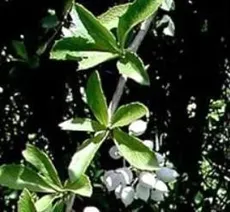
Popular clumps of five to eight, simply spiny toothed, leathery, and leaves remain grouped. Length: 4.9cm, width: measuring 1.8cm, with a rich green hue on the higher side with a pale green hue on the base of the plant.
2. Flower
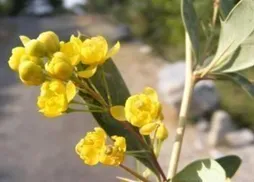
Flowers be situated yellow, actinomorphic, and had aregular diameter of 12.5mm.
3. Fruits
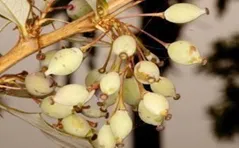
Fruits amount in 7mm in length and 4mm in diameter, weigh 227 mg and consume volume 237microleter. The fruit consumes an aconite violet.
4. Stem
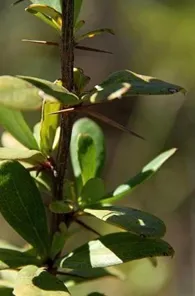
The stem of Berberis aristata is a valuable component in traditional Indian medicine, particularly in Ayurvedic practices. It's used for its potential antibacterial, anti-inflammatory, and other therapeutic properties.
Phytochemical constituents
protoberberine alkaloids, undergoes a chemical reaction.as fine as palmatime chloride. Additional extracted alkaloids include aroma line, oxy be berberine, Berberine, oxyacanthine, besides Berberine chloride. Alkaloids, composed with taxilamine, pseudo palmatine chloride, pseudo 1 in 10 dilution chemical constituents, remained obtained from the bark. (Chakravarty et al., (1950)). the berberis aristata plant's blooms comprise the polyphenolic flavonoids quercetin, martin, and rutin. Two more acids were e-caffeic acid but also chlorogenic acid that is contemporary. The ethanolic extract of the plant also contain the paraffin hydrocarbon is also particular detected throughout heartwood ethanolic extract. The substantial inorganic in the plant rhizomes have Significant amount of cadmium, iron and Zinc. (Blasko. (1982)).
Qualitative Phytochemical Analysis Quantitative analysis
Qualitative chemical analysis was performed and experimental in various citations like chloroform acetone and ethanol and liquid of berberis aristata stem for detective work the secondary metabolised current in it.
Test for alkaloids
Pipette 2 ml of sample into a clean test tube and add 3 drops of picric reagent formation of light-yellowunder pressure indicates the occurrence of alkaloids.
Test for flavonoids
TO 2ml of sample add few drops of the concentrated NH3 solutions suggestion of yellow colour confirms the occurrence of flavonoids
Test for Tannins
Withdraw 2ml of illustration into dried followed by 2 ml of sterile water. Along with drip in a few drops of 0.1%t of ferric chloride and perceive for dark precipitates
Test for steroids
To 1ml of sample add and sequentially add 2ml of glacial acetic acid an equal volume(2ml) of concentrated H2SO4. Experimental for colour transformationsince violet to blue green.
Qualitative analysis
Thin layer chromatography of berberis aristata leaves Flat-bed chromatography techniques exited adopted in the Favor identification associated with the different classes of apparatuses present extracted base on the approaches designate previous.
List of various materials used in this:-
|
Sr.No. |
Material |
|
1. |
Plant material ( Tree turmeric) |
|
2. |
Solvent (e.g. ethanol, methanol, water) |
|
3. |
Chemicals ( eg., berberine standard) |
|
4. |
Equipment (eg., rotary evaporator,Uv-vis spectrophotometer) |
|
5. |
Glassware(e.g., Beaker, flasks, TLC plates) |
|
6. |
Analytical standard (e.g., tree turmeric) |
|
7. |
Microscope slides. |
|
8. |
Cover slips for microscopy. |
|
9. |
Thin layer chromatography (TLC) plates and developing solvents. |
Instrumentation
|
Sr.No. |
Instrumentation |
|
1. |
UV-Vis spectrophotometer (SHIMADZU UV- 1800) |
|
2. |
pH meter (Model pH tester 300 |
|
3. |
Sonicator ( Model Sonica 2200 MH ) |
|
4. |
Micropipette (Tarson P products Pvt. Ltd.) |
|
5. |
Vacuum Filtration assembly ( Sigma-Aldrich) |
|
6. |
Magnetic Stirrer with hot plate |
|
7. |
Refrigerator (LG) |
|
8. |
Membrane filter |
|
9. |
Glassware |
|
10. |
Sonicator |
|
11 |
pH meter (calibration, usage) |
Results pH meter (Model pH Tester)
Device that measures the acidity or alkalinity of a solution. Needed to adjust mobile-phase pH in Buffer preparation..
Sonicator (Model SONICA 2200 MH)
Ultrasonic bath that uses sound waves to agitate samples, aiding extraction or dissolution of compounds.
Magnetic Stirrer with hot plate
Device that mixes solutions with a magnetic bar and can heat them for dissolution or reaction.
Refrigerator (LG)
Appliance for storing chemicals or extracts at low temperature to prevent degradation.
Glassware (Borosil 3.3)
Laboratory glass containers (beakers, flasks) used for preparing and storing solution.
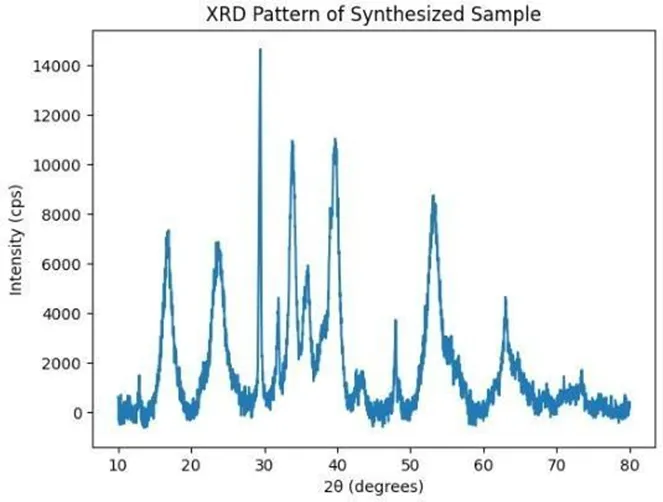
XRD Pattern of Synthesized Nanoparticles
The X-ray diffraction (XRD) pattern of the synthesized sample is shown in the above figure. The graph represents the variation of intensity (counts per second) with diffraction angle (2θ), which provides information about the crystalline nature of the material.
The XRD pattern confirms that the synthesized nanoparticles possess a crystalline structure with well-defined diffraction peaks, indicating successful formation of structured nonmaterial. XRD pattern of synthesized nanoparticles showing characteristic diffraction peaks indicating crystalline nature of the material.
The positions of the diffraction peaks correspond to specific crystallographic planes, which can be indexed using standard reference data such as JCPDS files, thereby confirming the phase purity and identity of the nanoparticles. The absence of extra or unidentified peaks in the diffract gram suggests that the synthesized sample is free from significant impurities, indicating high purity and successful synthesis.
Furthermore, the average crystallite size of the nanoparticles can be estimated using the Scherer equation, which relates peak broadening to particle size. The slight broadening observed in the peaks is a typical feature of nanoscale materials and further supports the formation of nanoparticles. The high intensity and narrow width of the peaks indicate good crystalline and uniform particle distribution.
SAMPLE IMAGES
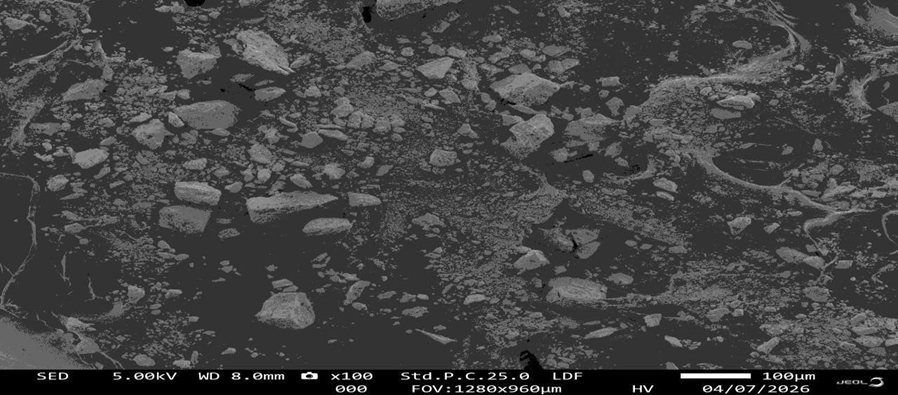
SAMPLE IMAGES
Characterization of Synthesized Nanoparticles
1. Particle Size Analysis (Dynamic Light Scattering)
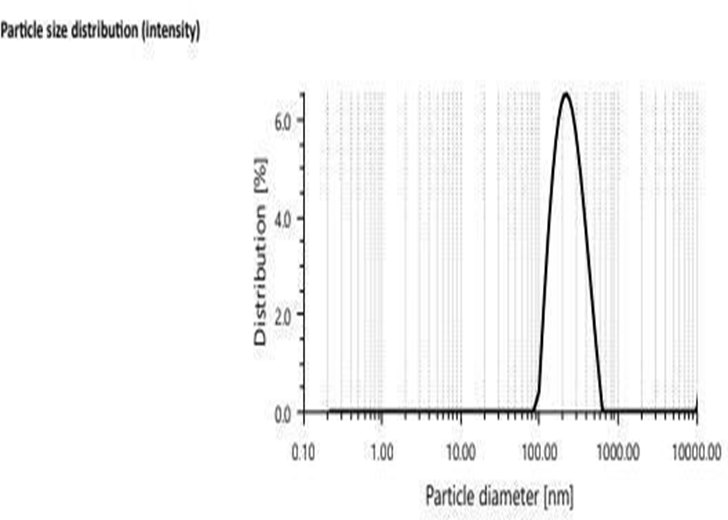
• The particle size distribution of the synthesized nanoparticles was determined using a dynamic light scattering technique. The analysis was carried out at a controlled temperature of 25°C using water as the dispersing medium. Multiple measurement runs were performed to ensure reproducibility and accuracy of the results.
• The average hydrodynamic diameter of the particles was found to be approximately 256 nm, indicating successful formation of nanoscale particles. The size distribution was predominantly centered on this value, with the majority of particles contributing to a single major population.
• The polydispersity index (PDI) was calculated to be 0.185, suggesting a relatively narrow size distribution. This indicates that the synthesized nanoparticles exhibit acceptable uniformity, although slight variation in particle size exists.
• The intensity-based distribution revealed that nearly 93% of the particles fall within the nanoscale range (~250 nm), confirming the efficiency of the synthesis process. A minor fraction (~6%) of larger particles was also observed, which may be attributed to aggregation phenomena during synthesis or storage.
• Overall, the particle size analysis demonstrates that the prepared nanoparticles possess suitable dimensions and distribution characteristics for potential biomedical and catalytic applications.
2. Elemental Analysis (Energy Dispersive X-ray Spectroscopy – EDS)
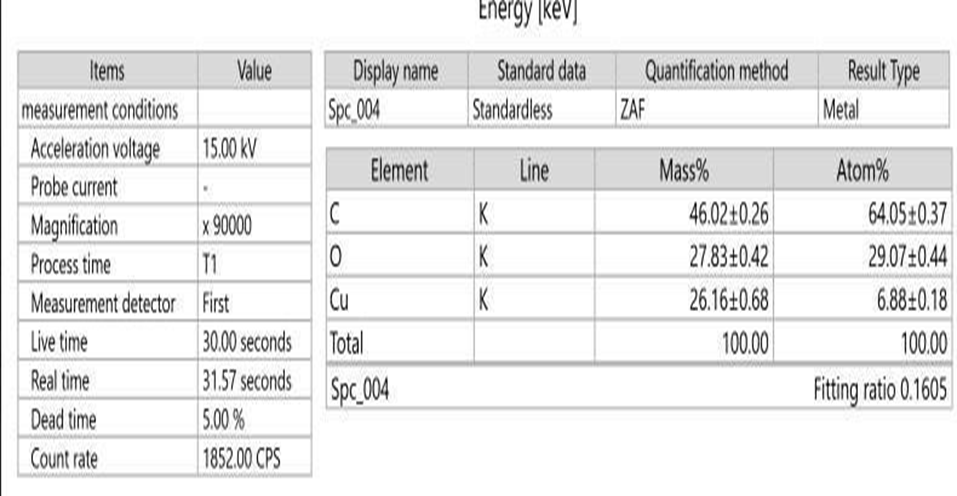
Elemental composition of the synthesized nanoparticles was analyzed using energy dispersive X-ray spectroscopy (EDS) under high vacuum conditions with an accelerating voltage of 15 kV. The analysis was performed at high magnification to ensure accurate detection of elemental signals.
The EDS spectrum confirmed the presence of key elements associated with the synthesized material. The major elements detected include:
• Carbon (C): ~46.02% (mass percentage)
• Oxygen (O): ~27.83% (mass percentage)
• Copper (Cu): ~26.16% (mass percentage)
The atomic percentage further supports the dominance of carbon and oxygen, which may originate from plant-based reducing and stabilizing agents used during green synthesis. The presence of copper confirms the successful formation of copper-based nanoparticles.
4. The characterization studies confirm that the synthesized nanoparticles exhibit:
• Nanoscale particle size (~256 nm)
• Acceptable size distribution (low PDI)
• Proper elemental composition with minimal impurities
These findings validate the effectiveness of the synthesis method and support the potential application of the nanoparticles in various pharmaceutical and environmental fields.
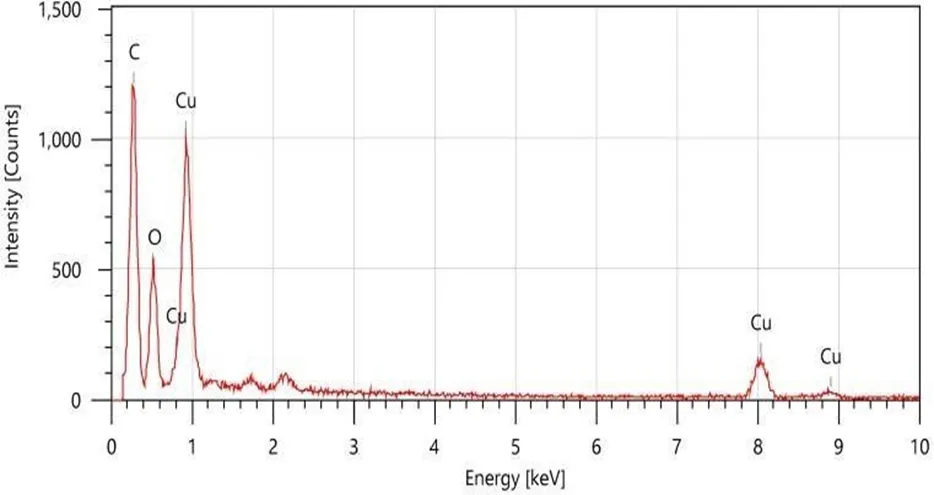
Energy Dispersive X-ray Spectroscopy (EDS) Analysis
The elemental composition of the synthesized nanoparticles was examined using Energy Dispersive X-ray Spectroscopy (EDS). The obtained spectrum presents the relationship between X-ray intensity (counts) and energy (keV), which allows identification of the elements present in the sample.
The EDS analysis clearly demonstrates that the synthesized nanoparticles are primarily composed of copper along with carbon and oxygen elements. The results confirm:
• Successful incorporation of copper in the nanoparticle structure
• Presence of organic capping agents (carbon and oxygen)
• High purity of the synthesized material.
• Based on the EDS analysis, it can be concluded that the synthesized nanoparticles are primarily composed of copper along with carbon and oxygen elements. The results confirm successful synthesis through a green route, with minimal contamination and effective stabilization by organic constituents.
ENERGY KEY MEASUREMENT CHART
TEM ANALYSIS OF NPS
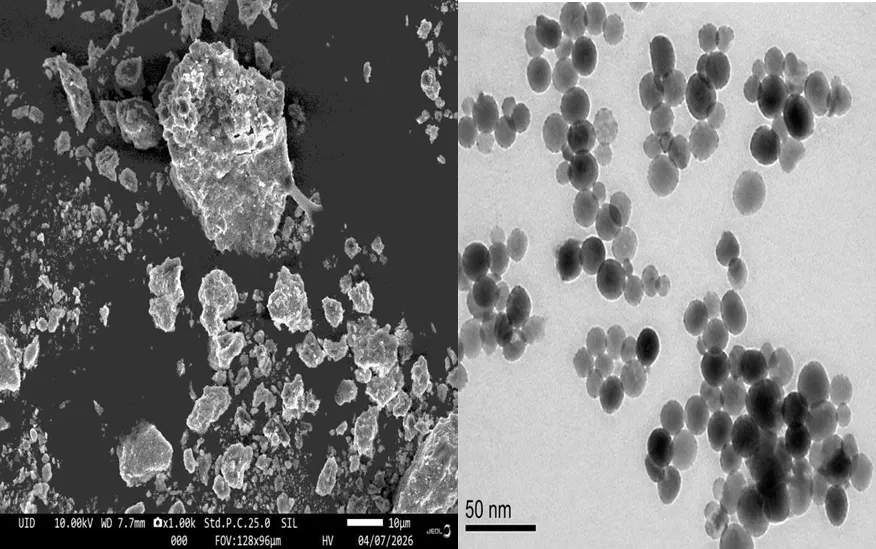
The TEM images revealed that the synthesized copper nanoparticles were predominantly spherical in shape with slight agglomeration.
• Particle shape: Spherical
• Distribution: Uniform (slightly aggregated)
• Surface morphology: Smooth
• The TEM analysis confirmed the formation of copper nanoparticles in the size range of
50 nm. The particles were mostly spherical, indicating uniform growth during synthesis. Slight aggregation may be due to high surface energy of nanoparticles.
• TEM results clearly demonstrate that the synthesized copper nanoparticles are nanosized, uniformly distributed, and suitable for applications such as antibacterial and catalytic activities.
• TEM is an essential technique for the characterization of copper nanoparticles. It provides precise information about particle size, morphology, and distribution, confirming successful synthesis of nanoparticles.
Graph Intense PSD
Particle Size Analysis Data
The particle size of the synthesized sample was analyzed using a Litesizer 500 instrument operating in particle size measurement mode. The analysis was conducted at a controlled temperature of 25°C, using water as the solvent.
Measurement Conditions
• Measurement mode: Particle size (Dynamic Light Scattering)
• Measurement angle: Side scatter
• Solvent: Water
• Solvent refractive index: 1.3303
• Solvent viscosity: 0.8903 mPa·s
• Number of runs: 6
• Time per run: 10 seconds
1. Average Particle Size
The hydrodynamic diameter of the particles was found to be:
• 256.2 nm This indicates that the synthesized particles fall within the nanometer range, confirming successful nanoparticle formation.
2. Polydispersity Index (PDI)
• PDI = 18.5% (0.185) The PDI value suggests a moderately narrow size distribution, indicating that the particles are fairly uniform but not perfectly monodisperse.
3. Particle Size Distribution
The intensity-based particle size distribution showed:
|
Peak |
Size (nm) |
Area (%) |
Standard Deviation (nm) |
|
Peak 1 |
251.4 nm |
93.49% |
92.16 |
|
Peak 2 |
14420 nm |
6.51% |
2127 |
to nanoparticles around 251 nm, indicating that most particles are in the nanoscale range.
• A minor peak (~14420 nm) suggests the presence of some aggregated or larger particles.
4. Additional Parameters
• Diffusion coefficient: 1.9 µm²/s
• Mean intensity: 295.0 counts’/s
• Absolute intensity: 8889.2 counts’/s
• Transmittance: 77.0%
The particle size analysis confirms that the synthesized material consists predominantly of nanoparticles with an average size of approximately 256 nm. The relatively low PDI indicates a fairly uniform distribution, although the presence of a small fraction of larger particles suggests partial aggregation.
CONCLUSION
The present investigation was carried out to evaluate the authenticity, phytochemical profile, and nonmaterial-based characterization of Berberis aristata (tree turmeric). The study successfully integrated classical pharmacognostic techniques with advanced analytical approaches to ensure accurate identification and evaluation of the plant material. Microscopic examination of the plant drug revealed distinct diagnostic features such as well-developed xylem vessels, fibers, and the presence of calcium oxalate crystals, which are characteristic markers for identification and help in detecting adulteration. These anatomical observations confirmed the genuineness of the crude drug. (TLC) analysis demonstrated the presence of important phytoconstituents, particularly alkaloids such as berberine. The developed chromatographic profile provided a reliable fingerprint for the plant, supporting its standardization and quality control. Furthermore, the study extended towards nanotechnologybased characterization of synthesized nanoparticles derived from the plant
extract. Particle size analysis using Dynamic Light Scattering confirmed that the particles were within the nanometer range, with an average size around 256 nm and a relatively low polydispersity index, indicating acceptable uniformity. Elemental analysis through Energy Dispersive X-ray Spectroscopy verified the presence of copper along with carbon and oxygen, confirming successful synthesis and stabilization of nanoparticles through a green approach. Transmission Electron Microscopy revealed that the particles were predominantly spherical with slight aggregation, supporting controlled growth and nanoscale formation. In addition, X-ray diffraction studies confirmed the crystalline nature of the synthesized nanoparticles, with welldefined diffraction peaks indicating structural stability and successful formation of nonmaterials. Overall, the results of the study demonstrate that Berberis aristata is a valuable medicinal plant with significant phytochemical constituents and potential for nanoparticle synthesis. The combination of microscopy, TLC profiling and advanced analytical techniques provides a comprehensive approach for authentication, quality evaluation, and potential pharmaceutical applications. The findings of this work highlight the importance of integrating traditional pharmacognostic methods with modern analytical tools for the development of standardized herbal formulations and novel nanotechnology-based drug delivery systems.
REFERENCES

Isha, Shivam Sharma, Dr. Dev Prakash Dahiya, Green Synthesis and Characterization of Tree Turmeric Mediated Nanoparticle and Their Biological Application, Int. J. of Pharm. Sci., 2026, Vol 4, Issue 6, 1884-1897, https://doi.org/10.5281/zenodo.20591804
 10.5281/zenodo.20591804