

We use cookies to ensure our website works properly and to personalise your experience. Cookies policy
Department of Pharmacology, St. Soldier Institute of Pharmacy, Lidhran Campus, Behind NIT (R.E.C.), Jalandhar –Amritsar by pass, NH-1, Jalandhar -144011, Punjab, India.
Objectives : To evaluate the hepatoprotective activity of Trigonella foenum graecum in Paracetamol induced Hepatotoxicity. Method : The study was carried out using Swiss mice maintained under standard laboratory conditions. Animals were divided into five groups consisting of normal control, disease control (PCM-treated), standard treatment (Silymarin + PCM), fenugreek low dose (100 mg/kg + PCM), and fenugreek high dose (200 mg/kg + PCM). Results: The results revealed that Paracetamol administration produced significant hepatotoxicity, as evidenced by reductions in hematological parameters and marked elevations in serum ALT, AST, and ALP levels. The disease group showed severe liver injury compared to the normal control group. Conclusion: Treatment with aqueous extract of fenugreek at both low dose (100 mg/kg) and high dose (200 mg/kg) significantly improved these altered parameters and showed protective effects against Paracetamol-induced liver damage. The high-dose treatment exhibited comparatively greater hepatoprotective activity, suggesting a dose-dependent response. The protective effects observed may be attributed to the presence of bioactive phytoconstituents such as flavonoids, polyphenols, alkaloids, saponins, and antioxidant compounds present in fenugreek, which help in reducing oxidative stress and stabilizing hepatocellular membranes.
The liver is the largest gland in the body, weighing between 1400 and 1600 gm in males and 1200-1400 gm in females. It is situated in the upper part of the abdominal cavity. The liver is enclosed in a thin, inelastic capsule and incompletely covered by a layer of peritoneum1.
Many organic and inorganic compounds, as well as medications that enter the body by inhalation, injection, or most usually the digestive system, are metabolised by the liver. The main drug-metabolising system resides in the microsomal fraction of the smooth endoplasmic reticulum of liver cells, via the P-450 cytochrome and cytochrome reductase enzyme systems2.
Hepatotoxicity is the condition of liver damage caused by drugs, chemicals, toxins, or alcohol, leading to impaired liver function. It is commonly associated with oxidative stress, inflammation, and elevated liver enzymes such as ALT, AST, and ALP. Hepatotoxicity, or liver damage, is caused by hepatotoxins, which may be sourced from chemicals, dietary supplements, pharmaceutical drugs, and medicinal plants.3,4,5
Paracetamol, also known as acetaminophen, can cause severe hepatotoxicity and nephrotoxicity when taken in overdose. PCM is metabolized by cytochrome P450 enzymes into the toxic metabolite NAPQI (N-acetyl-p-benzoquinone imine), which induces oxidative stress and depletes glutathione (GSH) levels. Paracetamol-induced liver injury is characterized by elevated serum hepatic markers such as alanine aminotransferase (ALT), aspartate aminotransferase (AST), alkaline phosphatase (ALP), and bilirubin levels6.
At very high concentrations, paracetamol has been reported to induce DNA single-strand breaks, reduce unscheduled DNA synthesis, and increase sister-chromatid exchanges in V79 Chinese hamster cells, even without an external metabolic activation system7.
Trigonella foenum-graecum L., fenugreek, is an important herb belonging to the Leguminosae family8. From ancient times, it has been used in herbal medicine because of its numerous healthcare properties like anti-diabetic, antioxidant, hypoglycemic, antihyperlipidemic, and immune-enhancing properties.9,10 The active chemical constituents present in TFG include steroidal saponins, trigonelline, gentianine and carpaine alkaloids, trigocoumarin, phosphates, potassium, proteins (4-hydroxyisoleucine), choline, vitamin C, betacarotene, nicotinic acid, and folic acid.11 The leaves contain seven saponins, known as graecunins. These compounds are glycosides of diosgenin.12
Fenugreek is known for its pleasantly bitter, slightly sweet seeds.13
Hepatic symptoms can vary from being completely symptom-free to having ongoing symptoms. Liver fibrosis, hepatic necrosis, vomiting, bleeding, edema of the lower extremities, increased serum transaminases, bilirubin, or cholestasis, liver cirrhosis, liver failure, or hepatic veno-occlusive disease are all symptoms that patients may experience after hepatotoxicity begins.16-19
The reduction of hepatic insulin-induced gene-2a expression leads to hepatic lipogenesis and hyperactivation of SREBP-1c, which in turn causes hepatic steatosis and high blood lipid levels. This is caused by lower levels of CREBH, which stands for cyclic adenosine monophosphate responsive element-binding protein H. The impact of fenugreek seeds on lowering blood lipid levels was studied using mouse models.20
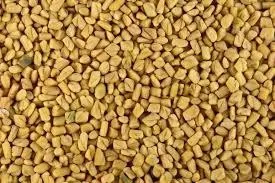
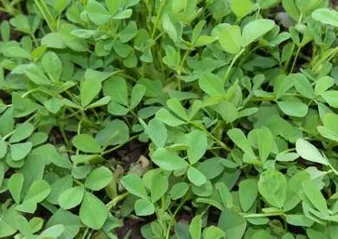
Figure 1: Fenugreek Seed Fig. 2 Fenugreek Plant
MATERIALS AND METHODS
The aqueous seed extract of Trigonella foenum-graecum was obtained from Kshipra Biotech PVT.LTD together with its Certificate of Analysis (C.O.A.).
METHODOLOGY:
• Test component:
In this study, the aqueous extract of Trigonella foenum-graecum was used as the test component.
• Extraction Procedure of the Test Plant (Ferulaasafoetida):
The extraction of Trigonella foenum-graecum seeds was carried out using water. The detailed procedure is given in the following steps:
Extraction:
Concentration of Extracts:
PREPARATION OF FORMULATION:
Dissolve 40 g of concentrate in 60 ml of distilled water to constitute a low dose of fenugreek. (40%)Dissolve 60 g of concentrate in 40 ml of distilled water to constitute a high dose of fenugreek. (60%)
PROCUREMENT OF ANIMALS:
Swiss mice were procured from and kept in the Animal House Facility, St. Soldier Institute of Pharmacy, Jalandhar, Punjab, India. All animals were housed in clean polypropylene cages under controlled environmental conditions, with a 12-hour light/dark cycle, a temperature of 22±2°C, and relative humidity of 55±10%. The mice were provided with a standard pellet diet and water ad libitum. Animal care and use were conducted in accordance with the guidelines of the Committee for the Purpose of Control and Supervision of Experiments on Animals (CPCSEA), Government of India, ensuring ethical treatment and welfare of the animals throughout the study.
EXPERIMENTAL PROTOCOL:
Experimental Design:
In the experimental protocol, animals were divided into 6 groups, six mice in each group. i.e., Group I (Control group), which is a normal control group that received normal saline on a daily basis orally. Group II (Disease group), which is a disease group treated with the drug model Paracetamol BW (w/w) p.o route to induce disease. Group III Test drug Paracetamol and fenugreek at low dose body weight by the p.o. route. Group IV Test drug Paracetamol BW, and fenugreek at medium dose body weight by p. o route. Group V Test drug Paracetamol and fenugreek at high dose body weight by p.o route for nine days as shown.
Experimental protocol in In Vivo Studies:
Duration of study 21 days
Table 1: Experimental Design
| Sno | Groups | Treatment | Dose | Route of administration | Animals required |
|---|---|---|---|---|---|
| 1. | I (control) |
Normal saline | Daily basis | p. o. | 6 |
| 2. | II (Disease group) |
Paracetamol | 500mg/kg | p.o. | 6 |
| 3. | III (Standard group) |
Silymarin + Paracetamol | 50mg/kg+500m g/kg | p. o | 6 |
| 4. | IV (Test drug low dose) |
Fenugreek Low dose + Paracetamol | 100mg/kg+500 mg/kg | p. o | 6 |
| 5. | V (Test drug high dose) |
Fenugreek High dose + Paracetamol | 200mg/kg+500 mg/kg | p. o | 6 |
Total No. of animals required:
Number of groups of animals (N): 6groups
No of animals required (n): 30 (6 animals in each group) Species and Strain: Swiss Mice, either sex
Test drug: Fenugreek, low dose and high dose
Experimental protocol according to the days required for the study:
Table 2: Experimental Protocol
| S.N. | Groups | Treatment | Days |
|---|---|---|---|
| 1. | I (Control) |
Normal saline | For all 21 days |
| 2. | II (Disease group) |
Paracetamol | Single dose daily up to 7 days |
| 3. | III (Standard group) |
Silymarin+ Paracetamol | 1-7th days Paracetamol 8-21st days Silymarin |
| 4. | IV (Test drug low dose) |
Fenugreek aqueous extract (100mg/kg)+ Paracetamol | 1-7th days Paracetamol 8-21st days test drug low dose |
| 5. | V (Test drug high dose) |
Fenugreek aqueous extract (200mg/kg)+ Paracetamol | 1-7th days Paracetamol 8-21st days test drug high dose |
EVALUATION OF DIFFERENT PARAMETERS
Complete blood count: Total number of erythrocytes (RBCs), total number of leukocytes (WBCs), differential leukocyte count, platelet count, packed cell volume (PCV) %, and hemoglobin (Hb) concentration were estimated by adopting standard procedures. Blood smears were prepared as soon as possible after blood collection on a glass slide, and quickly dried and stained with Giemsa and May-Grunwald stain for the differential blood count. Erythrocyte indices like mean corpuscular volume (MCV), mean corpuscular hemoglobin (MCH) and mean corpuscular hemoglobin concentration (MCHC) were calculated according to standard formulas.14
Biochemical parameters: Estimation of biochemical parameters in serum, i.e., the levels of alanine transaminase (ALT), aspartate transaminase (AST), alkaline phosphate (ALP), with the help of a biochemistry analyzer kit with corresponding reagents according to standard
protocols.15
Statistical analysis: Statistical analysis will be carried out by one-way analysis of variance (ANOVA) for the significance value. Data will be expressed as mean±SEM (standard error mean).
RESULTS (TABLES & GRAPHS)
Hematological findings
After 24 hrs post-treatment (table)
Figure 3:
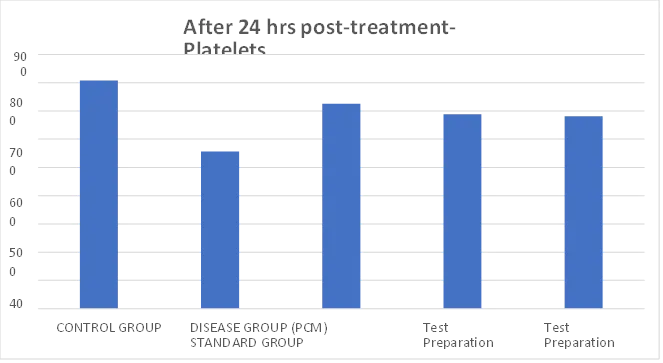
After 24 hrs post-treatment- Platelets 900 800 700 600 500 400 300 200 100 0 CONTROL GROUP DISEASE GROUP (PCM) STANDARD GROUP (PCM+SL) Test Preparation 1(100mg/kg)+PCM Test Preparation 2(200mg/kg)+PCM
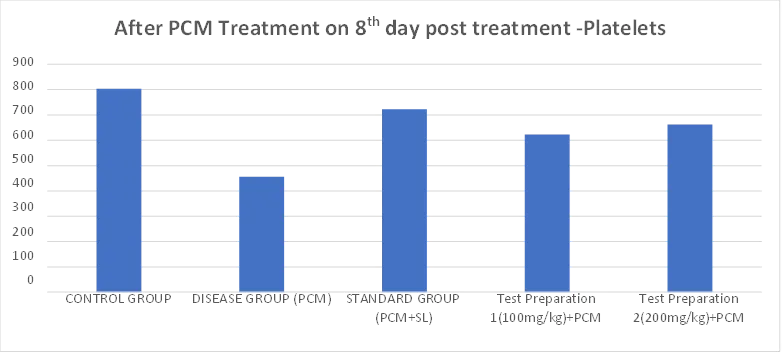
Figure 4:
As shown in the figure 3, there was a significant reduction in RBCs, WBCs, Platelets, PCV, Hb, MCHC, Neutrophils, Lymphocytes, and monocytes in the PCM group of mice (disease group) after 24 hours of single dose of PCM p.o., as compared to the control group, but there is a significant elevation in the value of MCV.
In contrast, the administration of the medication shown a protective effect against PCM-induced decreases in the values of red blood cells, white blood cells, platelets, PCV, hemoglobin, microcytic hematopoietic cells, neutrophils, lymphocytes, and monocytes.. MCV value also significantly reduced than PCM treated groupTable 4 After PCM Treatment on 8th day post treatment
As shown in the figure, there was a significant reduction in RBCs, WBCs, Platelets, PCV, Hb, MCHC, Neutrophils, Lymphocytes, and monocytes in the PCM group of mice (disease group) after 24 hours of single dose of PCM p.o route as compared to the control group, but there was a significant elevation in the value of MCV. On the other hand, when the treatment was given, it showed the protective effect against PCM-induced reduction in the values of RBCs, WBCs, Platelets, PCV, Hb, MCHC, Neutrophils, Lymphocytes, and Monocytes. MCV value was also significantly reduced than PCM treated group.
Table 3: After 3 Weeks Post-Treatment
| TEST NAME | CONTROL GROUP | DISEASE GROUP (PCM) |
STANDARD GROUP (PCM+SL) |
Test Preparation 1(100mg/kg)+PCM | Test Preparation 2(200mg/kg)+PCM |
|---|---|---|---|---|---|
| RBCs (106/µl) |
8.58±0.26 | 7.28±0.2a | 8.65±0.6b | 7.48±0.4b | 7.46±1.4b |
| WBCs (103/µl) |
14.86±0.7 | 13.66±1.2a | 14.74±0.5b | 13.98±0.3b | 13.95±1.5b |
| Platelets (103/µl) |
730.22±28.2 | 623.36±28.4a | 692.34±12.4a,b | 598.96±12.4a,b | 601.28±12.4a,b |
| PCV (%) | 46.48±1.3 | 43.44±1.3a | 46.28±1.3b | 45.56±1.4a,b | 45.26±1.6b |
| Hb (g/dl) | 16.54±1.4 | 16.23±0.3a | 16.48±1.5b | 16.16±1.2b | 16.18±1.6b |
| MCV (fl) | 54.56±2.3 | 65.88±2.4a | 55.26±2.6b | 56.44±2.6a,b | 56.94±2.4a,b |
| MCH(pg) | 19.38±0.2 | 22.58±2.6a | 19.86±1.6a,b | 22.14±1.4a,b | 22.37±1.6a,b |
| MCHC (%) | 35.66±2.3 | 34.36±2.4 | 35.56±2.4a,b | 34.83±2.6a,b | 34.75±3.4a,b |
| Neutrophils (103/µl) |
3.84±0.6 | 2.76±0.5 | 3.65±0.5b | 2.96±1.3a,b | 2.86±0.6b |
| Lymphocytes (103/µl) |
10.78±0.5 | 10.46±1.1 | 10.64±0.3a,b | 10.03±0.5a,b | 10.17±0.4a,b |
| Monocytes (103/µl) |
0.35±0.6 | 0.28±1.3a | 0.34±0.4a,b | 0.34±0.6b | 0.24±0.5b |
All the data given in Table 3 are means ± S.D with dissimilar superscript letters (significantly differ at p ?0.05).
(a) means significantly differ from the control value. (b)means significantly differ from the PCM group.
Biochemical findings
Table 4: After 24hrs Post Treatment
| TEST NAME | CONTROL GROUP | DISEASE GROUP (PCM) |
STANDARD GROUP (PCM+SL) |
Test Preparation 1(100mg/kg)+PCM | Test Preparation 2(200mg/kg)+PCM |
|---|---|---|---|---|---|
| ALT (U/ml) |
26.27±2.4 | 49.44±3.5a | 32.24±3.4ab | 41.44±3.5a,b | 38.27±2.5a,b |
| AST (U/ml) |
45.24±2.3 | 152.44±3.7a | 62.15±2.7ab | 72.26±2.7a,b | 74.24±3.3a,b |
| ALP (IU/I) | 112.93±1.3 | 242.21±1.8a | 126.23±1.5a,b | 132.14±2.3a,,b | 136.24±2.3a,b |
All the data given in Table 4 are means ± S.D with dissimilar superscript letters (significantly differ at p ?0.05).
(a) means significantly differ from the control value. (b) mean significantly NG9, differ from the PCM group.
Table 5: After PCM Treatment on 8Th Day Post Treatment
| TEST NAME | CONTROL GROUP | DISEASE GROUP (PCM) | STANDARD GROUP (PCM+SL) |
Test Preparation 1(100mg/kg)+PCM | Test Preparation 2(200mg/kg)+PCM |
|---|---|---|---|---|---|
| ALT (U/ml) |
27.29±2.2 | 69.43±4.7a | 42.25±3.6ab | 54.44±3.5a,b | 52.29±2.9a,b |
| AST (U/ml) |
46.24±2.7 | 182.45±4.5a | 72.14±2.5ab | 86.26±2.7a,b | 84.24±3.5a,b |
| ALP (IU/I) | 114.93±1.5 | 282.25±2.7a | 136.24±1.5a,b | 158.16±2.5a,,b | 156.24±2.3a,b |
All the data given in Table 5 are means ± S.D with dissimilar superscript letters (significantly differ at p ?0.05).
(a) means significantly differ from the control value. (b)mean significantly NG9, differ from the PCM group.
Table 6: After 3 Weeks Post-Treatment
| TEST NAME | CONTROL GROUP | DISEASE GROUP (PCM) | STANDARD GROUP (PCM+SL) |
Test Preparation 1(100mg/kg)+PCM | Test Preparation 2(200mg/kg)+PCM |
|---|---|---|---|---|---|
| ALT (U/ml) |
28.36±0.7 | 38.64±2.4a | 32.66±3.5a,b | 42.17±3.4a,b | 43.36±2.4 a,b |
| AST (U/ml) |
50.24±1.4 | 128.24±3.6a | 66.24±3.3a,b | 70.66±3.5a,b | 70.84±3.6a,b |
| ALP (IU/I) | 123.86±2.7 | 232.36±2.6a | 128.24±2.4a,b | 144.24±2.4a,b | 144.24±2.4a,b |
All the data given in Table 6 are means ± S.D with dissimilar superscript letters (significantly differ at p ?0.05).
(a) means significantly differ from the control value. (b) Means significantly differ from the PCM group.
DISCUSSION
The present study was carried out to evaluate the hepatoprotective activity of aqueous extract of Trigonella foenum-graecum (fenugreek) against Paracetamol (PCM)-induced hepatotoxicity in Swiss mice. Paracetamol-induced liver injury is a widely accepted experimental model for assessing hepatoprotective agents because excessive doses of paracetamol produce severe hepatic damage through the formation of the toxic metabolite N-acetyl-p-benzoquinone imine (NAPQI), resulting in oxidative stress, lipid peroxidation, hepatocellular necrosis, and depletion of glutathione stores. In the present investigation, hematological and biochemical parameters were evaluated to determine the protective efficacy of fenugreek extract.
The hematological findings demonstrated that PCM administration caused marked alterations in blood parameters. Significant reductions in RBC count, WBC count, platelet count, PCV, hemoglobin concentration, neutrophils, lymphocytes, monocytes, and MCHC were observed in the disease control group as compared to the normal control group. These changes indicate severe systemic toxicity and suppression of hematopoietic activity caused by PCM-induced oxidative stress and hepatic injury. An elevation in MCV values in PCM-treated animals further suggested the development of macrocytic alterations associated with hepatic dysfunction.
Treatment with fenugreek extract at both low dose (100 mg/kg) and high dose (200 mg/kg) significantly improved these haematological parameters compared to the PCM-treated group. The restoration of RBCs, WBCs, platelets, Hb, PCV, neutrophils, lymphocytes, and monocytes suggests that fenugreek possesses protective effects against PCM-induced hematotoxicity. The improvement was more pronounced in the high-dose treatment group, indicating a dose-dependent hepatoprotective effect. The standard drug, silymarin, also restored haematological parameters close to normal values, validating the experimental model.
Biochemical estimations of liver function markers further supported the hepatoprotective activity of fenugreek extract. Serum ALT, AST, and ALP are sensitive indicators of hepatocellular injury and membrane integrity. In the disease group, PCM administration caused a significant elevation in serum ALT, AST, and ALP levels after 24 hours, on the 8th day, and even after 3 weeks post-treatment, confirming extensive liver damage. The increase in these hepatic enzymes may be attributed to leakage from damaged hepatocytes into systemic circulation following PCM-induced oxidative injury and necrosis.
Administration of fenugreek extract significantly reduced serum ALT, AST, and ALP levels compared to the disease group. Although enzyme levels were not completely normalized in all groups, the reduction observed clearly indicates stabilization of hepatocellular membranes and improvement in liver function. The high-dose fenugreek group demonstrated better protective activity than the low-dose group, suggesting enhanced efficacy with increased dose. However, silymarin-treated animals showed greater normalization of biochemical markers, which may be due to its well-established antioxidant and membrane-stabilizing properties.
The hepatoprotective effect of Trigonella foenum-graecum may be attributed to the presence of various bioactive phytoconstituents such as flavonoids, polyphenols, alkaloids, saponins, vitamins, and antioxidant compounds. These phytochemicals are known to possess free radical scavenging activity, inhibit lipid peroxidation, enhance endogenous antioxidant defence systems, and reduce oxidative stress-induced cellular damage. Fenugreek has also been reported to improve detoxification mechanisms and maintain the structural integrity of hepatocytes, thereby reducing leakage of liver enzymes into the bloodstream.
The findings of the present study are in agreement with previous reports demonstrating the hepatoprotective potential of fenugreek against chemically induced liver injury. Earlier studies have shown that fenugreek possesses antioxidant, anti-inflammatory, and membrane-protective activities, which contribute to its beneficial effects in hepatic disorders. The current investigation further confirms that aqueous extract of Trigonella foenum-graecum can effectively attenuate PCM-induced liver toxicity in mice.
Overall, the study indicates that fenugreek extract exerts significant hepatoprotective activity against PCM-induced hepatotoxicity, as evidenced by improvement in haematological and biochemical parameters. The hepatoprotective activity may be mediated through antioxidant mechanisms and stabilization of hepatic cell membranes. Among the tested doses, the high dose (200 mg/kg) exhibited comparatively better protective effects. However, further studies involving histopathological evaluation, antioxidant enzyme assays, and isolation of active constituents are required to elucidate the exact mechanism of action and therapeutic potential of Trigonella foenum-graecum in liver disorders.
CONCLUSION
The present study concludes that the aqueous extract of Trigonella foenum-graecum (fenugreek) possesses significant hepatoprotective activity against Paracetamol-induced hepatotoxicity in Swiss mice. Administration of Paracetamol caused marked alterations in hematological and biochemical parameters, indicating severe hepatic injury and oxidative stress. Significant reductions in RBCs, WBCs, platelet count, hemoglobin, PCV, neutrophils, lymphocytes, and monocytes along with elevated liver enzyme levels such as ALT, AST, and ALP confirmed the induction of hepatotoxicity.
Treatment with aqueous extract of fenugreek at both low dose (100 mg/kg) and high dose (200 mg/kg) significantly improved these altered parameters and showed protective effects against Paracetamol-induced liver damage. The high-dose treatment exhibited comparatively greater hepatoprotective activity, suggesting a dose-dependent response. The protective effects observed may be attributed to the presence of bioactive phytoconstituents such as flavonoids, polyphenols, alkaloids, saponins, and antioxidant compounds present in fenugreek, which help in reducing oxidative stress and stabilizing hepatocellular membranes.
The results of the study support the traditional use of Trigonella foenum-graecum as a medicinal plant with hepatoprotective potential. Although the extract did not completely restore all parameters to normal levels, it demonstrated considerable improvement comparable to the standard drug silymarin. Therefore, fenugreek may serve as a promising natural therapeutic agent for the management of drug-induced liver injury.
Further investigations including histopathological studies, antioxidant enzyme analysis, and isolation of active phytoconstituents are recommended to better understand the exact mechanism of hepatoprotective action and to validate its clinical applicability in liver disorders.
REFERENCES

Priya, Ajeet Pal Singh, Amar Pal Singh, Hepatoprotective Role of Trigonella Foenum-Graecum in Paracetamol Induced Hepatotoxicity, Int. J. of Pharm. Sci., 2026, Vol 4, Issue 10, 4104-4113. https://doi.org/10.5281/zenodo.23684675
 10.5281/zenodo.23684675