

We use cookies to ensure our website works properly and to personalise your experience. Cookies policy
Department of Biotechnology, St. Bede’s College, Navbahar, Shimla, H.P-171002.
Ribose-5-phosphate isomerase A (RPIA) is a functionally important enzyme of the non-oxidative branch of the pentose phosphate pathway (PPP), catalysing the reversible interconversion of ribose-5-phosphate and ribulose-5-phosphate . The PPP contributes to the generation and interconversion of metabolic intermediates required for nucleotide biosynthesis and other cellular processes; therefore, alterations in enzymes associated with this pathway may influence broader aspects of cellular metabolism . RPIA has also attracted attention in studies investigating metabolic dysregulation and disease-associated molecular mechanisms .The present study employed an integrated transcriptomic and protein–protein interaction (PPI) network-based approach to investigate molecular alterations associated with rpia-1 dysfunction in Caenorhabditis elegans. RNA-sequencing data obtained from the NCBI Gene Expression Omnibus were used for gene-expression analysis . The selected genes were subsequently examined using the STRING database to investigate potential protein–protein interactions . Network visualisation and analysis were performed using Cytoscape , while cytoHubba was used to identify highly ranked and highly connected nodes within the interaction network .The analysis identified ACT3, ACT1, ACT2, ARX2, and ACT4 as prominent hub genes within the resulting network. The identification of several actin-associated genes among the highest-ranked nodes suggests a potential association between rpia-1 dysfunction and alterations in cytoskeletal organisation or related cellular processes. However, network centrality alone does not establish a causal biological relationship, and these genes should therefore be regarded as candidate molecular nodes requiring further experimental validation.Collectively, this study provides a systems-level framework for investigating molecular alterations associated with rpia-1 dysfunction in C. elegans. By integrating transcriptomic analysis with PPI network topology, the study identifies candidate hub genes that may support future investigations into the relationship between pentose phosphate pathway dysfunction and broader cellular network organisation.
The pentose phosphate pathway (PPP) is an important component of cellular metabolism that links carbohydrate utilisation with the generation and interconversion of metabolic intermediates required for diverse biosynthetic processes [1,2]. The pathway consists of oxidative and non-oxidative phases, with the non-oxidative phase facilitating the reversible rearrangement of sugar phosphates according to cellular metabolic requirements [1,2]. Ribose-5-phosphate isomerase (RPI; EC 5.3.1.6) is an important enzyme associated with this pathway and catalyses the reversible isomerisation of D-ribose-5-phosphate and D-ribulose-5-phosphate [1].
Previous research has indicated that altered expression of ribose-5-phosphate isomerase A (RPIA) may be associated with broader cellular signalling and disease-related processes [3]. In Caenorhabditis elegans, the rpia-1 gene is annotated by the National Center for Biotechnology Information (NCBI) as encoding a probable ribose-5-phosphate isomerase [5]. This annotation provides the basis for investigating the molecular consequences associated with altered rpia-1 function in C. elegans.
Alterations in metabolic pathways may have consequences extending beyond the immediate biochemical activity of the affected enzyme, potentially influencing gene-expression patterns and broader molecular interactions. Transcriptomic approaches, particularly RNA sequencing, provide a genome-wide method for examining changes in gene expression under different biological conditions [7,8]. Public repositories such as the NCBI Gene Expression Omnibus (GEO) provide access to functional genomics datasets that can be used for such analyses [7].
The identification of differentially expressed genes alone does not necessarily reveal their functional relationships or indicate which genes occupy relatively central positions within a molecular interaction network. Network-based approaches provide an additional framework for interpreting complex biological datasets by representing molecular components and their interactions as interconnected systems.
The STRING database provides a resource for investigating known and predicted protein–protein interactions and can be used to construct interaction networks for selected gene or protein sets [9]. Cytoscape provides a software environment for the visualisation and analysis of biomolecular interaction networks [6]. Furthermore, cytoHubba enables the ranking of network nodes according to different topological measures and can be used to identify candidate hub genes for further investigation [4].
The dataset used in the present study, GSE216697, provides transcriptomic data associated with ubiquitously and pan-neuronally reduced rpia-1 expression in Caenorhabditis elegans [10]. Functional interpretation of the resulting gene sets can be supported using resources such as the Gene Ontology knowledgebase and the Kyoto Encyclopedia of Genes and Genomes (KEGG) [11,12].
Previous research has established the fundamental importance of the actin cytoskeleton in cellular structure, organisation and movement [13]. The Arp2/3 complex also plays an important role in the nucleation and organisation of actin filaments [14]. These biological processes are relevant to the interpretation of candidate hub genes associated with actin-related molecular interactions.
The broader metabolic significance of the PPP has been extensively discussed in relation to cellular physiology, metabolic regulation and disease [15]. In C. elegans, reduced rpia-1 expression has also been investigated in relation to stress responses and longevity-associated phenotypes [16]. Further studies have examined the PPP in cancer metabolism and disease-associated metabolic regulation [17–20], while additional research has investigated PPP-associated metabolic processes in experimental and cellular systems [21–24].
Bioinformatics studies have also demonstrated the use of RNA sequencing and network-based approaches for identifying candidate hub genes and investigating molecular interaction networks [25–27]. Additional interaction resources, including BioGRID and earlier versions of STRING, provide complementary evidence for the analysis of molecular interaction networks [28,29]. Statistical methods for differential expression analysis, including DESeq2, further support the analysis of RNA-sequencing datasets [30].
Although rpia-1 is annotated as encoding a probable ribose-5-phosphate isomerase in C. elegans, the broader transcriptional and interaction-network alterations associated with rpia-1 dysfunction require further characterisation. The present study therefore employed an integrated bioinformatics approach combining transcriptomic analysis with protein–protein interaction network analysis.
Differentially expressed genes were examined within a PPI network framework, and network-topological analysis was subsequently used to identify highly ranked candidate hub genes. This approach provides a systems-level basis for prioritising molecular components for further investigation while recognising that computational network centrality does not, by itself, establish biological causality.
Accordingly, the present study aimed to identify key hub genes associated with rpia-1 dysfunction in Caenorhabditis elegans through the integration of transcriptomic and protein–protein interaction network analyses. By examining differential gene expression and network connectivity, the study sought to characterise candidate molecular nodes associated with rpia-1 dysfunction and provide a computational foundation for subsequent functional investigation and experimental validation.
METHODOLOGY
Acquisition of rpia-1 Knockdown RNA-Seq Dataset from NCBI GEO
The RNA-sequencing dataset used in the present study was obtained from the National Center for Biotechnology Information Gene Expression Omnibus (NCBI GEO) under the accession number GSE216697 [9]. The dataset comprised transcriptomic data from Caenorhabditis elegans under ubiquitous and pan-neuronal rpia-1 knockdown conditions. Processed gene-expression data were available for downstream analysis, while raw sequencing data were accessible through the Sequence Read Archive (SRA) [9]. NCBI GEO is a public repository for high-throughput functional genomics data, including RNA-sequencing and gene-expression datasets [10].A total of 12 samples were included, representing four experimental groups with three biological replicates per group. These transcriptomic data provided the foundation for the subsequent differential-expression and network-based analyses conducted in the present study ( Fig.1).
Preprocessing, Normalisation and Tabulation of Gene Expression Data
The processed gene-expression data were imported into Microsoft Excel for initial organisation, tabulation and preliminary assessment. Genes exhibiting consistently low expression across the analysed samples were excluded to reduce background noise and improve the interpretability of subsequent analyses. The remaining expression data were organised according to their respective experimental groups to facilitate comparisons between control and rpia-1 knockdown samples. Fold-change calculations were subsequently performed to identify genes exhibiting altered expression patterns and to generate a filtered gene set for downstream network analysis. Appropriate processing and comparative evaluation of RNA-sequencing data are important for the identification and interpretation of transcriptional differences between experimental conditions [11].
Differential Expression Analysis
Differential-expression analysis was performed by comparing gene-expression levels between control and rpia-1 knockdown samples. Fold-change-based comparisons were used to identify genes demonstrating altered expression under rpia-1 knockdown conditions. The resulting filtered gene set was subsequently selected for downstream protein–protein interaction analysis. RNA sequencing enables genome-wide investigation of transcriptional differences between biological conditions, while differential-expression analysis provides a framework for identifying genes associated with specific experimental or genetic perturbations [11]. In the present study, the resulting differentially expressed gene set served as the primary input for subsequent protein–protein interaction network construction and hub-gene identification .
Protein–Protein Interaction Network Construction Using STRING
The filtered gene list was submitted to the STRING database to construct a protein–protein interaction (PPI) network. The organism was specified as Caenorhabditis elegans to ensure that the analysis was conducted within the appropriate species-specific context. A minimum required interaction score of 0.7 was applied to retain high-confidence protein associations within the network. The resulting interaction network was subsequently downloaded in tab-separated format for further visualisation and topological analysis. STRING integrates evidence from experimental studies, computational predictions, curated databases, co-expression patterns and other information sources to establish protein association networks [12]. Such networks provide a systems-level framework for investigating potential functional relationships among proteins and can support the biological interpretation of selected gene and protein sets [12].
Graphical Representation of PPI Networks and Identification of Hub Genes Using Cytoscape and cytoHubba
The PPI network generated using STRING was imported into Cytoscape for graphical visualisation and network-topological analysis. Within the network, nodes represented proteins, whereas edges represented associations between proteins derived from the STRING interaction data. Cytoscape provides a computational environment for the visualisation, integration and analysis of biomolecular interaction networks [13]. The cytoHubba plugin was subsequently used to identify highly ranked nodes within the interaction network. Candidate hub genes were evaluated using network-topological measures, including degree, betweenness, closeness and maximal clique centrality (MCC) [14].Genes receiving comparatively high rankings across the applied topological measures were identified as candidate hub genes and selected for further functional investigation. Importantly, high network connectivity was interpreted as an indicator of topological importance rather than direct evidence of biological causality. Therefore, the identified hub genes were regarded as candidate molecular components associated with rpia-1 knockdown that require further biological and experimental validation.
Functional Enrichment and Pathway Analysis of rpia-1-Associated Hub Genes
The identified hub genes were subjected to functional enrichment and pathway analysis to investigate potentially over-represented biological functions and pathways associated with the analysed gene set. Functional interpretation was performed using the STRING database, which supports the analysis and enrichment of selected gene and protein sets [12]. Gene Ontology (GO) analysis was used to investigate the functional characteristics of the identified hub genes. The GO framework provides a standardised system for describing gene-product attributes across three principal categories: biological process, molecular function and cellular component [15]. Pathway analysis was additionally performed using information from the Kyoto Encyclopedia of Genes and Genomes (KEGG), which provides a resource for the systematic representation and interpretation of biological pathways, molecular interactions and cellular systems [16]. Network diagrams and other graphical representations were used to facilitate the interpretation of molecular relationships and to highlight key nodes within the interaction network.
RESULTS
Identification of Differentially Expressed Genes Following rpia-1 Knockdown
The RNA-sequencing dataset GSE216697 was analysed to investigate gene-expression alterations associated with rpia-1 knockdown in Caenorhabditis elegans. The dataset included transcriptomic data generated under ubiquitous and pan-neuronal rpia-1 reduction conditions and contained biological replicates for the experimental groups [9].Following preprocessing, organisation and filtering of the gene-expression data, genes showing altered expression patterns between the control and rpia-1 knockdown conditions were selected for downstream analysis. Differential-expression analysis provides a framework for identifying genes whose expression differs between experimental or biological conditions [11]. The resulting gene set was subsequently used for protein–protein interaction network construction. The analysis demonstrated that rpia-1 knockdown was associated with alterations in the expression of multiple genes. These genes were therefore further examined using a network-based approach to identify potentially important molecular components .
Protein–Protein Interaction Network Construction
The selected genes were submitted to the STRING database for the construction of a protein–protein interaction (PPI) network. The analysis was performed using Caenorhabditis elegans as the selected organism, with a minimum interaction confidence score of 0.7 applied to retain high-confidence protein associations. The resulting network was exported and imported into Cytoscape for graphical visualisation and topological analysis. STRING integrates experimentally determined and computationally predicted protein associations to facilitate the investigation of functional relationships within gene and protein sets [12]. Cytoscape subsequently enabled visualisation and further analysis of the resulting interaction network [13]. The PPI network provided the basis for identifying highly connected nodes that could represent candidate hub genes within the rpia-1-associated molecular network (Fig. 2)
Identification of Candidate Hub Genes
Network-topological analysis was performed using Cytoscape and the cytoHubba plugin. The analysis identified the following five genes as the highest-ranking candidate hub genes:ACT3, ACT1, ACT2, ARX2 and ACT4. The identification of highly ranked nodes was based on network-topological measures implemented in cytoHubba, including degree, betweenness, closeness and maximal clique centrality (MCC)( Fig. 2.3) [14]. Among the identified candidate hub genes, ACT3 showed the highest recorded network score, followed by ACT1, ACT2, ARX2 and ACT4, as presented in Table 1.
Expression Patterns of the Candidate Hub Genes
The expression analysis showed positive log₂ fold-change values for all five leading candidate hub genes in the analysed rpia-1 knockdown comparison. ACT3 demonstrated the largest positive expression change, with a recorded log₂ fold change of +1.85 and a p-value of 0.002. This was followed by ACT1, with a log₂ fold change of +1.60, and ACT2, with a log₂ fold change of +1.55. ARX2 and ACT4 demonstrated log₂ fold changes of +1.32 and +1.20, respectively. The coordinated positive expression changes observed among these genes suggest that they represent a prominent component of the molecular response identified in the analysed rpia-1 knockdown dataset
Functional Characteristics of the Candidate Hub Genes
A prominent feature of the hub-gene analysis was the predominance of genes associated with the actin cytoskeleton. Four of the five highest-ranking candidate hub genes—ACT1, ACT2, ACT3 and ACT4—were associated with actin-related cellular functions. Actin is a fundamental component of the cytoskeleton and plays important roles in cellular structure, organisation and movement [17]. Therefore, the identification of multiple actin-associated genes among the highest-ranking nodes indicates that cytoskeleton-associated interactions represented a prominent feature of the constructed PPI network. The remaining candidate hub gene, ARX2, is associated with the Arp2/3 complex, which contributes to the nucleation and organisation of actin filaments [18]. The identification of ARX2 together with several actin-associated genes further supports the prominence of actin-related molecular interactions within the network. However, these findings should be interpreted as evidence of network association and topological importance rather than direct biological causality. The present analysis does not independently establish that rpia-1 knockdown directly regulates cytoskeletal organization (Fig.3.) (Fig.5).
DISCUSSION
The present study investigated molecular alterations associated with rpia-1 knockdown in Caenorhabditis elegans through the integration of transcriptomic and protein–protein interaction (PPI) network analyses. The analysis identified ACT3, ACT1, ACT2, ARX2 and ACT4 as the principal candidate hub genes. The predominance of actin-associated genes among the highest-ranking nodes suggests that cytoskeleton-related molecular interactions were a prominent feature of the network associated with rpia-1 knockdown. However, these findings should be interpreted as computationally derived associations rather than direct evidence of a causal molecular mechanism.
The rpia-1 gene encodes a probable ribose-5-phosphate isomerase and is associated with the non-oxidative branch of the pentose phosphate pathway (PPP) [1,2]. Ribose-5-phosphate isomerase catalyses the reversible interconversion of ribose-5-phosphate and ribulose-5-phosphate, thereby contributing to cellular metabolic processes and the generation of metabolic intermediates [1,2]. More broadly, the PPP is a central component of cellular metabolism that contributes to biosynthetic processes and cellular redox homeostasis [15]. Therefore, perturbation of rpia-1 may potentially influence molecular processes extending beyond its immediate enzymatic function.
The identification of ACT1, ACT2, ACT3 and ACT4 as candidate hub genes is a notable finding. Actin is a major component of the eukaryotic cytoskeleton and contributes to cellular structure, intracellular organisation, movement and cell division [13]. The presence of multiple actin-associated genes among the highest-ranking nodes therefore indicates that cytoskeleton-associated interactions were prominent within the PPI network generated from the rpia-1 knockdown dataset.
In addition, ARX2 was identified as one of the principal candidate hub genes. ARX2 is associated with the Arp2/3 complex, which participates in the nucleation and organisation of actin filaments [14]. The simultaneous identification of ARX2 together with multiple ACT genes further supports the observation that actin-related interactions represent an important characteristic of the identified network. Nevertheless, this finding should not be interpreted as proof that rpia-1 directly regulates the actin cytoskeleton. Instead, the results identify a potential molecular association that requires further investigation.
The present findings can also be considered in relation to previous research investigating altered RPIA expression. Ribose-5-phosphate isomerase A has been associated with broader changes in cellular signalling and disease-related processes, indicating that altered RPIA activity may have consequences beyond its direct metabolic function. In C. elegans, reduced rpia-1 expression has also been investigated in relation to stress responses and longevity-associated phenotypes [16]. The present analysis extends this area of investigation by identifying candidate molecular components within a transcriptomic interaction network that may be associated with reduced rpia-1 expression.
Importantly, the identification of ACT3, ACT1, ACT2, ARX2 and ACT4 as hub genes does not establish that these genes are direct regulators of the biological consequences of rpia-1 knockdown. Hub-gene identification is based on network topology and reflects the relative connectivity or centrality of nodes within the constructed network. Cytoscape provides a platform for the visualisation and analysis of biomolecular networks, whereas cytoHubba enables the identification and ranking of highly connected nodes using topological methods . Consequently, a high-ranking hub gene may represent an important network component without necessarily functioning as a direct causal regulator of the phenotype being investigated.
The identification of ACT3 as the highest-ranking candidate hub gene may nevertheless justify further investigation. Its prominent network position, together with its observed expression change in the analysed dataset, suggests that it may represent a useful candidate for subsequent functional studies. However, this interpretation should remain cautious because network rankings are influenced by the composition of the input gene set and the interaction information available within the underlying database. STRING integrates experimental evidence, computational predictions, database annotations and other evidence sources to generate protein association networks [9]. Therefore, network centrality should be regarded primarily as a method of prioritising candidates for further investigation rather than as confirmation of biological function.
The integrated use of transcriptomic and PPI network analysis represents a useful systems-level strategy for reducing the complexity of large gene-expression datasets. RNA sequencing enables the identification of transcriptional changes across a large number of genes [8], while PPI analysis provides an additional framework for examining potential functional relationships among the resulting gene products [9]. By combining these approaches, the present study was able to prioritise a smaller group of highly connected candidate genes from the broader set of genes associated with rpia-1 knockdown.
Several limitations of the present study should be acknowledged. First, the analysis was based primarily on transcriptomic data and computational network methods. Changes in mRNA expression do not necessarily correspond directly to changes in protein abundance, protein activity or cellular phenotype. Second, the PPI network was constructed using existing interaction information and predictions available through STRING [9]. Consequently, the resulting network may not represent every interaction occurring specifically under the experimental conditions associated with rpia-1 knockdown.
A further limitation is that the candidate hub genes were not experimentally validated in the present study. Independent approaches, including targeted gene-expression analysis and protein-level or functional experiments, would be required to determine whether ACT3, ACT1, ACT2, ARX2 and ACT4 contribute directly to the biological consequences of reduced rpia-1 expression. Functional annotation and pathway analysis using resources such as Gene Ontology and KEGG can provide additional biological context, but enrichment and network analyses alone cannot establish causality [11,12].
Overall, the present study provides a systems-level computational framework for investigating molecular alterations associated with rpia-1 knockdown in Caenorhabditis elegans. The identification of ACT3, ACT1, ACT2, ARX2 and ACT4 as candidate hub genes indicates that actin- and cytoskeleton-associated interactions were prominent within the resulting PPI network [13,14]. The broader metabolic importance of the pentose phosphate pathway provides a plausible context in which altered rpia-1 function could be associated with wider cellular changes [15]. However, the present findings identify candidate molecular associations rather than experimentally confirmed mechanisms. Further experimental validation will therefore be necessary to establish the functional significance of these hub genes and determine whether they contribute directly to the molecular consequences of rpia-1 dysfunction.The present study investigated molecular alterations associated with rpia-1 knockdown in Caenorhabditis elegans through the integration of transcriptomic and protein–protein interaction (PPI) network analyses. The analysis identified ACT3, ACT1, ACT2, ARX2 and ACT4 as the principal candidate hub genes. The predominance of actin-associated genes among the highest-ranking nodes suggests that cytoskeleton-related molecular interactions were a prominent feature of the network associated with rpia-1 knockdown. However, these findings should be interpreted as computationally derived associations rather than direct evidence of a causal molecular mechanism.
The rpia-1 gene encodes a probable ribose-5-phosphate isomerase and is associated with the non-oxidative branch of the pentose phosphate pathway (PPP) [1,2]. Ribose-5-phosphate isomerase catalyses the reversible interconversion of ribose-5-phosphate and ribulose-5-phosphate, thereby contributing to cellular metabolic processes and the generation of metabolic intermediates [1,2].
Previous studies have indicated that altered ribose-5-phosphate isomerase A activity or expression may be associated with broader changes in cellular signalling and disease-related processes, suggesting that its biological effects may extend beyond its immediate metabolic function [3].
The integrated analysis used RNA-sequencing data to investigate transcriptional alterations associated with rpia-1 knockdown. RNA sequencing provides a genome-wide approach for examining changes in gene expression between biological conditions [8]. The transcriptomic dataset used in the present study was obtained from the NCBI Gene Expression Omnibus and provided the basis for the subsequent computational analyses [9].
The identified genes were subsequently examined using protein–protein interaction network analysis. Such approaches provide a framework for investigating potential functional relationships among gene products and for identifying highly connected molecular components within complex biological networks [12].
Cytoscape provides a platform for the visualisation and analysis of biomolecular interaction networks [13], whereas cytoHubba enables the identification and ranking of highly connected nodes using network-topological methods [14]. Importantly, the identification of ACT3, ACT1, ACT2, ARX2 and ACT4 as hub genes does not establish that these genes are direct regulators of the biological consequences of rpia-1 knockdown. Hub-gene identification reflects the relative connectivity or centrality of nodes within the constructed network and should therefore be interpreted primarily as a method for prioritising candidate genes for further investigation.
The broader pentose phosphate pathway is an important component of cellular metabolism and contributes to biosynthetic processes and cellular redox homeostasis [15]. Therefore, perturbation of rpia-1 may potentially influence molecular processes extending beyond its immediate enzymatic function. In C. elegans, reduced rpia-1 expression has also been investigated in relation to stress responses and longevity-associated phenotypes [16].
The identification of ACT1, ACT2, ACT3 and ACT4 as candidate hub genes is a notable finding. Actin is a major component of the eukaryotic cytoskeleton and contributes to cellular structure, intracellular organisation, movement and cell division [17]. The presence of multiple actin-associated genes among the highest-ranking nodes therefore indicates that cytoskeleton-associated interactions were prominent within the PPI network generated from the rpia-1 knockdown dataset.
In addition, ARX2 was identified as one of the principal candidate hub genes. ARX2 is associated with the Arp2/3 complex, which participates in the nucleation and organisation of actin filaments [18]. The simultaneous identification of ARX2 together with multiple ACT genes further supports the observation that actin-related interactions represent an important characteristic of the identified network. Nevertheless, this finding should not be interpreted as proof that rpia-1 directly regulates the actin cytoskeleton. Instead, the results identify a potential molecular association that requires further investigation.
The identification of ACT3 as the highest-ranking candidate hub gene may nevertheless justify further investigation. Its prominent network position, together with its observed expression change in the analysed dataset, suggests that it may represent a useful candidate for subsequent functional studies. However, this interpretation should remain cautious because network rankings are influenced by the composition of the input gene set and the interaction information available within the underlying database.
The integrated use of transcriptomic and PPI network analysis represents a useful systems-level strategy for reducing the complexity of large gene-expression datasets. By combining gene-expression analysis with network connectivity, the present study was able to prioritise a smaller group of highly connected candidate genes from the broader set of genes associated with rpia-1 knockdown.
Several limitations of the present study should be acknowledged. First, the analysis was based primarily on transcriptomic data and computational network methods. Changes in mRNA expression do not necessarily correspond directly to changes in protein abundance, protein activity or cellular phenotype. Second, computational interaction networks are dependent on the available interaction data and may not represent every molecular interaction occurring under the specific experimental conditions associated with rpia-1 knockdown.
A further limitation is that the candidate hub genes were not experimentally validated in the present study. Independent approaches, including targeted gene-expression analysis and protein-level or functional experiments, would be required to determine whether ACT3, ACT1, ACT2, ARX2 and ACT4 contribute directly to the biological consequences of reduced rpia-1 expression.
Overall, the present study provides a systems-level computational framework for investigating molecular alterations associated with rpia-1 knockdown in Caenorhabditis elegans. The identification of ACT3, ACT1, ACT2, ARX2 and ACT4 as candidate hub genes indicates that actin- and cytoskeleton-associated interactions were prominent within the resulting PPI network. However, the present findings identify candidate molecular associations rather than experimentally confirmed mechanisms. Further experimental validation will therefore be necessary to establish the functional significance of these hub genes and determine whether they contribute directly to the molecular consequences of rpia-1 dysfunction.
CONFLICT OF INTEREST
Authors have no conflicts of interest.
ACKNOWLEDGEMENT
The authors wish to acknowledge Department of Biotechnology, St. Bede’s College, Shimla, for support throughout the completion of this research work.
REFERENCES
|
HOW TO CITE: Tanvi Sharma, Aarti Lagwal, Luvina Dogra, Dr. Anita Chauhan, Identification Of Hub Genes Associated with Ribose-5-Phosphate Isomerase A (Rpia) Dysfunction in Cenorhabditis Elegans: Insights into Disease-Relevant Metabolic Networks, Int. J. of Pharm. Sci., 2026, Vol 4, Issue 8, 4513-4526, https://doi.org/10.5281/zenodo.22129155
|
Images and Tables:
Table 1. Comparative log₂ fold-change values of ACT3, ACT1, ACT2, ARX2, and ACT4 identified following rpia-1 knockdown
|
Rank |
Gene Symbol |
Degree / MCC Score |
Log2 Fold Change |
p-value |
Functional Role |
|
|
1 |
ACT3 |
12 |
+1.85 |
0.002 |
Cytoskeletal regulation, stress response |
|
|
2 |
ACT1 |
11 |
+1.60 |
0.004 |
Actin filament organization |
|
|
3 |
ACT2 |
10 |
+1.55 |
0.005 |
Cytoskeletal maintenance, cellular integrity |
|
|
4 |
ARX2 |
9 |
+1.32 |
0.010 |
Actin nucleation, cytoskeletal assembly |
|
|
5 |
ACT4 |
8 |
+1.20 |
0.015 |
Structural stability, stress response |
|
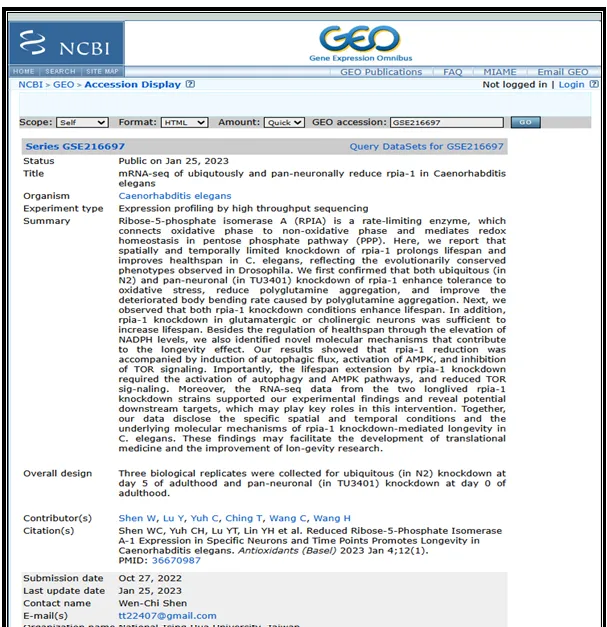
Fig.1. Acquisition and preprocessing of the GSE216697 Caenorhabditis elegans rpia-1 knockdown RNA-sequencing dataset.
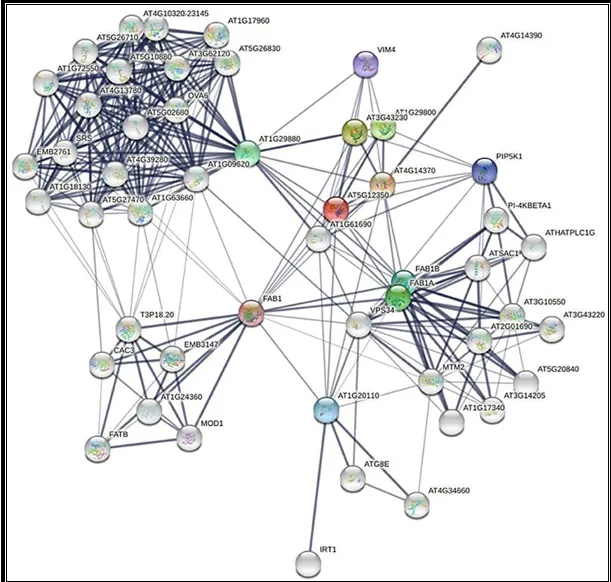
Fig.2. Construction of the protein–protein interaction network using STRING for the selected differentially expressed genes
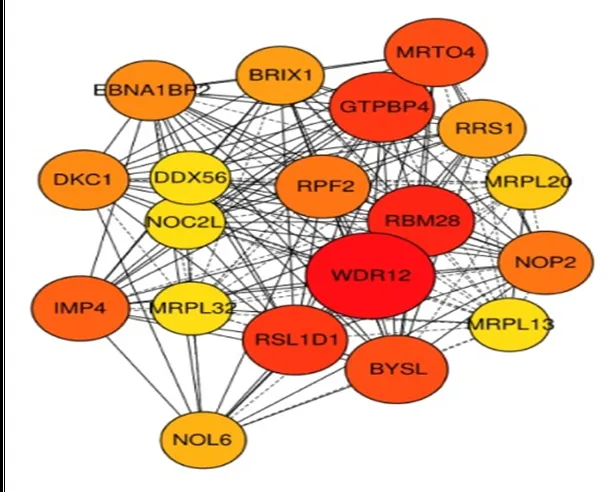
Fig.3. Identification and ranking of candidate hub genes using Cytoscape and the CytoHubba plugin.




Tanvi Sharma, Aarti Lagwal, Luvina Dogra, Dr. Anita Chauhan, Identification Of Hub Genes Associated with Ribose-5-Phosphate Isomerase A (Rpia) Dysfunction in Cenorhabditis Elegans: Insights into Disease-Relevant Metabolic Networks, Int. J. of Pharm. Sci., 2026, Vol 4, Issue 8, 4513-4526, https://doi.org/10.5281/zenodo.22129155
 10.5281/zenodo.22129155