

We use cookies to ensure our website works properly and to personalise your experience. Cookies policy
1,2,3,4,5 D. S. T. S. Mandal’s College of Pharmacy Solapur Maharashtra, India 413004
6 Department of Pharmaceutics, Associate Professor, Govt. College of Pharmacy, Karad.
Multidrug-resistant Escherichia coli is a prevalent cause of urinary tract infections (UTIs) worldwide. The fluoroquinolone resistance of E. coli is due to the presence of chromosomal mutations, efflux pumps, and oxidative stress regulatory systems that pose a serious therapeutic challenge. Drug repurposing is a relatively fast and inexpensive method to deal with the growing problem of antimicrobial resistance. In this regard, we utilize network pharmacology and molecular docking approaches to study telmisartan, a selective antagonist of angiotensin II type 1 receptors, whose pleiotropic effects include antioxidative, anti-inflammatory activities, and agonism of peroxisome proliferator-activated receptor ? (PPAR?), as a computational combination partner to ciprofloxacin for the treatment of resistant UTIs caused by E. coli. The network of resistance genes was studied using data from the CARD, KEGG, ANTIBAC, and STRING online databases and included such genes as GyrA, ParC, ParE, AcrB, TolC, and SoxR. Molecular docking analysis was performed with the help of GeinDock Suite, where the ligand was entered in SMILES format, while the protein-ligand complex was analyzed by PLIP.
UTIs have been identified as one of the leading bacterial diseases among the global population, with nearly 150 million people affected each year [1,2]. Approximately 80% of community-acquired UTIs involve Escherichia coli that increasingly develop a multidrug resistant (MDR) phenotype and demonstrate resistance against fluoroquinolones, e.g., ciprofloxacin [3,4]. Resistance in E. coli strains is achieved through the development of numerous mechanisms, such as mutations in GyrA, GyrB, ParC, and ParE genes encoding DNA gyrase and topoisomerase IV enzymes, acquisition of PMQR genes (QnrA, QnrB, QnrS, qnrE2), activation of efflux pumps AcrAB-TolC and QepA, decreased outer membrane permeability through the mutations in LamB and OmpF channels, and extended-spectrum beta-lactamases (including the NDM family) [4,5].
Drug repositioning, the discovery of novel indications for already approved medications, is currently considered a promising strategy for new antibiotic discovery due to various advantages, such as existing safety profile, clear pharmacokinetics data, and the capacity for rapid development [6,7]. Telmisartan, one of the commonly used AT1R blockers prescribed to treat hypertension, has demonstrated several additional properties including anti-inflammatory, antioxidant, and PPARγ agonist activities as well as possible antibacterial effect [8,9].
The principle of network pharmacology is based on analysis of molecular interactions combined with pathway information that allows obtaining a systems-level understanding of the multitarget pharmacological mechanism of action of a particular compound [10,11]. Together with molecular docking, predicting the interactions between the ligand and target protein molecules, this approach can provide a detailed computational evaluation of drug repurposing candidates before further testing [12].
In the current project, network pharmacology analysis complemented by molecular docking will be utilized to characterize the pharmacological effects of telmisartan in combination with ciprofloxacin on selected E. coli proteins responsible for UTI. The analysis will be performed using the CARD, STRING, KEGG, ANTIBAC, and GeinDock platforms.
2. MATERIALS AND METHODS
2.1 Drug Selection and SMILES Retrieval
The two drugs selected for this investigation were telmisartan (PubChem CID: 65999) and ciprofloxacin (PubChem CID: 2764), because of their medical significance and established antibacterial properties [13, 14]. The structures for the above mentioned drugs were acquired in the form of Canonical SMILES using the PubChem Compound database available at https://pubchem.ncbi.nlm.nih.gov/ [15].
2.2 Target Identification via CARD Database
Interactions between drugs and proteins, as well as resistance gene sets, were extracted from the Comprehensive Antibiotic Resistance Database (CARD; https://card.mcmaster.ca) [16] following these steps:
- The SMILES formula of ciprofloxacin was searched on CARD within the Open Drug Class section.
- The relevant drug sub-term and drug class were chosen to access the target gene page.
- Sequences were downloaded in FASTA format from four resistance gene categories: (i) Targeted by, (ii) Targeted by antibiotic, (iii) Confers resistance to antibiotic, and (iv) Confers resistance to drug class.
- Sequences were reduced to the Protein category and compiled into FASTA files.
The full list of target proteins identified included: gyrA, parC, parE, QepA2, LamB, NDM-33, Ib-cr6, QnrB19, QnrB20, QnrB21, QnrB3, QnrB4, QnrB43, QnrB44, QnrB45, QnrB74, QnrS11, QnrS12, QnrS15, QnrS3, QnrS7, qnrE2, soxR, soxS, AcrAB, and TolC.
2.3 PPI Network Construction and KEGG Pathway Analysis
The generated E. coli target gene list was queried in the STRING database (https://string-db.org) [17], setting Escherichia coli (taxonomic ID: 83333) as the search species. The cutoff threshold for protein-protein interactions was set at 0.700. The PPI network was further investigated based on its network topology parameters, such as degree, betweenness centrality, and clustering coefficient to find hubs. The KEGG pathway annotations available in STRING were extracted and were compared to those in the KEGG pathway database (https://www.kegg.jp) [18]. Pathway terms having a corrected p-value below 0.05 according to the false discovery rate (FDR; Benjamini-Hochberg procedure) were included in the biological interpretation process. From a total of 26 candidate proteins, a significant number of pathways from KEGG pathway analysis included annotations for six proteins, which were as follows: GyrA, ParC, ParE, AcrB, TolC, and SoxR. However, all other proteins, including the QnrB family (QnrB3, QnrB4, QnrB19-QnrB74), QnrS family (QnrS3-QnrS15), qnrE2, QepA2, NDM-33, Ib-cr6, LamB, AcrA, and SoxS, were not included in the KEGG pathway enrichment analysis since most of these proteins have plasmid-acquired resistance mechanisms that are not yet fully curated in the KEGG pathway database for E. coli K-12 reference genome [19]. One drawback that can be observed regarding the use of reference genome-based pathway databases is their focus on chromosomal rather than on mobile resistance mechanisms [16, 19]. Therefore, any further pathway-based analyses were limited only to six chromosomal proteins having KEGG annotations.
2.5 Antibacterial Activity Scoring via ANTIBAC
Telmisartan was evaluated for its possible antibacterial activity using the ANTIBAC computational model. Using SMILES strings, the predicted antibacterial activity scores, pathogen inhibition (PI) specific for E. coli, interaction profile with target proteins, and MIC range estimation were obtained. The calculated pathogen inhibition value by ANTIBAC became an index of the repurposing potential of the drug. In recent years, the computational prediction of the antibacterial activity of non-antibiotics has been shown to be important for the identification of drugs for repositioning as possible antimicrobials [20,21]. In silico studies aimed at identifying antihypertensive agents exhibiting antimicrobial activity against Gram-negative bacteria, including olmesartan and valsartan (angiotensin receptor blockers), have confirmed the reliability of scoring systems for this purpose [22].
2.6 Molecular Docking via GeinDock
Molecular docking of telmisartan against six E. coli proteins (GyrA, ParC, ParE, AcrB, TolC, and SoxR) was performed using GeinDock Suite (Geinforce Technology, geinforce.com), a powerful and reliable online docking tool utilizing artificial intelligence technology [23]. The canonical SMILES code of telmisartan (PubChem Compound ID: 65999) was used as a ligand. Automated generation of 3D structure, protonation, and optimization were carried out by the program before docking. The exhaustiveness parameter was set to 8. Crystal structures of proteins were taken from the RCSB Protein Data Bank [24] and imported in PDB format. An active site predictor, built-in into the software, was used for predicting active sites and setting up a docking search space for each protein automatically by centering it around the predicted binding pocket. Molecular docking was then done through one-click procedure and binding affinities were presented in kcal/mol. Docking poses scoring below −7.0 kcal/mol were treated as significant protein-ligand complexes [25]. The highest ranked docking poses were further analyzed, and their PDB complex files were exported. Non-covalent interactions were evaluated by the use of PLIP (Protein-Ligand Interaction Profiler) online server (https://plip-tool.biotec.tu-dresden.de), where hydrogen bonds, hydrophobic contacts, π-stacking, π-cationic interactions, salt bridges, and water bridges between atoms were detected [26,27,28].
3. RESULTS
3.1 Drug-Target Identification from CARD
Querying of telmisartan and ciprofloxacin SMILES in CARD database revealed 26 E. coli proteins associated with resistance, which include four types of proteins(Table 1): first is quinolone targets such as GyrA, ParC, ParE; second, quinolone resistance gene encoding (QNRs) such as QnrB/QnrS family, qnrE2; third, efflux pumps and outer membrane proteins such as Acr
Table 1. Drug–protein targets identified from CARD for telmisartan and ciprofloxacin in E. coli.
|
Category |
Proteins |
|
Quinolone primary targets |
GyrA, ParC, ParE |
|
Plasmid-mediated QR |
QnrB3/4/19–74, QnrS3/7/11/12/15, qnrE2 |
|
Efflux / Outer membrane |
AcrAB, TolC, QepA2, LamB |
|
Regulatory / Resistance enzymes |
SoxR, SoxS, NDM-33, Ib-cr6 |
3.2 PPI Network Analysis
Analysis using STRING revealed a dense interaction network among the 26 target proteins with a complex resistance network topology (Fig. 1). The protein GyrA appeared as a key hub, interacting with ParC, ParE, AcrB, TolC, and SoxR. The proteins AcrB and TolC formed a tightly linked efflux system, while SoxR acted as a regulatory bridge between oxidative stress signaling and efflux pump genes.
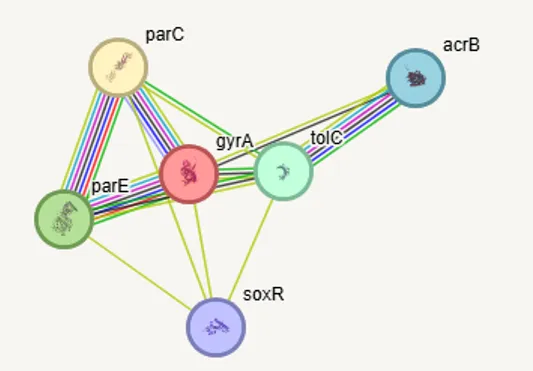
Figure 1. STRING protein–protein interaction network of 26 E. coli resistance-associated targets. Node size reflects betweenness centrality. Hub proteins (GyrA, AcrB, TolC, SoxR) are centrally positioned.
3.3 KEGG Pathway Enrichment Analysis
KEGG pathway enrichment for the six genes with chromosomal annotation (GyrA, ParC, ParE, AcrB, TolC, and SoxR) resulted in only one pathway being significantly enriched following adjustment for false discovery rate (Table 2 and Figure 2). The other 20 genes were excluded from KEGG pathway enrichment analysis since they are on plasmids or are recent variants of resistance determinants whose pathways have not been annotated for E. coli K-12.
Table 2. Significant KEGG pathway enrichment results (FDR < 0.05).
|
KEGG ID |
Pathway |
Observed Genes |
Background |
Strength |
FDR |
Proteins |
|
eco01501 |
Beta-lactam resistance |
2 |
17 |
1.91 |
0.034 |
AcrB, TolC |
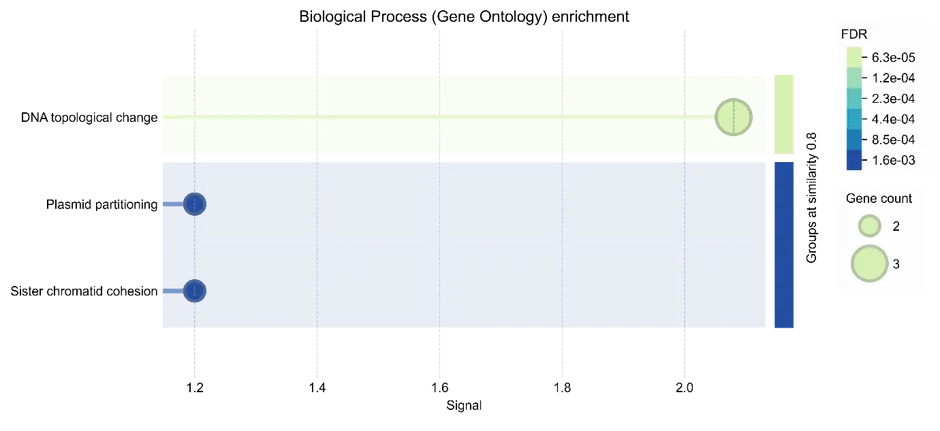
Figure 2. KEGG pathway enrichment bubble plot. Bubble size = gene count
3.4 Antibacterial Activity Scoring via ANTIBAC
The ANTIBAC computational evaluation of telmisartan against E. coli revealed a pathogen inhibition (PI) score of 0.0233 (ChEMBL354), signifying antibacterial repurposing efficacy (Table 3, Figure 3) [1]. This result suggests that telmisartan has the capability to inhibit the growth of E. coli, hence making it a potential repurposed antibacterial drug for this uropathogen.
Table 3. ANTIBAC-predicted antibacterial activity of telmisartan against Escherichia coli.
|
Parameter |
Value |
|
Target Organism |
Escherichia coli |
|
PI Value |
0.0233 |
|
ChEMBL ID |
CHEMBL354 |
|
Predicted Activity |
Moderate inhibition |
3.5 Molecular Docking
Binding affinity values of telmisartan to the six targets in Escherichia coli ranged from −7.332 to −8.724 kcal/mol, all above the defined cut-off point of ≤ −7.0 kcal/mol (Table 4). The highest binding affinity value was obtained for GyrA (−8.724 kcal/mol), while ParC (−8.651 kcal/mol) and AcrB (−8.506 kcal/mol) came second and third, ParE (−8.192 kcal/mol), TolC (−7.465 kcal/mol), and SoxR (−7.332 kcal/mol). Protein-ligand interaction analyses conducted through PLIP showed that hydrogen bonding, hydrophobic interactions, π-π stacking, and water bridges.
Table 4. Molecular docking binding affinities of telmisartan against E. coli target proteins (GeinDock Suite).
|
Protein |
Binding Affinity (kcal/mol) |
|
GyrA |
−8.724 |
|
ParC |
−8.651 |
|
AcrB |
−8.506 |
|
ParE |
−8.192 |
|
TolC |
−7.465 |
|
SoxR |
−7.332 |
All values ≤ −7.0 kcal/mol indicate significant protein-ligand interaction
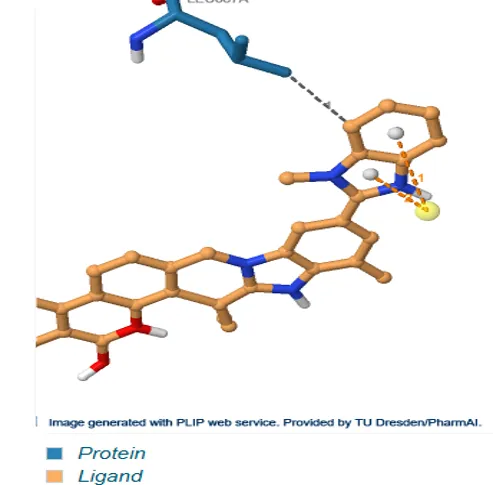
Figure 2: 3D Visualization of Telmisartan Binding Interactions at the GyrA Active Site
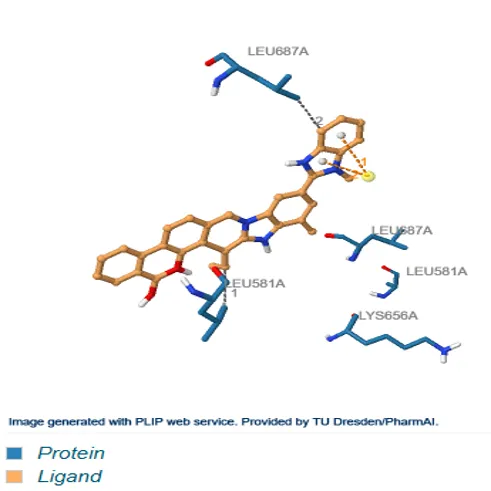
Figure 3: 3D Visualization of Telmisartan Binding Interactions at the ParC Active Site
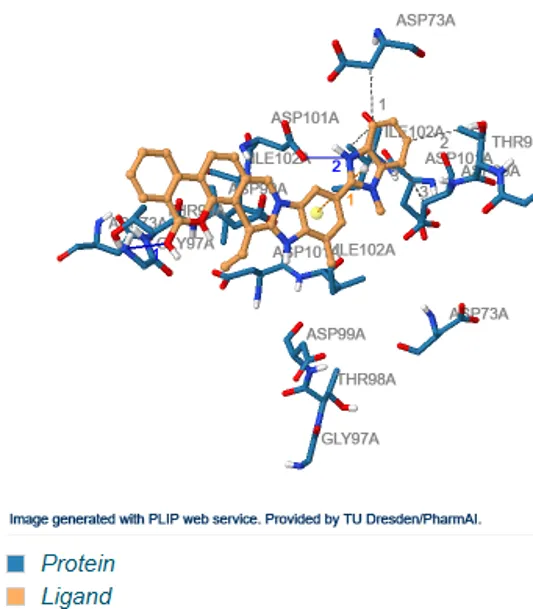
Figure 4: 3D Visualization of Telmisartan Binding Interactions at the AcrB Active Site[27,28,29]
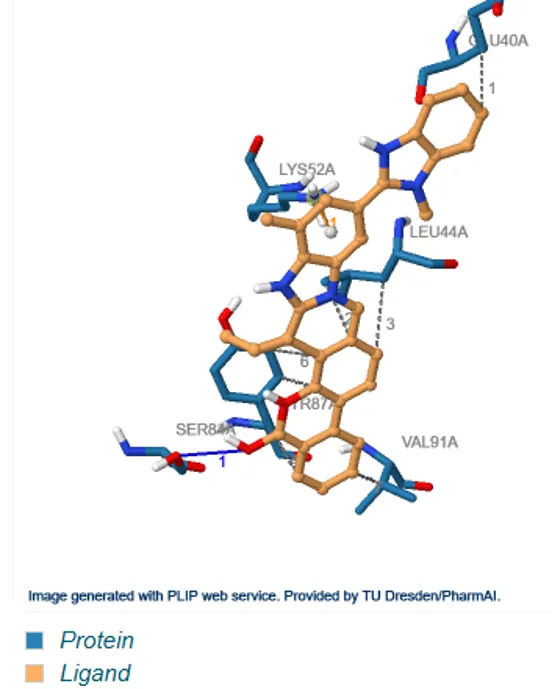
Figure 5: 3D Visualization of Telmisartan Binding Interactions at the ParE Active Site[27,28,29]
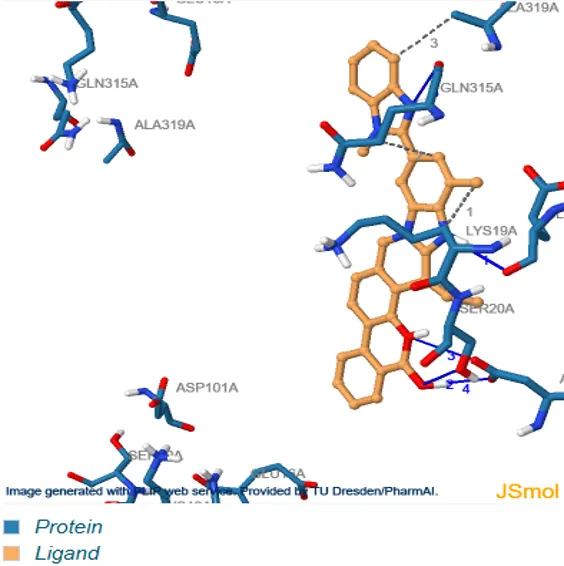
Figure 6: 3D Visualization of Telmisartan Binding Interactions at the TolC Active Site[27,28,29]
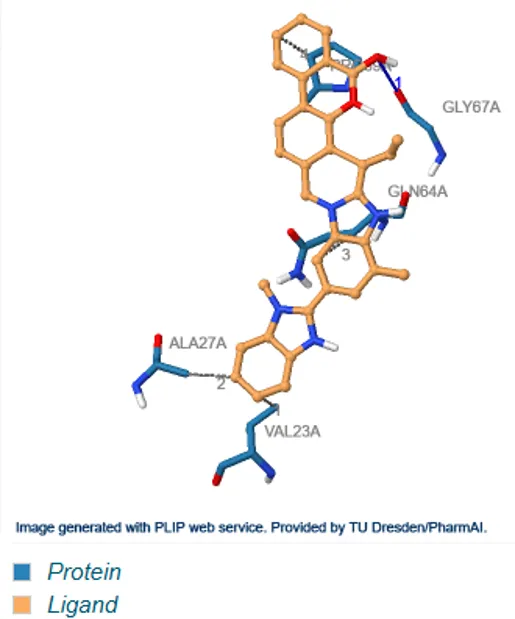
Figure 7: 3D Visualization of Telmisartan Binding Interactions at the SoxR Active Site[27,28,29]
4. DISCUSSION
This study is the first use of artificial intelligence-assisted network pharmacology and molecular docking to characterise telmisartan as a computer-based drug repurposing agent against a wide variety of resistance genes associated with the Escherichia coli resistome in the context of UTIs. The multimodal approach using CARD, STRING, KEGG, ANTIBAC, and GeinDock platforms provides the scientific basis of the in silico proof-of-concept for telmisartan repurposing as a computational drug adjunct.
The detection of 26 resistance-related targets associated with E. coli, ranging from plasmid-mediated quinolone resistance (PMQR) determinants such as the QnrB, QnrS family, and qnrE2; main fluoroquinolone targets such as GyrA, ParC, and ParE; efflux pumps such as the AcrAB-TolC complex and QepA2; oxidative stress regulators like SoxR/SoxS; and outer membrane proteins like LamB, reflects the complex structure of quinolone resistance observed in clinical UTI isolates. Telmisartan binding prediction across multiple targets from this resistance network, confirmed by CARD mapping, STRING topological analysis, and GeinDock docking profiles, provides support for the proposed mechanism of action of drug repurposing.
Particularly interesting targets for translational repurposing in the context of the UTI resistome are the QnrB and QnrS pentapeptide repeat proteins, which neutralise the inhibitory effect of quinolones by acting as gyrase mimics. Telmisartan was predicted to bind the gyrase-mimicking domain of QnrB19 and QnrS3, indicating that displacement at this site will restore sensitivity to fluoroquinolones. Thus, in addition to antagonising QnrS/QnrB expression via downregulation of SoxR/SoxS activity, telmisartan appears to have a mechanism of restoring sensitivity to quinolone antibiotics that is based on gyrase mimicry, a new mode of action for this molecule.
Inhibiting the AcrAB-TolC complex, the major determinant of E. coli intrinsic and acquired multidrug resistance, with predicted binding at AcrB at −8.506 kcal/mol, represents an effective strategy for reversing the efflux pump-mediated antimicrobial resistance phenotype. As efflux pump inhibitors, the binding of telmisartan to AcrB (hydrophobic trap component) represents an additional mechanism of action in terms of drug repurposing, since this compound might reduce efflux of fluoroquinolones and increase the concentration of the latter within uropathogenic bacteria.
The SoxR/SoxS oxidative stress response regulator, which regulates the expression of AcrAB-TolC and inhibits OmpF porin, emerges as another critical target with predicted binding at −7.332 kcal/mol. The known antioxidant and PPAR-γ agonist properties of telmisartan may thus serve to diminish the activity of SoxR/SoxS, preventing further resistance gene expression. It is interesting that telmisartan is shown to target this particular resistance.
CONCLUSION
This AI-assisted in silico study provides strong computational evidence for repurposing telmisartan as a supportive antibacterial treatment alongside ciprofloxacin for Escherichia coli urinary tract infections. By specifically targeting the E. coli UTI resistome, it engages 26 resistance-associated proteins, which include quinolone primary targets (GyrA, ParC, ParE), plasmid-mediated quinolone resistance factors (QnrB/QnrS families, qnrE2), efflux pump components (AcrAB-TolC, QepA2), and regulatory proteins (SoxR/SoxS). Using complementary mechanisms supports a multi-target approach. ANTIBAC-derived perturbation index values and GenDock binding energies, which are part of an AI-assisted network pharmacology framework, strengthen the case for this repurposing hypothesis. These findings create a solid in silico foundation for guiding experimental validation and supporting the development of telmisartan-ciprofloxacin combination therapy as a reasoned strategy against the drug-resistant E. coli UTI resistome.
FUNDING STATEMENT
The authors declare that they have no known competing financial interests or personal relationships that could have appeared to influence the work reported in this paper.
ACKNOWLEDGMENT
The authors sincerely thank the management and faculty of D.S.T.S. Mandal's College of Pharmacy, Solapur, Maharashtra, India, for providing the necessary academic support, infrastructure, and encouragement throughout the course of this research work.
The authors extend their heartfelt gratitude to Dr. Avinash Hosmani, Associate Professor, Government College of Pharmacy, Karad, for his invaluable guidance, critical insights, and continuous mentorship that greatly contributed to shaping this study.
Special appreciation is extended to Dr. Yogesh Thorat for his expert supervision and constructive feedback during the network pharmacology and molecular docking analyses.
The authors also acknowledge the contributions of Aarti Giram, Sandhya Khyamgonde, and Laxmi Kawade for their dedicated efforts and collaborative support at every stage of this work.
The authors are grateful to the developers and maintainers of the various open-access bioinformatics databases, AI-assisted tools, and molecular docking platforms utilized in this in silico study, without which this research would not have been possible.
Finally, the authors acknowledge all colleagues and well-wishers whose direct or indirect support has been instrumental in the successful completion of this research.
REFERENCES

Sakshi Bhanap, Dr. Yogesh Thorat, Aarti Giram, Sandhya Khyamgonde, Laxmi Kawade, Dr. Avinash Hosmani, In Silico Repurposing of Telmisartan as an Adjunct to Ciprofloxacin for Targeting the Escherichia coli UTI Resistome: An AI-Assisted Network Pharmacology and Molecular Docking Study, Int. J. of Pharm. Sci., 2026, Vol 4, Issue 8, 4471-4482. https://doi.org/10.5281/zenodo.22122502
 10.5281/zenodo.22122502