

We use cookies to ensure our website works properly and to personalise your experience. Cookies policy
School of Pharmaceutical Sciences SPS, VISTAS Old Pallavaram, Chennai, Tamil nadu, India 600117
Polycystic Ovary Syndrome (PCOS) is a common hormonal issue affecting 6%–26% of women who can have children. It causes problems like high male hormone levels, trouble with blood sugar, and irregular periods. Many women with PCOS have low Vitamin D, which may make these issues worse. In this review, we will be discussing about the benefits of taking Vitamin D for PCOS which may in turn help in lowering the male hormones, improving blood sugar, in helping to get regular periods, and reduction in overall inflammation. There are studies which shows that Vitamin D can lower testosterone, improve ovulation, and help with blood sugar, but results differ because studies use different doses and methods. There are several challenges includes the best dose to attain desirable effect, checking long-term effects, and understanding how Vitamin D works with other PCOS treatments. Further studies are required to assess the way to identify correct dose, long term of effects or benefits for individual persons. In this review we will be talking about how the Vitamin D can be helpful in treating the PCOS along with the treatment and about the research gaps that requires further research.
Polycystic Ovary Syndrome (PCOS) is a prevalent endocrine disorder affecting women of reproductive age, with a reported global prevalence ranging from 6% to 26%, depending on the diagnostic criteria used 1. It is a multifactorial condition characterized by hormonal imbalances, including hyperandrogenism, menstrual irregularities, and polycystic ovarian morphology 2. The pathophysiology of PCOS involves a complex interplay of genetic, hormonal, and environmental factors, leading to disruptions in the hypothalamic-pituitary-ovarian (HPO) axis, insulin resistance, and chronic low-grade inflammation 3. These hormonal abnormalities not only contribute to reproductive dysfunction but also increase the risk of developing metabolic conditions such as obesity, type 2 diabetes mellitus, and cardiovascular disease 4. Among the therapeutic approaches being explored for managing hormonal imbalances in PCOS, Vitamin D supplementation has gained considerable attention due to its potential role in modulating endocrine functions and improving metabolic outcomes 5.
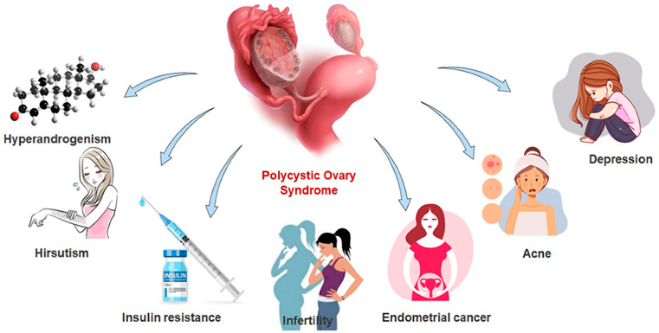
Vitamin D is a fat-soluble secosteroid that plays a crucial role in calcium and phosphate homeostasis, bone metabolism, and immune regulation 6. Beyond these traditional functions, emerging evidence suggests that Vitamin D is also involved in reproductive health through its effects on ovarian steroidogenesis, insulin sensitivity, and inflammatory pathways 7. Vitamin D receptors (VDR) are widely expressed in reproductive tissues, including the ovaries, endometrium, and placenta, suggesting that Vitamin D may directly influence key hormonal processes 8. Research indicates that Vitamin D deficiency is highly prevalent among women with PCOS, with estimates suggesting that 67%–85% of affected individuals have insufficient levels of this essential nutrient 9. This deficiency has been associated with increased insulin resistance, hyperandrogenemia, and menstrual irregularities, all of which are hallmark features of PCOS 10. Several clinical studies and meta-analyses have investigated the effects of Vitamin D supplementation on hormonal and metabolic outcomes in PCOS patients. Evidence suggests that Vitamin D supplementation may improve insulin sensitivity, reduce androgen levels, and promote menstrual regularity 11. Although the findings remain mixed, there is growing support for the hypothesis that correcting Vitamin D deficiency may alleviate hormonal imbalances and improve clinical outcomes in women with PCOS 12. This review aims to critically examine the role of Vitamin D supplementation in improving hormonal balance in PCOS patients, highlighting current evidence and future research directions.
Pathophysiology of PCOS and Hormonal Imbalance
Polycystic Ovary Syndrome (PCOS) is a complex endocrine disorder with a multifaceted pathophysiology involving hormonal dysregulation, metabolic abnormalities, and genetic predispositions 4. The primary hormonal disruption in PCOS is an imbalance in the hypothalamic-pituitary-ovarian (HPO) axis, leading to increased secretion of luteinizing hormone (LH) relative to follicle-stimulating hormone (FSH). This elevated LH/FSH ratio stimulates ovarian theca cells to produce excessive androgens, including testosterone and androstenedione 13. Elevated androgen levels contribute to the characteristic clinical manifestations of PCOS, such as hirsutism, acne, and alopecia 14 . Moreover, these hormonal disruptions impair normal follicular maturation, resulting in anovulation and the accumulation of immature follicles, leading to the polycystic morphology observed in the ovaries of affected women 3. Insulin resistance (IR) is another key feature of PCOS, present in approximately 70% of women with the condition, irrespective of body mass index (BMI) 15. Hyperinsulinemia, a compensatory response to insulin resistance, further exacerbates ovarian androgen production and reduces the hepatic synthesis of sex hormone-binding globulin (SHBG) 16. Lower SHBG levels increase the bioavailability of free androgens, intensifying hyperandrogenic symptoms 17. Insulin resistance not only contributes to reproductive dysfunction but also increases the risk of metabolic comorbidities, including obesity, dyslipidemia, and type 2 diabetes mellitus 18. This metabolic dysfunction can aggravate hormonal imbalances and further disrupt reproductive health in women with PCOS 19.
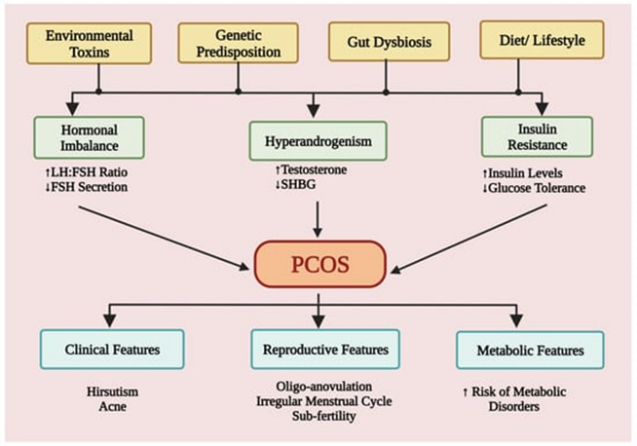
Chronic low-grade inflammation is also recognized as a contributing factor to the pathophysiology of PCOS. Increased levels of inflammatory markers such as C-reactive protein (CRP), tumor necrosis factor-alpha (TNF-α), and interleukin-6 (IL-6) are observed in women with PCOS 20. Inflammatory pathways may exacerbate insulin resistance and androgen production, creating a vicious cycle that sustains hormonal and metabolic disturbances 21. Furthermore, genetic and epigenetic factors are implicated in PCOS development, with familial aggregation studies suggesting a strong heritable component 22. Vitamin D deficiency is commonly observed in women with PCOS and may play a role in its pathophysiology by influencing insulin sensitivity and androgen regulation 9. Studies suggest that Vitamin D interacts with the insulin receptor gene and may modulate the inflammatory response 5. This deficiency is believed to exacerbate insulin resistance and hormonal imbalances, making Vitamin D supplementation a promising therapeutic strategy to address the endocrine disruptions characteristic of PCOS 11. Understanding the intricate hormonal and metabolic dysregulation in PCOS is crucial for developing targeted interventions, including the potential role of Vitamin D in mitigating these abnormalities.
The Role of Vitamin D in Hormonal Regulation
Vitamin D plays a significant role in regulating various hormonal processes in the human body, and its influence extends beyond calcium and bone metabolism. It is now recognized for its involvement in modulating endocrine functions, including insulin sensitivity, ovarian steroidogenesis, and immune regulation, which are critical factors in managing hormonal imbalances in Polycystic Ovary Syndrome (PCOS) 8 . Vitamin D exists in two main forms—cholecalciferol (D3) and ergocalciferol (D2)—and is metabolized in the liver and kidneys to its active form, calcitriol (1,25-dihydroxyvitamin D) 6. This active form interacts with Vitamin D receptors (VDR), which are widely expressed in endocrine tissues such as the pancreas, ovaries, and adrenal glands, highlighting its potential role in regulating hormonal activity 23. One of the primary hormonal disturbances in PCOS involves hyperandrogenism, resulting from dysregulation of the hypothalamic-pituitary-ovarian (HPO) axis. Vitamin D influences this axis by modulating the production of sex hormones. Studies have shown that Vitamin D supplementation can reduce serum androgen levels, including testosterone, and improve menstrual regularity in PCOS patients 24. This effect is believed to be mediated through the regulation of anti-Müllerian hormone (AMH), a marker of ovarian follicle reserve that is typically elevated in PCOS (He et al., 2015). Vitamin D appears to downregulate AMH expression, promoting follicular maturation and reducing ovarian cyst formation, thereby addressing one of the core pathophysiological features of PCOS 5. Additionally, Vitamin D plays a crucial role in modulating insulin sensitivity, which is closely linked to hormonal imbalances in PCOS. Insulin resistance (IR) is a hallmark of PCOS, affecting up to 70% of patients 3. Vitamin D is thought to enhance insulin sensitivity by activating insulin receptors and facilitating glucose transport into cells 10. This action helps to lower circulating insulin levels, which in turn reduces androgen synthesis by the ovarian theca cells and mitigates the clinical symptoms of hyperandrogenism 11. Moreover, Vitamin D reduces systemic inflammation—a contributing factor to both insulin resistance and hormonal imbalance—by downregulating pro-inflammatory cytokines such as tumor necrosis factor-alpha (TNF-α) and interleukin-6 (IL-6) (Barber et al., 2019). Emerging evidence also suggests that Vitamin D may influence adrenal androgen production, which is another source of excess androgens in PCOS. It modulates the activity of enzymes involved in steroidogenesis, thereby reducing adrenal androgen output 7. This multifaceted hormonal regulation highlights Vitamin D’s potential therapeutic role in correcting hormonal dysregulation in PCOS patients. Furthermore, Vitamin D supplementation has been shown to improve other hormonal parameters, such as lowering luteinizing hormone (LH) levels, reducing the LH/FSH ratio, and enhancing progesterone production, which contributes to ovulatory function and menstrual cycle regularity 12. In conclusion, Vitamin D plays an essential role in hormonal regulation, particularly in the context of PCOS. Through its influence on the HPO axis, insulin sensitivity, and inflammation, Vitamin D supplementation offers a promising approach to addressing the complex hormonal disturbances characteristic of PCOS. Continued research is necessary to fully elucidate the mechanisms by which Vitamin D exerts its regulatory effects and to optimize supplementation strategies for improving hormonal balance and overall health outcomes in PCOS patients 1.
Effects of Vitamin D Supplementation on Hormonal Balance in PCOS Patients
Vitamin D supplementation has emerged as a promising intervention to address the hormonal imbalances characteristic of Polycystic Ovary Syndrome (PCOS). Given the high prevalence of Vitamin D deficiency among women with PCOS, numerous studies have investigated its role in improving key hormonal parameters, including androgen levels, insulin sensitivity, and menstrual regularity 9. Evidence suggests that Vitamin D interacts with the hypothalamic-pituitary-ovarian (HPO) axis and insulin regulatory mechanisms, which are central to the pathophysiology of PCOS 24. Vitamin D receptors (VDR) are expressed in ovarian tissues, where they regulate genes involved in steroidogenesis and follicular development, highlighting its direct influence on ovarian function 8. One of the most significant hormonal effects of Vitamin D supplementation is the reduction in hyperandrogenism, a hallmark feature of PCOS. Elevated androgen levels contribute to clinical symptoms such as hirsutism, acne, and menstrual irregularities. Studies have shown that Vitamin D supplementation can reduce circulating testosterone levels by modulating androgen biosynthesis in the ovarian theca cells 11. This reduction may be attributed to the effect of Vitamin D on inhibiting anti-Müllerian hormone (AMH) production, which is typically elevated in PCOS and contributes to follicular arrest 5. Lower AMH levels following Vitamin D supplementation are associated with improved follicular maturation and ovulatory function, ultimately enhancing menstrual cycle regularity 12. Vitamin D also plays a critical role in improving insulin sensitivity, which is closely linked to hormonal disturbances in PCOS. Insulin resistance (IR) exacerbates hyperinsulinemia, which stimulates ovarian androgen production and suppresses sex hormone-binding globulin (SHBG), increasing the bioavailability of free androgens 7. Vitamin D supplementation has been shown to improve insulin sensitivity by enhancing insulin receptor expression and downstream glucose metabolism 10. This effect not only reduces hyperinsulinemia but also helps restore normal androgen levels and mitigate hyperandrogenic symptoms . A meta-analysis by Lerchbaum and Obermayer-Pietsch (2012) found that Vitamin D supplementation led to significant reductions in fasting insulin levels and homeostatic model assessment of insulin resistance (HOMA-IR) scores in women with PCOS.
Furthermore, Vitamin D supplementation appears to positively influence the regulation of luteinizing hormone (LH) and follicle-stimulating hormone (FSH). An elevated LH/FSH ratio is a characteristic endocrine abnormality in PCOS, contributing to disrupted follicular development and anovulation 3. Studies indicate that Vitamin D can lower LH levels and restore a more balanced LH/FSH ratio, thereby improving ovulatory cycles 24. Additionally, Vitamin D modulates the activity of enzymes involved in steroid hormone biosynthesis, reducing adrenal androgen production and further alleviating hormonal dysregulation 7. The anti-inflammatory properties of Vitamin D may further enhance hormonal balance in PCOS patients. Chronic low-grade inflammation is prevalent in PCOS and is associated with increased levels of inflammatory cytokines, which contribute to insulin resistance and androgen excess 20. Vitamin D exerts anti-inflammatory effects by downregulating pro-inflammatory mediators such as tumor necrosis factor-alpha (TNF-α) and interleukin-6 (IL-6), thereby improving insulin sensitivity and reducing androgen excess 21.
In conclusion, Vitamin D supplementation offers a multifaceted approach to improving hormonal balance in PCOS patients. It reduces hyperandrogenism, enhances insulin sensitivity, regulates gonadotropin levels, and mitigates inflammation. These combined effects not only alleviate clinical symptoms but also promote better reproductive and metabolic outcomes. Further large-scale randomized controlled trials are needed to optimize Vitamin D dosing strategies and fully elucidate its long-term benefits in managing PCOS 1.
Clinical Studies and Evidence Supporting Vitamin D Supplementation in PCOS
A growing body of clinical research highlights the beneficial effects of Vitamin D supplementation on improving hormonal and metabolic dysfunctions in Polycystic Ovary Syndrome (PCOS). As PCOS is a multifaceted endocrine disorder affecting reproductive, metabolic, and psychological health, the role of Vitamin D has gained attention for its potential to modulate key biochemical pathways. Numerous randomized controlled trials (RCTs) and observational studies indicate that Vitamin D supplementation positively influences androgen levels, insulin sensitivity, and menstrual irregularities in women with PCOS 9. Given the high prevalence of Vitamin D deficiency in this patient population, researchers have sought to determine the efficacy of Vitamin D in improving both hormonal balance and clinical outcomes 23. One of the most compelling pieces of evidence comes from a meta-analysis by Irani and Merhi (2014), which reviewed multiple RCTs investigating Vitamin D’s effect on hormonal parameters in PCOS patients. The analysis concluded that Vitamin D supplementation led to a significant reduction in total testosterone levels and improved menstrual regularity. Similar findings were reported by Pal et al. (2022), where Vitamin D supplementation of 4000 IU/day over 12 weeks led to decreased androgen levels and an increase in sex hormone-binding globulin (SHBG), which reduces the bioavailability of free androgens. This hormonal regulation contributes to the alleviation of common symptoms, such as hirsutism and acne, which are driven by androgen excess 12.
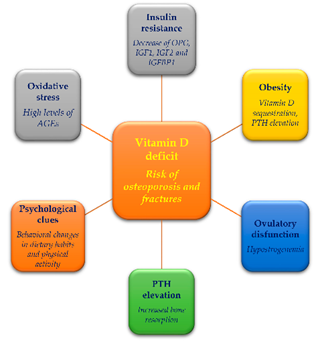
In addition to regulating androgen levels, clinical studies have demonstrated that Vitamin D improves insulin resistance, a common metabolic abnormality in PCOS. Krul-Poel et al. (2018) conducted a double-blind placebo-controlled trial where Vitamin D supplementation significantly improved fasting glucose levels and insulin sensitivity in Vitamin D-deficient women with PCOS. This effect is crucial as insulin resistance exacerbates hyperinsulinemia, which directly stimulates ovarian androgen production and disrupts follicular development 3. Another RCT by Trummer et al. (2019) found that Vitamin D supplementation over six months reduced the homeostasis model assessment for insulin resistance (HOMA-IR) index, indicating improved insulin sensitivity. These findings support the hypothesis that Vitamin D plays an integral role in glucose metabolism and its regulation may improve endocrine outcomes in PCOS. Vitamin D’s influence on menstrual regulation and ovulatory function has also been substantiated by clinical trials. Thomson et al. (2022) reported that women receiving Vitamin D supplementation experienced a significant increase in ovulatory frequency compared to the placebo group. This improvement is partly attributed to the downregulation of anti-Müllerian hormone (AMH), a marker of ovarian follicle reserve that is typically elevated in PCOS 9. Lowering AMH levels promotes follicular maturation and enhances the likelihood of ovulation. Moreover, Vitamin D supplementation has been shown to reduce luteinizing hormone (LH) levels and restore the LH/FSH ratio, both of which are essential for proper ovulatory cycles 12.
The anti-inflammatory properties of Vitamin D further underscore its therapeutic potential in PCOS management. Chronic low-grade inflammation is a well-established contributor to both insulin resistance and androgen excess in PCOS 20. Clinical studies reveal that Vitamin D supplementation reduces inflammatory markers such as C-reactive protein (CRP), tumor necrosis factor-alpha (TNF-α), and interleukin-6 (IL-6) 21. This reduction in systemic inflammation contributes to improved insulin sensitivity and hormonal regulation, providing an additional mechanism through which Vitamin D ameliorates PCOS symptoms 1. In conclusion, clinical evidence strongly supports the use of Vitamin D supplementation as an adjunctive therapy for improving hormonal and metabolic dysfunctions in PCOS patients. By reducing androgen levels, enhancing insulin sensitivity, regulating menstrual cycles, and mitigating inflammation, Vitamin D offers a multifaceted approach to addressing the complex pathophysiology of PCOS. Future large-scale, well-designed trials are necessary to establish optimal dosing regimens and long-term outcomes 7.
Limitations and Challenges in Vitamin D Supplementation for PCOS Management
Despite the promising evidence supporting the role of Vitamin D supplementation in improving hormonal balance and metabolic function in women with Polycystic Ovary Syndrome (PCOS), several limitations and challenges remain. One of the primary concerns is the variability in study designs, sample sizes, and Vitamin D dosages used in clinical research. This heterogeneity complicates the ability to draw definitive conclusions regarding the optimal dosage and duration of supplementation for effective management of PCOS symptoms . Different studies have utilized a wide range of Vitamin D dosages, from 400 IU/day to as high as 4000 IU/day, resulting in inconsistent outcomes in hormonal and metabolic parameters 8. Such discrepancies highlight the need for standardized protocols to determine the most effective supplementation regimen. Another challenge involves the complex and multifactorial nature of PCOS, which varies significantly among affected women. PCOS is characterized by diverse clinical presentations, including hyperandrogenism, insulin resistance, and menstrual dysfunction, which means that the response to Vitamin D supplementation may differ among individuals 7. While some patients experience significant improvements in androgen levels and insulin sensitivity, others show minimal or no response to supplementation 11. This variability may be influenced by genetic predispositions, baseline Vitamin D status, and other lifestyle factors such as diet and physical activity 5. As a result, a personalized approach to Vitamin D supplementation may be necessary to optimize outcomes for individual patients.
Another limitation lies in the measurement of Vitamin D status itself. Most studies assess serum 25-hydroxyvitamin D [25(OH)D] levels as a marker of Vitamin D sufficiency. However, there is no universal consensus on the optimal serum level for managing PCOS symptoms 12. Although levels above 30 ng/mL are generally considered sufficient, some researchers suggest that higher levels (40–50 ng/mL) may be required to observe metabolic and endocrine improvements in PCOS patients 24. Furthermore, factors such as Vitamin D-binding proteins and genetic polymorphisms in Vitamin D receptors (VDR) can affect the bioavailability and efficacy of supplementation, contributing to the variability in clinical outcomes 23. Compliance and adherence to supplementation also pose significant challenges. Long-term adherence to Vitamin D supplementation regimens can be difficult, particularly in populations with limited access to healthcare resources or those with low health literacy 1. Additionally, concerns about the potential risks of Vitamin D toxicity, although rare, may deter patients from consistent supplementation. Hypervitaminosis D can lead to hypercalcemia, which may result in symptoms such as nausea, weakness, and nephrocalcinosis 21. While most clinical trials have not reported adverse effects from Vitamin D supplementation, long-term safety data are still limited, especially in high-dose interventions.
The interaction of Vitamin D with other therapeutic interventions for PCOS also raises questions. Many women with PCOS are concurrently treated with medications such as metformin or oral contraceptives, which can influence hormonal and metabolic parameters 3. It remains unclear whether Vitamin D supplementation provides additive benefits or if its efficacy is diminished when combined with other treatments. Some studies suggest that combining Vitamin D with other interventions, such as omega-3 fatty acids or calcium, may enhance its effects on insulin sensitivity and androgen regulation 7. However, further investigation is required to evaluate potential synergistic or antagonistic interactions between Vitamin D and other therapeutic agents. In conclusion, while Vitamin D supplementation holds potential as a supportive treatment for managing hormonal and metabolic disturbances in PCOS, several limitations and challenges must be addressed. Variability in study designs, patient responses, and supplementation protocols complicates the establishment of definitive clinical guidelines. Future research should focus on large-scale, well-controlled trials with standardized methodologies to clarify the optimal dosage, duration, and patient selection criteria for Vitamin D supplementation in PCOS. Personalized treatment approaches that account for individual variability and potential interactions with other therapies may further improve clinical outcomes in PCOS management 5.
Future Directions and Research Gaps
Despite the growing body of evidence supporting the role of Vitamin D supplementation in improving hormonal balance and metabolic outcomes in Polycystic Ovary Syndrome (PCOS) patients, several research gaps and areas for future investigation remain. One significant gap lies in the lack of consensus regarding the optimal dosage and duration of Vitamin D supplementation. Existing studies vary widely in their supplementation protocols, ranging from low doses (400 IU/day) to high doses (4000 IU/day) administered over diverse timeframes 24. This variation complicates the ability to draw definitive conclusions and underscores the need for large-scale, randomized controlled trials (RCTs) to establish evidence-based guidelines. Future research should focus on identifying the precise dosage that achieves optimal endocrine and metabolic improvements without causing adverse effects 12. Another critical area for future investigation involves exploring the long-term effects of Vitamin D supplementation in PCOS patients. Most current studies have relatively short intervention periods, ranging from 8 to 24 weeks, which limits understanding of the sustained impact on hormonal regulation, insulin sensitivity, and reproductive outcomes 7. Long-term studies are needed to determine whether the benefits of Vitamin D persist after discontinuation of supplementation and to assess potential risks associated with prolonged high-dose intake. Furthermore, there is a lack of research on the effects of Vitamin D supplementation across different phenotypes of PCOS, as the syndrome exhibits heterogeneous clinical presentations, including varying degrees of hyperandrogenism, ovulatory dysfunction, and polycystic ovarian morphology 9. Future trials should stratify participants based on their PCOS phenotype to evaluate whether Vitamin D efficacy differs across subgroups.
The interaction between Vitamin D supplementation and other therapeutic interventions for PCOS is another unexplored research frontier. Many women with PCOS are treated with pharmacological agents such as metformin, oral contraceptives, and anti-androgens, which can influence hormonal and metabolic parameters 5. Future studies should investigate whether Vitamin D supplementation provides additive, synergistic, or potentially antagonistic effects when combined with these standard treatments. Additionally, understanding how Vitamin D interacts with lifestyle modifications, such as dietary changes and physical exercise, is essential for developing comprehensive, multimodal treatment strategies for PCOS 11. Genetic and epigenetic factors may also play a crucial role in modulating the response to Vitamin D supplementation. Variations in Vitamin D receptor (VDR) gene polymorphisms may influence individual responses to supplementation and contribute to the heterogeneity observed in clinical outcomes 3. Future research should incorporate genetic analyses to identify biomarkers that predict which patients are most likely to benefit from Vitamin D supplementation. Such personalized approaches could help tailor interventions to maximize efficacy while minimizing the risk of adverse effects. Furthermore, research exploring how Vitamin D modulates inflammatory pathways, oxidative stress, and gut microbiota composition may provide new insights into its broader biological effects and therapeutic potential in PCOS 21.
In addition to biological mechanisms, future research should address sociocultural and behavioral factors affecting adherence to Vitamin D supplementation. Many women with PCOS face challenges related to health literacy, economic constraints, and healthcare access, which can affect their ability to maintain consistent supplementation 1. Investigating patient-centered strategies to enhance adherence, such as simplified dosing regimens and community-based interventions, is vital to improving long-term outcomes. Finally, future studies should expand their scope beyond biochemical and clinical markers to evaluate the quality-of-life outcomes associated with Vitamin D supplementation in PCOS. Symptoms such as hirsutism, acne, menstrual irregularities, and infertility have profound psychosocial impacts, including anxiety, depression, and impaired body image 23. Research exploring how Vitamin D supplementation influences these patient-centered outcomes is crucial for developing holistic care models that address both the physical and psychological dimensions of PCOS. In conclusion, while current evidence suggests that Vitamin D supplementation offers promising benefits for hormonal and metabolic dysfunction in PCOS, several research gaps remain. Future studies should prioritize establishing standardized dosage guidelines, exploring long-term effects, and investigating interactions with other treatments. Incorporating genetic analyses, patient-centered outcomes, and adherence strategies will further enhance our understanding and inform comprehensive, personalized approaches to managing PCOS 7.
REFERENCES


P. Angelin Selvamani, Dr. K. Karthickeyan, Investigating The Role of Vitamin D Supplementation in Improving Hormonal Balance in PCOS Patients, Int. J. of Pharm. Sci., 2025, Vol 3, Issue 7, 65-75. https://doi.org/10.5281/zenodo.15782142
 10.5281/zenodo.15782142