

We use cookies to ensure our website works properly and to personalise your experience. Cookies policy
Sri Venkateswara College Of Pharmacy, Chittoor (AP).
Background: Epilepsy is a chronic neurological disorder characterized by recurrent seizures resulting from abnormal neuronal excitability. Although several antiepileptic drugs are available, their long-term use is often limited by adverse effects and incomplete seizure control. Medicinal plants used in traditional medicine may offer safer and effective alternatives for epilepsy management.Objective: This study aimed to evaluate the antiepileptic activity of methanolic and aqueous leaf extracts of Zappania urticifolia using standard experimental seizure models.Methods: Leaves of Zappania urticifolia were collected, authenticated, and extracted using methanol and water. Preliminary phytochemical screening was performed to identify major bioactive constituents. Antiepileptic activity was assessed in standard chemically and electrically induced seizure models in laboratory animals. Seizure onset, seizure duration, and protection against seizures were recorded and compared with those of a standard antiepileptic drug.Results: Phytochemical analysis confirmed the presence of alkaloids, flavonoids, glycosides, terpenoids, tannins, and phenolic compounds in both extracts. Both methanolic and aqueous extracts exhibited significant dose-dependent antiepileptic activity by delaying seizure onset, reducing seizure duration, and increasing protection against induced seizures. The methanolic extract demonstrated greater efficacy than the aqueous extract across the evaluated parameters.Conclusion: The findings suggest that Zappania urticifolia leaf extracts possess promising antiepileptic potential, possibly through modulation of inhibitory and excitatory neurotransmission. The superior activity of the methanolic extract indicates that it contains a higher concentration of bioactive constituents responsible for anticonvulsant effects. These results support the traditional use of Zappania urticifolia and highlight its potential as a natural source for the development of novel antiepileptic agents.
One of the most common neurological disorders in the world is epilepsy, which causes the disorder in about 50 million people and is a significant significant issue to the community. It is typified by repeated and unprovoked seizures caused by abnormal electrical activities in the brain [1]. Even though there are a number of available antiepileptic drugs (AEDs), approximately one-third of the patients are refractory or show serious side effects of undergoing long-term treatment, and safe and effective therapeutic alternatives that are more effective are highly demanded [2,3].
Plant-based remedies have been used in the traditional medicinal systems to manage various neurological diseases such as epilepsy. Bioactive secondary metabolites, including flavonoids, alkaloids, terpenoids, and glycosides, are abundant in medicinal plants and most of them exhibit neuroprotective and anticonvulsant effects [4,5]. The increasing popularity of herbal medicines all over the world is strongly contributed by the fact that these medicines are perceived to be safe, cheap and have broad therapeutic applications [6].
Zappania urticifolia (Family: Verbenaceae), also referred to as blue snake weed or nettle leaf velvet berry is a perennial herb that was very common in the tropical and subtropical areas. The plant has been used in the traditional treatment of fever, inflammatory diseases, gastrointestinal diseases and infection [7,8]. Phytochemical studies have identified the existence of iridoid glycosides, sterols, flavonoids, and phenolic compounds in the different parts of the plant and this indicates its possible pharmacological value [9].
Although it has been reported to have antioxidant, antimicrobial and cytotoxic properties, there is limited scientific evidence to support the antiepileptic effects of Zappania urticifolia [10,11]. Thus, the current experiment was done to provide systematic assessment of the antiepileptic effect of methanolic and aqueous leaf extracts of Zappania urticifolia on conventional experimental seizure models, which would provide pharmacological endorsement to its traditional usage. Phytochemical studies have indicated the occurrence of iridoid glycosides, sterols, flavonoids and phenolic compounds in different parts of the plant,
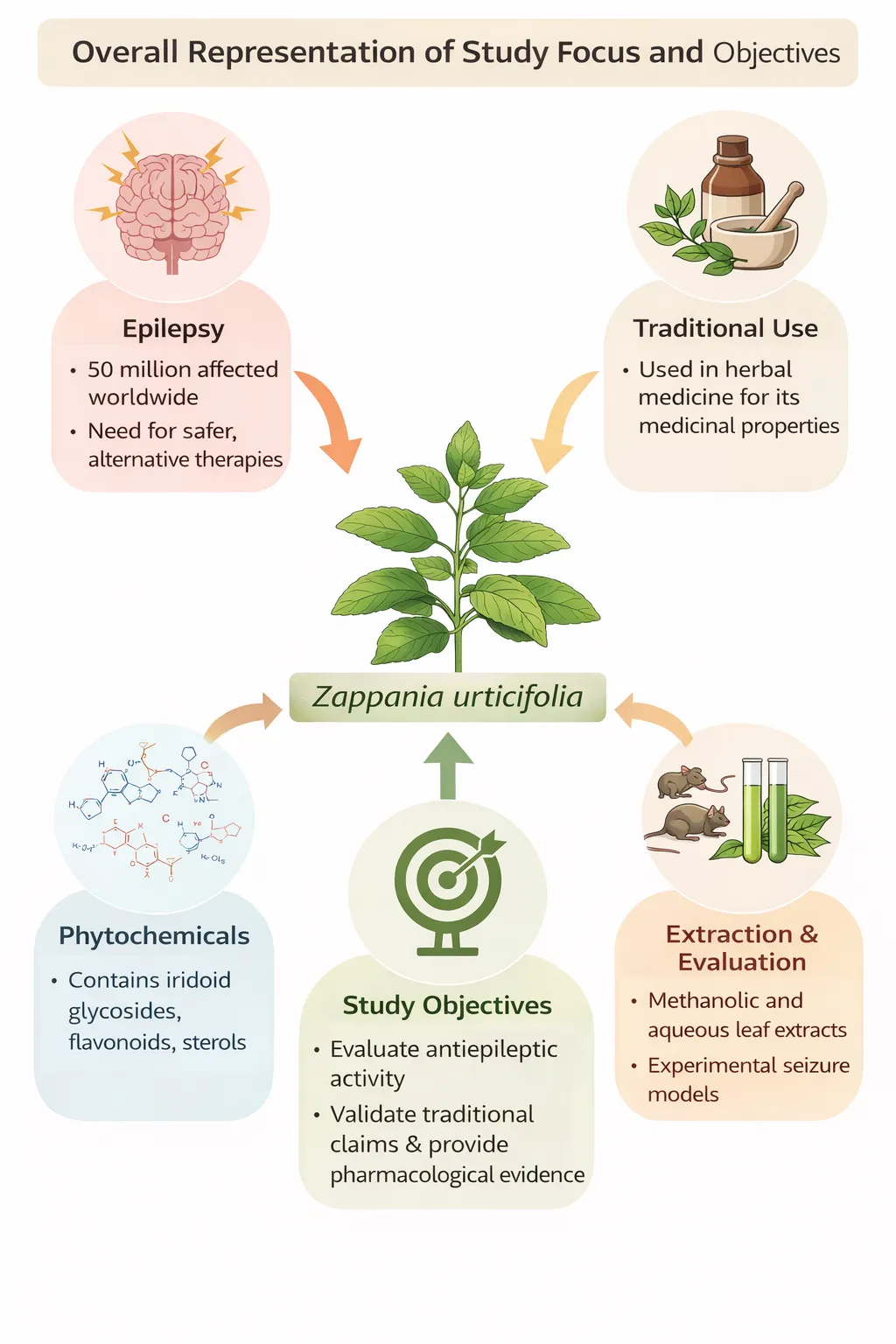
Fig – 1 Indicates Schematic representation on Zappania urticifolia
MATERIALS AND METHODS
Collection and Authentication of Plant Material.
Zappania urticifolia were fresh leaves that were taken in the local area of Nellore district, Andhra Pradesh, India, in the month of December. A qualified botanist was able to authenticate the plant material and a voucher specimen was placed in the institutional herbarium to be used in the future. The gathered leaves were first dried well under distilled water and dried at room temperature in a span of seven days and crushed into a coarse powder in a mechanical grinder to extract the required content [12,13].
Leaf Extracts Preparation Leaf extracts were prepared as follows.
Solvents methanol and distilled water were used to extract the dried powdered leaves of Zappania urticifolia. In the case of methanolic extraction, the powdered product was extracted with the help of Soxhlet equipment up to the point when the contents of the siphon tube turned colorless. The maceration using distilled water to make the aqueous extract was maintained at 24 hours with frequent shaking intervals. A rotary evaporator was used to filter and concentrate the extracts under reduced pressure to get semi-solid masses. The dried extracts were kept in airtight containers at 4 deg C pending use [14].
Primary Phytochemical Screening.
Initial preliminary phytochemical examination of methanolic extracts and aqueous extracts was conducted using the standard qualitative chemical tests to determine the presence of the major secondary metabolites. The extracts were filtered on alikanaloids, flavonoids, tannins, saponins, glycosides, phenols, steroids, and terpenoids based on standard protocols as outlined in standard pharmacognostic literature [15,16].
Experimental Animals
Albino adult rats of both sex with weight ranging between 180-220 g were obtained at a certified animal house. The cages were kept in the normal laboratory conditions (temperature 22 +- 2 degC, relative humidity 55 +- 10% and a 12 h light-dark cycle) with free access to the normal pellet diet and water ad libitum. All experiments were conducted following the provisions of the Committee for the Purpose of Control and Supervision of Experiments on Animals (CPCSEA) Government of India and were approved by Institutional Animal Ethics Committee (IAEC) [17].
Maximal Electroshock Seizure (MES) Model.
The efficacy of the extracts in the generalized tonic-clonic seizures was assessed with the help of MES model. The shock was delivered with the help of a constant current electro convulsiometer at corneal electrodes. The primary endpoint was to record the duration of the tonic hind limb extension. There was a major decrease or elimination of hind limb tonic extension that was deemed as insurance against seizures. The findings were compared to those got using a standard antiepileptic drug [18,19].
Pentylenetetrazole (PTZ)-Induced Seizure Model.
The pentylenetetrazole (PTZ), which is a GABA receptor antagonist, was used to induce seizures chemically. PTZ was given intraperitoneally to cause clonic seizures. The animals were monitored in terms of seizure, time, and death. The latency of seizure and decrease in the severity of the seizures were regarded as signs of antiepileptic action. The model is extensively applied in the assessment of drugs that are effective in absence and myoclonic seizures [20,21].
Statistical Analysis
All the experimental results were reported as mean standard error of the mean (SEM). One-way analysis of variance (ANOVA) was conducted and the suitable post hoc tests were conducted to statistically analyze the results. In differences, they were taken to be statistically significant at p < 0.05.
RESULTS
Primary Phytochemical Screening.
In a preliminary phytochemical examination on the methanolic and aqueous leaf extracts of Zappania urticifolia, it was indicated that a number of biologically active secondary metabolites were present. Both extracts were positive in flavonoids, alkaloids, glycosides, tannins, phenolic compounds and terpenoids with saponins dominating in the aqueous extract. The methanolic extract contained more steroidal compounds. The qualitative phytochemical profile indicates that the plant has compounds that have been known to have neuroprotective and anticonvulsant effects.
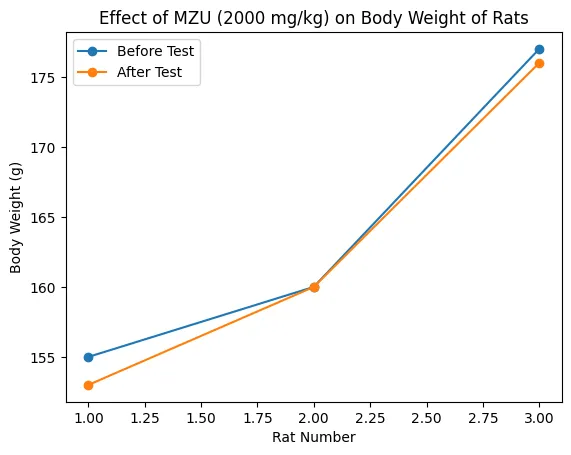
Fig – 2 represents effect of MZU on rats
Effect on Maximal Electroshock (MES)-Induced Seizures
In the MES-induced seizure model, administration of methanolic and aqueous extracts of Zappania urticifolia resulted in a significant reduction in the duration of tonic hind limb extension when compared with the control group. The methanolic extract demonstrated a dose-dependent protective effect, with higher doses showing marked suppression of seizure activity. The aqueous extract also exhibited significant anticonvulsant activity, though the effect was comparatively less pronounced than that of the methanolic extract.
Tab-1 Indicates Effect on Maximal Electroshock (MES)-Induced Seizures
|
Group |
Design of treatment |
Flexion |
Extensor |
Clonus |
Stupor |
Recovery |
% protection |
|
I |
Vehicle control |
8.90.32 |
12.210.03 |
18.780.32 |
38.20.58 |
189.2 |
0 |
|
II |
Phenytoin 2.5mg/kg. i.p. |
3.90.33 ** |
0** |
8.910.5 4** |
16.290. 35* |
93.5 |
100 |
|
III |
MZU 250mg/kg .p.o |
6.720.5 1* |
3.920.1 6** |
14.810. 36* |
31.580. 95 |
141.79 |
66.31 |
|
IV |
MZU 500mg/kg .p.o |
4.090.2 2** |
2.120.3 1** |
12.820. 85** |
16.230. 69* |
113.51 |
82.731 |
|
V |
AZU 250mg/kg .p.o |
7.040.3 5* |
4.510.1 9** |
17.550. 39* |
34.390. 54 |
146.21 |
63.56 |
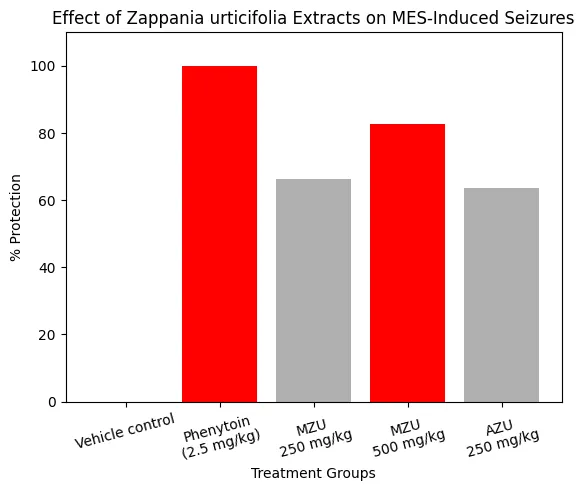
Fig – 3 represents effect of zappania urticifolia exctracts on MES- induced seizures
The standard antiepileptic drug used in this model produced complete abolition of tonic hind limb extension. The observed protection by Zappania urticifolia extracts indicates their potential efficacy against generalized tonic–clonic seizures mediated through inhibition of seizure spread.
Pentylenetetrazole (PTZ)-Induced Seizures Effect
Having PTZ-induced seizure model, methanolic as well as aqueous extracts were significant in delaying the onset of clonic seizure and decreasing seizure duration in the treated animals in comparison with the control group. The methanolic extract had a better anticonvulsant effect, which elicited a significant rise in latency to seizure onset and the decrease of severity of seizures. There was also some protection at higher doses against mortality caused by PTZ.
The water extract was found to have moderate anticonvulsant effects, which indicated the existence of aqueous-soluble neuroactive components. Findings of this model show that Zappania urticifolia extracts could be useful as inhibitory neurotransmitters or in GABAergic processes used in the control of seizures.
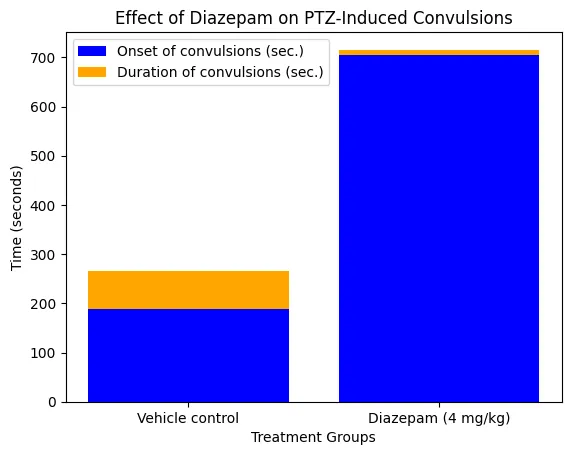
Fig – 4 Determines Pentylenetetrazole (PTZ)-Induced Seizures
DISCUSSION
The current research paper shows that the methanolic and aqueous leaf extracts of Zappania urticifolia have a large antiepileptic effect on the electrically and chemically induced seizure models. The application of MES and PTZ models offers full understanding of the anticonvulsant capability of the plant because these models replicate the various seizure types and processes that have been witnessed in the human epilepsy.
MES model is extensively used to detect the agents that are effective against the generalized tonic-clonic seizures and propagation of seizures. The tonic hind limb extension is suppressed by drugs in this model, which is thought to be inhibitory by blocking neural tissue voltage-gated sodium channels or inhibiting the propagation of the seizure by preventing neural tissue [22]. Such significant decrease in tonic hind limb extension by Zappania urticifolia extracts indicate a potential modification of sodium channel activity or neuronal membrane stabilization.
The seizure model generated by the PTZ is typically applicable in the determination of compounds that are effective against absence and myoclonic seizures. PTZ causes seizures mostly by blocking GABA A receptors which blocks inhibitory neurotransmission of the brain [23]. The delay in seizure onset and decrease in seizure duration in the case of Zappania urticifolia extracts suggest the potential increase in GABAergic transmission or the inhibitory synaptic activity.
This is because the anthaconvulsant activity of the methanolic extract is higher than that of the aqueous extract; this could be explained by the fact that lipophilic bioactive compounds like flavonoids, alkaloids, and terpenoids have higher solubility in methanol. Flavonoids are also known to bind to benzodiazepine receptors of the GABA receptors and act as anxiolytic and anticonvulsant agents [24]. It is also known that alkaloids can regulate the release of neurotransmitters and ion channels activity, a fact that also helps in suppressing seizures [25].
Also, oxidative stress has been implicated in the etiology of epilepsy, and neuronal pathology of repetitive fainting. Phenolic compounds and flavonoids occur in Zappania urticifolia which could be part of its antioxidant activity and thus provide neuroprotection and decrease the severity of seizures [26]. Therefore, the antiepileptic effect demonstrated in this paper can possibly be due to synergistic effect of many phytoconstituents with various mechanisms.
Despite the solid pharmacological evidence that the conventional use of Zappania urticifolia in the treatment of neurological disorders, additional studies should be conducted in order to isolate the active constituents, clarify the specific mechanisms, and determine long-term safety measures.
CONCLUSION
The current study shows that Zappania urticifolia leaf extracts (methanolic and aqueous) have considerable antiepileptic effects in test seizure models. The methanolic extract, especially, was more effective in the inhibition of the seizure onset and duration, which means that it has a higher proportion of pharmacologically active components. The anticonvulsant effects are possibly mediated by the action via the regulation of the GABAergic neurotransmission, inhibition of seizure propagation, and antioxidant processes.
The results offer scientific support of the conventional application of Zappania urticifolia in the treatment of epilepsy and shows its possibility as the source of new antiepileptic medications. More pharmacological and clinical research is needed to isolate active compounds, their mechanism of action and therapeutic potential on the management of epilepsy.
Limitations
The current experiment only focused on the acute experimental seizure models and might not be representative of the complicated processes that occur in the case of chronic epilepsy in humans. Crude methanolic and aqueous extracts were tested on the antiepileptic activity and the exact bioactive constituents that resulted in the observed effects were not isolated and characterized. The evidence of mechanistic understanding was indirectly obtained with the help of seizure models because no molecular or receptor-based research was conducted. Further, the chronic toxicity, pharmacokinetic and possible interactions with the traditional antiepileptic drugs have not been resolved, restricting the direct clinical application of the results.
FUTURE DIRECTIONS
The isolations, characterization and structural elucidation of the bioactive phytoconstituents in Zappania urticifolia that cause its antiepileptic properties should be the main focus of future research. Differentiation of lead compounds with better potency and selectivity can be achieved with the help of bioassay-guided fractionation. It is justified to conduct further studies based on the chronic seizure models (kindling and genetic models of epilepsy), to assess the effectiveness of the plant over time and whether it can be involved in the regulation of epileptogenesis and recurrence of seizures.
Mechanistic studies with molecular, electrophysiological, and receptor-binding techniques are required to clarify the specific mechanisms that are involved in the suppression of seizures, especially those in GABAergic and glutamatergic neurotransmission, the control of ion channels and oxidative stress. Also, full toxicity profiling, pharmacokinetic analysis, and herb-drug interactions should be analyzed to determine safety and translation relevance. Finally, to prove these preclinical results and to justify the creation of Zappania urticifolia as a new plant-based antiepileptic treatment, the well-designed clinical studies will be needed.
REFERENCES

Om Prakash Chaudary, D. Jothieswari, D. Ravi kiran, Investigation Of Extracts of Zappania Urticifolia for Antiepiletic Activity in Mes and Induced Epilepsy in Experimental Rats, Int. J. of Pharm. Sci., 2026, Vol 4, Issue 7, 4495-44502, https://doi.org/10.5281/zenodo.21491578
 10.5281/zenodo.21491578