

We use cookies to ensure our website works properly and to personalise your experience. Cookies policy
Department of Chemistry, A. R. College of Pharmacy and G. H. Patel Institute of Pharmacy, Vallabh Vidhyanagar, Anand, Gujarat, India, 388120
Magnetic herbal nanoparticles (MHNPs) have emerged as an advanced and promising approach in nanomedicine, integrating the therapeutic potential of herbal bioactive compounds with the unique magnetic properties of nanoparticles. The present review focuses on the design, synthesis, characterization, mechanism of action, applications, limitations, recent advancements, and future prospects of MHNPs in biomedical applications. A comprehensive literature survey was conducted using published research articles, review papers, and scientific databases related to magnetic nanoparticles, herbal drug delivery, and green synthesis techniques. The findings indicate that MHNPs significantly improve the bioavailability, stability, and targeted delivery of phytochemicals such as curcumin and epigallocatechin gallate. Various synthesis methods, including co-precipitation, sol-gel, hydrothermal, and plant-mediated green synthesis, have been widely explored, with green synthesis gaining attention due to its eco-friendly and biocompatible nature. The mechanism of MHNPs involves magnetic targeting, cellular uptake, and stimuli-responsive drug release, leading to enhanced therapeutic efficiency and reduced systemic toxicity. These nanoparticles have shown promising applications in cancer therapy, central nervous system drug delivery, antimicrobial activity, imaging, theranostics, and chronic disease management. However, several challenges, including toxicity concerns, nanoparticle instability, limited targeting efficiency, herbal variability, and difficulties in large-scale production, restrict their clinical translation. Recent advancements such as multifunctional nanoparticles, surface functionalization, and AI-based nanomedicine are improving their performance and expanding their scope.
Herbal medicines have been an integral part of traditional healthcare systems across the world, particularly in Ayurveda, Traditional Chinese Medicine (TCM) and other indigenous practices.[1][8] These medicines are derived from plant sources and contain a wide variety of bioactive compounds such as alkaloids, flavonoids, terpenoids, glycosides and polyphenols. Due to their natural origin, herbal drugs are generally considered safe and are widely used for the treatment of chronic diseases, including cancer, diabetes, inflammation and neurodegenerative disorders.[1][8]
Despite their therapeutic potential, the clinical application of herbal drugs is significantly limited by several pharmacokinetic challenges.[8][12]
These include poor aqueous solubility, low permeability, rapid degradation in the gastrointestinal tract and extensive first-pass metabolism. As a result, many herbal compounds exhibit low bioavailability and reduced therapeutic efficacy. To address these limitations, researchers have increasingly focused on the development of advanced drug delivery systems.[13][20]
Nanotechnology has revolutionized the field of drug delivery by enabling the design of nanoscale carriers that can improve drug solubility, stability, and targeting. Nanoparticles, typically ranging from 1 to 100 nanometers in size, possess unique physicochemical properties such as high surface area-to-volume ratio, enhanced permeability, and the ability to interact with biological systems at the molecular level. These properties make them ideal candidates for delivering therapeutic agents in a controlled and targeted manner.[8][12]
Among various types of nanoparticles, magnetic nanoparticles have attracted considerable attention due to their distinctive magnetic properties. Iron oxide nanoparticles, such as magnetite (Fe₃O₄) and maghemite (γ-Fe₂O₃), are widely used in biomedical applications because of their biocompatibility, low toxicity, and superparamagnetic behavior. These nanoparticles can be manipulated using external magnetic fields, allowing for precise targeting of drug-loaded carriers to specific sites within the body.[1][2][3]
The integration of herbal medicine with magnetic nanotechnology has led to the development of magnetic herbal nanoparticles (MHNPs), which represent a novel and promising approach in NDDS(Figure1). In this system, herbal bioactive compounds are either encapsulated within or conjugated onto magnetic nanoparticles, enabling targeted delivery and controlled release. This approach not only enhances the bioavailability of herbal drugs but also reduces systemic side effects and improves therapeutic outcomes.[7][12]
Recent studies have demonstrated the potential of MHNPs in various therapeutic applications, including cancer treatment, where targeted delivery of anticancer phytochemicals can significantly reduce toxicity to healthy tissues.[13][16]
Additionally, MHNPs have shown promise in crossing biological barriers, such as the blood-brain barrier, thereby enabling the treatment of central nervous system disorders. The ability to combine diagnostic and therapeutic functions, known as theranostics, further enhances the clinical potential of magnetic herbal nanoparticles.[6][13]
Therefore, magnetic herbal nanoparticles represent a convergence of traditional medicine and modern nanotechnology, offering a powerful platform for the development of advanced drug delivery.[18][22]
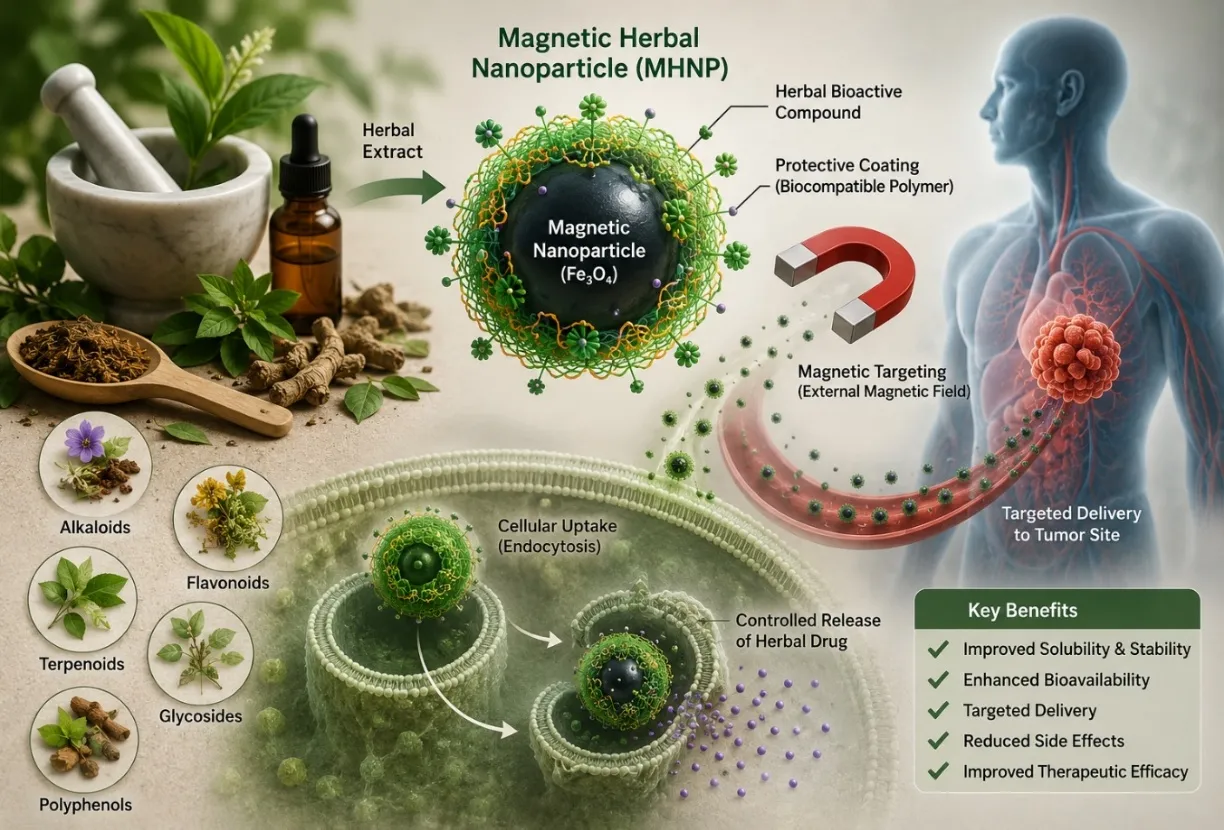
Fig1.Introduction of magnetic herbal nanoparticle
2. HISTORICAL BACKGROUND
The concept of utilizing magnetic materials for biomedical applications has evolved significantly over the past several decades. The earliest studies on magnetic particles date back to the mid-20th century, when researchers began exploring their potential in industrial and diagnostic applications. During the 1960s and 1970s, magnetic particles were primarily used for magnetic separation techniques and basic imaging applications.[3][4]
The 1980s and 1990s marked a significant turning point with the advancement of nanotechnology, which enabled the synthesis of nanoscale magnetic particles with improved properties. During this period, magnetic nanoparticles were increasingly investigated for biomedical applications, particularly in magnetic resonance imaging (MRI) as contrast agents. The development of superparamagnetic iron oxide nanoparticles (SPIONs) further enhanced their suitability for medical use due to their improved magnetic responsiveness and biocompatibility.[4][14]
In the early 2000s, researchers began exploring the use of magnetic nanoparticles for targeted drug delivery. The concept of magnetic targeting, where an external magnetic field is used to direct drug-loaded nanoparticles to specific sites, gained significant attention. This approach aimed to improve drug localization at the target site while minimizing systemic exposure.[7][12]
Simultaneously, there was a growing interest in the application of nanotechnology in herbal medicine. The limitations of conventional herbal drug formulations, such as poor bioavailability and instability, prompted researchers to develop nano-based delivery systems for phytoconstituents. Around 2010, the integration of herbal drugs with nanotechnology gained momentum, leading to the development of various nano-herbal formulations, including liposomes, phytosomes, nanoemulsions and polymeric nanoparticles.[18][22]
The concept of combining magnetic nanoparticles with herbal bioactives emerged more recently, around the last decade (2015–2025). This integration resulted in the development of magnetic herbal nanoparticles, which combine the advantages of magnetic targeting with the therapeutic potential of herbal compounds. Recent advancements in this field have focused on improving the stability, targeting efficiency, and multifunctionality of these systems, paving the way for their application in advanced drug delivery and precision medicine.[11][15]
3. Types and Classification of Magnetic Herbal Nanoparticles
Magnetic herbal nanoparticles (MHNPs) can be broadly classified based on their composition, structural design, and mode of herbal drug integration. This classification plays a crucial role in understanding their formulation strategies, physicochemical properties, and suitability for targeted drug delivery applications. By categorizing these nanoparticles, researchers can select appropriate systems depending on the therapeutic requirement, drug characteristics, and desired release profile.[2][6][14]
3.1 Classification Based on Magnetic Core Material
Based on the type of magnetic core used, magnetic herbal nanoparticles are mainly categorized into iron oxide nanoparticles, metallic magnetic nanoparticles, and ferrite nanoparticles. Among these, iron oxide nanoparticles are the most widely utilized due to their favorable properties. Magnetite (Fe₃O₄) and maghemite (γ-Fe₂O₃) exhibit superparamagnetic behavior, which allows them to respond effectively to external magnetic fields without retaining magnetism after removal of the field. These nanoparticles are highly preferred in biomedical applications because of their excellent biocompatibility, low toxicity, and ease of synthesis.[2][3]
In contrast, metallic magnetic nanoparticles such as cobalt (Co) and nickel (Ni) possess strong magnetic properties; however, their biomedical application is limited due to high toxicity and poor biocompatibility. As a result, they are rarely employed in herbal drug delivery systems. Ferrite nanoparticles, such as manganese ferrite (MnFe₂O₄) and zinc ferrite (ZnFe₂O₄), represent another important category. These nanoparticles offer tunable magnetic properties and enhanced stability, making them suitable for advanced and specialized research applications.[1][14]
3.2 Classification Based on Structure
Magnetic herbal nanoparticles can also be classified according to their structural configuration, which significantly influences drug loading, stability, and release behavior. Core–shell nanoparticles are one of the most commonly used structures, consisting of a magnetic core surrounded by a polymeric or herbal coating. This design helps in protecting the encapsulated drug, improving stability, and enabling controlled release.[5][7]
Matrix-type nanoparticles represent another structural form in which the herbal drug is uniformly dispersed throughout the nanoparticle matrix. This arrangement allows for sustained and controlled drug release over an extended period. In addition, surface-conjugated nanoparticles involve the attachment of herbal molecules onto the surface of the magnetic nanoparticle. This approach generally results in a faster drug release profile and is useful when rapid therapeutic action is required.[2][14]
3.3 Classification Based on Herbal Drug Integration
Based on the method of incorporating herbal bioactive compounds, magnetic herbal nanoparticles can be categorized into encapsulated, adsorbed, and covalently conjugated systems. In encapsulation, the herbal drug is enclosed within the nanoparticle, providing protection from degradation and improving bioavailability. In adsorption, the drug is attached to the surface of the nanoparticle through weak physical interactions, which allows for relatively faster release.[12][13]
Covalent conjugation involves the formation of strong chemical bonds between the drug and the nanoparticle surface, resulting in enhanced stability and controlled release characteristics. Each of these approaches offers distinct advantages and can be selected based on the nature of the drug and the desired therapeutic outcome.[18][20]
4. Synthesis of Magnetic Herbal Nanoparticles
The synthesis of magnetic herbal nanoparticles (MHNPs) plays a critical role in determining their physicochemical properties, including particle size, stability, drug loading capacity, and targeting efficiency. Different synthesis techniques are employed depending on the desired characteristics and intended biomedical application. Broadly, these methods can be classified into chemical methods and green synthesis approaches(Figure2).[14][18]
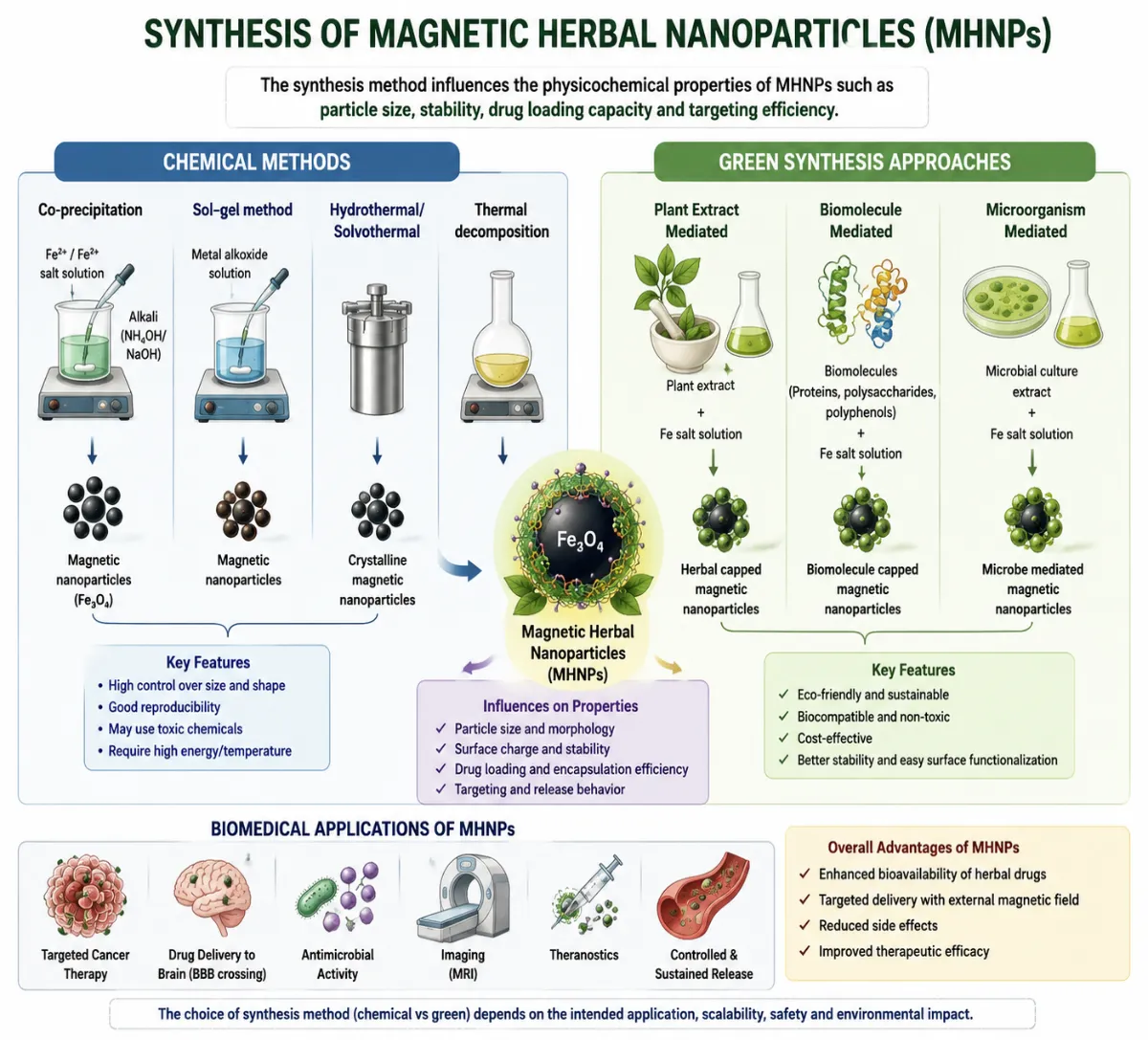
Fig 2. Synthesis of nanoparticle
4.1 Chemical Methods
Chemical synthesis methods are widely used for the preparation of magnetic nanoparticles due to their simplicity and reproducibility. Among these, the co-precipitation method is the most commonly employed technique. In this method, ferrous (Fe²⁺) and ferric (Fe³⁺) salts are reacted in the presence of a base to form magnetite (Fe₃O₄) nanoparticles. This method is highly preferred because it is simple, cost-effective, and suitable for large-scale production. However, one of its limitations is the relatively poor control over particle size and distribution under certain conditions.[18][23]
Another important method is the sol–gel technique, which is known for producing uniform and homogeneous nanoparticles with better control over morphology and particle size. Despite these advantages, the sol–gel method is relatively time-consuming and involves multiple processing steps, which may limit its practical application.[2][24]
The hydrothermal method is also widely used for the synthesis of magnetic nanoparticles. This method involves the use of high temperature and pressure conditions to produce highly crystalline and well-defined nanoparticles. The resulting particles often exhibit improved magnetic properties and structural stability, making them suitable for advanced biomedical applications.[2][16]
4.2 Green Synthesis
Green synthesis has recently gained significant attention as an eco-friendly and sustainable approach for the preparation of magnetic herbal nanoparticles. This method utilizes plant extracts such as neem, tulsi, and curcumin as natural reducing and stabilizing agents. The phytochemicals present in these extracts, including flavonoids, polyphenols, and alkaloids, play a crucial role in reducing metal ions and stabilizing the formed nanoparticles.[10][11]
The major advantages of green synthesis include its environmentally friendly nature, reduced toxicity, and cost-effectiveness. Additionally, this method eliminates the need for hazardous chemicals, making it more suitable for biomedical applications. Due to these benefits, green synthesis has emerged as a recent and highly promising trend (2018–2025) in the field of nanotechnology and is considered highly suitable for research and publication.[11][24]
4.3 Drug Loading Techniques
Drug loading is an essential step in the development of magnetic herbal nanoparticles, as it determines the therapeutic efficiency of the system. Various techniques are employed to incorporate herbal bioactive compounds into nanoparticles. Physical adsorption involves the attachment of drug molecules onto the surface of nanoparticles through weak interactions such as van der Waals forces. Encapsulation, on the other hand, involves enclosing the drug within a polymeric coating or matrix, which helps in protecting the drug from degradation and allows controlled release.[12][13]
Chemical conjugation is another important approach, in which the drug is covalently bonded to the nanoparticle surface. This method provides enhanced stability and more controlled drug release compared to other techniques. The selection of an appropriate drug loading method depends on the nature of the drug, desired release profile, and intended therapeutic application.[18][23]
5. Characterization of Magnetic Herbal Nanoparticles
Characterization of magnetic herbal nanoparticles (MHNPs) is a crucial step to ensure their quality, stability, and overall performance in drug delivery applications. Proper characterization helps in understanding the physicochemical properties of nanoparticles, which directly influence their biological behavior, therapeutic efficiency, and safety. Various analytical techniques are employed to evaluate parameters such as particle size, morphology, structural properties, surface charge, magnetic behavior, and drug loading efficiency.[14][18][22]
5.1 Particle Size and Morphology
Particle size and morphology are important factors that determine the distribution, cellular uptake, and targeting ability of nanoparticles. These parameters are commonly analyzed using techniques such as Transmission Electron Microscopy (TEM) and Scanning Electron Microscopy (SEM), which provide detailed information about the shape, size, and surface characteristics of nanoparticles. In addition, Dynamic Light Scattering (DLS) is widely used to measure the average particle size and size distribution in colloidal systems. Accurate control of particle size is essential for achieving efficient drug delivery and improved bioavailability.[6][14]
5.2 Structural Analysis
Structural characterization of nanoparticles is typically carried out using X-ray Diffraction (XRD). This technique helps in determining the crystalline nature and phase composition of the magnetic nanoparticles. XRD analysis confirms the formation of specific crystal structures, such as magnetite or maghemite, which are essential for ensuring desired magnetic properties and stability of the nanoparticles.[14][22]
5.3 Surface Charge
Surface charge plays a significant role in the stability and interaction of nanoparticles with biological systems. It is commonly measured using zeta potential analysis. The zeta potential value indicates the degree of electrostatic repulsion between particles in a suspension. Higher absolute zeta potential values generally indicate better stability, as they prevent aggregation of nanoparticles. Thus, surface charge is a key parameter in predicting the colloidal stability and shelf life of MHNPs.[6][14]
5.4 Magnetic Properties
The magnetic behavior of nanoparticles is an essential characteristic for their application in targeted drug delivery. This property is typically evaluated using a Vibrating Sample Magnetometer (VSM). VSM analysis helps in determining whether the nanoparticles exhibit superparamagnetic behavior, which is desirable for biomedical applications. Superparamagnetic nanoparticles respond to an external magnetic field but do not retain residual magnetism after the field is removed, thereby reducing the risk of aggregation in the body.[14][18][22]
5.5 Drug Loading and Release
The efficiency of drug loading and the release profile of the herbal compounds are critical for the therapeutic performance of MHNPs. These parameters are commonly analyzed using techniques such as UV–Visible spectroscopy and High-Performance Liquid Chromatography (HPLC). UV–Vis spectroscopy is used for preliminary analysis of drug concentration, while HPLC provides more precise and quantitative data regarding drug content and release kinetics. Controlled drug release is essential to achieve sustained therapeutic effects and minimize side effects.[22][26]
6. Mechanism of Action of Magnetic Herbal Nanoparticles
Magnetic herbal nanoparticles (MHNPs) exhibit their therapeutic effect through a well-organized multi-step mechanism, which enables targeted drug delivery and improved treatment efficiency. This mechanism involves several sequential stages, starting from administration to the final therapeutic action at the target site.[18][22]
Initially, the nanoparticles are administered into the body, most commonly through intravenous injection. Once introduced into the bloodstream, these nanoparticles begin to circulate throughout the body via the vascular system. Due to their nanoscale size and surface properties, they can remain in circulation for a sufficient period, allowing them to reach the desired target region.
The key step in this process is magnetic targeting. An external magnetic field is applied near the diseased site, such as a tumor or inflamed tissue. The magnetic core of the nanoparticles responds to this external field, causing them to accumulate specifically at the target site. This targeted accumulation significantly enhances drug concentration at the diseased area while minimizing distribution to healthy tissues.[23][26]
Following accumulation, the nanoparticles are taken up by the target cells through mechanisms such as endocytosis or passive diffusion. Endocytosis is the primary pathway, where cells engulf the nanoparticles into intracellular compartments. Once inside the cells, the drug release process is triggered by specific physiological conditions, including changes in pH, enzymatic activity, or temperature variations. These stimuli-responsive mechanisms ensure controlled and site-specific release of the herbal drug.[18][26]
Finally, the released herbal bioactive compounds exert their therapeutic action on the diseased cells, leading to the desired pharmacological effect. At the same time, the targeted nature of this delivery system helps in reducing toxicity and minimizing adverse effects on healthy tissues. Overall, this multi-step mechanism makes magnetic herbal nanoparticles an efficient and promising approach for targeted drug delivery.
7. Limitations of Magnetic Herbal Nanoparticles
Although magnetic herbal nanoparticles (MHNPs) offer significant advantages in targeted drug delivery, several scientific and clinical limitations still exist that restrict their widespread application. A critical understanding of these limitations is essential for improving their design, safety, and therapeutic performance in future research.[6][23]
7.1 Toxicity and Biocompatibility Issues
Despite the general perception that iron oxide nanoparticles are relatively safe, concerns regarding their long-term toxicity remain. Prolonged accumulation of these nanoparticles in vital organs such as the liver, spleen, or lungs may lead to adverse biological effects. In addition, nanoparticles can interact with plasma proteins, forming a protein corona that may trigger immune responses and alter their biological behavior. Another important issue is the generation of reactive oxygen species (ROS), which can cause oxidative stress and damage to cellular components. Therefore, careful evaluation of biocompatibility and toxicity is essential before clinical application.[22][27]
7.2 Stability Issues
Stability is a major challenge in the development of magnetic herbal nanoparticles. Due to their high surface energy, nanoparticles tend to aggregate over time, which can affect their size, distribution, and overall performance. Aggregation may also lead to a reduction in magnetic properties, thereby decreasing targeting efficiency. The stability of nanoparticles is influenced by several factors, including surface coating, pH of the medium, and ionic strength. Appropriate surface modification and formulation strategies are therefore required to enhance their stability during storage and in biological environments.[6][14]
7.3 Limited Targeting Efficiency
Although magnetic targeting is a promising approach, its efficiency is influenced by multiple physiological and physical factors. The effectiveness of targeting depends on the depth of the target tissue, blood flow dynamics, and the strength of the applied magnetic field. In deep-seated tissues, it becomes difficult to achieve sufficient magnetic force to guide nanoparticles accurately. As a result, complete localization at the desired site may not always be achieved, which can reduce therapeutic effectiveness.[18][22]
7.4 Scale-Up and Manufacturing Challenges
While the synthesis of magnetic nanoparticles is relatively simple at the laboratory scale, scaling up the process for industrial production presents significant challenges. Large-scale manufacturing requires precise control over particle size, uniformity, and reproducibility, which can be technically complex. Additionally, the cost of production increases due to the need for specialized equipment, quality control, and regulatory compliance. These factors can limit the commercial viability of MHNP-based formulations.[14][22]
7.5 Herbal Drug Variability
Another important limitation is the variability associated with herbal compounds. Herbal extracts often show batch-to-batch variation in their chemical composition due to differences in plant source, harvesting conditions, and processing methods. Furthermore, many herbal compounds are chemically unstable and sensitive to environmental conditions. This variability makes standardization difficult and can affect the consistency and reproducibility of the final nanoparticle formulation. Therefore, proper standardization and quality control of herbal materials are essential for successful application.[10][11]
8. Applications of Magnetic Herbal Nanoparticles
Magnetic herbal nanoparticles (MHNPs) have emerged as a versatile platform in modern nanomedicine due to their ability to combine targeted delivery with the therapeutic potential of herbal compounds. Their unique magnetic properties, along with the bioactivity of phytochemicals, make them suitable for a wide range of biomedical applications.[22][26]
8.1 Cancer Therapy
One of the most significant and widely explored applications of magnetic herbal nanoparticles is in cancer therapy. These nanoparticles enable the targeted delivery of bioactive phytochemicals such as curcumin, epigallocatechin gallate (EGCG), and other plant-derived compounds directly to tumor sites. This targeted approach helps in reducing the systemic toxicity commonly associated with conventional chemotherapy. Additionally, magnetic nanoparticles can be used in magnetic hyperthermia, where the application of an external alternating magnetic field generates localized heat, leading to the destruction of cancer cells. Overall, MHNPs enhance tumor targeting efficiency while minimizing damage to healthy tissues.[25][26]
8.2 Central Nervous System (CNS) Drug Delivery
Magnetic herbal nanoparticles also show great potential in delivering drugs to the central nervous system, particularly due to their ability to cross the blood-brain barrier (BBB), which is a major challenge in neurological treatments. Through appropriate surface modification, these nanoparticles can penetrate the BBB and deliver therapeutic agents directly to the brain. This approach is being explored for the treatment of neurodegenerative disorders such as Alzheimer’s disease and Parkinson’s disease. The use of MHNPs in brain targeting offers a promising strategy for improving drug bioavailability and therapeutic outcomes in CNS disorders.[17][19]
8.3 Antimicrobial Applications
Another important application of MHNPs is in antimicrobial therapy. The combination of herbal bioactive compounds with nanotechnology results in a synergistic effect that enhances antimicrobial activity. These nanoparticles have shown effectiveness against a wide range of microorganisms, including bacteria and fungi. The nano-size allows better penetration into microbial cells, while the herbal components provide natural antimicrobial properties, making MHNPs a promising alternative to conventional antibiotics.[24][25]
8.4 Imaging and Theranostics
Magnetic herbal nanoparticles are also widely used in biomedical imaging and theranostics. Iron oxide-based nanoparticles, in particular, serve as excellent contrast agents in magnetic resonance imaging (MRI), allowing improved visualization of tissues and disease sites. Theranostics refers to the combination of diagnosis and therapy in a single platform, and MHNPs are well-suited for this purpose. They can simultaneously aid in disease detection and deliver therapeutic agents, thereby improving the efficiency of treatment and monitoring.[17][19]
8.5 Anti-inflammatory and Chronic Disease Management
Magnetic herbal nanoparticles have shown promising potential in the treatment of chronic diseases and inflammatory conditions. Herbal compounds with anti-inflammatory properties can be effectively delivered using these nanoparticles to manage diseases such as diabetes, arthritis, and cardiovascular disorders. The targeted delivery system enhances therapeutic efficacy while reducing side effects, making MHNPs a valuable tool in long-term disease management.[13][25]
9. Recent Advancements in Magnetic Herbal Nanoparticles
In recent years, significant advancements have been made in the field of magnetic herbal nanoparticles (MHNPs), driven by the need for safer, more efficient, and targeted drug delivery systems. These developments have improved the functionality, biocompatibility, and clinical potential of MHNPs, making them a rapidly evolving area of research in nanomedicine.[18][22]
9.1 Green Synthesized Magnetic Nanoparticles
One of the most important recent advancements is the development of green synthesis methods for magnetic nanoparticles. This approach utilizes plant extracts as natural reducing and stabilizing agents, eliminating the need for toxic chemicals. Plant-mediated synthesis using sources such as neem, tulsi, and curcumin has gained considerable attention due to its eco-friendly nature and reduced toxicity. Recent studies emphasize that green synthesis not only enhances biocompatibility but also improves the suitability of nanoparticles for biomedical applications, making it a highly promising and publishable research trend.[14][24]
9.2 Multifunctional Nanoparticles
Another major advancement is the design of multifunctional nanoparticles that can perform multiple roles simultaneously. These nanoparticles integrate drug delivery, diagnostic imaging, and therapeutic functions into a single platform. Such systems are commonly referred to as theranostic nanoparticles. By combining these capabilities, MHNPs can diagnose diseases, deliver treatment, and monitor therapeutic responses in real time, thereby improving overall treatment efficiency.[17][19]
9.3 Stimuli-Responsive Systems
Recent research has also focused on the development of stimuli-responsive magnetic herbal nanoparticles. These systems are designed to release drugs in response to specific internal or external stimuli, such as changes in pH, temperature, or the application of a magnetic field. This controlled and site-specific drug release enhances therapeutic effectiveness while minimizing side effects. Stimuli-responsive systems represent a significant step toward precision medicine.[20][22]
9.4 Artificial Intelligence and Smart Nanomedicine
The integration of artificial intelligence (AI) into nanomedicine is an emerging and highly innovative advancement. AI-based approaches can be used to optimize nanoparticle design, predict drug targeting efficiency, and personalize treatment strategies. In the future, MHNPs are expected to be combined with AI and real-time imaging technologies to develop smart nanomedicine systems that can adapt to patient-specific conditions, thereby improving treatment outcomes.
9.5 Advances in Surface Functionalization
Surface functionalization techniques have also evolved significantly, contributing to improved performance of magnetic herbal nanoparticles. Methods such as PEGylation, ligand-based targeting, and antibody conjugation are widely used to enhance nanoparticle stability, increase circulation time, and improve targeting specificity. These modifications help nanoparticles evade the immune system and selectively bind to target cells, thereby increasing therapeutic efficiency and reducing off-target effects.[13][18]
10. Future Scope of Magnetic Herbal Nanoparticles
Magnetic herbal nanoparticles (MHNPs) hold immense future potential in the field of advanced medicine due to their unique combination of targeted delivery, biocompatibility, and multifunctional capabilities. Ongoing research and technological innovations are expected to further enhance their clinical applicability and commercial value in the coming years.[13][18]
10.1 Personalized Medicine
One of the most promising future directions of MHNPs is their application in personalized medicine. These nanoparticles can be engineered to deliver drugs based on individual patient characteristics, such as genetic profile, disease type, and physiological conditions. This patient-specific approach allows precise targeting of diseased tissues, leading to improved therapeutic outcomes and reduced side effects. As precision medicine continues to evolve, MHNPs are expected to play a crucial role in developing customized treatment strategies.[13][22]
10.2 Integration with Nanorobotics
The integration of magnetic herbal nanoparticles with nanorobotics represents an advanced and futuristic approach in drug delivery. Nanorobotic systems can potentially control the movement and release of nanoparticles within the body using external stimuli such as magnetic fields. This enables highly controlled and site-specific drug delivery, often referred to as remote-controlled therapy. Although still in the early stages of research, this technology has the potential to revolutionize targeted treatment in the future.
10.3 Advanced Cancer Treatment
Magnetic herbal nanoparticles are expected to significantly contribute to advanced cancer treatment strategies. Future approaches may involve combination therapies that integrate chemotherapy, magnetic hyperthermia, and herbal drug delivery into a single platform. This multi-modal treatment strategy can enhance the overall effectiveness of cancer therapy by targeting tumor cells through different mechanisms simultaneously, thereby improving treatment outcomes and reducing the chances of drug resistance.[14][18][23]
10.4 Clinical Translation
Despite promising research outcomes, the clinical translation of MHNPs remains a major challenge. More extensive clinical trials are required to establish their safety, efficacy, and long-term effects in humans. Additionally, regulatory approval processes for nanoparticle-based therapies are complex and require stringent quality control and standardization. Addressing these challenges will be essential for the successful transition of MHNPs from laboratory research to clinical practice.[13][22]
10.5 Commercialization Potential
Magnetic herbal nanoparticles also have significant potential for commercialization in the pharmaceutical and healthcare industries. With the increasing demand for targeted drug delivery systems, the market for nanoparticle-based therapeutics is rapidly expanding. MHNPs, due to their combined advantages of natural compounds and advanced nanotechnology, are expected to gain considerable attention from industry stakeholders. Continued research, technological advancements, and regulatory support will play a key role in their successful commercialization.[13][20]
11. CONCLUSION
Magnetic herbal nanoparticles represent a novel and highly promising approach in targeted drug delivery systems. By combining the therapeutic benefits of herbal compounds with the unique properties of magnetic nanoparticles, these systems offer improved bioavailability, controlled release, and site-specific targeting. Despite certain limitations such as toxicity concerns, stability issues, and manufacturing challenges, recent advancements in nanotechnology, particularly in green synthesis and multifunctional systems, have significantly enhanced their potential.
The integration of artificial intelligence, nanorobotics, and personalized medicine is expected to further revolutionize this field in the coming years. With continued research and development, magnetic herbal nanoparticles have the potential to transform modern therapeutics and provide safer, more effective treatment options for a wide range of diseases.
REFERENCES




Bhavika Vala*, A. Captain, J. Joshi, N. Patel, Magnetic Herbal Nanoparticles For Targeted Drug Delivery And Biomedical Applications, Int. J. of Pharm. Sci., 2026, Vol 4, Issue 10, 3358-3372. https://doi.org/10.5281/zenodo.23573854
 10.5281/zenodo.23573854