

We use cookies to ensure our website works properly and to personalise your experience. Cookies policy
PRES‘S College of Pharmacy (For Women) Chincholi, Nashik Maharashtra, India 422103
Medication adherence plays a crucial role in achieving the best possible therapeutic results while minimizing morbidity, mortality, and healthcare expenditures. Nonetheless, patients suffering from both acute and chronic conditions frequently face significant hurdles when it comes to following their prescribed medication regimens. Various factors, including forgetfulness, complicated medication schedules, side effects, insufficient understanding, financial constraints, and restricted access to healthcare, can lead to suboptimal adherence to medications. The swift advancement of digital health technologies has opened up new avenues for enhancing medication adherence and providing support to patients during their treatment journey. Interventions in digital health, such as mobile health applications, text message reminders, electronic monitoring systems for medications, telemedicine services, wearable technology, and tools powered by artificial intelligence, can offer tailored reminders, educational resources, monitoring capabilities, and foster communication between patients and healthcare providers. These tools may boost adherence by fostering patient involvement, aiding in self-management, and facilitating the early detection of issues related to adherence. This contain the medication others methods digital health intervention its types future and role of health professionals.
MEDICATION ADHERENCE:
Medication adherence refers to the degree to which a patient adheres to and strictly follows the medical instructions including medication timing, dosage and frequency. Patient compliance with disease or medication related behaviors such as Like diet, exercise or lifestyle changes.(8)
Medication adherence is defined as the extent to which Patients take their medications as prescribed and as described by Three stages: start-up, implementation and cessation.(3)
In its 2003 report on medication adherence, the WHO states that “improving the effectiveness of adherence interventions could have a far greater impact on the health of the population than any improvement in specific medical treatment.(1)
Medication adherence is an important component of disease management And treatment outcomes and is defined as “the degree to Which patients follow their medication regimen guided by Their health care professional .(2)
A huge hurdle in the modern era of advanced medicine lack of patient adherence to improve outcomes is the failure of medicine their doctors prescribed. Adherence to medication and compliance can be described as the “act of (the patient)consistent with the provider's recommendations with timing, dosage and frequency of medication taking”(6)
New findings from the World Health Organization and the National Institute for Health and Clinical Excellence indicate that between 30% and 50% of individuals suffering from chronic conditions fail to follow their prescribed medication regimens. Additional research demonstrates that the levels of non-compliance are significantly elevated and vary based on the specific illness. Among patients those diagnosed with human immunodeficiency virus infection exhibit the highest rates of adherence, in contrast to those with diabetes, who show the lowest adherence levels.(9
The average rate of medication non-adherence, which refers to the degree that patients fail to follow their medication plans as discussed with their healthcare providers, stands at 50% for individuals with chronic conditions in developed nations.(29)
DIGITAL HEALTH INTERVATION:
Digital technologies are being utilized more and more to provide these interventions, largely thanks to the increasing availability of smartphones and other technological advancements around the world. The number of individuals with internet access keeps expanding, with projections indicating there will be 5.44 billion internet users globally by 2024, representing approximately two-thirds of the entire population (Statista, 2024b). Access to smartphones stands at 69% across the globe (Statista, 2024c), with particularly high usage rates in the United Kingdom at 84% (Statistics, 2020) and the United States at 90% (Center, 2024). Over the last decade, interest in and the application of digital healthcare have significantly increased, especially following the onset of the COVID-19 pandemic in 2020 (Mahajan et al., 2021; Mosnaim et al., 2020). (4)
Growing in popularity, digital health interventions, commonly known as mHealth or eHealth, harness various digital, mobile, and wireless technologies to enhance health access within healthcare systems amid a rising demand for reliable health coverage. These solutions integrate digital tools aimed at promoting health and preventing illness, frequently through monitoring and communication strategies. They can be accessed via personal computers or mobile applications on devices like iPads, Android tablets, smartphones, and smartwatches. (27)
Digital mental health interventions for self-help have been proposed as a cost-effective and scalable solution to enhance access to mental health care. A study led by Nakamura and his team conducted a single-blind, two-group, individually randomized controlled trial in 46 primary care centers located in Guarulhos, Brazil. The research involved adults aged 60 and over exhibiting subthreshold depressive symptoms (with scores ranging from 5 to 9 on the Patient Health Questionnaire-9) who were assigned to a 6-week intervention group. This group received 48 automated messages via WhatsApp concentrating on psychoeducational and behavioral activation, in contrast to a control group that only received one message regarding depression.(30)
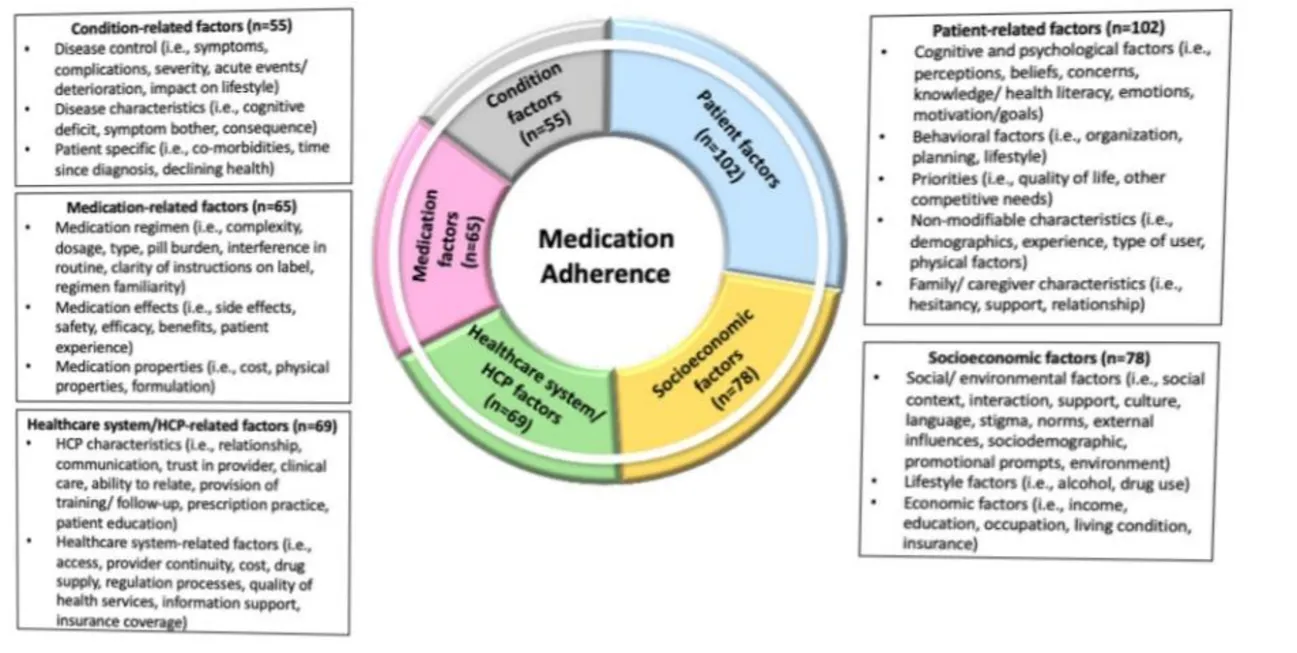
Factor affecting Medication Adherence:
METHOD:
The review was performed in line with the a priori protocol registered with PROSPERO, the international systematic review registry, hosted by the National Institute for Health and Care Research (NIHR) (registration number CRD42024601867). The methods used in this review were structured according to the Cochrane Handbook for Systematic Reviews of Interventions, version 6.2. 26 However, the meta-analysis was performed using JBI SUMARI software due to changes in institutional availability and the inclusion of randomized controlled trials (RCTs) and observational studies.(29)
1. Inclusion criteria:
We included a study if it fulfilled the following inclusion criteria met: (1) the study described a patient-centered Internet intervention, (2) the study described an intervention for patients(3) who take prescription medication for a chronic condition, adherence was at least one of the outcome measures, (4) the study was quantitative, and (5) published in either the English or Dutch.(9) Extracted data were descriptively synthesized and the historical evolution of the field was analysed. An initial new taxonomic approach was derived based on the different conceptual approaches identified in the literature review and discussed internally within the ABC project team in June 2009 in Aberdeen, UK. The taxonomic approach was then reviewed in light of the papers identified and redefined in June–August 2009.(28) Studies comparing the intervention with standard care (i.e. no DHI) were included in this review. This involved written, verbal, and pictorial instruction and pamphlets. Outcomes Studies assessed the outcome of medication adherence by patients (e.g., self-report, pill count, prescription retrieval), or defined from included studies. Outcomes at 1, 3 and 6 months were included as available from included studies data. Types of study The study designs included RCTs, quasi-experimental trials, case-control studies and cohort studies.(27)
Identification & Screening of Studies
Records identified through database searching
[n=___]
↓
Records with duplicates removed
[n=___]
↓
Title and abstract screened Records
[n=___]
↓
Full-text articles assessed for eligibility
[n=___]
↓
Studies that meet inclusion criteria
✓ Internet intervention that is patient-centered
✓ Intervention administered to patients
✓ Patients on chronic condition prescription medication
✓ medication adherence was an outcome measure
✓ Research study (quantitative)
✓ Gepubliceerd in het Engels of Nederlands
↓
Studies included for review
[n=___]
2. Search Criteria:
Electronic databases (PubMed, Embase, CINAHL, SScopus and Web of Science) were searched from inception to 14 May 2025. Keywords, synonyms, MeSH terms, Emtree and CINAHL subject headings were combined using Boolean operators (File S1) for three concepts: ‘older people’, ‘digital health interventions’ and ‘medication adherence’. We also hand-searched reference lists of related articles and reviews. d. Only original peer-reviewed articles in English were included. d. Citations were uploaded to Covidence systematic review software (Veritas Health Innovation, Melbourne Australia); duplicates were removed and screening was completed in two stages. Two reviewers independently screened title and abstracts and full texts. Differences were settled by discussion. (13)
The resources we use to sreach is , example
1. Research gate
2. Science direct
3. Pune mad
4. Google scholar
5. Willey online library
6. International journal of pharmaceutical science
3. Eligibility Criteria:
Studies that met the eligibility criteria included the following: (1) a randomized controlled trial featuring a standard care control group; (2) implementation of an interactive eHealth intervention targeting either the patient or their caregiver; (3) medication adherence identified as the main outcome; (4) an overall participant count of a minimum of 50 adult individuals utilizing long-term medication as specified by Zwikker et al.(10) Research involving solely individuals below the age of 65 or lacking distinct age specifications. Investigations where digital health was not the primary focus, or merely served as an auxiliary element, to guarantee that the influence of the digital aspect on adherence to medication could be distinctly evaluated. Studies that did not include a comparison group. Methodological outlines, presentations from conferences, viewpoints, editorial writings, critiques, or literature reviews.(15)
4. Data Extraction:
Data were collected independently by two reviewers (LCA and AK) through a tailored data extraction form. Baseline features of participants were gathered, which included factors like age and gender. Information regarding medication adherence was sourced either from published studies or by reaching out to the authors of the original research via email. In instances where two different adherence measurements were provided, the one deemed most relevant to the outcome metrics of the other studies included was selected for the meta-analysis. For instance, one research project measured adherence in terms of how many times a patient used an electronically monitored dispenser and the weight of the dispensing container during follow-up. The reviewers concurred that the dispensing action was more aligned with measures from the other studies incorporated.(17)
5. Quality Assessment:
The possibility of bias was evaluated by two evaluators, utilizing the quality rating instrument from the Cochrane Handbook for Systematic Reviews of Interventions. We classified the likelihood of bias as high, low, or uncertain for each of these areas: random sequence generation, allocation concealment, blinding of both participants and personnel, blinding of outcomes assessment, incomplete outcomes data, selective reporting of outcomes, and other types of bias.(14)
6. Study Design:
A randomized two-arm pre-posttest control group approach was utilized with a follow-up duration of 12 weeks. All individuals involved received standard treatment, whereas those in the intervention group also installed and utilized the Medisafe application on their personal smartphones throughout the research.(18)
7. Risk of Bias Assessment :
Cochrane's tools for evaluating risk of bias were utilized to evaluate the methodological caliber of the research, specifically employing the RoB 2 tool for randomized controlled trials, which also includes the version tailored for cluster-randomized trials. For non-randomized studies, the ROBINS-I version 2 was utilized.
Two reviewers conducted an independent evaluation of each study, and any differences in opinion were settled through discussion. The Cochrane RoB 2 Excel tool was implemented for the assessment of RCTs, while a modified Excel tool based on earlier research was used for ROBINS-I evaluations. A diagram illustrating the RoB assessments, known as the traffic plot, was created with the use of the robvis Shiny App. (2)
8. Study Outcomes:
The results of the research highlighted the approval and practicality of MPO and PRA, as well as their integration, from the viewpoints of both participants and caregivers by utilizing mixed methods. The quantitative evaluation of usability used the System Usability Scale (SUS), which was gathered separately for both MPO and PRA. Assessments of acceptability and feasibility were conducted through guided group discussions (FGD) with participants and detailed interviews (IDIs) with caregivers. One of the exploratory endpoints involved evaluating modifications in medication adherence through the Medication Adherence Rating System-5 (MARS-5) and counting pills.(21)
RESULT:
The search of literature led to a total of 527 entries from various databases. Subsequently, 340 items were removed from consideration due to their repetitive nature during the first screening process. Out of the remaining 187 records, titles and abstracts were evaluated, which narrowed it down to just 77 for comprehensive text examination. Ultimately, 67 entries were ruled out, and only 10 that fulfilled the inclusion criteria were taken into account.(26) We presented a descriptive summary of the insights gathered from the studies that were selected. The findings were assessed through thematic content analysis. The review group examined the significance of the data results to understand their relevance to the research goals and objectives.(24)
DIGITAL HEALTH INTERVENTION:
Digital mental health interventions for self-help have been proposed as a cost-effective and scalable solution to enhance access to mental health care. (30)
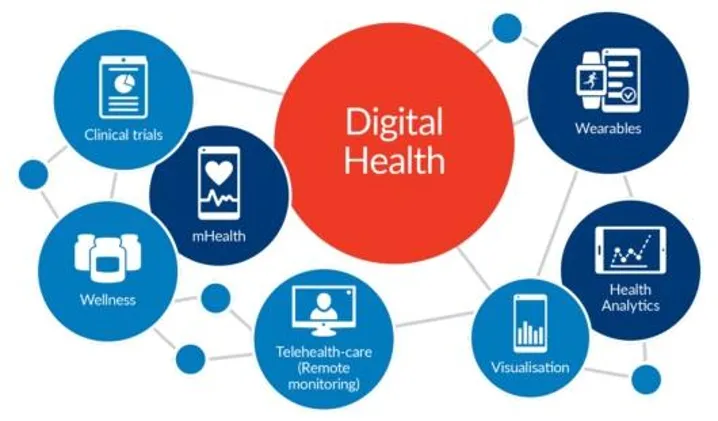
Digital health tools include a wide variety of resources designed to assist in health management and improve outcomes. Key technologies encompass: (11)
a. Mobile Health Applications (mHealth Apps)
b. Information and Communications Technology (ICT)
c. Telehealth Services
d. Wearable Devices
e. Remote Patient Monitoring (RPM)
f. Artificial Intelligence (AI) and Machine Learning
|
Technology |
Function |
Example |
|
Mobile Health Applications |
|
My Meds, Medisafe, Pill Reminder |
|
Wearable Technology, |
Tracks vital signs, monitors medication adherence |
Fitbit, Apple Watch
|
|
Remote Patient Surveillance (RPS) |
Tracks the health of patients from a distance
|
Tytocare, iHealth
|
|
Telemedicine Services |
Facilitates online consultations and health monitoring |
Amwell, Doctor on Demand |
|
AI-powered chatbots |
Machine Learning Tailored interventions through data evaluation |
support systems for decision-making |
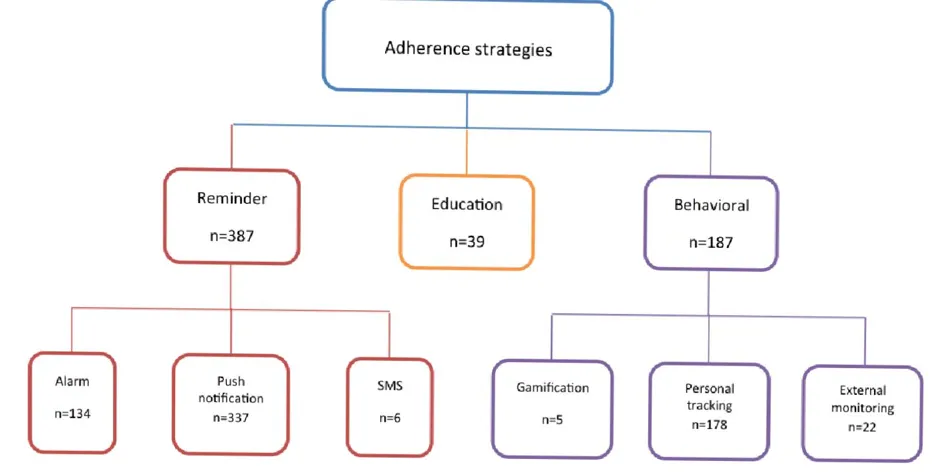
Nearly every application examined included some form of a reminder feature to support medication compliance, with a total of 387 apps representing 92.1% (387 out of 420) of those analyzed. The predominant subcategory was Push Notifications, employed by 80.2% (337 out of 420) of the apps. In second place were Alarms, which were featured in 134 applications, while a mere 1.4% (6 out of 420) of the apps integrated SMS Reminders.(6).
An application like Perx can be utilized in clinical environments outside of research for routine practice. Users with smartphones can install and utilize this application; however, adding additional languages and features for screen reading will enhance its accessibility. It is essential to implement measures that prevent the app from exacerbating health disparities among individuals who lack access or face language obstacles. Furthermore, integrating the app with pharmacy and general practice services may enhance its overall effectiveness. To evaluate and guarantee the app's feasibility and effectiveness on a broader level, it could be beneficial to consider more qualitative and implementation research, including cost-effectiveness analyses from the perspective of healthcare providers.(7)
Telehealth refers to the provision of healthcare services through advanced communication technologies from a distance. The synergy of breakthroughs in medical devices, software development, data management, and communication methods has transformed telehealth into an invaluable resource. This encompasses various practices and specialties, as exchanges between healthcare providers and patients occur through phone calls, emails, video conferences, the Internet, and remote monitoring tools. By minimizing the necessity for travel and lengthy waiting times, telehealth enhances operational efficiency without raising overall costs. It also extends healthcare access to those residing in isolated or underrepresented regions and ensures that patients receive care that is of equal or superior quality. Moreover, the convenience, improved access to services, and reduced anxiety associated with telehealth can lead to higher levels of patient satisfaction.(11)
Smartwatches like the Apple Watch and Fitbit are increasingly integrated into systems that remind users to take their medications. The advantages are clear. Notifications, alerts, and visual cues are sent directly to a user’s wrist. No need for a phone. For many, this simplifies things—resulting in fewer distractions from devices and quicker reminders. A randomized controlled trial explored the usage of a medication-alert wristwatch among older adults. What did they find? Over a span of 12 weeks, participants showed considerably improved adherence to their medication routines and gained increased confidence in managing their prescriptions. Additionally, the average systolic blood pressure improved to around 120 mm Hg, in contrast to about 142 mm Hg in individuals without the device (p < 0.001). Various scoping reviews support this overall trend—wearable technology appears effective in aiding individuals across different health issues through those consistent nudges—vibrations, sounds, flashes—delivered to a location that is hard to overlook.(12)
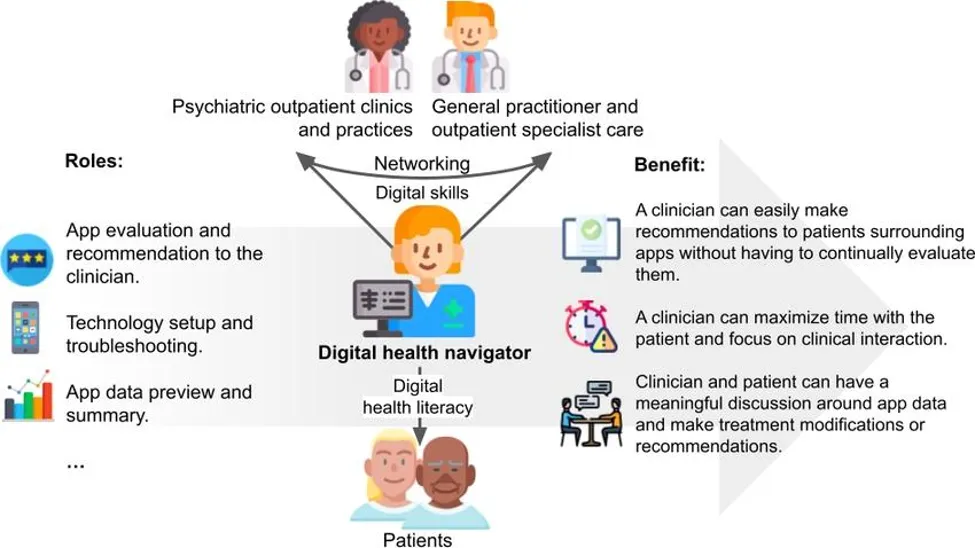
Healthcare providers and policy makers carry a significant obligation to actively engage patients in the collaborative process of care design and decision making, as well as to assist them in navigating a vast array of digital health tools. If this involvement is lacking, patients might resort to unproven alternatives or digital solutions that they cannot fully understand on their own. By fostering shared responsibility, doctors can also alleviate the strain associated with selecting appropriate treatments and managing the impacts of those choices. Disruptive innovations have the potential to eliminate the monotonous aspects of their roles, allowing more room for personalized attention and focus on patient interactions. Skills that are difficult to replicate, such as compassion, social support, and the human connection, are central to delivering quality care. (22)
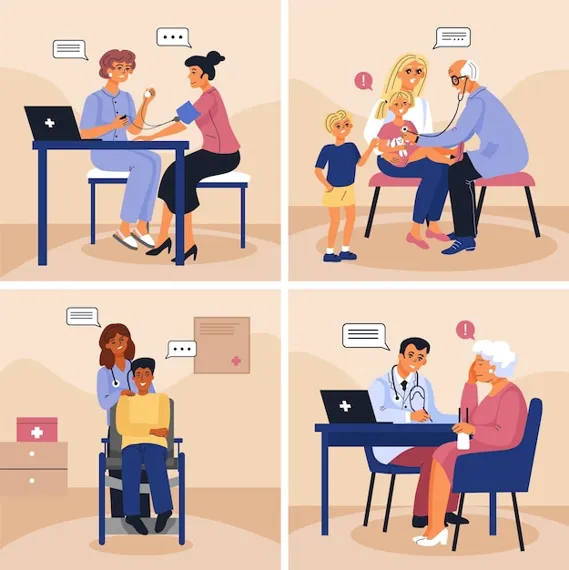
The utilization of digital health demands teamwork, signaling the end of the era of solitary physician heroes. The effectiveness of care is reliant on collaboration, understanding, and collective decision-making. Achieving this requires a redefined partnership between patients and their healthcare providers. A well-functioning relationship between patients and physicians remains a fundamental component of healing; a significant study indicated that a physician's empathy can notably impact diabetic patients' objective lab results, complication rates, and overall subjective well-being. (22)
ARTIFICIAL INTELLIGENCE:
Mobile applications driven by Artificial Intelligence (AI) utilize logical algorithms that can learn from information and autonomously make decisions based on broadly applicable principles (Zavaleta-Monestel et al., 2025). These apps have demonstrated their usefulness in tracking and enhancing medication adherence (Zavaleta-Monestel et al., 2025). A research project carried out by Labovitz et al. (2017) led to the creation of an AI-centric smartphone application designed for stroke survivors undergoing direct oral anticoagulant therapy. This app employed a neural network to recognize the patient and the medication prescribed, verify ingestion via the phone's camera, and issue reminders for medication. The findings indicated that users of the app exhibited a 100% adherence rate, in stark contrast to just 50% within the control group, alongside receiving favorable feedback from patients. Nonetheless, due to its small sample size (n = 28), additional studies involving larger cohorts are essential to assess its long-term impact. In a similar vein, Bain and their research team (Bain et al., 2017) employed an AI system that featured facial recognition and drug verification for the real-time observation of schizophrenia patients throughout a 24-week clinical investigation. Results showed that adherence rates in the group monitored by AI surpassed those in the control group—receiving modified direct observation therapy—by 17.9%. Additionally, a voice-driven conversational AI application was tested in a clinical trial to assist patients with type 2 diabetes (Nayak et al., 2023). The findings revealed that insulin adherence in the AI-voice group outperformed the standard care group by 32.7%. (32).
ROLE OF HEALTH CARE SERVICES:
CONCLUSION
This comprehensive analysis suggests that smartphone application interventions aimed at medication adherence correlate with increased self-reported compliance to prescribed drugs. Digital adherence technologies are no longer peripheral; they have established themselves as essential components of managing chronic diseases. The evidence is consistent across various conditions: diabetes, hypertension, asthma, and HIV—all show improvements in adherence, along with enhanced clinical results. The latest advancements—personalization through artificial intelligence, adherence to interoperability standards, and innovative behavioral design—raise the bar even higher. Significant initiatives like the WHO Global Strategy on Digital Health and India's Ayushman Bharat Digital Mission are creating the necessary policy framework to further this development.
The results of this review revealed that adhering to medications is a complex and multi-faceted issue that requires attention on various levels. It is essential for healthcare professionals and policy makers to direct more resources towards enhancing patient adherence to medication. This goal can be accomplished through increased interactions between healthcare providers, including physicians, pharmacists, and nurses, and their patients during routine follow-up visits and appointments. Additionally, healthcare providers should design personalized intervention programs aimed at addressing the barriers to adherence, fostering a reliable relationship between patients and their care teams. Pharmacists ought to adopt diverse and tailored approaches to improve medication compliance. They should strive to simplify, regularize, and standardize the processes related to taking and refilling prescriptions.
REFERENCES

Asmita Bhosale, Diksha Jadhav, Dhanashri Ghotekar, Rajeshwari Gangad, Medication Adherence: Digital Health Interventions, Int. J. of Pharm. Sci., 2026, Vol 4, Issue 10, 1551-1562. https://doi.org/10.5281/zenodo.23330725
 10.5281/zenodo.23330725