

We use cookies to ensure our website works properly and to personalise your experience. Cookies policy
Department of Pharmaceutical Quality Assurance, Vidyabharti College of Pharmacy, Amravati, Maharashtra, India.
High-Performance Liquid Chromatography (HPLC) remains one of the most widely used analytical techniques for the quantification and quality control. Today HPLC is widely applied for separations and purifications in a variety of areas including pharmaceuticals, biotechnology, environmental, polymer and food industries. HPLC is just one type of liquid chromatography, meaning the mobile phase is liquid. Analytical method development and validation play important role in the drug discovery, drug development and manufacture of pharmaceuticals. It involves detection of the purity and toxicity of a drug substance. This review focuses on the systematic approach to method development and validation of HPLC methods. Key parameters such as selection of mobile phase, stationary phase, detection wavelength, and sample preparation are discussed. Validation is performed according to regulatory guidelines, including specificity, linearity, accuracy, precision, robustness, and sensitivity. The review highlights best practices and challenges encountered during analytical method development.
High-performance liquid chromatography (HPLC) stands as a powerful analytical tool in modern chemistry. It excels at identifying, measuring, and separating components within liquid-dissolved samples. Widely employed in pharmacological
product analysis, HPLC is prized for its precision in both quantitative and qualitative assessments, contributing significantly to advancements in analytical chemistry. In high-performance liquid chromatography (HPLC), a sample solution (stationary phase) is injected into a porous column. A liquid (mobile phase) is then pumped through the column at high pressure. Components in the sample exhibit different migration rates through the column due to partitioning between stationary and mobile phases. This leads to elution at distinct times, allowing separation. HPLC's precision arises from nuanced component behaviors during partitioning, offering a robust method for analyzing diverse samples in fields like pharmaceuticals and analytical chemistry.1,2
High-performance liquid chromatography, also referred to as high-pressure liquid chromatography, is a kind of liquid chromatography. The method is widely used in analysis to identify, measure, and separate the constituent parts of a mixture. A more sophisticated kind of column liquid chromatography is called high-performance liquid chromatography (HPLC). Gravity normally drives the solvent through the column, but the high pressures of the HPLC process compress the solvent up to 400 atmospheres, enabling the sample to be divided into different constituents according to variations in relative affinities.3,4
The separation process can take four various forms depending on the nature of the stationary phase.
HPLC is preferred due to its
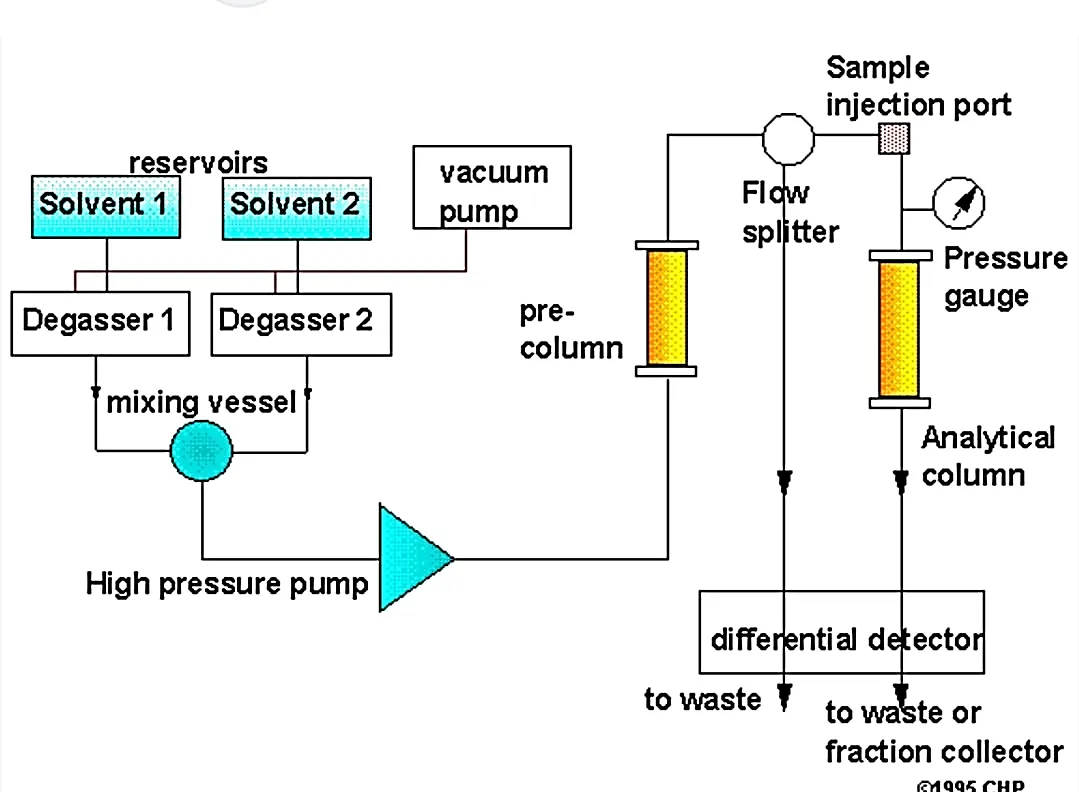
Figure 1: HPLC (High Performance Liquid chromatography) diagram
HPLC METHOD DEVELOPMENT
Methods are expanded for new products when unofficial methods are available. Another method for existing (non-pharmacopoeia) products is to decreases the cost and time for enhance precision and ruggedness. When another process proposed is calculated to replace the existing procedure relative laboratory data including advantages/disadvantages are made available. The aim of the HPLC-process is to try and separate, quantify the major active drug, any reaction impurities, all available synthetic inter-mediates and any degradants.7
Steps involved in Method development.7,8
UNDERSTANDING THE PHYSICOCHEMICAL PROPERTIES OF DRUG MOLECULES
Physicochemical properties of an active molecule play a major role in process development. For Method evolution one has to inspect the physical properties like solubility, pKa polarity and pH of the active molecule. Polarity is a physical property of a compound. It assists an interpreter, to determine the solvent and composition of the mobile phase. The solubility of molecules can be explain on the basis of the polarity of molecules. Polar, e.g. water, and nonpolar, e.g. benzene, solvents do not combine. In common, like dissolves like i.e., substance with similar polarity is soluble in each other. Selection of diluents is based on the solubility of test substance. The acidity or basicity of an analyte is defined most commonly by the pH value. Electing a proper pH for ionizable analytes frequently leads to symmetrical and sharp peaks in HPLC.8
SET UP OF CHROMATOGRAPHIC CONDITIONS
Throughout main method evolution, a set of starting conditions (detector, column, mobile phase) is preference to get the first “scouting” chromatograms of the sample. In many cases, these are based on reversed-phase chromatographic separations on a C18 column with UV detection. A conclusion on developing either an isocratic or a gradient method should be made at this point.
SELECTION OF COLUMN
A column is essential to the starting and central part of a chromatograph. A correctly selected column can generate a good chromatographic separation which provides a correct and good analysis. An unsuitable used column can frequently generate confusion, in adequate and bad separations which can lead to results that are invalid or complex to elucidate. The heart of a HPLC system is the column. Changing a column will have the highest effect on the resolution of analytes during process development. Selecting the best column for application need to consideration of stationary phase chemistry, particle size, retention capacity and column dimensions. The three main part of an HPLC column are the matrix, hardware and the stationary phase. There are different types of matrices for support of the stationary phase, including silica, alumina, polymers and zirconium. Silica is the most usual matrix for HPLC columns. Silica matrices are sturdy, uncomplicated derivative, prepared to compatible sphere size and does not protect to compress under pressure.9 Silica is chemically stable to most organic solvents and to lower pH systems. One short coming of a silica solid support is that it will liquefy above pH. In current years, silica supported columns have been developed for use at high pH. The separation effected by nature, shape and particle size of silica support. Smaller particle gives a larger number of theoretical plates, or increased. The nature of the stationary phase will establish whether a column can be used for normal phase or reverse phase chromatography. Normal phase chromatography uses a polar stationary phase and a non-polar mobile phase. Generally, highly polar compounds elute later than non-polar compounds. Frequently used reverse phase columns and their uses are listed below. Propyl (C3), Butyl (C4) and Pentyl (C5) phases are beneficial for ion-pairing chromatography (C4) and peptides with hydrophobic residues, and extra-large molecules. C3-C5 columns generally retain non-polar solutes more insoluble when compared to C8 or C18 phases. Examples include YMC-Pack C4 and Luna C5. These columns are generally not more stable to hydrolysis than columns with longer alkyl chains. Octyl (C8, MOS) phases have wide applicability.10 This phase is less retentive than the C18 phases, but is still quite useful for pharmaceuticals, nucleosides, and steroids. Ho Choosing of the stationary phase/column is the first and the most important step in process development. The evolution of a rugged and reproducible method is impossible without the availability of a stable, high-performance column. To escape problems from irreproducible sample retention during process development, it is important that columns be stable and reproducible. The separation selectivity for specific components differs between the columns of various manufacturer as well as between column production batches from the same manufacturer. Column dimensions, silica substrate properties and bonded stationary phase characteristics are the main ones. The use of silica-based packing is favoured in most of the present HPLC columns due to several physical characteristics.11
SELECTION OF CHROMATOGRAPHIC MODE FIGURE
Chromatographic modes depend on the analyte’s molecular weight and polarity. All case reports will focus on reversed-phase chromatography (RPC), the most common mode for small organic molecules. Ionizable substance (acids and bases) are frequently separated by RPC with buffered mobile phases (to keep the analytes in a non-ionized state) or with ion-pairing reagents.12
OPTIMIZATION OF MOBILE PHASE
Buffer Selection
Various buffers such as sodium phosphate, potassium phosphate and acetate were evaluated for system suitability parameters and overall chromatographic performance.
Effect of pH
If analytes are ionizable, the suitable mobile-phase pH must be select based on the analyte pKa so the target analyte is in one predominate ionization state, ionized or neutral. Renewal of the mobile-phase pH is one of the principal tools in the “chromatographer’s toolbox” allowing concurrent change in retention and selectivity between critical pair of components.13
Effect of organic modifier
Choosing of the organic modifier type is relatively simple in reverse phase HPLC, the normal selection is between acetonitrile and methanol (rarely THF). Gradient elution is usually employed with complex multicomponent samples since it may not be possible to get all components eluted between k (retention factor) 1 and 10 using a single solvent strength under isocratic conditions.13
Selection of detector and wavelength
After the chromatographic separation, the analyte of interest is detected by using acceptable detectors. Some commonly used detectors in LC are: ultraviolet (UV) detectors, electrochemical detectors, fluorescence detectors, refractive index (RI) detectors and mass spectrometry (MS) detectors. The selection of detector depends on the sample and the reason of the analysis. In case of multicomponent analysis, the absorption spectra may have been shifted to longer or shorter wavelengths compared to the parent compound. Therefore, the UV spectra of target analyte and impurities must be taken and overlaid with each other and the spectra should be normalized due to different amounts present in the mixture. A wavelength must be selected such that adequate response is for most of the analytes can be obtained.13,14
Developing the approach for analysis
Even developing the analytical method on RP-HPLC the first step which is followed, the selections of different chromatographic parameters like selection of mobile phase, selection of column, selection of flow rate of mobile phase, selection of pH of mobile phase. All of these parameters are selected on the basis of trials and followed by considering the system suitability parameters. Typical parameters of system suitability are e.g. retention time must be more than 5 min, the theoretical plates must be more than 2000, the tailing factor must be less than 2, resolution between 2 peaks must be more than 5, % R.S.D of the area of analyte peaks in standard chromatograms must not be more than 2.0% like other. Detection wavelength is usually isosbestic point in the case of simultaneous estimation of 2 components.8
SAMPLE PREPARATION
Sample preparation is a critical step of process development that the analyst must investigate. For example, the analyst should investigate if centrifugation (determination of the optimal rpm and time) shaking and/or filtration of the sample is needed, particularly if there are insoluble components in the sample. The purpose is to demonstrate that the sample filtration does not influence the analytical result due to adsorption and/or extraction of leachable. The effectiveness of the syringe filters is largely determined by their ability to evaluate contaminants/insoluble components without leaching undesirable artifacts (i.e., extractable) into the filtrate. The sample preparation method should be adequately described in the respective analytical method that is applied to a real in-process sample or a dosage form for subsequent HPLC analysis. The analytical method must specify the type of filter, manufacturer and pore size of the filter media.12 The motive of sample preparation is to generate a processed sample that leads to better analytical results compared with the initial sample. The prepared sample should be a divide relatively free of interferences that is compatible with the HPLC method and that will not harm to the column.14,16
METHOD OPTIMIZATION
Most like of the optimization of HPLC method development has been focused on the optimization of HPLC conditions.14The mobile phase and stationary phase compositions need to be taken into account. Optimization of mobile phase parameters is always considered is much easier and convenient than stationary phase optimization. To decrease the number of trial chromatograms involved, only the parameters that are likely to have an appreciable effect on selectivity in the optimization must be examined. Primary control variables in the optimization of liquid chromatography (LC) methods are the different methods are the different components of the mobile phase determining acidity, gradient, solvent, flow rate, sample amounts, injection volume, temperature and diluents solvent type. This is used to find the appropriate balance between resolution and analysis time after satisfactory selectivity has been achieved. The parameters involved column dimensions, column-packing particle size and flow rate. These parameters may be changed without affecting capacity factor or selectivity.11
METHOD VALIDATION
Validation of an analytical method by which it is developed by laboratory studies, that the performance characteristics of the process meet the requirements for the suitable analytical application. Validation is used for any new or revise method to ensure that it is capable of giving reproducible and reliable results, when used by various operators employing the similar equipment in the same or different laboratories. The type of validation program required depends completely on the particular method and its proposed applications. Results of the method validation can be used to judge the quality, reliability and consistency of analytical outcome; it is an integral part of any good analytical practice. Use of equipment that is within adequately calibrated, working correctly and specification is fundamental to the method validation process. Analytical methods need to be validated or revalidated.17
Before their introduction into routine use;
Whenever the conditions change the method has been validated
Whenever the method is changed
Particular parameters recommended by FDA, USP and ICH are as follows.17,19
Specificity
Linearity and Range
Precision
Method precision (Repeatability)
Intermediate precision (Reproducibility)
Accuracy (Recovery)
Solution stability
Limit of Detection (LOD)
Limit of Quantification (LOQ)
Robustness
System suitability
Specificity
It is an analytical method as its capacity to measure precisely an analyte in the presence of interference, such as synthetic precursors, enantiomers, excipients and known (or likely) degradation products that may be expected to be present in the sample matrix.18
Linearity and range
The linearity of an analytical method is its strength (within a given range) to produce test results, which are directly proportional to the concentration of analyte in the test solution. A linear relationship should be calculated across the range of the analytical procedure. It is demonstrated directly on the drug particle by dilution of a standard stock solution of the drug product components, using the proposed procedure. Linearity is usually expressed as the confidence limit around the slope of the regression line. For the create of linearity, minimum of five concentrations is recommended by ICH guideline. The range of an analytical process is the interval between the upper and lower limit that have been express to be determined with precision, accuracy and linearity using the method.18
Precision
The precision of an analytical method expresses the degree of agreement within individual test result when method is applied repeatedly to multiple sampling of a homogeneous sample under the prescribed conditions. Precision may be considered at three levels: repeatability, robustness and reproducibility. The precision of an analytical process is generally indicating the standard deviation or relative standard deviation of order of measurements. Precision may be also the degree of reproducibility or of the repeatability of the analytical process under standard conditions. Intermediate precision (also known as ruggedness) indicates within laboratories differentiation, as on various days, or with different analysts or instruments within similar laboratory. Precision of an analytical process is decided by analysis an enough number of aliquots of a homogeneous sample to be able to calculate statistically valid evaluates of standard deviation or relative standard deviation.20,21
Accuracy (Recovery)
The accuracy of an analytical method indicates the nearness of agreement between the value which is accepted either as a standard true value or an accepted reference value and the value found. lt is decided by applying the process to samples to which studied amounts of analyte have been added. These should be examined against standard and blank solutions to secure that no interference exists. The accuracy is then measured from the test results as a percentage of the analyte recovered by the assay. It may frequently be demonstrating the accuracy by the assay of known, added amounts of analyte.19,20
Solution stability
During validation the stability of standards and samples is established under common conditions, common storage conditions, and sometimes in the instrument to determine if special storage conditions are necessary, for illustration, refrigeration or protection from light.19
Limit of Detection (LOD)
Limit of detection (LOD) of an independent procedure is the lowest amount of analyte in a sample that can be detected but not necessarily quantitated as an exact value. In analytical method that exhibit baseline noise, the LOD can be depending on a signal-to-noise (S/N) ratio (3:1), which is usually shows as the concentration of analyte in the sample. The signal-to-noise ratio is determined by: s = H/h Where H = height of the peak corresponding to the component. h = absolute value of the great noise fluctuation from the baseline of them chromatogram of a blank solution.19,21
Limit of Quantification (LOQ)
The limit of Quantitation (LOQ) or Quantitation limit of an independent analytical method is the lowest amount of analyte in a sample that can be quantitatively determined with acceptable precision and accuracy. For analytical method such as HPLC that display baseline noise, the LOQ is generally estimated from a determination of S/N ratio (10:1) and is visually confirmed by injecting standards which give this S/N ratio and have an acceptable percent relative standard deviation as well.20,21
Robustness
Is defined as the measure of the capacity of an analytical process to remain unaffected by small but deliberate variations in process parameters (e.g. pH, mobile phase composition, temperature and instrumental settings) and give an indication of its reliability during normal usage. Determination of robustness is a systematic method of varying parameter and measuring the effect on the method by monitoring system suitability and/or the analysis of samples.19,20
System Suitability
System suitability tests are an integral part of liquid chromatographic methods. They are used to confirm that the detection sensitivity, resolution and reproducibility of the chromatographic system are sufficient for the analysis to be done. The tests are depending on the concept that the equipment, electronics, analytical operations and samples to be studied constitute a fundamental system that can be estimated as such. Factors, such as the peak resolution, number of theoretical plates, peak tailing and capacity have been measured to determine the applicability of the used method.17,21
FUTURE PERSPECTIVES
Advancements include:
Ultra-High Performance Liquid Chromatography (UHPLC)
Green chromatography (eco-friendly solvents)
Hyphenated techniques (HPLC-MS/MS)
CONCLUSION
In recent years evolution of the analytical methods for identification, purity evaluation and quantification of drugs has received a great deal of attention in the field of pharmaceutical analysis. This review describes HPLC method development and validation in common way. Following systematic development and validation procedures enhances the quality and safety of pharmaceutical products. Optimized method is validated with various parameters (e.g. specificity, precision, recovery, detection limit, linearity, etc.) as per ICH guidelines.
REFERENCES

Achal Umare, Shailesh Jawarkar, Method development and validation by HPLC: A Review, Int. J. of Pharm. Sci., 2026, Vol 4, Issue 7, 1437-1445, https://doi.org/10.5281/zenodo.21242281
 10.5281/zenodo.21242281