

We use cookies to ensure our website works properly and to personalise your experience. Cookies policy
Bharathi College Of Pharmacy, Bharathinagara, Mandya-571422, Karnataka, India
One of the best ways to stop the spread of infectious diseases is to practice good hand hygiene. The quick antibacterial action of alcohol-based hand sanitizers makes them popular, but excessive use can cause dryness, irritation, and damage to the skin's natural barrier. Herbal hand sanitizers made from bioactive compounds obtained from plants that have antibacterial, antioxidant, and anti-inflammatory qualities have become more popular as a result. Many Asian nations have long utilized Areca catechu, often known as Areca palm, as a medicinal plant. Recent research indicates that the leaf sheath, an agricultural by-product, includes polyphenols, tannins, flavonoids, and other phytochemicals with antibacterial and antioxidant potential, despite the fact that the majority of studies concentrate on the seed. The leaf sheath is a viable natural ingredient for herbal sanitizer formulations because of these bioactive ingredients. The significance of hand hygiene, the phytochemical components and therapeutic qualities of Areca catechu leaf sheath, formulation techniques, assessment criteria for herbal hand sanitizers, and the benefits of herbal sanitizers over synthetic ones are all summarized in this review. The review also emphasizes the necessity of more research to confirm the safety and antibacterial effectiveness of Areca catechu leaf sheath-based sanitizers for use in commercial settings.
Maintaining good hand hygiene is crucial to stopping the spread of illnesses and infections. Washing your hands is a crucial precaution to protect your skin from harmful microbes and prevent the spread of many infectious diseases. Hand washing removes visible filth from hands and reduces the number of harmful bacteria like salmonella and E. coli that can be carried by people, animals, and food.
Numerous studies have shown that hand sanitizers with at least 70% alcohol may eliminate 99.9% of microorganisms. Prior to the advancement of modern medicine, a wide range of ailments were mostly treated using plants.[1] Plant extracts have the potential to act as antimicrobial agents against a variety of pathogenic bacteria that lead to disease, infection, and drug resistance. The primary benefits of using natural sources over chemical ones are their affordability, accessibility, and safety. [2]
Customers choose ready-made alcohol-based hand rubs over conventional soap for hand cleaning in today's hectic lifestyle. Tannins, terpenoids, alkaloids, and flavonoids are examples of secondary metabolites found in plants that have antibacterial qualities. Hand sanitizers, also known as hand antiseptics or hand rubs, come in a variety of forms, including foam, gel, and liquid, and are used to eliminate common germs from the hands. In order to address the growing need for a hand hygiene product that works, we created an herbal sanitizer using plant extracts from commonly available plants and additional chemicals.[3]
Areca catechu L., also referred to as Areca palm or Betel nut palm, is a member of the Aceraceae family and is extensively grown in Southeast Asia and India. Although the seed has been thoroughly investigated, the leaf sheath, which is rich in useful phytochemicals such flavonoids, tannins, phenolic compounds, saponins, and alkaloids, is typically thrown away as agricultural waste. Because of these chemicals' antibacterial, antifungal, antioxidant, and anti-inflammatory properties, the leaf sheath is a sustainable and environmentally friendly source for herbal sanitizer composition.[4]
In addition to encouraging waste valorisation, the use of Areca catechu leaf sheath aids in the creation of affordable, biodegradable, and skin-friendly hand sanitizers. Phytochemicals are typically extracted using ethanol or hydroalcoholic solvents and then incorporated into an appropriate gel or liquid foundation that contains stabilizers and humectants. The final product's pH, viscosity, spread ability, antibacterial action, stability, skin irritation, drying time, and user acceptance are all assessed.[5]
One of the best and most affordable ways to stop the spread of infectious diseases in the community and in healthcare settings is to practice good hand hygiene. Human hands can harbor dangerous microbes like bacteria, viruses, and fungi because they often come into contact with contaminated surfaces. Diseases like influenza, COVID-19, diarrhoea, foodborne illnesses, and healthcare-associated infections (HAIs) can spread from person to person through direct touch or contaminated objects. Maintaining good hand hygiene breaks this chain of transmission and dramatically lowers the risk of infection. [6,7,8]
Hand hygiene is the cornerstone of infection prevention and control, according to the World Health Organization (WHO). By stopping the spread of pathogens and multidrug-resistant organisms, good hand hygiene can lower healthcare-associated illnesses, according to WHO. Because they offer quick and broad-spectrum antimicrobial action, the WHO advises using alcohol-based hand rubs (containing 60–80% alcohol) when hands are not obviously unclean and washing hands with soap and water when they are. [9]
Additionally, the Centers for Disease Control and Prevention (CDC) stresses the importance of hand cleanliness in preventing the spread of infectious agents in homes, workplaces, schools, and hospitals. The risk of disease transmission is greatly reduced by practicing good hand hygiene before eating, after using the restroom, after coughing or sneezing, and after contacting contaminated surfaces. Hand sanitization became a vital public health strategy to reduce the spread of the virus during the COVID-19 epidemic. [8,11]
Even though alcohol-based hand sanitizers are quite efficient, frequent usage can cause dryness, irritation, and damage to the skin's natural defences. This has prompted researchers to look into herbal hand sanitizers using antimicrobial chemicals derived from plants that provide good germ control along with further advantages like moisturizing, anti-inflammatory, and antioxidant qualities. As safer and more environmentally friendly substitutes for traditional sanitizers, herbal formulations containing phytochemicals such flavonoids, tannins, phenolics, and essential oils are being investigated more and more. [11,12,13]
All things considered, practicing good hand hygiene not only keeps people safe from infectious diseases but also lowers medical expenses, slows the spread of organisms resistant to antibiotics, and improves public health. The creation of efficient, skin-friendly hand hygiene products, education, and ongoing awareness are still crucial elements of infection prevention tactics. [7,8]
CLASSIFICATION OF HAND SANITIZERS:
Without the need for soap and water, hand sanitizers are antimicrobial solutions intended to lessen or eradicate bacteria on the hands. Hand sanitizers can be broadly categorized as either alcohol-based or non-alcohol-based based on their active ingredients and mode of action. Due to their enhanced skin friendliness and antibacterial action, herbal hand sanitizers have become a popular natural substitute in recent years. [6,7]
1. ALCOHOL-BASED HAND SANITIZERS (ABHS):
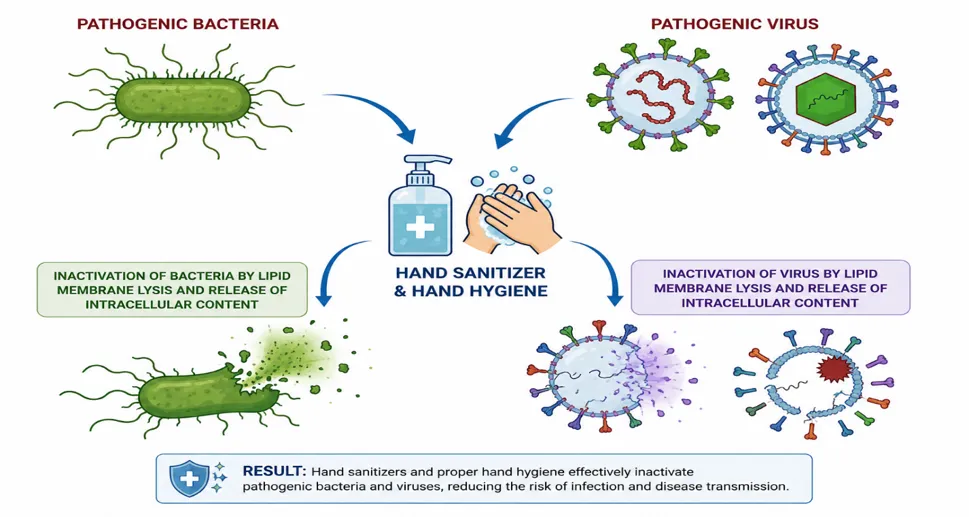
In healthcare settings, alcohol-based hand sanitizers are the most widely used hand disinfectants. Their main active element is either n-propanol, isopropyl alcohol, or 60–95% ethanol. Bacteria, fungus, and enveloped viruses are destroyed by these sanitizers because they quickly denature microbial proteins and damage cell membranes. [8]
Alcohol-based formulations with 60–80% alcohol is recommended by the World Health Organization (WHO) due to their quick action and broad-spectrum antibacterial activity. These formulations often include alcohol, hydrogen peroxide to remove bacterial spores that could contaminate the solution during production, and glycerol as a humectant. [6,9]
ADVANTAGES:
• Quick antibacterial action.
• Wide-ranging efficacy.
• Water is not necessary.
• Easy and rapid drying.
• Suggested for medical environments.
DISADVANTAGES:
• Repeated use results in dry skin.
• Could cause skin irritation.
• Extremely combustible.
• Less successful in combating bacterial spores.
• Quickly evaporates.
2. NON-ALCOHOL-BASED HAND SANITIZERS:
Alcohol is not the only antibacterial ingredient included in non-alcohol-based hand sanitizers. Typical active components consist of:
By rupturing cell membranes or obstructing vital metabolic functions, these sanitizers eliminate microbes. They may have a smaller antibacterial spectrum than alcohol-based sanitizers, but they often have longer residual antimicrobial activity. [8,14]
ADVANTAGES:
DISADVANTAGES:
3. HERBAL HAND SANITIZERS:
Extracts of medicinal plants with antibacterial, antioxidant, and anti-inflammatory qualities are used to make herbal hand sanitizers. They might be made as alcohol-free products or contain trace amounts of alcohol as a solvent. Phytochemicals such flavonoids, tannins, phenolic compounds, alkaloids, saponins, and essential oils are mostly responsible for their antibacterial effect. [12,13,14]
Plants commonly used in herbal sanitizers include:
ADVANTAGES:
DISADVANTAGES:
HISTORY:
Hand sanitizers were first used in medical facilities in 1966, and they gained a lot of popularity in the early 1990s. It is likely that the idea of using an antiseptic to clean hands first appeared in the early 1800s. In today's mechanical world, consumers consistently choose pre-made alcohol hand rubs over hand cleaning. A French pharmacist showed in 1822 that solutions containing lime or soda chlorides may be used as disinfectants and antiseptics, as well as to eliminate the unpleasant smells associated with human corpses. This pharmacist claimed in an article published in 1825 that using a liquid chloride solution to moisten their hands would be beneficial for doctors and other caregivers of patients with infectious disorders.[10]
HERBAL HAND SANITIZERS OVER SYNTHETIC HAND SANITIZERS:
Hand sanitizers are frequently used to preserve hand cleanliness and lessen the spread of harmful bacteria. Depending on where their active ingredients come from, they can be roughly divided into two categories: synthetic (chemical) hand sanitizers and herbal hand sanitizers. Herbal sanitizers include plant-derived bioactive substances such flavonoids, tannins, phenolics, alkaloids, and essential oils, while synthetic sanitizers mostly rely on alcohols or chemical antiseptics for antibacterial action. Herbal sanitizers have drawn a lot of interest lately due to their antibacterial activity, ability to reduce skin irritation, and extra anti-inflammatory and antioxidant properties. [11,12]
HERBAL HAND SANITIZERS:
Extracts from medicinal plants including Areca catechu, Azadirachta indica (neem), Ocimum sanctum (tulsi), Aloe vera, Curcuma longa (turmeric), and tea tree oil are used to make herbal hand sanitizers. Flavonoids, tannins, phenolic compounds, saponins, terpenoids, and alkaloids are among the phytochemicals found in these plants that have broad-spectrum antibacterial activity. [12,13,15]
Herbal sanitizers work by disrupting microbial cell walls, inhibiting vital microbial enzymes, interfering with nucleic acid production, and causing oxidative damage to microbial cells, among other ways. Herbal extracts provide antioxidant, anti-inflammatory, moisturizing, and wound-healing properties that support skin health in addition to limiting microbial development. [12,13,16]
Because Areca catechu leaf sheath includes polyphenols, flavonoids, tannins, and other bioactive substances with documented antibacterial and antioxidant effects, it is of particular interest for the current review. The leaf sheath's use in herbal sanitizer formulations offers a sustainable solution by turning agricultural waste into a medicinal product with additional value, despite the fact that research on it is less extensive than that on areca nuts. [17]
SYNTHETIC HAND SANITIZERS:
The primary antibacterial ingredients found in synthetic hand sanitizers are ethanol (60–80%), isopropyl alcohol (70–75%), or n-propanol. As chemical antiseptics, some formulations additionally contain benzalkonium chloride, chloroxylenol, or chlorhexidine gluconate. [11]
Alcohol-based sanitizers are very effective against a variety of bacteria, fungi, and enveloped viruses because they quickly kill microorganisms by denaturing proteins and rupturing lipid membranes. The World Health Organization (WHO) and the Centers for Disease Control and Prevention (CDC) recommend alcohol-based hand sanitizers for routine hand hygiene when soap and water are not accessible because to their quick action and broad-spectrum effectiveness. [8,9]
Frequent use of synthetic sanitizers, however, may cause the skin's natural lipid layer to be removed, leading to dryness, irritation, dermatitis, itching, and cracking. Additionally, some products have artificial perfumes and preservatives that could trigger allergic reactions in those who are sensitive. Concerns about germ resistance and the effects on the environment have also been highlighted by the long-term use of some non-alcohol antiseptics. [11]
MECHANISM OF ACTION:
The most widely utilized alcoholic component in biocides is n-propanol. Although the precise mechanism of alcohol's antimicrobial action is not well understood, it may be connected to membrane damage, inhibition or uncoupling of mRNA and protein production through effects on ribosomes and RNA polymerase, or protein denaturation. [8,28] Concentrations between 60% and 90% yield the best bactericidal efficacy for activity against bacteria.[29] In actuality, alcohol is more bactericidal than pure alcohol, or alcohol that contains no more than 1% water. As a result, water plays a crucial role in the denaturation process of proteins. Alcohol also affects vital metabolic processes, causing membrane damage and eventual loss of cellular integrity. Alcohols, however, have bactericidal effects on vegetative bacteria—those going through binary fission and metabolism—but not on spores.[30]
OVERVIEW OF ARECA CATECHU LEAF SHEATH:
The Arecaceae family includes Areca catechu L., also referred to as the Areca palm, Betel nut palm, or Supari palm. This tall, evergreen tropical palm is widely grown in Bangladesh, Indonesia, Malaysia, Thailand, India, Sri Lanka, and several other Southeast Asian nations. With a significant portion of its production occurring in Karnataka, India is the world's largest producer of areca nuts. Other parts of the plant, such as the leaf sheath, have recently drawn scientific attention due to their phytochemical composition and their pharmacological uses, despite the areca nut's long history of usage in medicine and cultural customs. [4,5]
The thick, fibrous coating that envelops the stem at the base of every leaf is called the leaf sheath. The leaf sheath, which is typically regarded as an agricultural by-product, spontaneously separates from the stem as the palm matures. Because of its strength, biodegradability, and environmental friendliness, it has historically been used to make biodegradable plates, bowls, food containers, and handicrafts. Recent research, however, indicates that the leaf sheath also has a number of bioactive phytochemicals that could be helpful in formulations for medicines and cosmetics. [5,19]
The leaf sheath of Areca catechu contains phenolic chemicals, flavonoids, tannins, saponins, alkaloids, glycosides, and terpenoids, according to phytochemical studies. The antibacterial, antioxidant, anti-inflammatory, and free radical scavenging properties of these secondary metabolites are well-known. By rupturing bacterial cell membranes, interfering with enzyme systems, and causing intracellular component leakage, phenolic chemicals and flavonoids prevent microbial growth. By precipitating microbial proteins and blocking microbial enzymes, tannins enhance antibacterial action. [4,12,13]
The leaf sheath's high phenolic and flavonoid content, which aids in reducing oxidative stress and neutralizing reactive oxygen species (ROS), is primarily responsible for its antioxidant function. When added to topical formulations like hand sanitizers, these antioxidant qualities may also aid in wound healing and shield the skin from environmental harm. [15,16]
Areca catechu extracts have been shown in several studies to have antibacterial action against common pathogenic microorganisms, such as Candida albicans, Bacillus subtilis, Pseudomonas aeruginosa, Escherichia coli, and Staphylococcus aureus. The phytochemical profile of the leaf sheath suggests that it also has promising antibacterial potential, despite the fact that many of these investigations concentrate on the seed or other plant sections. Because leaf sheath is a common agricultural waste product, using it in herbal formulations offers an environmentally friendly solution by turning waste into a therapeutic ingredient with additional value. [4,5,12]
For the creation of innovative herbal hand sanitizers and other topical pharmaceutical preparations, Areca catechu leaf sheath thus offers a potential, sustainable, and environmentally acceptable source of bioactive chemicals. [11]
BOTANICAL CLASSIFICATION
Kingdom -Plantae
Division- Magnoliophyta
Class- Liliopsida (Monocotyledonae)
Order- Arecales
Family- Arecaceae
Genus- Areca
Species- Areca catechu L. [20,22]
MAJOR PHYTOCHEMICALS PRESENT IN THE LEAF SHEATH:
1. Phenolic Compounds
One of the main bioactive components found in the leaf sheath is phenolic compounds. By contributing hydrogen atoms to counteract free radicals and lessen oxidative stress, they demonstrate potent antioxidant action. By destroying microbial cell walls and blocking vital enzymes involved in microbial metabolism, phenolics also have antibacterial qualities. [15]
2. Flavonoids
The antibacterial, antifungal, antiviral, antioxidant, and anti-inflammatory properties of flavonoids—polyphenolic compounds—are widely recognized. Through interference with microbial enzyme systems, nucleic acid synthesis inhibition, and cell wall integrity disruption, they prevent microbial growth. Flavonoids are useful components of topical medicinal formulations because they shield skin cells from oxidative damage. [16]
3. Tannins
Natural polyphenols having antibacterial and astringent qualities are called tannins. By precipitating microbial proteins, deactivating bacterial enzymes, and changing the permeability of cell membranes, they have antibacterial effects. By encouraging tissue contraction and reducing microbial colonization, tannins also aid in wound healing and lower inflammation. [25]
4. Saponins
Glycosidic substances with surface-active characteristics are called saponins. They interact with the membranes of microbial cells, increasing their permeability and allowing intracellular contents to seep out, which eventually results in cell death. Additionally, saponins have immunomodulatory and anti-inflammatory properties. [24]
5. Alkaloids
Alkaloids are substances with broad-spectrum antibacterial action that contain nitrogen. By interfering with DNA replication, protein synthesis, and cellular metabolism, they prevent bacterial development. Additionally, several alkaloids have anti-inflammatory and antioxidant qualities. [13]
6. Glycosides
Secondary metabolites called glycosides are made up of both sugar and non-sugar components. They may have antibacterial effects by interfering with microbial metabolic pathways and contribute to antioxidant activity. The medicinal potential of herbal mixtures is improved by their presence. [12,17]
7. Terpenoids
Terpenoids are naturally occurring substances that have anti-inflammatory, antioxidant, and antibacterial properties. They lessen oxidative stress, harm microbial cell membranes, and prevent microbial respiration. Terpenoids may enhance the sensory qualities of herbal hand sanitizers and contribute to the distinctive scent of plant extracts. [23]
Antimicrobial Activity of Areca catechu Leaf Sheath
Because it contains a variety of bioactive phytochemicals, Areca catechu L., or Areca palm, is widely recognized for its therapeutic qualities. Recent studies show that the leaf sheath, an agricultural by-product, also contains significant amounts of phenolic compounds, flavonoids, tannins, saponins, alkaloids, and terpenoids, which contribute to its antimicrobial potential, even though the majority of published research has concentrated on the areca nut (seed). The leaf sheath is a promising natural component for herbal hand sanitizer formulations since these phytochemicals can stop the formation of harmful germs. [4,22]
The high phenolic and flavonoid content of Areca catechu leaf sheath is primarily responsible for its antibacterial effect. Bacterial cell membrane damage, increased membrane permeability, and intracellular component leakage are all caused by phenolic chemicals, which ultimately result in cell death. By interfering with nucleic acid production, upsetting energy metabolism, and blocking vital microbial enzymes, flavonoids prevent bacterial growth. While saponins interact with membrane sterols to improve membrane permeability, tannins have antibacterial actions by precipitating microbial proteins and inhibiting bacterial adherence to host tissues. [12,13,25]
Because ethanol effectively removes polar phytochemicals like flavonoids and phenolic compounds, hydroalcoholic preparations of Areca catechu leaf sheath, especially 70% ethanol, have been shown to exhibit antibacterial action. Several clinically significant bacteria, such as Staphylococcus aureus, Escherichia coli, Pseudomonas aeruginosa, Bacillus subtilis, and Candida albicans, have been demonstrated to be inhibited by these extracts. Urinary tract infections, wound infections, skin infections, and hospital-acquired infections are frequently caused by these germs. As a result, adding Areca catechu leaf sheath extract to herbal hand sanitizer formulas may offer strong defence against a variety of harmful microorganisms. [4,17]
Standard microbiological methods like the agar well diffusion method, disc diffusion assay, minimum inhibitory concentration (MIC), and minimum bactericidal concentration (MBC) are typically used to assess the antibacterial effectiveness of Areca catechu leaf sheath extract. The extract's capacity to inhibit microbial growth is demonstrated by the quantifiable zone of inhibition it produces in various techniques. The concentration of the extract, the solvent employed, the extraction technique, and the test microorganism's susceptibility all affect how big the inhibitory zone is. [18]
The antioxidant qualities of Areca catechu leaf sheath may help maintain healthy skin by lowering oxidative stress and shielding skin cells from free radical damage in addition to its direct antibacterial activity. Because of this extra advantage, the leaf sheath is especially well suited for topical applications like herbal hand sanitizers, where frequent usage should both eradicate bacteria and maintain skin integrity. [15,16]
Even though Areca catechu's antibacterial qualities are widely known, it's crucial to remember that the majority of published research has focused on the seed or nut extract rather than the leaf sheath in particular. The evidence that is currently available indicates that the leaf sheath has promising antimicrobial potential and contains similar classes of phytochemicals; however, additional experimental research is required to determine its active components, develop standardized extraction techniques, and verify its efficacy through in vitro and in vivo studies. [4,5]
All things considered, the leaf sheath of Areca catechu is an environmentally beneficial and sustainable source of natural antibacterial chemicals. In addition to providing an alternative to synthetic antimicrobial agents, its use in herbal sanitizer formulations encourages the value-added use of agricultural waste, promoting environmental sustainability and the creation of green pharmaceutical goods. [4,11]
FUTURE PROSPECTS:
Research on herbal hand sanitizers has intensified due to the growing demand for natural healthcare products and the increased awareness of hand hygiene. Because they combine enhanced skin tolerability, biodegradability, and environmental sustainability with antibacterial activity, plant-based sanitizers are becoming more and more popular. Due to its abundance as an agricultural by-product and its documented phytochemical makeup, which includes flavonoids, phenolic compounds, tannins, saponins, and terpenoids, Areca catechu leaf sheath has become a promising raw material among the many therapeutic plants. [4,11,22]
The thorough phytochemical analysis of Areca catechu leaf sheath and the identification of the particular chemicals in charge of its antibacterial activity should be the main goals of future study. To guarantee batch-to-batch consistency and repeatability of herbal sanitizer formulations, standardization of extraction techniques, optimization of extraction solvents, and quality control parameters are crucial. The active phytoconstituents can be identified and quantified using sophisticated analytical methods as High-Performance Liquid Chromatography (HPLC), Gas Chromatography–Mass Spectrometry (GC–MS), and Liquid Chromatography–Mass Spectrometry (LC–MS). [4]
To assess the antibacterial activity of Areca catechu leaf sheath extracts against clinically important pathogens, such as multidrug-resistant bacteria and fungi, more in vitro and in vivo research is needed. Prior to widespread commercialization, toxicological analyses, skin irritation investigations, allergenicity evaluations, and long-term stability studies are also required. To determine the efficacy and safety of formulations under real-world usage circumstances, clinical trials should be carried out. [4,18]
Another interesting method for improving the efficacy of herbal sanitizers is nanotechnology. The stability, bioavailability, controlled release, and antibacterial activity of phytochemicals may be enhanced by incorporating plant extracts into nanoparticles, nano emulsions, liposomes, or other innovative drug-delivery systems. Such novel formulations may minimize the amount of active ingredient needed while offering extended antibacterial effect. [26,27]
By transforming agricultural waste into a valuable therapeutic product, the use of Areca catechu leaf sheath also promotes sustainable pharmaceutical research. By encouraging the effective use of natural resources and minimizing environmental waste, this strategy is consistent with the ideas of green chemistry and the circular economy. Areca catechu leaf sheath has the potential to become a significant natural component in topical antiseptics, herbal hand sanitizers, and other pharmaceutical and cosmetic compositions with further scientific confirmation and technological developments. [4,5]
CONCLUSION
One of the best strategies to stop the transmission of infectious diseases and lower infections linked to healthcare is to practice good hand hygiene. Frequent use of alcohol-based hand sanitizers can lead to dryness, irritation, and damage to the skin's natural barrier, despite their great efficacy. Herbal hand sanitizers with bioactive substances derived from plants have become more popular as a result. The leaf sheath of Areca catechu, an underutilized agricultural by-product, is full of phytochemicals with antibacterial, antioxidant, and anti-inflammatory qualities, including flavonoids, phenolic compounds, tannins, saponins, alkaloids, and terpenoids. The leaf sheath is a viable natural ingredient for herbal hand sanitizer formulations because of these bioactive ingredients, which help reduce agricultural waste and support environmental sustainability. Nevertheless, there is still less scientific data on the leaf sheath than on seeds, and further research is required to standardize extraction techniques, pinpoint active ingredients, assess safety and antibacterial efficacy, and carry out clinical validation. All things considered, the research that is now accessible indicates that the leaf sheath of Areca catechu has great potential as a safe, efficient, economical, and environmentally friendly substitute for the production of herbal hand sanitizers.
ACKNOWLEDGEMENT
We sincerely express our heartfelt gratitude to Bharathi College of Pharmacy, Bharathinagara, for providing us with the opportunity, academic environment, and necessary facilities to carry out and complete this review paper successfully.
CONFLICT OF INTEREST
No conflict of interest
REFERENCES






Dr. Shiju L, Aishwarya M, Bhoomika C K, Harsha C J, Sachin. M S, Thejaswi Gowda K M, Natural Hand Hygiene Solutions: A Review of Areca Catechu Leaf Sheath-Based Herbal Hand Sanitizers, Int. J. of Pharm. Sci., 2026, Vol 4, Issue 8, 2619-2630. https://doi.org/10.5281/zenodo.21972454
 10.5281/zenodo.21972454