

We use cookies to ensure our website works properly and to personalise your experience. Cookies policy
1,2School of Pharmaceutical Sciences, RIMT University, Mandi Gobindgarh, Punjab – 147301
3Faculty of Pharmaceutical Sciences, PCTE groups of Institutes, Baddowal cant, Ludhiana.
Transdermal drug delivery systems (TDDS) have emerged as a promising alternative to conventional routes such as oral and injectable administration, which provide better patient cooperation and work around first-pass metabolism. The traditional transdermal delivery systems work less effectively because the stratum corneum layer of skin acts as an obstacle that prevents most medicinal substances from entering the body especially large molecules and water-soluble medications. Microneedle technology has become a successful solution for developing effective transdermal drug delivery methods because it requires less invasive methods to deliver medications through the skin. The function of microneedles as drug delivery systems depends on their ability to push antenna-like structures through skin barriers to create microchannels, which enable drug delivery without reaching areas that contain nerve endings. This review presents a comprehensive evaluation of microneedle technology through an analysis of its main components, which include design principles and classification systems, and its methods of production. The study examines different mechanisms through which drugs are delivered, which include methods for skin penetration, release kinetics, and diffusion pathways. The study demonstrates how microneedle systems deliver small molecules, biologics, and vaccines, and provide solutions for diabetes, cancer, infectious, and dermatological disorders. The system provides several benefits, but it faces difficulties in its ability to withstand stress, its capacity to store medications, and the process of producing its products at a large scale, as well as obtaining official permission. The development of wearable microneedle systems that respond to environmental signals shows promising possibilities for their upcoming application in medical applications
The drug delivery systems (DDS) are the developed procedures to provide therapeutic agents in a desired pharmacological effect. Traditional routes comprise oral, intravenous, pulmonary, and nasal routes, with each having its peculiar merits and demerits. DDS seek to maximize drug release, bioavailability, and the therapeutic adherence of a patient through controlling drug release and targeting a specific tissue. In the contemporary DDS, nanotechnology, liposomes, and polymeric carriers are being used to increase the effect of therapy. As an example, pulmonary and nasal systems are increasing popularity as a result of the fast absorption and non-invasive application1. DDS has to be designed that considers the drug’s properties, disease’s pathology, and the patient’s needs2. New inventions in DDS have led to more advanced technologies like the transdermal drug delivery system (TDDS) and the microneedles which correct inadequacy of the traditional ones3. The traditional drug delivery channels like oral and intravenous forms face a major challenge. The bioavailability of oral delivery is normally low due to first-pass metabolism and degradation by the gastrointestinal tract4. Intravenous method methods though effective are invasive and result in systemic toxicity and patient discomfort. Besides, the high dose schedules result in low adherence to medications, especially in chronic diseases5. Due to these restrictions, other alternative systems have been developed that can provide control release, target delivery, and increased safety6. To overcome these obstacles new methods such as TDDS and microneedles are being developed to avoid the first-pass metabolism as well as reduce systemic side effects. TDDS are self-administrated dosage forms which are used to deliver an intact skin dose into systemic circulation. They provide controlled release, bioavailability boosting and bypassing of first-pass metabolism7. Typically, TDDS involve the use of patches that can deliver drugs for a longer duration, increasing patient compliance8. Stratum corneum is the main barrier, and drug flux enhancement requires the aid of permeation enhancers or new technologies9. TDDS come in handy especially with drugs that demand constant plasma concentrations, for instance, hormones and cardiovascular agents. They are non-invasive and hence can be used as an alternative to injections, which is more pain and infection free. Despite their promise, TDDS have difficulties due to some barriers imposed by the skin. The techniques of enhancement are required to enhance permeation of drugs. Surfactants and solvents are examples of chemical agents that disrupt lipid structures in the stratum corneum10. Physical techniques such as iontophoresis, sonophoresis, and microneedles create channels for the drug molecules11. A number of bio-enhancers, for example, peptides and lipids are also under investigations for use in delivery of macromolecules12. These methods have increased the use of TDDS to a broader spectrum of drugs, such as proteins and vaccines, specifically with a history of being problematic with skin penetration. Microneedles are micron sized instruments that can pierce stratum corneum painlessly and administer drugs to the masses efficiently. They may be solid, coated, dissolving or hollow, performing different functions13. Since they do not go through the nerve ends, microneedles circumvent the ionizing barrier of the skin rendering them an almost painless and user-friendly intervention14. The latest developments are biodegradable microneedles and combination with nanotechnology to get controlled release15. They find use in vaccines, insulin, and cancer therapeutics as alternatives to traditional injections and are revolutionary. Microneedle technology can change TDDS and, in this regard, allows delivering a variety of drugs, including biologic and vaccine. The goals are to improve patients’ compliance, reduce systemic toxicity, and achieve controlled release16. The microneedles also aim at increasing the therapeutic uses it has to dermatology, oncology, and immunization programs17. Their mass vaccination and customized medicines are right because of scalability and adaptability. The directions in future are incorporation of micro needles into smart systems to give real time monitoring and feedback18.
SKIN STRUCTURE AND PERMEATION BARRIERS
The skin is a complex organ which is used as the first barrier for the body. One of the three layers includes the epidermis, the dermis and the hypodermis. The outer layer, epidermis, is chiefly composed of the keratinocytes and provide a protective barrier against the environmental attacks such as UV radiations, pathogens, and even chemicals19. Its undercoat is the dermis, which is made up of collagen and elastin fibers, blood vessels, and sensory nerves that aid in elasticity, thermoregulation, and tactile sensitivity. Its lowest layer is the hypodermis and it is rich with the adipose tissue, a cushion and source of energy20. The thickness of the skin varies with the body parts and thus affect drug permeation since palms and soles of the foot are thicker than the eyelids. The homeostasis, water balance and resistance against mechanical injury is collectively provided by these layers and thus, the skin is not only a protective barrier, but a dynamic organ, necessary for survival21. This stratum cornea is the topical most part of the epidermis and provides essential support for the barrier property of the skin. The lipid matrix and corneocytes are referred to as bricks and mortar22. It is a structure that prevents water loss and protects against microbial invasion, toxins, and mechanical stress. Ceramides, cholesterol, and fatty acids are lipids that provide structural integrity while the moisturizing factors present in corneocytes are endogenous to keep the skin hydrated23. The protective effect of the stratum corneum, it is a major obstacle to transdermal drug delivery as it restricts the migration of hydrophilic and macromolecules. Its selective permeability allows only lipophilic, small drugs to cross it. Therefore, the stratum corneum is needed to survive, but is the main barrier that TDDS will have to overcome to be therapeutically effective24. The biological, physicochemical, and formulation factors influence the permeation of the drug through skin. Biological factors like age, skin thickness, hydration, and site of anatomy, e.g., a hydrated skin or younger skin is more likely to be permeable25. The physicochemical properties that influence the capacity of drugs to permeate the stratum corneum include molecular weight, lipophilicity, and partition coefficient. In most cases, molecules with a molecular weight of less than 500 Da and moderately lipophilic permeate better. Formulation-associated factors such as drug concentration, pH, presence of permeation enhancers are also crucial26. Permeability can further be modulated due to exogenous factors such as temperature, occlusion and mechanical stress. It is mandatory to know and understand these factors for developing effective TDDS because the factors determine the effectiveness of the drug absorption and treatment outcome. The optimization of these variables enables the researchers to increase the number of drugs that could be delivered through transdermal delivery, and hence, TDDS is clinically dynamic and applicable27. The passive systems of transdermal drug delivery only use diffusion through the stratum corneum, and this limits its use. Small, low-dose and lipophilic drugs are the only drugs that can effectively penetrate without any enhancement mechanisms28. The stratum corneum is very hard for the molecules of hydrophilic nature, peptides, proteins, and vaccines. Furthemore, skin thickness, hyrdation and location between individuals may may result in a difference in drug absorption hence reducing predictability of therapy29. Passive TDDS also has a problem with the drugs that have to act fast or produce high systemic concentrations. Such constraints limit passive TDDS to a narrow selection of available drugs such as nicotine and other hormones. To remedy these limitations, such sophisticated enhancement approaches as microneedles, iontophoresis, and chemical enhancers are under development, extending TDDS to biologics and macromolecules and thereby transforming drug delivery approaches30. All these ideas are demonstrated together in Figure 1, emphasizing the skin structure, barrier properties, factors of permeation, and innovative methods of enhancing transdermal drug delivery.
MICRONEEDLES: PRINCIPLES AND ARCHITECTURE
These microneedles are projections of the micron size and usually range between 50 and 900 2 m in length and are meant to enter the stratum corneum but not beyond the nerve terminals or blood vessels. This makes them painless and less invasive when compared to hypodermic needles31. The principle of operation is the formation of microchannels in the skin and use them to circumvent the stratum corneum barrier properties of the skin32. Manufacture materials include metals, silicon, biodegradable polymers, and microneedles are divided into solid, coated, dissolving and hollow microneedles, and each mechanism has a distinct drug release mechanism33. Microneedles provide an alternative delivery mechanism by their ability to control and direct delivery, leading to enhanced bioavailability and patient compliance, hence making microneedles a suitable alternative to the transdermal drug delivery systems. Microneedles major mechanism involves microchannels that are formed in stratum corneum. Microneedles” microchannels are pathways that allow the diffusion of drug molecules into deeper skin layers and are “usually 50100 m wide”34. Micro needles unlike hypodermic needles do not produce a lot of pain or bleeding because they do not excite the dermal nerves and capillaries[35]. The resultant microchannels can drug hydrophilic molecules, peptides, proteins, and even vaccines that may otherwise be blocked by the stratum corneum36. These microchannels are short lived and the skin barrier function is reinstated in a couple of hours, thus, reducing the risk of infection. This is instrumental to the effectiveness of microneedle based TDDS. After the formation of the microchannels, the drugs can be carried into the skin through diffusion, convection, or direct deposition. Drugs that have been applied beforehand are administered to the skin after the Solid microneedles allow for the creation of channels, whereas drugs are pumped onto the surface in coated microneedles37. Micro needles are dissolved in biodegradable polymers that encapsulate drugs that are released after the microneedles dissolve in the skin38. Liquid formulations may be injected into the dermis via hollow microneedles, which resemble miniature syringes39. The transportation system can handle different types of molecules which include small drugs and proteins and DNA and vaccines. The transport pathways which microneedles create enable their use in both systemic treatments and localized medical procedures. Microneedle design undergoes important changes because designers must consider geometric factors which include height and tip shape and array density and aspect ratio. Height determines penetration depth into the skin which typically ranges from 150 to 1500 micrometres, and it enables the stratum corneum to be crossed without reaching deeper nerve or blood vessel areas40. The shape of the tip (which includes conical and pyramidal and bevelled designs) establishes the required force for insertion and the level of pain that users will experience because sharper tips create less resistance but more risk of breakage41. The delivery efficiency for drugs depends on array density because higher density results in more payload delivery but creates skin stress which decreases patient comfort42. The mechanical strength and insertion reliability of a material depend on its aspect ratio which describes the relationship between length and diameter because optimal ratios enable proper penetration while maintaining structural strength40-42. The parameters control microneedle performance through their effect on patient compliance which determines therapeutic results thus they require precise optimization to achieve results in pharmaceutical engineering work 43.
CATEGORIZATION OF MICRONEEDLES
Fabricated from silicon, metals, or polymers, solid microneedles are mainly used by “poke-and-patch” where the insertion process is followed by the application of topical formulation (gel, cream, or patch) over the treated site to allow permeation through the diffusing microchannels44, 45. Surface-coated microneedles are solid microneedles with drug formulations coated on the shafts which quickly dissolved in interstitial fluid upon insertion, leading to drug release46. This method makes it possible to deliver accurate doses and eliminates the need for a patch after insertion. Coating uniformity and the limited number of drugs that can be loaded on the microneedle shafts remain a concern47. There are various coating techniques to ensure reproducibility of parameters such as dip-coating, spray-coating, and layer-by-layer48. The surface-coated microneedles are useful for vaccines that require small doses to elicit immune responses49. Microneedle-coated drug stability and mechanical strength of microneedles remain critical factors under study despite the technology’s potential. Dissolvable microneedles are commonly made from biodegradable polymers such as polyvinylpyrrolidone (PVP), carboxymethylcellulose, or sugars, which entrap drugs inside the matrix50. They are similar to small hypodermic needles and provide for direct infusion of liquid formulations into the dermis51. They allow precise control overdosing and are appropriate for delivery of larger volume than solid or coat microneedles. Their applications include insulin, vaccines, and local anaesthesia52. However, fabrication complexity, clogging risks, and mechanical fragility are limiting factors. Hollow microneedles can be combined with microfluidic pumps for continuous infusion and are thus promising in wearable drug delivery systems53. Clinical translation for hollow microneedles necessitates insertion force optimization and leakage prevention during administration. Hydrogel-forming microneedles are made from crosslinked polymers that swell after contacting interstitial fluid thus forming pathways for drug molecule diffusion54; unlike dissolvable microneedles, the hydrogel microneedles remain intact after insertion and can be detached without any remnants of the microneedle left behind, thus enabling a sustained release of the drug molecules from the attached reservoir patch55, hydrogel microneedles are most promising compared to other microneedles in relation to chronic therapies where controlled long-term delivery of the drug molecules is necessary but with minimal intrusion, mechanical strength, swelling kinetics, and biocompatibility are the main design attributes, recent studies have shown their applicability in the delivery of macromolecules such as peptides and monoclonal antibodies with enhanced patient compliance56. Figure 2 shows classification, mechanisms of drug delivery and key characteristics of these microneedle systems.
MANUFACTURING APPROACHES
Microreplication and molding are the most common place for accomplishing reproducible and precise microstructured surface production. These methods involve the replication of master templates with fine features onto a polymeric or metallic substrate for use in applications such as a drug-delivery system, diagnostics, or microfluidics57. However, despite this, there are several challenges, including tool wear and similarities at the nanoscale dimensions. They have resulted in improved throughput and reduced cost of production, making them essential in biomedical device manufacture58. Photolithography and etching are a pair of the most fundamental microfabrication processes for producing intricate patterns under submicron resolution. Photolithography uses photoresists to transfer patterns, whereas etching processes remove parts of materials either by wet or dry methods59. The methods play a crucial role in the semiconductor manufacturing industry and are gaining popularity in the manufacture of biomedical devices, such as lab-on-chip. Limitations include high cost, cleanroom requirements, and difficulty in scaling for large-area substrates. However, this is accompanied by major breakthroughs in deep UV lithography and plasma etching to improve their application in precision manufacturing60. Laser-based micromachining uses laser beams to accurately ablate or manipulate materials. It is mostly used for hard or brittle substrates such as ceramics, and metals where conventional machining methods are ineffective. It has been used to make stents, microchannels, and surface texturing for drug release modulation61. Its advantages comprise non-contact machining, low mechanical strains, and design flexibility. Quality might suffer because of the thermal effects, microcracks, and recast layers. Novel femtosecond lasers have reduced heat-affected zones and thus increased precision and biocompatibility62. Three-dimensional (3D) printing has been identified as one of the most revolutionary manufacturing tools for rapid prototyping and patient-specific manufacturing paradigms. Stereolithography, selective laser sintering, and fused deposition modeling enable the fabrication of novel and complicated geometries that are impossible with conventional manufacturing technologies63. In pharmaceuticals, 3D printing works for personalized-dose and controlled release systems. Challenges include limited diversity of materials, regulatory constraints, and reproducibility at scale. Ongoing researches in bioprinting and multi-material printing are expanding on its potential in tissue engineering and drug delivery64. However, scalability is still one of the significant challenges in microfabrication and advanced manufacturing despite progressing technology. High costs of equipment, stringent environmental controls, and variability in batch-to-batch production limit industrial adoption65. When it comes to biomedical applications, there is an added layer of complexity thanks to regulatory compliance, which extends to the reproducibility and safety validation. Scalability is achievable in microreplication; however, photolithography and 3D printing have throughput limitations and the need for material standardization. To address these hurdles, hybrid approaches, automation, and integration of quality-by-design principles that strike a balance between innovation and manufacturability are required66.
DRUG RELEASE MECHANISMS AND TRANSPORT PATHWAYS
Microneedles penetrate the stratum corneum by microchannels that bypass the natural barrier of the skin and enable drug delivery directly to viable epidermis and dermis. The insertion process is dependent of needle geometry, sharpness, and mechanical strength. While solid microneedles disrupt the barrier, coated and dissolving types release drugs upon insertion67. The micro-channels remain open for several hours, allowing sustained diffusion of drugs before their eventual closure, mediated by the skin’s natural healing mechanism68. Insertion depth and uniformity also vary based on the force used during drug administration, apart from elasticity. Confocal microscopy techniques form closure kinetics and confirm microchannel formation. This minimally invasive method proves more comfortable for patients compared to the hypodermic injection route69. Types of microneedles contribute to different drug release kinetics. Coated microneedles ensure rapid release as the drug dissolves off the surface when in contact with skin. Dissolving microneedles that are made from biodegradable polymers ensure controlled release as the matrix dissolves within a duration of minutes to hours70. Hydrogel-forming microneedles swell after insertion and form a sustained release depot. Release profiles depend on polymer composition, solubility of the drug, and dimensions of the microneedle. The release kinetics are often defined through first order or Higuchi type diffusion equation by the mathematical models71. Comparative studies show that a dissolving microneedle achieves a higher bioavailability for hydrophilic drugs, while for vaccines, coated microneedles are more suitable for rapid antigen presentation. After microneedle arrays are dissolved, hydrophilic drug molecules diffuse through the aqueous pores into the deeper skin layers. Diffusion through concentration gradients remains the primary mechanism of action73. Macromolecules and hydrophilic molecules that could not penetrate the stratum corneum have access to the depot through temporary channels. Convective transport also occurs using microchannels in combination with mechanical or iontophoretic modalities74. The diffusion rate is a function of microchannel dimensions, drug molecular weight, and hydration status of the skin. In vitro experiments using fluorescent tracers attest to enhanced dermal and systemic uptake consequent to the microchannels compared to when the skin is intact75. Closure of microchannels results in extensive reduction in permeability as a function of time, therefore optimal kinetics of drug release should follow the channel lifetime. Drug properties, formulation, and skin condition affect delivery efficiency through microneedles. Hydrophilic drugs can diffuse more readily through the aqueous microchannels, while lipophilic compounds may be encapsulated in nanoparticles or liposomes76. The viscosity of the formulation and the rate of polymer dissolution also influence the kinetics of the release. The hydration of the skin, thickness, and evidence of disease (e.g., psoriasis, eczema) change the permeability and microchannels' closing dynamics77. Application parameters, including insertion force, dwell time, and microneedle density, further influence efficiency. Patients’ specific factors such as age
or anatomical site contribute to variability. Design and fabrication-wise, this must be optimized and requirements done to have reproducible delivery efficiency given a population78. Figure 3 provides a comprehensive illustration of this array of mechanisms and factors influencing microneedle technology.
THERAPEUTIC AGENTS SUITABLE FOR MICRONEEDLE DELIVERY
THERAPEUTIC APPLICATIONS
Microneedle-based systems showed a lot of potentials in various kinds of biomedical applications. The system allows patients to receive insulin through a non-invasive method which helps them follow their treatment plan while achieving controlled blood sugar levels. Healthcare workers use microneedles for immunization programs because this method allows them to deliver vaccines against influenza and COVID-19 through a technique that enhances immune response without using traditional needles79. The medical field uses these technologies to administer chemotherapy drugs and immune system modulators directly to cancer patients which minimizes the adverse effects on their entire body. The system enables patients to achieve pain relief quickly through its ability to deliver pain relief medications via skin-based delivery methods. The system enables users to treat scars and restore skin and combat signs of aging through various aesthetic and dermatological treatments80, 81. The table 2 presents complete details about these different medical treatment methods.
KEY BENEFITS OF MICRONEEDLE PLATFORMS
Microneedle systems only pierce the outermost layer of the skin, the stratum corneum, and thus do not reach the pain receptors in the deeper layers of the skin. In this way, microneedles provide a painless method of injection as compared to hypodermic needles82, 83. This minimal invasiveness can lead to patient relaxation and lessening of the fear of medical procedures, which is why these devices can be a good option for children and older people. It is demonstrated that microneedles cause very little tissue damage and that the skin returns to normal quickly after application, which makes patients and doctors more willing to use this method84. Thanks to their characteristics, microneedles provide an efficient way to get drugs through the skin without the negative effects associated with traditional needles and, therefore, have the potential to change the face of drug and vaccine delivery85. The great thing about microneedle patches is that anyone can use them without having to be taught how. This independence of the patient not only increases treatment compliance but also makes it easier for those on long-term therapies to continue with their regimens since the need for them to be seen by a healthcare professional every time they take their dose is removed86. Besides being liked for their convenience and causing less pain than traditional approaches, patients also value microneedles for their ability to be used without the visibility of the user being compromised87. It is also seen that the microneedle is a patch form to give a more comfortable and private environment to a person for treatment. This helps patients to feel comfortable to take control of their condition and live an independent life. Such improved patient adherence leads to better treatment results and reduces the burden on the healthcare sector, which is why microneedles represent a valuable platform for the management of diseases over an extended period89-90. Microneedle-mediated transdermal delivery is able to bypass gastrointestinal degradation as well as hepatic first-pass metabolism, thereby increasing the bioavailability of drugs that have poor oral absorption. This method is very beneficial for peptides, proteins, and small molecules that are prone to enzymatic breakdown91. Microneedles create dermal microchannels that allow drugs to be directly absorbed into the systemic circulation, which means that a smaller drug amount can be used to achieve the same therapeutic effect, and the systemic toxicity is reduced. This pharmacokinetic benefit extends the variety of drugs that can be delivered through transdermal systems and making microneedles a promising approach for biologics and delicate molecules92. Microneedle systems can be designed to release the drug in a controlled manner, e.g., by using biodegradable polymers or materials that respond to the environment and regulate drug release. This feature of microneedles enables them to provide sustained, pulsatile, or site-specific delivery of drugs, thereby enhancing the therapeutic effect93. The drug delivery system which uses this method enables doctors to create accurate treatment plans. The method enables doctors to create personalized treatment plans because it decreases drug exposure throughout the body while increasing treatment effects at specific locations. This is especially true with disorders of the skin or metabolism. The wide range of microneedle features points to their usefulness in personalized therapy and drug delivery systems that are more advanced94. Unlike hypodermic needles that penetrate deeply into the tissue and blood vessels, microneedles barely create superficial microchannels that are rapidly closed, thereby lowering the chances of infection. Besides, their patch-based form that is meant for single use makes cross-contamination a minimal possibility95. Clinical studies have shown that after microneedle use, there is barely any microbial ingress, which is a strong indication of their safety profile. This benefit carries a lot of weight in large-scale vaccination campaigns and home-based therapies were maintaining a sterile environment and ensuring safety are of utmost importance. By lowering the risk of infections, microneedles not only boost patient confidence but also increase their usefulness in settings with limited resources96.
CURRENT LIMITATIONS AND OBSTACLES
Microneedle drug delivery systems provide potential benefits for delivery system yet multiple obstacles currently prevent their use in medical practice. The patch system can only deliver a specific amount of medication which prevents its use in treatments that require larger medication volumes. The patches lack enough strength to penetrate skin through their full depth which affects patients who have tougher skin types or thicker skin97. The use of the product increases the possibility of developing both skin irritation and hypersensitivity reactions. The high production expenses combined with the difficulties of producing the product at scale create obstacles for bringing the product to market. The absence of established regulatory frameworks and standardized procedures creates major obstacles that prevent products from gaining market access and receiving approval98. Table 3 provides complete information about these existing limitations and challenges.
RECENT BREAKTHROUGHS AND NOVEL DESIGNS
The development of Smart microneedles introduces an advanced drug delivery system which uses environmental pH and temperature and light and electrical signals as its operational triggers. The system enables doctors to deliver medicine at specific locations through controlled release which increases treatment accuracy and decreases unwanted body reactions99. The latest development involves polymer microneedles which respond to external stimuli through swelling and degradation to create an active drug delivery system. The implementation of electric-stimulus assisted MNs enables better treatment results for skin diseases through their ability to penetrate deeper and deliver more effective therapy100. The use of MNs in ocular medicine enables doctors to deliver drugs to the eye for extended periods through a procedure that requires little physical contact with the patient. Medical professionals now develop smart MNs through the creation of biocompatible polymers and hydrogels which provide solutions for treating long-term health conditions and developing tailor-made treatment approaches101. The method of microneedle delivery enables transdermal therapy by using nanocarriers which include liposomes and polymeric nanoparticles and dendrimers as delivery systems. The combination of nanocarriers and microneedles enables drugs to cross the stratum corneum barrier which leads to successful absorption throughout the body because nanocarriers improve drug solubility and stability and bioavailability. MNs containing liposome-loaded MNs have been used for vaccines and anticancer drugs which provide continuous release of medication and activation of the immune system102. The polymeric nanocarriers which include nanogels and micelles enable controlled drug release through environmental triggers which improves targeting accuracy in drug delivery systems according to reference103. The latest research demonstrates that microneedles create a combined effect which helps nanoparticles penetrate into skin tissue for better treatment results in persistent medical conditions according to reference104. This method shows great potential because it enables biologics and sensitive compounds such as peptides and nucleic acids to be delivered to their target sites. The healthcare industry is adopting wearable microneedle patches as both treatment and monitoring tools which patients can use and throw away after use. The patches provide users with comfortable experience through their minimal skin impact which enables users to adjust their treatment in real time. The research team created ultrasound-based wearable MN patches for gout treatment which provide users with the ability to release medication whenever they need it according to reference105. The wearable MN patches which have biosensing capabilities enable users to track changes in their biomarker levels that include glucose and lactate while providing combined diagnostic and therapeutic solutions according to reference106. The designers created disposable products which focus on achieving skin attachment and biocompatibility at an affordable price which makes their use suitable for wide-scale deployment in ongoing medical treatment and vaccination initiatives for chronic illnesses107. The devices function well for customized medical treatment and remote health assessment because of their lightweight design and simple operation. The first-ever microneedle system which combines drug delivery with biosensing technology has been developed as a groundbreaking medical advancement. The systems enable medical professionals to deliver treatment while simultaneously monitoring patients' physical conditions. Medical professionals can use 3D-printed barbed microneedle electrodes to treat wounds while performing impedance-based biosensing tests and drug delivery procedures108. Hydrogel-based MNs function as dual-purpose systems which both store medication and track biomarker levels109. The comprehensive reviews demonstrate that these platforms enhance patient adherence to treatment plans while enabling precise medical treatment and better management of long-term illnesses. The dual functionality of MNs provides substantial benefits for diabetes patients because the devices can deliver insulin while tracking their glucose levels throughout the day110.
FUTURE DIRECTIONS
Microneedle-based transdermal drug delivery systems are expected to play a transformative role in next-generation therapeutics. The future will see researchers develop microneedle designs which doctors will create for each patient based on their unique skin features. The system will use artificial intelligence together with digital health technologies to provide continuous patient monitoring which will adjust medication dosages while enhancing treatment results. The development of smart microneedles enables doctors to control drug release based on changes in glucose and pH because these microneedles respond to human body signals. The combination of microneedles with nanocarriers and biologics will enable researchers to develop advanced treatment methods which include gene delivery and immunotherapy. The process of establishing affordable production methods together with regulatory standards will enable businesses to enter markets which will lead to more doctors using the product and better healthcare services for patients worldwide.
CONCLUSION
Microneedle-based transdermal drug delivery systems provide modern pharmaceutical technology with an advanced drug delivery system that enables painless drug administration through a minimally invasive method which shows better results than traditional drug delivery methods. The microneedles enable better delivery of various therapeutic substances which include small molecules and biologics and vaccines because they efficiently penetrate the stratum corneum barrier. Their design allows for different therapeutic applications through their creation of solid microneedles and coated microneedles and dissolving microneedles and hydrogel-forming microneedles. The system provides various benefits but it suffers from several obstacles which include restrictions on drug delivery systems and their manufacturing capacity and their manufacturing capacity and their need to follow regulatory requirements. Scientific discoveries in materials development and production techniques and intelligent delivery system creation will provide solutions for resolving current challenges. The research and microneedle development process will transform this technology into next-generation transdermal drug delivery.
REFERENCES
|
|
Table No.: -1 The table presents different therapeutic classes which can be delivered through microneedle-based systems together with their typical systems and their main benefits and their main difficulties and the relevant sources which demonstrate their extensive use in transdermal drug delivery.
|
Therapeutic Class |
Examples |
Key Advantages |
Challenges |
References |
|
Low-molecular-weight compounds |
Insulin, lidocaine, antihypertensives |
Rapid systemic absorption, bypasses first-pass metabolism |
Limited drug loading capacity |
[79] |
|
Peptides & protein therapeutics |
Human growth hormone, monoclonal antibodies |
Enhanced bioavailability, avoids enzymatic degradation in GI tract |
Stability issues, cold-chain requirement |
[80] |
|
Vaccine antigens |
Influenza, measles, COVID-19 subunit vaccines |
Dose sparing, improved patient compliance, needle-free immunization |
Antigen stability, manufacturing scalability |
[81] |
|
Nanoparticle-based formulations |
Liposomes, polymeric nanoparticles |
Controlled release, targeted delivery |
Complex formulation, regulatory hurdles |
[82] |
|
Nucleic acids for gene therapy |
DNA plasmids, mRNA, siRNA |
Direct transfection, potential for personalized medicine |
Risk of degradation, immune activation |
[83] |
|
Combination biologics |
Peptide-nanoparticle conjugates, protein-DNA complexes |
Synergistic therapeutic effects |
Complex design, stability concerns |
[84] |
|
Hormones & endocrine agents |
Insulin analogs, parathyroid hormone |
Improved patient adherence, painless administration |
Limited dosing flexibility |
[85] |
|
Next-generation immunotherapies |
Cancer vaccines, checkpoint inhibitors |
Localized immune activation, reduced systemic toxicity |
High cost, formulation complexity |
[86] |
Table No.: -2 This table shows the different medical uses of microneedle-based systems which demonstrate their key benefits and challenges through selected examples together with their supporting references thus showing their growing importance in modern transdermal medication delivery systems.
|
Application |
Examples |
Key Advantages |
Challenges |
References |
|
Glycemic control via insulin delivery |
Rapid-acting insulin analogs |
Painless administration, improved patient adherence |
Stability of insulin in microneedle matrices |
[88] |
|
Immunization strategies |
Influenza, COVID-19, measles vaccines |
Dose sparing, needle-free, enhanced immune response |
Antigen stability, cold-chain logistics |
[89] |
|
Oncological interventions |
Cancer vaccines, checkpoint inhibitors |
Localized immune activation, reduced systemic toxicity |
Complex formulation, cost |
[90] |
|
Analgesia & pain management |
Lidocaine, fentanyl |
Rapid onset, bypasses GI metabolism |
Limited drug loading, risk of misuse |
[91] |
|
Aesthetic & dermatological uses |
Anti-aging peptides, scar reduction agents |
Targeted dermal delivery, improved cosmetic outcomes |
Patient variability, regulatory approval |
[92] |
|
Hormonal therapies |
Parathyroid hormone, contraceptives |
Sustained release, improved compliance |
Dose precision, formulation stability |
[93] |
|
Gene therapy applications |
DNA plasmids, mRNA vaccines |
Direct transfection, potential for personalized medicine |
Risk of degradation, immune activation |
[94] |
|
Combination therapies |
Peptide-nanoparticle conjugates, protein-DNA complexes |
Synergistic effects, multifunctional delivery |
Complex design, manufacturing scalability |
[95] |
Table No.: -3 The table presents essential restrictions which microneedle drug delivery systems face together with specific examples and their effects on treatment efficiency and their respective solutions and academic sources which serve to establish a complete understanding of existing obstacles and upcoming research paths.
|
Limitation |
Examples |
Key Implications |
Potential Solutions |
References |
|
Restricted drug payload per patch |
Insulin, monoclonal antibodies |
Limits therapeutic scope, unsuitable for high-dose drugs |
Development of multilayered or dissolving microneedles |
[107] |
|
Insufficient mechanical robustness |
Thick or calloused skin |
Risk of incomplete penetration, reduced efficacy |
Stronger polymers, metal microneedles |
[108] |
|
Local irritation or hypersensitivity |
Vaccine antigens, peptides |
Patient discomfort, risk of dermatitis |
Biocompatible materials, optimized formulations |
[32] |
|
High manufacturing costs |
Large-scale vaccine patches |
Limits affordability, hinders global access |
Scalable fabrication, 3D printing, automation |
[86] |
|
Regulatory and standardization challenges |
Diverse microneedle designs |
Delays in approval, lack of harmonized guidelines |
International standards, FDA/EMA harmonization |
[37] |
|
Limited long-term stability |
Protein therapeutics, nucleic acids |
Degradation during storage, cold-chain dependence |
Lyophilization, stabilizing excipients |
[109] |
|
Patient variability |
Different skin thickness, hydration |
Inconsistent drug absorption |
Personalized patch design, adaptive microneedle length |
[110] |
|
Complex formulation requirements |
Nanoparticle-loaded microneedles |
Difficult scale-up, reproducibility issues |
Advanced manufacturing, hybrid microneedle systems |
[111] |
Graphical Abstract
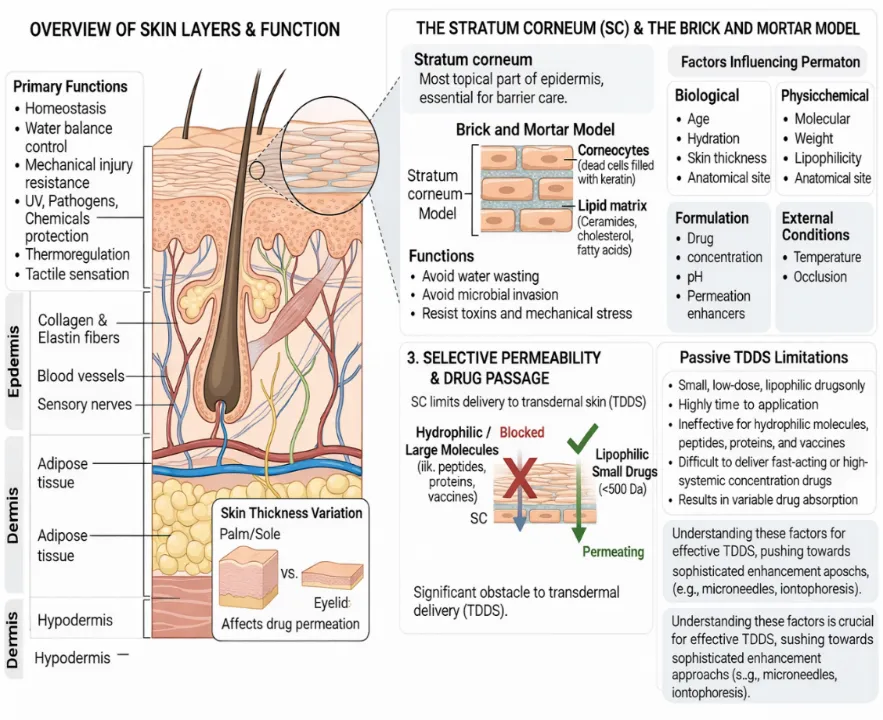
Figure No.: -1 The diagram shows the structure of the skin barrier. It shows the different elements which determine how substances pass through the skin. The diagram displays the obstacles that restrict drug delivery. The diagram shows advanced methods which use microneedles to improve drug delivery systems.
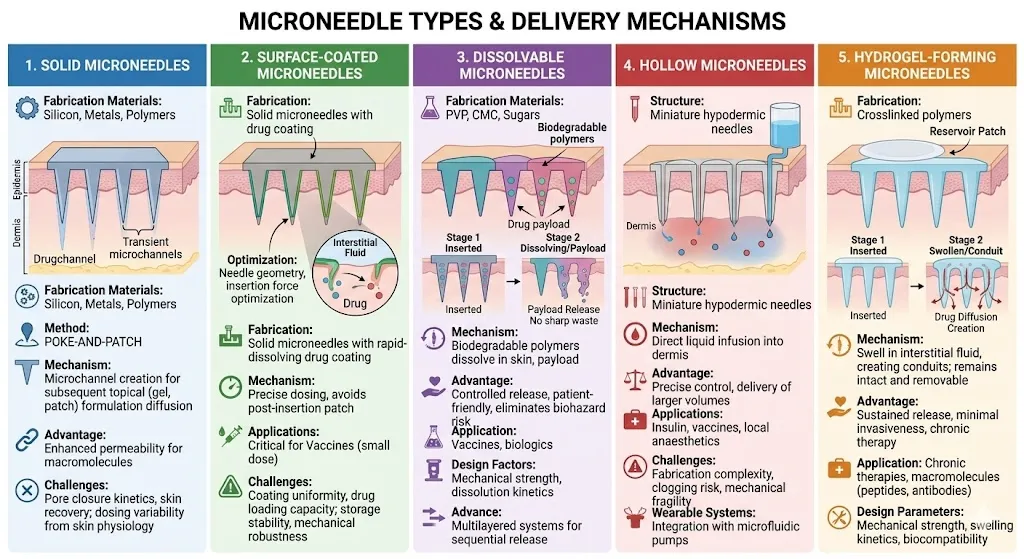
Figure No.: -2 This figure shows how microneedles classify their drug delivery systems which use specific fabrication materials and show their respective benefits and drawbacks to deliver multiple therapeutic methods through transdermal delivery.
Figure No.: -3 The diagram demonstrates the drug release mechanisms and transport pathways of microneedles while showing how microneedles penetrate the stratum corneum and exhibit different release rates through various microneedle designs and display essential elements that determine transdermal delivery success



Jagjeet Singh, Neha Srivastava, Seema Thakur, Microneedles: A Novel Approach for Transdermal Delivery, Int. J. of Pharm. Sci., 2026, Vol 4, Issue 6, 1672-1692, https://doi.org/10.5281/zenodo.20570734
 10.5281/zenodo.20570734