

We use cookies to ensure our website works properly and to personalise your experience. Cookies policy
Department of Pharmaceutics Paavai College of Pharmacy and Research R. Puliyampatti, Namakkal, Tamilnadu, India
Nanoemulsion-based drug delivery systems have emerged as advanced high-technology pharmaceutical platforms capable of overcoming major limitations associated with conventional drug delivery, including poor aqueous solubility, limited bioavailability, and lack of site specificity. Nanoemulsions are kinetically stable colloidal dispersions composed of two immiscible liquids stabilized by surfactants, with droplet sizes typically below 200 nm. Their nanoscale dimensions provide enhanced surface area, improved dissolution rates, and superior stability compared to conventional emulsions. Recent developments in nanotechnology have enabled the rational design and optimization of nanoemulsions using both high-energy and low-energy emulsification techniques. High-energy approaches such as ultrasonication, high-pressure homogenization, and micro fluidization generate intense shear forces to reduce droplet size, whereas low-energy methods rely on phase inversion and spontaneous emulsification mechanisms. Statistical optimization tools such as response surface methodology and Box–Behnken design further enhance formulation efficiency and reproducibility. Nanoemulsions demonstrate exceptional therapeutic potential in complex diseases such as neurodegenerative disorders, cancer, and diabetes mellitus. In neurodegenerative diseases, nanoemulsions facilitate nose-to-brain delivery, bypassing the blood–brain barrier and improving drug targeting. In oncology, nanoemulsions exploit the enhanced permeability and retention effect to increase tumor accumulation while minimizing systemic toxicity. In diabetes management, nanoemulsions improve oral bioavailability and therapeutic efficacy of antidiabetic agents, including natural polyphenols. This manuscript comprehensively reviews formulation principles, preparation methods,optimization strategies, and disease-specific applications of nanoemulsion-based drug delivery systems, highlighting their significance as next-generation pharmaceutical technologies.
Nanoemulsions are submicron colloidal systems consisting of oil and water phases stabilized by surfactants and co-surfactants, with droplet sizes typically ranging from 20 to 600 nm. Unlike conventional emulsions, Nanoemulsions exhibit superior kinetic stability, reduced gravitational separation, and enhanced bioavailability due to their nanoscale size and increased interfacial surface area [1,2,30].
The growing number of poorly water-soluble drugs in modern pharmacotherapy has intensified the need for innovative delivery systems capable of improving solubility, absorption, and therapeutic efficacy. Nanoemulsions offer multiple advantages, including ease of preparation, scalability, optical transparency, improved drug loading, and compatibility with multiple routes of administration [3–5].
Advances in nanotechnology have positioned Nanoemulsions as versatile carriers for targeted drug delivery in diseases requiring precise tissue localization, such as Alzheimer’s disease, Parkinson’s disease, cancer, and diabetes mellitus [6–9]. Their ability to cross biological barriers and provide controlled release makes Nanoemulsions a promising high-technology platform for pharmaceutical development.
2. CLASSIFICATION AND CHARACTERISTICS OF NANOEMULSIONS
Nanoemulsions are classified into oil-in-water (O/W), water-in-oil (W/O), and bi-continuous systems depending on the phase distribution. O/W Nanoemulsions are most commonly employed for oral, nasal, and parenteral delivery due to their low viscosity and patient acceptability.
Key physicochemical characteristics of Nanoemulsions include small droplet size, narrow size distribution, large interfacial area, optical clarity, and enhanced kinetic stability [1,2,30]. These properties significantly improve drug dissolution, absorption, and bioavailability.
Table 1 summarizes the classification, composition, and pharmaceutical relevance of Nano emulsion systems.
|
Type of Nano emulsion |
Dispersed Phase |
Continuous Phase |
Key Characteristics |
Pharmaceutical Relevance |
|
Oil-in-Water (O/W) |
Oil |
Water |
Low viscosity, high bioavailability, good patient compliance |
Oral, nasal, parenteral delivery |
|
Water-in-Oil (W/O) |
Water |
Oil |
Sustained release, enhanced lipophilicity |
Topical and transdermal delivery |
|
Bi-continuous |
Interconnected oil and water domains |
— |
High solubilization capacity |
Advanced targeting applications |
3. FORMULATION COMPONENTS
The formulation of stable Nanoemulsions depends on the careful selection of formulation components, including the oil phase, aqueous phase, surfactant, and co-surfactant [2,5]. The oil phase solubilizes lipophilic drugs, while surfactants reduce interfacial tension and stabilize nano-droplets. Co-surfactants enhance interfacial flexibility and promote spontaneous Nanoemulsions formation [4,7].
The hydrophilic–lipophilic balance (HLB) value of surfactants plays a crucial role in determining emulsion type, droplet size, and stability.
Table 2 lists commonly used formulation components and their pharmaceutical roles.
|
Component |
Examples |
Function |
|
Oil phase |
Medium-chain triglycerides, palm oil, isopropyl myristate |
Solubilizes lipophilic drugs |
|
Surfactants |
Tween 80, Span 20 |
Reduces interfacial tension |
|
Co-surfactants |
Ethanol, propylene glycol |
Enhances interfacial flexibility |
|
Aqueous phase |
Purified water, buffers |
Continuous phase |
4. METHODS OF NANO EMULSION PREPARATION
4.1 HIGH-ENERGY EMULSIFICATION TECHNIQUES
High-energy emulsification techniques utilize mechanical energy to break coarse emulsions into nanoscale droplets. These include high-pressure homogenization, ultrasonication, micro fluidization, and membrane emulsification.
Ultrasonication employs acoustic cavitation to reduce droplet size, while high-pressure homogenization forces emulsions through narrow gaps at high pressure, generating intense shear and turbulence [2,6,18].
4.2 LOW-ENERGY EMULSIFICATION TECHNIQUES
Low-energy methods rely on physicochemical changes in the system rather than external mechanical force. Phase inversion temperature and spontaneous emulsification are widely used low-energy techniques suitable for heat-sensitive drugs and large-scale manufacturing [7,30].
Table 3 compares high-energy and low-energy preparation methods.
|
Method Type |
Technique |
Principle |
Advantages |
Limitations |
|
High-energy |
High-pressure homogenization |
Mechanical shear |
Uniform droplet size |
High energy consumption |
|
High-energy |
Ultrasonication |
Acoustic cavitation |
Simple laboratory method |
Scale-up challenges |
|
Low-energy |
Phase inversion temperature |
Thermodynamic changes |
Suitable for heat-sensitive drugs |
Limited formulation range |
|
Low-energy |
Spontaneous emulsification |
Interfacial turbulence |
Energy-efficient |
Requires precise surfactant ratios |
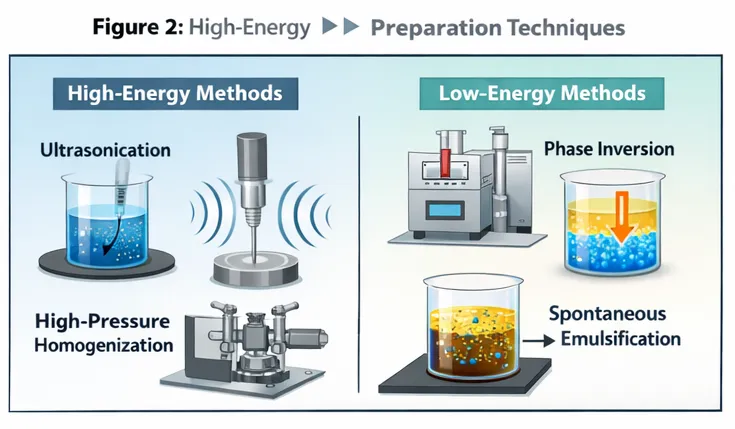
Figure 1 illustrates the structural organization of a Nanoemulsions system, while Figure 2 compares high-energy and low-energy preparation technique
5. OPTIMIZATION STRATEGIES
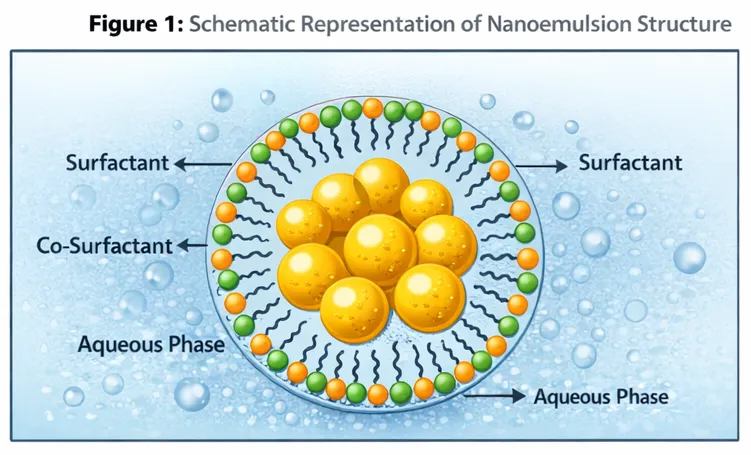
Figure 2 Schematic Representation of Nanoemulsion Structure
Optimization of Nanoemulsions formulations is essential to achieve desirable droplet size, polydispersity index, and stability. Response surface methodology and Box–Behnken design allow systematic evaluation of formulation variables with minimal experimental runs.
Design-Expert®-assisted optimization has been widely employed to enhance reproducibility and performance of Nanoemulsions-based drug delivery systems [6].
6. NANOEMULSIONS IN NEURODEGENERATIVE DISEASES
6.1 ALZHEIMER’S DISEASE
Alzheimer’s disease is a progressive neurodegenerative disorder characterized by memory impairment and cognitive decline [12–14]. Nanoemulsions-based intranasal delivery systems bypass the blood–brain barrier via olfactory and trigeminal pathways, enhancing brain drug targeting [15–18].
Nanoemulsions containing curcumin and quercetin have demonstrated improved neuroprotection and therapeutic efficacy [19,20].
6.2 PARKINSON’S DISEASE
Parkinson’s disease involves degeneration of dopaminergic neurons, resulting in motor dysfunction [22–24]. Nanoemulsions-based delivery of levodopa, selegiline, and antioxidant compounds improves bioavailability, brain targeting, and behavioural outcomes [25–28].
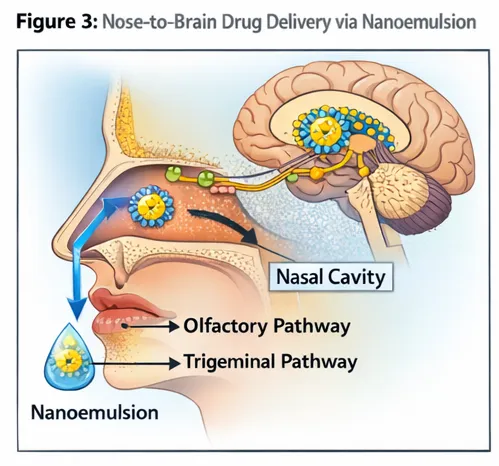
Figure 3 depicts nose-to-brain drug delivery via Nanoemulsions.
Table 4 summarizes Nanoemulsions applications in neurodegenerative diseases.
|
Disease |
Drug / Compound |
Route |
Therapeutic Outcome |
|
Alzheimer’s disease |
Curcumin, quercetin |
Intranasal |
Enhanced brain targeting |
|
Parkinson’s disease |
Levodopa |
Oral / Nasal |
Improved bioavailability |
|
Parkinson’s disease |
Selegiline |
Intranasal |
Enhanced behavioural performance |
7. Nanoemulsions in Cancer Therapy
Nanoemulsions play a crucial role in cancer therapy through passive and active targeting mechanisms. The enhanced permeability and retention (EPR) effect enables selective accumulation of Nanoemulsions in tumor tissues due to leaky vasculature and poor lymphatic drainage [35,36].
Nanoemulsions-based delivery of paclitaxel, docetaxel, and doxorubicin has shown improved tumor targeting, reduced systemic toxicity, and enhanced anticancer efficacy [34,37,39].
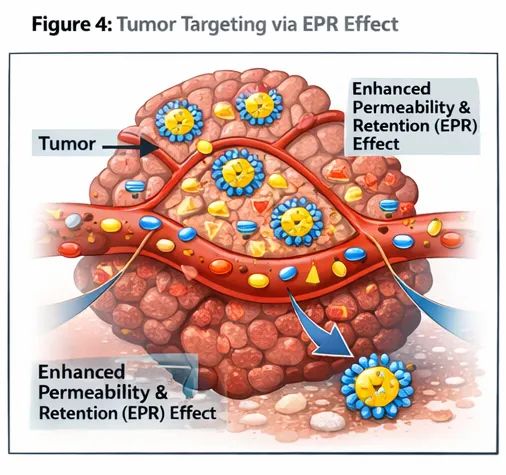
Figure 4 illustrates tumour targeting via the EPR effect.
Table 5 summarizes Nanoemulsions-based anticancer applications.
|
Drug |
Targeting Strategy |
Outcome |
|
Paclitaxel |
Passive (EPR effect) |
Increased tumor accumulation |
|
Docetaxel |
PEGylated Nanoemulsions |
Prolonged circulation |
|
Doxorubicin |
Dual-targeting |
Overcomes drug resistance |
8. Nanoemulsions in Diabetes Mellitus
Diabetes mellitus is a chronic metabolic disorder characterized by persistent hyperglycaemia. Nanoemulsions enhance oral bioavailability and therapeutic efficacy of antidiabetic agents.
Quercetin Nanoemulsions demonstrate improved glycaemic control, antioxidant activity, and pancreatic β-cell protection compared to conventional formulations [40,44,54].
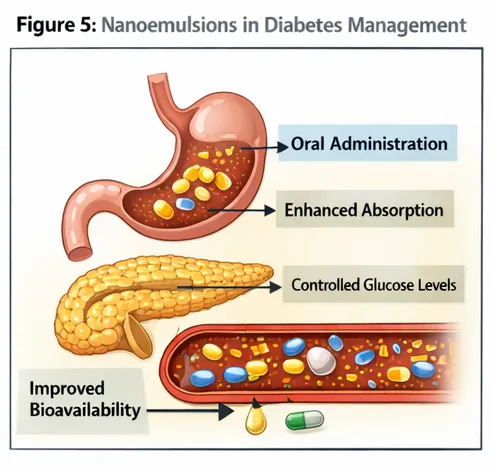
Figure 5 illustrates the role of Nanoemulsions in diabetes management.
Table 6 summarizes Nanoemulsions applications in diabetes mellitus.
|
Active Compound |
Benefit |
Observed Effect |
|
Quercetin |
Improved solubility |
Enhanced antidiabetic efficacy |
|
Insulin alternatives |
Oral delivery |
Reduced injection dependency |
9. ADVANTAGES AND LIMITATIONS
Nanoemulsions offer improved drug solubility, enhanced bioavailability, targeted delivery, and reduced toxicity [1,2]. However, challenges such as surfactant toxicity, long-term stability, and large-scale manufacturing remain.
10. FUTURE PERSPECTIVES
Future research should focus on stimuli-responsive Nanoemulsions, ligand-mediated targeting, and personalized drug delivery systems. Integration with smart nanotechnology platforms is expected to enhance clinical translation [38,39].
11. CONCLUSION
Nanoemulsions-based drug delivery systems represent a powerful high-technology platform capable of addressing critical challenges in pharmaceutical development. Their ability to enhance drug solubility, enable targeted delivery, and improve therapeutic efficacy across neurodegenerative diseases, cancer, and diabetes mellitus highlights their broad clinical potential. Continued innovation and clinical validation will further establish Nanoemulsions as key components of next-generation precision medicine
REFERENCES


Thilagavathi S., Aruna M., Sakthivel M., Sivakumar R., Janani Priya K., Kalaivani M., Kavishree R., Rajasekar R., Thejeswaran E., A Nanoemulsion-Based Targeted Drug Delivery Systems: Formulation Strategies, Optimization Techniques, And Therapeutic Applications in Neurodegenerative Diseases, Cancer, And Diabetes Mellitus, Int. J. of Pharm. Sci., 2026, Vol 4, Issue 6, 3493-3502. https://doi.org/ 10.5281/zenodo.20699214
 10.5281/zenodo.20699214