

We use cookies to ensure our website works properly and to personalise your experience. Cookies policy
Pharmacology Division, AU College of Pharmaceutical Sciences, Andhra University, Visakhapatnam, Andhra Pradesh
Triple Negative Breast Cancer (TNBC) is a rare, aggressive form of breast cancer that lacks both estrogen, progesterone, and HER2 receptors, resulting in fewer treatment options and poor prognosis. One of the most difficult aspects of TNBC is chemoresistance, resulting in treatment failure, tumor progression and recurrence. Recent developments in the field of nanofabrication have paved the way for the design of stimuli-responsive nanocarriers that can provide potential answers to these challenges. These nanocarriers are designed to exhibit specific tumor microenvironmental characteristics, such as acidic pH, overexpressed enzymes, high temperature, and redox gradients, which enable the targeted and controlled release of the drug at the tumor site. This review addresses the latest nanofabrication methods used in the fabrication of these intelligent drug delivery systems as a means to overcome the chemoresistance in TNBC. Improved intracellular delivery of chemotherapeutic drugs, inhibition of drug efflux systems, co-delivery of the chemotherapeutic drugs with gene silencing agents like siRNA or miRNA, and modulation of the tumor microenvironment to re-sensitize the target cells to the drugs were described as key strategies. Additionally, the review summarizes the recent advances in multifunctional nanoparticles with therapeutic and diagnostic capabilities (theranostics) and personalised nanomedicine strategies that could be adapted to specific tumor characteristics. The clinical translation of these nanocarriers, which involve biocompatibility, scalability and regulatory issues are also addressed. Overall, the integration of nanofabrication-enabled stimuli-responsive systems holds significant potential to revolutionize TNBC treatment by improving therapeutic efficacy, minimizing systemic toxicity, and ultimately enhancing patient outcomes.
Triple Negative Breast Cancer (TNBC) is a subset of breast cancer where there is no expression of estrogen receptor (ER), progesterone receptor (PR) or human epidermal growth factor receptor 2 (HER2) and has a high incidence in about 15-20% of all breast cancer cases [1]. This lack of receptor expression makes targeted hormonal and HER2-directed therapies ineffective, leading to poorer clinical outcomes and higher recurrence and metastasis rates than other breast cancer subtypes [2]. TNBC has a more aggressive clinical course and is disproportionately more common in younger women, highlighting the need for new therapeutic approaches. One of the most important problems encountered in the treatment of TNBC is the development of chemoresistance, which is also responsible for treatment failure and relapse [3]. Cancer cells develop chemoresistance via several mechanisms that involve changes in the cells' molecular machinery, such as up-regulation of drug efflux transporters, changes in apoptotic pathways, increased DNA repair capacity and epithelial-mesenchymal transition (EMT) [4]. The tumor microenvironment (TME) is also a significant factor because it can have a significant impact on promoting resistance, including hypoxia, stromal interactions, and acidic pH [5]. In conventional chemotherapy, the distribution of the drug is non-specific, causing systemic toxicity, and the drug does not accumulate in chemoresistant tumor niches, which reduces the efficacy of treatment [6]. To address these limitations, stimuli-responsive nanocarriers that allow for selective, controllable drug delivery in response to tumor-specific stimuli like pH, enzymes, temperature and redox conditions could prove to be promising candidates for nanofabrication [7]. These nanocarriers have the potential to promote drug bioavailability, intracellular drug delivery, overcome efflux mechanisms and modulate TME, which are key mechanisms of TNBC resistance to chemotherapy [8]. Furthermore, the nanofabrication techniques enable precise control over the size, shape, surface characteristics, and drug release profile of the nanocarriers, which is essential for optimizing therapeutic outcomes [9] . This review is aimed to provide a critical examination of recent development of nanofabrication strategies for the engineering of stimuli-responsive nanocarriers targeting chemoresistance in TNBC. It emphasizes molecular mechanisms of resistance, nanofabrication methods, stimuli-responsive drug release, therapeutic approaches and emerging trends and showcases translational challenges and future perspectives to hasten clinical impact.
2. Chemoresistance in TNBC: Molecular and Microenvironmental Factors
Triple Negative Breast Cancer (TNBC) is a complicated and complex form of cancer that is characterized by the presence of numerous molecular changes allowing the tumour cells to withstand the cytotoxic effects of chemotherapy. An important component of this resistance involves the over-expression of ATP-binding cassette (ABC) transporters, such as P-glycoprotein (ABCB1), which pump chemotherapeutic drugs out of the cell and decrease the intracellular concentrations of drugs and their efficacy [10]. At the same time, the dysregulation of apoptotic signaling pathways like the upregulation of anti-apoptotic Bcl-2 family proteins and down-regulation of pro-apoptotic factors prevents programmed cell death and makes damaged cells survive. An increased capacity for repair of DNA, especially by homologous recombination and nucleotide excision repair pathways, also provides resistance, as it can repair DNA lesions caused by chemotherapy [11]. The epithelial to mesenchymal transition (EMT) process plays mechanistically by inducing phenotypic plasticity, promoting stem-like characteristics and drug resistance via transcription re-programming, such as the transcription factors Snail, Twist and ZEB1 [12]. In addition to intrinsic cellular mechanisms, tumor microenvironment (TME) has a substantial impact on chemoresistance by sending biochemical and biophysical signals. Another characteristic of the TME is hypoxia caused by abnormal vascularization, which stabilizes hypoxia-inducible factors (HIF-1α and HIF-2α), which in turn stabilize transcription factors that drive survival pathways, such as the ones mediated by VEGF (angiogenesis), and metabolic reprogramming towards glycolysis, thereby increasing resistance to apoptosis and promoting EMT. Lowering the pH of the extracellular environment through increased glycolytic activity and secretion of lactic acid, changes the ionization of the drug which affects its uptake, and activates proteases like matrix metalloproteinases (MMPs) that degrade the extracellular matrix (ECM) enabling invasion and protecting tumor cells from drug penetration [13]. The secretion of cytokines (e.g., TGF-β, IL-6) and extracellular vesicles by stromal components such as cancer-associated fibroblasts (CAFs) and tumor-associated macrophages (TAMs) can activate pro-survival stromal signaling (STAT3, NF-κB), which can then upregulate ABC transporters, thereby reinforcing resistance phenotypes. Furthermore, the ECM is very dense and heterogeneous, creating physical barriers to drug diffusion, and activates integrin-mediated signaling pathways that promote drug resistance and cell survival [14]. All of these molecular and microenvironmental features work together to compromise the effectiveness of traditional chemotherapy, and are also complicated by systemic drug toxicity and the absence of targeted drug delivery. The lack of spatial and temporal regulation of the drug release process is the reason that the therapeutic concentrations are limited within resistant tumor niches, highlighting the need for more sophisticated delivery systems that can overcome these multifactorial resistance mechanisms [15].
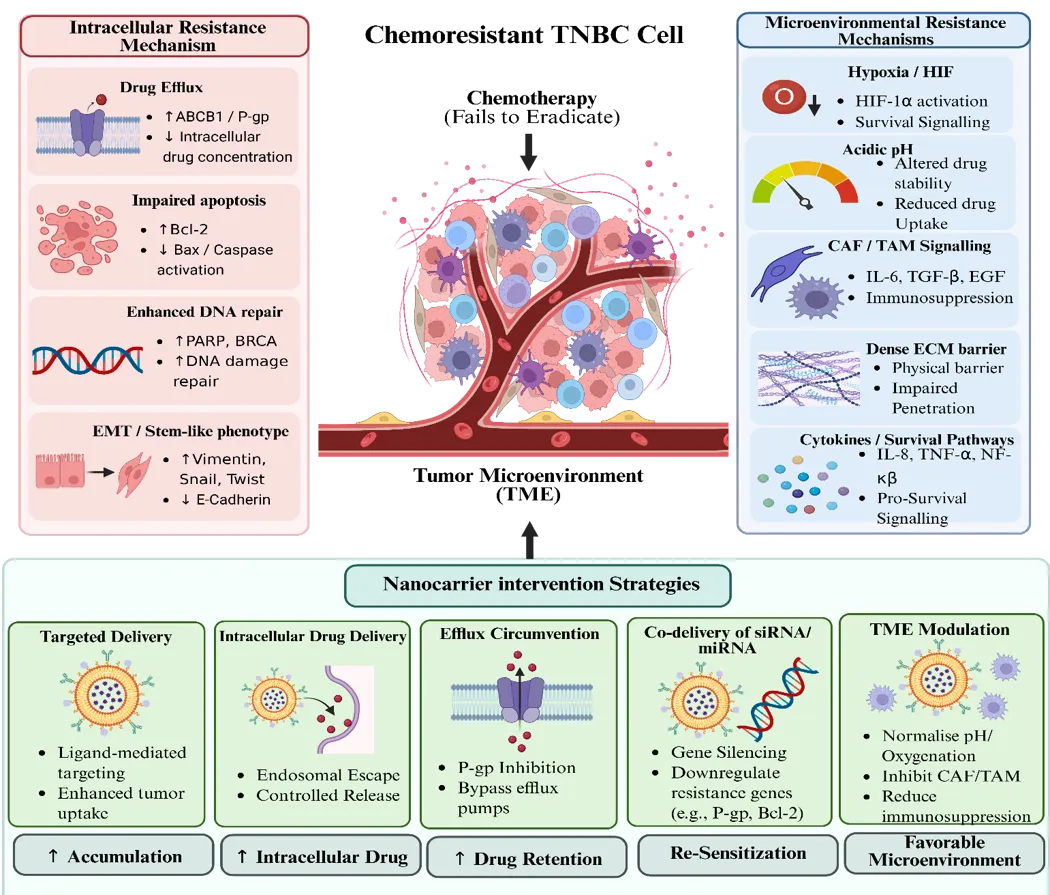
Figure 1. Multifactorial mechanisms of chemoresistance in triple-negative breast cancer and nanocarrier intervention points.
Chemoresistance in TNBC arises from interconnected intracellular and tumor-microenvironmental mechanisms. Intracellular mechanisms include increased ABCB1/P-glycoprotein-mediated drug efflux, impaired apoptosis, enhanced DNA-damage repair, and epithelial–mesenchymal transition/stem-like phenotypes. The tumor microenvironment further contributes through hypoxia/HIF signaling, acidic extracellular pH, cancer-associated fibroblast (CAF) and tumor-associated macrophage (TAM) signaling, extracellular matrix (ECM) barriers, and cytokine-mediated survival pathways. Stimuli-responsive nanocarriers can address these barriers through targeted and intracellular drug delivery, efflux circumvention, co-delivery of therapeutic nucleic acids such as siRNA/miRNA, and modulation of the tumor microenvironment, thereby promoting drug retention and resensitization of resistant TNBC cells.
3. Nanofabrication Techniques for Stimuli-Responsive Nanocarriers
The nanofabrication techniques allow precise control of the physicochemical properties of nanocarriers, which are crucial for the development of stimuli-responsive drug delivery systems that are specific to Triple Negative Breast Cancer (TNBC). These approaches dictate parameters like size, morphology, surface chemistry and responsiveness to tumor microenvironmental factors that all impact on targeting specificity and therapeutic efficacy [16].
3.1. Overview of Nanofabrication Methods
Electrospinning is a technique that uses a high voltage electric field to draw continuous nanofibers from polymer solutions, with diameters ranging from tens to hundreds of nanometers. The large surface area to volume ratio, and the tunable porosity can promote fast loading of the drug and controlled release. Furthermore, functionalization with pH sensitive polymers (such as polyacrylic acid) can facilitate the release of drug in the acidic TNBC microenvironment [17]. Overall, electrospinning is a useful technique with many benefits, but it only produces fibrous mats, which means it is mainly used for local and/or scaffold-based delivery.
Lithography includes top-down patterning methods like electron-beam and nanoimprint lithography technologies, which provide nanoscale control over size and shape. With such precision, it is possible to construct uniform nanocarriers equipped with multiple functional components such as targeting molecules and stimuli-sensitive groups, including ligands for cellular uptake and biodistribution optimization [18,19]. But the high cost and scalability problems of lithography pose a hurdle for clinical transition.
Self-Assembly is a bottom-up method in which amphiphilic molecules or block copolymers self-organize into nanostructures like micelles, liposomes or polymersomes. This approach is preferred due to its simplicity and scalability. The incorporation of stimuli-responsive linkers, such as acid-labile, redox-sensitive disulfide bonds, or enzyme-cleavable peptides allows for precise drug release after encountering microenvironmental stimuli present in TNBC tissues [18,20]. One of the difficulties is to obtain a uniform size distribution, and to keep the particle stability under physiological conditions.
3.2. Material Selection Criteria
Material choice is critical to balance biocompatibility, biodegradability, and stimuli responsiveness. Biocompatible polymers such as poly (lactic-co-glycolic acid) (PLGA), chitosan and polyethylene glycol (PEG) exhibit stealth and biocompatibility features that extend the systemic circulation and reduce clearance by the immune system [21]. To achieve stimuli-responsive behavior, functional groups with pH sensitivity (acid-labile bonds), intracellular glutathione sensitivity (disulfide linkers), and enzyme sensitivity (peptides sensitive to tumor proteases) are integrated. Hybrid materials combining organic and inorganic components (e.g., polymer-metal composites) are emerging to enhance multifunctionality, including imaging and therapeutic capabilities [22].
3.3. Design Considerations
Size: The size of nanocarriers is generally in the range of 50 to 200 nm to take advantage of the enhanced permeability and retention (EPR) effect, which allows them to accumulate in tumors, as well as to maintain a low clearance rate by the kidney and reticuloendothelial system (RES) [23]. Depending on the size, the internalization pathways and intracellular trafficking are also affected.
Surface Functionalization: Hydrophilic polymer coatings such as PEG decrease opsonization and immune clearance. Active targeting involves conjugating ligands, like antibodies, peptides, or aptamers, that specifically bind to receptors over-expressed by TNBC cells, which leads to more selective uptake with reduced off-target toxicity [23].
Drug Loading Capacity and Stability: High drug loading efficiency provides therapeutic doses and reduces carrier toxicity. Stability on circulation is achieved either by crosslinking or by using the core-shell structure to avoid premature drug release. The stimuli-responsive linkers undergo degradation or changes in conformation only in the tumor microenvironment, which allows for controlled and localized drug delivery [24].
To summarize, advanced nanofabrication methods, coupled with rational material selection and design optimization, enable the fabrication of complex stimuli-responsive nanocarriers. These systems overcome chemoresistance in TNBC by providing targeted and controlled drug delivery that is responsive to cues from the tumor microenvironment, thus improving therapeutic outcomes.
4. Stimuli-Responsive Mechanisms and Targeting Strategies
4.1. Types of Stimuli Exploited in TNBC
Stimuli-responsive nanocarriers are designed to take advantage of the unique biochemical and physiological properties of the tumor microenvironment in Triple Negative Breast Cancer (TNBC) to enable spatiotemporal control of drug delivery. The acidic extracellular pH of TNBC tumors (usually 6.5-6.8) is one of the main stimuli and is caused by increased glycolysis and accumulation of lactic acid. Acid-labile bonds or pH-sensitive polymers can be used to incorporate nanocarriers in which the chemical bond(s) break and/or the conformational structure changes in response to the acid pH, leading to localised release of the payload. This selective activation reduces the systemic toxicity and increases the bioavailability of the drug in the tumour site [25]. Temperature responsive mechanisms utilize the modestly higher temperature inside a tumor or induced high temperature. Some polymers like poly(N-isopropylacrylamide) (PNIPAM) have a so-called lower critical solution temperature (LCST), so that the polymer can be reversibly switched between the solution and precipitation state, allowing for the release of a drug when the local temperature exceeds the LCST. This thermosensitivity can be used to trigger the delivery of a drug with a thermal therapy, thereby increasing the tumor specificity [26]. Enzyme responsive nanocarriers take advantage of the overexpression of proteolytic enzymes, such as the matrix metalloproteinases (MMPs) and cathepsins present in the TNBC microenvironment. These enzymes break down peptide linkers or cleave polymeric backbones used in the design of the nanocarrier that allow site-specific disassembly of nanocarriers and release of drugs. This enzyme responsiveness allows preferential release of the drugs in the tumor environment, while leaving normal tissues unaltered [27]. Redox responsive systems take advantage of the higher level of reducing agent, glutathione (GSH), inside cancer cells. The disulfide bond or other redox-sensitive linker holds the therapeutic agent on the nanocarriers outside the cell, but allows it to be released inside the cell upon the cell's internalization. The mechanism allows for avoidance of extracellular degradation and increases the availability of the drug in the cytosol [28].
4.2. Engineering Nanocarriers for Controlled and Triggered Drug Release
The stimuli-sensitive chemical linkers and responsive polymers are embedded in the nanocarrier design, which facilitates the control of drug release. Acid-labile linkages like hydrazone, imine and acetal bond are included in the nanocarrier matrix or within the drug-nanocarrier complex, which can be cleaved at acidic pH within the tumor. The redox sensitive disulfide bonds are strategically located to be broken in the reductive intracellular environment. Peptide sequences are added that are degraded by proteases commonly found on tumor cells. The choice of polymers for the inner structure of nanocarriers is based on their conformational change on stimulus. For example, pH-sensitive polymers will swell or shrink in acidic conditions, affecting the rate at which drugs are released from the matrix. Thermoresponsive polymers change from coil to globule at a critical temperature, thereby releasing the payload [29,30]. Spatial segregation of drug compartments is achieved using layered or core-shell architectures with the ability to release the drug in a sequential manner, with outer layers released under extracellular stimuli and inner cores under intracellular stimuli. Targeting ligands or drugs can be hidden from the targeting cells or cells in circulation with “smart” surface modifications, but exposed when specific stimuli are encountered at a tumor site, resulting in increased selectivity and reduced off-target effects [31].
4.3. Targeting Ligands and Moieties for Selective TNBC Cell Recognition
Active targeting of TNBC cells is achieved by conjugating nanocarrier surfaces with ligands that recognize and bind to receptors that are overexpressed on cancer cells, enabling receptor-mediated endocytosis. Monoclonal antibodies or antibody fragments against epidermal growth factor receptor (EGFR) which is often over-expressed in TNBC, are highly specific and have high affinity and undergo internalization [32]. Peptide ligands, like the RGD sequence, bind to integrins present in the tumor vasculature and in tumor cells, which leads to improved penetration and receptor mediated endocytosis. The single-stranded nucleic acid molecule aptamers, which have high binding specificity and low immunogenicity, bind to specific markers such as CD44, a cancer stem cell marker that is highly expressed in TNBC, and have the advantages of stability and simple synthesis [33]. Selectively taken up by folate receptors that are upregulated in a selected number of TNBC subsets, small molecule ligands like folate bind to the folate receptor. To overcome tumor heterogeneity and enhance the targeting efficiency, dual or multi-ligand strategies are used, which include combination of ligands binding to different receptors and/or microenvironmental features [34]. This is the multivalent strategy that increases the binding avidity and cellular internalization, and consequently, the therapeutic efficacy.
5. Therapeutic Strategies to Overcome Chemoresistance
To overcome chemoresistance in Triple Negative Breast Cancer (TNBC), integrated strategies are needed to improve drug delivery inside cancer cells, circumvent drug efflux, and adjust tumor microenvironment (TME) to make drug sensitive. Nanofabrication enabled stimuli-responsive nanocarriers are a mechanistically sophisticated and translationally viable platform to solve these challenges.
5.1. Enhancing Intracellular Drug Delivery and Evading Efflux Mechanisms
The chemoresistant TNBC cells often overexpress ATP-binding cassette (ABC) transporters, including P-glycoprotein (P-gp), which actively extrude chemotherapeutic drugs from the cytoplasm, lowering intracellular drug levels below therapeutic concentrations. Nanocarriers designed with nanofabrication may overcome these efflux pumps by entering the cell by endocytosis instead of simple diffusion, thereby delivering drugs to the cytosol or specific organelles [34]. The nanocarrier design incorporates stimuli-responsive components that release the drug in a controlled manner within the cell, such as pH-sensitive linkers which can be broken down in the acidic endosomal compartments or redox-sensitive disulfide bonds which can be broken down by the high levels of glutathione within the cell [35]. The level of cytotoxic drugs in resistant cells is maintained by this targeted release, thus overcoming the efflux mediated resistance. Further, the surface can be functionalized with targeting ligands, such as antibodies against EGFR or peptides targeting CD44, a process that increases selective uptake of resistant TNBC cells, increases therapeutic efficacy and minimizes off-target toxicity [36]. This translationally has the advantage of increasing the accumulation of the drug in the tumor and reducing systemic exposure and overcome dose-limiting toxicities frequently seen in chemotherapy.
5.2. Co-delivery of Chemotherapeutics with siRNA or Resistance Modulators
In TNBC, chemoresistance has a multifactorial nature requiring combination therapy that targets multiple chemoresistance pathways. Such a synergy can be obtained by developing nanocarriers which could be loaded with chemotherapeutics and gene-silencing molecules, like small interfering RNA (siRNA) and microRNA (miRNA) [37]. The siRNA can, for example, reduce resistance by inhibiting the expression of genes involved in resistance (ABC transporter genes, including ABCB1) or anti-apoptotic genes (such as Bcl-2), thereby sensitizing the tumor cells to chemotherapeutics [38]. Nanofabrication methods allow both drugs (hydrophobic or nucleic acid) to be encapsulated and subsequently released in synchronously and co-localized fashion when stimulated by the tumour. This co-delivery mechanism can disrupt the resistance phenomenon on genetic and protein level on the one hand and provide the cytotoxic drugs, promote the apoptosis process and reduce tumour viability on the other hand [39]. Translationally, these combinatorial nanomedicines can be tailored to the patient's resistance profile, offering personalized treatment approaches that may improve treatment success and reduce the risk of relapse.
5.3. Modulating the Tumor Microenvironment to Sensitize Resistant Cells
The TME is important for chemoresistance due to its effect on hypoxia, acidic pH, immunosuppressive cells and tight extracellular matrix (ECM) that enable cells to survive and confer resistance to chemotherapy. Resistant cells can be sensitized and drug efficacy be improved by engineering nanofabricated stimuli-responsive carriers to modulate the TME. For example, oxygen carrying agents or oxygen generating agents may help to reduce hypoxia, which decreases hypoxia-inducible factor (HIF) mediated survival pathways [40]. pH modulators have the ability to restore extracellular pH to the normal range resulting in improved drug solubility and uptake. Immunomodulatory payloads such as checkpoint inhibitors or cytokines can be co-administered to switch off the immune system brake, and induce anti-tumor immune responses that are inhibited in the TME [41]. Furthermore, nanocarriers may be loaded with matrix degrading enzymes (e.g., collagenase), or inhibitors of stromal signaling to change the ECM and enhance drug diffusion and to break down protective niches. Mechanistically, these interventions do this by reducing the physical and biochemical barriers to resistant cells and therefore improve the distribution of the drug and therapeutic outcomes [42]. Translationally, by targeting the TME, the treatment responses go beyond a cellular level, as well as tissue-level resistance. Overall, these therapeutic approaches take advantage of the modularity and multifunctionality of stimuli-responsive nanofabricated systems to mechanistically and translationally overcome chemoresistance in TNBC [43]. Their versatility enables them to be tailored to the biology of the tumor and individual patient, thereby improving the potential for the development of effective, personalized cancer therapies.
6. Nanofabrication Innovations and Emerging Trends
Recent advances in nanofabrication have significantly expanded the capabilities of nanocarriers for Triple Negative Breast Cancer (TNBC) therapy by integrating multifunctional and hybrid nanostructures, advancing personalized nanomedicine, incorporating theranostic functionalities, and developing novel stimuli-responsive materials and fabrication techniques. These innovations mechanistically enhance therapeutic precision and translational potential, addressing the complex challenges posed by chemoresistance and tumor heterogeneity [34].
6.1. Integration of Multifunctional and Hybrid Nanostructures
Multifunctional nanostructures integrate therapeutic delivery system with other functions including imaging, targeting and external stimulus responsiveness in one single platform. Hybrid nanocarriers are frequently combinations of organic polymers and inorganic materials, such as gold nanoparticles, magnetic iron oxide or quantum dots, allowing for synergic functionalities [44]. For instance, magnetic nanoparticles coated with polymers can be used to target and target-controlled deliver drug/gene to the target site and release it in response to hyperthermia, thus allowing spatiotemporal control of therapy [45]. Photothermal conversion is achieved with plasmonic metals, which generate local heat when hit by near infra-red light, releasing the payload and ablating the tumor at the same time. The hybrid systems enable multimodal therapy, e.g., chemo-photothermal therapy, which boosts the anti-resistance effect of TNBC cells and reduces systemic side effects, mechanistically [46]. Hybrid nanostructures are designed to be modular, enabling a fine-tuning of size, shape and surface chemistry, which is essential for clinical translation, for example, by optimization of biodistribution and cellular uptake [47].
6.2. Advances in Personalized Nanomedicine and Precision Targeting
Personalized nanomedicine takes advantage of the molecular characteristics of the patient's tumour to design nanocarriers and therapeutic agents which maximize efficacy and minimize off-target toxicity. The nanofabrication techniques enable the precise control of the physicochemical properties of the nanocarriers, such as their size, shape, surface charge and density of ligands, with a view to satisfying the specific needs of the tumour microenvironment and the expression of specific receptors in the individual patient. Nanocarriers can be, for instance, further functionalised with ligands, which are specific for and targeted to the over-expressed receptor types in the patient's particular type of TNBC, for instance EGFR or CD44, and thus improve the selectivity of receptor type targeting and internalisation of the nanocarrier. High throughput screening and integration with artificial intelligence (AI)–guided design platforms help to optimize nanocarriers' behavior and therapeutic response, while predicting their behavior and therapeutic response from patient data. Precision targeting is achieved on a mechanistic level, involving the penetration and retention of the tumor, the reduction of tumor heterogeneity and reduction in systemic toxicity. Translationally, personalized nanomedicine can enable adaptive treatment strategies, enabling dynamic changes in nanocarriers' properties and cargo to adapt to tumor evolution [48,49].
6.3. Incorporation of Diagnostic (Theranostic) Capabilities
Theranostic nanocarriers combine therapeutic and diagnostic capabilities and allow the delivery of therapeutic agents and real-time monitoring of the efficacy of the treatment. These platforms combine imaging agents (fluorescent dyes, magnetic resonance imaging (MRI) contrast metals, or radionuclides in the nanocarrier with chemotherapeutics. Therapeutic elements that are responsive to stimuli can be tuned to regulate both therapeutic release and imaging signals, giving feedback on drug release and biodistribution and on tumor response [31]. The theranostic nanocarriers enable the spatiotemporal control of the therapy and non-invasive evaluation of treatment progress, which can be used to adjust the therapy dose according to the patient's individual situation. Drug release, for instance, can be triggered with redox- or pH-sensitive linkers, while at the same time changing the imaging contrast, which indicates successful delivery of the payload. Translationally, these systems can be integrated to facilitate clinical decision making by combining diagnosis, therapy, and monitoring in one platform, resulting in better treatment outcomes and patient management [50,51].
6.4. Emerging Stimuli-Responsive Materials and Fabrication Techniques
The development of advanced stimuli-responsive materials, multi-stimuli sensitivity and adaptive behavior in next generation nanocarriers is ongoing. The ability to control drug release in response to various combinations of pH, redox potential, enzymes and temperature via polymers responsive to these stimuli facilitates a more precise control of drug delivery into the complex and heterogeneous TNBC microenvironment [8]. Dynamic covalent chemistry and reversible crosslinking give rise to self-healing and shape memory properties, which will lead to increased stability in the circulation and increased responsiveness to tumor localization. The fabrication techniques that enable the creation of nanocarriers with hierarchical structures, controlled porosity, and spatially-distributed functional groups allow unprecedented architectural control of nanocarriers. These methods increase payloads' efficiency to be encapsulated, increase release rate and the targeting accuracy [31]. This innovation is achieved at a molecular level, allowing for control of in vivo nanocarrier behaviour, overcoming previous challenges in uniformity and scalability. In the clinical aspect, to address chemoresistance in TNBC, the translationally scalable fabrication and enhanced functional complexity of nanofabricated stimuli-responsive systems are of paramount importance. Together, these innovations mark a paradigm change in the field of nanofabrication, making nanocarriers into complex, multifunctional, smart platforms for personalized, controlled and monitored therapy. These emerging trends hold significant promise for improving the clinical outcomes and precision oncology of TNBC, addressing its chemoresistance and multifactorial nature [52].
7. Translational and Clinical Perspectives
The translation of stimuli responsive nanocarriers from bench-to-bedside for the application in Triple Negative Breast Cancer (TNBC) therapy is a multiple challenge process which encompasses scalable manufacturing, regulatory pathways, integration with personalized medicine and clinical adoption. The significance of these factors is due to the potential for achieving full therapeutic potential of nanofabricated systems [48].
7.1. Challenges in Scalable, Reproducible Nanofabrication for Clinical Applications
Robust and reproducible nanofabrication techniques that consistently control the nanocarriers' size, morphology, surface chemistry and stimuli responsiveness on a larger scale are needed to scale up the production of these stimuli-responsive nanocarriers. These parameters can vary significantly and could have a significant effect on the biodistribution, pharmacokinetics and therapeutic efficacy and quality control is of paramount importance. Microfluidics assisted synthesis and automated self-assembly are novel techniques that hold potential for scalable production with high uniformity and batch-to-batch consistency. But there are some difficulties at scaling up a lab scale process to an industrial scale process to keep functional integrity and stimuli responsiveness. Furthermore, it is crucial to make this nanocarrier stable during storage and transport and maintain the responsive properties of the nanocarrier. To ensure reproducibility and regulatory compliance, standardized protocols and in-process monitoring tools are crucial [34,53].
7.2. Regulatory Considerations Unique to Stimuli-Responsive Nanocarriers
The regulatory evaluation of stimuli responsive nanocarriers is difficult because of the various functions and in vivo dynamic properties of nanocarriers. Surface modifications and degradation products that could be released by stimuli-triggered release should also be taken into account in the safety assessment process, in addition to toxicity of the constituent materials. The controlled release mechanisms add extra factors to the considerations of pharmacodynamics and pharmacokinetics and must be fully characterized in physiological and pathological scenarios. Regulatory agencies demand high standards for the reproducibility, stability and predictable performance of the nanocarriers, as well as a thorough understanding of biological interactions. As no standard guideline is available specifically for stimuli-responsive systems, collaboration between developers and regulators would be required to develop guidelines for the simulation of these systems and to develop advanced in vitro/in vivo models that would set the degrees of freedom for the tumor microenvironment [17,40].
7.3. Prospects for Integration with Personalized Medicine and AI-Driven Design
TNBC is highly heterogeneous and patient-specific resistance mechanisms emphasize the need for personalized nanomedicine. Nanofabrication, combined with high throughput molecular profiling, enables the tuning of properties of the nanocarriers such as targeting ligands, drug payload and sensitivity to stimuli to the individual tumor properties. The analysis of a huge amount of data such as patient genomics, proteomics and pharmacologic parameters is performed by AI and machine learning algorithms and thus allows for predictive modelling of the behaviour of nanocarriers and the therapeutic responses. AI-driven design speeds up optimization by simulating the interaction between nanocarriers and tumors, and determining the most effective physicochemical properties for achieving maximum efficacy and reducing toxicity. This can lead to optimized treatment that can adapt to the progression of the tumour and therefore enhance clinical outcomes. Precision methods require integration with analytic platforms to make treatment adjustments, with stimuli-responsive nanocarriers being the ideal tool for next-generation personalized oncology from a therapeutic standpoint [54,55].
7.4. Strategies to Accelerate Clinical Translation and Patient Impact
Collaboration between multiple disciplines in academia, industry, clinical and regulatory is essential to achieve successful clinical adoption. Early involvement with regulatory authorities helps with harmonisation of quality and safety standards. Appropriate characterization methods are developed, ensuring consistency and having a product ready for regulatory testing, and scalable and cost-effective manufacturing processes are developed. Patient stratification by biomarkers and real-time tracking of nanocarrier biodistribution and efficacy in clinical trial designs are increasingly becoming associated with increased chances of clinical benefit. Additionally, educating health care professionals about the advantages of nanomedicine, as well as addressing logistical challenges and implementation and oversight, must be done to make nanomedicine a powerful tool in the mainstream. The gap between the experimental platforms and approved therapeutics will be helped to be bridged by public-private partnership and investments in infrastructure for translational research. These strategies all help to move innovations into clinical practice, and lead to improved treatment for patients with TNBC who are chemoresistant [2,3].
CONCLUSION
The nanofabrication of stimuli-responsive nanocarriers has great potential to overcome the important issue of chemoresistance in Triple Negative Breast Cancer (TNBC). These advanced delivery systems permit the fine-tuning of the nanocarrier's physicochemical characteristics, as well as tunability of response to tumor microenvironmental factors which can induce targeted and controlled drug release, decrease efflux, and control the tumor microenvironment. This is a comprehensive approach directly targeting the molecular and microenvironmental mechanisms that lead to therapy resistance. Significant progress has been made in the fabrication of more complex nanofabrication techniques, such as electrospinning, lithography, and selfassemblies, which can yield nanocarriers with the optimized properties of size, surface functionality and stimuli-sensitivity. Multifunctional and hybrid nanostructures have been created to boost the therapeutic potential by combining targeted delivery, diagnostics and external stimulus responsiveness in the same platform. With the personalized targeting and patient-specific tumor profiling enabled by AI, the therapeutic benefits and targeting precision continue to be enhanced with the advent of AI-powered personalized nanomedicine. In vivo tracking of drug delivery and tumor response in real time will enable better adjustment of treatment protocols. Also, new materials that respond to stimuli, and scalable fabrication methods, have helped circumvent previous limitations of instability, uniformity and clinical translation. Further development of scalable and reproducible manufacturing processes and establishment of standardized regulatory frameworks to match the dynamism of stimuli-responsive nanocarriers should be the focus of research in the future. To tackle tumor heterogeneity and resistance over time, there will be a need for innovation in nanofabrication and for the ability to combine it with personalised medicine, high-throughput screening and optimization using AI. Moreover, more preclinical models which simulate the complex tumor microenvironment and resistance mechanisms should be developed to further enhance the translatability. The capability of nanofabricated stimuli-responsive systems will not be realized without the cooperation of the research, clinical, industrial and regulatory communities. In sum, the strategic directions hold the potential to revolutionize the treatment of TNBC, tackle chemoresistance, optimize treatment effectiveness, and bring innovations for precision oncology via nanofabrication.
REFERENCES


Varikuti Janardhana, Balakoti Erothi, Routhu Pratyusha, K Eswar Kumar, Ummadisetty Manoj Kumar, Chunduru Venkata Ragha Vinay, Nanofabrication of Stimuli-Responsive Nanocarriers for Targeted Overcoming of Chemoresistance in Triple Negative Breast Cancer, Int. J. of Pharm. Sci., 2026, Vol 4, Issue 9, 3679-3695. https://doi.org/10.5281/zenodo.23022014
 10.5281/zenodo.23022014