

We use cookies to ensure our website works properly and to personalise your experience. Cookies policy
Department of Pharmaceutics, JNTUK, Kakinada, Andhra Pradesh, India
Chronic pulmonary diseases encompass different persistent and lethal diseases, including chronic obstructive pulmonary disease (COPD), idiopathic pulmonary fibrosis (IPF), cystic fibrosis (CF), asthma, and lung cancers that affect millions of people globally. Traditional pharmacotherapeutic treatment approaches (i.e., bronchodilators, corticosteroids, chemotherapeutics, peptide-based agents, etc.) are not satisfactory to cure or impede diseases. With the advent of nanotechnology, drug delivery to an intended site is still difficult, but the nanoparticle’s physicochemical properties can accomplish targeted therapeutic delivery. Based on their surface, size, density, and physical-chemical properties, nanoparticles have demonstrated enhanced pharmacokinetics of actives, achieving the spotlight in the drug delivery research field. In this review, the authors have highlighted different nanoparticle-based therapeutic delivery approaches to treat chronic pulmonary diseases along with the preparation techniques. The authors have remarked the nanosuspension delivery via nebulization and dry powder carrier is further effective in the lung delivery system since the particles released from these systems are innumerable to composite nanoparticles. The authors have also outlined the inhaled particle’s toxicity, patented nanoparticle-based pulmonary formulations, and commercial pulmonary drug delivery devices (PDD) in other sections. Recently advanced formulations employing nanoparticles as therapeutic carriers for the efficient treatment of chronic pulmonary diseases are also canvassed.
A range of long-term lung conditions are referred to as chronic lung disease, including lung cancer, idiopathic pulmonary fibrosis (IPF), cystic fibrosis, TB, asthma, and chronic obstructive pulmonary disease (COPD). No treatment can completely restore lung function in several of these conditions, which are incurable and frequently fatal. Asthma and COPD are the two most prevalent diseases in the world today, affecting an estimated 300 million and 210 million individuals, respectively. Pulmonary drug delivery, which can transport the drug directly, has special benefits over other delivery methods or strategies, including high bioavailability and no first-pass effect. [1,2]
Conventional pharmacotherapeutic methods, including corticosteroids and bronchodilators, frequently don't manage these problems well enough. This deficiency has prompted research into novel therapeutic approaches, including drug delivery systems based on nanoparticles, which are becoming more widely acknowledged as possible "magic bullets for targeted therapy in chronic pulmonary diseases." [3]
The "Magic Bullet" notion
Paul Ehrlich used the phrase "Magic bullet" in 1907 to describe a medicinal substance that could specifically target disease-causing substances without endangering healthy tissues. This idea has changed throughout time, especially in relation to cancer treatment, but it is still important for creating new therapies for long-term lung conditions.
Because of their capacity to increase drug delivery through enhanced pharmacokinetics and focused action at the disease site, nanoparticles have special benefits. [3]
Researchers can increase the effectiveness of medicine delivery and lessen adverse effects by altering the surface characteristics of nanoparticles, which will enable them to bind to particular cell types in the body. misuse. Furthermore, drug delivery systems based on nanoparticles can enhance the stability and prevent drug degradation, guaranteeing prolonged drag release and extending the therapeutic effect. [2, 3]
This approach, often referred to as the "Magic bullet" concept, involves the precise targeting of disease sites. while sparing healthy tissues. By leveraging the advantages of nanotechnology, nanoparticle-based drug delivery systems are poised to revolutionize the treatment of chronic pulmonary diseases, offering a promising pathway to more effective, safer, and personalized therapies. This introduction outlines the potential of nanoparticle-based drug delivery systems in the treatment of chronic pulmonary diseases and highlights their role in improving drug efficacy and patient outcomes [3]
PULMONARY SYSTEM
Anatomical and physiological the human gas exchange organ the skeleton and rib muscles protect the lungs' fragile tissues, which are found in the chest. The lungs filter waste carbon dioxide from the blood and supply oxygen to the body's tissues continuously. Through a network of pipes known as airways, which link the gas exchange zone to the exterior of the body, atmospheric air is routinely pumped. The upper and lower respiratory systems are two divisions of the respiratory tract. Right above the larynx, at the junction of the digestive and respiratory systems, is where the two systems meet. [4]
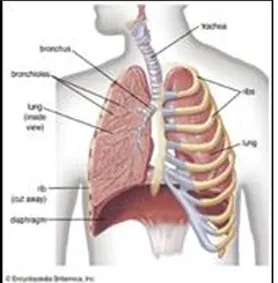
Fig 1: Anatomy and physiology
NANOMEDICINE IN RESPIRATORY DISEASES
In nanomedicine, medication/therapeutic molecules are conjugated or encapsulated using drug carrier systems. Nanomedicines can reach particular and far-flung parts of the body due to their nanoscale structure. [5] Drugs for respiratory conditions are administered to the lungs either systemically or by inhalation. This is beneficial since it reduces adverse effects, therapeutic dose, and drug resistance. High levels of biocompatibility and biodegradability are demonstrated by polymeric materials [6]. Effective drug entrapment by polymeric nanoparticles either permits prolonged drug release or speeds up release kinetics in response to extracellular or cellular cues such pH, temperature, and redox potential [7]. When these particles are functionalised, different ligands, DNA, peptides, and carbohydrates can be chemically conjugated to enable the particles' effective targeted distribution. [8]
PULMONARY DISEASE
Long-term illnesses that impair breathing are known as chronic respiratory disorders. Shortness of breath, coughing, and wheezing are some of the symptoms that can result from this illness, which makes it difficult for the lungs to get enough air. Asthma, chronic obstructive pulmonary disease (COPD), and bronchitis are typical instances of chronic respiratory conditions. These illnesses can have an impact on a person's quality of life and frequently call for continuous medical treatment. [2]
COPD
COPD Persistent airflow restriction is a hallmark of chronic obstructive pulmonary disease (COPD), a progressive chronic inflammatory lung disease. In COPD, the term "obstructive" describes airflow restriction brought on by partial or total airway obstruction. COPD is a complex illness that can be treated and prevented. By 2020, it is expected to rise from its current position as the fourth greatest cause of death globally to the third. Because of the ongoing burden of COPD risk factors and an ageing population, the disease's burden is predicted to rise globally over the next several decades. [9] Patients with COPD frequently report coughing, sputum production, wheezing, and shortness of breath as distinct symptoms.
However, a number of variables, such as the severity of the disease and any comorbidities, affect how symptoms affect a patient's everyday activities. [10] Systemic inflammation and an increase in upper and lower respiratory tract illness are linked to COPD exacerbations (Figure 2). The nature of inflammatory alterations in the airways, particularly when studied close to the exacerbation, is not well understood since it is challenging to do a bronchial biopsy during an exacerbation to severe COPD in patients with intermediate illness. In the bronchial mucosa, CD8+ lymphocytes and macrophages are more prevalent in stable COPD, while neutrophils are more prevalent in more severe cases. [11]
Nonetheless, throughout the last ten years, medication for COPD has advanced considerably. Previously, far better results were attainable due to the availability of long-acting beta-agonists (LABA), fixed combinations of inhaled corticosteroids and LABA, and long-acting anticholinergic or muscarinic antagonists (LAMA). Emphysema, mucus hypersecretion, and obstructive bronchiolitis are the main pathological characteristics of COPD [12]. Oxidative stress can accelerate the degradation of elastin in the lung parenchyma by impairing the activity of antiproteases like secretory leukoprotease inhibitor and α1-antitrypsin. Because oxidative stress impairs the activity of endogenous anti-aging molecules such sirtuins, which can prevent ageing and play a role in genomic integrity, lung ageing is accelerated [13]. Cellular senescence eventually results from sirtuin-1's decreased expression and activity. Additionally, inflammatory proteins such as TNF-α, IL-1, IL-6, CXCL8, CCL2, and MMPs are released and generated by senescent cells [14]. In patients with COPD, an imbalance in the expression of proinflammatory enzymes leads to corticosteroid resistance. Through a decrease in HDAC activity [15,16] and an increase in histone acetyltransferase activity [10], oxidative stress-induced damage raises the expression of proinflammatory enzymes in patients with COPD.
As a result, corticosteroid therapy is ineffective in reducing inflammation in individuals with COPD, even when high dosages of oral or inhaled corticosteroids are administered [17]. Furthermore, oxidative stress might lower anti-inflammatory defences like CAT activity, which has been shown to be markedly lower in COPD patients [18, 19]. Patients with COPD have higher serum nitro-tyrosine [13] and lipid-peroxidation product levels, which raise systemic inflammation through the synthesis of proinflammatory cytokines, leading to cachexia [20] and thromboembolic events [21].
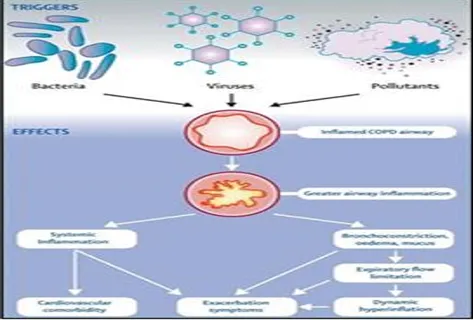
Fig 2: Mechanism of COPD
ASTHMA
Having asthma Wheezing, shortness of breath, chest tightness, and frequent coughing are the hallmarks of asthma, a chronic inflammatory disease of the airways, according to the World Health Organisation (WHO). Asthma symptoms include bronchospasm (contraction of the smooth muscle of the airways), oedema, and increased mucus secretion, which are caused by the release of inflammatory mediators including histamine and cysteinyl leukotrienes, which are triggered by the synthesis of IgE. Avoiding aggravating environmental factors, using short-acting β2-agonists for quick symptom relief, and using inhaled corticosteroids every day are all necessary for treating chronic asthma. Additional drugs, such as biologics or long-acting bronchodilators, may be necessary for the treatment of moderate to severe asthma. It is usually beneficial for people with severe asthma to speak with an asthma specialist about other options, like biologic injections. Irreversible airway blockage, hyperresponsiveness, and persistent inflammation that results in airway wall remodelling are the hallmarks of asthma, a complex illness.[22] The main goal of current treatment approaches is to reduce symptoms by using glucocorticosteroids, β-2 agonists, and bronchodilators. Although glucocorticoids and long-acting β-2 agonists are useful in treating asthma attacks, [23] overuse of these drugs has been linked to decreased clinical effectiveness and possible side effects. Furthermore, in cases of severe asthma, poorly managed inflammation may result in unexpected death. Alternative treatment approaches that can successfully treat airway remodelling and hypersensitivity while lowering the possibility of serious side effects are therefore desperately needed. [24,25]
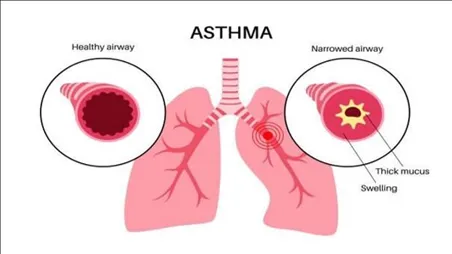
Fig 3 Asthma
PULMONARY FIBROSIS
A chronic and persistent tissue healing response, pulmonary fibrosis causes irreversible lung remodelling and scarring. [26] which subsequently promotes the production of collagen. Respiratory function and gas exchange capacity are significantly compromised by this diseased condition. The death rate linked to PF is above 70%, and patients often have abrupt decreases in respiratory capacity [27], underscoring the urgent need for efficient therapeutic measures. [28] Because fibrosis is linked to an increased risk of lung cancer, it is very harmful. [29]
The pathophysiology of PF includes aberrant TGF-β signalling pathway activation, which induces fibroblast activation and epithelial mesenchymal transition (EMT), hence promoting excessive ECM deposition (fig 4). These medications can be gradually released over time by being encapsulated in nanoparticles, which may lessen side effects and increase therapeutic efficacy. [3] In EMT, a crucial stage in the development of fibrosis, epithelial cells lose their polarity and take on a mesenchymal phenotype [30]. These myofibroblasts create an excess of extracellular matrix (ECM) proteins, including collagen, which causes lung tissue to thicken.
Transforming growth factor beta (TGF-β), a cytokine that stimulates fibroblasts and encourages the deposition of extracellular matrix, is the main mediator of the fibrotic process. Fibrosis is largely driven by other cytokines, including platelet-derived growth factor (PDGF), vascular endothelial growth factor (VEGF), and IL-13 [31]. Furthermore, immune cells that are activated in response to lung injury include neutrophils, macrophages, and T-cells. These cells release growth factors and pro-fibrotic cytokines, which contribute to chronic inflammation and fibrosis [29].
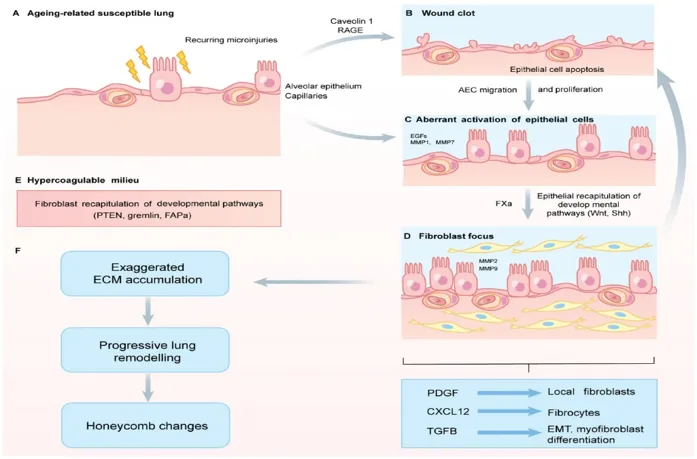
Fig 4: Proposed mechanisms in the pathogenesis of idiopathic pulmonary fibrosis.
PULMONARY TUBERCULOSIS
One of the main causes of death globally is tuberculosis (TB), which is brought on by Mycobacterium tuberculosis (MTB). [6] Airborne droplets from a person with an active form of tuberculosis are what spread the disease. The subject inhales bacilli during infection, the majority of which are mechanically held by mucus in the upper respiratory tract (often larger than 5 µm in diameter) [32]. A tiny portion (about 10%) does, however, make it to the lungs, bronchioles, and alveoli, where the bacteria are subsequently taken up by alveolar macrophages. Approximately 70% of participants are able to eradicate the infection at this point because to the innate immune response. If not, alveolar macrophages enter the interstitium through the lung epithelium [33].
Inadequate TB management, improper administration of antimicrobial medications, or poor drug combinations that cause the disease to spread to additional susceptible individuals are the main causes and carriers of tuberculosis. One significant method of developing resistance to M. tuberculosis is the proliferation of point mutations in genes that encode drug targets and/or drug-converting enzymes [34].
The goal of the granuloma is to stop Mtb from spreading to other organs in addition to limiting its growth. The subject's immunocompetence determines what occurs next.
The goal of the granuloma is to stop Mtb from spreading to other organs in addition to limiting its growth. The subject's immunocompetence determines what occurs next. fig 2 [33] Clinical treatment for tuberculosis is still challenging, but it is getting better. Hepatotoxicity, nephrotoxicity, ocular toxicity, ototoxicity, and other negative consequences are caused by oral or intravenous medications. It is recommended that TB medications be taken orally in order to improve the therapeutic index, bioavailability, and pharmacokinetic barriers. [34] However, a number of additional chemical and biophysical characteristics, including size, shape, hydrophobicity, and surface properties, affect how effective these drug delivery vehicles are for biomedical applications, materials with nanometre sizes and high levels of biocompatibility and biodegradability are ideal drug delivery methods. [35]
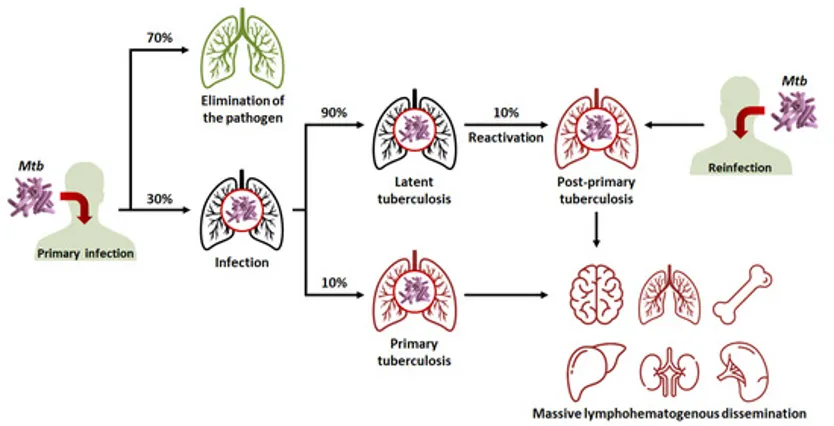
Fig 5: Pulmonary tuberculosis
2. FUNDAMENTALS OF NANOPARTICLE- BASED DRUG DELIVERY SYSTEMS
2.1 Nanoparticle Design and Composition
Nanoparticle performance in drug delivery depends largely on their composition and design. Common materials include:
Polymers: Biodegradable polymers such as PLA, PLGA, and PCL offer good biocompatibility and allow controlled drug release.
Lipids: Liposomes and solid lipid nanoparticles (SLNs) can encapsulate both hydrophilic and hydrophobic drugs while improving drug stability and release.
Inorganic materials: Silica and gold nanoparticles offer tunable size and surface functionalisation for targeted delivery.
Dendrimers: These highly branched structures provide a large surface area for drug loading and can be functionalised for specific cellular targeting. [36]
2.2 Nanoparticle Characterisation
Characterisation is essential to ensure nanoparticle stability, safety, and therapeutic performance. Key parameters include size, surface charge, shape, and surface modification. Particle size influences biodistribution, cellular uptake, and lung deposition, while zeta potential affects stability and cellular interactions. Surface ligands such as peptides, antibodies, or folic acid can enhance targeted delivery to diseased lung tissue. [37]
2.3 Mechanisms of Drug Encapsulation and Release
Nanoparticles can encapsulate small molecules, proteins, peptides, and nucleic acids. Common encapsulation methods include solvent evaporation, coacervation, and emulsification. Drug release occurs mainly through diffusion, nanoparticle degradation, or a combination of both, enabling sustained therapeutic effects and reduced dosing frequency.[38]
2.4 Mechanisms of Targeting
Nanoparticles can improve drug accumulation at specific tissues or cells, thereby enhancing therapeutic efficacy and reducing systemic toxicity. Passive targeting may occur through preferential accumulation in diseased or inflamed tissues, while active targeting uses surface ligands to facilitate specific cellular uptake.[39]
2.5 Biodistribution and Pharmacokinetics
Biodistribution and pharmacokinetics determine the absorption, circulation, metabolism, and elimination of nanoparticles. After inhalation, nanoparticles may remain in the airways or be taken up by lung cells depending on their size and surface properties. Biodegradable nanoparticles are metabolised into smaller components, whereas non-biodegradable systems may undergo hepatic or renal clearance. [40,3]
2.6 Safety and Biocompatibility
Nanoparticles must demonstrate adequate biocompatibility, low toxicity, and biodegradability. Toxicity depends on factors such as material composition, particle size, and surface charge. Ideally, biodegradable nanoparticles should degrade into non-toxic products that can be naturally eliminated by the body. [3]
2.7 Benefits of Nanoparticle-Based Drug Delivery Systems
Nanoparticle-based systems offer several advantages in chronic pulmonary diseases, including improved drug solubility and stability, controlled and sustained drug release, enhanced targeting, and localised pulmonary delivery. Inhaled nanoparticles can increase drug concentration at the site of disease while reducing systemic exposure and associated adverse effects. [3]
3.TYPES OF NANOPARTICLES IN DRUG DELIVERY SYSTEM
Nanoparticles have gained significant interest in drug delivery due to their small size, large surface area, and tunable surface properties. They can target specific tissues and cells, encapsulate drugs, and protect them from degradation. Common nanoparticle-based drug delivery systems include polymeric nanoparticles, polymeric micelles, dendrimers, and liposomes.
3.1 Polymeric Nanoparticles (Polymer–Drug Conjugates)
Helmut Ringsdorf first proposed the concept of polymer–drug conjugates in 1975. These systems consist of a hydrophilic polymer backbone serving as a carrier and a bioactive drug attached through a physiologically responsive linker. Targeting moieties or solubility enhancers may also be incorporated to improve pharmacokinetics and therapeutic efficacy. Their major advantages include high drug loading, improved drug solubility, modified pharmacokinetics, enhanced biodistribution, and improved therapeutic outcomes. [41]
3.2 Polymeric Micelles
Polymeric micelles are useful for targeted drug delivery, particularly for poorly water-soluble drugs. Their hydrophobic core facilitates drug solubilization and incorporation, while the outer hydrophilic layer enhances stability and circulation. Targeted delivery aims to increase drug accumulation at the desired site, minimize drug loss and degradation, reduce adverse effects, and improve bioavailability. Common drug carriers include natural and synthetic polymers, microparticles, liposomes, and amphiphilic polymer-based micelles. [42]
3.3 Dendrimers
Dendrimers are highly branched, three-dimensional macromolecules with well-defined architectures, monodispersed sizes, and tunable surface properties. Their compact spherical structure and programmable peripheral functionalities make them promising candidates for drug delivery and pharmaceutical applications.[43]
3.4 Liposomes
Liposomes are among the most widely studied nanocarriers for targeted drug delivery. They can improve therapeutic efficacy by stabilizing drugs, facilitating cellular and tissue uptake, and enhancing biodistribution to target sites. Liposomes consist of one or more concentric phospholipid bilayers surrounding an aqueous core. Their ability to encapsulate both hydrophilic and lipophilic drugs makes them versatile drug delivery systems: hydrophilic drugs are entrapped within the aqueous core, while hydrophobic drugs are incorporated into the lipid bilayer. [44,41]
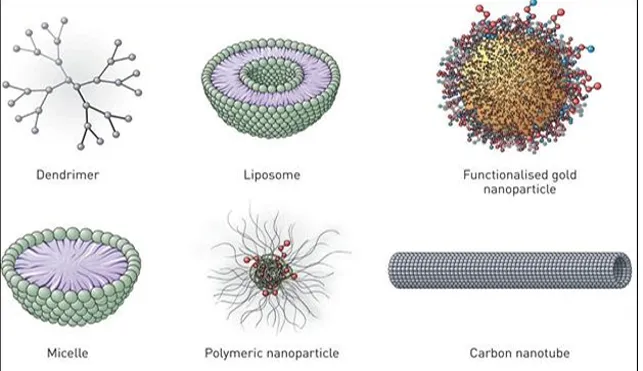
Fig 6: Types of nanoparticles
3.5 Viral Nanoparticles
Viral nanoparticles (VNPs) are naturally derived nanomaterials obtained from plant viruses, bacteriophages, and mammalian viruses. Virus-like particles (VLPs), which lack viral genomes, are increasingly used in nanomedicine. VLPs can be genetically or chemically modified with targeting ligands and loaded with drugs to achieve tissue-specific delivery. Their biocompatibility, biodegradability, and scalable production make them promising for cancer therapy, immunotherapy, vaccines, antibiotic and cardiovascular therapy, gene therapy, imaging, and pharmaceutical applications.[45]
3.6 Carbon Nanotubes
Carbon nanotubes (CNTs) are distinctive nanomaterials known for their small size, low weight, high tensile strength, and excellent electrical conductivity. First developed by Iijima in 1991, CNTs possess an sp²-hybridized graphitic structure and are classified as single-walled (SWCNTs), double-walled (DWCNTs), or multi-walled (MWCNTs). They are commonly produced by chemical vapour deposition, laser ablation, and arc discharge. Their unique mechanical, thermal, electrical, and optical properties support applications in tissue engineering, implants, biomedicine, drug delivery, sensors, and cancer therapy. [46]
|
System |
Structure |
Characteristics |
Examples of compound |
|
Polymeric nanoparticles |
Drugs are conjugated to the side chain of a linear polymer with a linker (cleavable bond) |
A) Water soluble, nontoxic, biodegradable B) Surface modification C)Selective accumulation and retention in tumour tissue (EPR effective) D)Specific targeting of cancer cells while sparing normal cells-receptor mediated target with a ligand |
Albumin-Taxol PGA-Taxol PGA-Camptothecin (CT-2106) HPMA-DOX(PK1) HPMA-DOX-galactosamine (PK2) |
|
Polymeric micelles |
Amphiphilic block copolymers assemble and form a micelle with a hydrophobic core and hydrophilic shell |
A) suitable carrier for water-insoluble drug B) Biocompatible, self-assembling, biodegradable C)Ease of functional modification D) Targeting potential |
PEG-Pluronic-DOX PEG-PAA-DOX (NK911) PEG-PLA-Taxol (Genexol-PM) |
|
Dendrimers |
Radially emerging hyperbranched synthetic polymer with regular pattern and repeated units |
A) Biodistribution and PK can be tuned B) High structural and chemical homogeneity C)Ease of functionalization, high ligand density D)Controlled degradation E) Multifunctionality |
PAMAM-MTX PAMAM-platinate |
|
Liposomes |
Self-assembling closed colloidal structures composed of lipid bilayers |
A) Amphiphilic, biocompatible B) Ease of modification C)Targeting potential |
Pegylated liposomal DOX (Doxil) Non-pegylated liposomal DOX (Myocet) Liposomal daunorubicin (DaunoXome) |
|
Viral nanoparticles |
Protein cages, which are multivalent, self-assembled structures |
A) Surface modification by mutagenesis or bioconjugation-multivalency B) Specific tumour targeting, multifunctionally C)Defined geometry and remarkable uniformity D)Biological compatibility and inert nature |
HSP-DOX CPMV-DOX |
|
Carbon nanotubes |
Carbon cylinders composed of benzene ring |
A) Water-soluble and biocompatible through chemical modification (organic functionalization) B) Multifunctionality |
CNT-MTX CNT-amphotericin B |
Abbreviations: PGA, poly-(L-glutamate); HPMA, N-(2-hydroxypropyl)-methacrylamide PEG, polyethylene glycol; PAA, poly-(Laspartate); PLA, poly-(L-lactide); PAMAM, poly(amidoamine); DOX, doxorubicin; MTX, methotrexate; PK, pharmacokinetics; EPR, enhanced permeability and retention; CNT, carbon nanotube; HSP, heat shock protein; CPMV, cowpea mosaic virus. [2,47]
4.NANOPARTICLE BASED DDS;
A nano-system is a system with a size range of 1–1000 nm [48]. Nano-systems are widely used for imaging, gene therapy, regenerative medicine, and drug delivery. Their major advantages include targeted delivery of high drug concentrations, improved stability and circulation time, reduced systemic toxicity, and enhanced solubility and biocompatibility of hydrophobic compounds [48-51]. AmBisome®, a liposomal formulation of amphotericin B, was the first approved nano-system and demonstrated reduced systemic toxicity with improved therapeutic efficacy [52]. Although most nano-systems are used in cancer treatment, they also have applications in inflammatory, neurological, metabolic, and respiratory diseases. Compared with conventional drug delivery, nanoparticles offer improved targeting, reduced toxicity, and increased bioavailability [53,54].
Liposomes are spherical lipid-bilayer vesicles capable of encapsulating both hydrophilic and hydrophobic drugs. Lipid nanoparticles (LNPs) can be engineered by modifying their size, surface charge, and lipid composition to improve biocompatibility, drug stability, and circulation time. Their surfaces can also be functionalized with peptides, monoclonal antibodies, or small-molecule ligands for targeted delivery [55,56]. For example, folate-conjugated LNPs can target macrophages with overexpressed folate receptors for the delivery of anti-inflammatory drugs [57].
Mesoporous silica nanoparticles (MSNs) have tunable structures that can be controlled by factors such as temperature, pH, silica precursor, and surfactant concentration. Pan et al. developed size-controlled MSNs ranging from 25–105 nm by varying the concentration of triethanolamine (TEA), highlighting their potential as pulmonary drug delivery carriers [58]. However, the toxicity and long-term safety of nanoparticle-based drug delivery systems require careful evaluation due to potential adverse health and environmental effects [59].
5.THE CONCEPT OF MAGIC BULLET
The phrase "Magic Bullet" in drug delivery refers to the targeted delivery of therapeutic agents to particular parts of the body; in the treatment of chronic lung diseases, nanoparticles are frequently used as carriers. Drug delivery systems based on nanoparticles have various benefits, including increased drug efficacy, decreased side effects, and the ability to target specific lung regions [2]. Paul Ehrlich came up with the idea of employing "magic bullets" to target a virus specifically without endangering the host organism a century ago. Ehrlich had a two-pronged approach to his magic bullet idea: first, he screened for harmful medications, and then he modified those treatments to be less toxic and more selective [60]. He could clearly see how stress-free it would be to cure illnesses with substances that are simply related to the microbe that causes them. The host is not under any responsibilities. The phrase "miracle cure" refers to the fact that it is intended solely to eradicate parasites from the body and ultimately has few adverse effects on humans. Given that an archer's magic bullet would only strike the adversary, Erlich hypothesised that site-specific treatment would be more advantageous than mastering its use. Scientists spent nearly a century investigating this fascinating idea, which resulted in the development of a number of nanoscale devices that are today referred to as nanomedicines [2,61].
The idea's popularity is demonstrated by its success, yet putting the magic bullet into practice in a clinic is still difficult. This is a result of challenges in identifying the appropriate target for a particular disease state, the medicine that effectively treats the condition, and the method for delivering the drug in a stable form to particular places while avoiding immunogenic reactions and certain interactions. [60] When combined with targeted ligands, nanoparticles may meet many of the characteristics of a "magic bullet" and have the potential to be helpful as carriers of active medications. In order to increase the effectiveness of a medicine at the site of action, this review focusses on targeted drug delivery employing nanoparticles, a method that connects a ligand to a nanosized, drug-loaded vehicle. [62]
6.MECHANISMS AND BARRIERS IN PULMONARY DRUG DELIVERY
There are various ways that drugs can be released from carriers, including: The most frequent release method is diffusion, in which the drug molecules move from the carrier to the surrounding media. This process is described by Fick's law of diffusion, which states that the rate of release is proportionate to the gradient in concentration.
Degradation: In this process, the medicine is released as the carrier material itself deteriorates over time. Applications requiring sustained release may benefit from this. When certain polymeric carriers come into touch with body fluids, they swell, which facilitates drug diffusion via the enlarged matrix.
Osmosis: In pulmonary drug delivery, this process entails the flow of a solvent into the carrier, which generates pressure that pushes drug molecules out of the lung.
Drug absorption in the pulmonary system is greatly influenced by the physiological features of the lungs, such as their enormous absorptive surface area [63]. Due to structural or metabolic changes in pulmonary tissue, PF is a progressive and potentially fatal illness that presents significant obstacles to the efficient administration of treatment. Effective medication distribution in fibrotic tissues is severely hampered by excessive extracellular matrix deposition, impaired epithelial/endothelial barrier integrity, and chronic inflammation. However, recent developments in DDSs and nanotechnology suggest that the outcomes could be much improved. There have been prior descriptions of the disease's molecular and anatomical difficulties, how to overcome them, and the medication delivery techniques suitable for PF [64]. It is now widely acknowledged that oxidative stress is a significant risk factor for the development of COPD and a prime target for COPD treatments. In the pathophysiology of COPD, oxidative stress is caused by both a reduction in antioxidative potential and an increase in the load of oxidants. [65]
7.NEED FOR TARGETED DRUG DELIVERY SYSTEM
Four factors make TDD more necessary than traditional DSs: medications' poor performance with conventional administration in terms of pharmacodynamic, pharmacokinetic, pharmaceutical, and pharmacotherapeutic aspects (as seen in Figure 7). Using optimised DD techniques to target medications to a specific region is crucial for both improving therapeutic efficacy and lowering toxicity linked to large dosages and a limited therapeutic index. [67] To overcome these limitations and inherent drawbacks of traditional DDSs, targeting is required. Topical lotions and ointments can only have local effects, oral administration is not an option for medications produced from proteins or peptides, and parenteral delivery is extremely intrusive.
Furthermore, unless the medicine is administered at a dosage and rate that maximises therapeutic effects while minimising side effects, the efficacy of drug–target interactions is jeopardised. [68] Promising advantages of TDD include the ability to significantly raise drug concentration in target compartments without negatively affecting nontarget compartments, reduced drug amount, which lowers therapeutic expenses, and easier drug-administration processes. Increased efficacy, altered pharmacokinetics, regulated biodistribution, enhanced localisation specificity, reduced toxicity, lower dosage, and better patient compliance are all typical outcomes of medication targeting. [69,70]
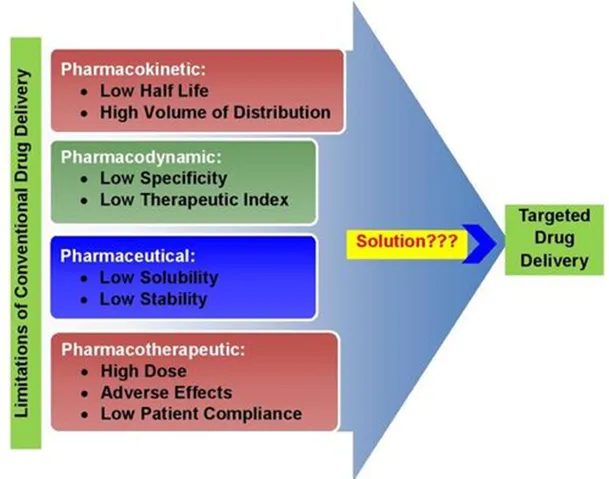
Fig 7: The need for targeted drug delivery
Basic Principles and Applications of Targeted Drug-Delivery Systems
Delivering a high concentration of the medicine to the targeted site while minimising its concentration to the nontargeted region is the fundamental idea behind drug targeting. By reducing adverse effects brought on by multitarget interactions, greater doses, and nontarget concentrations, this theory helps to maximise the therapeutic effects of the medication. [71] As seen in Figure 8, targeting also reduces undesirable medication interactions with bioenvironmental variables that influence drug access to specific body locations. [72] Coordinated drug behaviour, the targeting site, and the pharmaceutical carrier are all part of drug targeting. The target is the particular organ, cell, or collection of cells that the medication will interact with in a chronic or acute ailment that needs to be treated. For the loaded medicine to be transported effectively towards preselected locations, a specially designed molecule or system known as the carrier is necessary. [73] A drug-targeting combination should ideally be physico-chemically stable both in vitro and in vivo, poisonous, nonimmunogenic, biochemically inert, biodegradable, and biocompatible. It should also be easily and readily removed from the body, have a predictable and regulated pattern of drug release, be reasonably easy, reproducible, and economical to prepare, and have little drug leakage while in transit. [69,73]
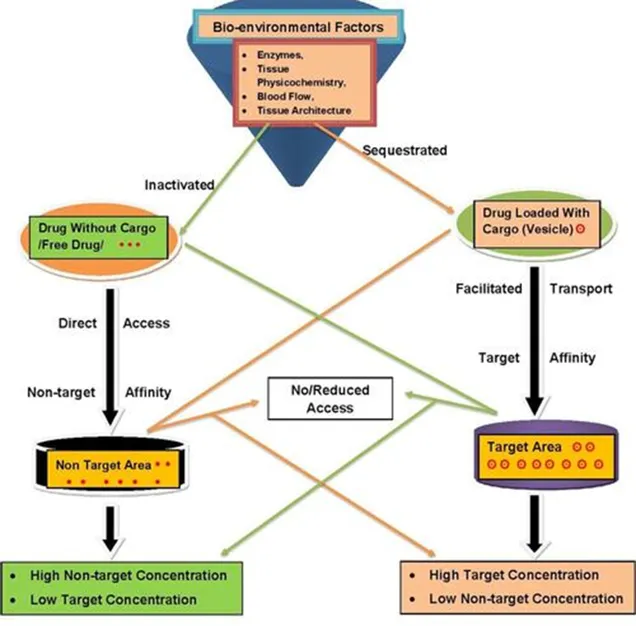
Fig 8: Principles of drug targeting
For efficient targeting of targeted cells or tissue, physiological factors like tissue architecture and blood flow for intravenous drug delivery should be managed in conjunction with physicochemical parameters like carrier geometry, avidity, composition, and functionalisation. [74] Effective tumor-targeted therapy also depends on the clinical increased permeability and retention (EPR) effect, extravasation, intra-tumoral distribution, tumour heterogeneity, and overexpression features. [74]
8.NANOPARTICLES FOR PULMONARY DISEASES
Chronic Respiratory Diseases and Nanomedicine More illnesses and fatalities are brought on by chronic lung conditions such interstitial pulmonary fibrosis, asthma, and COPD. Using dry powder inhalers, the 4,444 researchers also examined the effectiveness of various nanoparticles in reaching the lungs. They investigated the release of a medication known as salbutamol sulphate (SBS) by liposomes, which are microscopic fat bubbles, in asthmatic rats and guinea pigs. Particularly in guinea pigs, liposomes containing SBS were more effective and stayed in the lungs longer than SBS solution alone. One study examined therapies meant to prevent the development of new blood vessels in the lungs, which is a defining feature of asthma. It has been demonstrated that giving rats with allergic asthma a particular therapy reduces blood vessel formation and causes respiratory issues. In a different study, surface-adhesive microparticles of chitosan and alginate were examined in a model that resembles the inflammatory lung illness brought on by cigarette smoke. Compared to the medication alone, these particles were more successful in reducing inflammation. However, it's crucial to thoroughly research the hazards associated with using nanoparticles in therapy because they can result in asthma and allergic inflammation. All things considered, these results imply that using microparticles to treat lung illness may be advantageous. However, more investigation is required to completely comprehend their efficacy and safety. [76]
NANOMEDICINE IN ASTHMA
Chronic airway inflammation, bronchial hyperresponsiveness, and intermittent reversible airway blockage are the hallmarks of asthma, the most prevalent long-term inflammatory lung disease. A novel gadget called the electronic nose (E-Nose) uses nano-sensors to identify certain volatile organic compounds (VOCs) in inhaled gases. According to the quantity of inflammatory cells generated in the sputum. It has been demonstrated that inflammatory asthma [77]
NANOMEDICINE IN COPD
In earlier research, an E-nose technique based on nanosensors was used to diagnose COPD and confirm that individuals with the disease also had lung cancer (85% accuracy) and asthma (96% accuracy). The E-nose technique was utilized in a recent clinical study to detect bacterial colonization in patients with COPD and contrasted with quantitative culture of protected sample brushes. Although invasive, this is the gold standard for identifying infections of the distal respiratory tract. According to this study, the E-nose technique was 88% successful in differentiating between COPD patients who were colonized and those who were not. Nonetheless, their features and demographics are comparable. The E-nose tool was introduced in this study as a non-invasive, practical, easy-to-use, and trustworthy way to identify bacterial colonization in patients with COPD. [77]
9.ADVANCED DRUG DELIVERY SYSTEMS
Nanoparticles: adaptable delivery systems for focused pulmonary treatment
Because of their controlled release properties, hydrogels and nanoparticles (like PLGA and liposomes) can deliver anti-fibrosis medications (like pirfenidone) to fibrotic lesions precisely. They are perfect for pulmonary drug delivery because of their small size, high surface-area-to-volume ratio, and movable surface properties. For regulated and prolonged medication release, biodegradable polymers like polylactic-co-glycolic acid are frequently utilised. Targeted drug distribution to fibrotic lung tissues may be made easier by the presence of anti-fibrotic drugs like pirfenidone or nintedanib in these nanoparticles. Targeted administration is especially beneficial for chronic conditions like PF since it reduces systemic exposure and associated side effects. These biodegradable carriers work incredibly well for administering anti-inflammatory drugs to people with COPD. Lipid-based nanoparticles called liposomes are very good in encasing hydrophobic medications, increasing their stability and solubility. For instance, liposomal corticosteroid formulations have demonstrated improved retention in fibrotic and inflammatory lung tissues, hence reducing systemic toxicity. Because of their distinct optical and thermal characteristics, gold and silver nanoparticles can be used in targeted therapy. For instance, chemotherapy drugs like cisplatin have been delivered directly to lung tumours using polyethylene glycol (PEG)-coated gold nanoparticles, reducing systemic toxicity. In order to ensure focused administration and reduce off-target effects, pH-sensitive nanoparticles have been created to release medications in the acidic milieu of fibrotic tissues [78].
Hydrogels: long-term release for long-term lung conditions. Three-dimensional networks can be created using hydrogels, which are hydrophilic polymeric materials that have a large capacity to absorb biological fluids or water. Because of these characteristics, hydrogels are a great option for controlled and prolonged drug release, especially in chronic lung diseases [79]. For localised treatment of PF, injectable hydrogels containing anti-fibrotic medications have been investigated. By offering weeks of prolonged medication release, these hydrogels reduce the need for frequent administration and increase patient compliance. In preclinical models, for instance, pirfenidone-loaded hydrogels have demonstrated extended drug release and a reduction in fibrotic markers [80,81].
CONCLUSION
Over the past ten years, the use of nanomedicines has increased at an unparalleled rate. The need for better versions of existing medications, site-specific or targeted drug delivery, and ultimately greater patient compliance are some of the reasons behind the development of pharmaceuticals based on nanotechnology. Both preclinical and clinical trials have effectively used diagnosis and therapy strategies based on nanotechnology. Nanomedicines' regulated drug release and enhanced pharmacokinetics and pharmacodynamics result in minimal toxicity and maximum efficacy as compared to traditional treatment. To guarantee prolonged drug delivery at a given place, an appropriate drug carrier is essential. Based on limited clinical trials and in vitro and in vivo findings, this review paper addressed the impact of several NP types on a range of lung illnesses, including drug transport, effectiveness, and safety. In both in vitro and in vivo investigations, several NP types alleviated lung oxidative stress and lung pathological alterations in asthma and COPD while lowering inflammatory cells and markers. While some research showed that NP medicines had therapeutic effects in PF as well, other investigations demonstrated that NPS incited PF. The effects of nanoparticle-based medicine as a prospective treatment for lung infections by local antibacterial properties with low doses and decreased side effects were demonstrated by a number of in vitro and in vivo investigations. Increased drug delivery to specific lung cancer and lung metastasis sites, together with improved efficacy on lung cancer cells, demonstrated the impacts of NPs on lung malignancies (primary and metastatic). Additionally, the research demonstrated the superiority of NP-based medications over generic ones. A novel and promising strategy for the treatment of chronic pulmonary disorders is the use of nanoparticle-based drug delivery systems (NDDS). Targeted and regulated drug release directly to the lungs is made possible by NDDS, which takes advantage of the special qualities of nanoparticles, including their tiny size, large surface area, and capacity to encapsulate a variety of therapeutic agents. This tailored distribution reduces adverse effects, increases drug absorption, and improves therapeutic efficacy, especially in conditions like asthma and chronic obstructive pulmonary disease (COPD), pulmonary fibrosis. Additionally, a range of medications, such as proteins, nucleic acids, and tiny compounds, can be encapsulated in nanoparticles due to their flexibility, enabling regulated and prolonged delivery. Additionally, nanoparticles can improve drug penetration, guarantee deeper tissue distribution, and get beyond biological barriers like mucus and cellular membranes.
REFERENCES

K Sindhu, Prasanth Y, P Veeralakshmi, Anuradha N, Anitha P, Nanoparticle-Based Drug Delivery Systems: The Magic Bullet Approach for Targeted Treatment of Chronic Pulmonary Diseases, Int. J. of Pharm. Sci., 2026, Vol 4, Issue 9, 717-736. https://doi.org/10.5281/zenodo.22334696
 10.5281/zenodo.22334696