

We use cookies to ensure our website works properly and to personalise your experience. Cookies policy
Shree Krishna College OF Pharmacy, Sitapur, 261125 AKTU, Lucknow, UP, India
Embelia ribes (Vidanga) has long been recognized in traditional medicine for its diverse therapeutic potential, primarily attributed to its bioactive benzoquinone, embelin. Despite its broad pharmacological activities—including Anticancer, Antidiabetic, Antioxidant, Antimicrobial, Neuroprotective, and Anti-inflammatory effects—embelin’s clinical translation is hindered by poor solubility and limited bioavailability. Recent advances in nanotechnology offer promising solutions to these challenges. Lipid-based carriers such as solid lipid nanoparticles, liposomes, and nanostructured lipid carriers enhance solubility, stability, and targeted delivery. Polymeric nanoparticles, particularly PLGA and chitosan systems, provide controlled release and improved safety profiles. Phytosome complexes further augment bioavailability through sustained release and high entrapment efficiency. Eco-friendly synthesis of metallic nanoparticles, including silver, gold, and zinc oxide, not only improves therapeutic efficacy but also aligns with sustainability goals. Synergistic nanoformulations combining embelin with conventional drugs—such as doxorubicin, paclitaxel, gliclazide, and donepezil—demonstrate enhanced outcomes in cancer, diabetes, neurodegeneration, and antimicrobial resistance. Collectively, these strategies highlight the translational potential of embelin nanoformulations in modern therapeutics. This review emphasizes the importance of nanocarrier design, eco-friendly synthesis, and combination therapies in overcoming pharmacokinetic limitations, paving the way for future clinical applications and patentable innovations.
Embelia ribes (Burm. f.), commonly known as Vidanga in Ayurveda, has been widely used in traditional Indian medicine. According to Dr. Jyoti Sonkar (2023), the plant has been traditionally prescribed for a broad range of ailments, including sore throat, influenza, toothache, pneumonia, headache, abdominal disorders, leucoderma, skin diseases, indigestion, constipation, convulsions, epilepsy, and especially worm infestations.
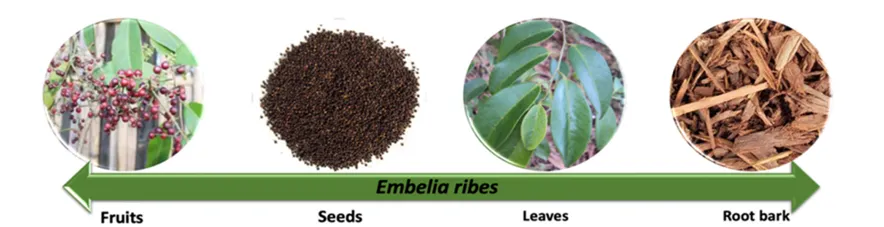
Figure 1. Embelia ribes plant part: fruit, seed, leaf, stem, etc., used for phytochemical and pharmacological studies.
Embelia ribes Burm. (family Myrsinaceae), commonly known as Vidanga, is a medicinal shrub widely used in Ayurveda and other traditional systems of medicine. The review by Sharma et al. (2022) highlights that the plant has been traditionally used for more than 5000 years for treating Analgesic, Anthelmintic, Antibacterial, Antidiabetic, anticancer, Antihyperlipidemic, Wound healing, and Anti-spermatogenic conditions. Different parts of the plant—fruits, seeds, leaves, and root bark—are used in forms such as powders, pastes, oils, and decoctions for disorders like indigestion, constipation, skin diseases, infections, and cardiac ailments. Phytochemical investigations reveal that E. ribes is rich in essential oils, Alkaloids, Flavonoids, Steroids, Phenolics, and Particularly Embelin, its major bioactive benzoquinone derivative. Embelin exhibits a wide range of pharmacological activities, including Hepatoprotective, Anti-inflammatory, Antioxidant, Antimitotic, Radioprotective, Anticancer, Contraceptive, Antihyperlipidemic, Antihyperglycemic, Analgesic, Antipyretic, and Wound healing effects.
Medicinal Potential of Embelin and Nano Formulations: An Update on the Molecular Mechanism and Various Application
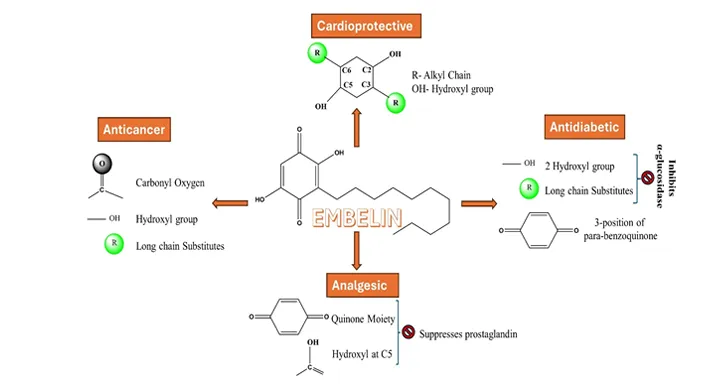
Figure 2. Schematic representation of the therapeutic mechanism of Embelia ribes in regulating oxidative stress and metabolic pathways.
Embelin, a naturally occurring benzoquinone isolated from the fruits of Embelia ribes, has gained significant scientific attention due to its broad therapeutic potential. As highlighted in the review by Ali et al. (2024), embelin exhibits diverse pharmacological activities including anticancer, antidiabetic, antioxidant, antimicrobial, neuroprotective, cardioprotective, anti-inflammatory, analgesic, wound healing, and anthelmintic effects. These activities arise from its ability to modulate multiple molecular pathways such as NF?κB inhibition, caspase activation, antioxidant enzyme upregulation, suppression of pro?inflammatory cytokines, and regulation of apoptotic proteins. Despite this broad therapeutic potential, embelin’s poor solubility and limited bioavailability restrict its clinical application. To overcome these challenges, the review emphasizes the development of nano formulations such as lipid-based carriers (liposomes, solid lipid nanoparticles, nanostructured lipid carriers), polymeric nanoparticles (PLGA, chitosan, dendrimers), and metallic nanoparticles (silver, gold, zinc oxide)—which enhance embelin’s solubility, stability, and targeted delivery. The authors also discuss combination therapies where embelin is co-loaded with other drugs to achieve synergistic effects. Overall, the paper nano formulation strategies are crucial for translating embelin’s medicinal promise into effective clinical applications (Ali et al., 2024).
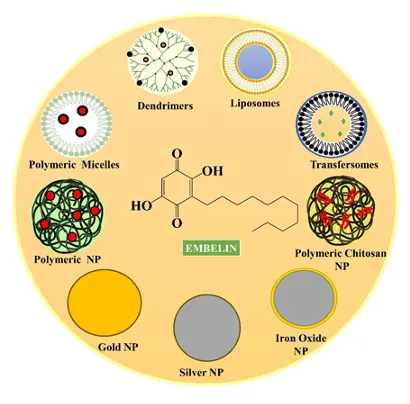
Figure 3. Flow diagram illustrating the extraction and preparation of Embelia ribes-based formulation for nanoformulation development.
a benzoquinone compound isolated from Embelia ribes. The authors highlight embelin’s diverse pharmacological activities, including anticancer, neuroprotective, antidiabetic, cardioprotective, wound-healing, anti-inflammatory, antioxidant, and antimicrobial effects. Noor et al. (2024) provide an in-depth analysis of how nanotechnology can overcome the limitations of embelin (EMB), a phytoconstituent from Embelia ribes known for its anti-inflammatory and anticancer properties. The authors emphasise that, despite EMB’s therapeutic promise, its poor water solubility and low oral bioavailability limit its clinical applications. To address this, various nanocarriers—such as nanoliposomes, nanostructured lipid carriers, niosomes, polymeric nanoparticles, nanosuspensions, phytosomes, self-nanoemulsifying drug delivery systems (SNEDDS), silver nanoparticles, microparticles, solid lipid nanoparticles, gold nanoparticles, and nanomicelles—have been explored. The review systematically discusses these nanoformulations in terms of particle size (50–345 nm), morphology, drug entrapment efficiency, zeta potential, in vitro release, permeation, and in vivo performance. Preparation methods such as thin-film hydration, nanoprecipitation, ethanol injection, and emulsification followed by sonication are highlighted as common strategies. Importantly, the paper also examines dual-drug nanoformulations, where EMB is combined with other therapeutic agents to enhance synergistic effects, improve stability, and broaden therapeutic applications. Finally, the inclusion of patents related to EMB nanoformulations demonstrates the translational potential of this bioactive compound, indicating future clinical applications in oncology, metabolic disorders, and neurodegenerative diseases. In essence, the review positions EMB-loaded nanoformulations as a promising frontier in phytoconstituent-based drug delivery, capable of improving bioavailability, therapeutic efficacy, and patient compliance while paving the way for clinical translation.
Embelin Niosomes
Embelin is a natural compound possessing a plethora of pharmacological activities, including antidiabetic activity. When formulated as niosomes, embelin offers additional advantages of nanoformulations and can be further exploited for clinical use. An oral niosome formulation of embelin was developed using a thin-film hydration technique, and its antidiabetic activity was studied. The formulation was characterized in terms of entrapment efficiency, vesicle size and morphology, in vitro release profile, and stability. Antidiabetic evaluation was performed in streptozotocin (STZ)-induced diabetic Wistar rats. An antioxidant assay was carried out by evaluating superoxide dismutase (SOD), catalase (CAT), thiobarbituric acid reactive substances (TBARS), and glutathione (GSH). The optimized formulation showed a significant Hypoglycemic effect, which was comparable with that of repaglinide. Moreover, significant increases in SOD, CAT, and GSH, along with a decrease in the lipid peroxidation level, were observed, which confirmed the antioxidant efficacy of the formulation. Thus, it is evident that the embelin-loaded niosome formulation was efficacious in diabetes management in Wistar rats.
Nano formulations of Embelin – Lipid-based nanoparticles (Organic)
nanotechnology has revolutionized drug delivery, particularly for lipophilic and poorly soluble molecules like embelin. Since solubility is the primary rate-limiting factor affecting drug release and bioavailability, lipid-based nanocarriers have emerged as highly effective systems. Over the past two decades, biocompatible and biodegradable lipid carriers have gained preference over polymeric nanoparticles, which often face challenges such as cytotoxicity and difficulties in large-scale manufacturing. Common lipid-based systems include solid lipid nanoparticles, liposomes, nanostructured lipid carriers, nanoemulsions, and lipid-polymer hybrid nanoparticles. In addition, specialized carriers such as phytosomes, niosomes, transfersomes, transniosomes, and ethosomes are widely employed to deliver phytoconstituents like embelin, thereby enhancing solubility, stability, and targeted distribution. Collectively, these lipid-based nanoformulations provide a versatile and safer alternative for improving the therapeutic potential of embelin in pharmaceutical applications (Dhiman et al., 2021; Haider et al., 2020; Barani et al., 2021; Sinha et al., 2020).
Polymeric nanoparticles of embelin
Polymeric nanoparticles of embelin
Underscore their growing importance in herbal drug delivery due to their ability to regulate drug release, protect bioactives from degradation, and enhance therapeutic safety and efficacy. Polymeric nanoparticles, especially those derived from herbal sources, are considered innovative carriers for phytoconstituents like embelin. For instance, Kumar et al. fabricated surface-modified PLGA nanoparticles conjugated with gallic acid, which significantly improved liver-specific uptake of embelin and demonstrated hepatoprotective effects by lowering SGOT, SGPT, ALP, and bilirubin levels. Similarly, chitosan nanoparticles have been widely explored: Saini et al. (2020) documented their potential as effective herbal delivery systems, while Maanvizhi et al. (2022) showed that embelin-loaded chitosan nanoparticles reduced blood glucose levels in diabetic rats without toxicity, confirming their antidiabetic potential. These nanoparticles also alleviated oxidative stress and normalized inflammatory markers in rheumatoid arthritis models, and N, O-carboxymethyl chitosan nanoparticles exhibited strong antioxidant activity and cytotoxicity against osteosarcoma cells. Overall, polymeric nanoparticles—particularly PLGA and chitosan-based systems—offer controlled release, targeted delivery, and significant therapeutic benefits for embelin in conditions such as liver toxicity, arthritis, diabetes, and cancer (Shree et al., 2022; Saini et al., 2020; Maanvizhi et al., 2022).
Embelin-Loaded Phytosome
In the study, embelin-loaded Phyto some complexes were successfully formulated and evaluated for drug–excipient compatibility, physicochemical properties, and release kinetics. FTIR and DSC analyses confirmed that embelin showed no chemical interaction with soya lecithin and chitosan, validating their suitability as excipients. The λmax of embelin was determined to be 288.7 nm, and a calibration curve was established for quantitative analysis. Six formulations (EMBP1–EMBP6) were prepared, with EMBP5 emerging as the most optimized, showing the highest percentage yield (86.20 ± 0.67%), smallest particle size (345.45 ± 1.231 nm), and maximum entrapment efficiency (81.78 ± 1.151%). SEM analysis of EMBP5 revealed phytosomes with smooth to rough surfaces, slightly aggregated, and appearing as individual or clustered non-fused particles. In vitro dissolution studies demonstrated a sustained release profile, with EMBP5 achieving 86.52% cumulative release over 12 hours. Drug release kinetics fitted best to first-order and Higuchi’s diffusion models, indicating a Fickian diffusion mechanism. Overall, embelin-loaded phytosomes, particularly EMBP5, proved to be a promising novel drug delivery system, offering improved therapeutic efficacy, controlled release, and enhanced bioavailability compared to conventional plant extracts (Pandey et al., 2021).
Metallic Nanoparticles (Inorganic)
Metallic Nanoparticles (Inorganic) highlight their significant role as innovative therapeutic tools in modern drug delivery and diagnostics. Metallic nanoparticles (MNPs) are particularly advantageous because they improve drug stability, extend circulation half-life, enhance biodistribution, and allow both passive and active targeting of specific tissues. Their ability to overcome drug resistance and deliver therapeutic molecules efficiently makes them highly valuable in treating complex diseases. Beyond drug delivery, MNPs are also applied in the development of biocompatible materials, nutraceuticals, and diagnostic systems for both in vivo and in vitro applications. A key emerging trend is the green synthesis of metallic nanoparticles, which offers economic and environmental benefits compared to conventional chemical and physical methods. This eco-friendly approach aligns with sustainable nanomedicine goals, making metallic nanoparticles a promising platform for delivering phytoconstituents such as embelin (Chandrakala, Aruna, & Angajala, 2022; Chopra et al., 2022).
Silver Nanoparticles (AgNPs)
Silver Nanoparticles (AgNPs) emphasizes their eco-friendly, cost-effective, and versatile role in biomedical applications, particularly when synthesized using phytoconstituents like embelin (EMB). EMB-mediated AgNPs act as reducing, stabilizing, and capping agents, making them safer and more sustainable compared to conventional chemical or physical methods. Several studies highlight their therapeutic promise: Jain et al. (2021) discussed the anticancer and antiviral potential of green-synthesized plant-based AgNPs, while Jagtap et al. (2022) demonstrated that EMB-based AgNPs inhibited lung cancer cell growth (A549 lines) through apoptosis with minimal necrosis. In another study, Jagtap et al. (2023) showed that EMB-derived AgNPs could modulate ER and HER2-positive breast tumors, suggesting their role in breast cancer nanomedicine. Beyond oncology, Ahmed et al. (2023) reported that EMB-AgNPs were effective against Acanthamoeba castellanii, reducing viability with lower IC50 values compared to embelin alone, while maintaining low toxicity toward human keratinocyte cells. Rajalakshmi et al. (2023) further demonstrated their environmental application, showing that EMB-AgNPs could degrade mercury under solar light within 60 minutes. Dhayalan et al. (2017) highlighted their antioxidant, antibacterial, and cytotoxic properties, particularly against Gram-negative bacteria and breast cancer cell lines (MCF-7). Collectively, these findings underscore that EMB-mediated AgNPs combine therapeutic efficacy with sustainability, making them powerful candidates for cancer therapy, antimicrobial treatment, and environmental remediation (Jain et al., 2021; Jagtap et al., 2022; Jagtap et al., 2023; Ahmed et al., 2023; Rajalakshmi et al., 2023; Dhayalan et al., 2017).
Gold Nanoparticles (AuNPs)
Gold Nanoparticles (AuNPs) illustrates how gold has evolved from being valued solely as a precious metal to becoming a leading material in advanced biomedical applications. AuNPs are widely recognized for their inertness, biocompatibility, and low toxicity, making them suitable for both medical and non-medical uses. They can be synthesized through physical, chemical, and biological methods, but recent research emphasizes eco-friendly synthesis techniques using natural sources such as plant extracts and phytoconstituents. Embelin (EMB) has been successfully employed as a reducing and stabilizing agent in the green synthesis of AuNPs, producing nanoparticles with strong antioxidant activity and antibacterial effects against E. coli and S. aureus. Dhayalan et al. (2017) demonstrated that EMB-based AuNPs also exhibited significant cytotoxicity against breast cancer (MCF-7) cell lines, reducing tumour cell viability. Further, Khare et al. (2021) investigated EMB-loaded chitosan-gold nanoparticles in combination with ciprofloxacin, showing synergistic antibacterial effects against multidrug-resistant Pseudomonas aeruginosa and E. coli, reducing the minimum inhibitory concentration of ciprofloxacin by up to 16-fold. Sasidharan et al. (2022) advanced this field by producing EMB-stabilized gold nanostars and polyhedral gold nanoparticles, which demonstrated exceptional biocompatibility, CT imaging contrast properties, and photothermal cytotoxicity against oral epithelial cancer cells. These findings underscore that EMB-mediated AuNPs are not only effective antibacterial and anticancer agents but also hold promise for diagnostic imaging and photothermal therapy. Collectively, eco-friendly EMB-based AuNPs represent a versatile and sustainable platform in nanomedicine (Dhayalan et al., 2017; Kalimuthu et al., 2020; Hammami et al., 2021; Khare et al., 2021; Sasidharan et al., 2022).
Zinc Oxide Nanoparticles (ZnO NPs)
Zinc Oxide Nanoparticles (ZnO NPs) highlights their wide-ranging biomedical and engineering applications, owing to their strong optical absorption in the UVA (315–400 nm) and UVB (280–315 nm) ranges. This property makes ZnO NPs suitable for gene and drug delivery, cancer therapy, biosensing, antibacterial and antifungal treatments, nanomachines mimicking biological processes, and biomaterials for tissue engineering. They can also act as molecular switches in shape memory polymers, further expanding their utility.
Eco-friendly synthesis methods have gained prominence, particularly those using plant extracts and phytoconstituents. Mahakal et al. (2018) successfully produced ZnO NPs from methanolic extracts of Embelia ribes, with embelin (EMB) serving as a key reducing agent to convert zinc acetate into ZnO nanoparticles. These EMB-mediated ZnO NPs demonstrated promising biomedical potential. More recently, You et al. (2023) constructed EMB-loaded gallic acid–iron nanoparticles that effectively targeted SLC16A1/3, a gene highly expressed in cervical cancer and linked to glycolysis and redox balance. By modulating these pathways in combination with photothermal therapy, the EMB-based nanocarriers offered a novel synergistic approach for malignant cervical cancer treatment. Collectively, EMB-mediated ZnO NPs represent a sustainable and multifunctional platform, combining eco-friendly synthesis with targeted therapeutic potential in oncology, antimicrobial therapy, and advanced biomedical engineering (Mahakal et al., 2018; You et al., 2023).
Embelin (EMB) synergistic agent in combination with nanoformulations
Highlights how combinatorial therapies—where two or more drugs are administered together—can significantly improve treatment outcomes by targeting multiple disease pathways, enhancing drug delivery, and minimizing side effects compared to single-drug approaches. EMB has been successfully integrated into several nanoformulations alongside conventional drugs, showing superior therapeutic benefits across cancer, diabetes, neurodegeneration, and antibiotic resistance. For instance, transferrin-conjugated liposomes co-loaded with doxorubicin and EMB demonstrated smaller particle size, higher entrapment efficiency, and potent inhibition of breast cancer cells, with uptake by MCF-7 cells being 3.2 times higher than liposomes containing doxorubicin alone (Quan, 2014). Similarly, solid lipid nanoparticles (SLNs) containing paclitaxel and EMB showed uniform morphology, enhanced drug release, and higher cytotoxicity against MCF-7 breast cancer cells compared to paclitaxel alone (Ali et al., 2024). In diabetes therapy, self-nanoemulsifying drug delivery systems (SNEDDs) combining EMB and gliclazide achieved particle sizes below 200 nm, excellent stability, and superior efficacy in reducing streptozotocin-induced hyperglycemia in rats compared to individual drugs (Rashid et al., 2018).
Neuroprotective synergy was observed in nanostructured lipid carriers (NLCs) co-loaded with donepezil and EMB, which improved brain targeting via the intranasal route and enhanced neuronal uptake, suggesting promise for Alzheimer’s disease therapy (Ali et al., 2023). In antimicrobial applications, chitosan-gold nanoparticles combining EMB with ciprofloxacin reduced the minimum inhibitory concentration of ciprofloxacin by 16-fold against multidrug-resistant Pseudomonas aeruginosa and 4-fold against E. coli, confirming strong synergy (Khare et al., 2021). Other studies demonstrated EMB’s combinatorial potential in micelles with paclitaxel for breast and prostate cancer, and in chitosan nanoparticles with carbidopa for enhanced brain delivery in Parkinson’s disease models.
Collectively, these findings underscore that EMB acts as a potent synergistic agent when combined with nanoformulations, amplifying therapeutic efficacy across diverse diseases while offering controlled release, improved bioavailability, and targeted delivery (Quan, 2014; Rashid et al., 2018; Ali et al., 2023; Khare et al., 2021).
CONCLUSION
Embelin, the principal bioactive compound of Embelia ribes, demonstrates remarkable pharmacological potential across diverse therapeutic domains. However, its poor solubility and limited bioavailability necessitate innovative drug delivery strategies. Nanoformulations—spanning lipid-based, polymeric, and metallic systems—have emerged as promising solutions to overcome these limitations, offering enhanced stability, targeted delivery, and synergistic efficacy. Evidence from experimental studies and patents underscores their translational potential in oncology, metabolic disorders, neurodegenerative diseases, and infectious conditions. Moreover, eco-friendly synthesis approaches align with the global movement toward sustainable nanomedicine. Collectively, embelin nanoformulations represent a forward-looking avenue for clinical application, bridging traditional phytomedicine with modern nanotechnology.
ACKNOWLEDGEMENT
The authors gratefully acknowledge the contributions of colleagues, mentors, and institutional support that facilitated this work. The authors also recognize the invaluable insights from prior researchers whose pioneering studies on Embelia ribes and embelin nanoformulations laid the foundation for this synthesis. Finally, appreciation is expressed to peers and students whose discussions and feedback enriched the clarity and scope of this manuscript.
REFERENCES


Sarita Chaudhary*, Mohd Jawed Khan, Anurag Kumar, Nanostructured Lipid Carriers for Herbal Therapeutics: Advances in Embelin Delivery from Embelia Ribes, Int. J. of Pharm. Sci., 2026, Vol 4, Issue 5, 7281-7293. https://doi.org/10.5281/zenodo.20410196
 10.5281/zenodo.20410196