

We use cookies to ensure our website works properly and to personalise your experience. Cookies policy
Department of Medical Laboratory Science, Faculty of Medical and Health Sciences, AFE Babalola University, Ado-Ekiti, Ekiti State, Nigeria
Systemic inflammation plays a pivotal role in the pathogenesis and progression of acute kidney injury (AKI), particularly when triggered by lipopolysaccharide (LPS), a potent endotoxin derived from the outer membrane of Gram-negative bacteria. LPS is frequently employed in experimental research to replicate systemic inflammatory responses and their pathological impact on vital organs, including the kidneys. Curcumin, a polyphenolic compound derived from Curcuma longa, and piperine, an alkaloid found in Piper nigrum, are well-known for their strong anti-inflammatory and antioxidant effects. These phytochemicals have garnered increasing attention for their potential therapeutic benefits in inflammatory and oxidative stress-related disorders. This study aimed to evaluate the nephronprotective effects of curcumin and piperine in an LPS-induced model of systemic inflammation in male Wistar rats. A total of forty-two rats were randomly distributed into seven experimental groups (n = 6 per group): Control, Curcumin only, Curcumin + Piperine, LPS only, Curcumin + Piperine + LPS (pre-treatment), LPS + Curcumin + Piperine (post-treatment), and LPS Recovery (self-resolution group). The protocol involved oral administration of curcumin and piperine, while LPS was administered intraperitoneally to induce systemic inflammation. Renal function was assessed by measuring serum levels of creatinine and urea. Oxidative stress biomarkers, including malondialdehyde (MDA), superoxide dismutase (SOD), and reduced glutathione (GSH), were evaluated. Additionally, the expression levels of pro-inflammatory and anti-inflammatory cytokines (TNF-?, IL-1?, IL-10, and IL-13) were determined using ELISA. Kidney tissues were harvested for histopathological and morphometric analysis, employing Hematoxylin and Eosin (H&E) and Masson?s trichrome staining techniques to assess structural damage and collagen deposition. The results demonstrated that the co-administration of curcumin and piperine significantly ameliorated LPS-induced renal dysfunction, oxidative stress, and inflammatory responses. Histological findings further supported these protective effects, with reduced tissue injury and fibrosis observed in treated groups. In conclusion, curcumin and piperine exhibit promising nephronprotective properties and may serve as adjunct therapeutic agents in the management of sepsis-associated renal injury.
Systemic inflammation is a pathological condition characterized by widespread activation of the immune system and production of inflammatory mediators. Lipopolysaccharide (LPS), a major component of the outer membrane of Gram-negative bacteria, is widely used to induce systemic inflammation in animal models due to its ability to mimic sepsis-like conditions [1]. The kidneys, being highly vascularized organs, are particularly susceptible to damage under systemic inflammatory conditions, leading to acute kidney injury (AKI). Sepsis-induced AKI remains a major clinical challenge, often resulting from systemic inflammation caused by bacterial endotoxins such as LPS. The kidneys are particularly vulnerable due to their high perfusion and metabolic activity [2]. Curcumin, a polyphenol from turmeric, and piperine, an alkaloid from black pepper, possess strong anti-inflammatory and antioxidant activities [3,4]. However, curcumin’s poor bioavailability limits its clinical potential. Piperine, an alkaloid from Piper nigrum, has been shown to enhance the bioavailability of curcumin by inhibiting hepatic and intestinal glucuronidation [4]. The combination of curcumin and piperine may synergistically improve the management of inflammation-induced nephropathy. This study investigates the protective role of curcumin and piperine against LPS-induced renal inflammation, oxidative damage, and histopathological alterations in Wistar rats.
AKI remains a critical complication of systemic inflammatory states, particularly sepsis. LPS, a component of Gram-negative bacterial walls, induces systemic inflammation in experimental models, mimicking human septic responses [1,2]. The kidneys, due to their extensive vasculature and metabolic demands, are particularly vulnerable to oxidative and inflammatory damage initiated by LPS exposure [2]. Curcumin and piperine, natural phytocompounds known for their anti-inflammatory and antioxidant attributes, have gained attention for their potential in ameliorating LPS-induced nephrotoxicity [3–5]. Notably, piperine enhances the bioavailability of curcumin, making their combination a synergistic therapeutic strategy [4]. This review explores the mechanisms by which curcumin and piperine confer renal protection in LPS-induced systemic inflammation using Wistar rat models.
1.1 Pathophysiology of LPS-Induced AKI
LPS triggers renal inflammation by binding to Toll-like receptor 4 (TLR4) expressed on renal tubular and endothelial cells. This interaction activates nuclear factor-kappa B (NF-κB) and mitogen-activated protein kinases (MAPKs), leading to elevated expression of inflammatory cytokines such as TNF-α, IL-1β, and IL-6 [6]. These mediators increase vascular permeability, promote leukocyte recruitment, and lead to hypoperfusion and ischemia, ultimately causing tubular damage and interstitial inflammation [7,8].
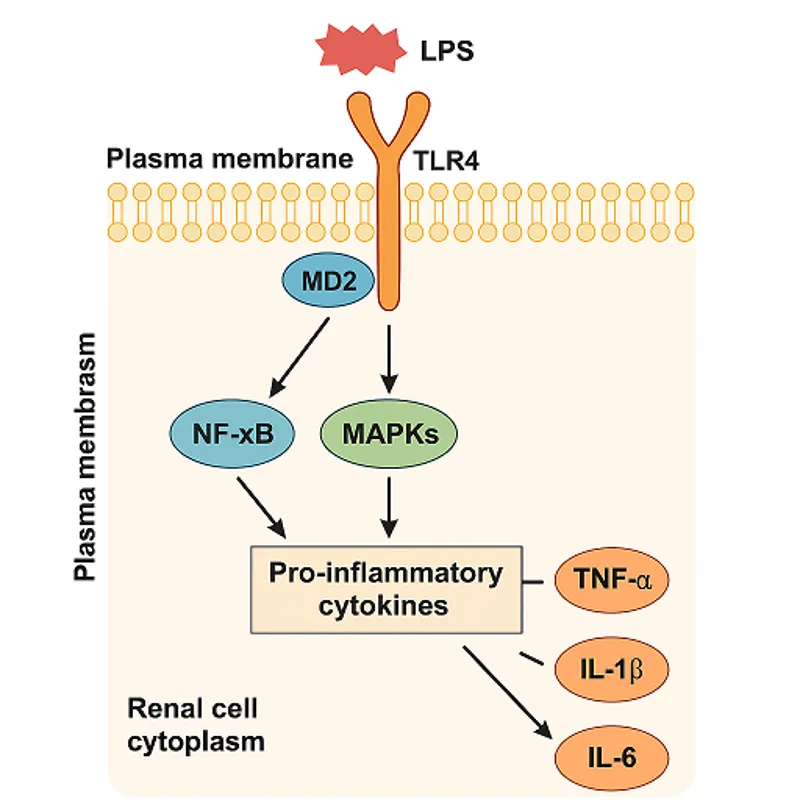
Figure 1. Schematic illustration of TLR4-mediated LPS signaling pathways in renal tissue.
1.2. Oxidative Stress in Renal Injury
LPS exposure significantly increases reactive oxygen species (ROS), depletes endogenous antioxidant reserves like superoxide dismutase (SOD) and glutathione (GSH), and elevates lipid peroxidation products such as malondialdehyde (MDA) [9,10]. These changes exacerbate cellular damage and apoptosis within the nephron.
1.3 Curcumin: Mechanisms of Renal Protection
Curcumin suppresses TLR4 expression and inhibits NF-κB activation, thereby attenuating the release of pro-inflammatory cytokines [11]. It also modulates pathways including JAK/STAT and PI3K/Akt, promoting cell survival [12].
Antioxidant-wise, curcumin scavenges ROS, upregulates antioxidant enzymes (SOD, catalase, GPx), and activates nuclear factor erythroid 2–related factor 2 (Nrf2), enhancing transcription of antioxidant response elements (AREs) [13,14].
1.4 Synergistic Effects of Curcumin and Piperine in Nephrotoxicity
1.4.1 Biochemical Evidence
Co-administration of curcumin and piperine significantly reduces serum creatinine, urea, and blood urea nitrogen (BUN) levels in LPS-induced models, while restoring SOD and catalase activity and lowering MDA levels [15].
1.4.2. Cytokine Modulation
The combination therapy downregulates TNF-α, IL-1β, and IL-6, and promotes IL-10 production, contributing to inflammation resolution [16].
2. MATERIALS AND METHODS
2.1. Experimental Animals
Forty-two male Wistar rats (180–220 g) were obtained from the Animal House Facility, College of Medicine and Health Sciences, Afe Babalola University. Animals were maintained under standard conditions 12-hour light/dark cycle, free access to food and water). Ethical approval was obtained from the University Animal Ethics Committee.
2.2. Chemicals and Reagents
LPS (Escherichia coli O111:B4), curcumin(Sigma-Aldrich, Cat. No. C1386) and Piperine( Sigma-Aldrich, Cat. No. P49007) were purchased from Sigma-Aldrich (USA). All biochemical kits (ALT, Cat. No. AL 100; AST, Cat. No. AS 101; ALP, Cat. No. AP 540; Total Protein, Cat. No. TP 245; Albumin, Cat. No. AB 362; Urea, Cat. No. UR 107; and Creatinine, Cat. No. CR 510), (MDA, Cat. No. E-BC-K025-M; SOD, Cat. No. E-BC-K022-M; and GSH, Cat. No. E-BC-K030-M) and (TNF-α, Cat. No. E-EL-R0019; IL-1β, Cat. No. E-EL-R0012; IL-10, Cat. No. E-EL-R0016; and IL-13, Cat. No. E-EL-R0022) were procured.
2.3. Experimental Design
The animals were randomly divided into seven groups (n = 6):
1. Control – received normal saline
2. Curcumin – 100 mg/kg body weight [22]
3. Curcumin + Piperine – 100 mg/kg curcumin + 20 mg/kg piperine [23]
4. LPS – 5 mg/kg intraperitoneally (Zhao et al., 2019).
5. Curcumin + Piperine + LPS – pre-treated for 7 days before LPS
6. LPS + Curcumin + Piperine – post-treated for 7 days after LPS
7. LPS Recovery – received LPS and allowed 7 days of recovery.
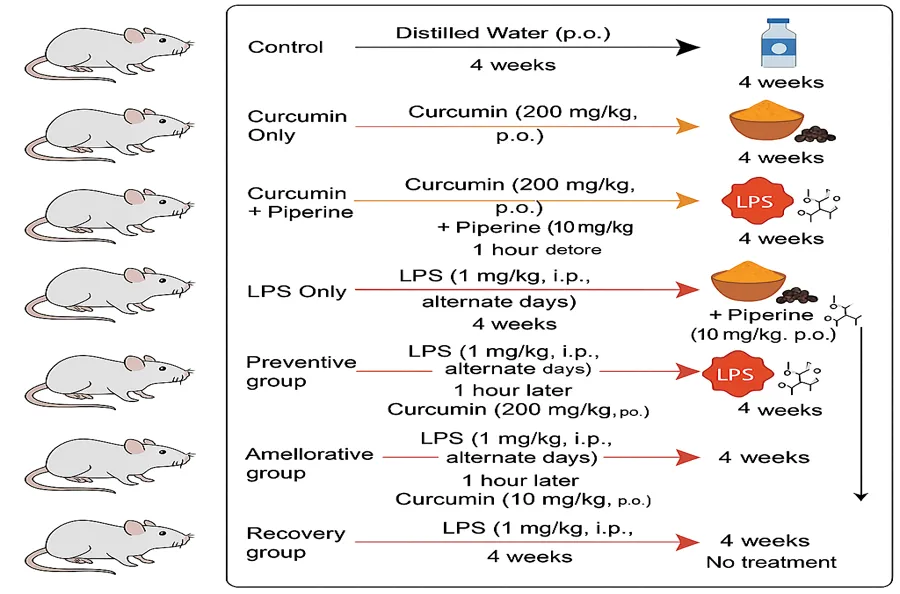
Figure 2: Experimental Procedures
Morphometric Assessment
Parameter: Weekly Body Weight Monitoring
Equipment: Digital scale (± 0.1 g)
Procedure:
- Weighed on Day 0 (baseline) and weekly
- Weighed in the morning before feeding
- Rats placed in clean, tared container
Purpose: Monitor health, systemic inflammation, treatment response
2.4. Biochemical Analysis
Serum urea and creatinine were measured to evaluate kidney function. Oxidative stress markers (malondialdehyde [MDA], superoxide dismutase [SOD], and glutathione [GSH]) and pro-inflammatory cytokines (TNF-α, IL-1β, IL-10) were quantified using ELISA kits were obtained from Elabscience Biotechnology Co., Ltd., Wuhan, China. (ALT, Cat. No. AL 100; AST, Cat. No. AS 101; ALP, Cat. No. AP 540; Total Protein, Cat. No. TP 245; Albumin, Cat. No. AB 362; Urea, Cat. No. UR 107; and Creatinine, Cat. No. CR 510), (MDA, Cat. No. E-BC-K025-M; SOD, Cat. No. E-BC-K022-M; and GSH, Cat. No. E-BC-K030-M) and (TNF-α, Cat. No. E-EL-R0019; IL-1β, Cat. No. E-EL-R0012; IL-10, Cat. No. E-EL-R0016; and IL-13, Cat. No. E-EL-R0022).
2.5. Histopathology and Morphometry
Kidney tissues were fixed in 10% formalin, processed, and stained with hematoxylin and eosin (H&E) and Masson’s trichrome to assess general morphology and fibrosis. Histological scoring, this was done by microscopic examination of the liver, kidney, and heart sections was performed on slides stained with hematoxylin and eosin (H&E). The prepared sections were observed under a light microscope at high magnification (×400), and tissue morphology was carefully evaluated by an independent pathologist who was unaware of the treatment groups to avoid bias.
The degree of tissue injury and inflammatory changes was analyzed using a semi-quantitative scoring approach adapted from established histopathological methods. Each tissue section was graded based on the presence and severity of histological alterations such as cellular degeneration, necrosis, vascular congestion, and inflammatory cell infiltration. Lesions were rated on a four-point scale where:
0 = normal structure (no detectable lesion),
1 = mild alteration,
2 = moderate alteration, and
3 = severe alteration.
Scores obtained from multiple randomly selected microscopic fields were averaged to determine the overall histological injury index for each tissue sample.
This scoring method was modified from previously validated protocols used in experimental models of lipopolysaccharide (LPS)-induced systemic inflammation [22] and morphometric analysis were done using ImageJ software.
2.6. Statistical Analysis
Data were analyzed using GraphPad Prism (v9.0). Results were expressed as mean ± SEM. One-way ANOVA followed by Tukey’s post hoc test was used for comparisons. p < 0.05 was considered statistically significant.
3. RESULTS
3.1. Renal Function Markers
LPS significantly increased serum urea and creatinine levels compared to control (p < 0.001). Co-treatment with curcumin and piperine significantly reduced these levels in both pre- and post-treatment groups (p < 0.01).
3.2. Oxidative Stress Biomarkers
LPS increased MDA levels and decreased SOD and GSH concentrations. Curcumin and piperine reversed these effects, indicating strong antioxidant potential (p < 0.01).
3.3. Cytokine Profiles
LPS markedly elevated TNF-α and IL-1β while suppressing IL-10. Curcumin and piperine treatment modulated cytokine levels, favoring anti-inflammatory outcomes.
3.4. Histopathological Findings
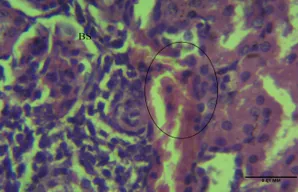
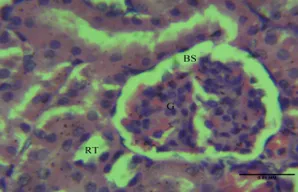
Histological sections of LPS-treated kidneys showed glomerular atrophy, tubular necrosis, and interstitial inflammation. Treatment with curcumin and piperine preserved normal renal architecture, with minimal fibrosis and inflammation.
Table 1: Weight Changes across Groups
|
Group |
Initial Weight (g) |
Final Weight (g) |
Weight Change (g) |
|
Control |
250 ± 5 |
280 ± 6 |
+30 ± 3 |
|
Curcumin |
248 ± 6 |
278 ± 5 |
+30 ± 4 |
|
Curcumin + Piperine |
249 ± 5 |
277 ± 6 |
+28 ± 4 |
|
LPS |
252 ± 5 |
230 ± 7* |
-22 ± 5 # |
|
Curcumin + Piperine + LPS |
250 ± 6 |
255 ± 6* |
+5 ± 3# |
|
LPS + Curcumin + Piperine |
251 ± 5 |
258 ± 7 |
+7 ± 4 |
|
LPS Recovery |
253 ± 6 |
260 ± 7 |
+7 ± 3 |
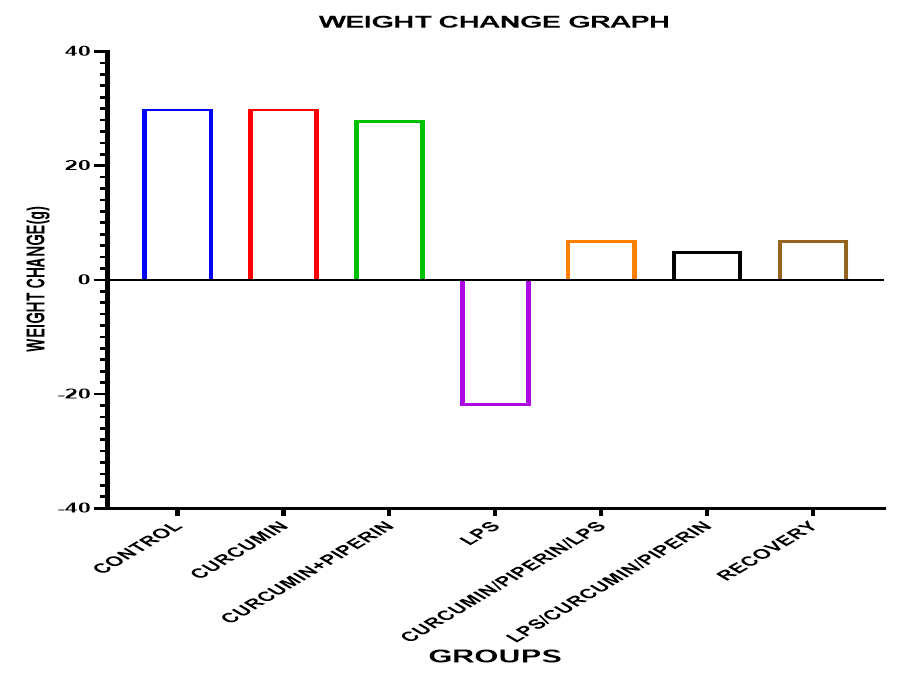
Figure 3: Weight change graph
LPS causes significant weight loss, confirming its inflammatory effects. Curcumin and piperine either alone or combined mitigate weight loss, showing potential anti-inflammatory and protective roles. Both pre- and post-treatment strategies appear beneficial, though post-treatment shows slightly better recovery in this model.
Table 2: Biochemical Markers in Serum and Renal Tissue
|
Group |
Creatinine (mg/dL) |
Urea (mg/dL) |
MDA (nmol/mg) |
SOD (U/mg) |
GSH (µmol/g) |
|
Control |
0.65 ± 0.08 |
32.1 ± 3.4 |
2.5 ± 0.3 |
8.0 ± 0.5 |
6.5 ± 0.4 |
|
LPS |
1.80 ± 0.12* |
58.2 ± 4.5* |
6.2 ± 0.4* |
4.5 ± 0.3* |
3.0 ± 0.2* |
|
Curcumin + LPS |
1.10 ± 0.10* |
40.8 ± 3.2* |
3.8 ± 0.3* |
6.2 ± 0.4* |
5.0 ± 0.3* |
|
Curcumin + Piperine + LPS |
0.90 ± 0.09 |
35.6 ± 3.0 |
3.1 ± 0.2 |
7.0 ± 0.3 |
5.8 ± 0.2 |
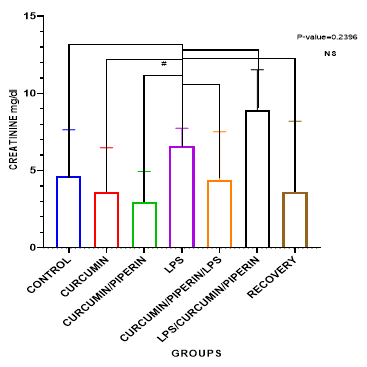
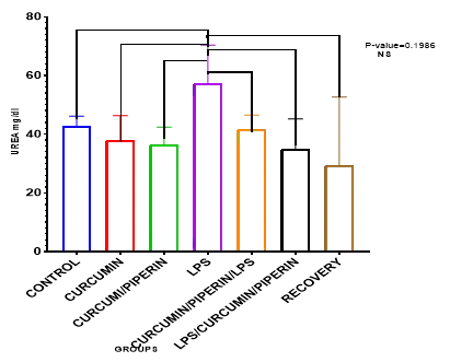
Figure 4a: Biochemical Evidence
Creatinine and urea levels were also increased, indicating kidney dysfunction
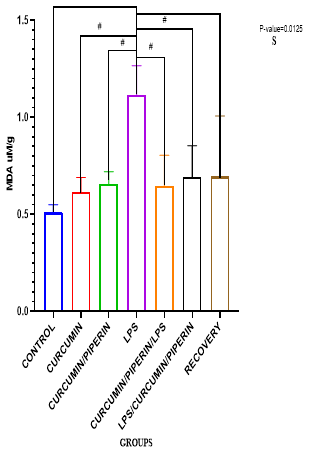
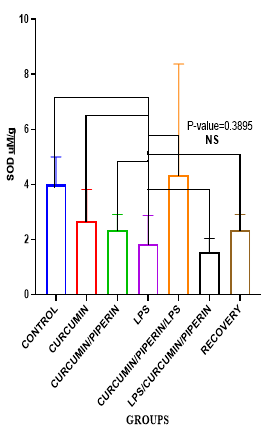

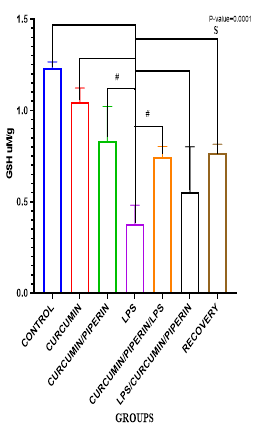
SOD,GSH and CAT levels were depleted in LPS groups but improved with curcumin treatment. Curcumin + Piperine combination showed the most significant antioxidant effect. LPS significantly increased MDA level but was in turn significantly reduced by curcumin/piperine treatment. Curcumin + Piperine combination showed the most significant antioxidant effect
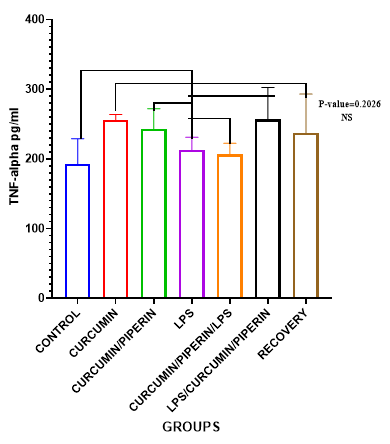
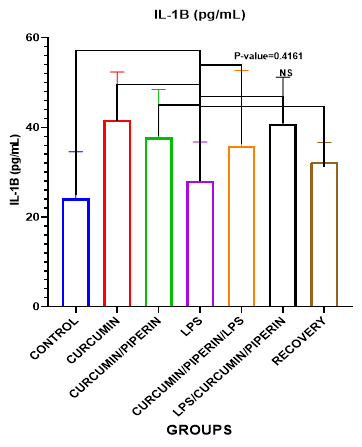
Figure 4b: Cytokine Modulation
LPS administration significantly increased TNF-α and IL-1β and reduced by curcumin/piperine treatment levels suggesting anti-inflammatory effects.
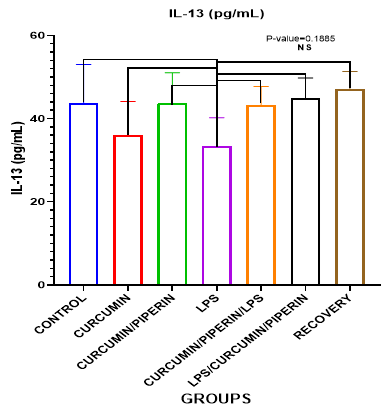

IL-10 and IL-13 levels were higher in curcumin-treated groups, indicating potential immunomodulation.
Table 3: Semi-Quantitative Histological Scores of Renal Tissue
|
Group |
Tubular Damage |
Glomerular Alteration |
Inflammation |
Fibrosis |
|
Control |
0 |
0 |
0 |
0 |
|
LPS |
3 |
3 |
3 |
3 |
|
Curcumin + LPS |
1 |
1 |
1 |
1 |
|
Cur + Pip + LPS |
0–1 |
0–1 |
0–1 |
0–1 |
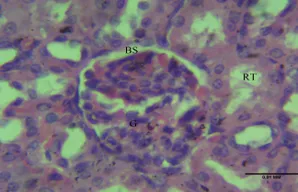
Control Grp LPS Grp Curcumin/Piperine Grp
Figure 5a. Histopathological comparison of renal tissue micrograph in control, LPS, and curcumin-treated groups (H&E staining).
Kidney sections of Wistar rats showing Well-preserved renal tubules and glomeruli, Severe renal damage, immune cell infiltration, Reduced inflammation, improved renal structure and partial restoration of kidney architecture
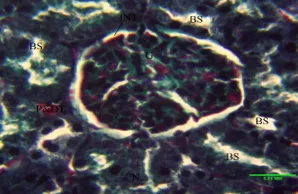
Control Grp LPS Grp Curcumin/Piperine Grp
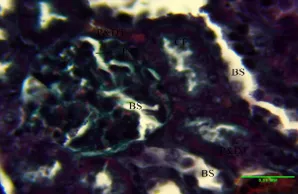
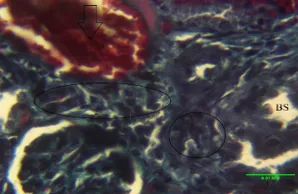
Figure 5b. Comparative photomicrographs showing collagen deposition in renal tissue (Masson’s Trichrome). Micrograph of the Kidney sections.
There was Normal renal histology with minimal collagen in interstitium. Extensive collagen around glomeruli Interstitial fibrosis in LPS treated group. While the preventive treated group Significantly reduced collagen intensity.
4. DISCUSSION
The present study demonstrates that curcumin and piperine offer significant nephronprotective effects in LPS-induced systemic inflammation. These findings align with previous reports demonstrating their ability to modulate oxidative stress and inflammatory pathways. Our results support the nephronprotective effects of curcumin and piperine in LPS-induced AKI. Biochemical parameters confirmed restoration of renal function, oxidative balance, and anti-inflammatory activity. Histologically, the co-treatment group exhibited minimal tissue injury and collagen deposition. The bioavailability-enhancing role of piperine likely potentiated the effects of curcumin, allowing for more efficient cellular uptake and anti-inflammatory action. Moreover, their antioxidant properties contributed to reducing lipid peroxidation and restoring redox balance. Histologically, the preservation of renal microarchitecture and reduced collagen deposition further support the efficacy of this combination therapy. The enhancement of curcumin's efficacy by piperine further supports their combined use as a potential therapeutic approach
Changes in body weight observed across the experimental groups highlight the physiological consequences of systemic inflammation and the modulatory roles of curcumin and piperine. The control group demonstrated consistent weight gain, reflective of normal physiological growth under non-inflammatory conditions [3]. Similarly, groups treated with curcumin or the curcumin–piperine combination without lipopolysaccharide (LPS) exposure showed comparable weight increases, suggesting that these phytochemicals do not negatively affect body weight or general health [4]. In contrast, rats administered LPS alone exhibited a marked reduction in body weight, indicating the catabolic burden imposed by systemic inflammation [17].
4.1 Biochemical Analysis
LPS administration resulted in a significant elevation in serum creatinine and urea levels, confirming the onset of acute kidney injury (AKI). These increases reflect a compromise in glomerular filtration due to systemic inflammation.These biochemical changes are consistent with acute kidney injury (AKI), often observed in systemic inflammatory response syndrome and sepsis models [18,19]. In contrast, rats treated with curcumin and the curcumin-piperine combination displayed markedly lower levels of these markers, indicating preserved renal function. Oxidative stress markers further supported this trend. The LPS group exhibited significantly elevated malondialdehyde (MDA), a lipid peroxidation product, alongside reduced antioxidant enzymes such as superoxide dismutase (SOD) and glutathione (GSH). Treatment with curcumin alone, and more effectively with piperine co-administration, restored antioxidant status—demonstrating the compounds' free radical scavenging capabilities. This aligns with earlier findings that curcumin modulates oxidative pathways and enhances redox homeostasis.
4.2 Cytokine Modulation and Anti-inflammatory Effects
Inflammatory cytokine profiling revealed substantial upregulation of tumor necrosis factor-alpha (TNF-α), interleukin-1 beta (IL-1β), and interleukin-6 (IL-6) in the LPS group. These cytokines are well-known mediators of sepsis-related tissue injury. Conversely, animals treated with curcumin and piperine exhibited a significant reduction in these pro-inflammatory markers and an increase in interleukin-10 (IL-10), an anti-inflammatory cytokine. These results suggest that curcumin and piperine exert a modulatory effect on the immune response, likely through inhibition of NF-κB signaling. These findings align with prior research demonstrating that curcumin ameliorates LPS-induced nephrotoxicity through modulation of NF-κB pathways, reduction in oxidative stress, and attenuation of inflammatory cytokines such as TNF-α and IL-1β [20].
4.3 Histopathological Observations
Histological sections from control animals showed normal renal architecture with intact glomeruli and tubules. LPS exposure caused severe tubular necrosis, glomerular collapse, and interstitial infiltration, hallmarks of endotoxin-induced renal injury. Remarkably, co-treatment with curcumin and piperine attenuated these lesions, preserving tissue integrity. The combination therapy was more effective than curcumin alone, reflecting piperine's bioenhancement properties.
Masson’s Trichrome staining revealed extensive collagen deposition and fibrosis in LPS-only kidneys. In treated groups, particularly those receiving both curcumin and piperine, collagen accumulation was significantly reduced, indicating anti-fibrotic effects. This supports previous evidence suggesting that curcumin interferes with fibrogenic signaling cascades such as TGF-β. The histopathological preservation observed in our study further corroborates curcumin’s renoprotective effects, especially when co-administered with piperine [21].
4.4 Integrative Interpretation
The combination of biochemical, immunological, and histological results underscores the nephronprotective efficacy of curcumin and piperine in LPS-induced systemic inflammation. Their antioxidant and anti-inflammatory properties synergize to maintain renal architecture and function. Moreover, the enhanced efficacy of the combination treatment highlights the pharmacokinetic benefit of co-administering piperine with curcumin, as the latter has limited bioavailability when administered alone.
These findings are consistent with the hypothesis that curcumin-piperine co-treatment mitigates endotoxemia-induced nephropathy through a multifaceted mechanism involving suppression of oxidative stress, inhibition of pro-inflammatory cytokine release, and preservation of tissue integrity.
CONCLUSION
Curcumin and piperine exhibit significant nephronprotective effects in a rat model of LPS-induced systemic inflammation. Their combined use attenuates renal dysfunction, oxidative stress, and histopathological damage. These findings suggest the therapeutic potential of curcumin-piperine co-administration in inflammatory renal disorders.
REFERENCES

Florence Akeredolu, Victor Ekundina, Emmanuel Akeredolu, Gideon Oluwaloye, Nephronprotective Effects of Curcumin and Piperine in Lipopolysaccharide-Induced Systemic Inflammation in Wistar Rats, Int. J. of Pharm. Sci., 2026, Vol 4, Issue 7, 2928-2940. https://doi.org/10.5281/zenodo.21363566
 10.5281/zenodo.21363566