

We use cookies to ensure our website works properly and to personalise your experience. Cookies policy
1.Dean-Academics & Professor, Department of Pharmaceutics, Holy Grace Academy of Pharmacy, Affliated to Kerala University of Health Sciences, Mala, Thrissur-680732, Kerala
2.Students, Department of Pharmaceutics, Holy Grace Academy of Pharmacy, Affliated to Kerala University of Health Sciences, Mala, Thrissur-680732, Kerala.
Nonwoven materials provide advantages like low production costs , versatile applications , light weight properties over traditional textiles . The increasing environmental and ecological concerns from extensive petroleum-based products highlight the necessity for developing products from renewable resources . As sustainable alternatives biobased nonwovens tackle the challenges of environmental pollution as well as adverse allergic reactions from the fossil materials used. This paper discusses the various advancement in biobased nonwovens focusing on innovations in wound bandages and incontinence products. It explores the feasibility of using Thilapia skin as atherapeutic option wound management. Due to the high content of collagen and omega-3-fatty acids , it has promising regenerative properties and can be used as xenograft . Acellular fish skin is a highly engineered product. We also discuss the manufacturing of baby diapers made fron chicken feathers . It appears that chicken feathers appear to meet the necessary characteristics and expecting that the product will meet the desired functions.
The global demand for environmentally sustainable materials has increased significantly due to pressing challenges such as global warming, plastic pollution, and depletion of non-renewable resources. Both consumers and industries are actively seeking alternatives to conventional synthetic products in order to reduce ecological impact. This transition has accelerated research and development in biobased materials, particularly in the field of nonwoven fabrics, which offer versatility, cost-effectiveness, and functional adaptability.
Nonwoven fabrics are textile structures produced directly from fibres without undergoing traditional processes such as spinning, weaving, or knitting. These materials are engineered through techniques like dry-laid and wet-laid processes, allowing customization of properties such as absorbency, porosity, tensile strength, and breathability. Due to these advantages, nonwovens have gained widespread applications in healthcare, hygiene products, filtration systems, and cosmetic industries. In particular, their role in wound care and absorbent hygiene products has been transformative.
However, conventional nonwoven materials are predominantly derived from synthetic polymers such as polyethylene and polypropylene, which are non-biodegradable and contribute significantly to environmental pollution. The accumulation of waste, especially from disposable hygiene products like diapers, poses a major environmental burden. Additionally, these materials may cause skin irritation, allergic reactions, and discomfort, particularly in sensitive populations such as infants and patients with compromised skin integrity.
Traditional wound dressings, although effective to some extent, exhibit several limitations. They often adhere to the wound surface, causing pain during removal and potential tissue damage. They also require frequent replacement and may have limited absorbency, making them unsuitable for severe conditions such as third-degree burns. While advanced synthetic dressings have been developed, they still fail to fully address issues related to biocompatibility, biodegradability, and cost.
To overcome these limitations, there is a growing need for biobased, eco-friendly, and functionally superior alternatives. Natural materials such as tilapia fish skin and chicken feathers have emerged as promising candidates due to their unique structural and biochemical properties. Tilapia fish skin is rich in collagen types I and III, which play a crucial role in wound healing by promoting re-epithelialization and angiogenesis. It also helps maintain skin elasticity and reduces scar formation. Acellular fish skin has been explored as a xenograft biomaterial, offering a biologically active and sustainable alternative for wound management.
Similarly, chicken feathers, an abundant agro-industrial waste, possess excellent characteristics such as high absorbency, lightweight structure, and biodegradability, making them suitable for use in hygiene products like diapers. Utilizing such waste materials not only reduces environmental pollution but also contributes to a circular and sustainable economy.
The increasing environmental concerns, combined with the limitations of synthetic materials and traditional products, highlight the urgent need to develop innovative, biodegradable, and skin-friendly nonwoven materials derived from renewable sources.This study aims to develop and evaluate biobased nonwoven materials using tilapia fish skin and chicken feathers for sustainable wound care and hygiene applications.
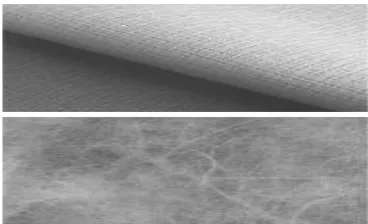
Fig. 1: Nonwoven fabrics
MATERIALS AND METHODS:
Nonwoven manufacturing technologies have gained significant importance in the cosmetic, healthcare, and hygiene industries due to their ability to produce functional, cost-effective, and versatile materials. Nonwoven fabrics are engineered structures formed directly from fibres without the need for spinning, weaving, or knitting. The manufacturing process involves several key stages, including raw material selection, web formation, bonding, and finishing, each of which determines the final properties of the fabric. Raw materials used in nonwoven production can be broadly classified into synthetic fibres such as polypropylene, polyester, viscose rayon, and polyamide, and natural fibres such as cotton, jute, hemp, and wool. Based on production methods, nonwovens are classified into dry-laid, wet-laid, and polymer-laid techniques. In the dry-laid process, fibres are opened, blended, carded, and laid into a web, producing a uniform and flexible structure. In contrast, the wet-laid process involves suspending fibres in water to form a slurry, which is deposited on a moving screen, followed by dewatering and drying to produce a smooth and uniform sheet. The polymer-laid technique includes spunbond and melt-blown processes, where thermoplastic polymers are melted, extruded into filaments, and directly converted into a web structure. Spunbond fabrics offer high strength and durability, whereas melt-blown fabrics are characterized by fine fibres, high porosity, and excellent filtration properties, making them suitable for medical and hygiene applications.
Bonding methods play a crucial role in imparting strength and integrity to nonwoven fabrics. These methods are categorized into mechanical, thermal, and chemical bonding. Mechanical bonding includes needle punching and hydroentangling, where fibres are physically entangled to form a cohesive structure, producing strong and flexible fabrics. Thermal bonding involves the application of heat and pressure to melt thermoplastic fibres, allowing them to fuse at contact points, commonly achieved through calendering or air bonding techniques. Chemical bonding utilizes adhesives or binders such as latex resins to secure fibres, enhancing stability and functional properties like water resistance and durability. After bonding, finishing and treatment processes are carried out to improve the performance of nonwoven fabrics. Coating is applied to enhance surface properties such as abrasion resistance, hydrophobicity, and antimicrobial activity. Lamination involves combining multiple layers to produce composite materials with improved strength and barrier properties against liquids and gases. Additionally, chemical treatments are used to impart specialized characteristics such as flame resistance, UV protection, and asntimicrobial properties. These advanced manufacturing technologies enable the development of high-performance nonwoven materials tailored for diverse applications, particularly in sustainable and biomedical fields.
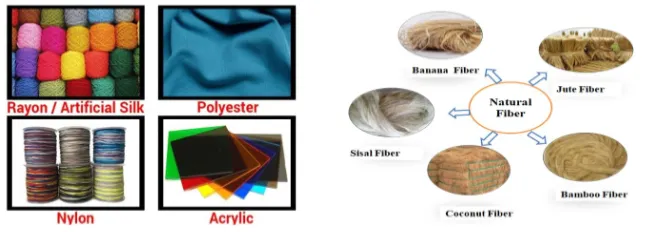
Fig. 2: Raw materials used in nonwoven fabric
Fabric manufacturing technologies:
The manufacturing process significantly influences the structural integrity and functional performance of nonwoven fabrics. Several manufacturing technologies are employed depending on the intended application.
Dry-Laid Process : The dry-laid process involves opening and blending staple fibres followed by carding and web formation. Fibres are deposited onto a conveyor belt to form a random or oriented fibre web. Dry-laid nonwovens are soft, flexible, and suitable for hygiene products and wound dressings.
Wet-Laid Process : In the wet-laid process, fibres are dispersed in water to form a slurry and deposited onto a moving screen. Water removal and drying result in smooth and uniform nonwoven sheets with controlled porosity and excellent absorbency.
Spunbond Technology : Spunbond technology involves extrusion of molten thermoplastic polymers through spinnerets to produce continuous filaments. The filaments are cooled, stretched, and deposited into a web structure. Spunbond nonwovens exhibit high strength and durability.
Melt-Blown Technology : Melt-blown technology produces ultrafine fibres using high-velocity hot air streams. These fibres form highly porous nonwoven structures with superior filtration efficiency and absorbency.
Electrospinning : Electrospinning is an advanced nanofibre fabrication technique that uses a high-voltage electric field to produce nanoscale fibres from polymer solutions. Electrospun nanofibres exhibit high surface area, interconnected porosity, and excellent drug-loading capacity.
Bonding techniques in nonwoven fabrics :
Bonding techniques provide cohesion and mechanical integrity to the fibre web.
Mechanical Bonding
Thermal Bonding
Finishing and surface modification process :
Finishing processes improve the functional properties of nonwoven materials.
Coating: Coating enhances antimicrobial activity, hydrophobicity, and barrier protection.
Lamination: Lamination combines multiple layers to improve mechanical strength and liquid resistance.
Chemical Finishing: Chemical treatments impart flame resistance, UV protection, antimicrobial properties, and antistatic behaviour.
Plasma Treatment: Plasma modification improves surface wettability, adhesion, and drug loading capacity.
Sterilization Techniques: Gamma irradiation, ultraviolet radiation, ethylene oxide treatment, and autoclaving are used to ensure sterility of medical nonwovens.
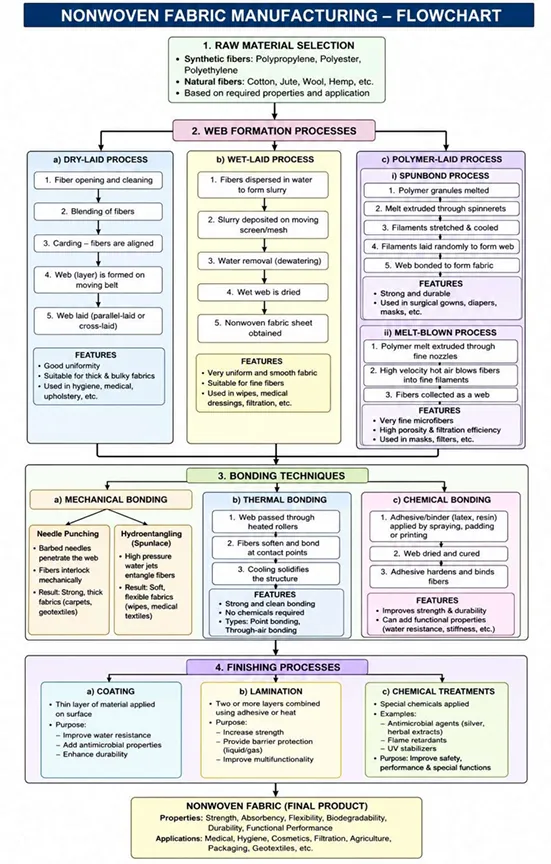
Fig. 3: Nonwoven fabric manufacturing
Innovations in wound healing using nonwovens : Innovations in wound healing using nonwoven materials focus on maintaining an optimal moist environment, preventing infection, and promoting faster tissue regeneration. Conventional burn treatments include topical antimicrobial agents such as silver sulfadiazine, bismuth-impregnated gauze, nanocrystalline silver dressings, and mafenide acetate. Advanced dressings like hydrogels, alginates, and hydrocolloids are also used to maintain moisture balance and support healing. These materials help protect the wound, reduce microbial growth, and improve patient comfort.
However, conventional treatments have several limitations, including cytotoxicity, allergic reactions, limited absorption capacity, and reduced effectiveness in severe or highly exudative wounds. To overcome these drawbacks, nonwoven biomaterials derived from natural sources have emerged as effective alternatives. Tilapia fish skin, rich in collagen types I and III, promotes re-epithelialization, angiogenesis, and faster wound healing. Its biocompatibility, biodegradability, and porous structure support cell growth and nutrient transfer, making it a promising nonwoven-based dressing for sustainable and advanced wound care applications.
Tilapia Fish Skin as a Xenograft:
Tilapia fish skin has been widely utilized as a xenograft or biological dressing in wound healing due to its superior safety and effectiveness compared to mammalian sources such as pigs, cattle, and human cadavers, which may pose risks of disease transmission, immune reactions, and ethical or religious concerns. Tilapia fish skin exhibits excellent biocompatibility, biodegradability, and strong adherence to the wound surface. It is rich in collagen types I and III, which play a crucial role in extracellular matrix formation, re-epithelialization, and angiogenesis. These properties promote faster healing, maintain moisture balance, reduce scar formation, and improve outcomes in chronic and non-healing wounds.
Acellular fish skin (AFS) provides additional advantages due to its porous microstructure (20–100 µm), which facilitates cell adhesion, capillary in-growth, and efficient transport of nutrients and oxygen. It acts as an ideal scaffold for tissue regeneration and has been reported to reduce healing time in burn wounds. The presence of omega-3 polyunsaturated fatty acids further enhances epithelialization and accelerates wound closure. Additionally, bioactive components in fish skin stimulate angiogenesis, granulation tissue formation, and macrophage activation, contributing to effective tissue repair. Its low immunogenicity and ability to preserve bioactive molecules make it a promising material for advanced wound care applications.
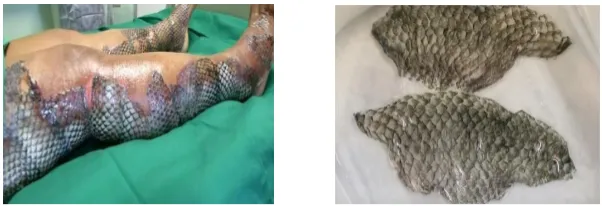
Fig. 4: Tilapia fish skin as Xenograft
Wound bandage preparation and manufacturing process :
The preparation of wound bandages using tilapia fish skin involves multiple processing steps.
Collection and Cleaning: Fresh fish skin is collected and washed thoroughly to remove scales, muscles, and contaminants.
Decellularization and Sterilization: The cleaned skin is treated with saline solution and chlorhexidine gluconate to remove microorganisms and cellular debris.
Glycerol Preservation: Sequential glycerol treatment improves flexibility and preservation stability.
Fabric Formation: The treated fish skin is converted into nonwoven structures using wet-laid processing or electrospinning.
Bonding and Finishing: Thermal bonding and coating processes improve structural integrity and antimicrobial performance.
Packaging and Storage: Final wound dressings are sterilized using gamma radiation and stored under controlled conditions.
Manufacturing process of wound bandage :
The manufacturing process of the wound bandage using tilapia fish skin involves several sequential steps to ensure sterility and functionality. Initially, tilapia fish skin is collected, scales are removed, and the skin is carefully dissected and cut into strips. The skin is then rinsed with 0.9% saline and sterilized by soaking in 2% chlorhexidine gluconate solution for 60 minutes. After sterilization, it is again washed with saline and treated with a mixture of 75% glycerol and 25% saline for 1 hour, followed by immersion in 100% glycerol for 3 hours to enhance preservation and flexibility. The processed skin is then packed in sterile conditions and stored at 4°C, with additional sterilization performed using gamma radiation if required. Subsequently, the treated fish skin is converted into a nonwoven bandage using techniques such as electrospinning or wet-laid method. Finally, the formed fabric is subjected to thermal bonding, followed by coating and lamination processes to improve mechanical strength, barrier properties, and overall performance of the wound dressing.
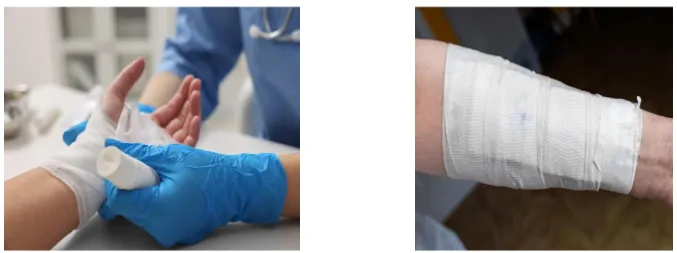
Fig. 5: Conventional treatment methods
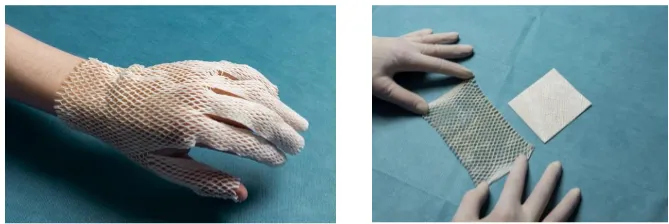
Fig. 6: Acellular fish skin based wound bandages
Table 1: Comparison of Thilapia Fish Skin Based Wound Dressing With Conventional treatment
|
Fish Skin Wound Dressing |
Conventional Treatment |
|
1. Painless and reduced need for analgesic drugs |
1. Painful and need analgesic drugs |
|
2. Requires less frequent changes |
2. Needs to be changed frequently |
|
3. No risk of rejections or donor site morbidities |
3. Risks of rejections and allergic reactions |
|
4. Fish skin could be easily obtained from in-house aquaculture and farms and is abundant |
4. Allograft and autograft procedures are technically challenging and have limited availability |
|
5. No adverse reactions are observed |
5. Adverse reactions like rashes, pruritus are observed |
|
6. Helps maintain skin elasticity and reduces the appearance of scars |
6. Causes skin rigidity and results in scar formation |
Evaluation methods:
The evaluation of the fish skin-based wound dressing was performed using cytotoxicity, hemocompatibility, histological, microbiological, and scar assessment studies. Cytotoxicity was evaluated using L929 fibroblast cells treated with fish skin extract in DMEM, while hemocompatibility was assessed by a hemolysis test using rabbit blood and absorbance measurement at 545 nm. Skin regeneration and tissue thickness were analyzed using H&E stained sections and ImageJ software. Histological studies assessed collagen organization in formalin-fixed, hematoxylin-stained samples. Microbiological evaluation was done by culturing samples on different media to detect bacterial, yeast, and fungal contamination. Scar formation was assessed using the Scar Evaluation Index (SEI), where SEI > 1 indicates hypertrophic scarring and SEI ≤ 1 indicates normal healing. These evaluations confirm the safety, biocompatibility, and wound healing efficacy of the dressing.
Cytotoxicity Test
Cytotoxicity evaluation determines the biocompatibility of wound dressing materials using L929 fibroblast cell lines cultured in DMEM medium. Cell viability assays such as MTT are performed after exposure to fish skin extracts.
Hematological (Hemocompatibility/Hemolysis) Test
Hemocompatibility is evaluated using rabbit blood. The degree of hemolysis is measured spectrophotometrically at 545 nm. Low hemolysis indicates excellent blood compatibility.
Histological Examination
Histological analysis is conducted using hematoxylin and eosin stained tissue sections. Microscopic examination evaluates fibroblast proliferation, collagen deposition, epithelialization, and tissue regeneration.
Microbiological Testing
Microbiological testing detects bacterial, fungal, and yeast contamination using nutrient agar and potato dextrose agar culture methods.
Scar Assessment Index (SEI)
The Scar Evaluation Index is calculated by comparing healed tissue thickness with normal skin thickness. Lower SEI values indicate improved healing with minimal scar formation.
Manufacturing of incontinence product using nonwovens:
The manufacturing of incontinence products such as disposable diapers using nonwoven materials has significantly improved hygiene and comfort. Modern diapers are lightweight, highly absorbent, leak-proof, and easy to use. They are typically composed of multiple layers, including a nonwoven topsheet made of polypropylene or polyethylene that allows liquid penetration, a backsheet that prevents leakage, an absorbent core made of cellulosic fluff pulp or synthetic fibres, and superabsorbent polymers (SAP) that retain large amounts of fluid. Additional components such as elastics, adhesives, and tapes are used to enhance fit and functionality.
However, conventional disposable diapers have several drawbacks. They are primarily made from non-biodegradable petrochemical-based polymers, contributing significantly to environmental pollution and landfill accumulation. The presence of synthetic chemicals, dyes, and fragrances may cause skin irritation, allergic reactions, and diaper rashes in infants. Prolonged use can also increase the risk of infections. Additionally, the production process requires large amounts of raw materials, water, and energy, making these products expensive and environmentally unsustainable. These limitations highlight the need for eco-friendly and biodegradable alternatives based on natural nonwoven materials. The manufacturing process of baby diapers primarily focuses on the formation of the absorbent pad, which is the core functional layer. Initially, fluff pulp is fibreized and combined with superabsorbent polymers (SAP) to form the absorbent core. This is followed by lamination with nonwoven topsheet and backsheet materials along with the incorporation of elastic components for proper fit. The structure is then shaped, cut, and packaged into final products. The absorbent pad is typically a multilayer nonwoven structure formed using wet-laid or dry-laid techniques. The formed web undergoes thermal bonding, where heat is applied to soften the binding material, followed by cooling to stabilize the structure. Finishing processes are carried out to enhance properties such as absorbency and durability.
To improve sustainability, renewable and eco-friendly raw materials are increasingly explored as alternatives to conventional synthetic components. Cellulosic fibres such as bamboo and hemp exhibit excellent absorbency, antimicrobial properties, and biodegradability, making them suitable for diaper applications. Natural materials like rubber provide elasticity, while starch-based adhesives offer biodegradable bonding solutions. Additionally, natural additives such as aloe vera and chamomile extracts can be incorporated for their soothing and anti-inflammatory properties. Protein fibres like wool also provide breathability and bacteriostatic properties, although cost limits their large-scale use. These alternatives support the development of biodegradable, skin-friendly, and sustainable incontinence products.
Chicken feathers as absorbent core :
Chicken feathers are emerging as an effective absorbent core material for nonwoven-based diapers due to their unique structural and physicochemical properties. Feather fibres are lightweight (low density), flexible, compressible, and possess good thermal insulation. They are primarily composed of keratin and exhibit high mechanical strength and resilience. Compared to conventional fibres such as cellulose and wool, chicken feather fibres have a larger surface area and higher hygroscopicity, enabling greater moisture absorption. Their porous “honeycomb” microstructure enhances wettability and fluid retention, making them highly suitable for absorbent applications. Additionally, the presence of both hydrophilic and hydrophobic amino acids allows efficient moisture interaction, contributing to improved absorption performance.
From a functional perspective, chicken feather fibres exhibit suitable diameter, short length, and high fineness, which contribute to the formation of soft, lightweight, and highly absorbent nonwoven fabrics. Their moisture content (8–13%) ensures comfort and better interaction with finishing agents. Prior to use, feathers undergo cleaning, decontamination, and sterilization processes to remove impurities and microorganisms, resulting in odour-free and safe fibres. Their ability to form highly porous, absorbent nonwoven structures makes them a sustainable and efficient alternative to conventional absorbent materials used in disposable diapers, supporting the development of eco-friendly hygiene products.Top of Form
EVALUATION:
The performance of the chicken feather-based absorbent core was evaluated using tests for absorption capacity, absorption rate, leakage prevention, air permeability, liquid distribution, and mechanical strength. Urine absorption ratio (UAR) was calculated based on weight difference before and after absorption. Absorption speed was determined using the flat plate method, while run-off test assessed leakage control on an inclined surface. Air permeability was measured under controlled pressure, and wicking test evaluated liquid distribution within the core. Mechanical properties such as tensile strength and elasticity were analyzed to determine durability and flexibility of the diaper material.Bottom of Form.
Table 2: Evaluations of Manufacturing of Wound Bandage
|
Test |
Methodology |
Outcome |
|
Cytotoxicity Test |
L929 fibroblast cells cultured in 96-well plate and incubated at 37°C for 24 hrs. Treated with fish skin extract in DMEM. Controls: DMEM (blank), phenol (positive), polyethylene (negative). |
Determines cell viability and biocompatibility of the dressing. |
|
Hemolysis Test |
Fish skin extracts prepared in saline (37°C, 72 hrs). Mixed with diluted rabbit blood, incubated, centrifuged, and absorbance measured at 545 nm. |
Evaluates blood compatibility; low hemolysis indicates safety. |
|
Skin Tissue Thickness |
H&E stained sections observed at 25× magnification. Thickness measured using ImageJ software from multiple fields. |
Assesses granulation tissue formation and wound healing progress. |
|
Histological Evaluation |
Formalin-fixed samples embedded in paraffin, sectioned, and stained with hematoxylin. |
Examines collagen organization and tissue regeneration. |
|
Microbiological Evaluation |
Samples cultured on nutrient agar, yeast extract medium, and potato dextrose agar. Colony count recorded. |
Detects microbial contamination (bacteria, fungi, yeast). |
|
Scar Evaluation (SEI) |
SEI = Wound tissue thickness / Normal skin thickness (evaluated at day 180). |
Determines scar formation (SEI > 1: hypertrophic scar; SEI ≤ 1: normal healing). |
Table 3: Evaluations of Manufacturing of Incontinence Product Using Nonwovens
|
Test |
Methodology |
Purpose |
|
Urine Absorption Capacity (UAR) |
Dry weight (W1) measured → soaked in urine → final weight (W2) taken → UAR = (W2 − W1) / W1 |
Determines absorbent capacity of core |
|
Urine Absorption Speed |
Urine added in intervals using cylinder → time for complete absorption measured |
Evaluates rate of absorption |
|
Urine Run-off Test |
Diaper placed on inclined surface → urine poured → runoff collected and weighed |
Assesses leakage prevention |
|
Air Permeability |
Measured using air permeability tester under fixed pressure (R = QV/A) |
Determines breathability |
|
Wicking Test |
Dyed liquid applied → distance travelled measured over time |
Evaluates liquid distribution |
|
Mechanical Strength Test |
Tensile strength and elasticity measured using testing machine |
Determines durability and flexibility |
CONCLUSION
In conclusion, nonwoven materials have become indispensable in modern healthcare and hygiene sectors due to their versatility, cost-effectiveness, and ability to be engineered for specific functional properties. Advanced nonwoven manufacturing techniques have enabled the production of lightweight, highly absorbent, breathable, and biocompatible materials suitable for applications such as wound dressings and incontinence products. The incorporation of natural biomaterials like tilapia fish skin, rich in collagen, and chicken feathers, with high absorbency and porosity, provides improved wound healing, moisture management, and patient comfort. These materials also demonstrate excellent antimicrobial potential, reduced risk of allergic reactions, and enhanced tissue regeneration compared to conventional synthetic products.
Moreover, the development of biodegradable and eco-friendly nonwoven materials addresses major environmental concerns associated with synthetic polymers, such as pollution and waste accumulation. The use of renewable resources reduces dependency on petrochemical-based materials and supports sustainable product design. Improved properties such as high absorption capacity, better fluid distribution, breathability, and mechanical strength further enhance product performance and user safety. As research continues, future innovations may include smart nonwoven materials with responsive functions, improved drug delivery capabilities, and enhanced durability. Overall, these advancements contribute to improved healthcare outcomes, environmental sustainability, and the development of next-generation medical and hygiene products.
Nonwoven fabrics have emerged as a versatile and indispensable component across multiple sectors, particularly in medical and hygiene applications. The transition from conventional textiles to nonwovens has significantly improved product performance by offering advantages such as high absorbency, lightweight structure, cost-effectiveness, and enhanced patient comfort. In wound healing, innovations such as tilapia fish skin–based dressings demonstrate superior biocompatibility, faster healing, reduced infection risk, and minimal adverse reactions compared to conventional treatments. Similarly, in hygiene products like diapers, nonwoven technology enables efficient fluid management, improved leakage protection, and better skin compatibility.
Furthermore, the incorporation of sustainable and natural materials such as cellulose fibers and chicken feather fibers highlights a shift toward eco-friendly alternatives, addressing environmental concerns associated with synthetic products. Advanced manufacturing techniques including wet-laid, electrospinning, and thermal bonding have enabled the production of highly functional nonwoven structures with tailored properties. These developments collectively emphasize the growing importance of nonwovens in enhancing healthcare outcomes while maintaining economic and environmental balance.
Looking ahead, future trends in nonwoven technology are expected to further revolutionize the field. Emerging manufacturing techniques such as hybrid needle punching, foam-forming, electrospinning, and 3D printing are enabling the development of high-performance, lightweight, and biodegradable materials. Nanotechnology-based nonwovens incorporating nanoparticles like silver, zinc oxide, and titanium dioxide offer advanced functionalities such as antimicrobial activity, UV protection, and improved filtration efficiency. Additionally, the adoption of green synthesis methods and biodegradable nanofibers will play a crucial role in reducing environmental impact.
The integration of digital technologies such as artificial intelligence (AI), machine learning (ML), and the Internet of Things (IoT) is expected to enhance production efficiency through real-time monitoring, predictive maintenance, and quality control. Moreover, the development of smart and functionalized nonwovens with embedded sensors and responsive materials holds significant potential in medical applications, enabling real-time health monitoring and improved patient care. Collaborative efforts between academia, industry, and regulatory bodies will be essential to accelerate innovation, ensure safety, and promote the widespread adoption of advanced nonwoven technologies, ultimately shaping a more sustainable and technologically advanced future in healthcare and hygiene sector.
REFERENCES

Raslamol .K,Aneena Titus, Leya Philip,Mary Leya Albert, Nandana. P. S, Swaliha Shajahan, Nonwovens : Transforming Cosmetic Experience with Innovation, Int. J. of Pharm. Sci., 2026, Vol 4, Issue 5, 7801-7814. https://doi.org/10.5281/zenodo.20439731
 10.5281/zenodo.20439731