View Article

Abstract

Schiff bases are important compounds containing an imine (C=N) group, widely used in coordination chemistry and medicinal applications. In this study, a Schiff base ligand was synthesized using vanillin and L-tyrosine, followed by complexation with copper (II) ions. The synthesis was carried out using urea, KOH, and a small amount of DMF through the liquid-assisted grinding (LAG) method. The prepared Schiff base and its copper complex are expected to exhibit enhanced stability, reactivity, and biological activity. This research highlights an eco-friendly and efficient approach for synthesizing Schiff base metal complexes with potential pharmaceutical and industrial applications.

Keywords

Schiff base, Vanillin, L-tyrosine, Copper (II) complex, Liquid-assisted grinding, Imine group, Coordination chemistry, Metal complex, DMF, KOH

Introduction

× Popup Image

Schiff bases are a group of compounds that contain a special bond called imine (C=N), which forms when primary amines react with aldehydes or ketones. These compounds are important in coordination chemistry because they can bind to metal ions, acting as ligands. Schiff bases have many useful properties, such as being antibacterial, antifungal, anticancer, and antioxidant. They are also used in making materials like polymers and dyes, and in catalyzing chemical reactions. When Schiff bases bind to metal ions, they can become more stable and active, creating metal complexes with unique properties. [1]

In this research, the focus is on creating a Schiff base ligand from vanillin and L-tyrosine, and then combining it with copper (II) ions. The process uses urea, a little DMF (a solvent), and KOH, all carried out through a method called liquid-assisted grinding (LAG). Each of these chemicals and conditions plays an important role in making the Schiff base and forming the copper complex, which will be explained further below.

  1. Schiff Bases: Compounds with the imine functional group (C=N), formed by reacting primary amines with aldehydes or ketones.
  2. Applications:
    • Used in coordination chemistry as ligands to bind metal ions.
    • Have biological properties like antibacterial, antifungal, anticancer, and antioxidant activities.
    • Used in materials science (polymers, dyes) and as catalysts in chemical reactions.
  3. Schiff Base + Metal Ions: When Schiff bases bind to metal ions, they become more stable, reactive, and biologically active, creating unique metal complexes.
  4. Research Focus:
    • Synthesis of a Schiff base ligand using vanillin and L-tyrosine.
    • Complexation with copper (II) ions.
    • Using urea, DMF (solvent), and KOH in the liquid-assisted grinding (LAG) method.
  5. Importance of Chemicals and Conditions:
    • Each chemical and condition plays a vital role in synthesizing the Schiff base and forming the copper complex. [1],[2]

1. Vanillin-(4-hydroxy-3-methoxybenzaldehyde)

Vanillin is a natural compound found in vanilla beans. It has three important parts: an aldehyde group (-CHO), a phenolic hydroxyl group (-OH), and a methoxy group (-OCH₃), all attached to a benzene ring. The aldehyde group reacts easily with primary amines, making vanillin a good starting material for Schiff base synthesis. When vanillin reacts with L-tyrosine, it forms an imine bond (C=N), which is the key feature of Schiff bases. The hydroxyl group helps the vanillin coordinate with metal ions, and the methoxy group affects the compound's electronic properties, influencing the stability of the metal complex. [2]

2. L-Tyrosine

L-Tyrosine is an amino acid that contains an amino group (-NH₂), a carboxyl group (-COOH), and a phenolic hydroxyl group (-OH), all attached to a benzene ring. The amino group of L-tyrosine reacts with the aldehyde group of vanillin, forming an imine bond and eliminating a water molecule. This forms the Schiff base ligand. The carboxyl and hydroxyl groups can also coordinate with metal ions, making L-tyrosine a strong tridentate ligand, which enhances the stability of the metal complex. [3]

3. Urea

Urea CO(NH₂)₂ is a small molecule that contains two amine groups and a carbonyl group. It helps in the synthesis of Schiff base metal complexes by:

    • Forming hydrogen bonds that stabilize the reaction.
    • Weakly coordinating with metal ions, which can affect the geometry of the complex.
    • Helping to maintain a reactive surface during the grinding process (LAG method), improving the reaction speed and efficiency. [4],[5]

4. Copper Sulfate- (CuSO₄)

Copper sulfate provides Cu²⁺ ions, which are the metal ions used in the Schiff base complex. Copper prefers certain shapes, such as square planar, and can bind to the nitrogen in the imine bond and the oxygen atoms in the hydroxyl and carboxyl groups of the Schiff base. This creates a stable metal-ligand complex.[6],[7]

5. Potassium Hydroxide (KOH)

KOH is a strong base used to remove protons from acidic groups in the ligand, such as the hydroxyl and carboxyl groups. This makes the oxygen atoms more reactive and helps them bind better to the metal, improving the stability of the complex. KOH also helps the condensation reaction between vanillin and L-tyrosine by removing acidic protons that could slow the reaction. [8]

6. Dimethylformamide

DMF is a solvent used in small amounts to assist in the grinding process. It helps:

    • Improve the efficiency of grinding, allowing the reactants to interact better.
    • Solvate Cu²⁺ ions, making it easier for them to bind with the Schiff base.
    • Stabilize reaction intermediates and prevent side reactions. [9]

7. Liquid-Assisted Grinding (LAG) Method

LAG is a green method where only a small amount of solvent (like DMF) is used to help ground the reactants together. This method has several advantages:

    • Faster reactions because the reactants are in close contact.
    • Less solvent is used, making it more environmentally friendly.
    • Higher yields and purer products since side reactions are minimized.
    • Mild conditions that reduce the energy needed for the reaction. [9]

Importance of Metal Complexation in Schiff Base Metal Complexes:

  1. Increased Stability: When Schiff bases bind to metal ions, the resulting metal complex becomes more stable than the Schiff base alone. The metal ion helps "hold" the Schiff base together, preventing it from breaking apart. [10]
  2. Improved Reactivity: The metal ion can enhance the reactivity of the Schiff base, making it more effective in chemical reactions. This is especially useful in catalysis, where metal complexes can speed up reactions. [10]
  3. Biological Activity: Metal complexes of Schiff bases often have stronger biological effects, such as antibacterial, antifungal, or anticancer activity, compared to the Schiff base alone. The metal ion can interact with biological molecules, enhancing the compound’s therapeutic potential. [10]
  4. Metal-Ligand Interaction: The metal ion forms coordination bonds with the Schiff base, and this interaction can change the properties of both the metal and the ligand. This makes metal complexes useful in creating new materials or in industrial processes. [10]
  5. Enhanced Functionality: Schiff base metal complexes can have specific properties like better solubility, increased stability under different conditions (like temperature or pH), and the ability to form unique structures that are useful for various applications, such as in sensors, polymers, and materials science. [10]

AIM:

The aim of this research is to synthesize and characterize Schiff base metal complexes using the novel Liquid-Assisted Grinding (LAG) method. The complexes are made from the combination of vanillin, L-tyrosine, and urea. The study aims to explore the efficiency, sustainability, and properties of these complexes, focusing on their potential applications in fields like catalysis, drug development, and materials science.

Objectives:

      • To develop a solvent-free method (LAG) for synthesizing Schiff base metal complexes from vanillin, L-tyrosine, and urea, and evaluate its advantages over traditional synthesis methods (in terms of efficiency, time, and environmental impact).
      • To optimize the reaction conditions (such as temperature, time, and amount of liquid additive) for the synthesis of Schiff base metal complexes to achieve high yield and purity.
      • To characterize the synthesized Schiff base metal complexes using various techniques (e.g., UV-Vis, FT-IR, NMR, X-ray diffraction) to determine their structural, chemical, and physical properties.
      • To investigate the stability and reactivity of the Schiff base metal complexes in different conditions (e.g., temperature, solvents) to understand their potential for use in catalysis and biological applications.
      • To assess the biological activity (such as antimicrobial or anticancer properties) of the Schiff base metal complexes, especially focusing on their potential as therapeutic agents.
      • To explore the environmental benefits of using Liquid-Assisted Grinding (LAG) as an alternative to traditional solvent-based synthesis methods in terms of reducing waste, energy consumption, and environmental impact. [13],[10]

MATERIALS AND CHEMICALS

The following chemicals and reagents were used for the synthesis of the Schiff base ligand and its corresponding copper metal complex through the Liquid-Assisted Grinding (LAG) method. All chemicals were of analytical grade and were used without further purification.

  1. Chemicals:
    • L-Tyrosine – 0.90595 g (0.005 mol)
  • Used as the amino acid component for Schiff base formation.
    • Vanillin – 0.76075 g (0.005 mol)
  • Served as the aldehyde precursor for imine (C=N) formation.
    • Urea – 0.5 g
  • Added to enhance hydrogen bonding, grinding efficiency, and ligand stability.
    • Potassium Hydroxide (KOH) – 0.28055 g (0.005 mol)
  • Promotes the deprotonation of the amino acid and assists in ligand formation.
    • Dimethylformamide (DMF) – 2–3 drops
  • Used as the liquid component for the LAG process to improve grinding kinetics and surface contact.
    • Copper(II) Sulfate (CuSO₄) – 0.79805 g (0.005 mol)
  • Used as the metal ion source for the formation of the copper–Schiff base complex. [8],[14],[15]
  1. Apparatus and Glassware:

The following laboratory apparatus were used during the synthesis and characterization work:

    • Mortar and Pestle - Used for grinding reactants in the LAG method.
    • Beakers (50 mL, 100 mL)- Used for mixing and solution preparation.
    • Measuring Cylinder- Used for measuring small volumes of solvents.
    • Glass Stirrer- Used for manual stirring of reaction mixtures.
    • Whatman Filter Paper- Used for filtration of reaction products.
    • Funnel-Used for setting up filtration.
    • Weighing Balance- Used for accurate measurement of chemicals.
    • Hot Plate / Water Bath (if used for drying)-Used for controlled heating during drying.[14]

EXPERIMENTAL WORK

1. Synthesis of Schiff Base Ligand

The synthesis of the Schiff base ligand involved the reaction of L-Tyrosine, vanillin, and urea under the Liquid-Assisted Grinding (LAG) method. LAG provides a solvent-free alternative for synthesizing Schiff base ligands, enhancing both reaction kinetics and efficiency.

    • Weighing of chemical

Accurate weighing of the reactants is crucial for the success of this synthesis. L-Tyrosine (0.005 mol) and Potassium Hydroxide (KOH) (0.005 mol) were precisely weighed using a precision analytical balance to ensure the correct molar ratios. L-Tyrosine was chosen as the amino acid because of its ability to readily form Schiff bases through its amine group. Potassium Hydroxide was included in the reaction to deprotonate the amino group of L-Tyrosine, making it more reactive and ready to form the imine bond with vanillin.
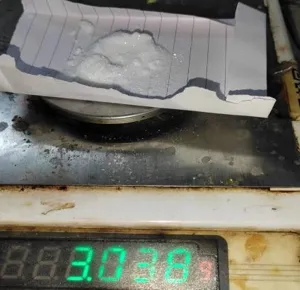
Fig.1 weighing of chemical

    • Initial Grinding

The process of grinding was carried out in an agate mortar, a material that is chemically inert and suitable for grinding reactions. The mixture of L-Tyrosine and KOH was continuously ground for a period of time until the mixture became slightly sticky. The grinding process facilitated the mechanical activation of the reactants, promoting the reaction between L- Tyrosine and KOH to form the first intermediate compound required for Schiff base formation. This step was critical as it ensured proper molecular mixing and interaction, enhancing the reaction efficiency.  
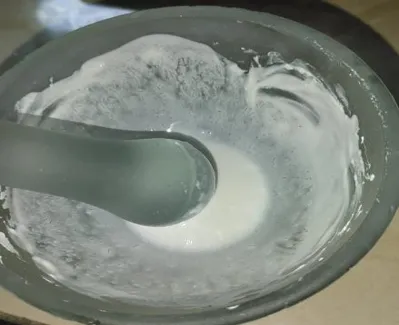
Fig.2 Intial Grinding

    • Addition of LAG Solvent and Additive

Next, Dimethylformamide (DMF), a solvent commonly used in grinding reactions to assist in the dispersion and mixing of reactants, was added in 2–3 drops. The DMF was not used as a conventional solvent; rather, it acted as a liquid component that improved the grinding kinetics by enhancing the friction between the solid reactants, making the grinding process more efficient. Urea (0.03 g) was also added to the mixture. Urea was chosen for its ability to form hydrogen bonds with the Schiff base, which can significantly increase the stability and rigidity of the ligand structure, improving its overall coordination  properties when later complexed with metals.
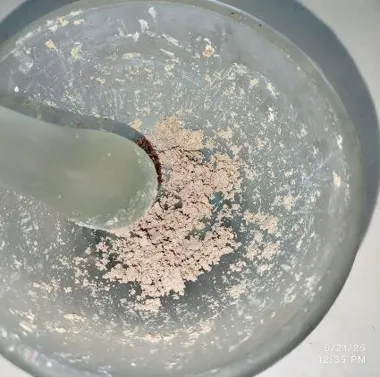
Fig 3 Addition of Addative

    • Addition of Vanillin

At this stage, vanillin (0.005 mol) was added to the reaction mixture. Vanillin was selected as the aldehyde component of the Schiff base because of its strong ability to form imines through reaction with amino acids. Upon the addition of vanillin, the reaction mixture gradually turned yellow, a clear visual indicator that the Schiff base was forming. The grinding process continued for an additional period, ensuring that the aldehyde group from vanillin fully reacted with the amine group from L-Tyrosine, completing the formation of the imine (C=N) bond. This color change was further confirmation of the Schiff base formation, which can be attributed to the characteristic yellow hue of the imine structure.
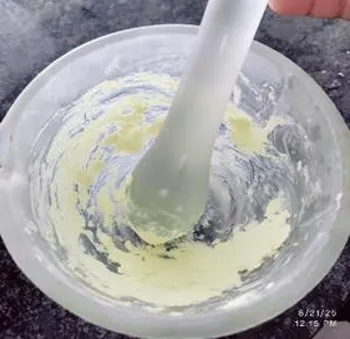
Fig.4 Addition of Vanilin

    • Isolation of Product

After about 45 minutes of grinding, the reaction mixture was thoroughly processed, and a solid product was observed in the mortar. This solid product was the Schiff base ligand, which was then carefully isolated. At this point, any residual unreacted starting materials or excess reagents were removed. The product was carefully transferred into a clean container, ready for the next steps in the synthesis.

2. Synthesis of Metal Complex (Copper Complex)

The second part of the experiment involved the coordination of the Schiff base ligand with a metal ion to form a Metal-Schiff base complex. Copper(II) ions were used as the metal source, and the coordination process was again carried out using the LAG method.

  • Addition of Metal Salt

The copper metal salt, Copper(II) sulfate (CuSO₄) was chosen as the copper source. Copper sulfate was added slowly and carefully to the mortar containing the Schiff base ligand. 0.005 mol of CuSO₄·5H₂O (0.79805 g) was weighed accurately. The slow addition was done to ensure uniform mixing and to avoid any localized excess of the metal ion, which could lead to incomplete complex formation. Copper ions (Cu²⁺) are known to readily coordinate with the nitrogen atom in the Schiff base, making Copper-Schiff base complexes widely used in catalysis, material science, and medicine.   
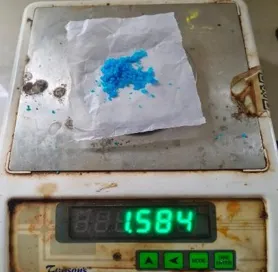
Fig.5 Addition of metal

  • Grinding and Complex Formation

The reaction mixture, now containing both the Schiff base ligand and copper sulfate, was continuously ground for approximately 1 hour at room temperature. The grinding time was extended to ensure complete metal-ligand interaction. The mechanical energy from grinding facilitated the coordination between the copper ions and the Schiff base ligand, helping the metal ion to bind to the nitrogen atom of the Schiff base, forming the Copper-Schiff base complex. Grinding also ensured that the metal salt dissolved and interacted evenly with the ligand throughout the mixture. After one hour of grinding, the reaction mixture  was  carefully  examined  for  signs  of  successful coordination.
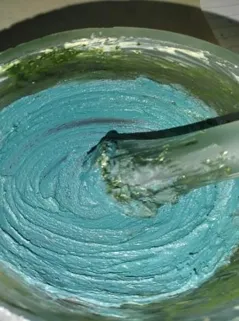
Fig.6 Grinding

  • Purification of Product

After complex formation, the resulting product was purified to remove any unreacted copper salt or excess Schiff base ligand. The complex was washed with cold dehydrated ethanol, a solvent chosen for its ability to dissolve any residual impurities without disrupting the metal- ligand complex. This purification step ensured that the final product consisted solely of the Copper- Schiff base complex, without contamination from by-products. The wash was repeated until the product appeared free from residual reagents or unreacted components.
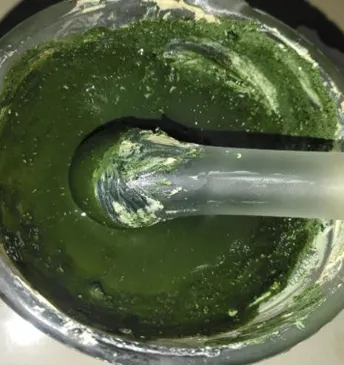
Fig.7 purification of product

  • Drying

To obtain a dry, stable metal complex, the purified product was placed in a vacuum drying oven set to 40°C. The complex was left to dry for 30 minutes. Drying was essential for removing any residual ethanol and moisture that might interfere with further characterization. The use of a vacuum drying oven ensured that the product was thoroughly dried while maintaining the integrity of the metal-ligand complex. The dried Copper-Schiff base complex was then carefully removed from the oven and prepared for further analysis and characterization. [8], [14], [15]  
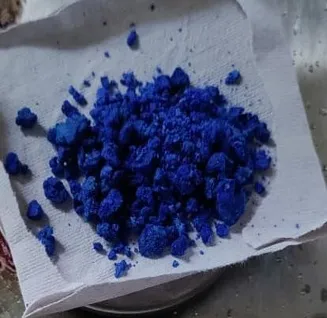
Fig.8 Drying

Calculations for weighing of ingredients

This section outlines the calculations performed to determine the required amounts of reagents used in the synthesis of the Schiff base ligand and its corresponding copper complex.

Calculation for L-Tyrosine

  • Given:
    • Required moles = 0.005 mol
    • Molecular weight of L-Tyrosine = 181.19 g/mol
  • Calculation:

To calculate the mass of L-Tyrosine required, we use the formula:

Mass = Moles × Molecular Weight

Conclusion:

Therefore, the required amount of L-Tyrosine is 0.90595 g (approximately 906 mg).

Calculation for Urea (5 mol%)

  • Given:
    • 5 mol% of 0.005 mol of L-Tyrosine
    • Molecular weight of Urea = 60.09 g/mol
  • Calculation:

To calculate the amount of urea required, we use the formula:

Mass = Moles × Molecular Weight

Conclusion:

Therefore, the required amount of urea is 0.30045 g (approximately 300 mg).

Calculation for Copper Sulphate

  • Given:
    • Moles of Copper Sulphate (CuSO₄) = 0.005 mol
    • Molecular weight of Copper Sulphate (CuSO₄) = 159.61 g/mol
  • Calculation:

To calculate the mass of Copper Sulphate required, we use the formula:

Mass = Moles × Molecular Weight

Conclusion:

Therefore, the required mass of Copper Sulphate is 0.79805 g (approximately 0.798 g).

Table. 1 Calculation of Ingredients

Reagent

Required Moles

Molecular Weight (g/mol)

Required Mass (g)

L-Tyrosine

0.005 mol

181.19 g/mol

0.90595 g (≈ 906 mg)

Urea (5 mol%)

0.005 mol

60.09 g/mol

0.30045 g (≈ 300 mg)

Copper Sulphate

0.005 mol

159.61 g/mol

0.79805 g (≈ 798 mg)

Identification Tests

To confirm the identity and purity of the reagents used in the synthesis of the Schiff base ligand and its copper metal complex, several identification tests were performed. The following tests were carried out for vanillin, L-Tyrosine, urea, and copper sulfate:

  1. Identification Test for Vanillin
    • Procedure:

A saturated vanillin solution (5 mL) was prepared, and 0.2 mL of ferric chloride solution was added.

    • Observation:

A blue color was produced, and upon heating the solution to 80°C, the color changed to brown, and a white precipitate formed upon cooling.[16]

  1. Identification Test for L-Tyrosine
    • Procedure:

50 mg of L-Tyrosine was added to 1 mL of dilute nitric acid.

    • Observation:

A dark red color developed within 5 minutes. [16]

  1. Identification Test for Urea
    • Procedure:

0.1 g of urea was dissolved in 1 mL of water, followed by the addition of 1 mL of Nessler’s reagent.

    • Observation:

A white crystalline precipitate formed. [16]

  1. Identification Test for Copper Sulfate
    • Procedure:

Several drops of dilute ammonia were added to the copper sulfate solution.

    • Observation:

A blue precipitate was initially formed, and upon further addition of ammonia, the precipitate dissolved, resulting in a deep blue solution. [16]

  1. Identification Test for Potassium Hydroxide
    • Procedure:

0.1 g of potassium hydroxide was dissolved in 10 mL of water, and the solution was diluted to 100 mL with water. Then, 1 mL of the prepared solution was taken for the identification test for potassium ions.

    • Observation:

The solution showed the characteristic reactions of potassium ions, confirming the presence of potassium hydroxide in the solution. [16]

Table 3 Identification Test

Sr.

No.

Substance

Identification Test / Reagent Used

Result

1

Vanillin

Ferric chloride test

Formation of blue color which changed to

brown on heating, confirming the presence of vanillin

2

L-Tyrosine

Nitric acid test (Xanthoproteic reaction)

Development of dark red color indicating presence of L-Tyrosine

3

Urea

Nessler’s reagent test

Formation of white crystalline precipitate

confirming urea

4

Copper Sulfate

Ammonia solution test

Formation of deep blue solution confirming

copper ions

5

Potassium

Hydroxide

Potassium ion

identification test

Characteristic potassium ion reactions observed,

confirming potassium hydroxide

Physical Characterization of Schiff Base Metal Complex

The Schiff base metal complex was synthesized and examined for its physical properties to understand how it behaves under different conditions. The addition of copper (CuSO₄) to the Schiff base ligand resulted in a change in appearance, solubility, and color, which were carefully observed. We also tested how the complex performed under different storage conditions over 2 -3 weeks to determine its stability and integrity.

  1. Appearance
    • Before Metal Addition (Schiff Base Ligand): The Schiff base was initially obtained as a yellow crystalline solid. This yellow color is typical of Schiff base ligands, formed by the reaction between vanillin (the aldehyde) and L-tyrosine (the amino acid). The crystalline form shows that the ligand has an organized structure, which is important for its function in coordination chemistry.
    • After Adding Copper (CuSO₄): When Copper Sulfate (CuSO₄) was added to the Schiff base, the complex turned into a blue solid. This color change indicates the successful formation of the metal-ligand complex. The blue color is a characteristic feature of copper complexes with Schiff base ligands, showing that the copper ion has bonded with the Schiff base.
    • Crystalline Texture: The final product remained crystalline, suggesting that the complex has a stable and ordered structure, which is good for its stability and performance in various applications.

2. Odour

The complex had a vanillin-like smell, which is a typical scent of vanillin, the aldehyde component in the Schiff base. This confirms that the vanillin residue is still present in the Schiff base after the complex formation. The aromatic nature of the complex indicates that the ligand part of the complex retained its original characteristics.

3. Solubility
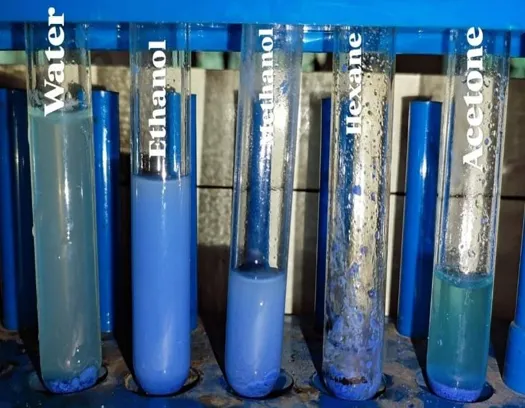
    • Solubility in NaOH: The Schiff base metal complex dissolved well in a 0.2 M NaOH solution, forming a clear solution. This suggests that the complex is more soluble in mildly alkaline (basic) conditions. The solubility in NaOH indicates that the complex might have polar or ionic characteristics, which allow it to interact with the alkaline solution.          

Fig 9 Solubility study

    • Solubility in Alcohols: The complex showed partial solubility in ethanol and other alcohols, but did not dissolve completely. This partial solubility is typical for Schiff base metal complexes, which often show differential solubility depending on the solvent. This also suggests that the complex is less soluble in organic solvents compared to water or basic solutions. [8],[13],[14],[15]

4. Colour Change upon Metal Coordination

    • A noticeable color change occurred after the addition of CuSO₄ to the Schiff base. The Schiff base, which was yellow, turned blue when copper was introduced. This color change is significant because Schiff base ligands typically change color when they coordinate with metal ions. The blue color confirms that the copper ions have successfully coordinated with the Schiff base, for metal complex. [8],[13],[14],[15]

5. Storage Conditions

To evaluate the stability and storage of the Schiff base metal complex, we stored the product for 2-3 weeks under different conditions and observed any changes in its physical properties. The following storage conditions were used:

    • Open Environment: One sample of the Schiff base metal complex was stored in an open container at room temperature, exposed to air and moisture. No significant changes were observed during this period, but since the complex was exposed to air, it could absorb moisture, potentially leading to slight degradation in the future. However, in the short term, the complex appeared stable.
    • Air-tight Container: Another portion was stored in an air-tight container to prevent exposure to moisture and air. This sample remained stable without any noticeable changes in appearance or solubility, confirming that keeping the complex in an air-tight environment helps preserve its integrity. The complex remained unaffected by moisture and external air in the sealed container.
    • Polyethylene Bag: A third sample was stored in a polyethylene bag. This storage condition exposed the complex to limited air but kept it protected from direct moisture contact. The complex remained stable with no significant degradation. However, over a longer time period, the sample may be more vulnerable to airborne contaminants.
    • Refrigerator (2-8°C): A portion of the Schiff base metal complex was stored in a refrigerator at 2-8°C. After 2-3 weeks in the refrigerator, the complex became harder in texture. This indicates that the cold temperature affected the physical properties of the complex, making it less soluble or more rigid in nature. The refrigeration process did not cause any degradation but made the complex more solid and firm.
    • Storage Below 2°C: When the complex was stored in a cold environment (below 2°C), the complex became even harder in nature. This suggests that lower temperatures caused the complex to become more rigid and less reactive. The compound may become more stable at these temperatures, but its solubility or ease of processing could be affected by the increased hardness.
    • Paper Bag: A final sample was stored in a paper bag. This environment provided protection from moisture but allowed some air exposure. The complex remained unchanged in this condition, showing that it was relatively stable in the paper bag, similar to the air-tight storage condition but without a complete seal.

6. Melting Point Determination

    • The melting point of the synthesized Schiff base metal complex prepared by Liquid- Assisted Grinding (LAG) method was determined using a standard melting point apparatus to assess the purity and thermal stability of the product. The melting point was recorded by taking three independent readings.
    • The observed melting point values were 96°C, 98°C, and 98°C. The melting point range of the synthesized complex was therefore found to be 96–98°C.
    • The narrow melting point range indicates good purity of the synthesized Schiff base metal complex and confirms successful formation of the product.

Table.4 Melting point

Trial No.

Melting Point (°C)

1

96

2

98

3

98

Range

96–98

Summary of Storage Conditions

Table. 5 Summary of Storage Conditions

Storage Condition

Observations

Open Container

No significant degradation observed, but exposure to moisture may affect the complex over time.

Air-tight

Container

The complex remained stable with no visible changes, confirming that sealing in an air-tight container preserves its integrity.

Polyethylene

Bag

No major changes observed, but the complex may be vulnerable to airborne contaminants over time.

Refrigerator (2-8°C)

The complex became harder in nature, indicating that refrigeration affects its physical state, making it firmer but not degrading it.

Below 2°C

The complex became even harder, suggesting that temperatures below 2°C increase the rigidity and stability of the complex, though solubility may decrease.

Paper Bag

The complex remained stable, similar to the air-tight condition, with no significant  degradation after 2-3 weeks.

Melting point

The melting point of the synthesized Schiff base metal complex was found to be in the range of 96–98°C, indicating good purity and consistency of the prepared  compound.

Physical Parameters of Synthesized Schiff Base Metal Complex

Table. 5 Physical Parameters of Synthesized Schiff Base Metal Complex

Parameter

Observation

Appearance

Blue solid

Odour

Vanillin-like aromatic smell

Solubility

Soluble in 0.2 M NaOH

Solubility in Alcohols

Partially soluble in ethanol/alcohol

Effect of Metal Addition

Colour change observed after adding metal salt, confirming complex formation

Storage Condition

Stable in air-tight container, polyethylene bag, and refrigerator. Became harder at low temperatures.

Characterization of Schiff Base Metal Complex by UV-Visible Spectral Analysis

Method of dilution preparation as follows:

  • METHOD 1: C₁V₁ = C₂V₂ Dilution Method

Step 1: Preparation of Stock Solution (1000 µg/mL)

Weigh 10 mg of the drug

Dissolve in 10 mL 0.2 M NaOH solution

Concentration=10mL/10 mg

= 1mg/mL=1000μg/mL

  • METHOD 2: Serial Dilution Method

Step A: Prepare 1000 µg/mL

10 mg in 10 mL → 1000 µg/mL

Step B: Prepare 100 µg/mL

1 mL of 1000 µg/mL + 9 mL 0.2 M NaOH solution→ 100 µg/mL

Step C: Prepare 10 µg/mL

1 mL of 100 µg/mL + 9 mL 0.2 M NaOH solution → 10 µg/mL

  • METHOD 3: 100 mL Stock + Final Dilution

Step A: Prepare 100 µg/mL

10 mg in 100 mL → 100 µg/mL

Step B: Dilute to 10 µg/mL

1 mL of 100 µg/mL + 9 mL 0.2 M NaOH solution → 10 µg/mL

“A stock solution of 1000 µg/mL was prepared by dissolving 10 mg of the drug in 10 mL of distilled water. The working solution of 10 µg/mL was then obtained using the dilution equation (C₁V₁ = C₂V₂). Based on this calculation, 0.1 mL of the 1000 µg/mL stock solution was transferred into a volumetric flask and diluted to 10 mL with distilled water to achieve the required 10 µg/mL concentration.”

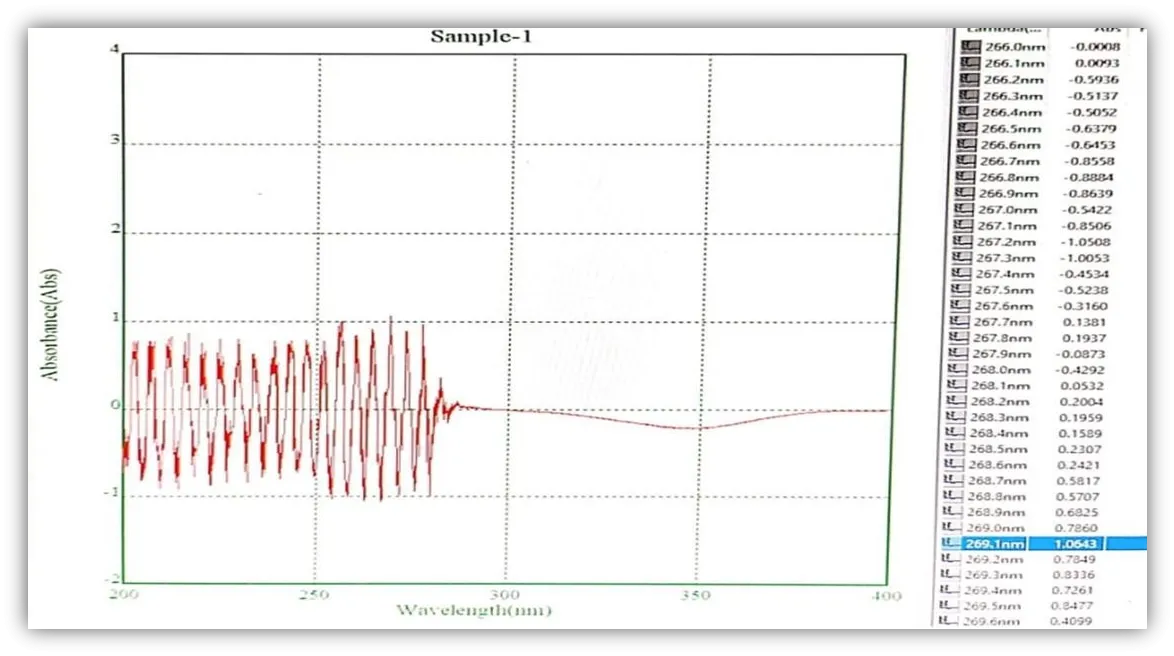
The synthesized Schiff base ligand, along with its copper complex, was analyzed using UV- Visible spectroscopy to investigate the electronic transitions and gain insight into the electronic structure of the complex. The UV-Visible spectrum of the Schiff base metal complex revealed a clear absorption peak at: [8],[9],[14],[15]

  • λmax = 269 nm
  • Absorbance = 1.0643

Interpretation of UV-Visible Data

  1. π → π Transition*
    • The absorption peak observed at 269 nm is characteristic of the π → π* electronic transition.
    • π → π transitions* occur when electrons in the π (bonding) orbitals of a conjugated system (such as aromatic rings) are excited to the π (antibonding) orbitals*.
    • This transition is typical of molecules containing aromatic rings, such as vanillin, as well as the imine group (C=N) formed during the Schiff base synthesis. The presence of the C=N double bond in the Schiff base ligand is particularly important, as it contributes to the conjugation in the molecule, facilitating such transitions. [17]
  2. Confirmation of Schiff Base Formation
    • The formation of the Schiff base introduces the C=N (imine) chromophore, which significantly increases the conjugation in the molecule.
    • The presence of conjugation is responsible for the absorption peak in the range of 260- 300 nm. The absorption at 269 nm strongly supports the successful formation of the Schiff base, confirming the conjugation between the aromatic ring of vanillin and the imine group. [17]
  3. Absorbance Value Explanation
    • The absorbance value of 1.0643 observed at 269 nm can be interpreted as follows:
      • The relatively high absorbance value indicates a strong electronic transition, suggesting that the Schiff base and its metal complex are optically active.
      • A good concentration of the chromophore is present in the sample, meaning the ligand is well-formed and has a high concentration of conjugated electrons.
      • The absorbance value of 1.0643 also indicates that the ligand/complex has been properly formed. This is an indication of the successful formation of the Schiff base and the coordination of the metal ion (copper) with the Schiff base ligand.
  4. Schiff Base–Metal Complex and λmax
    • The observed λmax of 269 nm is consistent with typical Schiff base-metal complexes, where the ligand-to-metal charge transfer (LMCT) or enhanced π → π transitions* contribute to the absorption peak.
    • Schiff base complexes often exhibit absorption peaks in the 260-300 nm range, which is typically attributed to the conjugated π system of the Schiff base ligand as well as the metal's influence on the electronic structure of the complex. [8],[9],[14],[15]

Table 6 Summery Schiff Base–Metal Complex and λmax

Characteristic

Observation

Absorption Peak (λmax)

269 nm

Absorbance Value

1.0643

Type of Transition

π → π* electronic transition (aromatic C=N group and conjugated system)

Confirmation of Schiff Base

Peak at 269 nm confirms the presence of conjugation in the Schiff base, confirming its formation

Explanation of Absorbance

Strong electronic transition, good concentration of chromophore, and proper formation of complex

Fig. 10 UV Visible spectra

Fig 11 UV visible spectra

RESULTS & DISCUSSION

  1. UV–Visible Absorption Study

The UV-Visible spectrum of the synthesized Schiff base metal complex showed a prominent absorption peak at:

    • λmax = 269 nm
    • Absorbance = 1.0643

This absorption peak suggests that the complex has π → π* or n → π* electronic transitions, which are typical in Schiff base ligands and their metal complexes. The presence of this peak confirms that the conjugated structure required for the metal complex formation is successful.

  1. Colour and Physical Appearance

The Schiff base metal complex was tested for its basic physical properties, and the observations were as follows:

    • Initially, the product appeared as a yellow crystalline powder.
    • After adding the metal salt (CuSO₄), the color changed to blue, indicating the successful formation of the metal-ligand complex.
    • The complex had a vanillin-like aromatic smell, which is typical of the vanillin used in its synthesis.
    • The complex was soluble in 0.2 M NaOH, forming a clear solution.
    • It was partially soluble in ethanol/alcohol, suggesting limited solubility in organic solvents.

These observations confirm the formation and properties of the Schiff base metal complex.

  1. Effect of Metal Addition

When copper sulfate (CuSO₄) was added during the synthesis, the complex underwent a distinct color change. This color change is important because it indicates that:

    • The metal ion (copper) has successfully coordinated with the Schiff base ligand.
    • The desired Schiff base metal complex has been formed.

The visual color change is a clear sign of the metal-ligand interaction, which supports the successful synthesis of the complex.

DISCUSSION

  1. Comparison with Literature

The UV-Visible absorption results obtained in this study (λmax = 269 nm) are consistent with what is commonly observed in Schiff base metal complexes. For example, Schiff bases like 2- methoxy-4-((p-tolylimino)methyl)phenol typically show absorption peaks at 329 nm and 285 nm, which are also associated with π → π and n → π transitions** within the C=N and aromatic ring.

When compared to the literature:

    • The λmax value of 269 nm in this study is close to the reported value of 285 nm for similar Schiff base complexes. This suggests that the structure of our complex is similar to those found in earlier studies.
    • The slight shift to a lower wavelength (blue shift) might be due to:
      • Different substituents (vanillin and L-tyrosine vs. p-toluidine)
      • A different electronic environment in the complex
      • The coordination effect of the metal (copper in this case)

Therefore, the UV results are consistent with previous research and confirm the successful formation of the Schiff base metal complex in this study.

  1. Effect of LAG (Liquid-Assisted Grinding) vs. Conventional Methods

Table. 7 Effect of LAG (Liquid-Assisted Grinding) vs. Conventional Methods

Parameter

LAG Method (Present Study)

Conventional Method (Literature)

Solvent Use

Very little (2–3 drops of DMF)

Large volume of solvents

Reaction Time

Faster (< 1 hour)

Longer (2–4 hours or more)

Energy Requirement

Low (manual grinding)

Requires heating or reflux

Environmental Impact

Eco-friendly, minimal waste

Generates solvent waste

Yield

Generally higher

Moderate

Purity

Good, fewer byproducts

Sometimes requires recrystallization

The Liquid-Assisted Grinding (LAG) method used in this study is an eco-friendly and efficient technique compared to traditional solvent-based synthesis methods. Here's a comparison between the two:

In this study, the LAG method resulted in:

    • Quick reaction times.
    • Immediate color change after the addition of the metal salt.
    • A cleaner reaction pathway with minimal side reactions.

This demonstrates that LAG enhances the efficiency of the synthesis and reduces the environmental impact by minimizing solvent use and waste production. Compared to conventional methods, LAG is a greener and more efficient approach for synthesizing Schiff base metal complexes.

SUMMARY AND CONCLUSION

In this study, a novel Schiff base metal complex was successfully synthesized using the Liquid- Assisted Grinding (LAG) method. The complex was prepared by reacting vanillin, L-tyrosine, and urea, followed by the addition of copper sulfate as the metal source. The reaction resulted in a clear color change from yellow to blue, indicating successful metal coordination with the Schiff base ligand.

The physical characterization of the synthesized complex revealed several important properties:

    • The product appeared as a yellow crystalline powder before the addition of copper sulfate, turning blue after complexation with the metal.
    • The complex was soluble in 0.2 M NaOH, indicating good solubility in mild alkaline conditions, and was partially soluble in alcohol.
    • The compound exhibited a vanillin-like aromatic smell, typical of the aromatic aldehyde group in vanillin.
    • The complex showed good stability when stored in an air-tight container to protect it from moisture.

The UV-Visible spectroscopy results provided strong evidence for the successful formation of the Schiff base metal complex, with a prominent absorption peak at 269 nm (Absorbance = 1.0643). This absorption is attributed to π → π transitions*, which are characteristic of Schiff base ligands and confirm the presence of the C=N chromophore in the complex.

The LAG method proved to be an efficient, fast, and environmentally friendly approach for synthesizing the Schiff base metal complex. The method required minimal solvent (only 2–3 drops of DMF) and led to faster reactions with higher yields compared to conventional methods. The green chemistry aspects of the LAG method highlight its potential for sustainable synthesis of metal-organic complexes.

Future work will involve more detailed characterizations of the synthesized complex using techniques like IR spectroscopy, NMR, and biological testing to further investigate the structure, activity, and potential applications of the complex.

REFERENCES

  1. Dhar, D. N., & Taploo, C. L. (1982). Schiff bases and their applications. Journal of Scientific and Industrial Research, 41, 501–506.
  2. Muche, S., Harms, K., Biernasiuk, A., Malm, A., Popiołek, Ł., Hordyjewska, A., ... & Hołyńska, M. (2018). New Pd (II) schiff base complexes derived from ortho-vanillin and L-tyrosine or L-glutamic acid: Synthesis, characterization, crystal structures and biological properties. Polyhedron, 151, 465-477.
  3. Eugene-Osoikhia, T. T., Akinpelu, I. O., & Odiaka, T. I. (2019). Synthesis, characterization and antimicrobial studies of transition metal complexes of Schiff base derived from salicylaldehyde and L-tyrosine amino acid. Nigerian Journal of Chemical Research, 24(1), 46-56.
  4. Hassan, A. M., Heakal, B. H., Younis, A., Abdelmoaz, M. A., & Abdrabou, M. M. (2020). Conventional and microwave-assisted synthesis, antimicrobial and antitumor studies of tridentate Schiff base derived from O-vanillin and phenyl urea and its complexes. Advanced Journal of Chemistry-Section A, 3(5), 621-638.
  5. Alwan, W. M. (2018, May). Synthesis, characterization and the corrosion inhibition study of two Schiff base ligands derived from urea and thiourea and their complexes with Cu (II) and Hg (II) ions. In Journal of Physics: Conference Series (Vol. 1003, No. 1, p. 012017). IOP Publishing.
  6. Joseyphus, R. S., Shiju, C., Joseph, J., Dhanaraj, C. J., & Bright, K. C. (2015). Synthesis and characterization of Schiff base metal complexes derived from imidazole-2- carboxaldehyde with L-phenylalanine. Der Pharma Chemica, 7(6), 265-270.
  7. Chandra, S., Bargujar, S., Nirwal, R., & Yadav, N. (2013). Synthesis, spectral characterization and biological evaluation of copper (II) and nickel (II) complexes with thiosemicarbazones derived from a bidentate Schiff base. Spectrochimica Acta Part A: Molecular and Biomolecular Spectroscopy, 106, 91-98.
  8. Sulaiman, Z., & Na’aliya, J. (2024). Mechanochemical synthesis, structural characterization, and antimicrobial evaluation of tri-nuclear Co(II), Ni(II), and Cu(II) complexes with vanillin-L-leucine Schiff base. ChemSearch Journal, 15(1), 190–204. Publication of Chemical Society of Nigeria, Kano Chapter.
  9. Sani, S. A.M.Lawal , Liquid-assisted mechanochemical synthesis: Green approach to synthesis of Co(II) Schiff base complex and evaluation of antimicrobial activities. Journal/Conference Name. ISSN 2278–0211
  10. Nandaniya, B. K., Das, S. P., Chhuchhar, D. R., Pithiya, M. G., Khatariya, M. D., Jani, D., & Dangar, K. B. (2024). Schiff base metal complexes: Advances in synthesis, characterization, and exploration of their biological potential. International Journal of Chemical Studies, 12(5), 131-134.
  11. Ndagano, N. (2025). Recent advances in liquid assisted grinding chemistry: towards sustainable synthesis.
  12. Salami, S. A., Manyeruke, M. H., Ezekiel, C. I., Ndagano, U. N., Safari, J. B., Amusat, S. O., & Krause, R. W. (2025). Recent advances in liquid assisted grinding chemistry: towards sustainable synthesis. Results in Chemistry, 102675.
  13. Balachandran, G., Dhamotharan, A., Kaliyamoorthy, K., Rajammal, K. S., Kulandaiya, R., & Raja, A. (2024). Synthesis, Characterization, and Catalytic Applications of Schiff-Base Metal Complexes. Engineering Proceedings, 61(1), 26.
  14. Sulaiman, Z., & Na’aliya, J. (2024). Mechanochemical synthesis, structural characterization, and antimicrobial evaluation of tri-nuclear Co(II), Ni(II), and Cu(II) complexes with vanillin-L-leucine Schiff base. ChemSearch Journal, 15(1), 190–204. Publication of Chemical Society of Nigeria, Kano Chapter.
  15. Hasanah, U., Hanapi, A., & Ningsih, R. (2017). Synthesis of Schiff base compound from vanillin and p-toluidine by solvent-free mechanochemical method. Proceeding of International Conference on Green Technology, 8(1), 278–281.
  16. British pharmacopoeia commission 2019: volume 2 general notices, monographs,medicinal and pharmaceutical substance
  17. Pratiwi, R. A., & Nandiyanto, A. B. D. (2022). How to read and interpret UV-VIS spectrophotometric  results  in  determining  the  structure  of  chemical compounds. Indonesian Journal of Educational Research and Technology, 2(1), 1-20.
  18. Bhat, M. A., & Sood, R. A. (2014). Transition metal complexes of ligands containing amide and urea groups: synthesis, characterization and biological studies. International Journal of Scientific and Research Publications, 4(7), 1–6 

Reference

  1. Dhar, D. N., & Taploo, C. L. (1982). Schiff bases and their applications. Journal of Scientific and Industrial Research, 41, 501–506.
  2. Muche, S., Harms, K., Biernasiuk, A., Malm, A., Popio?ek, ?., Hordyjewska, A., ... & Ho?y?ska, M. (2018). New Pd (II) schiff base complexes derived from ortho-vanillin and L-tyrosine or L-glutamic acid: Synthesis, characterization, crystal structures and biological properties. Polyhedron, 151, 465-477.
  3. Eugene-Osoikhia, T. T., Akinpelu, I. O., & Odiaka, T. I. (2019). Synthesis, characterization and antimicrobial studies of transition metal complexes of Schiff base derived from salicylaldehyde and L-tyrosine amino acid. Nigerian Journal of Chemical Research, 24(1), 46-56.
  4. Hassan, A. M., Heakal, B. H., Younis, A., Abdelmoaz, M. A., & Abdrabou, M. M. (2020). Conventional and microwave-assisted synthesis, antimicrobial and antitumor studies of tridentate Schiff base derived from O-vanillin and phenyl urea and its complexes. Advanced Journal of Chemistry-Section A, 3(5), 621-638.
  5. Alwan, W. M. (2018, May). Synthesis, characterization and the corrosion inhibition study of two Schiff base ligands derived from urea and thiourea and their complexes with Cu (II) and Hg (II) ions. In Journal of Physics: Conference Series (Vol. 1003, No. 1, p. 012017). IOP Publishing.
  6. Joseyphus, R. S., Shiju, C., Joseph, J., Dhanaraj, C. J., & Bright, K. C. (2015). Synthesis and characterization of Schiff base metal complexes derived from imidazole-2- carboxaldehyde with L-phenylalanine. Der Pharma Chemica, 7(6), 265-270.
  7. Chandra, S., Bargujar, S., Nirwal, R., & Yadav, N. (2013). Synthesis, spectral characterization and biological evaluation of copper (II) and nickel (II) complexes with thiosemicarbazones derived from a bidentate Schiff base. Spectrochimica Acta Part A: Molecular and Biomolecular Spectroscopy, 106, 91-98.
  8. Sulaiman, Z., & Na’aliya, J. (2024). Mechanochemical synthesis, structural characterization, and antimicrobial evaluation of tri-nuclear Co(II), Ni(II), and Cu(II) complexes with vanillin-L-leucine Schiff base. ChemSearch Journal, 15(1), 190–204. Publication of Chemical Society of Nigeria, Kano Chapter.
  9. Sani, S. A.M.Lawal , Liquid-assisted mechanochemical synthesis: Green approach to synthesis of Co(II) Schiff base complex and evaluation of antimicrobial activities. Journal/Conference Name. ISSN 2278–0211
  10. Nandaniya, B. K., Das, S. P., Chhuchhar, D. R., Pithiya, M. G., Khatariya, M. D., Jani, D., & Dangar, K. B. (2024). Schiff base metal complexes: Advances in synthesis, characterization, and exploration of their biological potential. International Journal of Chemical Studies, 12(5), 131-134.
  11. Ndagano, N. (2025). Recent advances in liquid assisted grinding chemistry: towards sustainable synthesis.
  12. Salami, S. A., Manyeruke, M. H., Ezekiel, C. I., Ndagano, U. N., Safari, J. B., Amusat, S. O., & Krause, R. W. (2025). Recent advances in liquid assisted grinding chemistry: towards sustainable synthesis. Results in Chemistry, 102675.
  13. Balachandran, G., Dhamotharan, A., Kaliyamoorthy, K., Rajammal, K. S., Kulandaiya, R., & Raja, A. (2024). Synthesis, Characterization, and Catalytic Applications of Schiff-Base Metal Complexes. Engineering Proceedings, 61(1), 26.
  14. Sulaiman, Z., & Na’aliya, J. (2024). Mechanochemical synthesis, structural characterization, and antimicrobial evaluation of tri-nuclear Co(II), Ni(II), and Cu(II) complexes with vanillin-L-leucine Schiff base. ChemSearch Journal, 15(1), 190–204. Publication of Chemical Society of Nigeria, Kano Chapter.
  15. Hasanah, U., Hanapi, A., & Ningsih, R. (2017). Synthesis of Schiff base compound from vanillin and p-toluidine by solvent-free mechanochemical method. Proceeding of International Conference on Green Technology, 8(1), 278–281.
  16. British pharmacopoeia commission 2019: volume 2 general notices, monographs,medicinal and pharmaceutical substance
  17. Pratiwi, R. A., & Nandiyanto, A. B. D. (2022). How to read and interpret UV-VIS spectrophotometric  results  in  determining  the  structure  of  chemical compounds. Indonesian Journal of Educational Research and Technology, 2(1), 1-20.
  18. Bhat, M. A., & Sood, R. A. (2014). Transition metal complexes of ligands containing amide and urea groups: synthesis, characterization and biological studies. International Journal of Scientific and Research Publications, 4(7), 1–6 

Photo
Shraddha Chitale
Corresponding author

PDEA’S College of Pharmacy Hadapsar Pune 411028

Photo
Ganesh Vitukade
Co-author

PDEA’S College of Pharmacy Hadapsar Pune 411028

Photo
Sakshi Walunj
Co-author

PDEA’S College of Pharmacy Hadapsar Pune 411028

Photo
Bhagyshree Jagtap
Co-author

PDEA’S College of Pharmacy Hadapsar Pune 411028

Shraddha Chitale, Ganesh Vitukade, Sakshi Walunj, Bhagyshree Jagtap, Novel Liquid-Assisted Grinding (LAG) Synthesis and Characterization of Schiff Base Metal Complexes Derived from Vanillin, L-Tyrosine & Urea, Int. J. of Pharm. Sci., 2026, Vol 4, Issue 6, 3721-3739. https://doi.org/10.5281/zenodo.20705066

More related articles
Impurity Profiling in Pharmaceuticals: An Overview...
Kanmani S, Varshya M, Yashica C, Swetha P...
Awareness Regarding the Role of Diet in the Preven...
Md Sayeed Anwar, Abel B., Asad Raza, Khushi Gupta, Supriya Mehta,...
Hepatotoxicity: Comprehensive Review...
Mahesh Manke , Padmaja Giram, Smita Shirale, Madhuri Shinde, Saba...
Comprehensive Review on Cinnamon Essential Oil-Loaded Microcapsules and Their An...
Abhisekh Koiri, Dr. Nidhi Srivastava, Lokendra Kumar Pandey...
Formulation and Evaluation of Poly-Hebal shampoo....
Krushna Zagade, DR. Ramesh Ingole, Shyam Aawchar, Swapnali Kale, Aarati Jamkar...
Related Articles
Review on Oral Fast Dissolving Film Technology: Materials, Methods...
Radhika D. Holkar, S. J. Dighade, P.G. Patil...
The Next Frontier Mucoadhesive and Mucus-Penetrating Nanoparticles: Overcoming t...
Pallavi Bilwe, Ayush Papadkar, Gayatri Badode, Samiksha Sonwal...
Microsphere-Based Drug Delivery Systems: An Overview...
Pathlavath Nithin, Dr. K. Anie Vijetha, Dr. M. Sunitha Reddy ...
Impurity Profiling in Pharmaceuticals: An Overview...
Kanmani S, Varshya M, Yashica C, Swetha P...
More related articles
Impurity Profiling in Pharmaceuticals: An Overview...
Kanmani S, Varshya M, Yashica C, Swetha P...
Awareness Regarding the Role of Diet in the Prevention of Iron and Vitamin D Def...
Md Sayeed Anwar, Abel B., Asad Raza, Khushi Gupta, Supriya Mehta, Himanshu Roy, Sushil Raj, Md Musab...
Hepatotoxicity: Comprehensive Review...
Mahesh Manke , Padmaja Giram, Smita Shirale, Madhuri Shinde, Saba Shaikh...
Impurity Profiling in Pharmaceuticals: An Overview...
Kanmani S, Varshya M, Yashica C, Swetha P...
Awareness Regarding the Role of Diet in the Prevention of Iron and Vitamin D Def...
Md Sayeed Anwar, Abel B., Asad Raza, Khushi Gupta, Supriya Mehta, Himanshu Roy, Sushil Raj, Md Musab...
Hepatotoxicity: Comprehensive Review...
Mahesh Manke , Padmaja Giram, Smita Shirale, Madhuri Shinde, Saba Shaikh...