

We use cookies to ensure our website works properly and to personalise your experience. Cookies policy
1,2,3 Abhinav Education Society’ s College of Pharmacy, Narhe, Pune
4 Clinical Pharmacist, Sahyadri super speciality Hopital, Deccan, Pune- 411041.
Objective: To assess pain severity and evaluate the management of pain among orthopedic patients in a tertiary care hospital.Methodology: This study was conducted to assess pain and its management among orthopedic patients in a tertiary care hospital. Pain was evaluated using demographic factors, current pain assessment tools, pain severity scales, and drug utilization patterns. A prospective observational study was carried out with 309 patients, using the Wong-Baker Faces Pain Rating Scale and Lexicomp to assess potential drug interactions. Results showed NSAIDs (84.14%) were the most prescribed, followed by opioids (60.19%) and acetaminophen (38.18%). Significant findings included the role of obesity in pain outcomes and a high prevalence of moderate (45.8%) and minor (49.7%) drug-drug interactions. This study emphasizes the importance of standardized pain assessment tools and cautious drug use to improve orthopedic care.Conclusion: There is a need for a unified, patient-centric approach to pain assessment and management in orthopedic care. Personalized treatment, monitoring for drug interactions, and lifestyle interventions like weight management and physical activity can greatly improve patient outcomes.
Pain is a complex and subjective experience that plays a critical role in orthopedic care. Defined by the International Association for the Study of Pain (IASP) as “an unpleasant sensory and emotional experience associated with actual or potential tissue damage” 4. pain is now regarded as the fifth vital sign in clinical settings. It is especially prevalent in orthopedic patients due to musculoskeletal injuries, surgeries, and degenerative conditions 5. Pain can be acute or chronic. Acute pain serves as a protective mechanism and usually resolves once the underlying cause is treated. In contrast, chronic pain persists beyond normal healing time and may involve pathological changes in pain perception, including central sensitization 6. Orthopedic conditions—such as fractures, arthritis, dislocations, and post-surgical trauma—are major contributors to pain and disability 1. Elderly patients are particularly at risk due to age-related bone degeneration, comorbidities, and decreased mobility. In these patients, self-reported pain scales like the Wong-Baker Faces Pain Rating Scale provide a simple and effective method of assessing pain, especially when literacy may be limited 1 . Effective pain assessment is foundational to pain management. It informs diagnosis, guides treatment choices, and helps evaluate the effectiveness of interventions 2. Furthermore, the role of drug-drug interactions (DDIs) in pain therapy is increasingly recognized. Polypharmacy, especially in older adults, raises the risk of DDIs which can reduce therapeutic efficacy or increase adverse effects 4. Additionally, obesity has emerged as a significant factor influencing orthopedic pain. Excess body weight puts increased stress on joints, delays recovery, and complicates both surgical and non-surgical interventions 3. This study was therefore conducted to evaluate the pain assessment techniques, medication patterns, and risks of DDIs among orthopedic patients, along with the influence of demographic and lifestyle factors such as age, gender, and obesity.
MATERIAL AND METHODS
This was a prospective, observational study carried out at Sahyadri Super Specialty Hospital, Pune, over a period of six months. A total of 309 patients admitted to the orthopedic ward were enrolled in the study based on specific inclusion and exclusion criteria. Patients from all age groups, including geriatric and pediatric patients, were included, while pregnant women, outpatient department (OPD) cases, and patients allergic to NSAIDs and opioids were excluded.
Data were collected using a structured data collection form, which recorded information on patient demographics (age, gender, weight, BMI), social habits (smoking, alcohol use), comorbidities, diagnosis, pain severity, medications prescribed, and hospitalization details. Pain severity was assessed daily using the Wong-Baker Faces Pain Rating Scale, which is a simple tool involving facial expressions that helps patients, including young and elderly ones, to express their level of pain. Medication records were carefully reviewed to identify commonly prescribed pain medications such as NSAIDs, opioids, and acetaminophen. Potential drug-drug interactions (DDIs) were detected and analyzed using Lexicomp software, categorizing the interactions based on severity (severe, moderate, or minor) and mechanism. Data were entered into Microsoft Excel for analysis, and descriptive statistics were used to interpret the findings.
The study aimed to evaluate how demographic factors and obesity affect pain perception, assess pain management practices, monitor the risk of drug interactions, and suggest improvements for safer and more effective orthopedic care.
Excel spreadsheet and subjected to descriptive statistical analysis to determine trends in utilization, comorbidity patterns, and the frequency and severity of drug interactions.
Inclusion-
1) All age group like geriatric,pediatric.
2) Patients admitted to orthopedic ward.
Exclusion-
1) Pregnant women
2) OPD Patients
3) Patient allergic to NSAIDS’S and Opioids
RESULT
Gender wise distribution: - The study was done in 309 inpatients of orthopedic department in tertiary care hospital .Out of 309 patients,174(56.3%) were male and 135(43.7%) were female.
|
Gender |
Frequency (N) |
Percentage (%) |
|
Male |
174 |
56.3 % |
|
Female |
135 |
43.7 % |
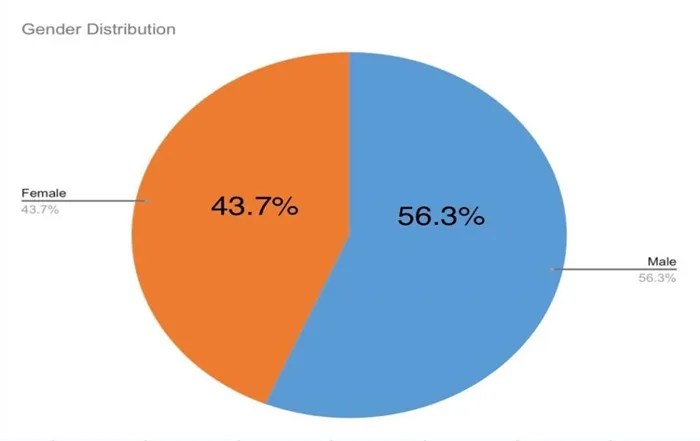
Fig.1- Gender wise Distribution
Age wise distribution: - Age distribution of patients revealed that maximum patients 175 (56.7%) belong to the age group of 51 years and above followed by 90 (29.1%) in age group of 31-50 years, 36(11.6%) in age group of 18-30 years and lastly 8 (2.6%) patients belong to age group of 1-17 years (2.6%).
|
Age(years) |
Frequency (N) |
Percentage (%) |
|
1-17 |
8 |
2.6 % |
|
18-30 |
36 |
11.6 % |
|
31-50 |
90 |
29.1 % |
|
51 and above |
175 |
56.7 % |
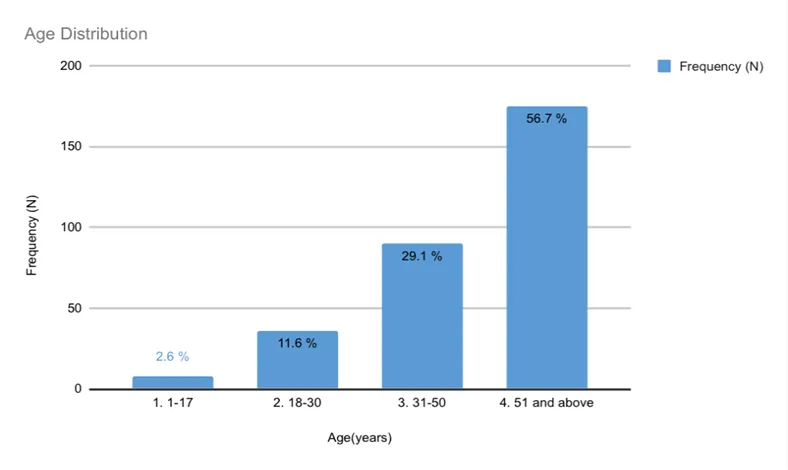
Fig. 2 – Age wise Distribution
Social Habits Wise Distribution : - In this study out of 309 patients,10 (3.2%)patients were found to be smoker, also 3 (1%)patients consuming alcohol and smoking and 296(95.8%) patients were found be non alcoholic and non smoker.
|
Social Habits |
Frequency (N) |
Percentage (%) |
|
Smoking |
10 |
3.2 % |
|
Alcoholic + Smoking |
3 |
1 % |
|
None |
296 |
95.8 % |
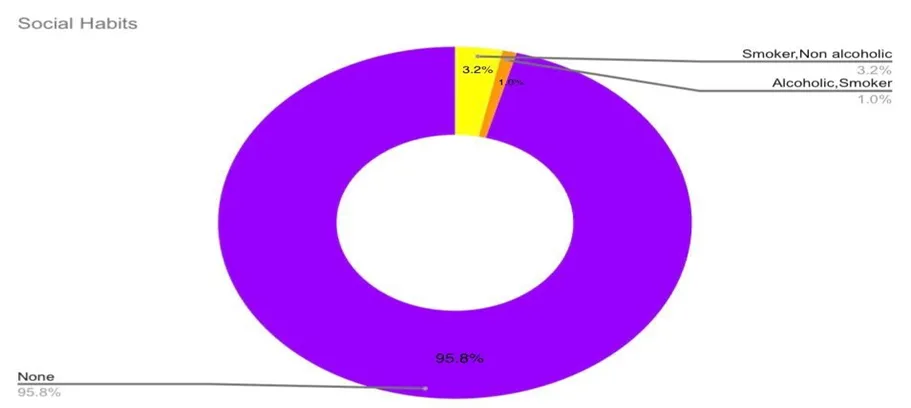
Fig.3- Social Habits Wise Distribution
Comorbidities Wise Distribution : - In this study out of 309 patients,168(54.36%)patients were found with comorbidities and 141 (45.64%)patients without comorbidities. Hypertension and diabetes mellitus are common comorbidities. Most of the patients had both hypertension plus diabetes mellitus.
|
Comorbidities |
Frequency (N) |
Percentage (%) |
|
Patients with multiple comorbidities |
168 |
54.36 % |
|
Patient without any comorbidities |
141 |
45.64 % |
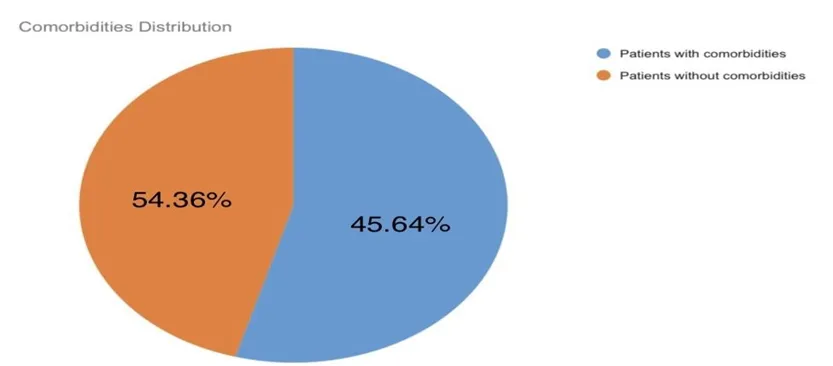
Fig. 4- Comorbidities Wise Distribution
Weight Wise Distribution(according to BMI classification of WHO) : - Weight distribution revealed that out of 309 patients,78 (25.3%) patients were found to be obese,127 (41.2%) patients were overweight ,93 (30%) patients were found to be normal weight (ideal range), and lastly 11 (3.6%) patients were found to be underweight.
|
BMI(kg/m2) |
Frequency (N) |
Percentage(%) |
|
|
Underweight |
<18.5 |
11 |
3.6 % |
|
Normal Range |
18.5-24.9 |
93 |
30 % |
|
Overweight |
25.0-29.9 |
127 |
41.2 % |
|
Obese: |
Greater than and equal to 30 |
|
|
|
Obese class-1 |
30.0-34.9 |
54 |
17.5 % |
|
Obese class-2 |
35.0-39.9 |
20 |
6.5 % |
|
Obese class-3 |
Greater than and equal to 40 |
4 |
1.3 % |
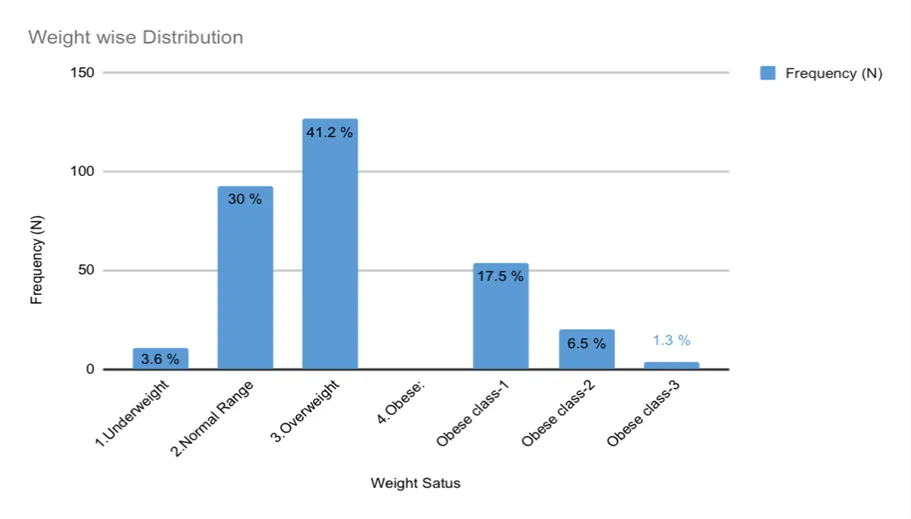
Fig.5- Weight Wise Distribution
Pain Assessment Method : In this study Wong baker faces pain rating scale(WBS) is used in all patients to assess the intensity and severity of pain. It is usually recommended for patients age 3 years and above. In this scale pictures are assigned a score and patients are asked to indicate their pain which matches with the expression of a picture. The advantage of Wong baker faces pain rating scale(WBS) is that the patient does not need to be literate. The scale utilizes a six-face scale, extreme left (pain score 0), through to severe pain on the extreme right (pain score 10).
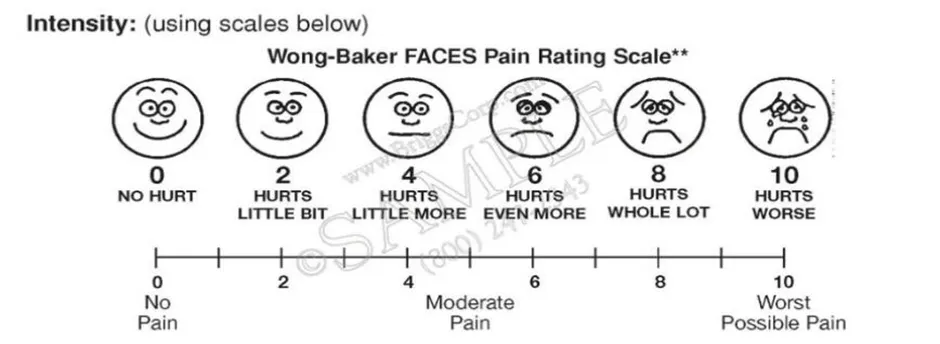
Fig. 6- Wong baker faces pain rating scale(WBS)
Pain score : - In this study it is observed that pain intensity and severity in all patients decreases after treatment was performed. In this study, out of 309 patients, pain score of patients from day one to last day decreases after receiving proper treatment. All patients have pain score between 0-4 that is from no pain to moderate pain, most of the patients have high pain when they come in the hospital but pain score decreases after receiving proper treatment.
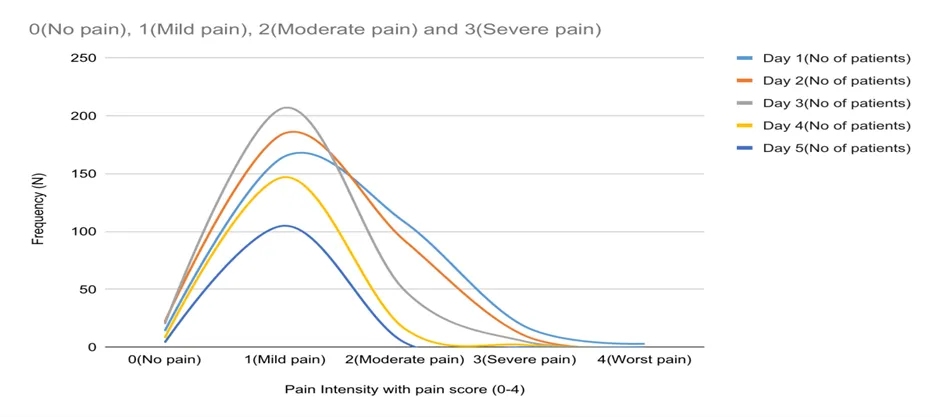
Fig. 7- pain score distribution of 309 patients
Commonly Used Pain Medications : - :- In this study, pain management is very essential to improve patient health. Out of 309, non-steroidal anti-inflammatory drugs(NSAID )(84.14%), were the most often used method of pain treatment, 60.19% patients treated with Opioid analgesic,38.18% patients treated with analgesic and antipyretic,4.85% patients treated with Non Opioid analgesic and lastly 1% patients treated with corticosteroids.
|
Medications |
Percentage (%) |
|
.Acetaminophen |
38.18% |
|
NSAID |
84.14% |
|
Opioid Analgesic |
60.19% |
|
Non-Opioid analgesic |
4.85% |
|
Corticosteroids |
1 % |
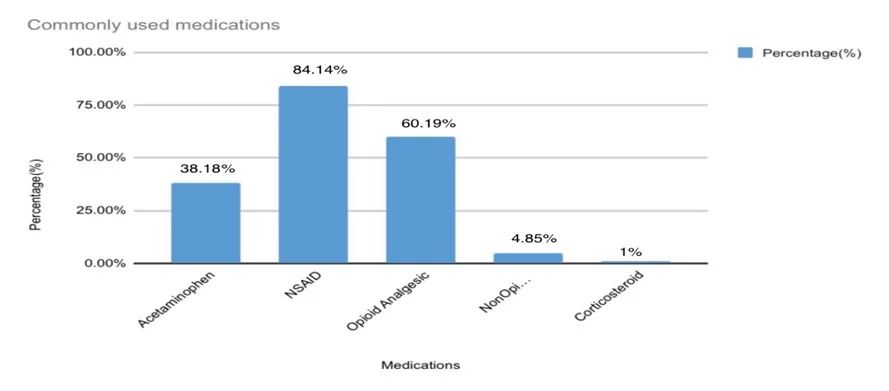
Fig.8- Class of drug prescribed in orthopedic patients
Drug Interactions :- In this study ,290 probable drug interactions were observed, majority of interactions are observed by acetaminophen and tramadol, followed by aceclofenac, diclofenac, heparin, amikacin..
|
Drug-Interactions |
Frequency (N) |
Percentage (%) |
|
.Acetaminophen-Ondansetron |
144 |
49.7 % |
|
Tramadol-Ondansetron |
128 |
44.1 % |
|
Aceclofenac-Acetylsalicylic acid |
13 |
4.5 % |
|
Heparin-Diclofenac |
1 |
0.3 % |
|
.Amikacin-Diclofenac |
4 |
1.4 % |
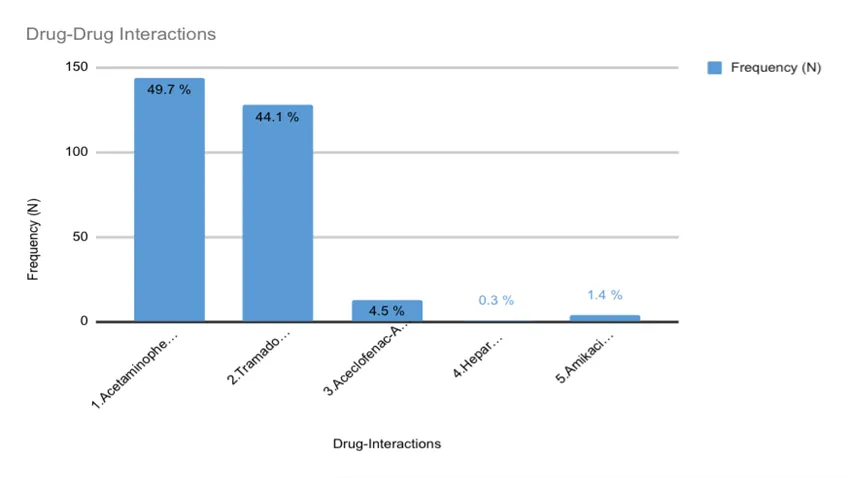
Fig. 9- Potential Drug – Drug Interaction
Drug Interactions analyzed based on severity : In our study a total of 290 potential drug drug interactions (DDI) was found in 309 patients, medication profile. Our study shown that major(severe) type of potential DDI was 13(4.5%), moderate type of potential DDI was 148(45.8%) minor type of potential DDI was 144 (49.7%).
|
Severity |
Frequency (N) |
Percentage (%) |
|
Major |
13 |
4.5 % |
|
Moderate |
133 |
45.8 % |
|
Minor |
144 |
49.7 % |
DISCUSSION
This study was done to understand how pain is assessed and managed in orthopedic patients. We found that pain is a common and serious problem in patients with bone and joint issues, especially after fractures or surgeries. If not treated well, this pain can slow down healing and affect the patient’s mood, sleep, and overall recovery.
In our study, most healthcare providers used tools like the Visual Analog Scale (VAS) and Numeric Rating Scale (NRS) to check pain levels. These are simple and effective tools that help patients show how much pain they feel. However, in many cases, pain was not checked regularly or updated during the patient’s stay, which can lead to poor pain control. Most patients were treated with painkillers such as NSAIDs, paracetamol, and opioids. Opioids were given carefully, mainly in patients with high levels of pain. This is important because using too many opioids can cause addiction or side effects. It was good to see that NSAIDs and paracetamol were used in many cases as safer options.
We also noticed that non-drug treatments like physiotherapy, hot or cold packs, and proper positioning were not used as much as they should be.
These methods can help reduce pain without side effects, especially when used along with medicines. Many healthcare workers believed in these methods but didn’t use them regularly, mostly because of time limits, less staff, or lack of training. Another important point was the lack of teamwork. Nurses, physiotherapists, and doctors all play a role in pain management, but sometimes there was poor communication between them. Pain treatment works better when everyone shares information and follows the same plan. Lastly, we saw that there is no fixed protocol or guideline in many cases. Each doctor or nurse was using their own method. This can lead to confusion and different levels of care for different patients.
CONCLUSION
This study showed that pain is a serious and common problem in orthopedic patients. Most patients had moderate to severe pain due to fractures, joint conditions, or surgeries. Healthcare providers mostly used pain scales like the Visual Analog Scale (VAS) and Numeric Rating Scale (NRS) to check pain, but many times pain was not reassessed regularly. Pain relief was mainly done using medicines such as NSAIDs, paracetamol, and opioids. While these medicines helped reduce pain, opioids were used carefully due to concerns about side effects and addiction. Non-drug treatments like physiotherapy, cold or hot packs, and positioning were helpful but not used often in all cases. The study also found some problems in pain management, such as lack of proper guidelines, poor documentation, and weak communication between doctors, nurses, and physiotherapists. These problems made it harder to give proper pain relief to patients.
To improve pain management, there is a need for:
• Standard protocols for pain assessment and treatment
• Regular training for all healthcare staff
• Better teamwork and communication among staff
• More focus on non-pharmacological methods of pain relief
Overall, this study shows that with proper assessment tools, correct use of medicines, and team-based care, pain in orthopedic patients can be managed more effectivel
REFERENCES


Shreya Pawar, Aishwarya Shirke, Trupti Tuse, Manoj Pisure, Pain Assessment And Management In Orthopedic Patients in a Tertiary Care Hospital : A Prospective Observational Study, Int. J. of Pharm. Sci., 2026, Vol 4, Issue 8, 658-666, https://doi.org/10.5281/zenodo.21801537
 10.5281/zenodo.21801537