

We use cookies to ensure our website works properly and to personalise your experience. Cookies policy
School of Pharmacy, Desh Bhagat University, Mandi Gobindgarh Punjab, India- 147301.
Parkinson's disease (PD) is a progressive neurodegenerative disorder, which is principally characterised by the loss of nigrostriatal dopaminergic neurons, but whose clinical and biological phenotype goes beyond dopamine deficiency. Motor features such as bradykinesia, rigidity, resting tremor and postural instability are accompanied by a wide range of non-motor features—such as cognition, mood, sleep, autonomic function, gastrointestinal function and pain. A multidimensional approach, which involves pharmacological, device-aided and rehabilitative treatments, is currently required for the treatment. Levodopa is the most effective motor disability (symptomatic) therapy but wearing off and dyskinesia occur often with long-term use. Dopamine agonists and MOA-B, COMT inhibitors, amantadine and adenosine A2A antagonism are complementary treatments, and newer delivery systems should aim to overcome pharmacokinetic issues and minimize fluctuations. Several new treatments are available to help treat advanced disease, such as continuous subcutaneous levodopa/carbidopa infusion, inhaled levodopa, and sublingual or injectable apomorphine. Recently, more interest has been generated in extended-release oral levodopa and selective dopamine D1/D5 receptor agonism, which are both now in late-stage development. Although much research has been conducted, there is no pharmacological therapy that has been conclusively proven to have disease modifying effects. New therapies are being developed to address some of the other mechanisms associated with the disease, such as aggregation and propagation of ?-synuclein, dysfunction of glucocerebrosidase (GBA) and the lysosomes, leucine-rich repeat kinase 2 (LRRK2), neuroinflammation, and mitochondrial dysfunction and cellular metabolism. From a clinical perspective, the results have often been less convincing than from the preclinical studies. Several of the repurposed agents and GLP-1 receptor agonist and ?-synuclein antibodies are examples of the challenges associated with moving mechanistic hypotheses into clinically meaningful slowing of progression. However, recent
Parkinson's disease (PD) is an important age-related neurodegenerative condition, and is becoming a significant global disease burden [1]. The clinical phenotype is characterized by motor symptoms (bradykinesia, rigidity and resting tremor) and other symptoms like cognitive, psychiatric, autonomic, gastrointestinal, sleep and sensory symptoms [2]. Given the diversity of disease onset and the different levels of severity of these manifestations, it is difficult to explain the disease solely by the degeneration of nigrostriatal dopaminergic systems [3]. While the degeneration of the Dopaminergic Neurons from the SNpc is a hallmark of motor dysfunction, pathological changes are observed in several neurotransmitter systems, in Cortical and Subcortical networks, in Glial cells and in Peripheral tissues [4].
Pathologically, α-synuclein aggregation, impaired protein and lysosomal homeostasis, mitochondrial dysfunction, oxidative stress and neuroinflammatory responses are all features of PD Studies of the genes have also shown that the seemingly sporadic PD cases form sub-groups that are driven by mutations in genes like GBA1, LRRK2, SNCA, PRKN, PINK1 and DJ-1 [5]. This recognition of heterogeneity has significance for therapy as there is a possibility of treatment that affects one pathogenic pathway being of little relevance to another molecular subtype [6].
Despite this, dopamine replacement has been the staple of the therapeutic experience so far with PD [7]. Levodopa therapy was a significant breakthrough in therapy as conversion of levodopa to dopamine in the brain may be able to significantly restore motor function [8]. Other compounds that have been developed later have been peripheral dopa-decarboxylase inhibitors, dopamine agonists, catechol-O-methyltransferase (COMT) inhibitors and non-dopaminergic agents. These have revolutionised the symptomatic treatment of PD, especially in early and middle stage [9].
The major problem is that while efficacy in symptoms does not always lead to changes in the underlying neurodegenerative process [10]. Despite optimal medication, long-term disease course leads to progressive disability and motor complications will get harder to control with decreasing endogenous dopaminergic buffering capacity [11]. Dopaminergic stimulation is therefore an important principle and extended release drugs and infusion devices have been developed [12]. This is becoming more relevant in today's clinical trials between symptomatic control and disease modification [13]. The LEAP study is the first long-term study to compare early/postpone levodopa initiation to determine whether levodopa affects the progression of disease [14].The LEAP study is a first long-term study comparing early/postpone levodopa initiation for disease progression, which found no difference between the two timeframes [15]. Previous imaging investigations also indicated potential neuroprotective properties of dopamine agonists, which were complicated by changes in markers of dopamine transporters and storage due to the use of the drugs [16]. These results highlight the importance of not presuming clinical rating scale or molecular imaging changes to be neuros protection. The therapeutic situation realized, is thus contrasted to a paradox. Progressively, treatment is getting more sophisticated for symptoms and there is no convincing disease modifying treatment. Concurrently, new drugs are moving into the therapeutic pipeline targeting α-synuclein and antibodies, lysosomal modulation, LRRK2 inhibitors, GLP-1 receptor agonists, mitochondrial rescue, anti-inflammatory therapies and genetically informed therapeutics [17] .
Section synthesis. PD therapy today should be considered more of a continuum from proven dopamine replacement therapy to investigational mechanism directed therapy. Where there is a real need is not another 'fairly effective' symptomatic drug but something which can slow or stop the neurodegenerative process in the long term without compromising on safety.
2. Pathophysiological Basis of Pharmacological Treatment
2.1 Dopaminergic dysfunction
The clinical motor symptoms of PD are mostly attributed to the dysfunction of basal ganglia circuits, which are impaired by dysfunction of dopaminergic signaling. The loss of dopamine results in the imbalance of direct pathway and indirect pathway signaling controlling movement, leading to an overactive indirect pathway basal ganglial output to the thalamocortical motor networks [18]. Levodopa is therefore still very effective as it is a replenisher of the precursor needed for the production of dopamine. However, the history of levodopa's effectiveness can make it easy to overlook the fact that PD is a complex biological disorder. The serotonergic, noradrenergic and cholinergic systems and dopaminergic neurons are all affected [19]. This may account for the fact that dopamine replacement is most effective in the treatment of bradykinesia and rigidity, but not completely effective for postural instability, cognitive impairment, autonomic dysfunction, sleep disturbance and some types of pain [20] .
2.2 α-Synuclein and protein homeostasis
α-Synuclein is a protein that is a central pathological target since abnormal aggregation of the protein is characteristic of Lewy pathology. However, the actual link between neuronal death and the accumulation of α-synuclein is not yet known and aberrant structure, oligomerization, clearance and intercellular transmission of α-synuclein may all be involved. This uncertainty is for therapeutic reasons. If the accumulation of α-synuclein is in some way a downstream effect or compensation for the degeneration, then eliminating extracellular or aggregated protein could be of little clinical significance. This is suggested by the poor efficacy of several α-synuclein specific clinical trials[21].
2.3 Lysosomal and genetic pathways
Variants of the gene GBA1 are one of the most powerful genetic risk factors for PD. The decrease in glucocerebrosidase activity could affect the function of lysosomes, resulting in a vicious circle between the decrease in lysosomal function and increase in α-synuclein levels . This pathway has been much studied owing to its potential as a pharmacological target for agents like ambroxol which appear to be a biologically plausible one[22].
LRRK2 is another genetically-defined treatment pathway. LRRK2 hyperactivity can influence the trafficking of vesicles, lysosomal function and signatory. Selective kinase inhibition may have the potential to benefit genetically defined and broader patient populations with LRRK2 associated disease because the clinical features of the two types of PD overlap [23].
2.4 Neuroinflammation and mitochondrial dysfunction
Microglial activation and peripheral inflammatory changes have been linked to the progression of PD, but inflammation could also be a part of the pathogenic process or a reaction to peripheral nerves being damaged [24]. In the same way, several studies have shown that mitochondria dysfunction and oxidative stress are associated with the vulnerability of dopaminergic neurons [25]. These pathways have led to the development of therapeutic ideas based on GLP-1 receptor agonists, mitochondrial stabilizers, antioxidants and anti-inflammatory drugs.
The biggest hurdle is to find out if these processes cause, result from, or amplify the process of neurodegeneration. A secondary mechanism could be targeted with a treatment that would have a biological effect but not a measurable clinical effect unless it is given early enough in treatment.
Section synthesis. With the growing knowledge of PD's biology, there are now several potential targets that could be targets for therapy, but just because something is a plausible target doesn't mean that it works as well in the clinic. Several biologically appealing interventions have failed and thus, pathway engagement is not enough evidence of disease-modifying.
3. Current Pharmacological Treatment of Parkinson’s Disease.
3.1 Levodopa: mechanism of action
Levodopa and a peripheral dopa-decarboxylase inhibitor (peridopa) still the most effective PD symptomatic drug treatment. The finding that levodopa was effective in reversing akinesia revolutionized the treatment of PD and gave it a new treatment paradigm, based on dopamine replacement [26]. Carbidopa/Benserazide helps to lower the amount of levodopa that is converted to dopamine in the periphery, thus increasing the amount of levodopa available to the brain and decreasing the adverse peripheral effects.
Levodopa is more clinically effective than most alternatives especially in patients who are extremely disabled. It results in strong benefits in bradykinesia and rigidity and overall more motor benefits than dopamine agonists [27]. Today, the recommendations for treatment are to select the right treatment instead of systematically delaying levodopa [28].
Early onset of levodopa-induced dyskinesia (LID) is another issue that has been re-evaluated. The LEAP delayed-start trial failed to show a disease modifying effect of delaying levodopa, and didn't prove that starting early leads to faster disease progression [29]. This was previously suggested to be a benefit for dopamine agonists as compared to levodopa in terms of the early incidence of dyskinesia, but with increased neuropsychiatric toxicity and decreased motor efficacy [30].
Levodopa is the least desirable drug in terms of its absorption. It has a short plasma half-life, gastrointestinal function and competition with dietary amino acids are important factors in its absorption and repeated administration of the preparation eventually results in pulsatile dopaminergic stimulation. However, with reduced nigrostriatal neuronal buffering, patients require more and more plasma levodopa levels to keep a motor function [31].
This is a phenomenon that leads to wearing off, irregular OFF periods and dyskinesia induced by levodopa. Importantly, these complications should not be taken as an indication of the intrinsic toxicity of levodopa. They are mostly related to the interplay between Parkinson's disease, a fluctuating drug supply and a decreasing ability of the neurons to store and release dopamine.
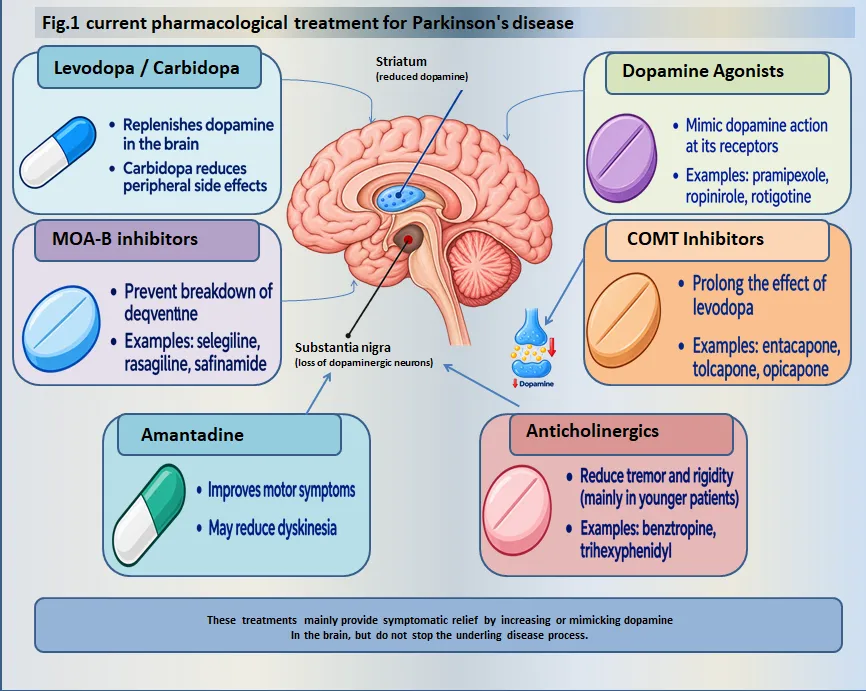
Table 1: Principal Pharmacological Classes Used in Parkinson’s Disease
| Drug class | Representative agents | Principal mechanism | Major clinical role | Important limitations |
|---|---|---|---|---|
| Levodopa/DDCI | Levodopa/carbidopa, levodopa/benserazide | Dopamine precursor | Most effective motor therapy | Wearing-off, dyskinesia |
| Dopamine agonists | Pramipexole, ropinirole, rotigotine | Dopamine receptor stimulation | Early PD and adjunctive treatment | Somnolence, hallucinations, impulse-control disorders |
| MAO-B inhibitors | Rasagiline, selegiline, safinamide | Reduce dopamine metabolism | Monotherapy or adjunctive treatment | Modest symptomatic effect, drug interactions |
| COMT inhibitors | Entacapone, opicapone, tolcapone | Prolong levodopa exposure | Wearing-off | Dyskinesia, adverse effects; tolcapone hepatotoxicity |
| NMDA antagonist | Amantadine | Glutamatergic modulation | Dyskinesia and OFF episodes | Hallucinations, edema, cognitive adverse effects |
| A2A antagonist | Istradefylline | Adenosine A2A blockade | Adjunctive OFF treatment | Modest benefit, regional availability |
| Rescue dopaminergic therapies | Apomorphine, inhaled levodopa | Rapid dopaminergic delivery | Sudden or predictable OFF episodes | Administration burden |
| Anticholinergics | Trihexyphenidyl, benztropine | Muscarinic blockade | Tremor in selected younger patients | Cognitive and autonomic toxicity |
4. Dopamine Agonists
Dopamine agonists directly activate the dopamine receptors and don't need to be converted to dopamine by surviving nigrostriatal neurons. Pramipexole and ropinirole increase the levels of stimulation of D2/D3 receptors, while rotigotine is a continuous transdermal D2/D3 receptor stimulator [32].
Dopamine agonists may be a good option as a single agent in some younger patients or in combination with levodopa if motor fluctuations start to occur. They may also be longer acting than immediate release levodopa, so may help to prevent OFF times, as well as potentially delaying the use of increased levodopa doses [33]. But the effect of their use is usually less than with levodopa.
The drawback of the major one is tolerability. Some of the more significant are the somnolence, hallucinations, edema, and orthostatic hypotension, as well as impulse-control disorders. Pathological gambling, compulsive sexual behavior, binge eating and excessive shopping can lead to significant psychosocial problems and may not be identified unless clinicians screen for them [34].
The different pharmacokinetic approach is provided with rotigotine as it is delivered transdermally which gives around the clock exposure. The RECOVER study showed that there was a benefit in terms of early-morning motor function and sleep disturbances, suggesting that there is the potential benefit of continuous receptor stimulation [35]. However, there are some adverse effects that are relevant to the application site and common with dopamine agonist effects.
Previous studies for example REAL-PET and CALM-PD showed interest in the neuroprotective potential of dopamine agonists [36]. But, dopamine transporter imaging is still subject to the effects of dopaminergic therapy, and is not a perfect surrogate marker for neuronal survival. The next study (PROUD) with a delayed start did not demonstrate disease modification [37]. Therefore, dopamine agonists cannot be used as a neuroprotective drug at present, but should be considered as symptomatic drug.
Section synthesis. Dopamine agonists continue to be a valuable add-on therapy, especially if exposure to levodopa is to be avoided; however, they have a number of neuropsychiatric side effects that restrict their use in cognitively impaired or elderly patients. Their historical hypothesis on the neuroprotection is yet to be validated.
5. MAO-B Inhibitors and COMT Inhibitors
5.1 MAO-B inhibition
Rasagiline and selegiline inhibit MAO-B and thus lower the metabolism of dopamine. Can offer slight symptomatic benefit as monotherapy in early disease, can be used to decrease OFF time when used with levodopa [38]. Safinamide's activities include reversible MAO-B inhibition, actions on voltage-gated sodium channels and glutamate release which may account for its effects on mechanisms beyond dopamine metabolism.
Randomized trials also indicate that safinamide can be used to increase ON time without the occurrence of troublesome dyskinesia when used in combination with levodopa [39]. There is some broad acceptance of its effectiveness based on meta-analysis, but very limited evidence for disease-modifying effects and modest effect sizes for most studies that have been conducted as an adjunctive treatment [40].
In particular, Rasagiline was of interest after the ADAGIO delayed start trial. Where there was slower clinical worsening with early treatment (some analyses suggested this), there was a wavering primary interpretation due to the risk of symptomatic confounding in the design of delayed start [41]. Therefore, it is not at this point appropriate to consider inhibition of MAO-B as disease modifying.
5.2 COMT inhibition
COMT inhibitors decrease the conversion of levodopa to 3-O-methyldopa, thus prolonging the action of levodopa. Entacapone is considered as an adjunct and opicapone has been shown to be effective in the wearing-off patient group and has a once-daily dosage regimen.
Tolcapone has peripheral and central COMT activity, but has had some clinical limitations due to hepatotoxicity. It is for this reason that entacapone and opicapone are more part and parcel of modern-day practice.
The STRIDE-PD trial was designed to determine if dyskinesia could be prevented by more continuous dopamine stimulation by prescribing levodopa/carbidopa/entacapone as initial treatment. It did not show the decrease in dyskinesia that was predicted, and, as such, did not prove that the theoretical concept of "continuous stimulation" would yield a decrease in motor complications [42].
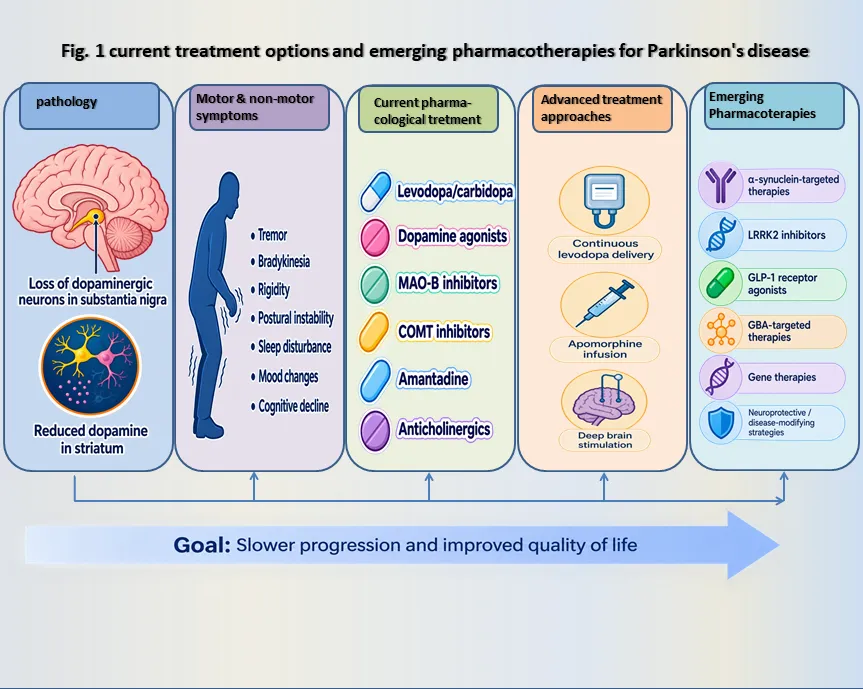
Section synthesis. MAO-B and COMT inhibitors can be useful as adjunctive medications, especially to minimize OFF time, but are mostly symptomatic. Their results highlight the importance of changing the characteristics of levodopa pharmacokinetics, rather than proving the development of disease modification.
6. Amantadine and Management of Dyskinesia
Amantadine is a unique drug with dopamine antagonistic properties, and part of its action may be due to its NMDA receptor antagonism. It's the main pharmacologic therapy for levodopa induced dyskinesias. Initial controlled trials showed marked decreases in dyskinesia, which led to the hypothesis that overactivation of the glutamatergic pathway is responsible for dyskinesia associated with levodopa [43].
There is an extended-release amantadine that has been created to give prolonged plasma exposure. Phase III trials showed decreases in the incidence of dyskinesia and OFF time, and that these benefits remained after extended use [44]. A recent meta-analysis of randomized controlled trials (RCTs) further validated the significant decrease in dyskinesia with all amantadine formulations, with adverse events such as hallucination, dizziness, edema and dry mouth as potential issues [45].
Amantadine is a good example of an important principle in pharmacotherapy for PD: that it can be a symptomatic drug which does not directly affect the dopaminic receptors. Downstream glutamatergic circuitry modulation may be beneficial to clinically relevant complications of dopamine replacement.
Amantadine is not a "disease modifying" drug, however, and should not be used as such. It is most useful in those with established dyskinesia, and becomes more of an issue in the older patient with cognitive dysfunction.
Section synthesis. Because of its non-dopaminergic property, amantadine is an important agent to treat levodopa-induced dyskinesia. It has proven to be effective, and its effects have highlighted the role of non-Dopaminergic circuitry in motor complications, but it has limited application because of its neuropsychiatric and peripheral side effects.
7. Newer Levodopa Delivery Strategies
The disadvantages of the conventional oral levodopa formulations have encouraged the development of longer and more sustained exposure levodopa formulations.
7.1 Extended-release oral levodopa
IPX203 is a long acting (extended release) carbidopa/levodopa formulation that helps to increase the time that levodopa is available in the bloodstream. Doses of IPX203 were associated with significantly greater amounts of GOOD ON time per day and fewer dosing requirements than those of immediate-release carbidopa/levodopa in the phase III RISE-PD trial [46]. It was generally reported to have a well-tolerated safety profile and efficacy was maintained in its open-label extension [47].
The clinical relevance may be significant as it can lead to better adherence and a decrease in the burden of multiple dosing. But, there is no cure for the progressive nigrostriatal degeneration that is a fundamental biological issue. The most important contribution they can make is therefore to optimize the symptomatic control.
7.2 Inhaled levodopa
Levodopa is available as an inhaled formulation that is not absorbed in the gastrointestinal tract and gives a rapid rescue dose. The inhaled levodopa treatment in the SPAN-PD phase III trial resulted in motor function improvement during OFF period [48]. There have been some good longer-term data to support continued symptomatic benefit and not a significant pulmonary toxicity [64].
It is most useful in patients who take oral levodopa, but have slow or inconsistent response to the drug. However, there are certain requirements for inhaling the treatment such as sufficient inspiratory capacity and the patient's capacity to use inhaler correctly.
7.3 Continuous subcutaneous levodopa
Continous infusion is a more direct approach towards achieving continuous dopaminergic stimulation. ND0612 is a portable subcutaneous pump for the delivery of levodopa/carbidopa. In the phase III BouNDless trial, there was a significant advantage of the treatment with ON over oral treatment with ON time without troublesome dyskinesia [49].
Foslevodopa/foscarbidopa also offers an option for continuous subcutaneous levodopa delivery and has increased treatment options for advanced disease [50]. Some of the drawbacks are infusion site reactions, management of the device, cost and the need for patient or care taker competency.
Section synthesis. New levodopa formulations can only be used alongside levodopa and are designed to overcome the limitations of levodopa in terms of its pharmacokinetic properties. They have a main commitment of consistency of motor control and a decrease in treatment load.
8. Other rescue therapies, such as apomorphine.
Apomorphine is a strong drug which acts on dopamine receptors and can make the transition to ON state very quickly. Subcutaneous infusion has been tested in patients who have patients with persistent motor fluctuations despite optimized oral treatment. The TOLEDO trial showed a large decrease in the OFF time for each day, compared with the placebo group [51]. Extension data is available for the long term and continued clinical use in the correct patient population [68].
Anothesr rescue option for sublingual apomorphine film which does not require injection. During OFF periods, there was evidence of improved motor function in Phase III [52]. which is useful in patients that have a predictable or sudden OFF period.
The usefulness of rescue therapy is the fact that it restores independence of functioning, rather than intervening with disease biology. While a small change in a clinic-based motor score may be more relevant to the clinic, a dramatic decrease in OFF time may be more relevant to the individual patient.
Section synthesis. Apomorphine is a good example of the increasing role of personalised drug delivery. Persistent fluctuations are best treated with continuous infusion and discrete OFF episodes are best treated with on-demand preparation.
9. Device-Aided and Advanced Therapies
Treatment with medications becomes more complicated as PD advances. If oral therapy is ineffective and is not giving good control then device therapy can be considered including deep brain stimulation (DBS), intestinal levodopa infusion and continuous apomorphine infusion [53].
Motor fluctuations and medication requirements can be significantly reduced and improved in the right patients with DBS, especially stimulation of the subthalamic nucleus or globus pallidus internus. The EARLYSTIM trial was designed to test DBS in patients with relatively early onset motor complications and showed the benefit of DBS in these select patients [54].
But, the same cannot be said for DBS, which does not provide the same disease modification as a drug. It can regulate abnormal activities in the circuit but does not stop the continuous degeneration of the circuit. It also suffers from various surgical risk considerations, cognitive status, psychiatric disease, age, access and cost limitations [55].
Intestinal levodopa/carbidopa gel is a continuous enteral delivery which can be used to decrease OFF time in advanced PD. It is effective and this lends support to the idea that fine dosing of levodopa may lead to better motor control, but this technique is not widely used due to the use of invasive techniques and complications associated with the devices.
The increasing trend towards subcutaneous levodopa infusion is especially important because there is a possibility for continuous dopaminergic therapy without intestinal, or intracranial, surgery.
10. Treatment of Non-Motor Symptoms
Non-motor symptoms are gaining recognition as significant factors to consider in determining the quality of life and burden on caregiver. They are treated with pharmacotherapy specific to the symptoms – just dopaminergic replacement is not enough [56].
10.2 Decision-making ability and the legal impacts of it.10.3 Memory.
Rivastigmine is a valuable evidence-based medicine drug that is used to treat Parkinson's disease dementia. Cognitive impairment may be associated with cholinergic dysfunction, which has been a basis for the use of drugs that inhibit cholinesterases for cognition [57]. But these benefits are typically small, and side effects on the stomach can make it hard to stay on the medication.
There is a lack of very effective disease-specific cognitive therapies.
10.2 Psychosis
Hallucinations and delusions are common in Parkinson's disease psychosis; some medicines that help control the symptoms of Parkinson's disease can worsen symptoms. Treatment thus needs to consider psychiatric control and preservation of motor function.
Clozapine has been found to be effective, but needs to be monitored hematologically. The mechanism of action of pimavanserin is different from the others, because it selectively blocks the serotonin receptor 5-HT2A and has proven to be effective in the treatment of Parkinson's disease psychosis [58].
10.3 Depression and apathy
Depression is a frequent symptom of PD, and can pre-date motor symptoms. The treatment of depression is tailored to the individual, and there is clinical evidence for using selective serotonin reuptake inhibitors or tricyclic drugs [59].
Apathy is more challenging to treat because it is associated with depression and with the dopaminergic motivational circuitry, which is also associated with cognitive impairments. Evidence is still rather limited, and targeted trials and phenotyping is needed.
10.4 Orthostatic hypotension
Neurogenic orthostatic hypotension can significantly decrease ambulatory ability and can cause an increase in falls. In addition to non-pharmacological therapies, the drug options are midodrine, fludrocortisone and droxidopa [60].
Treatment is difficult due to the need to carefully balance the increase in blood pressure in supine position, as high BP in this position can be harmful.
The symptoms of constipation, or gastrointestinal dysfunction, are addressed.Constipation and gastrointestinal dysfunction are treated.
Constipation is very prevalent and can be a prodrome to motor PD. This may also be symptomatic with macrogol or other osmotic laxatives, but hydration and fibre and physical activity should also be considered [61].
Gastroparesis may also negatively affect levodopa absorption, making the treatment of non-motor disease an important interaction with levodopa pharmacokinetic failure.
10.6 Sleep disorders
Sleep fragmentation, insomnia, excessive daytime sleepiness and REM sleep behavior disorder are important disturbances of sleep that may impact quality of life. Dopaminergic drugs may be helpful in certain symptoms, but can be harmful to sleepiness and sleep attacks [62]. In RECOVER, for instance, rotigotine has been shown to have beneficial outcomes in sleep-related measures, but cannot be extrapolated to other sleep disorders [63].
Section synthesis. Non-motor symptoms are a poorly explored facet of the pharmacotherapy of PD. Current therapy is mostly symptomatic and often there is less evidence for these therapies than for motor dysfunction therapies. So non-motor outcomes should be considered primary endpoints in future development, in preference to secondary endpoints.
11. Emerging Pharmacotherapies
11.1 GLP-1 receptor agonists
The GLP-1 receptor agonists are one of the most thoroughly studied repurposed drug strategies. Preliminary preclinical research indicates that GLP-1 signaling is also potentially able to impact insulin sensitivity, mitochondrial function, oxidative stress, inflammation and neuronal survival [64].
The initial trial of exenatide produced a lot of excitement due to the continued improvement in the motor function following withdrawal from the drug [65]. But, it does not imply disease modification if the beneficial effect is still present following the end of the treatment. Symptomatic effects may also occur through adaptive mechanisms or changes in drug exposure and/or changes in motor reserve [66].
The bulk of evidence is now more complex. A phase III-type randomized study of pegylated exenatide analogue (NLY01) to increase the durability of the drug action was unsuccessful in showing significant improvement in the primary motor outcome [67]. The effect of Lixisenatide on motor progression was statistically significant in a phase II trial of PD patients in the early stage of disease, and the magnitude was small, although gastrointestinal side effects were common [68].
The results are promising but also have some concerns. The activity of GLP-1 receptor agonism certainly acts on biological pathways that are relevant to PD, but it is unclear whether this activity is clinically relevant and leads to slowing of neurodegeneration.
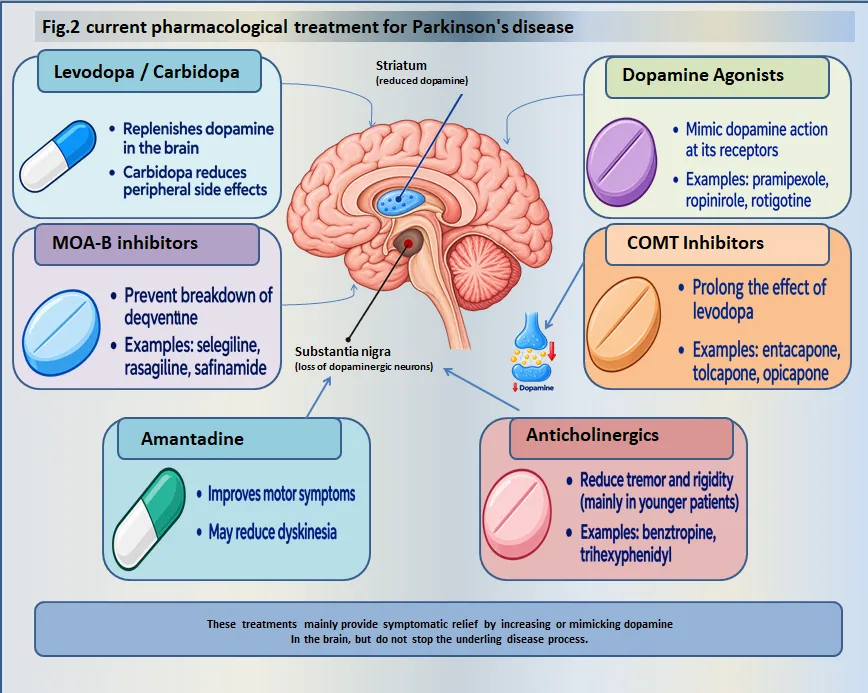
11.2 α-Synuclein immunotherapy
The goal of passive α-synuclein immunization is to block extracellular pathological species or to inhibit cell-to-cell propagation of α-synuclein. Among the most promising antibodies that entered clinical development, were cinpanemab and prasinezumab [69].
The global disease progression was not significantly improved in the phase II PASADENA trial of prasinezumab [70]. The second PADOVA trial (2026) also did not achieve its primary endpoint, but exploratory analyses indicated some clinical activity and warranted further study [71].
Similar lack of convincing clinical efficacy was seen for Cinpanemab. Biomarker analyses from SPARK led to valuable information regarding disease progression as well as trial design but did not prove therapeutic benefit [72].
The failures should not necessarily mean that α-Synuclein is not a good target. This could be due to a number of factors: treatment may have been initiated too late; the pathogenic species that is targeted may not be the most relevant; antibody penetration might not have been sufficient; or α-synuclein pathology may be heterogeneous across patients [73].
11.3 GBA and glucocerebrosidase enhancement
Ambroxol is a pharmacological chaperone which has been shown to increase the protein levels of glucocerebrosidase and is therefore a drug of interest in particular in GBA associated PD [74]. An early open label trial showed that it penetrated the CSF and bound to the target, but did not allow any conclusions to be drawn about disease modification due to the uncontrolled trial design [75].
Target engagement and rise in glucocerebrosidase levels have been shown in a recent phase II randomized trial in Parkinson's disease dementia without significant cognitive improvement [76]. This is a good example of how to differentiate between biological target engagement and clinical efficacy.
Venglustat is an inhibitor of glucosylceramide synthase which may complement the approach of reducing the accumulation of glycosphingolipid substrates [77]. Initial studies showed good pharmacologic feasibility but clinical effectiveness has yet to be proven [78].
Genetic stratification and identification of target engagement and treatment at earlier stages in disease, using biomarkers, will likely be the key to the future of the GBA field.
11.4 LRRK2 inhibition
One of the most promising genetically-informed therapeutic strategies is the inhibition of LRRK2. In early clinical studies, DNL201 was found to have CNS penetration and to inhibit LRRK2 signaling, which suggests the potential for pharmacological pathway modulation [40]. Others, such as DNL151, have made it into early clinical trials [79].
The biggest difficulty is establishing whether biochemical inhibition is associated with slowing of clinical progression. Chronic inhibition is also important as LRRK2 is found in a number of tissues besides the nervous system such as lung and kidney [80].
The LRRK2 field remains, however, a critical step in moving towards precision pharmacotherapy as there is a possibility to target those patients that have been shown to have pathway activation.
11.5 Mitochondrial rescue and ursodeoxycholic acid
Screening efforts focused on compounds which could enhance the function of mitochondria in tissue models of PD led to the discovery of Ursodeoxycholic acid (UDCA) [81]. A phase II randomized trial showed biological activity that supported the target engagement within the mitochondria and showed potential benefit for objective gait parameters, but not for motor score on the conventional MDS-UPDRS score [82].
This disparity would give a good idea of the methodological dilemma in PD trials. The traditional clinical scales may not be sensitive enough to changes in the biology, while the sensor-based outcomes may be more sensitive to the more subtle changes in function [83]. Rarely, however, exploratory digital endpoints can produce false positive results—uncontrolled [84].
11.6 Iron chelation and oxidative stress
Oxidative damage is thought to be caused by iron deposits in the substantia nigra. Deferiprone, therefore, was considered to be a potential disease-modifying drug [85]. The randomized FAIRPARK-II trial and the subsequent phase III evidence failed to demonstrate clinical benefit, however, and gave rise to concerns of being able to interpret changes in motor scores as evidence of disease modification over short time periods [86].
The lack of efficacy of iron chelators doesn't indicate that iron is not involved in the pathogenesis of PD. Instead, it shows that it may be necessary to change multiple downstream pathological changes to effect the complex neurodegenerative process [87].
12. Disease Modification: Why Has Translation Been So Difficult?
The biggest problem with the PD drug development is that there's no drug that's shown to slow the neurodegeneration process. There are probably a number of reasons [88].
First, PD is a highly complex disease with a genetic component. Clinical features are shared among patients with the GBA1-associated disease, those with the LRRK2-associated disease and apparently sporadic PD, but the molecular pathogenesis is quite different [88]. Thus, a drug that acts on one mechanism can only have measurable effects in a biologically-selected subgroup of patients.
Secondly, clinical diagnosis is usually after significant neuronal damage has taken place. When motor symptoms are sufficiently typical for diagnosis (by the time they are present), therapeutic intervention may have reached the stage where it is too late to stop already established neuronal loss [89].
Third, there is confounder of clinical outcome measures by symptomatic treatment. An MDS-UPDRS improvement might be achieved by increasing dopamine signaling, without changing the rate of neuronal degeneration. On the other hand, a real biologic effect will not be detected if the outcome measure is not sensitive [90].
Fourthly, disease-modifying trials are of long duration. Nearly all trials are 6-18 months in duration while neurodegenerative processes take years [91]. Therefore, in short studies it may not be possible to distinguish real versus artificial slowing of disease.
Fifth, most candidate interventions have been based on animal model systems that are either toxin-based or genetically homogeneous that only partially mimic human PD. Human disease also includes ageing, comorbidities, genetic variability and environmental exposures and numerous interactions between different cell types [92].
Section synthesis. It is incorrect to say that failure of disease-modifying trials means that there is no modifiable biology of PD. Instead, it is a sign that future trials need to be initiated at an earlier stage, molecularly stratified trials, validated biomarkers and a longer follow-up period.
13. Precision Pharmacotherapy and Future Directions
Empiric drug choice is unlikely to persist as the primary method for guiding PD pharmacotherapy in the future, and would be replaced by using biomarkers to guide pharmacotherapy [93]. There is already a genetic test to determine if a person has a GBA1 or LRRK2 mutation that indicates he or she is at risk for developing disease, and new α-synuclein assays may offer biological confirmation of synucleinopathy [94].
There are several key areas of development including: development of reliable biomarkers that measure neuronal injury and therapeutic response, such as α-synuclein seed-amplification assays, imaging biomarkers, digital motor measures, skin biopsy, and cerebrospinal fluid markers [95].
A disease-modifying trial would then be the optimal trial to select patients prior to the onset of significant neuronal loss, treat with a disease-specific treatment, confirm the treatment's ability to engage the targeted disease and follow disease progression with a number of complementary outcomes.
Such an approach already exists with GBA-directed trials, in which it is possible to genetically sort out the participants. Much the same approaches are in development for LRRK2 inhibition. These methods can lead to therapies in the first few years that only work in molecularly defined sub-groups of PD patients and not the whole population of PD [96]. This should be seen as a success and not a failure since there is no need for one therapy to suit all patients in precision medicine [97].
Ultimately, combination therapy might be required. Multiple mechanisms are involved in PD and not just a single molecular defect. Future treatment might include symptomatic dopamine replacement and the use of α-synuclein clearance, lysosomal function, neuroinflammation or mitochondrial resilience agents [98].
Regardless, carefully considering pharmacokinetic and pharmacodynamic interactions will be necessary for the development of combination strategies. This is especially important for the long-term safety because if disease-modifying treatment does need to be continued, it could be for many years in relatively early-stage patients [99].
14. Critical Comparison of Current and Emerging Pharmacotherapies
Table 2: Evidence for Established and Emerging Pharmacotherapies That Are Compared.
| Therapeutic strategy | Primary target | Evidence strength | Main benefit | Principal limitation |
|---|---|---|---|---|
| Levodopa/DDCI | Dopamine replacement | Very high | Greatest motor efficacy | Motor fluctuations/dyskinesia |
| Dopamine agonists | D2/D3 receptors | High | Motor benefit, reduced levodopa requirement | Impulse-control and neuropsychiatric effects |
| MAO-B inhibitors | Dopamine metabolism | High | Modest motor benefit/less OFF | Limited efficacy |
| COMT inhibitors | Levodopa metabolism | High | Reduced OFF time | Dyskinesia/adverse effects |
| Amantadine ER | NMDA/glutamatergic pathways | High for dyskinesia | Reduces dyskinesia and OFF | Hallucinations, edema |
| Inhaled levodopa | Rapid levodopa delivery | High | Rescue of OFF episodes | Device/pulmonary requirements |
| Apomorphine | Dopamine receptors | High | Rapid OFF reversal/reduced OFF time | Administration burden |
| Continuous levodopa infusion | Continuous dopamine replacement | High/emerging | Improved ON time | Infusion-site/device complications |
| Tavapadon | D1/D5 receptors | High emerging | Motor improvement | Long-term safety not established |
| GLP-1 agonists | GLP-1 signaling | Inconsistent | Possible disease-modifying signal | Conflicting trials |
| Prasinezumab | α-Synuclein | Inconclusive | Exploratory motor signal | Primary endpoints not met |
| Ambroxol | GCase/lysosomal function | Early | Target engagement | Clinical efficacy unconfirmed |
| LRRK2 inhibitors | LRRK2 kinase | Early | Strong mechanistic rationale | Clinical efficacy and long-term safety unknown |
| UDCA | Mitochondrial function | Early | Biological target engagement | Clinical efficacy uncertain |
| Venglustat | Glycosphingolipid synthesis | Early | Pathway modulation | No established clinical benefit |
| Deferiprone | Iron | Negative/inconclusive | Targeted iron reduction | No convincing disease modification |
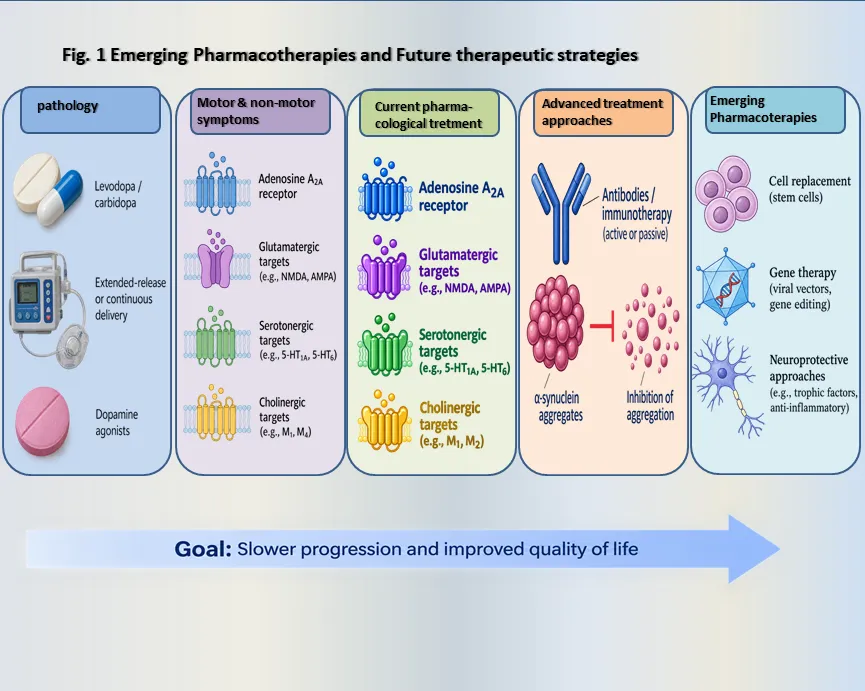
15. Research Gaps and Future Priorities
There are several priorities that should be considered for the future generations of PD pharmacotherapy trials.
The first is to get in early. For established motor disease, treatments begun at that time may not prove to be effective in showing disease modification if there has already been extensive neuronal loss at diagnosis. Hence, prodromal populations based on REM sleep behavior disorder, genetic risk and/or α-synuclein biomarkers might grow in significance [100].
The second one is biological stratification. Going forward, trials of PD should not be considered as a monocohort trial. Patients with specific biochemical phenotypes should be increasingly studied as a defined therapeutic population as should GBA1 carriers and LRRK2 mutation carriers [101].
The third one is improved outcome measures. While MDS-UPDRS is still essential, the use of digital motor assessment, wearable sensors, imaging, fluid biomarkers and objective measures of medication need should also be used [102].
The fourth is the safety that will be enjoyed in the long run. A PD treatment that helps to prevent the disease from progressing could be taken for several years. Therefore, even a slight increase risk of cancer, pulmonary abnormalities, psychiatric adverse effects or metabolic complications could be a clinical issue [103].
Combination therapy is the 5th option. α-Synuclein accumulation, mitochondrial dysfunction, and lysosomal impairment and inflammation are interrelated, so it may be necessary to intervene in multiple targets simultaneously. When biological and clinical activity of the individual components have been established, rational combination therapy should be considered.
Last, clinical trials should separate target engagement, efficacy (symptomatic) and disease modification. A drug can bind to its molecular target without exerting beneficial therapeutic effects, exert beneficial therapeutic effects without altering the disease, and/or may alter the disease without making significant changes on conventional scales within the short term. These differences should be built into the design of the trials, and not be generated after the fact [104].
CONCLUSION
The development of pharmacotherapy for PD has advanced significantly since 1960, although the basic goals have not changed: to find an effective symptomatic treatment and to find a treatment that would modify the disease. The standard of motor efficacy is levodopa, and other strategies include dopamine agonists, MAO-B inhibitors, COMT inhibitors and amantadine. The pharmacokinetic disadvantages of the traditional oral administration are being overcome by the development of extended-release formulations, inhaled levodopa, apomorphine and continuous subcutaneous levodopa delivery.
New drugs are now trying to target things upstream from the dopamine deficiency – immunotherapy with α-Synuclein, GLP-1 receptor agonists, GBA-directed drugs, LRRK2 inhibitors and mitochondrial rescue strategies. But the conflicting or disappointing outcomes from a handful of late-stage trials prove that while it may make good biological sense, it does not always translate to clinical benefits. This alteration of disease-modifying pathways and symptomatic treatment pathways is further evidenced by the 2026 PADOVA results of prasinezumab, and the recent phase III tavapadon results.
Another dopamine replacement molecule is unlikely to be the next big leap forward, however. Identifying patient populations defined by their biology, treating the disease earlier, achieving validation of biomarkers, defining better endpoints in clinical trials and discovering drugs that would be capable of modifying the neurodegenerative process itself will be critical for progress. Combining symptomatic dopamine replacement with mechanism specific interventions may be the most promising strategy to change the management of PD from a lifelong chronic symptom treatment to true disease modification.
REFERENCES



Reenu, Manjinder Kaur, Asha Juma Haji, Mujeeb Ur Rehman, Puja Gulati, Parkinson’s Disease: Current Treatment Options and Emerging Pharmacotherapies, Int. J. of Pharm. Sci., 2026, Vol 4, Issue 11, 2335-2354. https://doi.org/10.5281/zenodo.24271753
 10.5281/zenodo.24271753