

We use cookies to ensure our website works properly and to personalise your experience. Cookies policy
Department of pharmacology at Aims college of pharmacy, Mumbai
This paper presents an overall review of Lavandula stoechas (ustukhudddus), also called French lavender. This review focuses on the pharmacological activity of the ustukhuddus. Activities that have been studied are aggregated together and emphasise how the flower can be used in treating different types of diseases. The chemical constituents used and how they work have been introduced. The use of this drug in different systems of medicine has been discussed, and hence its use in Ayurveda has been specifically mentioned in this review. It also states the studies showing clear and accurate results as an antioxidant as well as an agent for reducing fungal infections.As there are side effects of the currently used drugs for neurodegenerative diseases, an attempt is made to avoid the use of such drugs and make a herbal treatment for the mentioned diseases. The overall study related to Ustukhuddus is compiled in this review. This study suggests that the herbal drug (ustukhuddus) has many pharmacological activities has been verified which includes, antifungal, neuroprotective, antibacterial, antiviral etc.
LAVANDULA STEOCHAS
Lavandula stoechas, commonly known as lavender, is a type of flowering plant that belongs to the mint family, Lamiaceae. There are about 47 different kinds of lavender, and they are originally found in areas like Cape Verde, the Canary Islands, parts of Europe, northern and eastern Africa, the Mediterranean, and parts of Asia up to India. Many types of lavender are grown around the world because they are used as decorations in gardens, as herbs in cooking, and for making essential oils. Lavandula stoechas is the most common type of lavender and is often just called lavender.The color of its flowers is actually the name of a colour. Lavender has been used in traditional medicine and beauty products for a long time. Lavandula stoechas is part of the same plant family as other lavenders.The name 'lavender' comes from the Latin words for 'violet' and 'to wash,' which refer to the color of the flowers and the fact that lavender was used to wash things.
The name 'stoechas' comes from the Stoechades, which are a group of islands near the coast of Gaul.It was used a lot by Muslim doctors. In the Unani system of medicine, lavender is called 'Ustukhuddus' in the Indian subcontinent, but in Western India, it's mistakenly called 'Alfazema'.In Spain, it's known as 'Romero Santo', meaning 'sacred rosemary'.In the Unani system, it's described as 'Jaroobe dimagh', meaning 'broom of the brain', because it helps remove black bile from the brain, strengthens the body, and improves intelligence.It was first described by Galen, the first pharmacist, so it's also called 'Galeenial herb'.Dioscorides mentioned it in the book 'Kitabul Hashaiash'.Avicena, known as the Prince of Physicians, wrote about it in his famous work, the 'Canon of Medicine'.The oil content of L.stoechas is between 0.77% and 1.2%, and the plant itself is bitter and grey in color.Ustukhuddus is also known as Arabian or French lavender.Unani medicines are made from plants, minerals, and animal products[7].
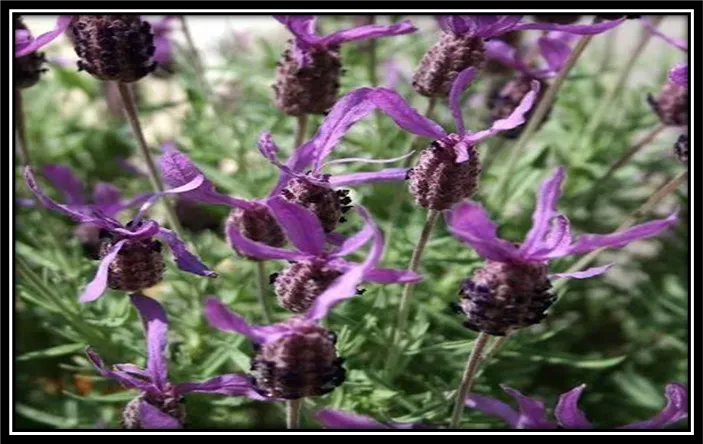
Fig. No. 01 Ustukhuddus
Lavandula plants are usually small shrubs or bushes that can grow up to a meter high. They bloom between mid-June and mid-July and prefer soil that is slightly acidic.The flowers are arranged in circular clusters and are often purple, blue, violet, pink, or lilac.L.stoechas was likely the first type of lavender to be used for its essential oils.The Romans, Greeks, and Arabs all recognized its health benefits.Lavender is well known in the Mediterranean area because of the health benefits of its essential oils.It's also used in cooking, making herbal teas, and in cosmetics. Lavender is popular because of its pleasant smell and is widely used in gardens. English lavender, which is called Lavandula angustifolia, is the most common type grown, but Spanish lavender, Lavandula stoechas, has a lot of special features.It's easy to recognize because of its bright and fragrant flowers.It’s the first compact type of Spanish lavender that can be grown from seeds.It branches well and produces a lot of flowers that cover its silver-green leaves.The flower stems have dark purple-violet flowers with beautiful purple bracts on top.Spanish lavender grows best in full sun and can handle heat and humidity better than other types of lavender.The showy, winged flower stems appear in late spring and last into summer.This small but flower-filled plant is good for growing in small containers or pots and is often used in garden borders.
GEOGRAPHICAL DISTRIBUTION:
The genus Lavandula has 51 species and hybrids that are found from Macaronesia through the Mediterranean region to India. About 30 species and hybrids grow naturally in the Mediterranean, and more than half of these are found only in certain areas of the western Mediterranean, which is where the most diversity in the genus is.Most of the lavender used in cooking in the Mediterranean (and other places) is Lavandula angustifolia, which is also called English lavender or true lavender.Even though it's called English lavender, this plant naturally grows only in parts of northeastern Spain, France, and Italy.
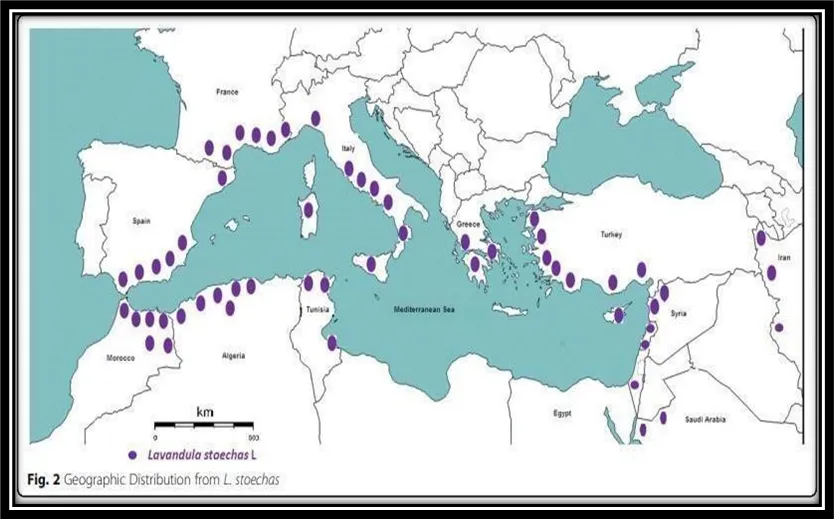
Fig. No. 02 Geographical distribution of Lavandula steochas
CULTIVATION:
Bandera Purplea is a good choice for growing in small containers that hold 1 quart to 1 gallon. Spanish lavender does best when it's planted in a soil mix that is loose and drains well, with a pH level between 5.5 and 6.0.When planting, the soil mix should be level with the top of the plant.Don't plant too deep, because this can cause a fungus called Botrytis to grow on the branches that are touching the wet soil.Since these plants grow many branches naturally, you don't need to pinch them before planting or during growing. Like most lavender types, Spanish lavender needs a normal to slightly less amount of water. It doesn't like very wet or too dry conditions.If the soil stays wet for too long, the roots can rot. Keep in mind that when lavender is in containers, it isn't as drought-resistant as when it's planted in the ground.So, it should be kept slightly moist, but not too wet. If you need to water, do it thoroughly and let the soil dry a little between watering’s. Spanish lavender needs light to moderate fertilization. If using water-soluble fertilizers, apply 250 ppm of nitrogen as needed, or use a constant feeding program with 125 to 150 ppm nitrogen each time you water. Controlled-release fertilizers also work well if mixed into the soil before planting at a rate of 1.0 to 1.2 pounds of elemental nitrogen per yard of soil.
Bandera Purplea grows naturally in a tight shape and usually doesn't need special height control. When planting, the growing mix should be level with the top of the plant. Since these plants branch easily, you don't need to pinch them before planting or during growth.Like most types of Lavandula, Spanish lavender needs normal to slightly less water.It doesn't like very wet or too dry conditions.If the soil stays wet for too long, the roots can get a disease called root rot.Remember that when lavender is in containers, it's not as drought-tolerant as when it's planted in the ground.So, keep it slightly moist.If watering is needed, water thoroughly and let the soil dry slightly between waterings.Spanish lavender needs a moderate amount of fertilizer.Controlled-release fertilizers can also be used if mixed into the growing medium before planting at a rate of 1.0 to 1.2 pounds of elemental nitrogen per yard of growing medium. Bandera Purplea naturally grows in a compact shape and usually doesn't need strategies to control its height.
SPECIAL CARE FOR CULTIVATION
This species has many attractive varieties that can add beauty to any garden. Learn how to plant, water, and care for L.stoechas sub-shrubs.Drainage and how much sunlight the plant gets are the most important things to think about.Plant Lavandula stoechas in full sun, even if the sun is very strong.
LIGHT
Growing lavender in full sunlight helps the plant produce more buds and grow into big, full bushes.
SOIL
Using a soil mix that has little organic material can help the plant produce more oils and a better scent. So, don't add too much organic matter or fertilizer. Lavender plants like soil that drains well and stays a bit dry, so if you're using regular potting mix, mix in some sand to help with drainage[18]. Alkaline or chalky soil can make the fragrance of lavender stronger, but if the soil is too acidic, with a pH lower than about 6.5, the plants might not live very long[19]. Water Lavender is a tough plant that can handle not getting water once it's grown. When you first plant them, water them regularly during their first season.After that, they can deal with long periods without water.Too much water can cause mold and rot in the roots[18].
Temperature and Humidity
Lavender can handle a variety of temperatures, and it's usually the wetness that harms the plants more than the cold. Wet roots in winter or high humidity in summer can be a problem.If humidity is an issue, make sure there's enough space between plants for air to flow, and plant them in a sunny spot.To protect against cold winter winds, plant them near a stone or brick wall for extra warmth and protection[19].
Fertilizer
It's a good idea to add a little compost to the planting hole when you first plant lavender. After that, you don't need to feed them, as extra fertilizer might make the lavender less strong [18].
Common Pests & Plant Diseases:
Lavender doesn't usually get many diseases. It may develop phytophthora, a fungal disease that causes rot in the roots and stems.It can also get septoria leaf spot, which is a fungus often found on tomato plants too[20]. The four-lined plant bug is another pest that feeds on lavender leaves. This can be controlled using pesticides.
HISTORY
Lavender has been used for more than 2500 years. The ancient Egyptians used it in mummification and for making perfumes.The Romans used lavender oils for cooking, bathing, and to make the air smell nice.The name comes from the Latin word "lavare," which means "to wash." The Romans also used lavender in soaps and carried it with them all over the Roman Empire.In medieval and Renaissance France, women who washed clothes for money were called "lavenders." Clothes were washed in lavender and dried on lavender bushes.
Lavender was used to scent drawers, make the air smell good, prevent infections, and help heal wounds.It was also known in Roman times for its antiseptic and healing powers.The ancient Greeks used lavender to help with insomnia and back pain.Lavender was also used to treat the Great Plague in London in the 17th century.In the 16th century, glove makers in France who were allowed to use lavender to perfume their products avoided getting cholera.Queen Elizabeth of England had lavender conserve on her table and fresh lavender flowers in her home.Queen Victoria became interested in lavender in 19th century England, and English lavender became popular.The Victorians grew lavender in gardens, and both queens used products from the famous lavender company, Yardley’s of London.
Lavender is a truly magical plant with a sweet smell and healing properties. It is easy to grow and just needs full sun and good drainage.Lavender is a hardy plant and can even survive with little care.Most varieties are adaptable and prefer growing in rocky soil with a high pH, and they like dry conditions after they get established.They do not like wet soil.The best results come from planting seedlings instead of seeds.Choose from many varieties, but make sure to match them with your growing conditions, soil, and climate. Lavender oil is mainly used in perfumes and soaps. But it also has many other uses, such as in household cleaners, deodorizers, candles, and even food products.Lavender is known for its antiseptic and antibiotic properties that can kill bacteria, help with bee stings and migraines, heal burns, and keep moths away from clothes.The smell of lavender is also used to calm horses, help people sleep better, and balance emotions. Aromatherapy began because of lavender.Essential oils are used to bring healing and balance to the body.
VERNACULAR NAMES
Asava is a traditional liquid medicine made by fermenting natural ingredients with self-generated alcohol, as described in Ayurveda. Ayurveda is one of the world's oldest traditional medicine systems, with a strong philosophical and experimental base, and it is believed to be over 3000 years old.It is still practiced today.Ayurveda is a complete medical system that includes physical, psychological, philosophical, ethical, and spiritual health.It also became very popular by showing how humans and nature are connected.The Rig Veda, Sam Veda, Yajur Veda, and Atharva Veda have had a big impact on how people in India live healthy lives.Today, there is growing interest in using alternative medicines, mainly because of the side effects, lower effectiveness, high cost, and increasing resistance to synthetic drugs, as well as the rise of many serious and dangerous diseases.
Ayurveda, the traditional Indian medicine system, remains the most ancient yet living tradition with a solid philosophical and experimental foundation. It is a science of life with a holistic approach to health and personalized medicine.It is a complete medical system that includes physical, psychological, philosophical, ethical, and spiritual health.In Ayurveda, each cell is considered to be a natural expression of pure intelligence, so it is called self-healing science.In addition to the concept of self-healing, the use of herbal treatments is also important in this traditional Indian medicine system.
According to the World Health Organization, about 70–80% of the world's population relies on non-conventional medicines, mostly from herbal sources, for their healthcare. People are showing more interest in using complementary and alternative medicine because synthetic drugs have more side effects, there's no cure for some long-term illnesses, new drugs are expensive, microbes are becoming resistant to drugs, and new diseases are appearing. Ayurveda is very effective, but the way it works, how the medicines act in the body, how they are absorbed, and how they affect safety are not fully understood.Also, the basic ideas of Ayurveda are not widely accepted in science because there's not enough proof.
In today's world, Western medicine is very advanced because of good research and high-tech methods, so there's a need to prove the basic ideas of Ayurveda and traditional herbal medicines.These traditional medicines are safe, cheaper, and have fewer harmful effects compared to modern drugs.Many people around the world use herbal plants and their products for their everyday health needs.Because of this, scientists are studying these natural compounds carefully using standard methods.Some studies show that the ingredients in these herbal products might be mixed with low-quality drugs or non-drug substances.So these products are not officially approved in many countries even though they have been used for a long time in their home countries.This might be because there is no proper way to standardize them, not enough research data, and poor research methods to confirm their authenticity.Therefore, it's necessary to follow the guidelines set by the World Health Organization to standardize Ayurvedic medicines if they are to be used globally.Various researchers have checked the physical and chemical properties of some Ayurvedic products like Asava and Arista to ensure their real quality and authenticity. The findings from these studies are discussed in this review to help other researchers in similar areas.
Brihattrayi, which includes the three main Ayurvedic texts—Charaka Samhita, Sushrut Samhita and Ashtang Hridaya—talks about the uses of fermentation in making medicines and drinks, especially for two types of products: 'madya' (which means wine) and 'asava-arishta'.These texts explain how fermentation works, the process to make them, what kind of containers to use, how long to wait, how to test the product, and the benefits of the final product. Charaka Samhita gives nine plant sources that can be used in making fermented products, such as fruits, grains, roots, flowers, bark, exudates, branches, leaves, and sugar. It also explains the fermentation process in detail, including the time needed, the right conditions, and how to test the product.Charaka also praises Soma as the best medicinal preparation and sura as the most refreshing drink. Sushruta Samhita talks about fermented products used for surgery and treating diseases. It describes several types, including madya, sura, prasanna, jagala, surasava, madhvasava, shukta, and dhanyamla, all of which are forms of exciting drinks.
Ashtanga Hridaya is the first to mention using the flowers of Woodfordia fruticosa to start the fermentation process for making asava and arishta.According to Ashtanga Sangraha, five main sources are used to make madya, like grapes, sugarcane, honey, rice, and grains. Sushruta also mentions that arishta is better than other forms of drugs because it uses a mix of different materials that change during fermentation. It's clear that the ingredients used in making asava and arishta change, which might make the final product more effective than the original herbal decoction.However, there's no clear explanation about how the compounds in the herbs change during fermentation.Some researchers, like Thatte and Dahanukar and Valiathan and Thatte, may have helped others look for missing links in Ayurvedic texts.But despite this, not many people have focused on researching the changes inside the herbal ingredients during fermentation.This might be because Ayurveda tends to look at the whole picture, which differs from the way modern science often approaches things.
In Ayurveda, herbal medicines are made using various methods to transfer the active parts of the plants. One unique method is 'Sandhana kalpana', where acidic and alcoholic fermented products are made.The process starts with liquid drugs, like juices or decoctions, and lets them ferment naturally using the materials from the plant itself.This fermentation makes ethyl alcohol and other organic compounds.The active ingredients from the herbs are extracted along with these compounds.As a result, these medicines have a longer shelf life, are absorbed faster by the body, and are more effective than regular Ayurvedic preparations.So, the Ayurvedic community uses these forms, like asava, arishta, and kanji, often in daily practice for treating illnesses.
Chemical Constituents
These products contain bioactive compounds such as glycosides, phenols, steroids, terpenes, and organic substances like carbohydrates and resins. The leaves especially contain polyphenols, apigenin-7-O-beta-D-glucoside, luteolin and its 7-O-beta-D-glucoside and 7-O-beta-D-glucuronide, rosmarinic acid, and 6-O-caffeoyl glucose. In the essential oil, 51 compounds were found, with the main ones being fenchone (30.85%), pinocarveyl acetate (10.2%), camphor (9.58%), eucalyptol (8.12%), and myrtenol (4.65%). These are the main parts of the oil.The aerial parts of the plant contain volatile oil, oleanolic acid, ursolic acid, vergatic acid, beta-sitosterol, alpha-amyrin and its acetate, lupeol, erythrodiol, luteolin, acacetin, and vitexin.Also, inorganic substances like calcium, iron, magnesium, aluminum, potassium, and strontium are present.The ethanolic extract of the whole plant of Lavandula stoechas L.was found to have beta-sitosterol, ursolic acid, and an unidentified triterpenic acid.Two new flavone glucosides and a new acetylated glucoside of luteolin were also isolated from Lavandula stoechas.
Antioxidant activity
It has been reported that the essential oil of Ustukhuddus has antioxidant activity, thanks to six active chemical components: linalyl acetate, linalool, 1-8 cineole, gamma-terpinene, and camphor.
The methanolic extract and essential oil of Lavandula stoechas Linn.showed strong antioxidant activity in experimental animals.However, the level of antioxidant activity depends on the type of extract used. The yield of essential oil obtained by water distillation was 1.36±0.2%. The extraction process reached maximum oil content after the first 80 minutes.The composition of the essential oil was analyzed using GC/FID,which identified six terpene compounds.The most important ones were linalyl acetate (15.26%), linalool (10.68%),1-8 cineole (10.25%), gamma-terpinene (11.2%),and camphor (11.25%) [24].Moreover, the essential oil has some antioxidant activity, but it is not as effective as vitamin E.
Antioxidants stop the formation of volatile organic compounds and conjugated diene hydroperoxides that come from the oxidation of linoleic acid.This helps protect the cell membranes from damage caused by lipid oxidation.In a test called the β-carotene-linoleate bleaching assay, it was found that the antioxidant compounds in the methanolic extract of Lavandula stoechas reduced the oxidation of β-carotene.The antioxidants in this extract neutralized the hydroperoxides made from linoleic acid.The antioxidant activity of the extract was measured by how fast β-carotene degraded.In the research, it was found that the extract with the slowest degradation of β-carotene had the highest antioxidant activity.
In this study, the antioxidant activity of the extracts and standards was measured by how much β-carotene degraded. The highest inhibition was shown by BHT and BHA at 78.78±1.59% and 79.15±0.24%, followed by the extract of Lavandula stoechas at 47.98±0.94% at the concentration of 2 mg/ml.The change in absorbance of β-carotene at 490 nm in the presence of the methanolic extract of Lavandula stoechas, the control and the positive controls BHT and BHA was considered.Based on the results, it can be said that the methanolic extract of Lavandula stoechas showed lower antioxidant activity than the standards, BHA and BHT.However, the high concentration of polar phenolics in the extract may help in inhibiting the oxidation of linoleic acid.
Fermentation
Fermentation is a process used in Ayurveda to make medicines. It is a natural way where sugars are converted into useful products.Fermentation has been around since 10,000 B.C.E., when the first human civilization began in the fertile crescent.The most common types of fermentation are alcohol fermentation, lactic acid fermentation (homofermentation and heterofermentation), butyric acid, mixed acid, propionic acid and acetic acid.Yeasts are involved in alcohol fermentation.Lactic acid bacteria like Lactobacillus, Clostridium, Butyrivibrio, Bacillus, and other anaerobes are used in butyric acid fermentation.
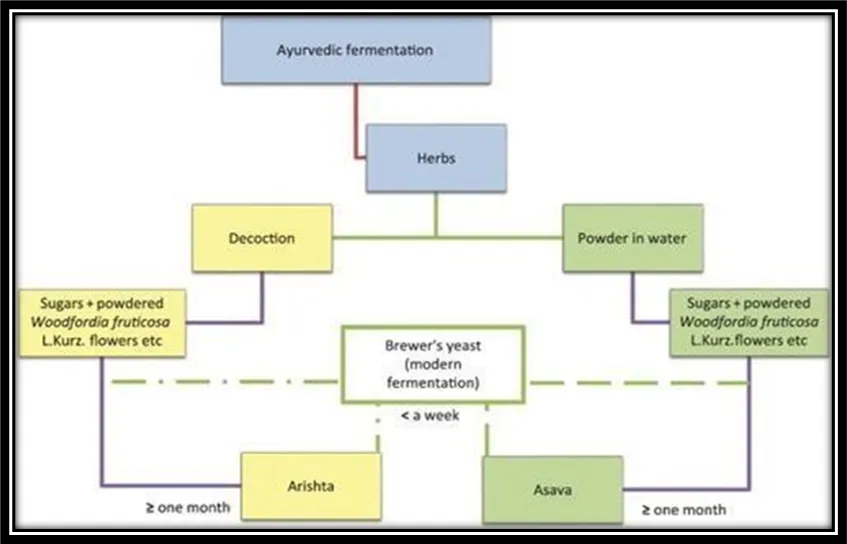
Fig. No.03 Fermentation
Enterobacteriaceae like Escherichia, Enterobacter, Salmonella, Klebsiella, and Shigella are involved in mixed acid fermentation.Propionibacterium, Veillonella, Bacteroides, and some Clostridia are used for propionic acid fermentation.Acetobacter, Gluconobacter, and Bacillus subtilis are used in acetic acid fermentation.Alcohol fermentation is used in making wine, beer, and sourdough.Lactic acid fermentation is used in making dairy products, fermented meats, and vegetables.Butyric acid fermentation is used in marsh sediments and sewage systems.
Mixed acid fermentation is used in the digestive tract of humans and animals, and in fresh water.Propionic acid is used in dairy products.Acetic acid is used in the acetic acid industry.The bacteria involved in different fermentation paths include Acetobacter, Gluconacetobacter, Halomonas, Hafnia, Tatumella, Zymomonas, Brachybacterium, Microbacterium, Brevibacterium, Corynebacterium, Micrococcus, Kocuria, Arthrobacter, Streptomyces, Propionibacterium, Bifidobacterium, Bacillus, Gemella, Jeotgalicoccus, Enterococcus, Carnobacterium, Tetragenococcus, Vagococcus, Weissella, Leuconostoc, Oenococcus, Lactococcus, Staphylococcus, Streptococcus, Lactobacillus, and Pediococcus.Techniques used to study microbial content and dynamics in fermented foods include Denaturing Gradient Gel Electrophoresis (DGGE) or Thermal Gradient Gel Electrophoresis (TGGE), along with plating, for evaluating dominant microbial populations.Fluorescence in Situ Hybridization (FISH) or Direct Epifluorescence Technique (DEFT) with plating is used to count non-cultivable populations.DGGE combined with Reverse Transcriptase-Polymerase Chain Reaction (RT-PCR) is used.rRNA quantitative hybridization is used to semi-quantify microorganisms that are metabolically active.Analysis of sugars and fermentation end products helps in monitoring the fermentation process.
Quantitative Polymerase Chain Reaction (q-PCR) and Competitive Polymerase Chain Reaction (c-PCR) are used.Flow cytometry helps detect and count non-dominant species and assess their viability, stress response, and survival in foods.Microarray-based rRNA detection without amplification helps in semi-quantifying and tracking both dominant and non-dominant microbial populations.
AIM AND OBJECTIVE
The aim of this review is to thoroughly examine and critically evaluate the pharmacological activities of Lavandula stoechas (Ustukhuddus), focusing on its bioactive components, how they work, and its potential to be used in both modern and traditional medicine. The goals of this review include explaining the botanical characteristics of Lavandula stoechas, such as its scientific classification, physical appearance, and where it is found.It will also look at how Ustukhuddus has been used in traditional systems like Unani and Ayurveda.Additionally, this review will identify and discuss the plant compounds that are responsible for its medicinal effects. To carefully look at the reported medicine effects of Lavandula stoechas, including: antioxidant power, ability to reduce inflammation, fight microbes, stop seizures, protect brain cells, ease anxiety and depression, and relieve pain. Also, to look into how these effects work in the body.To check if it's safe, what side effects it might have, and the right dose based on studies done in labs and with people.To find out what areas still need more research and how it could be used as a medicine in the future.
REVIEW OF LITERATURE
The articles included in this review are meant to be typical, not every single one, because many were published in less commonly known journals and aren't easily available. Still, looking at these can help show the overall progress made in this area.These articles can be grouped into the following: - Traditional methods used to make Ayurvedic medicine through fermentation - Physical and chemical properties of Ayurvedic medicines that have been fermented - How fermentation changes these medicines - How well fermented Ayurvedic products work in real-life situations - Future research ideas for Ayurvedic fermented medicines - Using solid-state fermentation in Ayurveda
RESULTS AND DISCUSSION
The review shows that Lavandula stoechas (Ustukhuddus) has many medicine effects, thanks to the variety of chemicals it contains. Studies have found that it has essential oils like camphor, fenchone, and cineole, as well as flavonoids, phenolic compounds, tannins, coumarins, and terpenoids.These active ingredients are probably why it works as a medicine.Lab tests like DPPH, ABTS, and FRAP showed that it can remove harmful free radicals, which means it could help against damage from oxidative stress.The high levels of phenolic and flavonoid compounds are a big reason for this antioxidant effect.
In vivo studies show that this plant has good anti-inflammatory effects, which might happen because it stops some inflammation-causing chemicals like prostaglandins and cytokines from working.Its essential oil can kill different kinds of bacteria, both Gram-positive and Gram-negative, as well as some fungi, making it useful for fighting infections.There's strong support for its effects on the central nervous system, including helping prevent seizures, reducing anxiety, treating depression, and improving memory.These effects may happen because it affects certain brain chemical pathways like GABAergic and cholinergic systems, which fits with its use in traditional Unani medicine as a brain tonic.It also has pain-relieving effects, which could work through both the brain and the body's nerves. Even though these findings are promising, most of the evidence comes from lab tests, and there aren't enough well-designed human trials. The plant's chemical makeup can change depending on where it grows and the environment, and the way it's extracted isn't always standardized, making it hard to know if it works consistently.While it's usually safe at normal doses, higher amounts of its essential oil, especially those with camphor, may be harmful, showing the need for better dose control and safety checks.Overall, these results back up traditional uses and show that Lavandula stoechas has big potential as a herbal treatment, but more research is needed to understand how it works and to develop it into a reliable medicine.
CONCLUSION
Different methods used for studying this plant have given mixed results. Some of these methods could help improve the way we make standard tests for this kind of liquid medicine.There are not many studies that directly compare traditional and modern ways of making these medicines.If we can find out how well traditional and modern methods work in real patient situations, we can create better preparation techniques and more accurate standards. Looking closely at Ayurvedic principles can help us use modern technology in new ways to make better, safer, and more effective asava.
REFERENCES

Nahid Kayyum Khan., Pharmacological Properties Of Lavandula Stoechas: A Review, Int. J. of Pharm. Sci., 2026, Vol 4, Issue 9, 226-239. https://doi.org/ 10.5281/zenodo.22234222
 10.5281/zenodo.22234222