

We use cookies to ensure our website works properly and to personalise your experience. Cookies policy
1,4,5 Institute of Pharmaceutical Science & Research, Balaghat, Madhya Pradesh
2 Siddhivinayak Collage of Pharmacy Warora, Maharashtra
3 Bajiraoji Karanjekar College of Pharmacy, Sakoli, Maharashtra
Anemia remains a major global health problem, particularly in developing countries, and is associated with reduced hemoglobin levels and impaired oxygen delivery to tissues. Herbal medicines have gained considerable attention as safer and cost-effective alternatives to conventional therapies. Anthocephalus cadamba (Rubiaceae), commonly known as Kadamba, is a medicinal plant widely used in traditional systems of medicine for the treatment of anemia and inflammatory disorders. This review summarizes the phytochemical composition, pharmacological properties, and experimental evidence supporting the anti-anemic potential of A. cadamba, with special emphasis on phenylhydrazine-induced anemia models. Available literature suggests that the bark of A. cadamba possesses antioxidant, anti-inflammatory, and hematinic activities, which may contribute to its protective effects against oxidative hemolysis. The review highlights the therapeutic relevance of A. cadamba and supports further research for its development as a natural anti-anemic agent.
Anemia is a common hematological disorder characterized by a reduction in hemoglobin concentration, red blood cell (RBC) count, and/or hematocrit below normal physiological levels. Hemoglobin is essential for transporting oxygen from the lungs to peripheral tissues; therefore, anemia results in decreased oxygen delivery, leading to symptoms such as fatigue, weakness, pallor, dizziness, and reduced physical performance. Anemia affects individuals of all age groups and is particularly prevalent among women, children, and the elderly, especially in developing countries.
TYPES OF ANEMIA
Anemia can be broadly classified based on etiology and red blood cell morphology. Iron deficiency anemia is the most common type and occurs due to inadequate iron intake, poor absorption, or chronic blood loss. Megaloblastic anemia results from deficiency of vitamin B?? or folic acid, leading to impaired DNA synthesis and production of large, immature erythrocytes. Hemolytic anemia is caused by premature destruction of red blood cells, either due to intrinsic defects or external factors such as toxins and oxidative stress. Aplastic anemia arises from bone marrow failure, resulting in decreased production of red blood cells, white blood cells, and platelets. Anemia of chronic disease is associated with long-standing infections, inflammatory conditions, or malignancies that interfere with erythropoiesis.
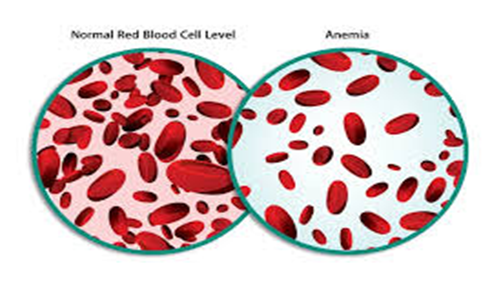
Figure normal vs anemia
CAUSES OF ANEMIA
The causes of anemia are multifactorial and include nutritional deficiencies, genetic disorders, chronic diseases, infections, and drug- or toxin-induced damage. Nutritional anemia commonly results from insufficient intake of iron, vitamin B??, or folic acid. Excessive blood loss due to trauma, gastrointestinal bleeding, or menstruation also contributes significantly to anemia. Certain drugs, chemicals, and oxidative agents such as phenylhydrazine can damage red blood cells and induce hemolysis. Additionally, bone marrow suppression and impaired erythropoietin production can further reduce red blood cell synthesis.
PATHOPHYSIOLOGY OF ANEMIA
The pathophysiology of anemia involves either reduced production of red blood cells, increased destruction of red blood cells, or excessive blood loss. In hemolytic anemia, oxidative stress plays a major role by damaging the erythrocyte membrane, leading to premature RBC destruction. In nutritional anemia, deficiency of essential nutrients impairs hemoglobin synthesis and erythropoiesis. Reduced oxygen-carrying capacity results in tissue hypoxia, which triggers compensatory mechanisms such as increased cardiac output and stimulation of erythropoietin release. However, prolonged anemia overwhelms these mechanisms, leading to systemic complications and reduced quality of life.
Phenylhydrazine-induced anemia is a widely used experimental model for evaluating anti-anemic and hematoprotective agents. Phenylhydrazine is a potent hemolytic compound that selectively damages red blood cells by generating excessive reactive oxygen species. These free radicals cause oxidative injury to the erythrocyte membrane, leading to lipid peroxidation, membrane fragility, and premature red blood cell destruction. As a result, there is a marked reduction in hemoglobin concentration, red blood cell count, and hematocrit levels.
Additionally, phenylhydrazine disrupts hemoglobin structure and promotes the formation of Heinz bodies, further accelerating erythrocyte breakdown by the reticuloendothelial system. The resulting hemolysis creates a condition that closely resembles hemolytic anemia in humans. This model is particularly useful for studying oxidative stress–mediated anemia and for assessing the antioxidant, erythropoietic, and membrane-stabilizing effects of pharmacological and herbal interventions.
Phenylhydrazine-induced anemia is one of the most commonly employed experimental models for evaluating anti-anemic agents, particularly those acting against hemolytic anemia. Phenylhydrazine is a potent oxidative agent that selectively targets red blood cells, causing severe oxidative stress. It induces lipid peroxidation of the erythrocyte membrane, disrupts membrane integrity, and leads to the formation of Heinz bodies, ultimately resulting in premature destruction of red blood cells by the reticuloendothelial system. This process leads to a marked reduction in hemoglobin concentration, red blood cell count, and hematocrit, closely resembling hemolytic anemia observed in clinical conditions.
Experimental investigations have demonstrated that administration of Anthocephalus cadamba bark extract significantly ameliorates phenylhydrazine-induced hematological alterations. Treatment with the extract results in a dose-dependent restoration of hemoglobin levels, red blood cell count, and hematocrit values when compared to anemic control groups. The improvement in hematological parameters indicates a protective effect of the extract against oxidative hemolysis. These findings suggest that A. cadamba bark possesses potent hematinic properties and supports recovery of erythrocyte integrity and function. The observed anti-anemic activity is largely attributed to the presence of antioxidant phytoconstituents that counteract phenylhydrazine-induced oxidative damage.
The anti-anemic activity of Anthocephalus cadamba bark extract is believed to be mediated through multiple complementary mechanisms. One of the primary mechanisms involves the scavenging of reactive oxygen species generated during phenylhydrazine-induced oxidative stress. By neutralizing free radicals, the extract helps prevent lipid peroxidation and preserves the structural stability of erythrocyte membranes.
Additionally, the bark extract exhibits erythrocyte membrane-stabilizing properties, which protect red blood cells from hemolysis and extend their lifespan in circulation. This membrane-protective effect plays a crucial role in maintaining normal red blood cell count and hemoglobin levels. The extract may also stimulate erythropoiesis either directly or indirectly by enhancing bone marrow activity and promoting the synthesis of new red blood cells.
Phenolic compounds and flavonoids present in A. cadamba are key contributors to these effects. These phytoconstituents enhance endogenous antioxidant defense systems, reduce lipid peroxidation, and support hematological recovery. Through these combined actions, Anthocephalus cadamba bark extract effectively mitigates anemia and restores normal hematological function.
Anthocephalus cadamba (synonym Neolamarckia cadamba), commonly known as Kadamba, is a large, fast-growing evergreen tree belonging to the family Rubiaceae. It is widely distributed throughout tropical and subtropical regions of South and Southeast Asia, including India, Bangladesh, Sri Lanka, Indonesia, and Malaysia. In India, the plant holds both medicinal and cultural significance and is commonly found along riverbanks, forest margins, and moist regions.
The Kadamba tree can attain a height of 30–45 meters and is characterized by a straight trunk with broad spreading branches. The bark is grayish to brown in color, rough in texture, and rich in medicinally active constituents. Leaves are large, opposite, ovate to elliptic, and glossy green, while the flowers are small, fragrant, and arranged in distinctive spherical yellow to orange heads. The fruits are small, numerous, and embedded within a fleshy globose structure.
Traditionally, different parts of Anthocephalus cadamba such as bark, leaves, flowers, and roots have been used in Ayurvedic and folk medicine. The bark is particularly valued for its therapeutic properties and has been used in the treatment of anemia, fever, inflammation, diarrhea, and skin disorders. Phytochemical studies have reported the presence of alkaloids, flavonoids, tannins, glycosides, saponins, and phenolic compounds, which are believed to contribute to its pharmacological effects.
Modern scientific investigations have demonstrated that Anthocephalus cadamba possesses antioxidant, anti-inflammatory, antimicrobial, hepatoprotective, and hematinic activities. The antioxidant potential of the bark plays an important role in protecting red blood cells from oxidative damage. Due to its rich phytochemical composition and wide range of biological activities, Anthocephalus cadamba is considered a promising medicinal plant with potential applications in the development of herbal formulations for anemia and related disorders.
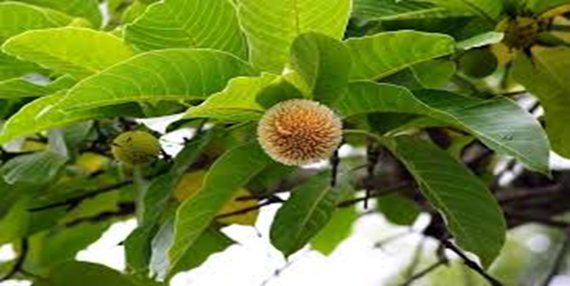
Figure plant of Anthocephalus cadamba
Anthocephalus cadamba is a well-known medicinal plant with a wide range of pharmacological activities supported by both traditional use and modern scientific investigations. Various extracts prepared from the bark, leaves, flowers, and roots have shown significant biological effects.
Antioxidant Activity
The bark extract of Anthocephalus cadamba exhibits strong antioxidant potential due to the presence of flavonoids, phenolic compounds, and tannins. These bioactive constituents are capable of scavenging free radicals and reducing lipid peroxidation. The antioxidant activity plays a crucial role in protecting red blood cells from oxidative damage, particularly in conditions involving hemolysis such as phenylhydrazine-induced anemia.
Anti-Inflammatory Activity
Several experimental studies have demonstrated the anti-inflammatory activity of Anthocephalus cadamba. The bark extract reduces inflammation by inhibiting the release of pro-inflammatory mediators such as prostaglandins and cytokines. This activity supports its traditional use in inflammatory conditions, wounds, and tissue injury.
Antimicrobial Activity
Anthocephalus cadamba shows broad-spectrum antimicrobial activity against both Gram-positive and Gram-negative bacteria, as well as certain fungal strains. This antimicrobial effect is attributed to phytochemicals such as alkaloids and tannins, which interfere with microbial cell wall synthesis and metabolic processes.
Hepatoprotective Activity
The hepatoprotective effect of Anthocephalus cadamba bark extract has been reported in toxin-induced liver damage models. The extract enhances antioxidant enzyme levels and prevents oxidative stress-mediated liver injury, thereby maintaining normal hepatic function.
Hematinic and Anti-Anemic Activity
The most significant pharmacological activity of Anthocephalus cadamba bark is its hematinic and anti-anemic effect. Experimental studies have shown that the extract improves hemoglobin concentration, red blood cell count, and hematocrit levels. This effect is believed to result from its antioxidant action, protection of erythrocyte membranes, and possible stimulation of erythropoiesis.
Other Pharmacological Activities
In addition to the above activities, Anthocephalus cadamba has been reported to possess antipyretic, analgesic, antidiabetic, immunomodulatory, and wound-healing properties. These diverse pharmacological actions highlight the therapeutic importance of the plant and its potential in herbal drug development.
FUTURE PERSPECTIVES
Although experimental studies have demonstrated the promising anti-anemic potential of Anthocephalus cadamba bark extract, further scientific investigations are necessary to fully establish its therapeutic value. Future research should focus on the isolation, purification, and characterization of the specific bioactive constituents responsible for the observed hematinic effects. Detailed molecular and cellular studies are required to elucidate the precise mechanisms involved in erythrocyte protection, antioxidant defense, and stimulation of erythropoiesis.
In addition, comprehensive toxicological evaluations, including acute, sub-chronic, and chronic toxicity studies, are essential to confirm the safety profile of the bark extract. Standardization of extraction procedures, dosage forms, and phytochemical content will be critical for ensuring batch-to-batch consistency and reproducibility of therapeutic effects. Development of standardized herbal formulations such as capsules, syrups, or tablets containing A. cadamba bark extract may provide a cost-effective and safer alternative to conventional anti-anemic drugs. Furthermore, well-designed clinical trials will be required to validate its efficacy and safety in human subjects, paving the way for its integration into modern therapeutic practice for anemia management.
CONCLUSION
The available scientific literature strongly supports the phytopharmacological importance and anti-anemic potential of Anthocephalus cadamba. The bark of the plant is rich in bioactive phytoconstituents, particularly flavonoids and phenolic compounds, which contribute significantly to its antioxidant and erythrocyte-protective properties. These antioxidant-mediated effects play a crucial role in preventing oxidative damage to red blood cells and reducing hemolysis, especially in experimental models such as phenylhydrazine-induced anemia.
The demonstrated improvement in hematological parameters, including hemoglobin concentration, red blood cell count, and hematocrit levels, validates the traditional use of A. cadamba in the treatment of anemia. Overall, Anthocephalus cadamba emerges as a promising natural therapeutic agent with significant potential for the development of safe, effective, and affordable herbal anti-anemic formulations. Continued research and clinical validation may further strengthen its role in the management of anemia and related hematological disorders.
REFERENCES





Omprakash Ukey, Pragati Zalwade, Narendra Lanjewar, Tanay Upadhyay, Digambar Rahangdale, Phytopharmacological and Anti-Anemic Potential of Anthocephalus cadamba: A Review, Int. J. of Pharm. Sci., 2026, Vol 4, Issue 1, 2455-2461. https://doi.org/10.5281/zenodo.18350504
 10.5281/zenodo.18350504