

We use cookies to ensure our website works properly and to personalise your experience. Cookies policy
Department of Pharmaceutics, Spurthy College of Pharmacy, Rajiv Gandhi University of Health Sciences, Bengaluru, India - 562106.
Acne vulgaris is a common inflammatory skin disorder affecting individuals of all age groups, particularly adolescents and young adults. It develops due to excessive sebum production, follicular blockage, microbial colonization, and inflammation, resulting in pimples, scarring, and psychological distress. Although conventional topical therapies such as creams and gels are widely used, they may cause skin irritation, reduced effectiveness with prolonged use, and poor patient compliance.Herbal medicines combined with advanced drug delivery systems have emerged as promis-ing alternatives for acne management. Curcumin possesses potent anti-inflammatory and antimicrobial activities but is limited by poor water solubility and low bioavailability. Tea tree oil exhibits broad-spectrum antimicrobial and anti-inflammatory properties, while aloe vera provides moisturizing, soothing, and wound-healing effects. Niosomes enhance drug stability, skin penetration, and controlled release.This review discusses the pathogenesis of acne, limitations of conventional treatments, and the potential of a curcumin-tea tree oil niosomal gel enriched with aloe vera as a promising herbal strategy for effective acne management
Acne vulgaris is a skin problem that affects the oil glands in the skin. Acne occurs mostly in teenagers and young adults.1 This skin problem occurs when the skin produces excess oil production, follicular blockage, growth of cutibacterium acnes and Inflammation. Acne may present as blackheads, whiteheads, red bumps and big painful bumps on the face, chest and back. Acne can also leave scars make negatively affect self-esteem, and reduce quality of life.1 So, it is very important to find a way to treat acne vulgaris.
A lot of people around the world have acne vulgaris and many of them need to see a doctor every year.1 Doctors usually give creams, antibiotics and other medicines to treat acne vulgaris. These medicines can have side effects, like dry skin, redness and sensitivity to the sun.2 While using antibiotics for anti-acne treatment, it may lead to resistance and their formulation stop working.3 These limitations have encouraged researchers to explore plant-based bioactive compounds as promising alternatives for the treatment of acne vulgaris.4
Some plants have compounds that can help with acne vulgaris. For example, Curcumin, a naturally derived compound from turmeric that reduce inflammation and fight against bacteria that cause acne vulgaris.4 Tea tree oil, which comes from a tree in Australia can also fight against bacteria that cause acne vulgaris and reduce inflammation.5 Aloe vera, which comes from a kind of cactus can help the skin to heal and makes feel better. 6 But curcumin doesn’t penetrate into the skin properly and it make stains on the skin so need to find a way to enhance the therapeutic efficacy of curcumin.7
Recently scientists have found a way to deliver medicines to the skin using bubbles called niosomes. These bubbles can carry all kinds of medicines including the ones that come from plants like curcumin, tea tree oil and aloe vera. They can help the medicines get into the skin better to work longer and be more effective. That is why scientists think that using niosomes to deliver curcumin, tea tree oil and aloe vera could be a way to treat acne vulgaris.8
Combining curcumin, tea tree oil and aloe vera into one medicine could be very effective against acne vulgaris. Curcumin can reduce inflammation tea tree oil can fight against bacteria that cause acne vulgaris and aloe vera can help our skin heal.4 Putting these medicines into niosomes and then into a gel could make them work better against acne vulgaris.8
This article will talk about acne vulgaris, how it is usually treated and how curcumin, tea tree oil and aloe vera can help treat acne vulgaris. It will also talk about niosomes. How they can be used to deliver these medicines to treat acne vulgaris. By looking at all the research that has been done this article hopes to provide a foundation for research and development of acne vulgaris treatments using natural medicines, like curcumin, tea tree oil and aloe vera.
2.ACNE VULGARIS
Acne vulgaris is a skin condition. It affects areas with oil glands like the face, neck, chest, shoulders and upper back. Acne is very common during adolescence.1
2.1 Overview
Acne vulgaris is a skin disease. It causes pimples, blackheads and whiteheads. This happens when pores get blocked and get inflamed 1. Acne vulgaris occurs when there is much oil production, which combines with dead skin cells and blocks the pores.2
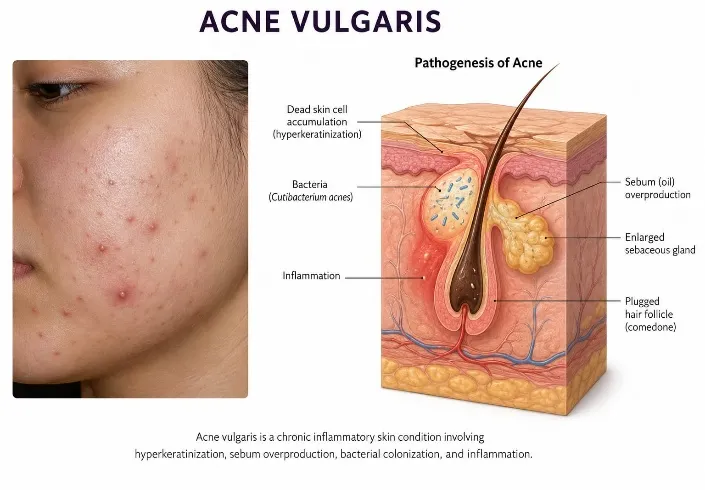
Figure 1. Formation of Acne Vulgaris
2.2 Etiology
The causes of acne vulgaris are:
2.3 Classification of Acne
Acne vulgaris can be classified by type and severity:9
2.4 Complications
Untreated or severe acne can cause scarring, post-inflammatory hyperpigmentation and persistent erythema.10
2.5 Diagnosis
The diagnosis of acne vulgaris is mainly based on history, lesion morphology, distribution and severity. Laboratory tests are not usually needed unless an underlying condition is suspected.2
2.6 Need for Novel Therapeutic Strategies
Current acne treatments have limitations, like resistance and local irritation.3 There is a need for therapeutic strategies, including topical formulations with natural bioactive compounds and advanced drug delivery systems.8 Herbal substance like curcumin, tea tree oil and aloe vera confirms, in treating acne vulgaris.4
3.NANOTECHNOLOGY IN TOPICAL DRUG DELIVERY
Nanotechnology has become an important approach in modern medicine because it improves drug delivery.11 In topical therapy, the skin's outer layer, called the stratum corneum, acts as a barrier that limits drug penetration.12 Nanotechnology-based carriers help drugs cross this barrier and reach deeper layers of the skin, improving drug absorption, effectiveness, and targeted delivery while reducing side effects.11
3.1 Overview
Nanotechnology is the branch of science that deals with the design, development, application of materials and systems with dimensions ranging from 1 to 100 nanometer (nm).13 In medicine, it improves drug delivery by enhancing drug stability, increasing effectiveness, and enabling targeted delivery with fewer side effects.11
3.2 Benefits of Nanotechnology in Topical Drug Delivery
There are benefits of using Nanotechnology in drug delivery.
Here are a few:
3.3 Nanocarriers Used in Topical Drug Delivery
There are kinds of nanocarriers used in drug delivery.
Here are a few:11
3.4 Role of Nanotechnology in Herbal Acne Treatment
Many herbal medicines used for acne, such as curcumin, have poor water solubility and low stability, which can reduce their effectiveness.7 Nanotechnology helps overcome these limitations by improving drug solubility, stability, and skin penetration. Nanocarriers also provide controlled and targeted drug release to the affected area, increasing therapeutic effectiveness while reducing side effects. As a result, nanotechnology enhances the overall performance of herbal anti-acne treatments and improves patient outcomes.11
4.NIOSOMES
Niosomes are microscopic vesicles made up of non-ionic surfactants and cholesterol. They form a bilayer structure on hydration and can encapsulate both hydrophilic and lipophilic drugs. Niosomes are widely used as drug carriers because they improve drug stability and enhance drug delivery. They were developed as a more stable, cost-effective, and easily prepared alternative to liposomes.8
4.1 Overview
Niosomes are closed vesicles. They are made when non-ionic surfactants get wet. Cholesterol helps make them stable. They can hold water-loving drugs inside and oil loving drugs outside.
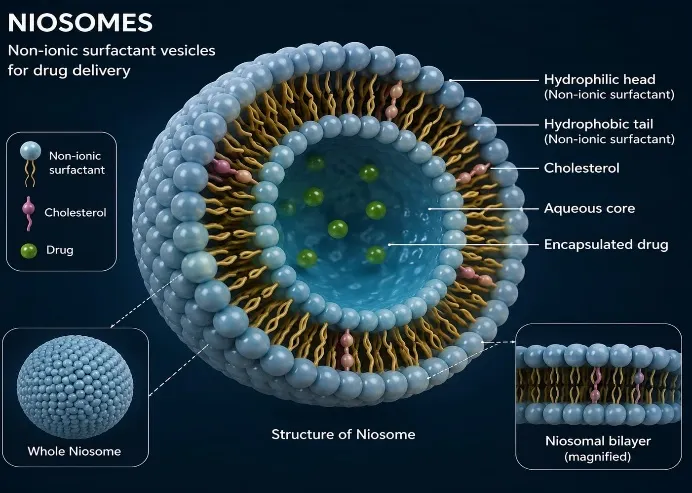
Figure 2. Structure of Niosome
4.2 Composition of Niosomes
In what niosomes are made of is very important. It affects how they form. how stable they are and how they release drugs.13
Non-ionic Surfactants
Non-ionic surfactants are the part of niosomes. They form the bilayer membrane.8 Some used surfactants are:
The surfactant used affects the size, stability and permeability of niosomes.13
Stearic acid
Stearic acid is added to niosomes to make them more stable. It reduces leakage and makes them less permeable.13
Hydration Medium
The liquid used to make niosomes affects how they form. It can be buffer, water or other liquids.13
4.3 Classification of Niosomes
Niosomes can be classified based on their size and layers:13
Each type has characteristics and release profiles.
4.4 Methods of Preparation
There are ways to make niosomes:13
4.5 Mechanism of Drug Entrapment
Niosomes can hold both water-loving and fat-loving drugs. The drugs are trapped inside or outside the niosomes.8
4.6 Mechanism of Skin Penetration
When niosomes are applied to the skin they interact with the skin surface. They can improve drug penetration and retention.14
4.7 Advantages of Niosomes
Niosomes have advantages:8
4.8 Limitations of Niosomes
Niosomes also have some limitations:13
4.9 Characterization of Niosomes
Niosomes need to be characterized to ensure their quality:13
4.10 Pharmaceutical Applications of Niosomes
Niosomes have medical applications:8
4.11 Niosomes in Acne Therapy
Niosomes can be used to treat acne. They can deliver drugs directly to the skin. Improve their penetration.14
4.12 Role of Niosomes in the Present Formulation
The present formulation uses niosomes to deliver curcumin and tea tree oil. Niosomes can improve the stability and penetration of these drugs.8
5.NIOSOMAL GEL
Niosomal gel contain niosomal vesicles in a gel base. They improve drug stability, enhance skin penetration, and provide sustained drug release.15 Aloe vera helps soothe the skin, reduce irritation, and support healing.6
5.1 Overview
A niosomal gel is a topical dosage form designed for application to the skin. It is prepared by incorporating drug-loaded niosomal vesicles into a suitable gel base.15 The gel helps the medicine stay in the skin and makes easier to use.
5.2 Composition of Niosomal Gel
A niosomal gel has parts:
Drug-Loaded Niosomes
These are tiny vesicles that carry the medicine. They helps to keep the medicine safe and release the drug slowly.15
Gel Base
This is the gel that the niosomal vesicles are mixed with. It helps the medicine to stay on the skin and makes it easier to apply.
Humectants and Moisturizers
These are ingredients that help keep your skin hydrated and feel good. They can also help the medicine spread evenly on the skin.
Preservatives
These are ingredients that helps to keep the medicine from spoiling. They prevent bacteria and other germs from growing in the medicine.
pH Adjusting Agents
These are ingredients that helps to keep the medicine at the pH level. This is important because the medicine pH must be same as the skin pH to work properly.
5.3 Benefits of Niosomal Gel
5.4 Mechanism of Niosomal Gel
When a niosomal gel is applied to the skin, it spreads evenly and adheres well to the skin surface. The drug is gradually released from the niosomal vesicles and penetrates into the skin. This prolonged release enhances drug retention at the application site, improves skin penetration, and increases therapeutic effectiveness.15
5.5 Dermal Penetration of Niosomal Gel
Niosomal vesicles enhance drug penetration into the skin and can reach hair follicles, making them effective for acne treatment. This improves drug delivery, reduces inflammation, and helps control acne-causing bacteria.14
5.6 Applications of Niosomal Gel in Herbal Medicine
Some herbal medicines do not work well on the skin; they are not soluble in water or do not penetrate into the skin well.7 Niosomal gel can carry the medicine into the skin and keep it there for a longer time.15
5.7 Aloe Vera in Niosomal Gel
Aloe vera soothes the skin, improves hydration, and enhances the effectiveness of niosomal gel. It also helps improve drug penetration and supports skin healing.6
5.8 Benefits of Curcumin-Tea Tree Oil Niosomal Gel with Aloe Vera
It helps the curcumin penetrate the skin better.15 It protects the tea tree oil from breaking down.5 Aloevera reduces irritation and makes skin feel better.6
5.9 Challenges in Formulating Niosomal Gels
Making niosomal gel can be tricky. It is important to make sure the niosomal vesicles do not break down and the medicine does not leak out. The gel needs to be the consistency. It is also important to make sure the medicine is stable and works over time.15
6.FORMULATION COMPONENTS
In this formulation curcumin and tea tree oil are the ingredients. Aloe vera is also added for its healing and therapeutic properties.16 Other ingredients like cleaners, cholesterol, solvents, gelling agents, preservatives and other medicine helpers are added. They increase stability and effectivess.15
6.1 Curcumin
Description
Curcumin is a compound found in Curcumalonga.7
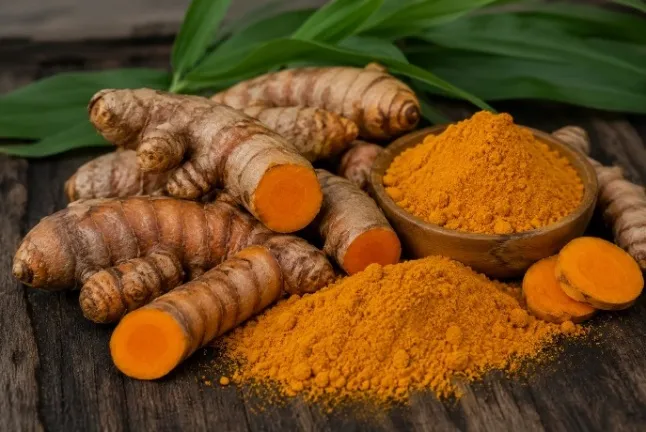
Figure 3. Curcumin
Role in the Formulation
Formulation Challenges
Curcumin has some challenges.
These are:
So, curcumin is put into vesicles. This helps overcome these limitations.8
6.2 Tea Tree Oil
Description
Tea tree oil is an oil from Melaleuca alternifolia.5
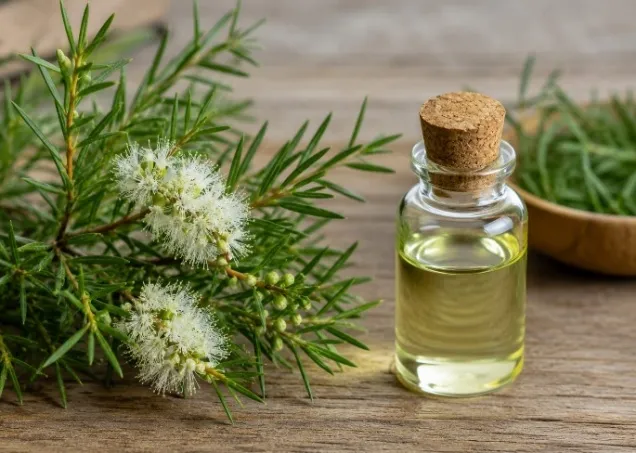
Figure 4. Tea Tree Oil
Role in the Formulation
Formulation Challenges
Tea tree oil has challenges.
These are:
Encapsulation of tea tree oil in vesicular systems helps improve its stability and reduce volatility.16
6.3 Aloe Vera
Description
Aloe vera is the medicinal plant.6
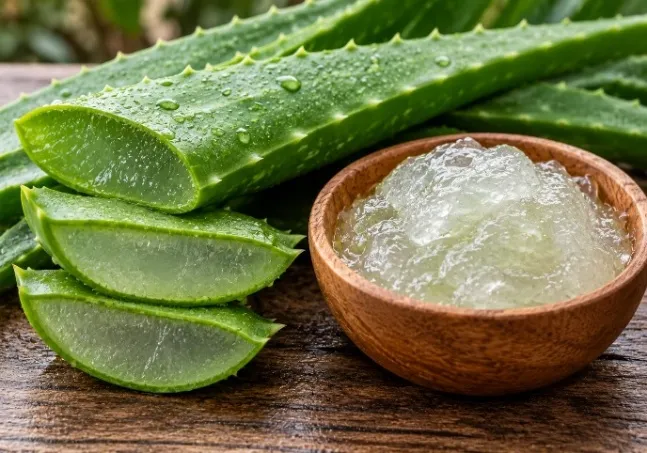
Figure 5. Aloe Vera
Role in the Formulation
Aloe vera provides:
6.4 Nonionic Surfactant
Nonionic surfactant helps to form vesicles.13
Used Surfactants
Role in the Formulation
Nonionic surfactant helps with:
6.5 Stearic acid
Description
Stearic acid is a membrane-stabilizing component.13
Role in the Formulation
Stearic acid:
6.6 Organic Solvent
Organic solvents are used during vesicle preparation.13
Examples
Role in the Formulation
Organic solvents help:
6.7 Hydration Medium
The hydration medium is essential for vesicle formation.13
Common Hydration Media
Role in the Formulation
The hydration medium contributes to:
6.8 Gelling Agents
Gelling agents provide the semisolid consistency required for application.17
Common Gelling Agents
Role in the Formulation
Gelling agents are responsible for:
6.9 Humectants and Penetration Enhancers
These improve hydration of the skin and drug permeation.17
Examples
Role in the Formulation
These agents help:
6.10 Preservatives
Preservatives prevent contamination. Improve product stability.17
Examples
Role in the Formulation
Preservatives contribute to:
6.11 pH Adjusting Agents
pH adjustment is essential to ensure compatibility with the skin.17
Examples
Role in the Formulation
These agents help:
6.12 Purified Water
Purified water serves as the aqueous vehicle.17
Role in the Formulation
Purified water contributes to:
6.13 Summary of Formulation Components
The formulation uses a combination of agents and pharmaceutical excipients.15 Curcumin provides Anti-inflammatory activity.7 Tea tree oil contributes by reducing the anti-acne microbes.5 Aloe vera offers moisturizing properties.6 They help to develop a patient-friendly gel, for topical anti-acne therapy.15
7. SYNERGY OF CURCUMIN, TEA TREE OIL AND ALOE VERA
The combination of curcumin, tea tree oil and aloe vera is an idea as each one has its own special benefits. When these are put together in a gel formulation, they can work together to make the treatment more effective. They help the skin to heal faster and reduce side effects.18
7.1 Science Behind Their Combined Effect
Curcumin, tea tree oil and aloe vera work together to help get rid of acne.18
7.2 Benefits of Formulating These Ingredients in a Gel
Curcumin and tea tree oil are not easy to use on their own. Curcumin doesn't dissolve well in water and doesn't penetrate into the skin easily.7 Tea tree oil can evaporate quickly and lose its effectiveness.5 The gel can help them penetrate the skin, reduce side effects and make the treatment more effective.15
7.3 Outcomes of This Treatment
The combination of curcumin, tea tree oil and aloe vera, in a gel can help get rid of acne by improving the overall therapeutic effectiveness through the complementary actions of these natural ingredients.18
8.METHODS OF PREPARATION OF CURCUMIN-TEA TREE OIL NIOSOMAL GEL
The preparation of a curcumin–tea tree oil niosomal gel containing an aloe vera base involves two main steps.19
First, curcumin- and tea tree oil-loaded niosomes are prepared using the thin-film hydration method. This method is widely used because it provides excellent reproducibility, high drug entrapment efficiency, and allows easy optimization of the formulation.13
In the second step, the prepared niosomes are incorporated into an aloe vera-based gel to obtain the final niosomal gel formulation.15
8.1 Selection of Materials
Selection of ingredients and pharmaceuticals excipient
Active Ingredients
Niosomal Components
Organic Solvents
Gel components
8.2 Preparation of Curcumin–Tea Tree Oil Niosomes
Thin-Film Hydration Method
It enables the formation of stable vesicles capable of efficiently encapsulating both hydrophilic and lipophilic compounds, making it particularly suitable for the preparation of curcumin–tea tree oil-loaded niosomes.13
Step 1: Preparation of the Organic Phase
The required quantities of surfactant (Span 60), Stearic acid, curcumin, and tea tree oil were accurately weighed and dissolved in a mixture of organic solvents, i.e., chloroform and methanol, to obtain a clear and homogeneous solution. This organic phase served as the precursor for the formation of the thin lipid film during the subsequent evaporation step.19
Step 2: Formation of the Thin Lipid Film
The organic solvent mixture was allowed to evaporate while the round-bottom flask was rotated manually by hand to ensure uniform distribution of the lipid components along the inner wall of the flask. Continuous manual rotation facilitated the formation of a thin and uniform lipid film as the organic solvents evaporated. The flask was then left until complete evaporation of the solvents before proceeding to the hydration step.19
Step 3: Hydration of Thin Film
The thin lipid film was hydrated with an appropriate volume of phosphate buffer solution (PBS, pH 7.4) or distilled water under gentle agitation. During hydration, the lipid film swelled and gradually detached from the inner wall of the flask, resulting in the spontaneous formation of multilamellar niosomal vesicles encapsulating curcumin and tea tree oil.13
Step 4: Size Reduction of Niosomes
The niosomal suspension was subjected to sonication using a bath sonicator to reduce the particle size and obtain a more uniform vesicle distribution. Bath sonication helped produce smaller and more homogeneous niosomes.20
Step 5: Storage of Niosomal Dispersion
The prepared niosomal dispersion was transferred to an air tight container and stored under refrigerated conditions (2–8°C) until further use.20
8.3 Preparation of Aloe Vera Gel Base
Prepare the gel base separately using a gelling agent.
Step 1: Hydration of Gelling Agent
The required quantity of Carbopol 934 was slowly dispersed in distilled water with continuous stirring to prevent lump formation and obtain a uniform dispersion. Leave it 24 hours for swelling.17
Step 2: Swelling of Polymer
The polymer dispersion was allowed to hydrate and swell completely until a smooth and uniform gel structure was obtained.17
Step 3: Addition of Auxiliary Ingredients
Humectants (e.g., propylene glycol or glycerin), preservatives, and aloe vera gel were added to the hydrated polymer dispersion with continuous stirring until a homogeneous gel was obtained.17
Step 4: pH Adjustment
Triethanolamine was added gradually to obtain the desired pH and form a homogeneous gel.17
8.4 Incorporation of Niosomal Dispersion into Aloe Vera Gel
The optimized curcumin–tea tree oil niosomal dispersion was slowly incorporated into the prepared aloe vera gel base with gentle stirring to ensure uniform distribution without disrupting the vesicular structure.15
8.5 General Flow Chart of Preparation
Selection of Active Ingredients and Excipients
↓
Preparation of Organic Phase
(Curcumin + Tea Tree Oil + Surfactant +Stearic acid)
↓
Formation of Thin Film
(Hand shaking method)
↓
Hydration of Thin Film
↓
Formation of Niosomal Suspension
↓
Sonication/Homogenization
↓
Preparation of Aloe Vera Gel Base
↓
Incorporation of Niosomal Dispersion
↓
Preparation of Curcumin–Tea Tree Oil
Niosomal Gel Enriched with Aloe Vera
↓
Evaluation and Characterization
9.EVALUATION PARAMETERS OF CURCUMIN- TEA TREE OIL NIOSOMAL GEL ENRICHED WITH ALOE VERA
Evaluation of pharmaceutical formulations is essential to ensure their quality, efficacy, safety, stability, and patient acceptability.21
9.1 Evaluation of Niosomes
Physical Appearance
The prepared niosomal dispersion should be visually examined for:
Visual examination provides preliminary information regarding formulation quality and stability.21
Particle Size Analysis
Principle
Particle size analysis is commonly performed using dynamic light scattering (DLS), which measures fluctuations in scattered light caused by the Brownian motion of particles.22
Significance
Particle size influences:
Smaller vesicles generally exhibit better penetration and therapeutic performance.22
Zeta Potential Analysis
Zeta potential evaluates the surface charge of vesicles and serves as an indicator of colloidal stability.22
Principle
The surface charge of the particles is determined by measuring their electrophoretic mobility.22
Significance
Zeta potential influences:
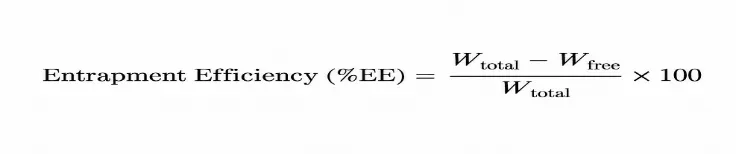
Entrapment Efficiency
Entrapment efficiency determines the percentage of drug successfully incorporated into the niosomal vesicles.13
Principle
Entrapped and unentrapped drug fractions are separated by centrifugation or ultracentrifugation, after which the drug content is determined.13
Calculation:
Where,
Wtotal = Total amount of drug added during formulation
Wtotal =Amount of free (un-entrapped) drug detected in the supernatant
%EE = Percentage of drug successfully entrapped within the noisome
Significance
Entrapment efficiency provides information regarding:
Drug Content Estimation
Drug content analysis determines the amount of active ingredient present in the formulation.21
Analytical Methods
Significance
Drug content estimation helps determine:
Morphological Evaluation
Morphological studies provide information regarding vesicle shape and surface characteristics.
Techniques
Significance
Morphological evaluation helps determine:
Polydispersity Index (PDI)
The polydispersity index determines the uniformity of particle size distribution.22
Significance
PDI values indicate:
Lower PDI values indicate a more uniform particle distribution.
9.2 Evaluation of Niosomal Gel
Physical Appearance
The prepared gel should be evaluated for:
pH Determination
The pH of topical formulations should be compatible with the physiological pH of skin.17
Significance
Appropriate pH helps:
Viscosity Measurement
Viscosity determines the flow behavior and consistency of the gel.17
Instrument
Significance
Viscosity affects:
Spreadability Study
Spreadability determines the ease with which the gel can be applied over the skin surface.17
Significance
Good spreadability contributes to:
Homogeneity Test
Homogeneity assessment ensures uniform distribution of active ingredients throughout the formulation.21
Significance
A homogeneous gel ensures:
9.3 Skin Irritation Study
Skin irritation studies evaluate the safety of the topical formulation.23
Parameters Evaluated
Significance
This evaluation ensures:
9.4 Significance of Evaluation Parameters in the Present Study
1. To evaluate the physicochemical properties of the niosomal gel.
2. To assess the quality of the formulation through particle size, zeta potential, entrapment efficiency, and drug content.
3. To determine the suitability and safety of the gel for topical application.
10.SUMMARY OF PUBLISHED RESEARCH STUDIES
Previous studies support the use of herbal niosomal formulations for acne therapy.24 Nanocarrier systems have been shown to improve drug stability, enhance skin penetration, provide sustained release, and increase the therapeutic efficacy of herbal bioactive compounds.8
Table 10.1: Comparative Analysis of the Herbal Components
|
Parameter |
Curcumin |
Tea Tree Oil |
Aloe Vera |
|
Source |
Curcuma longa |
Melaleuca alternifolia |
Aloe barbadensis |
|
Primary Activity |
Anti-inflammatory |
Antimicrobial |
Wound healing |
|
Antioxidant Activity |
Excellent |
Moderate |
Good |
|
Antimicrobial Activity |
Moderate |
Excellent |
Mild |
|
Anti-inflammatory Activity |
Excellent |
Excellent |
Excellent |
|
Wound-Healing Activity |
Good |
Moderate |
Excellent |
|
Solubility Issue |
Poor aqueous solubility |
Poor aqueous solubility and volatility |
Stable gel matrix |
|
Benefit of Niosomal Delivery |
Improved bioavailability |
Improved stability |
Supportive therapeutic action |
|
Role in Present Formulation |
Active anti-inflammatory agent |
Active antimicrobial agent |
Gel enhancer and healing agent |
Table 10.2: Advantages of Niosomal Delivery Compared with Conventional Topical
Formulations
|
Parameter |
Conventional Gel/Cream |
Niosomal Gel |
|
Drug Stability |
Moderate |
High |
|
Skin Penetration |
Limited |
Enhanced |
|
Drug Release |
Immediate |
Controlled and sustained |
|
Follicular Targeting |
Poor |
Excellent |
|
Drug Retention |
Low |
High |
|
Bioavailability |
Limited |
Improved |
|
Protection of Active Compounds |
Minimal |
Excellent |
|
Frequency of Application |
Frequent |
Reduced |
|
Therapeutic Efficacy |
Moderate |
Enhanced |
|
Patient Compliance |
Moderate |
Better |
10.3 Summary of Published Research Findings
The research that has been done and published shows that using nanotechnology to make treatments is better than the usual ways of treating acne.24 Treatments that use curcumin in a special tiny form work well to reduce inflammation and get rid of bad things that can hurt the skin.7 Treatments that use tea tree oil in a form are also very good at fighting off the bad things that can cause infections and last longer.5 Aloe vera is also very good for the skin because it helps heal wounds and makes the skin feel soft and not inflamed.6 The special tiny bags that deliver the medicine to the skin also work well because they help the medicine get into the skin really well and stay there for a long time and they release the medicine slowly which makes the treatment work better. Nanotechnology-based herbal formulations like these are very good, for treating acne.24
The available evidence strongly supports the development of a curcumin–tea tree oil niosomal gel enriched with aloe vera as a rational and promising approach for topical anti-acne therapy. The combination of these herbal bioactive agents within a niosomal delivery system may provide synergistic therapeutic effects while overcoming the limitations associated with conventional formulations.24
11.FUTURE PERSPECTIVES
Herbal nanotechnology-based drug delivery systems show great promise for acne treatment.24 A curcumin-tea tree oil niosomal gel enriched with aloe vera offers improved skin penetration, controlled drug release, enhanced stability, and reduced side effects.8 However, further preclinical and clinical studies are needed to confirm its safety, efficacy, and longterm stability.25
Future research should focus on targeted nanocarriers, formulation optimization, large-scale production, and clinical translation. This system may also have potential applications in wound healing, inflammatory skin disorders, and cosmetic skincare.25
CONCLUSION
Acne vulgaris is a common inflammatory skin disorder that affects quality of life.1 Although conventional treatments are available, they may cause side effects and antibiotic resistance, highlighting the need for safer alternatives.3 Herbal agents such as curcumin, tea tree oil, and aloe vera possess antimicrobial, anti-inflammatory, antioxidant, and wound-healing properties, but their therapeutic use is limited by poor stability and low skin penetration.18
Niosomal drug delivery systems can overcome these limitations by improving drug stability, skin penetration, and controlled release.8 This review highlights the potential of a curcumin-tea tree oil niosomal gel enriched with aloe vera as a promising topical approach for acne management.24 Further clinical studies are needed to establish its safety and therapeutic efficacy.25
ACKNOWLEDGMENT
The authors sincerely acknowledge Mrs. Anju K. P., Assistant Professor, Department of Pharmaceutics, Spurthy College of Pharmacy, Bengaluru, for her outstanding guidance, unwavering encouragement, and continuous support throughout the preparation of this review article. As our project guide, her insightful suggestions, patient mentorship, and constant motivation played a pivotal role in shaping this work. Her confidence in our abilities and her dedication to academic excellence inspired us to overcome challenges and complete this review successfully.
The authors also acknowledge the Department of Pharmaceutics, Spurthy College of Pharmacy, Bengaluru, for providing the academic environment and necessary support during the preparation of this review article.
CONFLICT OF INTEREST
The authors declare that there are no conflicts of interest related to the publication of this review article.
REFERENCES

Anju K P, Swetha V, Navyashree V, Chandana V, Amaldev K M, Abin T S, Polyherbal Niosomal Gel for Anti-Acne Therapy: Recent Advances in Curcumin, Tea Tree Oil, and Aloe Vera-Based Topical Delivery, Int. J. of Pharm. Sci., 2026, Vol 4, Issue 7, 5337-5556, https://doi.org/10.5281/zenodo.21671939
 10.5281/zenodo.21671939