

We use cookies to ensure our website works properly and to personalise your experience. Cookies policy
Faculty of Pharmacy, The Maharaja Sayajirao University of Baroda.
Polymeric biomaterials have emerged as a vital component in the advancement of modern drug delivery systems owing to their remarkable biocompatibility, biodegradability, and adaptable physicochemical properties. These materials, derived from both natural and synthetic sources, enable controlled, sustained, and targeted delivery of therapeutic agents, thereby enhancing drug efficacy while minimizing adverse effects. Recent developments have focused on smart and stimuli-responsive polymeric systems that can respond to environmental triggers such as pH, temperature, enzymes, and redox conditions, allowing site-specific and on-demand drug release. Furthermore, the integration of nanotechnology has led to the development of advanced delivery platforms such as polymeric nanoparticles, nanofibers, hydrogels, dendrimers, and DNA-based nanostructures, which offer improved drug loading, stability, and targeting efficiency. Innovations in fabrication techniques, including microfabrication and molecular imprinting, have further expanded the potential of polymeric biomaterials in personalized medicine. Despite these advancements, challenges such as biocompatibility concerns, large-scale production, and regulatory barriers persist. Overall, polymeric biomaterials continue to play a transformative role in the development of next-generation drug delivery systems with enhanced therapeutic outcomes and patient compliance.
Biomaterials are specifically engineered compounds that engage with biological systems for medicinal applications, especially in medication delivery. These materials may originate from natural sources or be synthetically manufactured, and in certain instances may incorporate biological elements such as cells integrated into polymer scaffolds. In the last sixty years, biomaterials have advanced considerably due to interdisciplinary collaboration among engineers, chemists, physicists, biologists, and doctors. Their advancement has facilitated the regulated and effective administration of a diverse array of therapeutic agents, including antibodies, peptides, vaccines, enzymes, and traditional pharmaceuticals. Biomaterials enhance therapeutic efficacy and reduce negative effects by increasing the pharmacokinetic profile and stability of certain medicines(Keane & Badylak, 2014).
A significant benefit of biomaterials in drug delivery is their capacity for controlled and sustained drug release. Advanced formulations, including polymeric nanoparticles, liposomes, dendrimers, and hydrogels, facilitate prolonged drug release, hence decreasing administration frequency and enhancing patient adherence. Moreover, biomaterials can be designed to react to physiological circumstances, like pH, temperature, or enzyme activity, facilitating targeted and stimuli-responsive drug release. This focused strategy lowers systemic exposure and toxicity, guaranteeing that the medication effectively reaches the designated location of action(Zhong et al.,2023).
Biomaterials are primarily categorised into three principal types: polymers, ceramics, and metals. Polymeric biomaterials, encompassing natural polymers (e.g., chitosan, alginate, and gelatin) and synthetic polymers (such as PLA, PLGA, and PEG), are predominantly utilised in drug delivery owing to their versatility, biocompatibility, and biodegradability. Ceramics, such as calcium phosphates and bioactive glasses, together with metals like titanium and stainless steel, are predominantly employed in orthopaedic and dental applications for hard tissue substitution. Nonetheless, their function in drug delivery is constrained relative to polymers, although they may act as carriers or coatings in specific specialised applications(Hotaling et al., 2015).
Recent progress in biomaterials for drug delivery has been propelled by breakthroughs in organic and synthetic chemistry, materials science, genetic engineering, and biotechnology. These advancements have resulted in the creation of intelligent biomaterials with improved functionality, including self-assembling systems, nanocarriers, and bioresponsive materials. Lipid-based carriers, such as liposomes and solid lipid nanoparticles, have become prominent for the delivery of both hydrophilic and hydrophobic pharmaceuticals. Likewise, polymer-based nanocarriers can be modified with ligands to facilitate active targeting of tissues or cells, such as cancer cells, hence enhancing therapeutic efficacy. A significant domain of progress is the amalgamation of biomaterials with biological systems, including tissue engineering and regenerative medicine. Biomaterial scaffolds can be engineered to facilitate cell proliferation and tissue regeneration while concurrently administering growth factors or pharmaceuticals in a regulated fashion. This dual functioning is very advantageous in wound healing, bone regeneration, and cancer treatment. The integration of nanotechnology has facilitated the development of highly accurate medication delivery devices that can traverse biological barriers and administer pharmaceuticals at the cellular or subcellular level.
In summary, biomaterials have transformed medication delivery by facilitating controlled, targeted, and efficient administration of medicinal substances. Their categorisation into polymers, ceramics, and metals illustrates their varied applications, with polymeric biomaterials predominantly utilised in drug delivery systems. Ongoing developments in research and technology are anticipated to augment the possibilities of biomaterials, facilitating more personalised and effective treatments with diminished side effects(Tran et al., 2015).
2. TYPES OF BIOMATERIALS
2.1 Metallic Elements
Metals are among the most widely employed biomaterials, especially for load-bearing applications, owing to their exceptional mechanical strength, durability, and fatigue resistance. They are extensively utilised in orthopaedic treatments, where metallic implants are crucial for structural support and functional restoration. These implants vary from basic devices like wires and screws to more intricate systems, including fracture fixation plates and whole joint prostheses for the hip, knee, shoulder, and ankle. In addition to orthopaedics, metallic biomaterials are utilised in general surgical operations, maxillofacial reconstruction, and dentistry applications. Metals frequently utilised in biomedical applications including stainless steel, commercially pure titanium and its alloys, and cobalt-based alloys, all of which demonstrate superior biocompatibility, corrosion resistance, and mechanical integrity(Pilliar, 2021).
2.2 Ceramics and Glass
Bioceramics, utilised in biomedical applications, are essential for the repair and regeneration of impaired or pathological musculoskeletal tissues. These materials are categorised into bioinert, bioactive, and bioresorbable ceramics according to their interaction with biological systems. Bioinert ceramics, like alumina and zirconia, offer superior strength and stability, whereas bioactive ceramics are capable of establishing direct interactions with adjacent tissues. Bioresorbable ceramics, including tricalcium phosphate (TCP), progressively deteriorate and are supplanted by natural tissue over time. Bioceramics demonstrate many modes of adhesion to host tissue, encompassing morphological fixing, biological fixation, and bioactive bonding. Moreover, bioactive glasses, predominantly consisting of silica-based frameworks (SiO? units), constitute a multifaceted category of biomaterials. These glasses are frequently integrated into supporting matrices to construct prosthetic devices for hard tissue applications. Their superior biocompatibility, osteoconductivity, and mechanical qualities render them exceptionally appropriate for orthopaedic and dental prosthetics(Elshazly et al., 2024).
2.3 Composites
Composite biomaterials are formed by amalgamating two or more disparate materials to attain superior mechanical, physical, and biological characteristics. Carbon nanotube (CNT)-based composites have garnered considerable interest owing to their remarkable electrical conductivity, mechanical strength, and distinctive surface properties. Carbon nanotubes can demonstrate superconductivity along particular axes when combined with materials like zeolites. These composites can be produced utilising many matrices, including polymers, ceramics, glass, and carbon, reinforced with fibres such as silicon carbide (SiC), stainless steel, or phosphate glass. Additionally, composite coatings can be utilised on metallic implants to enhance surface characteristics including porosity, packing density, and corrosion resistance. This alteration mitigates metal ion leaching and improves the implant's overall efficacy and durability(Bhong et al., 2023).
2.4 Polymers
Polymers constitute a highly diverse category of biomaterials and are widely employed in the packaging and encapsulation of implantable medical devices. Biocompatible and biostable polymers are essential for safeguarding electronic components in devices against moisture, ions, and other physiological influences. Essential qualities necessary for these applications encompass regulated gas permeability and hydrophobicity. Numerous polymers are extensively employed in biological applications owing to their advantageous characteristics. Polyvinylidene fluoride (PVDF) is esteemed for its chemical inertness, robust piezoelectric characteristics, and exceptional resistance to hydrolytic degradation, in addition to its considerable mechanical strength and rigidity. Polyethylene, especially in its high-density porous variant, demonstrates superior biocompatibility, elasticity, and anti-infective qualities, in addition to advantageous drying and processing attributes. Polypropylene is a commonly utilised polymer recognised for its non-toxic characteristics, elevated melting point, and exceptional dielectric properties. Polymethyl methacrylate (PMMA) is lightweight, structurally robust, and radiolucent, albeit possessing relatively low thermal and electrical conductivity. Silicone polymers provide superior electrical insulation, elevated gas permeability, hydrophobic properties, and minimal toxicity, rendering them appropriate for various biomedical applications. Moreover, liquid crystal polymers provide benefits including chemical inertness, flame resistance, little moisture absorption, compatibility with imaging modalities such as MRI, and the capacity to be manufactured into thin, flexible layers(Jagur?Grodzinski, 2006).
3. CLASSIFICATIONS OF POLYMERIC BIOMATERIALS USED IN DRUG DELIVERY(Jagur?Grodzinski, 2006)
1. Based on Origin
(a) Natural Polymers
1. Protein Based Polymer: Collagen, Albumin, Gelatin
2. Polysaccharides: Alginate, Cyclodextrin, Chitosan, Dextran, Agarose, Hyaluronic acid, Starch, Cellulose
(b) Synthetic Polymers
1. Polyester: Poly lactic acid, Poly glycolic acid, Poly hydroxyl butyrate, Polycaprolactone, Poly lactide-co-glycoside, Poly diaxonone
2. Polyanhydride: Poly adepic acid, Poly sebacic acid, Poly terpthalic acid
3. Poly amides: Poly amino acid, Poly imino carbonate
2. Based on Drug Delivery
a) Oral Drug Delivery: e.g. Chitosan
b) Ocular Drug Delivery: e.g. alginate, fibrin, CS, collagen, and gelatine
c) Drug Delivery to Ear: e.g. poly (2-hydroxyethyl aspartamide), carboxymethyl cellulose
d) Pulmonary Drug Delivery: e.g. Chitosan-based aerosolized preparations
e) Transdermal Drug Delivery: Cellulose, CS, gelatine, starch
f) Central Nervous System Drug Delivery: PLGA, PEG, PCL, N-(2-hydroxypropyl)-Methacrylate copolymers (HPMAs), poly (lactic acid) (PLA), poly (glutamic acid) (PGA) poly (amino acids), and Polyanhydride
g) Cardiovascular Drug Delivery: Polyamides, Polyolefin, Polyester, Polyurethanes
h) Drug Delivery for Wound Closure: CS, collagen, elastin, and fibrinogen
i) Localized Drug Targeting: Poly anhydride poly [bis (p-carboxy-phenoxy)propane-sebacic acid.
4. APPLICATION OF POLYMERIC BIOMATERIALS IN DRUG DELIVERY
Polymeric biomaterials play a crucial role in drug delivery systems due to their versatility, biocompatibility, and ability to provide controlled and targeted drug release in Table 1. They are widely used across various routes of administration, including oral, transdermal, injectable, pulmonary, and ocular delivery. These polymers can enhance drug stability, improve bioavailability, and enable sustained release, thereby reducing dosing frequency and side effects. Advanced polymeric systems such as nanoparticles, hydrogels, micelles, and nanofibers also facilitate site-specific delivery, particularly in cancer therapy and gene delivery, making them essential components in modern and precision medicine.
Table 1: Various applications of polymeric biomaterials in drug delivery
|
Sr. No. |
Application Area |
Polymeric Biomaterials Used |
Key Features / Role |
Examples |
Reference |
|
1 |
Oral Drug Delivery |
Chitosan, Alginate, Cellulose derivatives |
Enhances bioavailability, protects drug from degradation, controlled release |
Gastroretentive tablets, polymer-coated capsules |
(Das et al., 2021) |
|
2 |
Transdermal Drug Delivery |
PVA, PEG, Hydrogels, Silicone |
Controlled release through skin, bypasses first-pass metabolism |
Transdermal patches, microneedles |
(Liu et al., 2024) |
|
3 |
Injectable Drug Delivery |
PLGA, Hydrogels, Polyanhydrides |
Sustained and localized drug delivery, reduced dosing frequency |
Microspheres, in situ gels |
(Cai et al., 2024) |
|
4 |
Targeted Drug Delivery |
PEG, Dendrimers, Ligand-functionalized polymers |
Site-specific delivery, reduces toxicity, improves therapeutic efficiency |
Cancer-targeting nanoparticles |
(Lee et al., 2017) |
|
5 |
Controlled/Sustained Release |
PLA, PGA, PLGA |
Maintains drug concentration over time, improves compliance |
Matrix tablets, reservoir systems |
(Olamide Ishola et al., 2026) |
|
6 |
Gene and Protein Delivery |
PEI, Chitosan, Polylysine |
Protects biomolecules, enhances cellular uptake, non-viral delivery |
DNA/RNA delivery systems |
(Wu et al., 2025) |
|
7 |
Ocular Drug Delivery |
Hydrogels, Collagen, Alginate |
Improves retention time and bioavailability in eye |
Ocular inserts, drug-loaded contact lenses |
(Franco & De Marco, 2021) |
|
8 |
Pulmonary Drug Delivery |
Chitosan, PLGA, PEG |
Direct lung delivery, rapid onset, localized effect |
Inhalable nanoparticles, aerosols |
(Alwahsh et al., 2024) |
|
9 |
Wound Healing & Tissue Engineering |
Collagen, Gelatin, Nanofibers, Hydrogels |
Supports tissue regeneration and controlled drug release |
Wound dressings, scaffolds |
(Ndlovu et al., 2021) |
|
10 |
CNS Drug Delivery |
PLGA, PEG, Poly(amino acids) |
Crosses blood-brain barrier, targeted brain delivery |
Nanoparticles for neurodegenerative diseases |
(Patel & Patel, 2017) |
5. ADVANCEMENT IN POLYMERIC BIOMATERIAL
5.1 Stimuli-Responsive Biomaterials
Smart components are stimuli-responsive biomaterials that demonstrate reversible chemical transitions and fundamental alterations in properties upon exposure to diverse triggers (such as temperature, magnetic field, pH, etc.), ultimately affecting drug release in Fig 1. Intelligent biomaterials have numerous benefits compared to traditional medication delivery systems. The primary objectives include enhanced medication regulation, improved drug absorption and targeting, reduced toxicity, efficient hydrophobic drug delivery, and greater efficacy and patient adherence. The primary issues with this on/off release method are that the trigger can occur at the site of application, smart biomaterials are designed to respond promptly to the trigger at optimal intensities, and the trigger-mediated transitions are reversible.
Various surface modification approaches are utilised to impart stimuli responsiveness to biomaterials, including self-assembled monolayers, thin polymeric network films, grafting, and layer-by-layer assembly. Stimuli-responsive biomaterials can be designed in diverse configurations through noncovalent interactions, either triggered or untriggered: (1) self-assembling structures/peptides, (2) host-guest complex systems, such as recently developed cucurbit[n]uril-type molecular containers and cryptand recognition-based mechanically interlocked host-organic guest systems; (3) high-affinity hydrogen bonding-based supramolecules; and (4) metal ion-ligand coordination systems(Balcerak-Wo?niak et al., 2024)
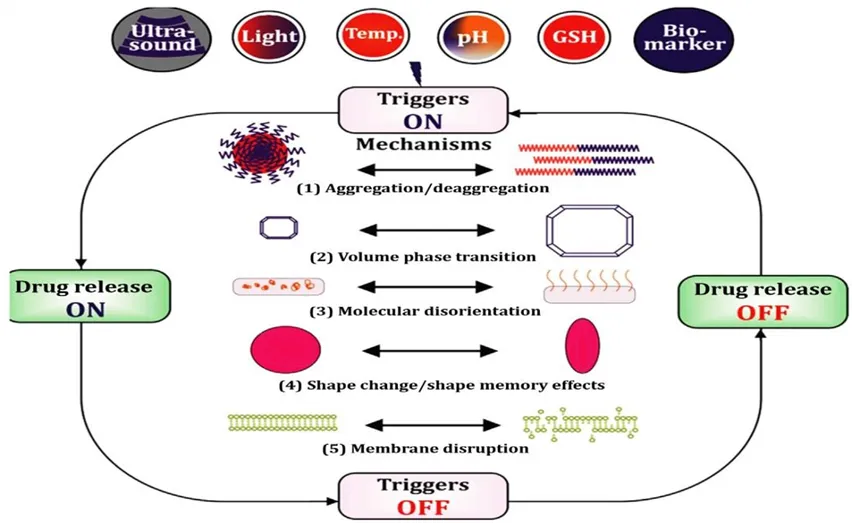
Fig 1: Stimuli-responsive polymeric biomaterials showing how external and internal triggers (e.g., pH, temperature, light, ultrasound, GSH, and biomarkers) regulate drug release through structural and physicochemical changes.
5.1.1 Biomaterials Responsive to Physical Stimuli
Physical stimulus-responsive biomaterials are sophisticated polymeric systems that exhibit reversible physicochemical alterations in reaction to external physical stimuli, including temperature, magnetic fields, electrical impulses, mechanical stress, and ultrasound. These modifications change polymer structure, solubility, or interactions, facilitating accurate and regulated medication release at the targeted location(Liao et al., 2025).
a) Thermo-Responsive Biomaterials
Thermo-responsive polymers demonstrate reversible alterations in their structure and characteristics in reaction to temperature fluctuations. These modifications encompass variations in intramolecular hydrogen bonding, solubility, and polymer chain conformation, resulting in swelling or shrinking behaviour that can be utilised for controlled drug release. These polymers are often categorised into three classifications:
Thermosensitive liposomes are extensively investigated nanocarriers for medication delivery. ThermoDox, a temperature-sensitive liposomal version of doxorubicin, has being studied for oncological treatment. Localised thermal methods, including radiofrequency ablation, microwave hyperthermia, and high-intensity focused ultrasound (HIFU), are employed to initiate medication release. At elevated temperatures (40°C), embedded chemicals such as ammonium carbonate breakdown, producing gas that compromises the liposomal barrier and promotes drug release(Luckanagul et al., 2021).
b) Magnetically Responsive Biomaterials
Magnetic-responsive biomaterials comprise magnetic nanoparticles, usually magnetite (Fe?O?) or maghemite (Fe?O?), that react to external magnetic fields. These nanoparticles demonstrate superior dispersion, stability, and reduced aggregation under alternating magnetic fields. Drug delivery methods utilising superparamagnetic iron oxide nanoparticles (SPIONs) can facilitate regulated drug release via mechanisms like magnetic heating or mechanical deformation. Hydrophobic pharmaceuticals encapsulated in Pluronic-F127 micelles and integrated into ferrogels can be released via compression caused by a magnetic field. Silica-coated magnetic nanoparticles, functionalised with thermosensitive polymers, can improve medication release when subjected to alternating magnetic fields. These systems have demonstrated potential applications in cancer treatment, including tumour inhibition via ferrite-based nanocrystals(Li et al., 2020).
c) Electrical-Responsive Biomaterials
Electrical-responsive biomaterials employ electroactive polymers (EAPs) such polypyrrole, polyaniline, and polyazulene, which react to applied electrical stimuli. These polymers experience redox reactions and structural alterations that enable drug release via several processes, including ion-driven diffusion, electroerosion, and electroporation. These systems facilitate regulated, pulsatile, or on-demand administration of pharmaceuticals. Electroresponsive hydrogels have exhibited improved drug release, such as phenytoin sodium, owing to heightened ionisation in the presence of an electric field. Furthermore, nanocomposite films that integrate graphene oxide with conducting polymers have prolonged and regulated drug release characteristics. Nonetheless, constraints encompass diminished drug loading capacity attributed to charge interactions and the loss of polymer conductivity following repeated stimulation cycles(Piccirillo & Pullar, 2025).
d) Mechanical-Responsive Biomaterials
Mechanical-responsive biomaterials react to physical forces, including pressure, compression, or shear stress. These forces elicit structural modifications, including aggregation, disaggregation, or phase transitions, leading to drug release.
Despite being under preliminary examination, these technologies exhibit promise in targeted therapeutics. Cyclodextrin-alginate complexes can release pharmaceuticals when subjected to mechanical compression. Likewise, liposomes may disintegrate under elevated shear stress conditions, such as those present in atherosclerotic blood arteries, facilitating targeted medication release. Nanoparticle aggregates may break into smaller units when subjected to shear stress, rendering them beneficial for applications such as thrombosis therapy(Rouhbakhsh & Sedghi, 2025).
e) Ultrasound-Responsive Biomaterials
Ultrasound-responsive biomaterials employ acoustic waves (frequency >20 kHz) to initiate medication release. Ultrasound waves can infiltrate deep tissues and elicit both mechanical and thermal responses. Mechanical impacts encompass cavitation (the production and oscillation of bubbles), sonic streaming, and sonoporation, which augment drug permeability through biological membranes. Microbubble systems, comprising gas-filled cores encased in polymer or lipid shells, are extensively utilised for ultrasound-mediated medication delivery. For instance, microbubbles composed of perfluoropentane (PFP) and coated with PEG-PLLA have shown efficient delivery of anticancer agents such as paclitaxel when subjected to ultrasound stimulation. Thermal effects from concentrated ultrasound can induce localised heating, facilitate drug release or directly obliterate cancer cells. These systems have demonstrated promise uses in oncology and cardiovascular therapies by improving medication absorption and therapeutic efficacy(Ma et al., 2026).
5.1.2 Chemical Stimuli-Responsive Biomaterials
Chemical stimuli-responsive biomaterials are sophisticated polymeric systems engineered to react to chemical alterations in the biological milieu, including fluctuations in pH and redox states. These systems experience physicochemical changes that initiate controlled and site-specific drug release, rendering them very appropriate for targeted therapy(Badeau & DeForest, 2019a).
a) pH-Responsive Biomaterials
pH-responsive biomaterials are engineered to utilise the inherent pH fluctuations found in various physiological and pathological conditions within the body. These polymers possess ionisable functional groups that react to pH variations, resulting in structural and physicochemical alterations. These polymers are categorically divided into:
Anionic polymers, such as polyacrylic acid (PAAc) and polyaspartic acid, possess weak acidic groups that release protons at elevated pH levels, leading to ionisation and subsequent swelling. Cationic polymers (e.g., poly (β-amino ester), poly(L-histidine)) possess basic groups that take protons under acidic conditions, resulting in modifications of charge and structure. When subjected to different pH settings, these polymers experience protonation, deprotonation, charge reversal, and bond cleavage. These modifications lead to conformational changes in polymer chains, resulting in either swelling or contraction of the polymeric network, thus promoting drug release. PAAc (pKa = 4.25) undergoes ionisation at elevated pH, resulting in the expansion of the polymer matrix and consequent drug release.
The human body displays notable pH gradients across many compartments, including lysosomes (pH 4.5–5), Golgi apparatus (~6.4), and cytosol (~7.4). Moreover, pathological situations such as tumours, infections, and irritated tissues frequently display acidic environments. pH-responsive systems are extremely advantageous in targeted medication delivery, notably in cancer treatment(Karimi et al., 2016).
PLGA-b-polyhistidine-b-PEG triblock copolymer nanoparticles have been engineered for antibiotic administration, exhibiting charge-switching behaviour in acidic infection environments, hence improving bacterial uptake. Likewise, tumour tissues display an acidic microenvironment resulting from heightened glycolysis (Warburg effect), facilitating the utilisation of pH-responsive nanocarriers. Advanced systems, such as pillararene-integrated upconversion nanoparticles (UCNPs), have exhibited effective delivery of anticancer agents like doxorubicin by protonation-induced structural collapse in acidic tumour microenvironments(Ow et al., 2025).
b) Redox Responsive Biomaterials
Redox-responsive biomaterials are engineered to react to variations in redox potential between intracellular and extracellular environments, especially in pathological tissues. These systems are particularly beneficial in cancer and gene therapy applications. The principal redox system in biological cells comprises the glutathione (GSH)/glutathione disulphide (GSSG) pair, governed by enzymes including glutathione reductase and cofactors such as NADP?/NADPH. Additional significant redox systems comprise thiol/disulfide pairs (e.g., cysteine/cystine) and thioredoxin systems (Trx-1 and Trx-2). Moreover, reactive oxygen species (ROS), including hydrogen peroxide, superoxide radicals, and hydroxyl radicals, have a role in redox fluctuations, particularly in pathological states such as inflammation, atherosclerosis, and cancer(Tyagi et al., 2021).
A fundamental characteristic utilised in redox-responsive drug delivery is the markedly elevated intracellular concentration of GSH relative to extracellular levels, with tumour cells frequently displaying GSH concentrations up to fourfold greater than those of normal cells. This gradient facilitates targeted medication release within certain cells. Redox-responsive systems are generally constructed with disulphide bonds, thiol linkages, or other redox-sensitive entities that experience cleavage or alteration in reaction to the intracellular reducing milieu. These systems can be characterised as micelles, liposomes, dendrimers, mesoporous silica nanoparticles (MSNs), or nanogels. Redox-sensitive micelles containing disulphide connections can disintegrate into hydrophilic components upon exposure to GSH, resulting in the liberation of hydrophobic medicines. Shell-detachable micelles exhibit improved doxorubicin release in multidrug-resistant cancer cells. Likewise, GSH-responsive MSNs modified with RGD peptides through disulphide bonds provide targeted delivery and regulated release by bond cleavage. Cross-linked micelles containing hydrophobic medicines such as camptothecin exhibit effective drug release by redox-induced cleavage of disulphide bonds(Tyagi et al., 2021).
5.1.3 Biologically Responsive Biomaterials to Stimuli
Biological stimuli-responsive biomaterials are sophisticated drug delivery devices that react to biological signals, such biomolecules or enzymes found within the body. These technologies utilise differences in biological settings between healthy and pathological conditions, facilitating accurate, targeted, and regulated medication delivery. Their enhanced selectivity, biocompatibility, and capacity to replicate natural biological processes render them exceptionally useful in advanced drug delivery applications(Badeau & DeForest, 2019b).
a) Biomolecule-Responsive Biomaterials
Biomolecule-responsive biomaterials are engineered to react to variations in endogenous biomolecules, including glucose, adenosine triphosphate (ATP), deoxyribonucleic acid (DNA), and reactive oxygen species (ROS). The levels of these biomolecules differ markedly between normal physiological conditions and diseased ones, establishing a foundation for targeted medication release via molecular recognition processes.
These methods employ distinct interactions between the biomaterial and target biomolecules, facilitating analyte-activated medication delivery. An exemplary case is the advancement of glucose-responsive insulin delivery devices for diabetes control. A multitude of methodologies have been utilised in the creation of such systems, including(Sharifzadeh & Hosseinkhani, 2017):
These systems exhibit self-regulated drug release; nevertheless, certain methods, especially those based on phenylboronic acid, may necessitate elevated glucose concentrations for optimal activation(Miyata et al., 2006).
b) Enzyme-Responsive Biomaterials
Enzyme-responsive biomaterials are engineered to experience physicochemical changes in reaction to enzymes. Due to the variability of enzyme expression across tissues and its frequent elevation in specific clinical states, these systems provide significant selectivity and efficiency for targeted drug delivery. Enzymes include proteases, lipases, and glycosidases are frequently utilised in these systems. Proteases, such as matrix metalloproteinases (MMPs), are overexpressed in cancer and inflammatory disorders. This characteristic has been employed to build nanoparticles with enzyme-sensitive peptide linkers that release medicines selectively at pathological locations. Anticancer agents, including doxorubicin (DOX) and aminoglutethimide (AGM), have been attached to polymer backbones by enzyme-sensitive linkers, facilitating regulated drug release upon enzymatic cleavage. Likewise, liposome-based systems can be designed to react to enzymes such as phospholipase A2 (PLA2), which is released by bacteria like Helicobacter pylori in gastrointestinal ailments. PLA2 facilitates the rupture of the liposomal membrane, leading to localised drug release at the site of infection(Wang et al., 2022).
Moreover, glycosidase-responsive systems, including β-D-galactosidase-sensitive nanocarriers, have exhibited improved and regulated drug delivery, such as doxorubicin, in cancer cell lines. Hybrid systems such as mesoporous silica nanoparticles (MSNs) enhance targeted efficacy and the precision of medication release(Sobczak, 2022).
6. Intelligent Drug Delivery Systems
Intelligent drug delivery systems signify a substantial improvement over traditional distribution methods by integrating responsiveness, adaptability, and precision into therapeutic administration. These systems are engineered to administer pharmaceuticals at the correct location, at the optimal concentration, and at the designated time, thus enhancing therapeutic effectiveness while reducing unwanted effects. Through the integration of advanced biomaterials, nanotechnology, and molecular recognition strategies, intelligent systems can dynamically respond to physiological variables and external stimuli, facilitating controlled and targeted medication delivery. An essential characteristic of intelligent drug delivery systems is their capacity to identify and engage with biological targets via molecular recognition processes. This is frequently accomplished using functionalised polymers that can selectively attach to specific chemicals, receptors, or cells. Molecular imprinting techniques facilitate the fabrication of polymer matrices including extremely selective binding sites that emulate natural antibodies. These methods optimise medication targeting, minimise off-target effects, and boost the overall therapeutic index, especially in conditions such as cancer where selective targeting is essential(Zhu et al., 2025). Another significant facet of intelligent systems is their dependence on stimuli-responsive mechanisms that initiate drug release in reaction to internal or external inputs. These triggers may encompass fluctuations in pH, temperature, enzymatic activity, redox potential, or externally applied stimuli such as magnetic fields, ultrasound, or electrical signals. Upon detecting these stimuli, the polymeric carrier experiences structural or chemical alterations, resulting in regulated drug release. This responsiveness facilitates site-specific distribution and on-demand drug administration, rendering these devices exceptionally efficient and adaptable. Nanotechnology is essential for the advancement of intelligent drug delivery systems by facilitating the creation of nanoscale carriers, including nanoparticles, micelles, liposomes, and nanogels. These nanocarriers provide a substantial surface area, increased drug loading capacity, and greater stability. Furthermore, they may undergo surface modification with ligands for active targeting or be designed to utilise passive targeting processes, such as the improved permeability and retention effect in tumour tissues. This nanoscale accuracy markedly improves drug absorption and therapeutic results(Shishir et al., 2021). Advanced fabrication processes enhance the development of intelligent medication delivery systems. Techniques like microfabrication, 3D structuring, and the formulation of multifunctional hybrid materials facilitate the construction of intricate delivery systems with exact regulation of drug release kinetics. Microneedles, microfluidic devices, and implanted reservoirs offer novel methods for drug delivery, enhancing patient adherence and facilitating minimally invasive treatments. These technologies facilitate the advancement of personalised medicine by customising drug delivery systems to meet the specific demands of individual patients(Siddique et al., 2026). Notwithstanding their great potential, intelligent drug delivery systems encounter numerous difficulties that restrict their extensive clinical application. Challenges include biocompatibility, long-term safety, production scalability, and regulatory approval persist as substantial obstacles. Furthermore, the intricacy of these systems necessitates thorough assessment to guarantee reproducibility and dependability. Nonetheless, continuous research and technical progress are anticipated to mitigate these constraints, facilitating the development of more efficient, safe, and individualised drug delivery systems in the future(Raikar et al., 2023).
7. RECENT APPLICATION OF POLYMERIC BIOMATERIALS
7.1 Orthopaedic Pharmacological Administration
Orthopaedic medication delivery systems are essential in the treatment of fractures, joint replacements, spinal diseases, and various musculoskeletal illnesses. In these applications, biomaterials are combined with implants to offer structural support and localised medicine administration, especially for infection prevention and therapy. Orthopaedic implants can administer pharmaceuticals via several methodologies. Pharmaceuticals can be applied to the surface of implants for rapid therapeutic effects, integrated within scaffolds or bone cement for prolonged release, or encapsulated in biodegradable beads for targeted administration. These methods provide elevated medication concentrations at the target location while reducing systemic adverse effects. Antibiotic cement nails (ACNs) have been thoroughly researched and utilised in orthopaedic trauma, especially for long bone infections, showing enhanced results in infection management and bone regeneration(Liang et al., 2023).
7.2 Parenteral Drug Administration
Injectable drug delivery systems constitute one of the most efficient methods for providing therapeutic agents, especially for medicines having low oral bioavailability, significant first-pass metabolism, or a narrow therapeutic index. Injectable systems based on biomaterials offer a multifaceted platform for the concurrent delivery of medicines, cells, and bioactive substances. These systems can be constructed utilising natural, synthetic, or hybrid polymers, tailored to fulfil certain criteria such as regulated degradation, injectability, mechanical integrity, and biological functionality(Shetab Boushehri et al., 2020).
Injectable biomaterials facilitate localised and prolonged drug release, safeguarding the medication against premature degradation and assuring its distribution to the intended location of action. They have exhibited considerable therapeutic promise in preclinical models for ailments such as myocardial infarction and peripheral artery disease. These technologies improve patient adherence and therapeutic results by decreasing dose frequency and enhancing targeting efficiency. Furthermore, their minimally invasive delivery and capacity to create in situ depots render them exceptionally beneficial for prolonged therapeutic uses(Sousa et al., 2026).
7.3 Pharmaceutical Administration for Wound Closure
Biomaterial-based drug delivery systems for wound closure are designed to promote tissue regeneration and accelerate the healing process. An optimal biomaterial in this context serves not only as a physical barrier but also engages in the healing process by attracting precursor cells, facilitating tissue formation, and administering medicinal chemicals such as antibiotics or growth hormones. Advanced biomaterials with self-healing capabilities are particularly valuable, as they can repair mechanical or chemical damage autonomously, mimicking natural tissue behavior. Both natural and synthetic biomaterials are used for wound healing applications. Natural materials, such pig dermis (marketed as EZ-DERM), offer superior biocompatibility and facilitate tissue regeneration. Synthetic biomaterials have benefits including regulated composition, repeatability, and improved stability. Polytetrafluoroethylene (Teflon) is extensively utilised owing to its non-carcinogenic properties, chemical inertness, simplicity of sterilisation, and malleability. These attributes enable it to adapt seamlessly to wound sites while offering an efficient protective and therapeutic interface(Nour et al., 2019).
8. CHALLENGES IN USING BIOMATERIALS FOR DRUG DELIVERY
Biomaterial-based drug delivery systems have considerable benefits; yet, their clinical application is constrained by many scientific and technical obstacles. A primary problem is biocompatibility and safety, as biomaterials might elicit immunological responses, inflammation, or cytotoxic effects if inadequately engineered. Ensuring regulated biodegradation and secure expulsion from the body is equally essential. The intricacy of material design complicates the attainment of an optimal equilibrium among qualities such as drug loading, mechanical strength, degradation rate, and response to stimuli. Minor alterations in composition can influence repeatability and efficacy. Moreover, comprehending the in vivo behaviour of biomaterials presents difficulties, as elements such as protein adsorption, enzymatic degradation, and interactions with biological systems might modify drug release and targeting efficacy(Claudia Spataru et al., 2024).
A significant constraint pertains to manufacturing, scalability, and regulatory approval. Advanced biomaterial systems frequently necessitate intricate fabrication methods, complicating large-scale production while ensuring uniformity and cost-efficiency. Challenges with sterilisation, storage stability, and shelf life further hinder commercialisation. Furthermore, rigorous regulatory standards necessitate comprehensive preclinical and clinical assessments, rendering the licensing process protracted and costly. Economic variables significantly influence accessibility and widespread adoption, as elevated development and manufacturing costs may impose limitations. Confronting these problems is crucial for the effective development and execution of biomaterial-based drug delivery systems in clinical practice(Deshmukh et al., 2024).
9. FUTURE PROSPECTS AND CONCLUSION
In recent decades, biomaterial research has undergone significant improvements, resulting in its extensive application in tissue engineering, wound healing, and drug delivery. In drug delivery, biomaterials serve as effective carriers and platforms for controlled drug release, monitoring, and diagnostic purposes. These systems have shown considerable promise in facilitating prolonged and tailored medication delivery, consequently augmenting therapeutic efficacy, reducing unwanted effects, and promoting patient compliance. The domain of biomaterial-based medication delivery encompasses traditional implanted devices and bioartificial systems, as well as sophisticated platforms like molecularly imprinted polymers (MIPs). Moreover, these systems have been effectively utilised through multiple administration routes, including oral, ophthalmic, pulmonary, transdermal, and brain pathways, for the treatment of various diseases such as cancer and immunological disorders. Recent advancements, such as biomimetic imprinting, DNA/aptamer-based nanostructures, microfluidic technologies, and multi-stimuli-responsive systems, have significantly enhanced their functionalities and applications(Farag, 2023).
Notwithstanding these developments, numerous hurdles persist, especially regarding safety assessment and clinical use. Despite much focus on the design and characterisation of biomaterials, factors such as biocompatibility, biodegradability, and long-term toxicity remain inadequately defined. Consequently, a restricted quantity of biomaterial-based drug delivery methods has advanced to clinical application. The regulatory frameworks for these complex technologies are still developing, necessitating standardised methods to guarantee uniform quality and performance. Minor differences in biomaterial composition can substantially affect their biological behaviour, typically requiring extensive and thorough clinical assessment. Moreover, the substantial expenses linked to development and the ambiguity in risk benefit evaluation stemming from insufficient long-term data present additional obstacles. Nonetheless, ongoing progress in biomaterial science, along with comprehensive assessment of their physical, chemical, mechanical, and biological characteristics, is anticipated to propel the innovation of next-generation drug delivery systems(Stock & Vacanti, 2001).
REFERENCES

Milind Thosar, Shivani Gandhi, Vaishnavi Deshmukh, Polymeric Biomaterials in Modern Therapeutics: Emerging Trends in Drug Delivery, Int. J. of Pharm. Sci., 2026, Vol 4, Issue 6, 4940-4956, https://doi.org/10.5281/zenodo.20758163
 10.5281/zenodo.20758163