

We use cookies to ensure our website works properly and to personalise your experience. Cookies policy
Assistant Professor, Sri Venkateswara College Of Pharmacy Chittoor (A).
The current investigation aimed to enhance their aqueous absorption and candesartan dissolving Kinetics, the drug is classified as an antihypertensive agent in class II, through the developing tablets that dissolve quickly, employing the solid-dispersion approach. Solid-dispersions of candesartan were fabricated via the solvent-evaporation technique utilizing hydrophilic polymeric carriers such as Poloxamer 407, PVP K30, and PEG 4000. The optimized dispersions were subsequently incorporated into tablet matrices using highly efficient superdisintegrants-Crospovidone as well as Sodium starch glycolate, through the direct compression methodology. Then the prepared formulations which have been characterized to micromeritic details and invitro disintegration in addition to dissolution performance. Among the developed formulations, batch F2 containing Crospovidone exhibited the most rapid disintegration and achieved approximately 98.85 % cumulative drug release within 45 minutes, signifying a pronounced enhancement in dissolution efficiency relative to the pure drug. FTIR spectral analysis confirmed by the absence of physicochemical incompatibility between drug and the ingredients, confirming development stability. Therefore, optimized solid dispersion system constitutes a promising and scientifically robust strategy for augmenting solubility, dissolution behavior, and oral bioavailability of candesartan, thereby enhancing therapeutic efficacy and patient compliance
The first alternative to conventional oral dosage forms emerged in the late 1970s with the introduction of quick-dissolving systems designed to improve drug delivery, especially for older people and children’s [1,2]. Water is not required to take mouth tablets that dissolve solid dosage forms that break down rapidly within saliva. After breaking down inside the oral cavity, a drug can enter the body through oral mucosa, pharynx, or esophagus, which makes it work faster and more effectively [2]. Solid oral formulations remain the most preferred dosage forms given that their ease of administration, precise dosing, and better patient adherence [3]. ODTs—also termed mouth-dissolving, fast-melting, or quick-disintegrating tablets— are especially helpful for people those with regular difficulty swallowing pills, such as children, the elderly, and people with mental illness [1]. There are a number of ways to make these formulations, such as mass extrusion, molding, sublimation, lyophilization, direct compression, and spray drying. [2,4]. The inclusion of superdisintegrants facilitates rapid tablet breakup into fine particles, enhancing dissolution and promoting faster drug absorption [3].
Angiotensin II receptor blockers (ARBs) like Candesartan are frequently used to treat type 2 diabetes patients' hypertension and diabetic nephropathy [4]. It acts by selectively antagonizing angiotensin II type 1 (AT₁) receptors, leading to vascular smooth muscle relaxation, reduced vasoconstriction, and enhanced blood circulation. The drug exhibits an absolute bioavailability of about 60–80%, demonstrates linear pharmacokinetic behavior within the therapeutic range, and possesses an elimination half-life ranging from 11 to 15 hours [5]. However, its low aqueous solubility restricts its dissolution rate and bioavailability. To overcome this limitation, solid dispersion techniques employing hydrophilic carriers have been widely investigated to enhance solubility and dissolving [6,7].
The current study's goal was to enhance the rate of dissolution and solubility for Candesartan through the formulation of solid dispersions utilizing carriers such as Poloxamer 407, PVP K30, and PEG 4000. These dispersions were subsequently incorporated into fast-dissolving tablet formulations employing super disintegrants including Crospovidone as well as Sodium Starch Glycolate (SSG). To evaluate the efficacy of the devised system, the resultant physical-chemical properties and in-vitro dissolving performance of the tablets have been evaluated.
MATERIALS AND METHODS
Materials
Candesartan was given as a gift obtained from Hyderabad, India's Hetero Drugs Ltd. Poloxamer 407PVP K30, PEG 4000 was obtained from Loba Chemie Pvt. Ltd. Crospovidone, SSG were commercially obtained from Ozone ® India, Loba Chemie Pvt. Ltd. MCC, talc and Mg Stearate obtained from Chemie Loba Pvt. Ltd.
Drug Saturation Solubility:
Candesartan's saturation solubility was assessed by mixing an excess of the medication with 25 milliliters, of various dissolving substances including- distilled water, 0.1 N HCl (PH-1.2) and phosphate buffer (pH 6.8), contained in individual conical flasks with a capacity of 50 mL. The flasks were sealed with aluminum foil and placed upside down on a rotary shaker operating at 50 rpm and 37 ± 1 °C for 24 hours. After equilibrium was reached, the Whatman paper filter used for filtering the solutions then appropriately diluted, and measured by using a visible-UV spectrophotometer at a peak wavelength (λ max) of 244 nm.
FTIR Spectroscopy:
Potential interactions among Candesartan and the selected analysis using FT-IR had been utilized in evaluating compounds. The spectra were recorded within 4000–500 cm⁻¹ wavelength region using the KBr pellet technique. In order to find out whether there are any possible chemical interactions between drug and formulation components, then collected spectra were examined for the presence, absence, or shifting of distinctive peaks [6].
Method
Preparation of Solid Dispersions:
Candesartan was solvent-evaporated to create solid dispersions through hydrophilic carriers such as Poloxamer 407, PEG 4000, and PVP K30 in a 1:1 drug-to-polymer ratio. The drug and polymers were dissolved using methanol. After that, a dry residue was created by evaporating the solvent at 60 °C. After that, the final mass was kept in a desiccator for a full day to guarantee that any remaining solvent had been completely removed and that it had solidified. Dried dispersions were subsequently pulverized, passed through a #60 mesh sieve, and preserved in airtight containers for further studies [5,7,8].
Direct Compression Method:
Table1: Formulation table for Candesartan mouth dissolving tablets
|
F1 |
F2 |
F3 |
F4 |
F5 |
F6 |
F7 |
F8 |
F9 |
F10 |
F11 |
F12 |
|
|
Drug+Poloxamer407(1:1) |
60 |
60 |
60 |
60 |
- |
- |
- |
- |
- |
- |
- |
- |
|
Drug+PVK30 (1:1) |
- |
- |
- |
- |
60 |
60 |
60 |
60 |
- |
- |
- |
- |
|
Drug+PEG 4000 (1:1) |
- |
- |
- |
- |
- |
- |
- |
- |
60 |
60 |
60 |
60 |
|
Crospovidone |
20 |
30 |
- |
- |
20 |
30 |
- |
- |
20 |
30 |
- |
- |
|
Sodium starch glycolate |
- |
- |
20 |
30 |
- |
- |
20 |
30 |
- |
- |
20 |
30 |
|
Talc |
2 |
2 |
2 |
2 |
2 |
2 |
2 |
2 |
2 |
2 |
2 |
2 |
|
Magnesium stearate |
2 |
2 |
2 |
2 |
2 |
2 |
2 |
2 |
2 |
2 |
2 |
2 |
|
MCC |
116 |
106 |
116 |
106 |
116 |
106 |
116 |
106 |
116 |
106 |
116 |
106 |
|
Total wt. of tablets (mg) |
200 |
200 |
200 |
200 |
200 |
200 |
200 |
200 |
200 |
200 |
200 |
200 |
Pre-compression parameters
Angle of repose:
The angle of repose was measured by employing the fixed funnel method, where the height (h) and base radius (r) of the formed powder cone were recorded for calculation. [12]:
θ = tan -1 h/r
Bulk density:
Bulk density refers to the ratio between the mass of a powder and the total volume it occupies. Approximately 2 g of the powder mixture was accurately weighed and gently transferred into a graduated cylinder. After recording the initial untapped volume, the bulk density was computed using the corresponding equation. [13]:
Bulk density= W / Vo
Where,
W = weight of the powder
VO = initial volume
Tapped Density:
A 10 mL graduated cylinder was carefully filled with a measured quantity of the powder blend and subjected to 100 taps to achieve uniform packing. The tapped density was subsequently calculated using the standard formula. [14]:
Tapped density= W / VF
Where,
W = weight of the powder
VF = final volume
Carr’s Index:
Carr’s Index was determined from the bulk and tapped density values to assess the powder’s flowability and compressibility characteristics. The index was calculated using the following equation. [15]:
Carr’s index= tapped density-bulked density/ tapped density×100
Hausner’sRatio:
Hausner's ratio was calculated using bulk and tapped density results to evaluate the mixture flow characteristics. Good flow qualities are indicated by lower numbers. The ratio was computed utilizing the formula below. [16]:
Hausner ratio=T.D/B.D
Where, T.D= Tapped density,
B.D = Bulk density
Post-compression Parameters
WeightVariationTest:
Twelve tablets had been selected in every batch sample as well measured individually with a digital statistical device in order to assess weight consistency. The average tablet weight and the percentage variance of each tablet from the mean were calculated using the following formula.:
Initial weight- Average weight of tablets
Percentage deviation = ----------------------------------------------------------------- ×100
Hardnesstest:
A Monsanto hardness tester was applied to measure the crushing strength of the tablets. Next, all three of tablets were selected at a time for each formulation, and the crushing values were noted in kg/cm². To make sure batch uniformity, the average and standard deviation are estimated.
Thickness:
A mechanical screw gauge was used to measure the diameter of the tablet (micrometer) to verify consistency in tablet dimensions across all formulations [17].
Friability Test:
A Roche friabilator rotating at 25 rpm for 4 minutes (100 rotations) has been utilized to determine friability. After removing the tablets, the weight reduction % was calculated using the following equation [18]:
% Friability = Wi−Wf / Wi×100
Disintegration Test:
The USP disintegration test equipment with a basket arrangement holding six hollow tubes with ten-mesh screens used to determine the duration of disintegration. Then the device was kept at 37 ± 1 °C and run at 28–32 cycles per minute using 900-mL volume with 0.1 N HCl (pH 1.2). Each tube contained one tablet, and the period of time needed for a tablet with completely dissolve and all of the particles to flow through the mesh was noted. Every formulation was tested three times to ensure total uniformity. [19].
Drug Content Uniformity:
For drug content analysis, a single tablet were precisely measured along with pulverized. Take 100 milliliter volumetric flask was filled via the weight for one tablet's powder before 0.1 N HCl was added. Then the blend had been sonicated/shaken to ensure complete drug extraction and the same media was used to adjust the volume to 100mL. The solution was filtered, appropriately diluted, after checked with a UV-visible spectrophotometer at 244 nm. The drug content was calculated using the following formula. [20]:
Contents of drug (%) = Concentration ×dilution factor ×volume flask/1×1000
In-vitro dissolution:
The produced tablets' dissolving capacity was evaluated with a type-2 paddle technique equipment. At 37 ± 0.5 °C and a paddle rotation speed of 50 rpm, the test was carried out in 900 mL of 0.1 N HCl (pH 1.2). At 0, 5, 10, 15, 20, 30, and 45 min, aliquots were removed, filtered, and suitably diluted using the same dissolving media. In order to determine the absorbance at 244 nm, drug release has been identified using an ultraviolet-visible spectrophotometer. [5].
RESULTS AND DISCUSSION
Candesartan exhibited the most absorption at 0.1 N HCl (1.262 mg/mL), followed by phosphate buffer pH 6.8 (0.713 mg/mL) as well as distilled water (0.608 mg/mL). These results indicate that the solubility of Candesartan increases under acidic conditions, confirming its pH-dependent solubility behavior.
Table 2: Saturation Solubility studies of Candesartan
|
S.NO |
Solvents |
Solubility (mg/ml) |
|
1 |
Distilled Water |
0.608 |
|
2 |
Phosphate buffer (pH-6.8) |
0.713 |
|
3 |
0.1 N HCl (pH-1.2) |
1.262 |
FTIR spectral analysis confirmed that the characteristics, Candesartan in the drug–excipient mixtures without notable shifts or disappearance, indicating the absence of chemical incompatibility. These findings demonstrate that Candesartan remains stable and compatible with the selected formulation excipients.

Figure. 1: FT-IR Spectra of Candesartan
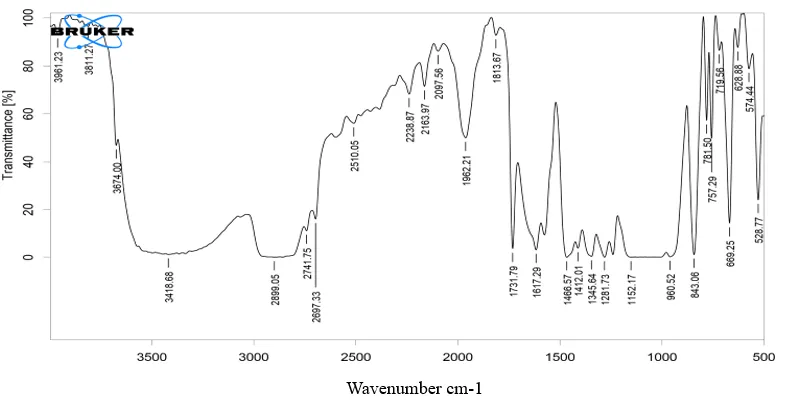
Figure .2: FT-IR Spectra of Candesartan + Poloxamer 407+ PVPK30+ PEG4000+ Crospovidone+ SSG+ Mg Stearate+ Talc+ MCC
Table 3: Interpretation data for FTIR spectra of Candesartan
|
IR absorption bands (cm_1)
|
Bond
|
Functional group |
|
|
Observed peak |
Characteristic peak |
||
|
3410-3320 |
3500-3200 |
N-H / O-H stretching |
Amine / H-bonded hydroxyl group |
|
1720.63 |
1750-1700 |
C=O stretching |
Carboxylic acid / amide group |
|
1563.11, 1485.40 |
1600-1450 |
C=C stretching |
Aromatic ring |
|
1263.43, 1237.54 |
1300-1000 |
C-N / C-O stretching |
20 amine / ether group |
Table 4: Interpretation data for FTIR spectra of Candesartan+ All Excipients
|
|
Bond
|
Functional group |
|
|
Observed peak |
Characteristic peak |
||
|
3961.23 |
4000-3700 |
O-H stretching |
Free hydroxyl |
|
3674.00 |
3700-3600 |
O-H stretching |
Talc / silicate OH groups |
|
3418.68 |
3500-3200 |
N-H / O-H stretching |
Amine / Hydroxyl |
|
2899.05 |
3000-2850 |
C-H stretching |
Aliphatic C-H |
|
1562.96 |
1600-1450 |
C=C stretching |
Aromatic ring |
Table 5: Pre-Compression Studies
|
Angle of repose(θ) |
Bulk density(g/ml) |
Tapped density(g/ml) |
Carr’s index (%) |
Hausner’s ratio |
|
|
F1 |
0.502±0.04 |
0.556±0.06 |
9.71±0.05 |
1.11±0.01 |
|
|
F2 |
26.24±0.33 |
0.452±0.05 |
0.500±0.04 |
9.60±0.06 |
1.11±0.01 |
|
F3 |
28.76±0.36 |
0.411±0.06 |
0.456±0.05 |
9.87±0.07 |
1.11±0.01 |
|
F4 |
27.80±0.41 |
0.532±0.004 |
0.591±0.05 |
9.98±0.05 |
1.11±0.01 |
|
F5 |
26.35±0.38 |
0.501±0.05 |
0.560±0.06 |
10.54±0.06 |
1.12±0.01 |
|
F6 |
26.20±0.40 |
0.532±0.06 |
0.604±0.05 |
||
|
F7 |
28.89±0.35 |
0.530±0.04 |
0.584±0.05 |
9.25±0.05 |
1.10±0.01 |
|
F8 |
28.50±0.30 |
0.530±0.05 |
0.594±0.04 |
10.77±0.06 |
1.12±0.01 |
|
F9 |
27.21±0.39 |
9.76±0.07 |
1.11±0.01 |
||
|
F10 |
27.93±0.43 |
11.90±0.08 |
1.13±0.01 |
||
|
F11 |
27.29±0.34 |
0.523±0.04 |
0.575±0.05 |
9.04±0.05 |
|
|
F12 |
28.86±0.32 |
0.460±0.05 |
0.500±0.04 |
1.09±0.01 |
All Candesartan fast-dissolving tablet formulations (F1–F12) exhibited satisfactory post-compression characteristics. The tablets showed uniformity in weight (200.1 ± 1.79 to 204.3 ± 3.50 mg) and thickness (3.47 ± 0.06 to 3.90 ± 0.12 mm). The hardness values (3.2 ± 0.18 to 3.7 ± 0.24 kg/cm²) and low friability (0.395–0.892%) indicated that the tablets possessed adequate mechanical strength. The disintegration time (7 ± 0.58 to 130 ± 45.8 seconds) and wetting time (22–120 seconds) demonstrated rapid tablet dispersion, particularly for the optimized batches. The water absorption ratio (22.14–151.49%) and drug content (0.429–0.969 mg) were within acceptable limits, confirming the uniformity and quality of all formulations.
Table 6: Evaluation of Post Compression Parameters of Candesartan Fast Dissolving Tablets(F1-F12)
|
Weight variation (mg/tablets) |
Hardness (kg/cm2) |
Thickness (mm) |
Friability loss (% w/w) |
Disintegration time (sec) |
Drug content(mg) |
|
|
F1 |
204.0±2.59 |
3.2±0.18 |
3.73±0.12 |
0.395 |
12±2.08 |
0.969 |
|
F2 |
202.0±2.87 |
3.6±0.17 |
3.70±0.10 |
0.492 |
7±1.53 |
0.759 |
|
F3 |
201.7±1.37 |
3.5±0.54 |
3.70±0.10 |
0.496 |
29±7.5 |
0.724 |
|
F4 |
204.3±3.50 |
3.6±0.5 |
3.47±0.06 |
0.780 |
27±4.36 |
0.707 |
|
F5 |
204.1±3.65 |
3.2±0.29 |
3.77±0.06 |
0.784 |
10±0.58 |
0.559 |
|
F6 |
203.8±2.40 |
3.6±0.04 |
3.90±0.10 |
0.880 |
18±2.0 |
0.669 |
|
F7 |
203.1±3.14 |
3.5±0.19 |
3.70±0.11 |
0.891 |
24±7.8 |
0.689 |
|
F8 |
202.7±4.56 |
3.5±0.49 |
3.8±0.12 |
0.704 |
130±45.8 |
0.518 |
|
F9 |
200.1±1.79 |
3.7±0.24 |
3.9±0.09 |
0.601 |
7±0.58 |
0.652 |
|
F10 |
200.1±2.67 |
3.6±0.16 |
3.7±0.11 |
0.892 |
7±2.08 |
0.551 |
|
F11 |
201±2.62 |
3.5±0.17 |
3.9±0.29 |
0.541 |
90±30.01 |
0.429 |
|
F12 |
203±3.46 |
3.7±0.12 |
3.9±0.02 |
0.489 |
80±17.32 |
0.468 |
Results are shown in mean ±SD, (n=3)
Table 7. Wetting time and Water Absorption ratio
|
Formulation code |
Wetting time (sec) |
Water absorption ratio (%) |
|
F1 |
36 |
75.38 |
|
F2 |
42 |
151.49 |
|
F3 |
56 |
25.49 |
|
F4 |
43 |
30.91 |
|
F5 |
25 |
126.34 |
|
F6 |
25 |
94.59 |
|
F7 |
34 |
40.19 |
|
F8 |
48 |
79.04 |
|
F9 |
24 |
22.14 |
|
F10 |
22 |
26.54 |
|
F11 |
90 |
97.34 |
|
F12 |
120 |
103.65 |
DRUG RELEASE KINETICS
Table 8. Zero-order kinetics data of Candesartan fast dissolving tablet of F1-F6
|
Cumulative % drug released |
||||||
|
F1 |
F2 |
F3 |
F4 |
F5 |
F6 |
|
|
0 |
0 |
0 |
0 |
0 |
0 |
|
|
5 |
17.21 |
22.63 |
13.68 |
11.52 |
8.535 |
6.64 |
|
10 |
26.38 |
29.13 |
22.57 |
21.88 |
13.18 |
10.19 |
|
15 |
34.97 |
47.19 |
28.44 |
26.82 |
19.99 |
35.01 |
|
20 |
54.13 |
73.72 |
49.08 |
33.48 |
40.50 |
65.79 |
|
30 |
66.17 |
82.26 |
60.85 |
53.15 |
62.95 |
79.54 |
|
45 |
95.44 |
98.85 |
88.56 |
74.47 |
84.49 |
90.20 |
Table 9. Zero-order kinetics data of Candesartan fast dissolving tablet F7-F12
|
Cumulative % drug released |
||||||
|
F7 |
F8 |
F9 |
F10 |
F11 |
F12 |
|
|
0 |
0 |
0 |
0 |
0 |
0 |
0 |
|
5 |
4.74 |
8.53 |
12.54 |
20.08 |
5.16 |
3.24 |
|
10 |
17.64 |
14.91 |
18.32 |
28.09 |
11.29 |
9.77 |
|
15 |
35.61 |
20.42 |
34.88 |
39.58 |
19.71 |
17.10 |
|
20 |
43.05 |
35.09 |
52.27 |
48.05 |
24.18 |
28.98 |
|
30 |
51.54 |
50.87 |
71.56 |
70.14 |
43.04 |
39.19 |
|
45 |
78.24 |
70.04 |
85.31 |
88.30 |
60.9 |
56.30 |
The in-vitro dissolution results demonstrated that formulation F2 achieved 98.85% drug release within 45 min, outperforming the other batches. This enhanced dissolution may be attributed to improved drug wettability, reduced crystallinity, and the combined solubilizing effect of Poloxamer 407 and the rapid disintegration facilitated by Crospovidone.
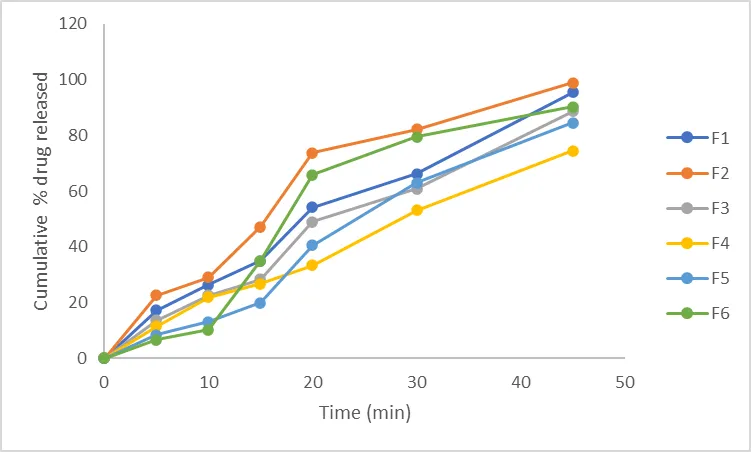
Figure. 9: Cumulative % drug release Candesartan FDTS F1-F6

Figure. 10: Cumulative % drug release Candesartan FDTS F8-F12
The study confirms that the solid dispersion approach significantly improves the solubility and dissolution performance of Candesartan. Among the developed formulations, F2 containing Crospovidone demonstrated superior performance, showing rapid disintegration, enhanced water uptake, and maximum drug release. All formulations met the acceptable limits for pre- and post-compression quality parameters, indicating formulation reliability. Therefore, Crospovidone-based Candesartan fast-dissolving tablets provide a promising strategy to enhance oral drug delivery and therapeutic efficacy.
REFERENCES

Dr. D. Ravi Kiran, Preparation and Evaluation of Candesartan Fast Dissolving Tablets for Improved Dissolution Using Solid Dispersion Technique, Int. J. of Pharm. Sci., 2026, Vol 4, Issue 6, 2674-2683, https://doi.org/10.5281/zenodo.20624282
 10.5281/zenodo.20624282