

We use cookies to ensure our website works properly and to personalise your experience. Cookies policy
Department of Pharmaceutics, Anurag College of Pharmacy, Warthi, Bhandara, Maharashtra.
The study focused on the formulation and evaluation of a herbal dry powder shampoo using medicinal plants such as Neem, Amla, Bhringraj, Tulsi, Hibiscus flower, Reetha, Heena, Hirda, and Shikakai. These herbs were selected because of their traditional anti-dandruff, cleansing, conditioning, and hair-nourishing properties. Three formulations (F1, F2 and F3) were prepared in different proportions. The plant material were shade-dried, powdered separately, sieved through mesh No. 80, and blended uniformly to obtain homogeneous formulations. The prepared shampoos were evaluated for various parameters, including organoleptic characteristics, powder flow properties, physicochemical properties, pH, washability, solubility, skin irritation, ash value, foaming capacity, hair-conditioning effects, and phytochemical constituents. Antimicrobial and antifungal activities were also tested against staphylococcus aureus and candida albicans using the agar well diffusion method. Results showed that all formulations had a fine, smooth texture, faint brown colour, and pleasant natural odour. Their Ph values were within the acceptable range for scalp application, and no skin irritation was observed. Good ash value and foaming capacities indicated satisfactory quality and cleansing performance. Among the three formulations, F3 demonstrated the strongest antimicrobial and antifungal activity against Staphylococcus aureus and Candida albicans respectively. This enhanced biological activity was attributed to the presence of diverse phytoconstituents in the herbal ingredients. Overall, F3 was found to be the most effective and most promising herbal dry powder shampoo formulation.
Hair is the integral part of beauty of human being. Herbs have been used by people to clean, beautify, and manage their hair since the ancient era. Hair has been trimmed, shaped and even coloured since the earliest times, but relatively little emphasis has been placed on cleaning process. It is only in this century that a real technology in the cleaning of hair and scalp has been developed. First was the distribution of cake soap and sanitary facilities to practice bodily cleanliness and personal hygine. Then, the specialization of branded shampoo products for hair and scalp in a multiplicity of types and forms[1,3].
Today, shampooing the hair and scalp has become almost a universal practice. Today perhaps the most common hair products are shampoos, which contain both synthetic and synthetic and herbal ingredients. Types of shampoo there are different types of shampoo like powder shampoo, clear liquid shampoo, liquid shampoo, lotion shampoo, solid gel shampoo, medicated shampoo, liquid herbal shampoo etc. Anti-dandruff shampoos contain fungal static ingredients know to control dandruff. Herbal formulation is gaining increasing demand in the world market. The antidandruff shampoo and nutritional shampoo with vitamins, amino acids, proteins and hydrolysate are not as acceptable in the market compared to natural remedies for their safety and fewer side effects[7.8].
Therapeutic use of zinc pyrithione, salicylic acid, imidazole derivatives, glycolic acid, steroids and sulphur and coal tar derivatives are current treatment of dandruff. However, these agents have some limitations, either due to poor clinical efficacy or due to the there are also compliance issue. These drugs do not prevent recurrence. Synthetic shampoo is surfactant which has good foaming character. Synthetic shampoo is cationic, anionic, non-anionic surfactant mixes. However it is toxic and causes irritation of eye. The surfactants leave deposits of sodium, calcium and magnesium salts on the hair shaft. So these synthetic shampoos are found are found to have side effects like a drying effects on the hair. Natural ingredients Hirda, Bhringraj, Shikakai, Heena, Tulsi, Neem, Hibiscus flower and Reetha were used to prepare herbal shampoo powder[7,11].
1. Problems related to hair-
Dandruff
Dandruff is a common and harmless long-term scalp condition that causes white flakes of dead skin to appear in the hair fall on to the shoulders. It can occur when the scalp becomes either too dry or overly oily.
Although dandruff does not pose any health risks, it can be uncomfortable and sometimes embarrassing for the people who experience it. Normally, skin cells on the scalp are continuously renewed, and old cells naturally shed as a part of body’s regular process. However, in individuals with dandruff, this shedding happens much faster than usual.
As a result, large numbers of dead skin cells accumulate and mix with the natural oils produced by the scalp. These cells then clump together, forming visible white flakes that are commonly associated with dandruff. While the condition is chronic and may recur, it can usually be managed effectively with proper scalp care and treatment[2,10].
Causes of Dandruff:

Treatment:
PLANT PROFILE

Neem[17,18]:
Fig. Neem
| NEEM | |
|---|---|
| Synonyms | Nimb (Hindi), Limba (Marathi) |
| Biological source | Neem consists of the fresh or dried leaves and seed oil of Azadirachta indica |
| Family | Meliaceae |
| Chemical constituents | Nimbnene, Nimbandiol, Nimbolide, Azadiractin, Stearic acid |
| uses | Anti-dandruff activity Antiseptic and anti-bacterial activity Condition your scalp Promote healthy hair growth |

Amla[17,18]:
Fig. Amla
| AMLA | |
|---|---|
| Synonyms | Amla(Hindi), Awla(Marathi) |
| Biological source | It is derived from dried ripe fruits of Embelica officinalis |
| Family | Euphorbiaceae |
| Chemical constituents | Vitamin c Gallic acid Linoleic acid Emblicanin A and Emblicanin B |
| Uses | Hair growth promoter Adds shine to Conditioning hair Anti-dandruff activity |

Bhringraj[17,18]:
Fig. Bhringraj
| BHRINGRAJ | |
|---|---|
| Synonyms | Bhagra (Hindi), Bhringraj, Maka (Marathi) |
| Biological Source | It is obtained from entire herb Ecilipta-alba |
| Family | It belongs to family Asteraceae |
| Chemical constituents | Ecliptine Nicotine Stigasterol Polyacetylene |
| Uses | Anti-Dandruff Activity Prevent premature Greying Hair growth Promoter Conditioning Hair |

Tulsi[17,18]:
Fig. Tulsi
| TULSI | |
|---|---|
| Synonyms | Tulsi (Hindi), Tulshi (Marathi) |
| Biological source | It is obtained from dried leaves of Ocimum sanctum |
| Family | It belongs to family Labiatea |
| Chemical constituents | Eugenol Eucalyptol Camphor Apigennin |
| Uses | Antibacterial activity Soothes the scalp Hair growth promotor Conditioning Hair |

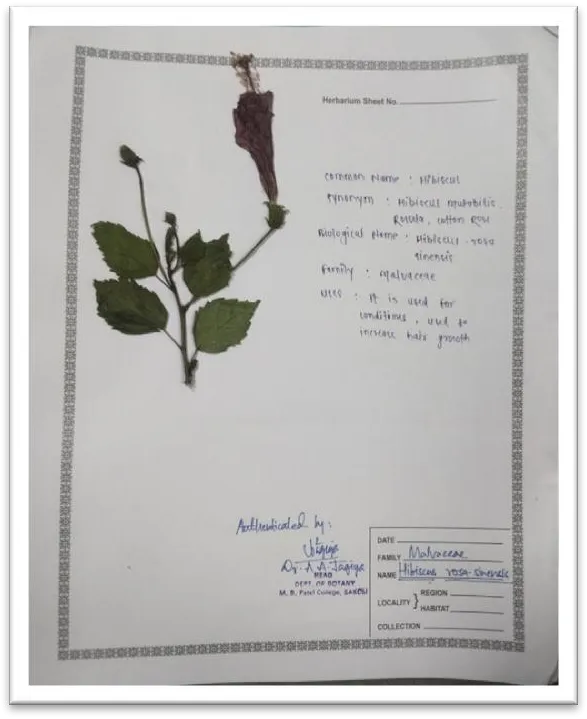
Hibiscus flower[17,18]:
Fig. Hibiscus flower
| HIBISCUS FLOWER | |
|---|---|
| Synonyms | Jasvand (Marathi) |
| Biological Source | It is contained dried flowers of hibiscus rosa-sinensis |
| Family | It belongs to family Malvaceae |
| Chemical constituents | Anthrocyanins Kaempferol Citric acid Tartaric acid |
| Uses | Natural cleansing Moistorizing Conditioning Prevent hair breakage |
Reetha[17,18]:

Fig. Reetha
| REETHA | |
|---|---|
| Synonyms | Aritha (Hindi), Dodak (Marathi) |
| Biological source | It is a dried fruit of Sapindus mukorossi |
| Family | It belongs to family Sapindaceae |
| Chemical constituents | Sapindosides Tannins Iron Kaempferol Vitamin A and C |
| Uses | Foaming agent Natural shine Treat scalp problem Conditioning |
Shikakai[17,18]:
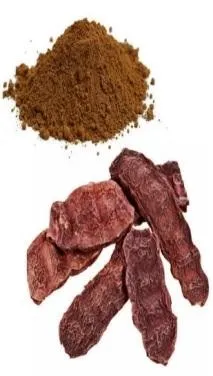
Fig. Shikakai
| SHIKAKAI | |
|---|---|
| Synonyms | Shikakai ( Hindi), Shikayala (Marathi) |
| Biological source | It is dried seeds of Acacia rugate |
| Family | It belongs to family Leguminosae |
| Chemical constituents | Saponins Tannins Flavonoids Alkaloids Vitamin C |
| Uses | Foam base Soothes the scalp Natural shine Treat scalp problem |

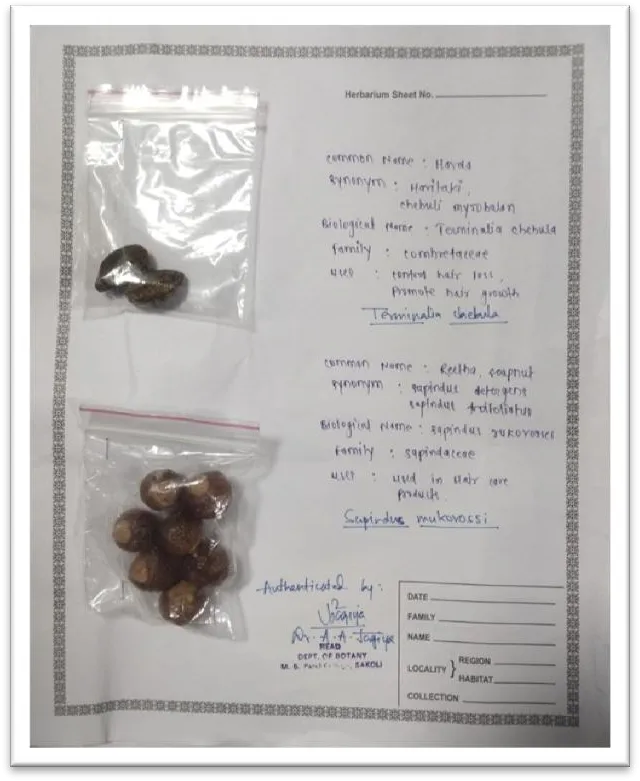
Hirda[17,18]:
Fig. Hirda
| HIRDA | |
|---|---|
| Synonyms | Haritaki, chebuli myrobalan |
| Biological source | It consists dried ripe fruits of Terminalia chebuli |
| Family | Combretaceae |
| Chemical constituents | Chebulagic acid Gallic acid Punicalagin Corilagin Terchebulin |
| Uses | Promotes hair growth Strengthens hair roots Improves hair texture Reduces dandruff |

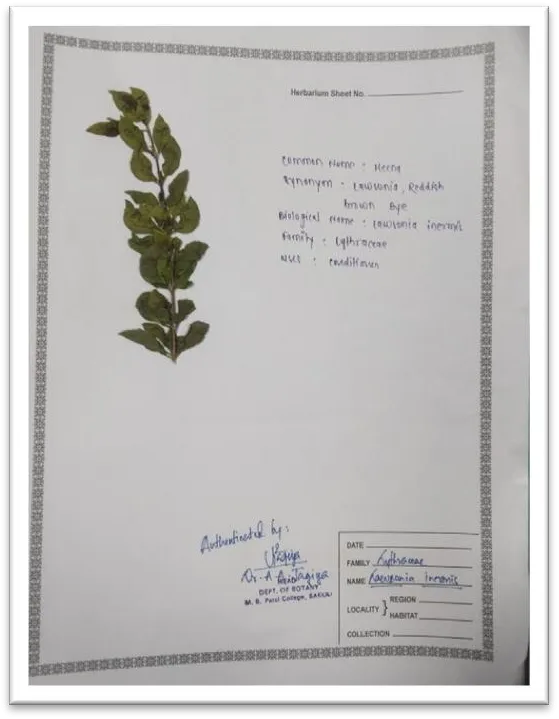
Heena[17,18]:
Fig. Heena
| HEENA | |
|---|---|
| Synonyms | Lawsonia, Reddish brown Dye |
| Biological source | It consists dried leaves of Lawsonia inermis |
| Family | Lythraceae |
| Chemical constituents | Lawsone Gallic acid Tannins Flavonoids |
| Uses | Natural hair dye Hair growth Hair conditioning Hair thickness |
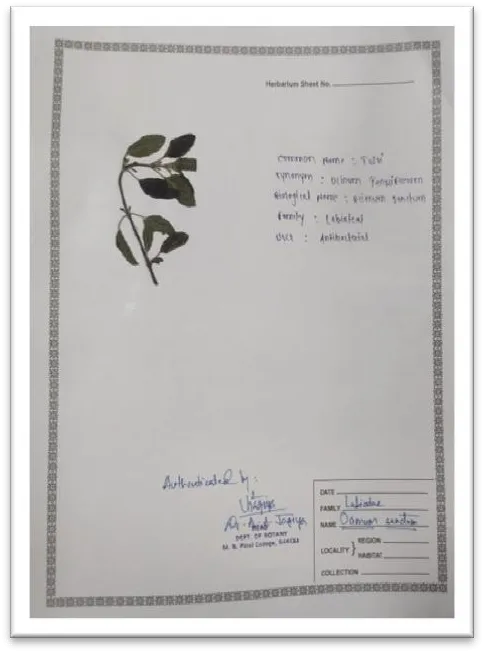
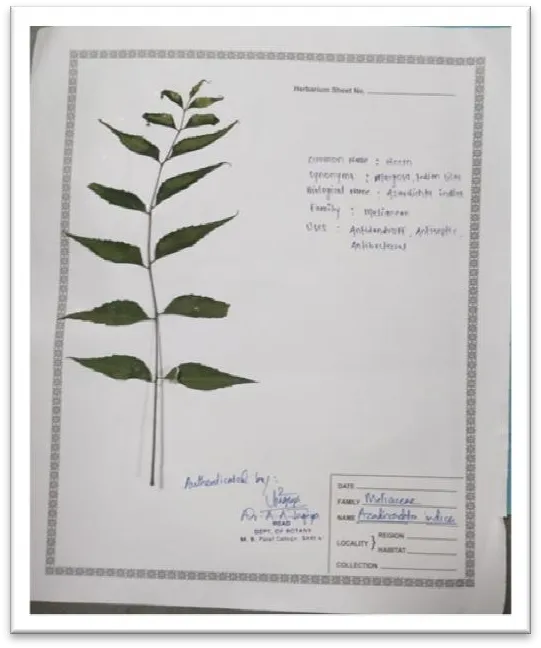
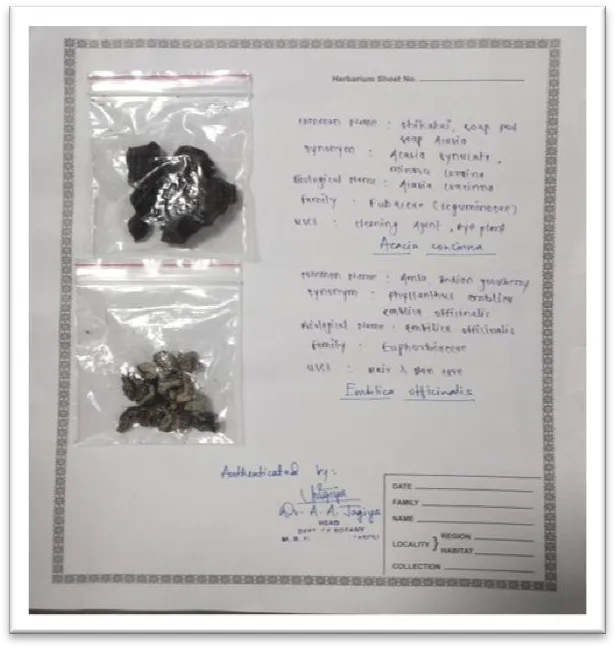
Authentication of Herbal Plants:-
Authentication of herbal plants is an essential process that ensures the correct plant species and plant parts are used in herbal medicines. It helps prevent adulteration, mislabeling, and fraud, thereby ensuring the safety, quality, and effectiveness of herbal products. Proper authentication also guarantees that consumers receive the intended therapeutic benefits from herbal formulations. Dr Amit A. Jagiya.
AIM AND OBJECTIVES
Aim: To prepare and evaluate herbal dry powder shampoo formulation for effective management of dandruff while providing gentle cleansing and conditioning of the hair and scalp.
Objectives:-
1. To select and collect suitable herbal ingredients
2. To prepare different formulations (F1, F2 and F3) of herbal dry powder shampoo
3. To evaluate the prepared formulations for physicochemical and powder-flow properties
4. To evaluate the shampoo formulations for PH, washability, solubility, foaming index, ash value, skin irritation, and hair-conditioning properties.
5. To assess the antimicrobial/antifungal activity of the prepared formulation against selected microorganisms using the agar well diffusion method.
6. To perform stability evaluation and compare F1, F2 and F3 to identify a suitable herbal dry powder shampoo formulations.
PLAN OF WORK:-
Collection of information from books, research papers and literature surveys

Collection of herbal plants and ingredients from Bhandara district

Authentication of herbal plants

Shed drying

Grinding

Sieving

Mixing

Evaluation test
RESULTS AND DISCUSSION
CONCLUSION
MATERIALS AND METHOD:
• Materials Used in herbal formulations:-
Table None: 1
| Sr. No | Ingredients | Quantity (for 100gm) | ||
|---|---|---|---|---|
| F1 | F2 | F3 | ||
| 1 | Shikakai | 10gm | 9gm | 8.5gm |
| 2 | Reetha | 6.5gm | 7.5gm | 7gm |
| 3 | Amla | 7.2gm | 6gm | 4gm |
| 4 | Bhringraj | 4gm | 4gm | 5.5gm |
| 5 | Hirda | 6gm | 7gm | 7.5gm |
| 6 | Heena | 7.5gm | 6.5gm | 5.5gm |
| 7 | Hibiscus flower | 5gm | 5gm | 5gm |
| 8 | Tulsi | 1.3gm | 2gm | 5gm |
| 9 | Neem | 2.5gm | 3gm | 2gm |
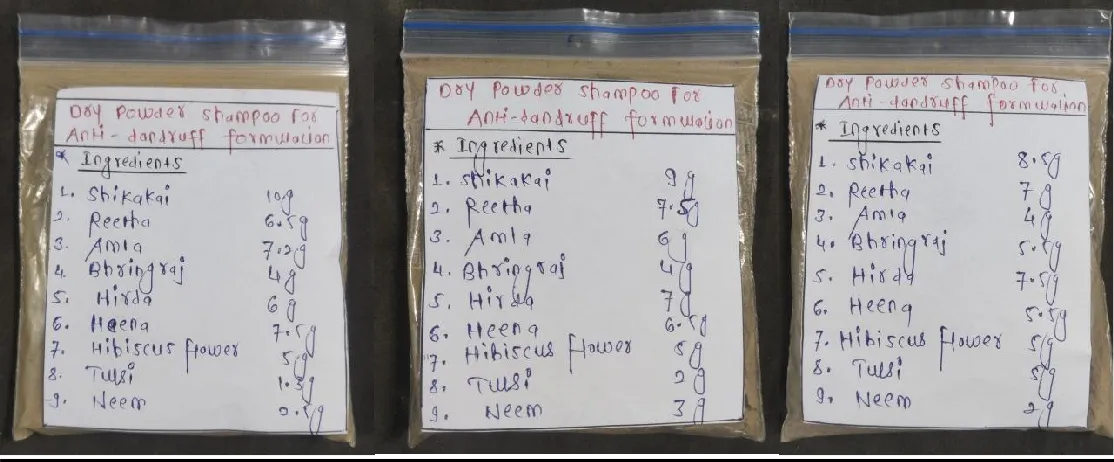
Formulation 1 Formulation 2 Formulation 3
Firstly, collect all herbal ingredients

After collection, all herbal ingredients are dried in shed for one week

Then all herbal ingredients are grind individually and make fine powder

Then all ingredients are grind individually according to required concentration of
preparation i.e., F1, F2, F3

Then mixing all ingredients according to the given concentration preparation respectively

Then packed the preparation in suitable container
• Formulation of herbal shampoo
All selected plant materials were thoroughly dried and fine powdered. The required herbal ingredients for shampoo preparation were weighed separately in their specified quantities. The crude plant materials were then subjected to size reduction using a hand-operated mixer to obtain a fine powder[8,13].
The powdered materials were passed through sieve No. 80 to ensure uniform particle size and achieve a smooth texture suitable for shampoo formulation. After sieving, the individual herbal powders were accurately measured and mixed thoroughly using a homogeneous blend was obtained[8,13].
The resulting herbal dry powder shampoo was then carefully packed in suitable containers, properly labelled, and stored for further evaluation and analysis[1,9].
EVALUATION OF HERBAL SHAMPOO POWDER:-
Prepared formulations of shampoos were subjected to following evaluation parameters.
Organoleptic evaluation:-
Organoleptic evaluation on the parameters like physical appearance, colour, odour and texture was carried out. Colour and texture evaluated by vision and touch sensation respectively[1,4].
General powder characteristics:-
General powder characteristics includes evaluation of those parameters which are going to affect the external properties (like flow properties, appearance, packaging criteria etc.) of the preparation. Characteristics evaluated under this section are powder form, particle size, angle of repose and bulk density. Sample for all these eveluations were taken at three different level i.e., from top, middle, and lower level[9,14].
Particle size:-
Particle size is a parameter, which could affect various properties like spreadability, grittiness etc., particle size was determined by sieving method by using I.P. standard sieves by mechanical shaking for 10 min[9,14].
Angle of repose:--
It is defined as the maximum angle possible in between the surface of pile of powder to the horizontal flow. Funnel method required quality of dried powder is taken in a funnel placed at a height of 2cm from a horizontal base. The powder was allowed to flow to form a heap over the paper on the horizontal plane. The height and radius of the powder was noted and recorded the angle of repose (θ) can be calculated using the formula[9,14].
θ = tan -1 (h / r)
where, θ – Angle of repose,
h- Height of the heap,
r- Radius of the base
Bulk density:-
Bulk density is the ratio between the given mass of a powder and its bulk volume. Required amount of powder is dried and filled in a 50ml measuring cylinder up to 50ml mark. Then the cylinder is dropped onto hard wood surface from a height of 1 inch at 2 second interval. The volume of the powder is measured. Then powder is weighed. This is repeated to get average values.
Tapped density:-
The tapped density is an increased bulk density attained after mechanical tapping a container containing the powder sample. After observing the initial powder volume or mass, the measuring cylinder or vessel is mechanically trapped for 1 min and volume or mass reading are taken until little further volume or mass change was observed. It was expressed in gram per cubic centimetre (g/cm3).
Compressibility/Carr’s Index:-
This is calculated using the formula-
Tapped density – Bulk density
Carr’s index = ____________________________ x 100
Tapped density
Hausner’s Ratio:-
The formula used to determine Hausner’s ratio are as follows,
Tapped density
Hausner’s Ratio = _______________________
Bulk density
Moisture content:-
Moisture content in the formulation is very important as it contains herbs which are liable to be attacked by weather. 2gm of powder was taken and kept in an oven and dried up to two constant reading and
% moisture content was calculated as w/w[9,14].
Physicochemical evaluation:-
pH:-
pH affects the pharmaceutical consideration as well as it affects the effect of shampoo on hairs. 1gm of powder shampoo was taken and 9ml of distilled water was added to it. pH of the resulting solution was calculated using pH meter at 370C[1,12].
Washability:-
Formulations were applied on the skin and then ease and extent of washing with water were checked manually[1,12].
Solubility:-
Solubility is defined as the ability of the substance to soluble in a solvent. 1 gm of the power is weighed accurately and transferred into a beaker containing 100 ml of water. This was shaken well and warmed to increase the solubility. Then cooled and filter it, the residue obtained is weighed and noted[1,12].
Skin irritation test:-
The skin irritation tests revealed that the herbal shampoo powder shows no harmful effect on skin. This is due to the absence of synthetic surfactants. Most of the synthetic surfactants produce inflammation of the eyelid and corneal irritation. But in this formulation of herbal shampoo powder, the uses of all ingredients are obtained naturally. So, it does not produce any harmful effect on skin[1,12].
Ash value:-
Total ash content ash value is calculated to determine the inorganic contents which is characteristics for an herb. About 2gm of powder drug was taken in silicon dish previously ignited and weighed. Temperature was increased by gradually increasing the heat not exceeding to red colour. After complete burning, ash is cooled and weighed[17,18].
Foaming ability and foam stability:-
Cylinder shake method with slight modification was used for determining foaming ability. 50ml of the 1% shampoo solution was put into a 100ml measuring cylinder and covered with hand. Measuring cylinder and covered with hand. Measuring cylinder was shaken for 1 minute. The total volume of the foam contents after 1 min shaking was recorded. The procedure was continued for 5 min[3,7].
Antifungal/Antimicrobial Evaluation:-
The antifungal/antimicrobial activity of F1, F2, and F3 was evaluated by the agar well diffusion method. Suitable sterile agar plates were inoculated with the test microorganism, and wells were prepared using a sterile borer. Equal amounts of each formulations were added into separate wells along with suitable positive and negative controls. The plated were incubated under appropriate conditions, and the zone of inhibition (ZOI) was measured in mm and compared among F1, F2 and F3[7,11].
Phytochemical screening:-
Phytochemical screening qualitative phytochemical analysis for secondary metabolites was carried out for the crude sample of neem (Azadirachta indica) as per standard methods[17,18].
Test for alkaloids:-
A quality of 0.5g of sample was dissolved in hydrochloric acid and filtered using filter paper to the 2ml of filtrated was treated with dragendroff’s reagent (solution of potassium bismuth iodide) formation of red precipitate confirmed indicating the presence of alkaloid[17,18].
Test for saponins:-
A quantity of 0.5g of sample was boiled with 50ml of distilled water and filtered. To 5ml of each filtrate, 3ml of distilled water was added and shaken vigorously for about 5 minutes, formation of frothing was confirmed showing the presence of saponins[17,18].
Test for glycosides:-
An amount of 0.5 gm of sample was stirred with 10ml of boiled distilled water. This mixture was filtered and 2ml of the filtrate hydrolysed with few drops of concentrated hydrochloric acid (HCl) and the solution rendered alkaline with a few drops of ammonia solution. Then, about 5 drops of this solution was added to 2ml of benedict’s quantitative reagent and boiled. Appearance of reddish-brown precipitate was indicative results for presence of glycosides[17,18].
Test for terpenoids:-
A quantity of 0.5g of sample was dissolved in ethanol for about 10 minutes for proper extraction and filtered. To 5ml of each filtrate was added 1ml of acetic anhydride followed by addition concentrated H2SO4. A change in colour from pink to violet showed presence of terpenoid[17,18].
Test for flavonoids:-
2ml 1% NaOH was added to 1gm of sample, presence of yellow colour indicates presence of flavonoids.
Test for phenol:-
A quantity of 0.5g of the sample was boiled with 15 ml of distilled water and filtered. To 2ml of the filtrate, few drops of 10% ferric chloride solution were then added. Formation of violet colour was confirmed indicating the presence of phenolic hydroxyl group[17,18].
Starch:-
1ml iodine was added 1gm of sample. Appearance of blue or black colour confirms the presence of starch in plant extract[17,18].
Fat test:-
1ml of distilled water and few drops of ethanol were added to 1gm of sample. The white colour precipitate formed showed the presence of fat in the plant extract[17,18].
RESULT AND DISCUSSION:-
Herbal dry powder anti dandruff shampoo was prepared using Neem, Amla, Bhringraj, Tulsi, Hibiscus flower, Reetha, Heena, Hirda, Shikakai in different proportions (In table 1). These formulations were prepared using mixing in ascending order by weight and with continuous trituration. This preparation was evaluated organoleptically observing colour, odour, taste, and texture (In table A). General powder characteristics of formulation was done (In table B). The result of phytochemical Evaluation was calculated (In table C). And the result of Phytochemical screening was calculated (In table D).
Table None: A: Result of Phytochemical Screening:-
| Sr. No. | Phytochemicals | F1 | F2 | F3 |
|---|---|---|---|---|
| 1 | Alkaloids | + | + | + |
| 2 | Saponins | + | + | + |
| 3 | Glycosides | + | + | + |
| 4 | Terpenoids | + | + | + |
| 5 | Flavonoids | + | + | + |
| 6 | Phenol | + | + | + |
| 7 | Starch | - | - | - |
| 8 | Fat | - | - | - |
TABLE B: RESULTS OF ORGANOLEPTIC EVALUATION/ VISUAL APPEARANCE
Table C: Results of General Characteristics:-
| Sr. No. | formulation | Physical appearance | Colour | Texture | Odour |
|---|---|---|---|---|---|
| 1 | F1 | Powder (solid) | Faint brown | Fine & smooth | Natural & Earthy |
| 2 | F2 | Powder (solid) | Faint brown | Fine & smooth | Natural & Earthy |
| 3 | F3 | Powder (solid) | Faint brown | Fine & smooth | Natural & Earthy |
| Sr. No. | Formulation | Particle size | Angle of Repose | Bulk Density | Tapped Density |
|---|---|---|---|---|---|
| 1. | F1 | <180 µm | 320 | 0.378 g/cm3 | 0.446 g/cm3 |
| 2. | F2 | <180 µm | 330 | 0.381 g/cm3 | 0.442 g/cm3 |
| 3. | F3 | <180 µm | 320 | 0.384 g/cm3 | 0.438 g/cm3 |
| Sr. No. | Formulation | Carrs index | Hausners ratio | Moisture content |
|---|---|---|---|---|
| 1. | F1 | 15.25% | 1.18 | 2.66% |
| 2. | F2 | 13.80% | 1.16 | 3.09% |
| 3. | F3 | 12.33% | 1.14 | 2.88% |
Table None: D: Results of Phytochemical Evaluation:-
| Sr. No. | Formulation | pH | Washability | Solubility | Skin irritation |
|---|---|---|---|---|---|
| 1. | F1 | 5.39 | Easily Washable | Not completely soluble | Not observed |
| 2. | F2 | 5.63 | Easily Washable | Not completely soluble | Not observed |
| 3. | F3 | 5.11 | Easily Washable | Not completely soluble | Not observed |
| Sr. No. | Formulation | Ash value | Nature of hair after washes | % foaming capacity |
|---|---|---|---|---|
| 1. | F1 | 7.4 % | Soft, manageable | 102 |
| 2. | F2 | 8.1% | Soft, manageable | 98 |
| 3. | F3 | 8.4 % | Soft, manageable | 103 |
Table None: E: Antifungal and Antimicrobial Activity:-
| Sr. No. | Formulation | Microorganism Staphylococcus aureus (ZOI in mm) | Microorganism Candida Albicans (ZOI in mm) |
|---|---|---|---|
| 1 | F1 | 10.2 | 16.2 |
| 2 | F2 | 7.4 | 14.9 |
| 3 | F3 | 10.9 | 16.9 |
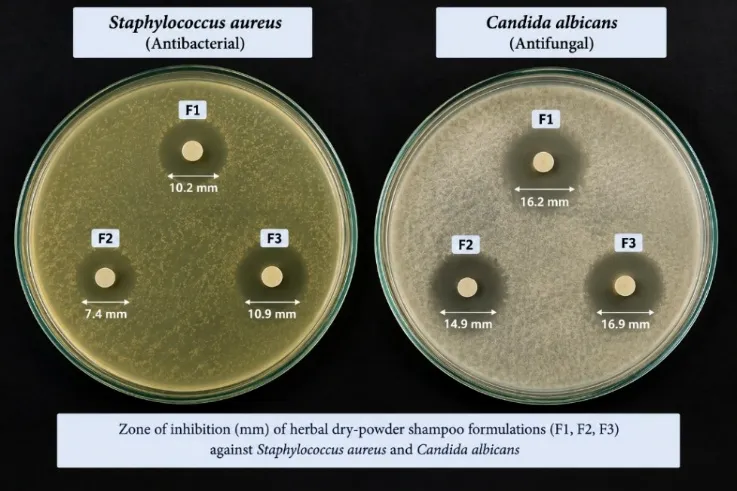
CONCLUSION:-
Medicinal plants used in the formulation of herbal shampoo were found as rich source of novel drugs. These plants are Neem, Amla, Bhringraj, Tulsi, Hibiscus flower, Reetha, Shikakai has been reported for hair growth and conditioning. The various quality control parameters were checked. All parameter gives favorable results. The results obtained on present study showed that the active ingredients of these drugs when incorporated in shampoo gives more stable products with good aesthetic appeal. The pH of the shampoo has been shown to be important for improving and enhancing qualities of hair, minimizing the irritation to the eyes and stabilizing the ecological balance of the scalp. The current trend to promote shampoos of lower pH is one of the minimizing damages to the hair. Such results are estimated out of a formulation to establish strong results for the usage and good results of the product. Though the product is in dry form in spite has wonderful wetting capacity and being dry is a very good for the storage. The evaluation parameters like organoleptic evaluation. General powder characters, physicochemical evaluation, cleansing action, foaming, wetting agent, nature of hair after wash was carried out and was found to be within the standard range.
ACKNOWLEDGEMENT:-
I would like to express my heartfelt gratitude to my guide, Dr. Damodar Goupale associate professor of department of pharmaceutics, Anurag college of pharmacy, warthi, Bhandara, for his constant guidance, encouragement and valuable suggestions throughout the course of this research work. His expertise and support were instrumental in shaping this study.
I am deeply thankful to Dr. Amit A. Jagiya associate professor and head of Botany department Manoharbhai patel college sakoli, bhandara for his assistance in authenticating the plant materials used in this research.
My sincere appreciation goes to the faculty members and staff of Anurag college of pharmacy for providing the necessary facilities and supportive environment to carry out this work. I also extend my gratitude to my colleagues and friends for their cooperation, motivation and constructive feedback during the preparation of this project.
Finally, I am indebted to my family for their unwavering support, encouragement and understanding, which give me strength to complete this research work successfully.
REFERENCES



Kirti Wanjari, Damodar Goupale, Sachin Lohe, Preparation and Evaluation of Polyherbal Dry Powder Shampoo for Anti-dandruff Evaluation, Int. J. of Pharm. Sci., 2026, Vol 4, Issue 11, 3196-3211. https://doi.org/10.5281/zenodo.24361297
 10.5281/zenodo.24361297