

We use cookies to ensure our website works properly and to personalise your experience. Cookies policy
Associate Professor, Pharmacognosy and Phytochemistry, Lokmanya Tilak Institute of Pharmacy, Navi Mumbai, Maharashtra, India.
Common cold and cough in children are among the most common health issues faced by infants and young children. They are mainly caused due to respiratory tract viral infection. The common signs and symptoms include cough, nasal blockage, rhinorrhoea, sneezing, sore throat and mild fever. Although most cases of common cold and cough resolve spontaneously, inappropriate treatment and misuse of common cold and cough medications may lead to adverse effects, medication errors and unnecessary antibiotic usage. Common cold and cough in children can be managed through a combination of pharmacological and non-pharmacological interventions depending on the age, clinical symptoms and condition of the child. Non-pharmacological interventions include giving adequate amounts of fluids, using nasal saline drops, humidification and giving honey to children above the age of 1 year. Pharmacological interventions include antitussive, antihistamines, decongestants, expectorants, mucolytics and antipyretics. However, safety and efficacy must be carefully considered. Recent advances have been made in paediatric dosage forms to improve palatability, accurate dose delivery, stability and patient compliance. These include oral solutions, suspensions, powders, granules, mini tablets, chewable tablets and orally disintegrating dosage forms. This can also be achieved through advanced drug delivery systems and appropriate choice of excipients. This review gives an overview of the different types of common cold and cough, their epidemiology, pathophysiology, treatment, dosage form strategies, benefits, challenges faced, safety issues and regulatory guidelines. Overall, it is important to develop safe, effective and patient friendly paediatric formulations to improve treatment outcomes.
Coughing is a protective reflex and a common clinical symptom. It assists in removing excessive mucus, irritants and foreign bodies from the respiratory tract. It can be caused by post nasal drip, viral upper respiratory tract infections (URTI), asthma, gastro-esophageal reflux disease (GERD) or vagal stimulation.(1) Cough can also be classified depending on how long it lasts for, whether it is a wet or dry cough and what kind of cough it is (barking, whooping, bitonal or a hollow cough). An acute cough is usually less than 3 weeks, a subacute cough can last between 3-8 weeks and a chronic cough will last more than 8 weeks.(2) Coughing is one of the most prevalent reasons to consult a healthcare professional and can cost a lot of money. It is a common reason for consultation in children and adolescents. Viral upper respiratory tract infections such as common colds are the most common cause of acute coughs. Other causes include acute bacterial sinusitis, pertussis, exacerbations of COPD, allergic rhinitis, asthma, pneumonia and irritants.(3) Most coughs will resolve on their own however acute coughs can sometimes indicate serious conditions such as pulmonary embolism, pulmonary oedema and lung cancer. Coughing is an essential mechanism to clear the airways so should not be suppressed. There has historically been little research into treating coughing however due to increased interest there have been multiple evidence based guidelines created by respiratory societies.(4) In 2019 the Italian Society of Pediatric Allergy and Immunology (SIAIP) created guidelines to manage acute coughs in children and adolescents. However, due to new evidence and developments since the COVID-19 pandemic there is a need to update guidelines in order to improve diagnosis and management.(5)
Approximately 9.6% of the global population suffer from a cough. Around 5-10% of the population in India suffer from a cough. Coughing is a protective mechanism but often indicates pathology within the respiratory tract or other systems.(6) Chronic coughing can affect children’s sleep and impact their everyday activities. This can impact their and their caregiver’s quality of life. Family doctors and general practitioners must determine whether coughs are self-limiting or chronic requiring targeted management. Due to a lack of standardisation coughs can be difficult to diagnose and manage in primary care in India. Often fixed dose combination medications are prescribed inappropriately causing adverse effects and potential drug interactions. Therefore there is a need to create an holistic approach based around symptoms and evidence based guidelines to aid diagnosis, appropriate prescribing and management of coughs in adults and children in India.(7)
Cough is a common protective mechanism. It helps remove irritants, foreign bodies and excess fluid from the respiratory tract. However chronic coughing can affect everyday activities. This can cause a decrease in productivity, discomfort and disruption to sleep. There are many causes of coughs including respiratory infections, allergies, asthma, COPD, GERD, irritants and some medications.(8) Acute coughs tend to last less than 3 weeks, subacute coughs can last between 3-8 weeks and chronic coughs will last more than 8 weeks in adults. Coughs can be productive (phlegm is produced) or non-productive (dry). There are many non-pharmacological and pharmacological options to treat coughs. Non-pharmacological options include drinking plenty of fluids, avoiding irritants, lifestyle changes and techniques to assist coughing. There are also many pharmacological options including antitussives, expectorants, mucolytics and antihistamines.(9) The underlying cause can also be treated.
Antitussive syrups are commonly used to treat coughs. They often contain synthetic medications and herbal remedies including ivy leaf and thyme. Recent studies have looked into creating new formulations, controlled release medications, muco-adhesive formulations and new treatments for cough hypersensitivity. However, it is important to consider the efficacy and safety of all ingredients in the product.(10)
2. Overview of pediatric cold and cough:
Cold and cough are some of the most common health problems experienced by young children. These mainly involve the upper respiratory tract and are usually caused by viral infection. The common cold is an acute, self limiting infection which affects the upper respiratory tract. Symptoms usually include a blocked / runny nose, sneezing, sore throat, low grade fever and cough.
Coughing is a natural reflex of the respiratory system to help clear mucus, foreign bodies and irritants from the airway. Cough may be caused by viral infections, allergic reactions, irritants in the environment or other respiratory conditions.(11)
Common viruses causing cold and cough in children include rhinovirus, respiratory syncytial virus, Influenza, adenovirus and coronavirus. As children's respiratory systems and immune systems are still developing they may be more likely to get a respiratory infection.
The majority of common cold and cough in children are mild and will resolve themselves over a period of 7-10 days. Some children may suffer with complications such as otitis media, sinusitis, bronchiolitis and pneumonia. Appropriate management includes symptom relief, hydration, prevention of complications and using safe paediatric formulations.(12)
2.1. Epidemiology of paediatric cold and cough
Respiratory tract infections are one of the highest causes of illness in children worldwide. Young children (preschool aged) suffer with multiple bouts of a common cold per year due to their immature immune systems and frequent exposure to infectious agents in schools, daycares etc.
Incidence of respiratory infections depends on many factors including age, nutrition, environmental factors, smoking exposure, seasonality and vaccination status. Children below 5 years of age are at high risk of respiratory infections, especially those caused by respiratory syncytial virus.(13)
3. Types of pediatrics cold and cough :-
Table 1: Classification and Characteristics of Cough in Pediatric Patients.
| Type of cough | Characteristics | Common causes |
|---|---|---|
| Acute cough | Lasts less than 3 weeks and develops suddenly. | Common cold, influenza, viral respiratory infections. |
| Chronic cough | Persists for more than 4 weeks in children. | Asthma, allergies, protracted bacterial bronchitis. |
| Dry cough (Non-productive) | Does not produce mucus or sputum; often associated with throat irritation. | Viral infections, allergic rhinitis, asthma. |
| Wet cough (Productive) | Produces mucus or sputum and may be associated with chest congestion. | Bronchitis, pneumonia, respiratory tract infections. |
3.1. Chronic cough in children :
Chronic cough in children differs in its most common causes and management when compared to adults. It is increasingly defined by coughing for longer than 4 weeks. Children presenting with chronic cough should be carefully assessed using specific protocols developed for children. Chronic cough in children differs from adults due to their airway anatomy, increased susceptibility to damaging insults, less control over cough reflexes and differences in neurodevelopmental and immunological development throughout different paediatric age groups. The respiratory tract and nervous system go through several changes throughout childhood including structural and functional changes to the airway, leading to differences in the cough reflex. Immunological processes also take place during development and create immune memory. This means infection and congenital abnormalities are the most common causes of cough in children.(13)
3.1.1. Causes of chronic cough:
Chronic cough may be seen alongside asthma, chronic obstructive pulmonary disease, bronchiectasis and interstitial lung disease, and occasionally lung cancer. These conditions alone, or in combination, account for a large proportion of chronic cough cases.9 However, there is great variability in prevalence of co-existent conditions reported by clinicians due to different availability of investigations such as sputum induction, 24 hour pH impedance / manometry and different levels of expertise by the specialist consulted.10 Cough prevalence varies with age and generally reflects the age related prevalence and distribution of diseases associated with chronic cough. The reasons for increased prevalence of chronic cough in females are unclear but may be associated with age related hormonal changes. Cough that persists despite guideline treatment for the above conditions is known as refractory chronic cough. Cough for which there is no identifiable cause is known as unexplained chronic cough.(14)
3.1.2. Mechanisms of cough:
Chronic cough can also be described as cough hypersensitivity syndrome. Many patients will have cough triggered by mild thermo-, chemical and/or mechanical stimuli.Many patients will also have a sensation of itchiness, irritation and discomfort in the throat area.(15) They may even describe feeling like there is "something in their throat". Temperature changes, perfumes, aerosols, strong smells, talking, laughing and singing often trigger coughing.Cough hypersensitivity syndrome is an accepted diagnosis which can co-exist with any of the other causes of chronic cough above. The cause of cough hypersensitivity syndrome is debated however both central and peripheral sensitisation are thought to play a role.(16)
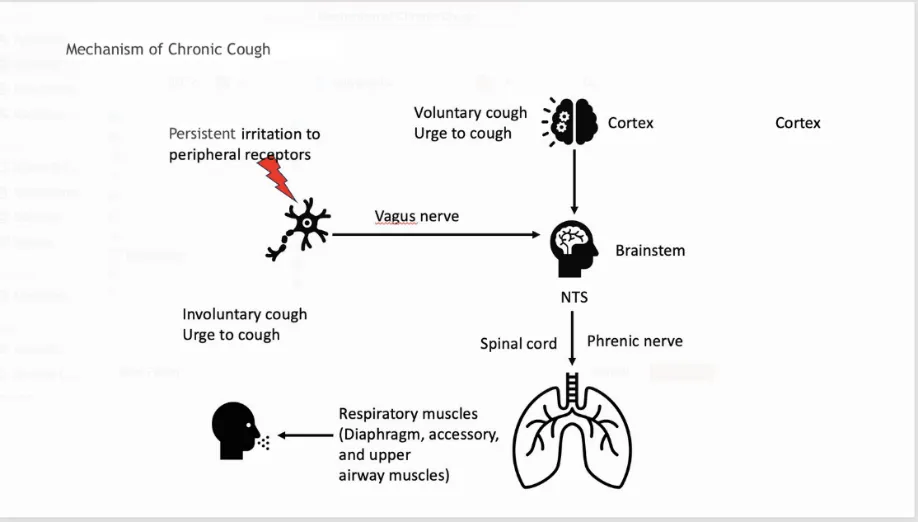
2. Acute cough:
Cough can be divided into acute cough which lasts less than four weeks.(17) Acute cough is more prevalent in preschool age children than school age children and adolescents . Approximately two th Fig no.1 mechanism of cough
3.irds of children (aged 0-4 years) will consult with an acute respiratory problem . An observational study looking at 433 children aged 1-14 years with acute cough revealed 52% were under six years old.(18) Preschool children experience increased morbidity and a worse effect on quality of life (QoL). They experience increased duration and severity compared to children and adolescents.(19) Acute cough can be a presenting symptom of upper respiratory tract infections (URTIs). It presents in around 90% of cases and is usually caused by viral infection. This is normally benign and self limiting . Due to increased exposure when entering a new communal setting young children frequently develop respiratory tract infections.(20) This can cause children to have up to eight to ten episodes of URTI per year, with cough being present for longer than two weeks.(21)
Acute bronchitis, characterised by acute cough, is a common presentation with inflammation of the trachea and lower respiratory tract.
The diagnosis is currently based on clinical symptoms. Initial assessment is to exclude other relevant differentials. The CHEST guidelines (2006) recommends only diagnosing acute bronchitis if there is no evidence of pneumonia, common cold, acute asthma, or COPD exacerbation .
In previous retrospective cohort studies, more than a third of patients diagnosed with acute bronchitis were actually diagnosed with asthma. After three years 34% were diagnosed with asthma or chronic bronchitis . Initial clinical assessments are important in providing ongoing management. A study looked at 46 patients with a history of two or more similar presentations with acute bronchitis diagnosed by their doctor. 65% were found to have mild asthma.(22) If coughing is presented as suspected acute bronchitis a thorough assessment is required. Pre-existing medical problems and risk factors should be explored. Other differentials include common cold, cough variant asthma, acute exacerbation of chronic bronchitis in a smoker, acute exacerbation of bronchiectasis and acute rhinosinusitis.
3.3. Dry cough:
A dry cough is a type of cough where there is no obvious production of sputum. It can be caused by irritation and/or inflammation of the respiratory system. It is commonly associated with viral respiratory tract infections, allergic diseases and inhalation of irritants. A dry cough can sometimes persist in children following the initial symptoms of a respiratory infection. Identifying the duration, frequency, triggers and associated symptoms of a dry cough will help determine the potential cause. The cough reflex is a protective mechanism designed to remove irritants from the respiratory tract. Stimulation of sensory nerves in the airways can lead to a frequent coughing episode where there is no obvious increase in sputum (dry cough). Common causes are smoking, dust, allergens, hypersensitivity of the airways after an infection and some respiratory diseases. However, a dry cough alone cannot confirm asthma or allergy.
3.3.1. Clinical characteristics of dry cough:
3.3.2. Causes of Dry Cough Requiring Urgent Treatment:
Patients with shortness of breath, reduced oxygenation, increased heart rate, increased respiratory rate, chest pain or painful cough, high temperature, rib fracture, rupture of rectus abdominis muscle, pneumoperitoneum, pneumomediastinum, and frequent urination may require urgent treatment. As soon as the cause is identified urgent treatment should be initiated.15 Patients with treatment resistant coughs (such as idiopathic cough or cough hypersensitivity syndrome), should be treated as a disease. Suppressive treatments may need to be considered.(23)
3.4. Wet cough:
A productive/wet cough produces a wet/creaky sound. This indicates there are secretions within the respiratory tract. In younger children they may not effectively clear their secretions so whilst there may be no visible sputum this doesn’t necessarily indicate a dry cough. A wet cough often occurs when someone has a respiratory infection. However if the cough remains wet this can indicate a problem with the airways. Coughing helps to clear the airways of secretions. If the airways become inflamed/infectious it can cause excess secretions. Coughing can help to clear these. A wet cough can occur during a viral infection which is self-limiting. Chronic wet coughs in children can be caused by conditions such as protracted bacterial bronchitis and bronchiectasis.(24)
3.4.1. Clinical characteristics of wet cough:
• Wet and gurgling. May be mucous.
• Nasal discharge and respiratory secretions.
• Seen in acute viral respiratory tract infections.
• If there is a persistent productive cough each day this may indicate an underlying lung problem.
• If the cough is prolonged or has any red flag symptoms an assessment from a medical professional is required.
It is very important to consider whether a child presenting with an acute productive cough has pneumonia or an inhaled foreign body (if relevant clinical symptoms are present). Chronic productive coughs may suggest protracted bacterial bronchitis or bronchiectasis.(25)
3.5. Viral Upper Respiratory Tract Infection (URTI) in Children:
Viral Upper Respiratory Tract Infections (URTI) are one of the most common infective diseases seen in children. Typically they affect the nose, nasal passageways, sinuses and throat. They are often caused by rhinovirus but can also be caused by other viruses including adenovirus, respiratory syncytial virus (RSV), influenza viruses and seasonal coronary viruses[28,29]
Viral URTIs typically cause mild symptoms including rhinorrhoea, nasal obstruction, sneezing, sore throat and cough. The severity and duration of symptoms will depend on the virus causing the infection, age of the child and immune response. Most simple colds will last anywhere between 7-10 days however coughing can last longer.(26)
3.5.1. Common symptoms include:
3.6.Allergic rhinitis and associated symptoms:
Allergic Rhinitis (AR): Inflammatory disease of the nasal mucosa caused by Immunoglobulin E (IgE) mediated reactions against environmental allergens. It can be caused regularly by house dust mites, pollen, moulds spores and animal dander. Often affects children/adolescents and can cause disturbance to sleep, daily activities, concentration and academic performance
Unlike Viral Upper Respiratory Tract Infections it is not infectious and therefore cannot be passed between people. Symptoms can be seasonal or perennial depending on what allergens are causing them. Common symptoms include recurrent sneezing, a runny nose, nasal congestion and itchiness in the nose, eyes and/or roof of mouth. A cough may develop due to irritation from nasal discharge or if there is another co-existing respiratory condition.(27,28)
3.6.1. Associated symptoms of allergic rhinitis:
Common symptoms include:
The severity of symptoms can vary. If they have a history of recurring symptoms associated with specific triggers, nose or eye itchiness will help to differentiate allergic rhinitis from infectious rhinitis.(27,28)
4.Pathophysiology of pediatric cold and cough:
Evidence from the literature indicates that the symptoms associated with the 4 most common viral URTIs are due to the immune system responding to the infection rather than the virus causing specific damage to the tract. Studies have shown that the identification of the virus cannot be done from symptoms alone. Infections caused by rhinovirus lead to an increase in polymorphonuclear leukocytes at the initial stage of infection. Macrophages are key in initiating an acute phase reaction by releasing cytokines. Symptoms experienced during an pper respiratory tract infection are due to proinflammatory cytokines and other mediators being secreted. Systemic symptoms such as fever are due to cytokines and local symptoms such as sore throat and nasal congestion are due to bradykinin. 4.1 Sore Throat Sore throat, together with irritation and pain in the pharynx often occurs at the beginning of infection. It is most likely that this is due to prostaglandins and bradykinin stimulating pain receptors in the upper respiratory tract. Bradykinin can induce rhinitis symptoms and sore throat when administered intranasally so is likely to be responsible for this symptom. Pain sensation is transmitted via the cranial nerves supplying the nasopharynx. Similar symptoms occur in bacterial URTI, pharyngitis and tonsillitis.(29)
4.1.cough:
Cough is the most commonly observed clinical symptom and reason for consultation with a physician. Coughing is a protective reflex to prevent aspiration of food and liquids into the airway. It also clears the respiratory tract of mucus and other foreign materials. This reflex is mediated by the vagus nerve only. Coughing occurs in the airway when sensory nerves within the larynx or below are stimulated . To cause coughing due to laryngeal inflammation caused by rhinitis the inflammation must pass into the larynx. The external ear and esophagus are innervated by the vagus nerve meaning that coughing can be caused by gastro-esophageal reflux . Respiratory tract infections are often accompanied by a non-productive dry cough in the initial days. A dry cough may be due to the spread of inflammation to the larynx.Nasal inflammation causes sneezing rather than Pathophysiology of Clinical Symptoms in Acute Viral Respiratory Tract Infections 31 Coughing. Coughing during respiratory tract infections is thought to be due to increased sensitisation of the cough reflex. This is due to the actions of inflammatory mediators on the sensory nerve terminals in the airways.(29)
4.2. cold:
During the initial stages of infection excessive serous nasal secretions can be produced. Sneezing coupled with a sore throat are the first symptoms of infective respiratory tract disease. Sneezing occurs due to a reflex response that is mediated by the trigeminal nerve supplying nerve endings to the nasal epithelium.A sneeze centre within the brain stem will cause the sneezing reflex. Inflammation occurs within the nasal cavity and nasopharynx causing stimulation of the trigeminal nerves. As histamine causes sneezing when administered intra-nasally it is likely due to histamine receptors on the trigeminal nerve.(29)
5. Therapeutic approaches in pediatric cold and cough:
Common cold and acute cough infections are one of the most common respiratory illnesses in children. Viruses are the most common cause of these illnesses. Most will resolve by themselves with no specific treatment. Treatment involves relieving symptoms, maintaining hydration and ensuring good sleep and comfort. Consideration should be given to what age your child is, what symptoms they are experiencing, their clinical state and the safety of the product. There is evidence to show that many OTC cough and cold medications available are not very effective in young children so it is important to have an evidence based approach using the correct treatment for children of different ages.(29)
5.1 Principal therapeutic approaches:
5.1.1 Non-pharmacological therapy:
Management of simple colds and coughs in children will often be non-pharmacological. Children should be given plenty of fluids, warm drinks to soothe their sore throats, and a saline solution used as nasal drops or spray. Nasal aspiration may also be used in infants. Cool mist humidifiers will help reduce nasal congestion and soothe sore throats. Saline nasal irrigation can help manage nasal symptoms and nasal aspiration can help infants who are unable to clear their own nasal mucus.(30)
5.1.2. Advantages:
5.1.3. Disadvantages:
5.2.Preparations based on honey:
Honey is a popular complementary therapy used for relief of acute coughs in children older than 1 year. It may help reduce the frequency and severity of coughing in children, and can help improve sleep patterns, especially overnight. A systematic review of studies in children found possible benefits when using honey instead of a placebo or no treatment, however all studies were methodologically poorly performed and the quality of evidence was variable. Honey must not be used in babies under 12 months old due to a risk of infant botulism.(30,31)
5.2.1.Advantages:
5.2.2. Disadvantages:
5.3. Drug-based treatment:
Prescription of pharmacological therapies will be based on specific symptoms. The choice of active ingredient should take into account the age of the child, type of cough and severity of the symptoms along with the evidence base for both effectiveness and safety.
A. Antitussives:
These drugs are aimed at suppressing a cough. There is limited evidence to support their routine use in acute cough due to a common cold. Dextromethorphan has not been consistently shown to be more effective than a placebo or supportive therapies. Cough medicines containing codeine should not be used in children due to risk of severe adverse respiratory effects.(32)
Advantages:
Disadvantages: Limited evidence of benefit in uncomplicated viral cough; possible adverse effects, inappropriate suppression of a protective cough reflex, and risk arising from dosing errors or unsuitable age groups.
B. Antihistamines:
Antihistamines are mainly used for treating allergic symptoms such as sneezing, itching and a runny nose. However they do have little benefit in simple viral infections in children. First generation antihistamines may produce sedation and therefore cause drowsiness, dry mouth or paradoxical excitement. They should only be given if there is an indicated reason for administering them to children with colds.
Advantages:
Disadvantages
C. Decongestants:
Decongestants help with nasal congestion by reducing swelling of the mucous membranes in the nose. However, cough and cold preparations containing decongestants lack evidence for efficacy and safety in young children. The FDA recommend against using cough and cold preparation containing decongestants or antihistamines under 2 years old. Manufacturers also advise against use of these preparations in children under 4 years old.(32)
Advantages:
Disadvantages:
D. Expectorants and Mucolytic agents:
Expectorants are used to help clear mucus and mucolytic agents reduce the viscosity of mucus. There is not much evidence to suggest that these agents will help in acutely viral cough in children. They should not be routinely added to paediatric formulations without considering age of child and safety of ingredients.(32)
Advantages:
Disadvantages:
E. Antipyretics/Analgesics:
If the child is suffering from fever, headache or body aches Paracetamol (acetaminophen) or Ibuprofen can be given. This helps with the symptoms but is not treating the underlying viral infection. It is important to give the correct dose based on the age and weight of the child. (30)
Advantages:
Disadvantages:
F.Antibiotics:
These are not indicated in simple viral colds. They act on bacterial infections rather than viral. If they are used they should only be used if there is a confirmed or strongly suspected bacterial infection. Unnecessary use of antibiotics causes antimicrobial resistance and puts children at risk of unnecessary adverse effects.(32)
Advantages:
Disadvantages:
G. Implications for development of cold and cough medicines in paediatrics:
Formulation selection should be based on effective ingredients. Cold and cough medicines for children should include evidence-based, safe for the appropriate age, accurately dosed and easy to administer. Care must be taken with combination products as they may result in unintentional overdose due to duplicated active ingredients. Formulations should not contain excessive number of pharmacological agents to increase the number of symptoms claimed to be treated. Evidence suggests that formulation should focus on supportive treatments and only medication if the benefit outweighs the risk.
6.Formulation strategies:
6.1 Development of suitable oral liquid dosage forms:
Oral liquids are very commonly used as a dosage form for infants and younger children. They can easily be swallowed and dosing is flexible to allow doses to be given as required depending on the drug and weight of child. Formulations should consider solubility, stability, taste, dosage volume and age.
Advantages:
Disadvantages:
6.2.Taste-masking and palatability enhancement:
Taste masking is an important aspect of formulation design. Bitter or unpalatable drugs are often refused by patients leading to poor compliance. This can be overcome by suitable flavourings and sweeteners, complexation of the drug with excipients, polymer coatings, microencapsulation and other taste masking techniques.
Advantages:
Disadvantages:
6.3 Suspensions and powders for constitution:
Suspended formulations may be advantageous if the active pharmaceutical ingredient is very insoluble in water, or if a liquid dosage form is preferred. Powders may be used to improve stability during storage of certain medicines.
During formulation development, factors such as particle size distribution, sedimentation, redispersion, viscosity, content uniformity and post constitution stability should be considered.
Advantages
Disadvantages:
6.4. Orally disintegrating tablets, mini-tablets and multiparticulates.:
Age-appropriate solid dosage forms may be an alternative to liquid medicines. Orally disintegrating tablets rapidly break down in the mouth. Mini-tablets and multiparticulates can allow flexible dosing if appropriately formulated and administered.
Advantages:
Disadvantages:
6.5. Suitable excipients and measuring devices:
Careful selection of excipients such as solvents, preservatives, sweeteners, colourings and flavours is required when formulating a product for children. Suitability will depend on the age of the child, dose, amount of exposure and specific excipients used. Accuracy can be increased by using a measuring device such as a calibrated oral syringe.
Advantages:
More accurate dosing More acceptable Less chance of incorrect administration
Disadvantages:
Toxicity of excipients varies with age Incompatibilities Misunderstanding by carer Different measuring device designs.(36)
7. Types of pediatric cold and cough formulations:
There are various different dosage forms available for cold and cough treatments for children. Health Canada consider single active dosage forms (thin strips), rapid release solids and oral liquids as acceptable forms.(36)
7.1 Liquid Oral Products e.g. Syrups, Solutions, Suspensions, Drops
ACC Kindersaft 3x100 ml
Liquids are often used in children’s formulations. Solutions have the ingredients fully dissolved in them, while suspensions have particles dispersed within them. The drops can be administered in small quantities with the correct measuring device. Advantages are that they are easy to administer, dose volumes can be adjusted and easy for children who cannot swallow solid dosage forms. Disadvantages include potential inaccuracies and overdosing, contamination and instability. Flavouring agents, preservatives and sweeteners will need to be carefully selected. Liquids can be very important to consider when creating formulations as medication errors often occur with children’s cough and cold products due to unattended consumption or incorrect dosing.(33,34)
7.2 Solid Oral Products:
Tablets, chewable tablets, caplets and effervescent tablets are some examples. Solids can be more convenient than liquids to carry around and provide accurate dosages. Chewables can be beneficial for improving acceptability in children who can chew.
Advantages include being easy to carry, no measuring required and potentially more stable. Disadvantages include difficulty swallowing, choking risk in younger children, limited dosage and potentially unpalatable. Effervescents will need dissolving correctly. They are generally more suitable for children who can use them safely and have the correct dosage strength.(34)
7.3 Granules/Oral Powders:
Granulat Erdbeer/Vanille ben-u-ron (10 St) 500 mg Direct Powders and granules can be provided in single dosage sachets. Advantages include easy single dose packaging, easy to carry and no need for certain preservation in liquids. Disadvantages include needing to measure accurately, may be unpleasant and potential dosing errors. Suitability will depend on how soluble, palatable and sensitive to moisture the ingredient is and if the child can take the correct dosage.(36)
7.4 Drops (swallowed):
T-cold Drops General Medicines at Best Price in Ahmedabad | Talent Health Care
Drops are highly concentrated liquid products administered in small volumes. Often a measuring dropper will be included. They can be useful when a small dose is required. Often used in children’s products as they are specifically licensed for use in children of that age.
Advantages of using drops include being easy to carry, easy to administer and easy for children who cannot swallow tablets. Disadvantages include high risk of dosing errors with incorrect droppers, overdosing due to concentration differences and potential difficulties administering.
Accurate measuring devices and clear labelling is essential for liquid medication in children.(35)
7.5 Medicated Throat Lozenges/Oral Strips
Relieves Cough And Soothes Sore Throat Instantly - Orally Disintegrating Strips General Medicines at Best Price in Mumbai | D K Livkon Health Care Pvt Ltd
Lozenges slowly melt in the mouth whilst strips melt quickly. They can be used for older children who can use them safely. Advantages of these include being easy to use, easy to carry and could be useful for localised sore throat relief.
Disadvantages include choking risk with lozenges in young children. Palatability and mouth feel can affect acceptability. Evidence is conflicting about whether specific active ingredients are effective for viral cough in children. Strips have limitations with dosage and compatibility. Health Canada guidance do recognise single active strips but do not recognise multi active strips as they fall under specific labelling standards for children’s cough and cold products.(34)
7.6 Topical Products/Vapor Rubs:
Vicks VapoRub Original 1.76 oz Farmacia Savia As described on the label, topical vapor rubs should be applied to the chest or neck. Some will contain menthol, camphor or fragrant oils to create a sensation of more free nasal breathing.
Advantages include not being ingested and potentially improved subjective cough symptoms or improved sleep with some products.
Disadvantages include skin irritation, accidental ingestion and toxicity due to incorrect exposure to ingredients like camphor. They cannot remove the virus and therefore can only be used if you are of the correct age. A clinical review showed that there may be some benefits to using topical vapor rubs to help certain cough symptoms in children. However there is still limited evidence and should not be generalised to all products.(37)
7.7. Summary of dosage forms and formulation considerations
Table 2: Dosage Forms and Formulation Considerations.
| Dosage form | Main advantage | Main limitation |
|---|---|---|
| Syrups and solutions | Easy administration | Preservation and dosing challenges |
| Suspensions | Can accommodate poorly soluble ingredients | May require shaking and uniform redispersion |
| Oral drops | Small administration volume | Concentration-related dosing errors |
| Tablets and chewables | Portable and convenient | Swallowing and choking risks |
| Powders and granules | Convenient unit-dose packaging | Taste and preparation difficulties |
| Thin strips | Convenient administration | Limited dose capacity and age suitability |
| Lozenges | May soothe throat symptoms | Choking risk in young children |
| Topical vapor rubs | Non-oral application | Skin irritation and ingestion toxicity |
8.Advantage of pediatric cold and cough formulation:-
8.1. Advantages of multiparticulates for the preparation of age-appropriate products.
8.1.1. Efficacy and acceptability
A] Dosage: The dose can be easily adjusted to suit each patient, and the tiny particles are easy to swallow.
B] Preparation: The product can be given in different ways, such as sprinkled on food or mixed in a drink.
C] Compliance: The particles are simple to enhance with extra features, and their unpleasant taste can be hidden, so patients are more likely to take them.
8.1.2. Safety profile
A] Bioavailability: The body absorbs the drug consistently from one dose to the next, because the particles pass through the gut in a uniform way. The drug can also be designed to release at a chosen time or place.
B] Excipients: The inactive ingredients used are generally recognized as safe (GRAS).
C] Stability and medication error: The photo shows no text for these rows.
D] Patient access : Manufacturability and affordability: The equipment and methods needed to produce them are already easy to obtain.(38–40)
8.2. Advantages of orodispersible tablets for the preparation of age-appropriate product[45].
8.2.1. Efficacy and acceptability
A] Dosage and preparation: The tablet can be taken without water, so there is no need to swallow it whole. It can also be given in flexible ways.
B] Compliance: Patients tend to prefer it to standard tablets or liquids, so they are more likely to take it as directed.
8.2.2. Safety profile
A] Bioavailability: More of the drug may reach the bloodstream, because some is absorbed through the lining of the cheek (buccal absorption).
B] Excipients, stability, medication error: The photo shows no advantage text for these rows.
C] Patient access:-Manufacturability and affordability:-The photo shows no advantage text for these rows.(38–40)
8.3.Advantages of chewable tablets for the preparation of age-appropriate product[45].
8.3.1. Efficacy and acceptability
A] Dosage and preparation: The tablet can be taken without water, so the patient doesn't have to swallow it whole.
B]Compliance: Patients may like it better than standard tablets or liquids.
8.3.2. Safety profile
A] Bioavailability: The amount of drug absorbed may be higher, because the tablet breaks up and dissolves quickly. Some drug may also be absorbed through the lining of the cheek (buccal absorption).
B] Excipients, stability, medication error:The photo shows no advantage text for these rows.
C] Patient access Manufacturability and affordability: The machinery and packaging needed to produce it are already easy to obtain.(38–40)
9. Advantages of the Therapeutic Approach of Cough and Cold:-
9.1.The therapeutic approach to cough and cold provides several benefits in reducing symptoms, improving patient comfort, and promoting effective recovery.
1. Symptomatic Relief: Reduces symptoms such as cough, sneezing, sore throat, nasal congestion, and runny nose.
2. Improved Quality of Life: Helps patients carry out their daily activities with less discomfort.
3. Better Sleep: Relief from coughing and nasal congestion improves sleep quality.
4. Supportive Recovery: Rest, adequate fluid intake, and appropriate symptomatic treatment support the body's natural recovery process.
5. Prevention of Complications: Early assessment and appropriate management help identify patients who may develop serious complications.
6. Rational Use of Antibiotics: Helps prevent unnecessary antibiotic use in viral infections and reduces the risk of antimicrobial resistance.
7. Cost-Effective Treatment: Supportive care and suitable over-the-counter medicines can provide affordable symptom management.
8. Personalized Treatment: Treatment can be selected according to the patient's age, symptoms, medical history, and severity of illness.
9. Patient Education: Increases awareness about medication use, hygiene, prevention, and home care.
10. Reduced Transmission: Handwashing, respiratory hygiene, and avoiding close contact help prevent the spread of respiratory infections.
11. Safe Medication Practices: Encourages appropriate medicine selection and dosage, reducing the risk of adverse drug reactions.
12. Timely Medical Intervention: Helps recognize warning signs and identify patients who require further medical evaluation.(38–40)
10.Recent advances in conventional oral drug delivery systems
Conventional solid and liquid dosage forms have limitations in delivering drugs to pediatric patients. This section discusses challenges in their manufacturing and administration, along with recent developments to overcome these limitations.
10.1. Liquid dosage forms:- Liquid dosage forms are particularly suitable for neonates and infants because they provide flexible dosing and are easy to swallow. However, they have limitations, including stability problems, higher transportation costs and difficulties in achieving controlled drug release. To overcome these challenges, researchers have investigated sustained-release liquid formulations using ion-exchange resins, coated microparticles and microemulsions to reduce frequent administration. Examples of extended-release formulations include azithromycin microspheres and methylphenidate hydrochloride oral suspension (48,49). Milk-based vehicles have also been explored to improve drug solubility and formulation stability, while lipid-based vehicles offer potential benefits in taste masking and solubilization of poorly water-soluble drugs .Additionally, nipple-shield delivery systems have been developed to administer medicines to breastfeeding infants Innovative administration devices, including syringe-equipped baby bottles, modified pacifiers and dose-sipping syringes, have also been investigated to simplify medicine administration in pediatric patients. However, the relatively high cost of these devices may limit their widespread application.(38–40)
10.2.Solid dosage form :- Solid dosage forms are widely preferred in the pharmaceutical industry because they offer good stability, ease of transportation, and low manufacturing costs. However, conventional tablets and capsules may be difficult for pediatric patients, particularly those with swallowing difficulties. Pill-swallowing cups and patient education or training techniques have been explored to improve the administration and swallowing of solid dosage forms, although their suitability for infants requires further evaluation. Another major limitation of conventional tablets is their poor dose flexibility, which often leads to tablet splitting and potential dosing inaccuracies. To overcome this problem, researchers have developed accurately divisible tablets that can be separated into multiple segments and tablets containing drug-free layers to improve dose accuracy. Solid dosage pens are another innovative approach that allows individualized dosing by cutting small portions from drug-loaded cylindricalrods. Smaller solid dosage forms, particularly minitablets, have emerged as promising alternatives because they are easier to swallow and provide greater dosing flexibility. Studies have demonstrated that children as young as six months can swallow minitablets, and 2 mm minitablets may be more acceptable than conventional liquid formulations in young children. However, their small size limits the amount of drug delivered in each unit, meaning that multiple minitablets may be required to achieve the prescribed dose.(38–40)
11. Challenges in pediatric formulation development:-
Pediatric formulation development presents several challenges due to differences in physiological development, drug metabolism, and therapeutic requirements across age groups. Developing age-appropriate formulations requires consideration of the specific needs of preterm neonates, infants, children, and adolescents. Accurate dose selection and flexibility are also essential to accommodate variations in body weight, organ maturation, and individual drug requirements. Palatability and acceptability are important factors because unpleasant taste, texture, and difficulties in administration may reduce medication adherence. Another major concern is excipient safety, as certain pharmaceutical additives, including benzyl alcohol and propylene glycol, may cause toxicity, particularly in neonates and preterm infants . Historical reports of neonatal toxicity associated with chloramphenicol and other medication components further highlight the importance of careful drug and excipient selection. Dose accuracy and administration also remain challenging because inappropriate dose measurement can result in underdosing or toxicity. Although pharmacokinetic modeling and dose-scaling approaches help predict appropriate pediatric doses, their accuracy may be limited by developmental changes in drug absorption, distribution, metabolism, and elimination. Limited clinical data, particularly for preterm neonates and children with specific medical conditions, further complicate dose selection and safety evaluation. Drug metabolism and response may also vary considerably among pediatric patients, requiring careful clinical assessment.Furthermore, pediatric formulations must be designed to provide manufacturing flexibility, consistent quality, stability, and accurate drug delivery across different dose requirements. Successful development requires multidisciplinary collaboration among formulation scientists, clinical pharmacologists, pharmacometricians, and healthcare professionals. Continuous evaluation of scientific evidence and regulatory recommendations is also necessary to ensure the safety, efficacy, and acceptability of pediatric medicines.(38–40)
12. Safety considerations for pediatric cough and cold formulations:-
Pediatric cough and cold formulations require careful consideration because their safety and efficacy vary according to the child's age and developmental stage. The use of antihistamines and decongestants in young children may cause serious adverse effects, and evidence supporting their effectiveness in children below six years is limited. Multi-ingredient formulations may also increase the risk of accidental overdose when different products contain the same active ingredients.
Accurate dose measurement is essential to prevent medication errors. Oral syringes and standardized measuring devices are preferred for administering liquid medicines because they help caregivers deliver the intended dose accurately. Different active ingredients are associated with specific safety concerns. Antihistamines may cause sedation or paradoxical excitation, while decongestants may produce cardiovascular adverse effects. Excessive acetaminophen administration can cause liver toxicity, and dextromethorphan overdose may result in neurological disturbances. Benzonatate ingestion in young children can cause severe toxicity, including seizures, cardiac arrest and death.
Drug interactions should also be considered, particularly the potential interaction of dextromethorphan with serotonergic medications. Furthermore, many OTC cough and cold preparations have not demonstrated convincing clinical benefits in young children, highlighting the importance of evaluating therapeutic efficacy alongside safety. Appropriate labeling, child-resistant packaging, caregiver education and suitable measuring devices are important strategies for preventing accidental ingestion and administration errors.Non-pharmacological approaches, including adequate fluid intake, saline nasal drops, nasal suctioning and honey for children older than one year, may provide symptomatic relief while minimizing unnecessary medication exposure.(38–40)
13. Regulatory guidelines for pediatric cough and cold formulations:
Regulatory authorities have established age-related restrictions to minimize the risks associated with pediatric cough and cold medicines. The US FDA does not recommend antihistamine- or decongestant-containing cough and cold products for children younger than two years because of potentially serious adverse effects. In 2008, manufacturers voluntarily updated product labels to indicate that these medicines should not be used in children younger than four years.
In 2018, the FDA restricted prescription cough and cold medicines containing codeine or hydrocodone to adults because of the risk of respiratory depression and serious breathing difficulties in children. Health Canada and the European Medicines Agency have also introduced restrictions on codeine use in pediatric patients.
Accurate dose measurement and clear labeling are essential regulatory considerations. The use of milliliters (mL) rather than household measurements such as teaspoons and tablespoons is recommended for oral liquid medicines. Standardized measuring devices should also be supplied with liquid formulations to minimize dosing errors . Product labels should clearly identify active ingredients and provide age-appropriate administration instructions to prevent accidental duplication of ingredients and overdose .
Restrictions also apply to specific active ingredients. Benzonatate is approved for cough relief in patients aged 10 years and older, as accidental ingestion by younger children may cause life-threatening toxicity. Concerns regarding the effectiveness of oral phenylephrine have also been raised, highlighting the need for evidence-based ingredient selection in pediatric cough and cold formulations.
Overall, regulatory recommendations emphasize age-appropriate medication use, accurate dosing, ingredient safety, caregiver education and consideration of non-pharmacological treatment options, particularly in younger children.(38–40)
CONCLUSION:
Cold and cough are common ailments in children and are mainly caused by viral infection of the upper respiratory tract. Most cases will resolve themselves but good treatment can help relieve symptoms and prevent complications. This involves supportive therapy with hydration, nasal decongestant drops (saline), humidification and honey (children over 1 year old). Appropriate medicines can also be used.Appropriate formulations can be produced to improve the treatment of cold and cough in children. Formulations such as syrup, suspension, powder, granules, chewable tablets, mini-tablets and melt in-mouth tablets can all be beneficial to the patient. Techniques such as masking the taste, using the right excipients and appropriate measuring devices can improve the quality of the formulation.
However factors such as unpalatable taste, correct dosage, safe excipients, formulation stability and differences between age groups must all be considered. Appropriate and safe formulations that are stable and suitable for children can be developed to improve the treatment of cold and cough in children. This should follow correct safety guidelines.
REFERENCES





Dr. Chanchal Navin R. A. J., Ayush Mhatre, Rushikesh Phadke, Raj Singh, Shrutika Patil, Therapeutic Approaches in Pediatric Cold and Cough: Formulation Strategies, Advantages, and Challenges: An Updated REVIEW, Int. J. of Pharm. Sci., 2026, Vol 4, Issue 11, 3178-3195. https://doi.org/10.5281/zenodo.24361127
 10.5281/zenodo.24361127