

We use cookies to ensure our website works properly and to personalise your experience. Cookies policy
D. Y.Patil college of Pharmacy kolhapur
Dysmenorrhea is one of the most common gynecological disorders affecting women reproductive age and is characterized by painful menstrual cramps accompanied by symptoms such as nausea, fatigue, headache and lower abdominal pain. It has a significant impact on physical, social and emotional well-being of women and often interferes with their daily activities and quality of life. Conventional treatment including non-steroidal anti-inflammatory drugs and hormonal therapies are effective in reducing pain but associated with various adverse effects and limitations during long term use. The present study was undertaken to formulate and evaluate a polyherbal gel containing flaxseed gel, lavender oil, and peppermint oil for management of Dysmenorrhea. Flaxseed is rich in ligans, flavonoids, phenolic compounds and omega 3 fatty acids which possess anti-inflammatory properties and help in reducing prostaglandin synthesis responsible for menstrual pain. Lavender oil exhibit analgesic, sedative, and antispasmodic activities whereas peppermint oil contain menthol which provide analgesic, anti-inflammatory and muscle relaxant effects. Flaxseed gel was prepared by heating flaxseeds with distilled water and filtering viscous extract through muslin cloth. The polyherbal gel was formulated by cold method using Carbopol 940 as gelling agent. other ingredients such as methyl paraben and propyl paraben were used as preservative, sodium metabisulphite as antioxidant, sodium formaldehyde as reducing agent, ethanol as a solvent. Lavender oil and peppermint oil were incorporated into formulation with continuous stirring to obtain a homogeneous and stable gel.
Dysmenorrhea painful menstruation, is a common chronic condition of pain that affects a wide range of young women capable of reducing their quality of life, decrease their ability to function at a 100 percent and ultimately causing reduction in productivity for the affected person for a period of time.[1] Based on studies, dysmenorrhea is the primary cause for frequently occurring short-term absence from school in adolescent girls and that the incidence of primary dysmenorrhea in this population varies from 16% to approximately 93%.2 [2] Pain referred by the International Association an unpleasant sensory and emotional experience related to actual or possible tissue damage Dysmenorrhea has a major effect on women's lives, restricting daily activities decreasing academic performance in adolescents and causing poor sleep quality. It also adversely impacts mood, resulting in anxiety and depression.[3]
It is classified into two types on the basis of pathology
Primary dysmenorrhea
Primary dysmenorrhea (PD) is defined by pain and spasm. One of the most common signs in both young and adult females is lower abdominal pains which begin just before or at the start of menstrual without any pelvic pathology. It usually occurs in adolescence, six to two years after a menarche. A unique and cyclic pattern describes dysmenorrheic pain, which typically rises on the first day of menstruation and lasts for up to 72 hours. Whilebeing relatively common and have an impact on day-to-day activities, it is frequently ignored or handled improperly as many young women prefer to suffer in silence without approaching a doctor.[4]
Etiology
While the exact reason of primary dysmenorrhea is not known, uterine prostaglandins, especially PGF2α, may be responsible for a large number of symptoms. Once menstruation starts, PGF2α gets released by the destroying endometrial cells during endometrial expulsion. Myometrial contractions, ischemia, and nerve ending sensitization are all produced by PGF2α. PGF2α levels in menstrual fluid are greater in women with more severe dysmenorrhea. first two days of menstruation, when symptoms are at their the most severe, are when these levels are at their highest. Further, a remarkable effectiveness of NSAIDs, that operate by decreasing prostaglandin synthetase, has been displayed in several of examinations.[5]
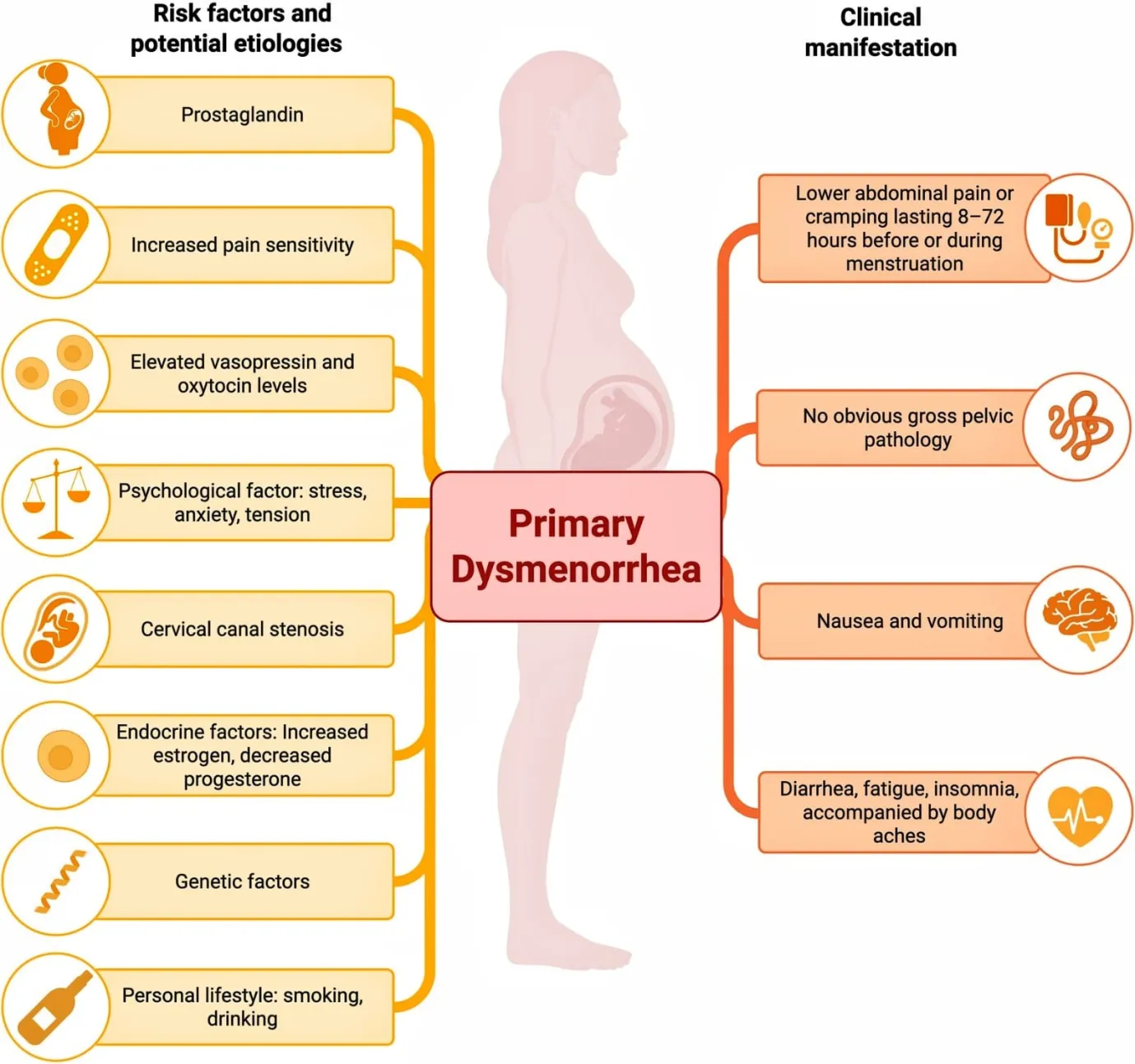
Fig no. 1 Primary dysmenorrhea
Secondary dysmenorrhea
Endometriosis, chronic pelvic inflammatory disease, adenomyosis, endometrial polyps, ovarian cysts, congenital defects, and intrauterine contraceptive device issues are among the medical disorders that lead to Secondary dysmenorrhea It generally appears in older girls (>24 years) who have never had dysmenorrhea. It is related to dispersed or chronic pain, that does not always occur during menstruation These include a big uterus, pain during sex, and resistance to effective treatment. Endometriosis, that is known as the presence of endometrial tissue outside the uterus, is considered to be one of the most common causes of SD. So the fundamental pelvic pathology is utilized to describe the evaluation and course of treatment for SD. [6]
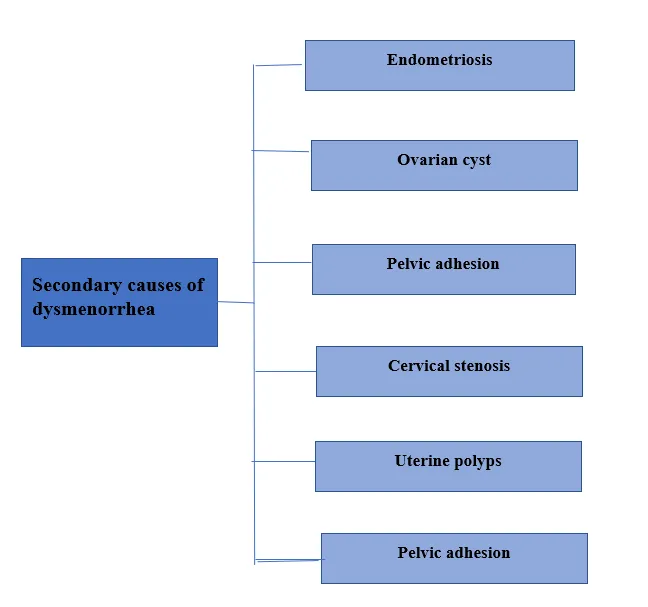
Fig no.2 Secondary Dysmenorrhea
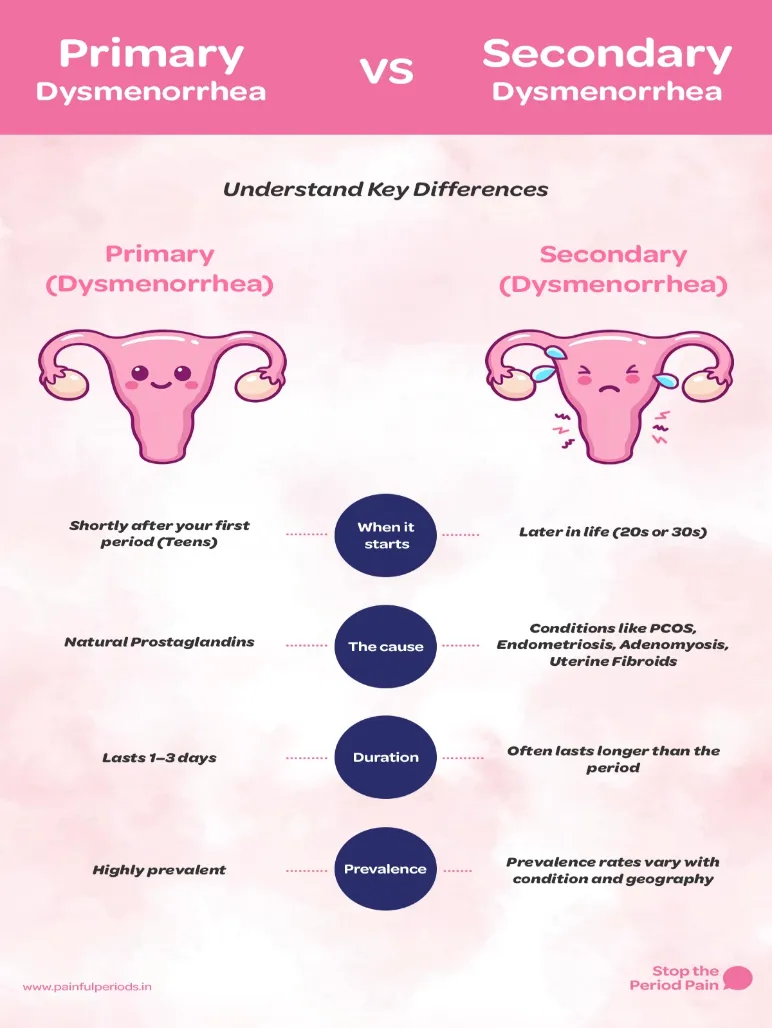
Fig no .3 difference between primary and secondary dysmenorrhea
Pathophysiology
Dysmenorrhea occurs by increased prostaglandin F2α (PGF2α) and prostaglandin E2 (PGE2) release in the uterus during endometrial sloughing. Anaerobic metabolite synthesis and uterine ischemia are promoted by these prostaglandins' increased vasoconstriction and myometrial contractions. It causes pain fibres to become hypersensitive, which ultimately results in pelvic pain. Arachidonic acid produces greater prostaglandins by means of the cyclooxygenase (COX) process. By activating the lysosomal enzyme phospholipase A2, levels of progesterone regulate the synthesis of arachidonic acid. [16] Progesterone levels rise during the second half of the luteal phase, the last stage of the menstrual cycle that occurs after ovulation. If conception is unsuccessful, the corpus luteum shrinks and blood progesterone levels decrease.[17]
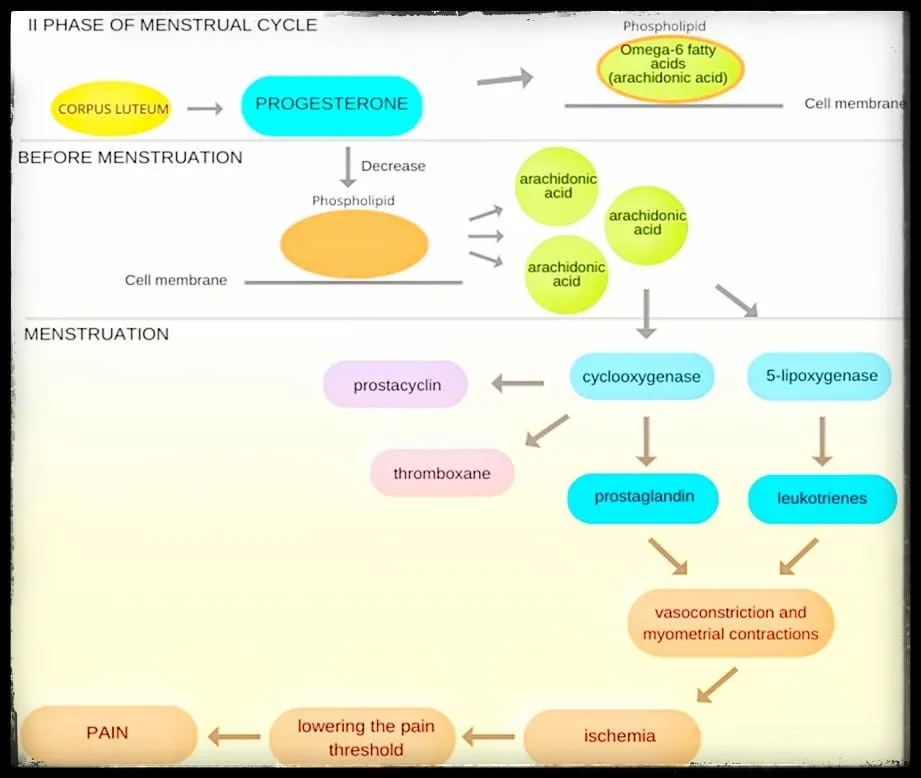
Fig no .4 Pathophysiology of dysmenorrhea
Herbal medicine
Medications such prostaglandin synthesis inhibitors, nonsteroidal anti-inflammatory drugs, and contraceptives tablets are used irregularly for treating dysmenorrhea due to fears regarding their adverse effects. In addition, Iranian culture has rejected some of them. Therefore, it seems that a new and simpler dysmenorrhea treatment is necessary. Some herbal medicines work effectively for dysmenorrhea and symptoms that goes along with it. Some plants have a potential to prevent the release of prostaglandins, while some have anti-spasmodic effects.[18]
Herbs are frequently utilized by women for the treatment of primary dysmenorrhea. In a systematic evaluation, Gholami analyzed 24 papers on effects of herbs on dysmenorrhea and found that Primary dysmenorrhea was reduced by chamomile tea , fennel (Foeniculum vulgare), cinnamon (Cinnamomum), dill (Anethum graveolens), safron (Colchicum), celery (Apium graveolens), anise (Pimpinella anisum), balm (Balsamum), valerian (Valeriana oicinalis), mint extract (Menthe longifolia), and organic honey.[14] These medications are used to treat side effects of dysmenorrhea Five categories of herbs are used to reduce menstrual pain. These groups include discomfort, spasm, and inflammation, all of which are factors in the cramps that occur during this time. It alleviates pain, inflammation, and tension. Herbs consisting of turmeric, ginger, cumin, and jatamansi are used to reduce the discomfort of spasms. The active constituents of these plants, which provide them with their anti-inflammatory qualities, comprise terpenoids, essential oils, alkaloids, vitamin C, and amino acids.[19]
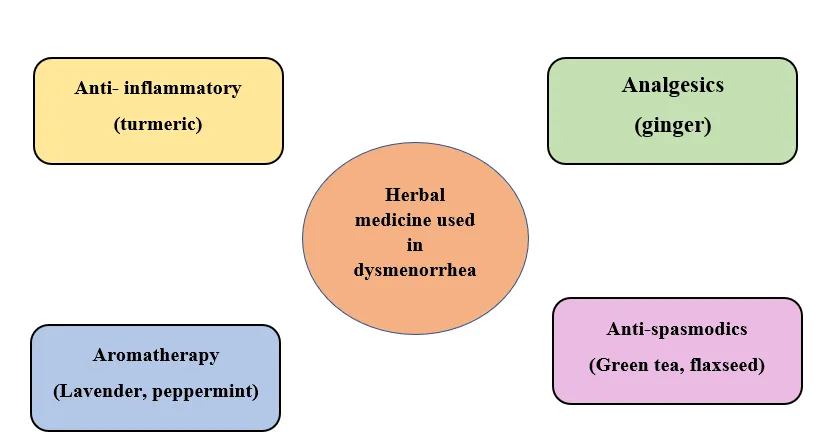
Fig no.5 herbal medicine in dysmenorrhea
Herbal plants used in treatment of dysmenorrhea
|
Sr no |
Plant name |
Biological source |
Active constituent |
Description |
|
1 |
Fenugreek |
Leguminaceae |
Lysine, trigonelline |
It has role in reduction of dysmenorrhea symptoms as well as abdominal cramps [20] |
|
2 |
Peppermint |
Labiatae |
menthol |
It has antispasmodic properties it also used to treat irritable bowel syndrome [21] |
|
3 |
Ashwagandha |
Solanaceae |
Withafetin, withanolides |
Reduces menstrual discomfort by reducing pain and swelling [22] |
|
4 |
Tulsi |
Laminaceae |
Oleanolic acid |
Help in reducing menstrual cramping, bloating and nausea [23] |
|
5 |
Fennel |
apiaceae |
Essential oil, estragol |
Fennel help in uterine contraction and prevent prostaglandin synthesis [24] |
|
6 |
Turmeric |
Zingiberaceae |
Curcumin |
It inhibits formulation of prostaglandin and cyclooxygenase which reduce inflammation [25] |
Gel
Gels are as semi-rigid systems in which are three-dimensional network of interlacing particle or dissolved molecules of the dispersed phase restricts the dispersing medium's movement. Gels are composed of two interpenetrating systems where the colloidal particles, also known as the gelat or or gallant, are uniformly distributed throughout a dispersion medium or solvent forming a three-dimensional matrix known as the gel. The gels are prepared by adding a gelling agent (gelator) which could be natural, synthetic or semi-synthetic polymer or low molecular weight small molecules, into an organic, inorganic or aqueous solvent or solvent systems. [26]
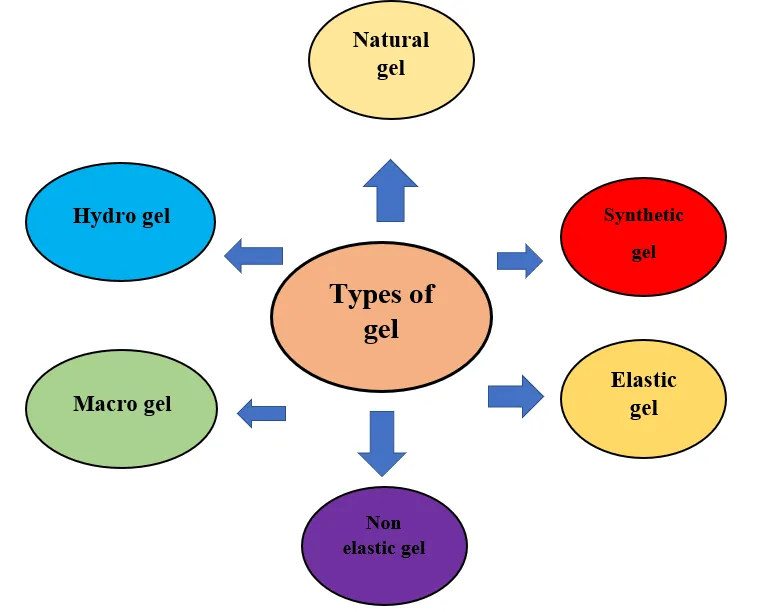
Fig no.6 Types of gel
Characteristics
Gel are easy to formulate as compared to other semisolid dosage form.
Gel is a non-greasy of formulation.
They are biodegradable and biocompatible.
They form protective layer on application site.
They are washable and nontoxic.
They provide excellent spredability and cooling effect.
They can be used administer both polar and nonpolar drugs.[27]
Material and methods
Lavender oil
One of the medicinal herbs that is often studied is lavender also known as lavandula which is a species of lamiaceae family. The purple blue shrub flower has been utilized for treatment of variety of diseases. Lavender angustifolia, lavender latifolia, lavenderstoechas and lavender intermedia are most widely used species. [28]
It is cultivated for commercial use all over the world. It is cultivated in indian states of himachal Pradesh, uttar pradeshand kashmir valley. [29] Its essence is mad from distilling flowers from blossoming plants and its muscle relaxanant and antispasmodic effects have been confirmed by many studies. Its essence is made from distilling flowers from blossoming plants, and its muscle relaxant and antispasmodic effects have been confirmed by many studies. [30]
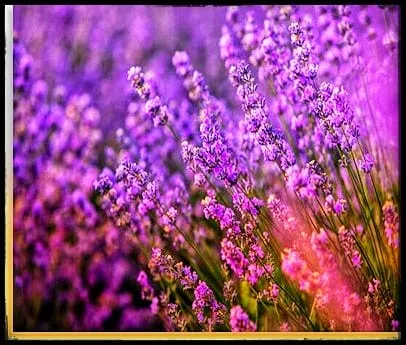
Fig no.7 lavender
Peppermint oil
Since ancient greek , roman , and egyptian times peppermint as ben considered one of the most widely used medicinal plants in traditional medicine . Nasal congestion, cough,sore throat , toothache,migrane headaches,musculoskeletalpains,stess,anxiety,nausea and vomiting bloating and abdominal pain ar just few of symptoms that it has been used to treat this herb has also been utilized to treat dysmenorrhea and induce menstruation. Research indicate antioxidant and anti-inflammatory, antibacterial, antispasmodic, analgesic and anxiolytic properties of peppermint. Menthol the main element in peppermint posseses analgesic and antispasmodic effects which influence smooth muscle and nerve tissue of many bodies system [31] On smooth muscles, peppermint decreases spasmodic activity. The antagonistic effects against calcium and the menthol component are the cause of this feature.
Also, peppermint's menthol component affects Kappa Opioid receptors, which reduces pain sensations. It also contains its own cell membrane receptor type, which reduces cellular inflow while the cells are at rest and increases the cells' sensitivity for stimulation. Menthol reduces pain by lowering synaptic stimulation and transmission.[32]
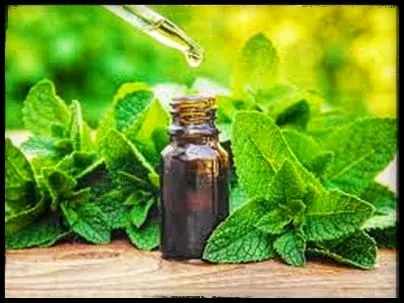
Fig no.8 peppermint oil
Flax seed
Linum usitatissimum is botanical name for flaxseed. Flaxseed have high concentration of prostanoids particularly lignans and small quantity of phenolic acids, flavonoids and cyanogenic glycosides based on phytochemical. The anti-inflammatory properties of lignans, flavonoids, and alpha-linoleic acid proved that flaxseed could lessen the severity of breast pain. Menstrual pain and migraines can be successfully treated with flaxseed oil. [33] As they include natural substances and have few adverse effects, herbal supplements are being increasingly utilized as alternative treatments. The effects of herbal remedies continue to be investigated and require further study. It prove the efficiency of flaxseed and chamomile in reducing pain on endometriosis patients pelvic pain, dyspareunia, and dysmenorrhea [34]
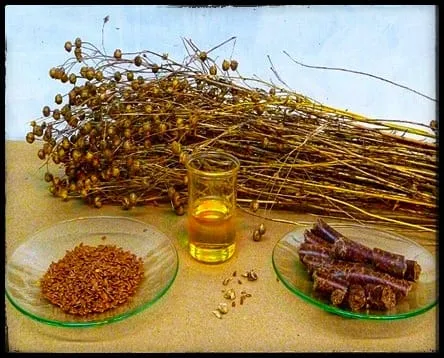
Fig no.9 flaxseed
Chemicals
|
Sr No |
Name |
Use |
Amount |
|
1 |
Carbopol 940 |
Gelling agent |
0.5mg |
|
2 |
Methyl paraben |
Preservative |
0.10mg |
|
3 |
Propyl paraben |
Preservative |
0.10mg |
|
4 |
Sodium metabisulphite |
Antioxidant |
0.05mg |
|
5 |
Sodium fromaldehyde |
Reducing agent |
0.025mg |
|
6 |
Ethanol |
|
2.5 ml |
|
7 |
Triethanolamine |
Ph adjuster |
2 drops |
|
8 |
Distilled water |
|
q.s |
Procedure
Step
Preparation of flax seed gel
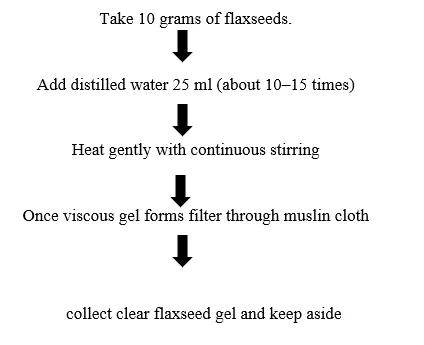
Step 2
Preparation of polyherbal gel
Evaluation test
1.Physical appearance
Colour =transparent
Odour =lavender
Appearance =smooth [36]
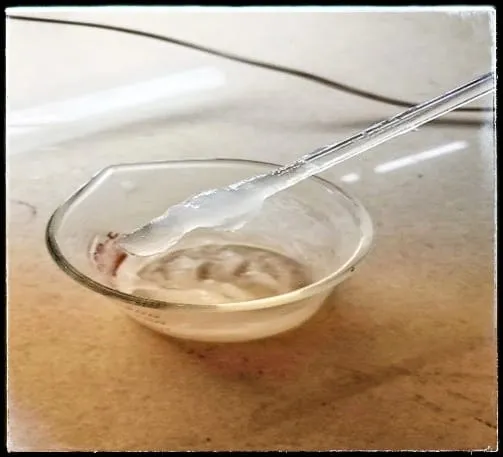
Fig no.13 Physical appearance
2.Spreadability test
M=Weight put on upper slide
L=length of slide
T=time taken for separation
M=4.50
L=7.4
T=20sec
S=M multiply L and divided by T
=1.68
Spreadability =1.68g cm/sec [37]
The polyherbal gel exhibit good spreadability spreading easily and uniformly on skin surface indicating statisfactory application properties.

Fig no.14 Spreadability test
3.pH
The pH was determined by using pH strip. The strip was deep into the gel and the obtained colour was compared with the chart provided with strip. Normal pH of polyherbal gel is 5-6.[38] The observed Ph of polyherbal gel is 6 i.e the polyherbal gel is neutral in nature.
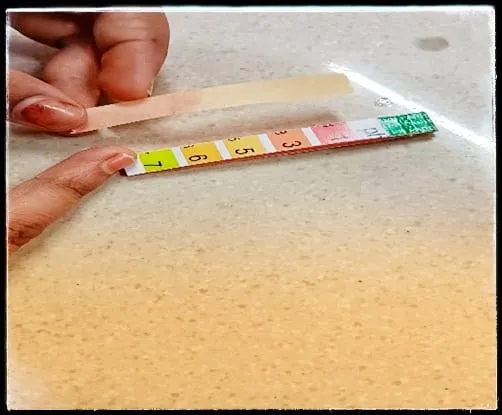
Fig no.15 pH
4.Washability test
The product was applied on hand and observed under running water.[39] The polyherbal gel was easily washable with water and was completely removed from skin surface without leaving excessive residue.The polyherbal showed good washability indicating user convience and easy application.

Fig no.16 Spredability test
5.Viscosity
The viscosity of individual polyherbal gel was measured by Brookfield viscometer at 100rpm using spindle no 6[40]
Viscosity =dial reading *factor
13907.1*100=1390710 poise(p)
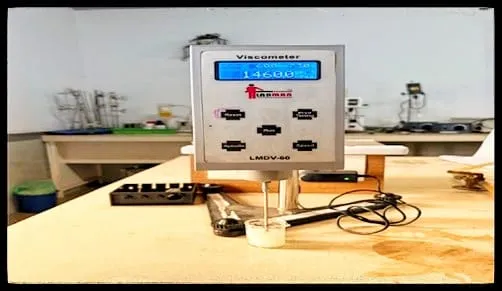
Fig no.17 Viscosity
RESULT
The formulated polyherbal gel containing flaxseed gel, lavender oil,and peppermint oil was successfully prepared and evaluated .The gel was transparent in color , smooth in appearance, and possessed lavender odour .the spreadability value found to be 1.68g.cm/sec,indicating east application on skin . The ph of gel was 5-6making suitable for topical use. The washability test demonstrated easy removal of gel with water and microbial test indicate absence of contamination. These evaluation result found that prepared polyherbal gel posseses desirable physiochemical properties for topical application and may effective in managing dysmenorrhea related pain and discomfort.
CONCLUSION
The present study successfully formulated and evaluated a polyherbal gel containing flaxseed gel, lavender oil and peppermint oil for management of dysmenorrhea. the formulation include appropriate pH, good spredability acceptable viscosity and microbial safety. The herbal ingredients possess anti-inflammatory, analgesic and antispasmodic properties that help reduce menstrual pain. Therefore developed polyherbal gel can be considered a safe, effective and patient friendly herbal alternative for symptomatic relief of dysmenorrhea.
REFERENCES






Namrata Patil*, Samruddhi Patil, Gayatri Patil, Ruksar Mulla, Pooja Deshmane, , C.M.Jangme, Preparation And Evaluation Of Polyherbal Topical Gel For Dysmenorrhea , Int. J. of Pharm. Sci., 2026, Vol 4, Issue 7, 3553-3570. https://doi.org/10.5281/zenodo.21415517
 10.5281/zenodo.21415517