

We use cookies to ensure our website works properly and to personalise your experience. Cookies policy
Department of Pharmaceutical Quality Assuarance, D.S.T.S. Mandal’s College of Pharmacy, Solapur, Maharashtra, India 413009
The research aimed to explore the antibacterial properties of Bauhinia purpurea leaf extracts and assess their potential for medical applications. Specifically, the study focused on evaluating the efficacy of both aqueous and methanol extracts against S. aureus and E. coli bacterial strains using the agar well diffusion method on Muller-Hinton Agar medium. Results indicated that the methanolic extract exhibited significant inhibition against Staphylococcus aureus, while the aqueous extract did not demonstrate observable activity against the tested microorganisms. This suggests that the antibacterial activity of Bauhinia purpurea leaf extracts may be solvent-dependent, with methanol being more effective in extracting the bioactive compounds responsible for antibacterial properties. Moreover, the research involved the development and assessment of eight different formulations derived from these extracts. Various parameters such as physical characteristics, pH, spreadability, viscosity, antibacterial effectiveness, and in-vitro cell diffusion were evaluated to determine the suitability of these formulations for potential applications. Overall, the study highlights the potential of Bauhinia purpurea leaf extracts, particularly the methanol extract, as a source of antibacterial agents. Further research could focus on identifying and isolating the specific bioactive compounds responsible for the observed antibacterial activity and optimizing formulations for practical applications in medicine or healthcare.
For centuries, plants have served as remedies for human ailments owing to their therapeutic components. Their richness in antimicrobial agents stems from the diverse array of microorganisms they harbor and the abundance of metabolites extractable from them1. This recognition of traditional medicines as viable healthcare alternatives has spurred scientific exploration into the antimicrobial potential of medicinal plants. Contemporary research has pinpointed numerous secondary metabolites within various plant species possessing antimicrobial properties. Given the severity of human infections, particularly those caused by bacteria and fungi, the quest for novel antimicrobial agents remains imperative. This drive fuels ongoing investigations into the medicinal properties of plants, aiming to unearth new chemotherapeutic options2-3.
Bauhinia purpurea Linn (Fabaceae), mostly referred to as the butterfly plant, is a deciduous tree of average size, found sparsely in India. It boasts a range of gastrointestinal applications, including serving as a laxative (flowers), a carminative agent (roots), and a remedy for diarrhea (bark). This plant has been used traditionally to cure a number of ailments, including septicemia, dropsy, discomfort, rheumatism, convulsions, and delirium.4
The aerial parts of the plant reportedly contain flavone glycosides, dimeric flavonoids, 6-butyl-3-hydroxy flavanone, amino acids, phenyl fatty esters, lutein, and β-sitosterol5. Notably, Bauhinia purpurea has found utility as a novel paraffin section marker for identifying Reed–Sternberg cells in Hodgkin’s lymphoma6.
Furthermore, Bauhinia purpurea lectin (BPA), isolated from the seeds of Bauhinia purpurea alba, exhibits specificity for Galβ1-3GalNAc (T) and has been extensively utilized in various cytochemical and immunological studies of cells and tissues under pathological or malignant conditions7. BPA serves as a marker in hyperplastic human tonsils and peripheral blood mononuclear cells, employed in immune histological, immune electron microscopic, and flow cytometric techniques8.
Herbs Used in Indian traditional medicine marks the inception of disease healing, owing to their rich reservoir of antioxidants capable of mitigating or delaying various diseased conditions. Among these, the stem bark of Bauhinia purpurea has been historically employed by Indian, Sri Lankan, and Pakistani communities to address a spectrum of ailments including ulcers, wounds, glandular swellings, stomach tumors, poison antidotes, diarrhea treatment, antihelminthic applications, leprosy, menstrual disorders, and rectal disorders.
Reports suggest that Bauhinia species contain steroidal glycosides, terpenoids, lactones, and flavonoids. Bauhinia purpurea has been documented to exhibit diverse pharmacological activities such as antioxidant, hepatoprotective, hypoglycemic, antiproliferative, and anti-inflammatory effects. Thus, the current study endeavors to evaluate the secondary metabolites, antibacterial activity, and in-vitro drug release profiles of gels prepared from extracts of Bauhinia purpurea.
The current study set out to determine the active ingredients in Bauhinia purpurea that possessed antibacterial activity in order to determine any potential therapeutic benefits. Agar well diffusion was used to test the Bauhinia purpurea leaf extract's antibacterial properties.
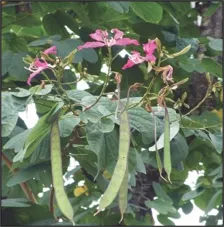
Fig.1: Image of Bauhinia purpurea plant
MATERIALS AND METHODS
Sample collection
The leaves of Bauhinia purpurea were collected from Solapur District of Maharashtra, India. After being carefully cleaned with water, the gathered leaves were dried in the shade. After drying, the dried leaves were ground into a powder using a blender so they could be used again.
Extraction of plant material
Aqueous Extract Preparation
The Bauhinia purpurea leaf powder of 160 gm was dispersed in approximately 2600 ml of distilled water and allowed to undergo maceration. The macerated mixture was filtered using muslin cloth to remove larger particles. This process was repeated thrice to ensure thorough filtration. Subsequently, the filtrate was passed through whatman filter paper for finer filtration. This step helps to remove smaller particles and debris, yielding a clearer solution. The filtrate obtained from the previous step was subjected to evaporation using a hot water bath at a controlled temperature. The purpose of evaporation is to remove the solvent (water) from the extract, leaving behind the concentrated extract. And extract was stored at a temperature range of 5-10°C to maintain its stability.
Methanolic Extract Preparation
The Bauhinia purpurea leaf powder of 70 gm was dispersed in approximately 500 ml of methanol and allowed to undergo maceration. The macerated mixture was filtered using muslin cloth to remove larger particles. This process was repeated thrice to ensure thorough filtration. Subsequently, the filtrate was passed through whatman filter paper for finer filtration. This step helps to remove smaller particles and debris, yielding a clearer solution. The filtrate obtained from the previous step was subjected to evaporation using a hot water bath at a controlled temperature. The purpose of evaporation is to remove the solvent (water) from the extract, leaving behind the concentrated extract. And extract was stored at a temperature range of 5-10°C to maintain its stability.
Phytochemical analysis
Qualitative analysis was done for the existence of alkaloid, carbohydrate, glycoside, saponins, phenols and tannins, Flavonoids, Amino acids, proteins, steroids9.
Table 1: Preliminary phytochemical screening of extracts of Bauhinia purpurea leaves
|
Sr. No. |
Plant constituents |
Methanol extract |
Aqueous extract |
|
1 |
Alkaloids |
- |
- |
|
2 |
Carbohydrates |
- |
- |
|
3 |
Glycosides |
+ |
- |
|
4 |
Saponins |
+ |
+ |
|
5 |
Phenolic compounds &Tannins |
+ |
+ |
|
6 |
Flavonoids |
+ |
+ |
|
7 |
Amino Acids |
+ |
+ |
|
8 |
Protein |
- |
- |
|
9 |
Steroid |
- |
- |
PREPARATION OF GEL
Table 2: Formulation of Herbal Gel Containing Bauhinia purpurea Aqueous Leaves Extract
|
Sr. No |
INGREDIENTS |
A1 |
A2 |
A3 |
A4 |
|
1 |
Carbopol 940 (%) |
1.5 |
1.5 |
1.5 |
1.5 |
|
2 |
BPL Aq Extract (gm) |
0.05 |
0.1gm |
0.15gm |
0.2 |
|
3 |
BPL Aq Ext./ml of gel base (gm/ml) |
0.005 |
0.01 |
0.015 |
0.02 |
|
4 |
Propylene Glycol (ml) |
3 |
3 |
3 |
3 |
|
5 |
Methyl Paraben (gm) |
0.3 |
0.3 |
0.3 |
0.3 |
|
6 |
Propyl Paraben (gm) |
0.15 |
0.15 |
0.15 |
0.15 |
|
7 |
Triethanolamine |
q.s |
q.s |
q.s |
q.s |
Table 3: Formulation of Herbal Gel Containing Table For Bauhinia purpurea Methanolic leaves Extract
|
Sr. No. |
INGREDIENTS |
M1 |
M2 |
M3 |
M4 |
|
1 |
Carbopol 940(%) |
1.5 |
1.5 |
1.5 |
1.5 |
|
2 |
BPL Me Extract (gm) |
0.05 |
0.1 |
0.15 |
0.2 |
|
3 |
BPL Me Ext./ml of gel base(gm/ml) |
0.005 |
0.01 |
0.015 |
0.02 |
|
4 |
Propylene Glycol (ml) |
3 |
3 |
3 |
3 |
|
5 |
Methyl Paraben (gm) |
0.3 |
0.3 |
0.3 |
0.3 |
|
6 |
Propyl Paraben (gm) |
0.15 |
0.15 |
0.15 |
0.15 |
|
7 |
Triethanolamine |
q.s |
q.s |
q.s |
q.s |
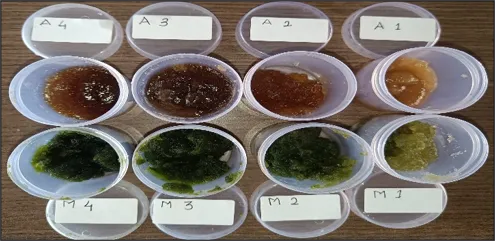
Fig. 2: Formulation of gel from Bahuinia purpurea Aqueous and Methanol Extract
Top of Form
RESULT & DISCUSSION
Evaluation of gel
1. Physical appearance
The physical appearance of Bauhinia purpurea gel, such as color and consistency, was visually checked shown in table 4 and 5. The pH value of the gel formulation is shown in table 3 gel was found to be in the range of 5.7 – 6.3 slightly alkaline pH, which is similar to normal skin.
Table 4: Physical Evaluation of Bauhinia purpurea Aqueous leaf Extract
|
Formulation code |
Color |
Consistency |
|
A1 |
Light brown |
Semi-solid |
|
A2 |
Brown |
Semi-solid |
|
A3 |
Brown |
Semi-solid |
|
A4 |
Dark brown |
Semi-solid |
Table 5: Physical evaluation of BPL Methanol Extract
|
Formulation code |
Color |
Consistency |
|
M1 |
Green |
Semi-solid |
|
M2 |
Green |
Semi-solid |
|
M3 |
Green |
Semi-solid |
|
M4 |
Dark Green |
Semi-solid |
2. pH
The pH value of the gel formulation is shown in table 7&8, gel was found to be in the range of 5.7 – 6.3 slightly alkaline pH, which is similar to normal skin.
Table 6: Determination of pH Aqueous Extract
|
Formulation code |
pH |
|
A1 |
5.7 + 0.2 |
|
A2 |
5.5 + 0.2 |
|
A3 |
5.9 + 0.2 |
|
A4 |
6.1 + 0.2 |
Table 7: Determination of pH Methanol Extract
|
Formulation code |
pH |
|
M1 |
6.2+ 0.2 |
|
M2 |
5.9 + 0.2 |
|
M3 |
6.3 + 0.2 |
|
M4 |
5.8 + 0.2 |
3. Viscosity
The viscosity of the herbal gel formulations was assessed using a Brookfield rotational viscometer with spindle number 64, operated at a rotational speed of 100 rpm.
Table 8: The viscosity of formulation ranged from 1878-5408 cps
|
Formulation containing Aqueous extract |
Formulation containing Methanol extract |
||
|
Formulation code |
Viscosity (cps) |
Formulation code |
Viscosity (cps) |
|
A1 |
4482 |
M1 |
3158 |
|
A2 |
2646 |
M2 |
3876 |
|
A3 |
2632 |
M3 |
5408 |
|
A4 |
1878 |
M4 |
3690 |
4. Antibacterial activity
The in vitro antibacterial activities of both aqueous and organic extracts of Bauhinia purpurea were determined using the standard agar well diffusion assay. Petri dishes with a diameter of 100 mm containing 25 ml of Mueller-Hinton Agar (MHA) were inoculated with 100µl of the test strain. After allowing the inoculum to solidify, wells with a diameter of 6 mm were created in the solidified agar using a sterilized cork-borer. Subsequently, 100µl of each extract was dispensed into its respective well, and the plates were then incubated at 37°C for 24 hours. Negative controls included dimethyl sulfoxide (DMSO), while tetracycline antibiotic served as the positive control. The experiment was conducted under strict aseptic conditions, and the antibacterial activity of each extract was quantified by measuring the mean diameter of the zone of inhibition (mm) produced by the respective plant extract10.
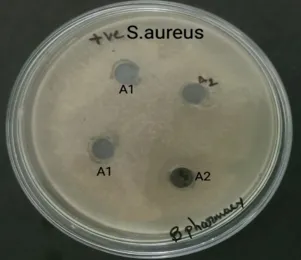
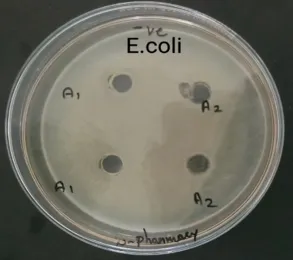
Fig. 3: Zone of inhibition of Aqueous Extract formulation on S. aureus & E. coli
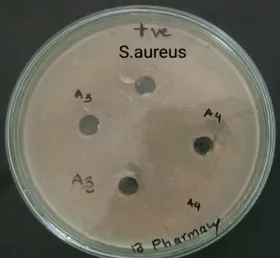
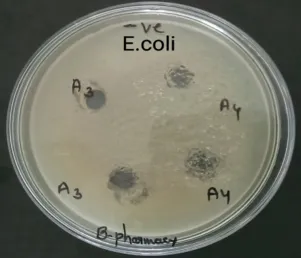
Fig. 4: Zone of inhibition of Aqueous Extract formulation on S. aureus & E.coli
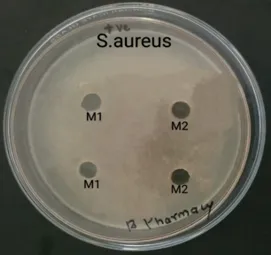
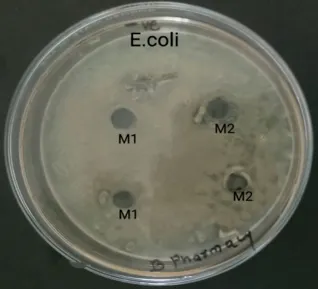
Fig. 5: Zone of inhibition of Methanol Extract formulation on S. aureus & E. coli
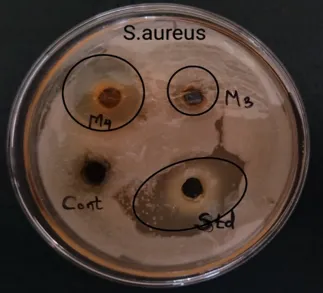
Fig 6: Zone of inhibition of Methanol Extract formulation on S.aureus & E.coli.
Table 9: Results of antimicrobial screening of aqueous and organic plant extracts determined by agar diffusion method
|
Zone of inhibition (in mm diameter) |
||||||||||||||||
|
Bacterial strains |
S. aureus |
E.coli |
||||||||||||||
|
Extraction type (mg/ml) |
Aqueous |
Methanol |
Aqueous |
Methanol |
||||||||||||
|
Formulation code |
A1 |
A2 |
A3 |
A4 |
M1 |
M2 |
M3 |
M4 |
A1 |
A2 |
A3 |
A4 |
M1 |
M2 |
M3 |
M4 |
|
Diameter (mm) |
0 |
0 |
0 |
0 |
0 |
0 |
20 |
26 |
0 |
0 |
0 |
0 |
0 |
0 |
18 |
22 |
|
Tetracycline |
35 |
35 |
30 |
30 |
||||||||||||
|
DMSO |
NA |
NA |
NA |
NA |
||||||||||||
CONCLUSION
The formulation and evaluation of a herbal gel containing Bauhinia purpurea leaves extract, along with the study of its antimicrobial activities, have been successfully completed. Phytochemical screening studies of the crude drug, identification of chemical compounds, and various evaluation parameters were conducted. The results demonstrate that the Bauhinia purpurea herbal gel formulations exhibit favorable appearance, ease of spreadability, improved release profile, and stability. Among all gel formulations, formulation M4 containing B. purpurea along with showed better spreadability, promising anti-microbial action against gram positive and gram negative micro-organism, and formulation A4 shows the maximum drug release as compared to other formulation.
CONFLICT OF INTEREST
The authors have no conflicts of interest regarding this investigation.
ACKNOWLEDGEMENT:
The authors are thankful to D.S.T.S. Mandal’s College of Pharmacy, Solapur, for their major support and providing infrastructure for work.
REFERENCES


Vaishnavi Bhairamadgi, Vaibhav Hente, Mallinath Kalshetti, Preparation & Development of a Topical Gel Containing Bauhinia purpurea Leaf Extract, Int. J. of Pharm. Sci., 2026, Vol 4, Issue 8, 2907-2913. https://doi.org/10.5281/zenodo.22023488
 10.5281/zenodo.22023488