

We use cookies to ensure our website works properly and to personalise your experience. Cookies policy
Department of Chemistry, A.N. College, Patna, Bihar 800013, India
The increasing environmental and health concerns associated with synthetic cleaning agents have prompted the search for safer and more sustainable alternatives. This study aimed to formulate and evaluate an eco-friendly dishwashing liquid based on Guava (Psidium guajava) leaf extract and determine its physicochemical characteristics, consumer acceptability, and potential as a household cleaning product. Fresh guava leaves were extracted using 95% ethanol and incorporated into a dishwashing liquid formulation containing sodium lauryl sulphate, cocodiethanolamide, linear alkylbenzene sulphonic acid, EDTA, citric acid, and natural fragrance. The formulated product was evaluated through sensory assessment and consumer acceptability tests involving household users and technical experts. Results showed that the dishwashing liquid exhibited desirable sensory properties, obtaining high ratings for aroma (3.56), texture (3.64), colour (3.40), post-wash skin feel (3.44), product odour (3.28), and overall preference (3.08). Respondents described the formulation as pleasant, smooth, visually appealing, and gentle on the skin, with no significant irritation or dryness after use. The majority of participants expressed willingness to purchase and recommend the product due to its effectiveness, natural composition, and environmentally friendly characteristics. Although minor improvements in fragrance and colour intensity are needed, the findings demonstrate that Guava leaf extract can be successfully utilized in the development of sustainable, plant-based cleaning products. The study concludes that the formulated dishwashing liquid is an effective, consumer-acceptable, and promising eco-friendly alternative to conventional synthetic detergents.
The widespread use of chemical-based cleaning products has raised concerns about their potential effects on human health and the environment. Synthetic surfactants, fragrances, and preservatives in commercial dishwashing liquids may contribute to water pollution, aquatic toxicity, skin irritation, and other adverse effects. In India, particularly in local communities, households and educational institutions continue to rely heavily on conventional cleaning products, while awareness of ecofriendly alternatives remains limited. Their wastewater may enter natural water systems, potentially affecting aquatic life and ecological balance. The growing demand for biodegradable and non-toxic cleaning products has therefore encouraged the development of sustainable plant-based alternatives.
Research had consistently shown that plant-based alternatives as sustainable substitute for synthetic cleaning agents. One promising natural resource is the guava (Psidium guajava) leaf which has been widely studied for its medicinal and antimicrobial properties. Previous studies, such as those conducted by Biswas et al. (2013) and Gutierrez- Montiel et al. (2024) have demonstrated that guava leaves are rich in bioactive compounds, including tannins, flavonoids and phenolic substances. These compounds exhibit strong antibacterial activity against a variety of microorganisms, including drug resistant strains making them highly suitable for hygienic applications.1,2
Furthermore, recent investigations by Fajriyah et al. (2023) and Baluarte et al. (2024) have successfully developed liquid soap formulations using guava leaf extracts were physically stable and highly effective in inhibiting common pathogenic bacteria such as Staphylococcus aureus in Escherichia coli, which are often associated with contamination on kitchen utensils and surfaces.3,4 These results provide strong evidence that guava leaf extract can serve as a viable, natural alternative to conventional synthetic dishwashing products.
Recently Santos et al. (2026) have successfully formulated and evaluate a biodegradable dishwashing liquid derived from guava leaf extracts by utilizing locally available plant resource. Their finding revealed that users generally strongly agreed on the description of the product’s aroma, texture and colour indicating that the dishwashing liquid was pleasant smooth and visually appealing.5
Pereira et al. (2023) have successfully evaluated total phenolics and tannins content by (HPLC), antioxidant activity and the antimicrobial activity of the aqueous extract of the guava leaf. Their finding revealed that Flavonoids are the major compounds followed by phenolic acids ant their study demonstrates that antimicrobial activity of the aqueous extract of P. guajava leaves against sensitive and resistant Gram- positive bacteria.6
The widespread use of chemical-based dishwashing liquids highlights the need for sustainable alternatives with antimicrobial properties. This study aimed to formulate and evaluate a biodegradable dishwashing liquid containing guava (Psidium guajava) leaf extract for its physicochemical and antimicrobial properties. The study further explores the potential of this plant-based formulation as an ecofriendly alternative to conventional synthetic dishwashing products, contributing to green chemistry and sustainable practices.
A substantial body of research supports the antimicrobial activity of guava leaf extracts, particularly against Gram-positive bacteria such as Staphylococcus aureus and Bacillus spp. This activity is attributed to phytochemicals such as flavonoids, tannins, terpenoids, glycosides, and saponins, which may disrupt bacterial membranes, inhibit enzymes, and interfere with essential metabolic processes. Guava leaf extracts have also demonstrated antibiofilm activity, suggesting potential for reducing persistent microbial contamination. Although methanol and ethanol extracts often show strong antibacterial activity, aqueous extracts also exhibit promising effects. These findings support the potential of guava leaf extract as a natural antimicrobial ingredient for ecofriendly cleaning products.
Furthermore, literature consistently highlights the broad- spectrum antimicrobial potential of Guava leaf extract7. The presence of flavonoids tannins and terpenoids contributes significantly to their effectiveness, as these compounds exhibit both bactericidal and bacteriostatic effect. Recent research also emphasizes their role in preventing biofilm formation, thereby enhancing their utility in maintaining hygiene on frequently used surfaces8. These properties provide strong scientific justification for incorporating Guava leaf extract as the primary ingredient in dishwashing liquid formulation.
2.1 Key ingredients in natural dishwashing liquid formulation:
The formulation of a natural dishwashing liquid requires careful consideration of ingredients that ensure both cleaning efficiency and environmental safety. Literature suggests that biodegradable and ecofriendly surfactants derived from plant or microbial sources serves as effective alternatives to conventional petrochemical- based surfactant9. These natural surfactant possess comparable emulsifying and foaming properties while offering advantages such as reduced toxicity and improved biodegradability10.
To achieve the desired consistency and stability, natural thickeners such as xanthan gum and guar gum are widely used. These agents enhance viscosity, prevent phase separation, and contribute to a stable gel -like structure11. Another critical aspect is product preservation. Since natural formulation are susceptible for microbial contamination, studies recommend the use of plant – based preservatives and organic acids to ensure adequate shelf life while maintaining product safety12.
2.2 Safety and consumer acceptance of natural cleaning products:
Beyond formulation, the success of a natural cleaning product depends on its safety and consumer acceptance. Research indicates that the dermal safety and cytotoxicity of plant extract to ensure the final product is safe for human use13,14.This enhances their suitability for household use particularly for individuals with sensitive skin. The review also explores consumer attitudes towards natural and eco-friendly cleaning products, focusing on the attributes that most influence purchasing decisions, such as efficacy, safety and scent. In shaping the consumer perception, the colour aroma and texture of product also play a significant role.
2.3 Antimicrobial properties of guava leaf extract dishwashing liquid:
The antimicrobial effectiveness of guava leaf extract is primarily due to phytochemicals such as tannins flavonoids and triterpenoids. These compounds disrupt Bacterial cell walls and inhibit microbial growth. The studies7 confirm that guava extract is effective against common pathogens including Staphylococcus aureus, Bacillus cereus and Escherichia coli. This highlights theit potential as natural alternatives to synthetic antimicrobial agents, particularly in the context of increasing antibiotic resistant,
This section describes the research design, materials and procedures, data collection methods, data analysis techniques, experimental procedures for antimicrobial study.
3.1 Research design:
This study employed a developmental research design in formulating the guava
(Psidium guajava) leaf extract based dishwashing liquid. Developmental Research is characterized by a systematic and interactive process involving the design development and evaluation of a product15. To facilitate data collection, a survey research Design was incorporated. Survey Research is a non-experimental quantitative approach used to gather data from a specific population through standardized instruments16,17. A structured questionnaire was utilized to collect data regarding users’ perceptions of the product in terms of aroma, texture and colour18. This method enabled the transformation of subjective responses into quantifiable data for systematic analysis. Additionally expert evaluation provided further validation of the product’s performance, safety and acceptability19.
3.2 Methods:
Freshly harvested mature guava leaves were collected from healthy, pesticide-free trees to ensure the purity and quality of the extract. To prevent contamination distilled water was consistently used during both the extraction and formulation stage. A 95% ethanol solution was employed as the extraction solvent to isolate the bioactive components present in Guava leaves.
In the formulation of the dishwashing liquid, several complementary ingredients were included to improve its effectiveness and stability. Sodium lauryl sulphate (SLS) served as the primary surfactant responsible for cleaning action, while cocodiethanolamide (CDEA) was added as a foam enhancer. Linear alkylbenzene sulphonic acid (LABSA) functioned as a degreasing agent, and industrial salt was used to adjust the viscosity of the solution.
Ethylenediaminetetraacetic acid (EDTA) was incorporated to reduce mineral deposits on utensils and enhance overall cleaning efficiency. To improve the fragrance of the product, a small amount of natural scent, such as lemon or calamansi oil, was added. Furthermore, aloe vera was included as a natural substitute for glycerin to provide a gentle moisturizing effect on the skin.
The process began by thoroughly washing fresh guava leaves with running tap water to remove dirt and impurities. The cleaned leaves were then air dried at room temperature for a period of three to five days. The leaves was dried again at 45℃ for 72 h in an oven with controlled air circulation. The drie Guava leaves were crushed using a knife mill and ground into a fine powder using a sterile blender. Approximately 100 g of the powdered material was soaked in 500 mL of 95% ethanol for 48 hours, with intermittent stirring to facilitate efficient solvent penetration. Following the extraction period the mixture was filtered using filter paper to obtain the guava leaf extract.
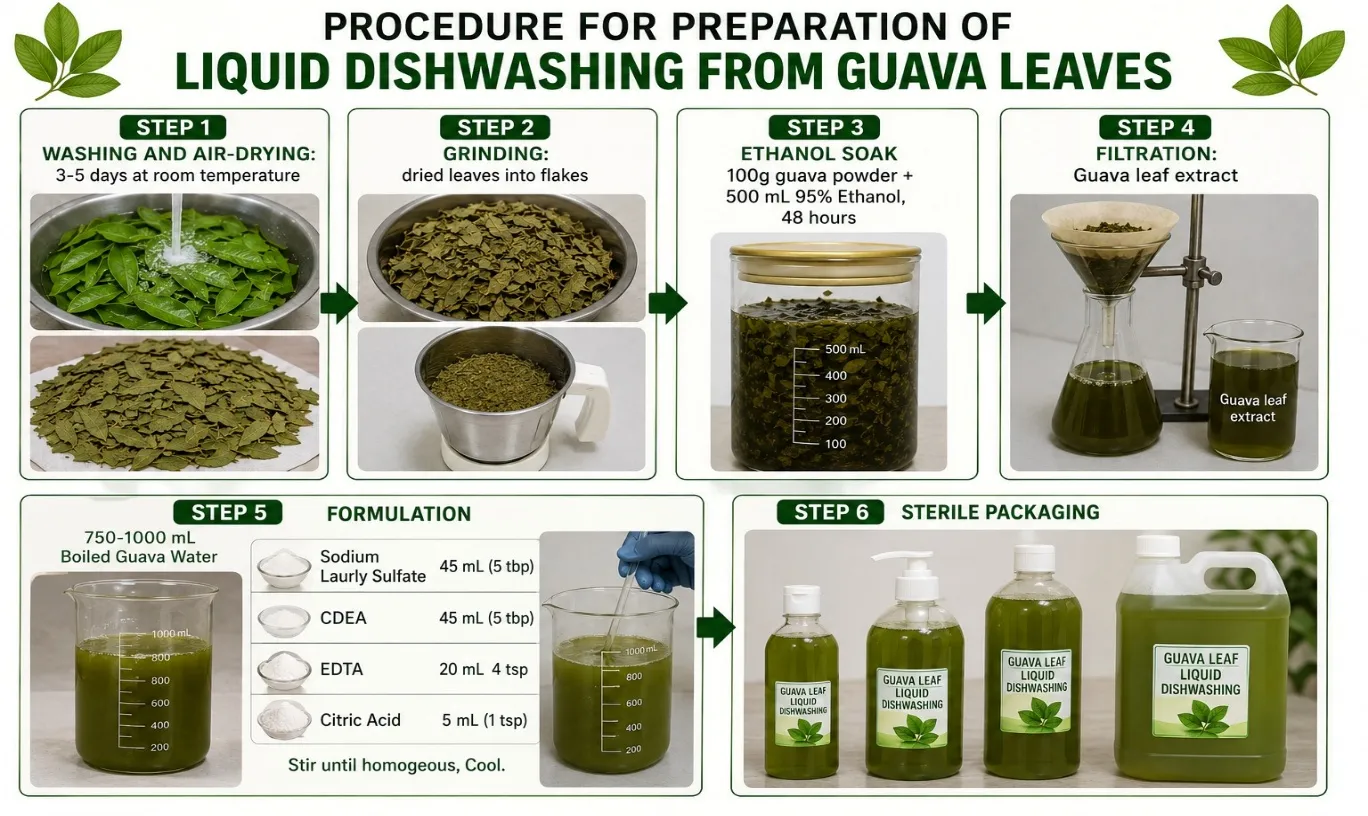
Figure1: Materials and procedures
For the preparation of the dishwashing liquid, 750 mL of boiled guava solution was first prepared. Subsequently 120 mL (8 tablespoons) of sodium lauryl sulphate (SLS) and 45 mL (5 table spoons) of cocodiethanolamide (CDEA) were gradually added with continuous stirring until completely dissolved. Thereafter, 20 mL (4 tablespoons) of EDTA was incorporated into the mixture. This was followed by the addition of 250 mL of the guava leaf extract and 5 mL (1 tablespoons) of citric acid. The solution was stirred continuously until a uniform and homogeneous mixture was obtained. Finally, the formulation was allowed to cool at room temperature and then transferred into sterile containers for storage. Physiochemical Properties of Guava (Psidium guajava) Leaf extract Based Dishwashing Liquid determined with the help of laboratory apparatus.
3.3 Research participants and sampling technique:
The participants in this study were strategically categorized into two groups to facilitate a well- rounded evaluation of the product. The first group included fifty (50) users from the local village community representing regular consumer of dishwashing products. The second group consisted of twenty (20) technical experts who possessed the necessary expertise to evaluate specific product characteristics such as aroma, texture and colour. This grouping allowed the researchers to gather insight from both end-users and professionals, ensuring a comprehensive assessment of the product’s performance. The study employed purposive sampling as the method for selecting participants. Purposive sampling is a non-probability sampling technique where respondents are selected based on specific characteristics, criteria, or expertise that are relevant to the research objectives. In this case, the method ensured that the user group consisted of individuals with regular experience in handling household cleaning products, while the expert group included participants with the sufficient technical knowledge to assess the formulation. The use of purposive enhance the validity and relevance of the data collected as it focused on respondent capable of providing informed and meaningful feedback.
As explained by Creswell and Creswell (2018) purposive sampling involves the intentional selection of participants who are best positioned to provide information that addresses the research objectives, such as choosing technical experts and regular household users for a specialized product evaluation20.
3.4 Data analysis:
To address the first research, question the guava leaf extract was evaluated using sensory analysis. Selected evaluators assessed its aroma, texture and colour through direct observation Aroma was examined through descriptive olfactory assessment, while texture was evaluated by observing and physically assessing the consistency of the extract. Colour was determined through visual inspection, using commonly accepted descriptive terms to characterize its appearance.
Table1. Response mode for evaluating the aroma of the guava leaf extract - based dishwashing liquid.
|
Scale |
Verbal Description |
Verbal Interpretation |
|
2.51 – 3.00 |
Strongly Agree |
Extremely pleasant; strong, fresh natural guava scent with no chemical odour |
|
2.01 – 2.50 |
Agree |
Pleasant and recognizable guava smell; minimal underlying chemical smell |
|
1.51 – 2.00 |
Partially Agree |
Faint or weak guava smell; slightly overpowered by base ingredients. |
|
1.00 – 1.50 |
Disagree |
Unpleasant or medicinal smell; no detectable guava aroma |
The scoring system is anchored by the highest range 2.51 – 3.00 (Strongly Agree), Which represents an optimal or “gold standard” formulation. A score within this range signifies that the natural aroma of the guava leaf is clearly dominant and effectively overpowers the synthetic smell of the surfactant base. This outcome reflects a successful extraction process in which the volatile aromatic compounds of the leaves have been well preserved.
As the mean score decreases to the Agree (2.01 – 2.50) and Partially Agree (1.51 – 2.00) categories the sensory distinctiveness of the product gradually weakens. In these ranges, the guava fragrance becomes less noticeable or only faintly detectable, suggesting either a lower concentration of the extract or the stronger presence of chemical odours from cleaning agents such as SLS or SLES. The lower category Disagree (1.00 – 1.50), indicates unsatisfactory sensory quality. Score within this range imply that the product lacks the characteristic guava scent or may exhibit an unpleasant medicinal or off – odour. This may occur due to the oxidation or degradation of the plant-based components within the formulation, ultimately reducing its overall acceptability Table 1.
Table 2. Response mode for evaluating the texture of the guava leaf extract - based dishwashing liquid.
|
Scale |
Verbal Description |
Verbal Interpretation |
|
2.51 – 3.00 |
Strongly Agree |
Ideal thickness; very smooth, produces rich lather, and feels gentle on skin. |
|
2.01 – 2.50 |
Agree |
Good consistency; easy to pour and creates sufficient bubbles. |
|
1.51 – 2.00 |
Partially Agree |
A bit too watery or overly ‘slimy’ inconsistent lathering. |
|
1.00 – 1.50 |
Disagree |
Very thin/ watery or unpleasantly sticky; harsh on the skin. |
The texture of the dishwashing liquid was assessed across four quality levels based on its tactile characteristics and overall user experience. The highest range (2.51 – 3.00) reflects an optimal formulation with “ideal thickness,” marked by smooth spreadability, abundant lather production, and a gentle, skin-compatible feel—attributes indicative of a well-formulated surfactant system. When the mean score falls within the (2.01 – 2.50) range, the texture is still considered acceptable, demonstrating a “good consistency.” At this level, the product remains effective for routine use and generates a sufficient amount of foam, although it may lack the richness and refined feel associated with top-tier formulations Table 2.
Table 3. Response mode for evaluating the colour of the guava leaf extract - based dishwashing liquid.
|
Scale |
Verbal Description |
Verbal Interpretation |
|
2.51 – 3.00 |
Strongly Agree |
Clear consistent and appealing natural hue; no sediment or separation. |
|
2.01 – 2.50 |
Agree |
Consistent colour throughout; looks professional and stable. |
|
1.51 – 2.00 |
Partially Agree |
Slightly cloudy or uneven colour; minor visible particles. |
|
1.00 – 1.50 |
Disagree |
Unappealing or murky colour; significant separation or sediment. |
A mean score between 1.51 and 2.00 (Partially Agree) suggests minor imperfections, such as slight cloudiness or the presence of suspended particles, which may point to limitations in the filtration process. In contrast, the lowest range of 1.00–1.50 (Disagree) denotes unsatisfactory visual quality, typically characterized by a turbid appearance or noticeable separation, indicating possible issues with emulsification or degradation of the plant-based extract.
To address the second research problem, the panel of experts evaluated the dishwashing liquid in terms of post-wash skin feel, odour, and overall acceptability. The results of their evaluation are presented in the following section.
Table 4. Response mode for evaluating the post - wash feel of the guava leaf extract - based dishwashing liquid.
|
Scale |
Verbal Description |
Verbal Interpretation |
|
2.51 – 3.00 |
Strongly Agree |
Hands feel exceptionally soft and hydrated; zero dryness or irritation. |
|
2.01 – 2.50 |
Agree |
Hands feel clean and normal; no noticeable tightness or itching. |
|
1.51 – 2.00 |
Partially Agree |
Hands feel slightly dry or “stiff” after use; requires some rinsing. |
|
1.00 – 1.50 |
Disagree |
Handa feel very dry, itchy or “slimy” (residue left on skin). |
The assessment of post-wash feels for the guava leaf extract–based dishwashing liquid, as shown in Table 4, serves as a key indicator of its dermatological effects and user comfort. A mean score within the 2.51 – 3.00 range (Strongly Agree) denotes a highly effective formulation that not only ensures efficient cleaning but also provides skin-conditioning properties, leaving the hands feeling soft, hydrated, and free from irritation.
Scores between 2.01 and 2.50 (Agree) reflect acceptable performance, where the product adequately cleans while maintaining the skin’s natural condition, resulting in a comfortable and neutral after-feel without signs of dryness or itching.
A mean score within the 1.51–2.00 range (Partially Agree) indicates minor formulation limitations, possibly due to an imbalance between the surfactant and the guava extract. This may lead to slight dryness or a somewhat tight sensation on the skin, sometimes requiring additional rinsing. The lowest range, 1.00–1.50 (Disagree), signifies unsatisfactory performance, where the product may cause discomfort such as dryness, irritation, or a slippery residue. Such outcomes suggest that the formulation may be overly harsh or not properly balanced for frequent use.
Table 5. Response mode for evaluating the odour of the guava leaf extract - based dishwashing liquid.
|
Scale |
Verbal Description |
Verbal Interpretation |
|
2.51 – 3.00 |
Strongly Agree |
Leaves a fresh, clean smell on dishes with no greasy or “fishy” residue. |
|
2.01 – 2.50 |
Agree |
Dishes smell neutral and clean; any food odours are effectively neutralized. |
|
1.51 – 2.00 |
Partially Agree |
Faint food odours remain or the guava smell is too overwhelming on the plates. |
|
1.00 – 1.50 |
Disagree |
Unpleasant smell remains on dishes; failed to neutralize food odours. |
The odour assessment of the guava leaf extract–based dishwashing liquid, as shown in Table 5, evaluates its effectiveness in eliminating unwanted smells using a four-point mean scale. A score within the 2.51 – 3.00 range (Strongly Agree) signifies excellent performance, indicating that the formulation efficiently removes organic odors and leaves dishes with a fresh, clean scent, free from any oily or “fishy” residues.
Scores between 2.01 and 2.50 (Agree) represent acceptable performance, where the product successfully neutralizes most food-related odors, resulting in a generally clean and satisfactory outcome.
A mean score within the 1.51–2.00 range (Partially Agree) suggests some limitations, where slight food odours may persist or the guava fragrance may be somewhat overpowering, potentially affecting the overall acceptability.
The lowest range, 1.00–1.50 (Disagree) indicates poor performance, where the product fails to effectively remove odours and may leave behind an undesirable smell. This outcome implies that the deodorizing capability of the guava extract is insufficient at the current concentration level.
Table 6. Response mode for evaluating the overall preference of the guava leaf extract - based dishwashing liquid.
|
Scale |
Verbal Description |
Verbal Interpretation |
|
2.51 – 3.00 |
Strongly Agree |
Would switch to this product over commercial bands. |
|
2.01 – 2.50 |
Agree |
Would likely use this product as a regular alternative. |
|
1.51 – 2.00 |
Partially Agree |
Might use this occasionally but prefers current brands. |
|
1.00 – 1.50 |
Disagree |
Would not use this product again or recommend it. |
The evaluation of overall preference for the guava leaf extract–based dishwashing liquid, as shown in Table 6, provides an integrated measure of user satisfaction and potential market acceptability through a weighted mean scale. A mean score within the 2.51–4.00 range (Strongly Agree) indicates a very high level of consumer approval, suggesting that users find the formulation highly effective and may even favour it over established commercial brands.
Scores between 2.01 and 2.50 (Agree) reflect strong acceptance, with respondents considering the product a reliable and suitable alternative to their regular dishwashing liquids.
A mean score within the 1.51–2.00 range (Partially Agree) denotes partial acceptance, where the product is functional but users may still prefer commercial options due to certain shortcomings in performance or sensory attributes. The lowest range, 1.00–1.50 (Disagree), indicates poor acceptance, suggesting that the product does not meet user expectations and is unlikely to be reused or recommended.
To address the third research objective, expert recommendations for improving the guava-based dishwashing liquid were obtained through interviews and evaluation forms. Specialists in relevant fields examined the formulation and cleaning effectiveness, and their feedback was systematically documented to identify areas requiring refinement.
3.5 Ethical considerations:
In carrying out the study titled “Preparation, Physiochemical Characterization, Consumer evaluation and Acceptability of Ecofriendly Dishwashing Liquid from Guava (Psidium guajava) Leaf Extract” the researchers carefully observed established ethical principles. A key priority was ensuring the safety and non-toxicity of the product. The formulation was designed to be safe for human use while also promoting environmental sustainability. This is in line with Republic Act No. 8970, which discourages the use of harmful synthetic surfactants and encourages the development of biodegradable, eco-friendly alternatives. The inclusion of guava leaf extract as a primary ingredient reflects the study’s aim of producing a safer and more sustainable dishwashing liquid.
Equally important was the protection of the rights and privacy of the participants involved in the evaluation process. Respondents were assured that all information collected would be handled with strict confidentiality. No personal identifiers were disclosed, and the data were reported only in summarized form to preserve anonymity. To ensure transparency, participants were provided with a consent form detailing the purpose and procedures of the study. Participation was entirely voluntary, and individuals were informed of their right to withdraw at any time without any consequences.
By emphasizing product safety, environmental responsibility, and respect for participant welfare, the study adhered to both ethical research standards and relevant legal requirements. The researchers remained committed to conducting the study with integrity, ensuring that all procedures were carried out in a fair, responsible, and respectful manner.
This section presents a comprehensive analysis and interpretation of the data collected, based on the research instruments utilized in the studies. It includes the discussion of the results obtained from the formulation and evaluation of a guava (Psidium guajava) leaf extract–based dishwashing liquid, focusing on its aroma, texture, and colour as perceived by users. It also details expert evaluations of post-wash skin feel, odour assessment, and overall preference, alongside recommendations for product enhancement.
4.1 Description of the respondents using the guava (Psidium guajava) leaf extract–based dishwashing liquid in terms of:
4.1.1 Sensory evaluation of aroma
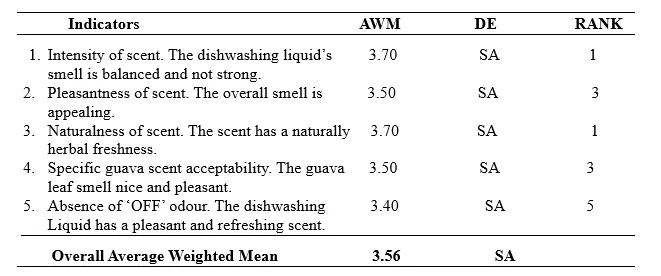
Table 7 shows the sensory evaluation results for the aroma of the Guava (Psidium guajava) leaf extract–based dishwashing liquid. The product obtained an overall weighted mean of 3.56 (Strongly Agree), indicating that respondents found the scent pleasant, fresh, and naturally appealing.
Among the indicators, Naturalness of Scent received the highest mean score (3.70), showing strong appreciation for the herbal fragrance of guava leaf extract. Absence of Off-Odor had the lowest mean score (3.40), but it still falls under the Strongly Agree category, indicating that respondents did not perceive any unpleasant odour. Overall, the results suggest that the aroma of the formulation was well accepted by users, supporting the use of guava leaf extract as a natural fragrance ingredient in dishwashing liquid formulations.
Table 7. Description of the Guava Leaf Extract- based Dishwashing Liquid in terms of Aroma
Legend: AWM- Average weighted Mean; DE- Descriptive Equivalent; 1-Disagree (D) [1.00-1.50]; 2- Partially Disagree [PD] [1.51-2.00]; 3-Agree(A) 2.01-2.50]; 4-Strongly Agree (SA) [2.51-3.00]
The present findings are consistent with the study of Harry T. Lawless and Hildegarde Heymann (2010). Who stated that aroma plays a significant role in shaping consumer acceptance especially when the fragrance is perceived as natural, fresh and safe21.
4.1.2 Texture:
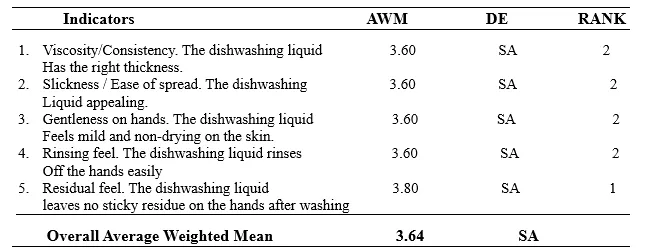
Table 8 presents the sensory evaluation results for the texture of the Guava (Psidium guajava) leaf extract–based dishwashing liquid. The product obtained an overall average weighted mean of 3.64 (Strongly Agree), indicating high user satisfaction with its texture. Respondents found the dishwashing liquid smooth, easy to spread, capable of producing rich lather, and gentle on the skin. Among the indicators, Residual Feel received the highest mean score (3.80), showing that users appreciated the clean and non-sticky sensation after washing. Viscosity/Consistency and Rinsing Feel both scored 3.60, indicating that the product had an appropriate thickness and was easy to rinse off. Although Slickness/Ease of Spread received the lowest score, it remained within the Strongly Agree category.
Table 8. Description of the Guava Leaf Extract- based Dishwashing Liquid in terms of Texture
Legend: AWM- Average weighted Mean; DE- Descriptive Equivalent; 1-Disagree (D) [1.00-1.50]; 2- Partially Disagree [PD] [1.51-2.00]; 3-Agree(A) 2.01-2.50]; 4-Strongly Agree (SA) [2.51-3.00]
Overall, respondents described the formulation as smooth, uniform, and comfortable to use, with no visible sedimentation or separation. These findings agree with the study of Seweryn (2018) and Lourith and Kanlayavattanakul (2009) reported that the skin compatibility, mildness, and reduced irritation potential of surfactants are important considerations in the development of household and personal cleaning products22,23. The high ratings for residual feel and texture indicate that the formulated dishwashing liquid was perceived as effective, comfortable, and highly acceptable to consumers. Residue-free and non-sticky characteristics are generally considered desirable attributes in cleaning products because they enhance user satisfaction and may encourage repeated use. These findings suggest that the formulated dishwashing liquid possesses a texture that is effective, comfortable, and highly acceptable to consumers.
4.1.3 Colour:
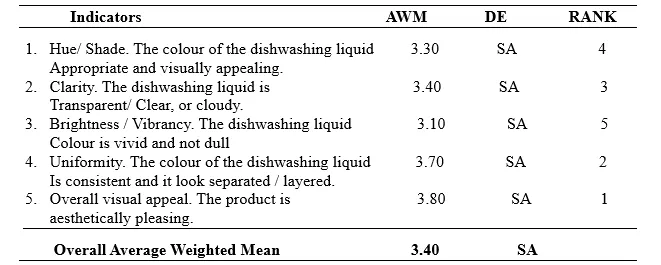
Table 9 presents the sensory evaluation results for the color of the Guava (Psidium guajava) leaf extract–based dishwashing liquid. The product received high ratings for Overall Visual Appeal (3.80) and Colour Uniformity (3.70), both interpreted as Strongly Agree, indicating that respondents found the product visually attractive and consistent in appearance.
Table 9. Description of the Guava Leaf Extract- based Dishwashing Liquid in terms of Colour
Legend: AWM- Average weighted Mean; DE- Descriptive Equivalent; 1-Disagree (D) [1.00-1.50]; 2- Partially Disagree [PD] [1.51-2.00]; 3-Agree(A) 2.01-2.50]; 4-Strongly Agree (SA) [2.51-3.00]
The indicators Hue, Clarity, and Brightness received ratings within the Agree category, suggesting that these characteristics were acceptable despite receiving slightly lower scores. Overall, respondents perceived the dishwashing liquid as having a clear, uniform, and naturally appealing colour, with no visible sedimentation or phase separation.
These findings indicate that the formulated dishwashing liquid possesses an aesthetically pleasing and stable appearance, contributing positively to its overall consumer acceptability.
The findings are consistent with the previous studies which have demonstrated that the incorporation of guava leaf extract into various formulations can contribute to improved physical stability and structural integrity, resulting in more uniform and compact products24,25. These findings support the respondents' perception that the formulated dishwashing liquid possessed a desirable and uniform appearance. In addition, Seweryn et al. (2018) emphasized that high rinsability and the absence of slimy residue are essential characteristics that influence user satisfaction with eco-friendly cleaning agents22. Overall, the finding suggest that the colour of the dishwashing liquid is aesthetically to users supporting the products visual appeal.
4.2 Expert evaluation of the guava (Psidium guajava) leaf extract–based dishwashing liquid in terms of:
4.2.1 Post-wash skin feel:
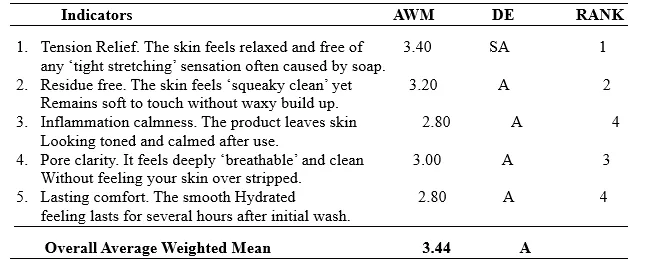
Table 10 shows that the Guava (Psidium guajava) leaf extract–based dishwashing liquid obtained an overall weighted mean of 3.44 (Strongly Agree), indicating that respondents experienced clean, comfortable, and non-irritated skin after use. Lasting Comfort received the highest rating, suggesting that the product helped keep the hands smooth and moisturized, while Tension Relief also scored highly (3.40), indicating reduced dryness and tightness. Although Inflammation Calmness and Pore Clarity had lower mean scores (3.0), they were still interpreted as Agree. Overall, the results suggest that the formulation provides effective cleansing while remaining gentle on the skin.
Previous study demonstrated that sustainable plant -based formulations can provide significant skin hydration and moisture retention while reducing trans epidermal water loss26–28. This implies that guava leaf extract may help preserve the integrity and protective function of the skin barrier during use. Similarly Nadaroglu & Baran, 2020; Casetti et al., 2011 emphasised that the herbal cleaning agents can effectively remove impurities and microorganisms while being gentler on the skin than many synthetic cleansers27,29.
Overall, the findings suggest that the guava leaf extract–based dishwashing liquid is a promising and marketable alternative to conventional commercial products. The positive consumer evaluations regarding quality, usability, and recommendation potential indicate that the formulation has strong potential for acceptance in the household cleaning product market.
Table 10. Description of the Guava Leaf Extract- based Dishwashing Liquid in terms of Post wash skin feel
Legend: AWM- Average weighted Mean; DE- Descriptive Equivalent; 1-Disagree (D) [1.00-1.50]; 2- Partially Disagree [PD] [1.51-2.00]; 3-Agree(A) 2.01-2.50]; 4-Strongly Agree (SA) [2.51-3.00]
4.2.2 Assessment of product odour:
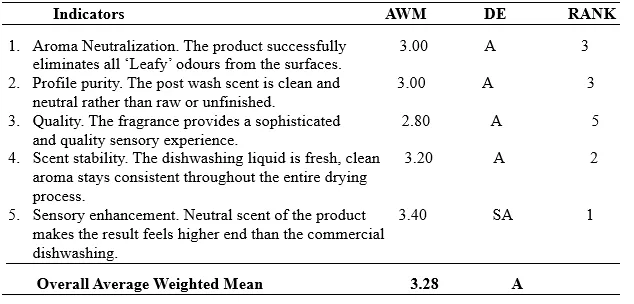
Table 11 presents the Product Odour Assessment of the Guava (Psidium guajava) leaf extract–based dishwashing liquid. The product obtained an overall weighted mean of 3.28 (Agree), indicating that respondents were generally satisfied with its odor characteristics and found it effective in producing a clean, neutral scent while reducing unpleasant food odours.
Among the indicators, Fragrance Quality received the highest rating and was interpreted as Strongly Agree, suggesting that respondents perceived the scent as pleasant and refreshing, which enhanced the overall cleaning experience. Indicators related to neutralizing the natural leafy odour of guava leaves received slightly lower ratings but still fell within the Agree category. Overall, the findings indicate that the formulation successfully balanced its natural herbal scent with an acceptable and refreshing fragrance suitable for household use. Although herbal extracts provide numerous functional benefits, their inherent earthy or leafy odor notes can present challenges in product development. Effective masking or modification of these natural odours is therefore important for enhancing consumer acceptability and facilitating the commercialization of plant-based formulations30. Overall, the findings indicate that the guava leaf extract–based dishwashing liquid achieved a favourable sensory profile that aligns with consumer expectations for a fresh and pleasant cleaning product. The positive ratings further suggest that the formulation provides a balanced, long-lasting, and appealing aroma that contributes to overall user satisfaction.
Table 11. Description of the Guava Leaf Extract- based Dishwashing Liquid in terms of Product odour Assessment.
Legend: AWM- Average weighted Mean; DE- Descriptive Equivalent; 1-Disagree (D) [1.00-1.50]; 2- Partially Disagree [PD] [1.51-2.00]; 3-Agree(A) 2.01-2.50]; 4-Strongly Agree (SA) [2.51-3.00]
4.2.3 Overall product acceptability:
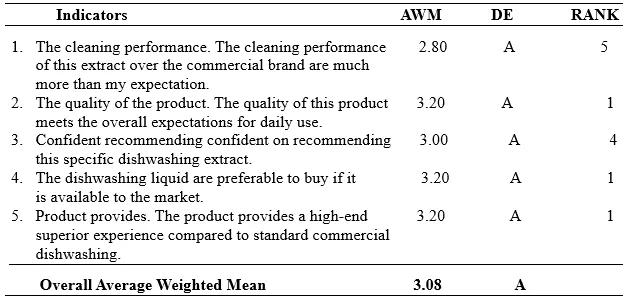
Table 12 presents the overall consumer preference for the Guava (Psidium guajava) leaf extract–based dishwashing liquid. The product obtained an overall average weighted mean of 3.08 (Agree), indicating that respondents generally had a positive perception of the formulation and were willing to use it as an alternative to commercially available dishwashing liquids. This suggests that the product was well accepted in terms of quality, usability, and market potential.
The highest-rated indicators (AWM = 3.20) showed that respondents believed the product met their daily cleaning needs, would be considered for purchase if commercially available, and provided a satisfactory overall experience. Although Cleaning Performance received the lowest mean score (2.80), it remained within the Agree category, indicating that the product was still perceived as effective in performing its intended function. Furthermore, the favourable rating for Confidence in Recommending the Product suggests that respondents were satisfied enough to endorse it to others. Overall, the findings indicate an increasing consumer preference for natural and plant-based household products. Respondents appreciated the product's natural formulation, pleasant user experience, and perceived safety, supporting the growing demand for eco-friendly cleaning products that combine effectiveness with environmentally conscious and skin-friendly ingredients.
Table 12. Description of the Guava Leaf Extract- based Dishwashing Liquid in terms of Overall preference for Guava Leaf Extract – based Dishwashing Liquid
Legend: AWM- Average weighted Mean; DE- Descriptive Equivalent; 1-Disagree (D) [1.00-1.50]; 2- Partially Disagree [PD] [1.51-2.00]; 3-Agree(A) 2.01-2.50]; 4-Strongly Agree (SA) [2.51-3.00
Meneguello et al (2025) emphasized that the growing consumer preference for plant-based cleaning products is largely driven by perceptions that natural ingredients are gentler on the skin and contain fewer potentially irritating synthetic surfactants31. Overall, the findings suggest that the guava leaf extract–based dishwashing liquid is a promising and marketable alternative to conventional commercial products. The positive consumer evaluations regarding quality, usability, and recommendation potential indicate that the formulation has strong potential for acceptance in the household cleaning product market.
5.PHYSICOCHEMICAL EVALUATION
The physicochemical properties of the guava (Psidium guajava) leaf extract-based dishwashing liquid are presented in Table 13. The formulation appeared as a homogeneous greenish-brown viscous liquid, indicating good dispersion of the extract and formulation components without visible phase separation. The measured pH was 6.6, indicating a mildly acidic formulation that may be suitable for routine dishwashing applications. The formulation exhibited measurable density and viscosity, reflecting its consistent liquid character and adequate flow properties for handling and application. The surface tension value indicates the ability of the formulation to wet and spread over dish surfaces, which is important for effective cleaning. The formulation also produced appreciable foam height, indicating satisfactory foaming performance associated with the presence of surfactant components. Furthermore, the formulation was completely soluble, demonstrating good compatibility and uniform dispersion of its constituents in the aqueous medium. Overall, the observed physicochemical characteristics suggest that the guava leaf extract-based dishwashing liquid possesses suitable physical properties for further evaluation as an ecofriendly cleaning formulation.
Table 13 Physiochemical Properties of Guava (Psidium guajava) Leaf extract Based Dishwashing Liquid
|
Properties |
Experimental Result |
|
Appearance |
Homogeneous greenish- brown viscous liquid |
|
pH |
6,6 ± 0.2 
|
|
Density |
1.01±0.02 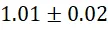
|
|
Viscosity |
1346±50 
|
|
Surface Tension |
29.1± 0.8 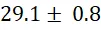
|
|
Foam height |
162± 5 
|
|
Solubility |
Completely soluble |
6.CONCLUSION
The Guava (Psidium guajava) leaf extract–based dishwashing liquid proved to be an effective, eco-friendly, and consumer-acceptable alternative to synthetic detergents. The formulation exhibited desirable sensory properties, including a pleasant aroma, smooth texture, and appealing appearance, resulting in high consumer satisfaction. Respondents also perceived the product as gentle and skin-friendly, as it effectively cleaned without causing dryness or irritation.
Furthermore, consumers expressed willingness to purchase and recommend the product because of its effectiveness, natural ingredients, and environmental benefits. Although minor improvements in fragrance and color intensity are needed, the findings demonstrate that guava leaf extract has strong potential for developing sustainable, plant-based household cleaning products with promising commercial value.
7. ACKNOWLEDGEMENT
The author sincerely acknowledges the Department of Chemistry, Anugrah Narayan College, Patna, Bihar, India, for providing the necessary laboratory facilities and academic support to carry out the present work. The author is also grateful to the laboratory staff for their assistance in conducting the experimental studies.
8. CONFLICT OF INTEREST
The author declares no conflict of interest
9. FUNDING
The author received no financial support for the research, authorship and publication of this article.
10. DECLARATION OF GENERATIVE AI AND AI-ASSISTED TECHNOLOGIES IN THE MANUSCRIPT PREPARATION PROCESS
During the preparation of this manuscript, the author used ChatGPT (OpenAI) to assist with language improvement, grammar, readability, and clarity of the manuscript. The author reviewed and edited the AI-assisted content and takes full responsibility for the accuracy, integrity, interpretation, and final content of the manuscript. ChatGPT was not used to generate, analyze, or interpret the experimental data or to alter the primary research images presented in this manuscript.
REFERENCES

Sanjay Kumar , Preparation, Physicochemical Characterization, Consumer evaluation and Acceptability of Ecofriendly Dishwashing Liquid from Guava (Psidium guajava) Leaf Extract, Int. J. of Pharm. Sci., 2026, Vol 4, Issue 9, 3538-3556. https://doi.org/ 10.5281/zenodo.23012631
 10.5281/zenodo.23012631