

We use cookies to ensure our website works properly and to personalise your experience. Cookies policy
1PG Scholar, Upgraded Department of Rasashastra and Bhaishajya Kalpana, Government Ayurved College, Vadodara, Gujarat.
2Reader and Head, Upgraded Department of Rasashastra and Bhaishajya Kalpana, Government Ayurved College, Vadodara, Gujarat.
Background: Ayurvedic pharmaceutics emphasizes systematic preparation and standardization of formulations to ensure consistency, quality, safety, and efficacy. This study aimed to develop a Standard Manufacturing Procedure (SMP) for Palasha Kshara, Palasha Ksharodaka, and Pippali Rasayana prepared using one and seven Bhavana of Palasha Ksharodaka. Materials and Methods: Authenticated fresh Palasha (Butea monosperma (Lam.) Kuntze) Panchanga and dried Pippali (Piper longum Linn.) fruits were used. Palasha Panchanga was dried and subjected to Bhasmikarana to obtain ash, followed by repeated extraction, sedimentation, decantation, and filtration to prepare Ksharajala. Evaporation yielded Palasha Kshara. Pilot studies optimized critical parameters for Palasha Ksharodaka preparation and Bhavana. Pippali fruits underwent one and seven Bhavana, followed by Bharjana in Goghrita and powdering through sieve no. 120#. Three batches of each major process were prepared to establish the SMP. Results: From 1520 kg fresh Palasha Panchanga, 94 kg ash was obtained (6.91% yield based on dried material). Palasha Kshara showed an average yield of 254 g (8.44%) from 3 kg ash. One-fourth evaporation produced Palasha Ksharodaka with an average yield of 898.33 mL (74.86%). One and seven Bhavana resulted in average weight gains of 121.67 g (19.57%) and 291.67 g (58.23%), respectively. Final powder yields were 590.33 g (92.38%) for PR-1 and 752.33 g (93.46%) for PR-7. Conclusion: The study established reproducible pharmaceutical parameters and an SMP for all three formulations, demonstrating progressive changes in weight and processing characteristics with increasing Bhavana cycles.
Pharmaceutics is the branch of science concerned with the transformation of raw materials into safe, effective and standardized dosage forms. In Ayurveda, this domain is primarily addressed through Rasashastra and Bhaishajya Kalpana, collectively referred to as Ayurvedic pharmaceutics. This discipline encompasses the development of formulation and standardization of various Ayurvedic preparations, ranging from simple forms like Svarasa (fresh juice) to multicomplex formulations such as Bhasma (calcination) and others.
Pharmaceutical science plays a crucial role in ensuring the therapeutic efficacy, safety and quality of Ayurvedic medicines. Proper preparation of various Ayurvedic dosage forms ensures quality, safety and efficacy. By implementing good manufacturing practices and maintaining quality assurance, pharmaceutical studies reinforce the credibility of Ayurvedic medicines, supporting their global acceptance and integration into modern healthcare systems.
Standard Manufacturing Procedure (SMP) refers to a systematically documented process that outlines each step involved in the preparation of an Ayurvedic drug, from procurement of raw material to final packaging. The implementation of SMP is vital for uniformity across different batches. In the present study, an effort has been made to develop SMP for the preparation of Pippali Rasayana prepared by one Bhavana and seven Bhavana of Palasha Ksharodaka.
OBJECTIVES
MATERIALS AND METHODS
The pharmaceutical study was conducted as follows:
A. Procurement and identification of raw material
B. Preparation of drug
A. Procurement and identification of raw material
I. Procurement of the raw materials
II. Identification of raw material
B. Preparation of Drug
All the samples of Pippali Rasayana prepared by one Bhavana (PR 1) and seven Bhavana (PR 7) of Palasha Ksharodaka were prepared in the Pharmaceutical Laboratory of Upgraded Department of Rasashastra and Bhaishajya Kalpana, Government Ayurved College, Vadodara, Gujarat.
1. Preparation of Palasha Kshara
1 a) Preparation of Palasha Panchanga Ash 1 b) Preparation of Palasha Ksharajala (PJ) 1 c) Preparation of Palasha Kshara
2. Preparation of Palasha Ksharodaka (PK) from the Kshara.
3. Preparation of Pippali Rasayana prepared by one Bhavana of Palasha Ksharodaka (PR 1)
3 a) One Bhavana of Palasha Ksharodaka to Pippali fruits.
3 b) Bharjana (Roasting) of one time Bhavita Pippali fruits in Goghrita.
3 c) Powdering of Pippali Rasayana prepared by one Bhavana of Palasha Ksharodaka.
4. Preparation of Pippali Rasayana prepared by seven Bhavana of Palasha Ksharodaka (PR 7)
4 a) Seven Bhavana of Palasha Ksharodaka to Pippali fruits.
4 b) Bharjana (Roasting) of seven times Bhavita Pippali fruits in Goghrita.
4 c) Powdering of Pippali Rasayana prepared by seven Bhavana of Palasha Ksharodaka.
Practical No. 1a (Preparation of Palasha Panchanga Ash)
An initial quantity of fresh Palasha Panchanga weighing 1520 kg underwent a thorough, open-air solar-drying phase lasting 25 days. After drying, the weight was reduced to 1360 kg, representing a moisture loss of 10.53% due to ambient evaporation. The dried material was then ignited in the open area. The open combustion process ran continuously for 72 hours. The procedure was carefully operated to allow oxygen exposure and ensure even, complete combustion. During the early stage of burning, crackling sounds were observed. Once the
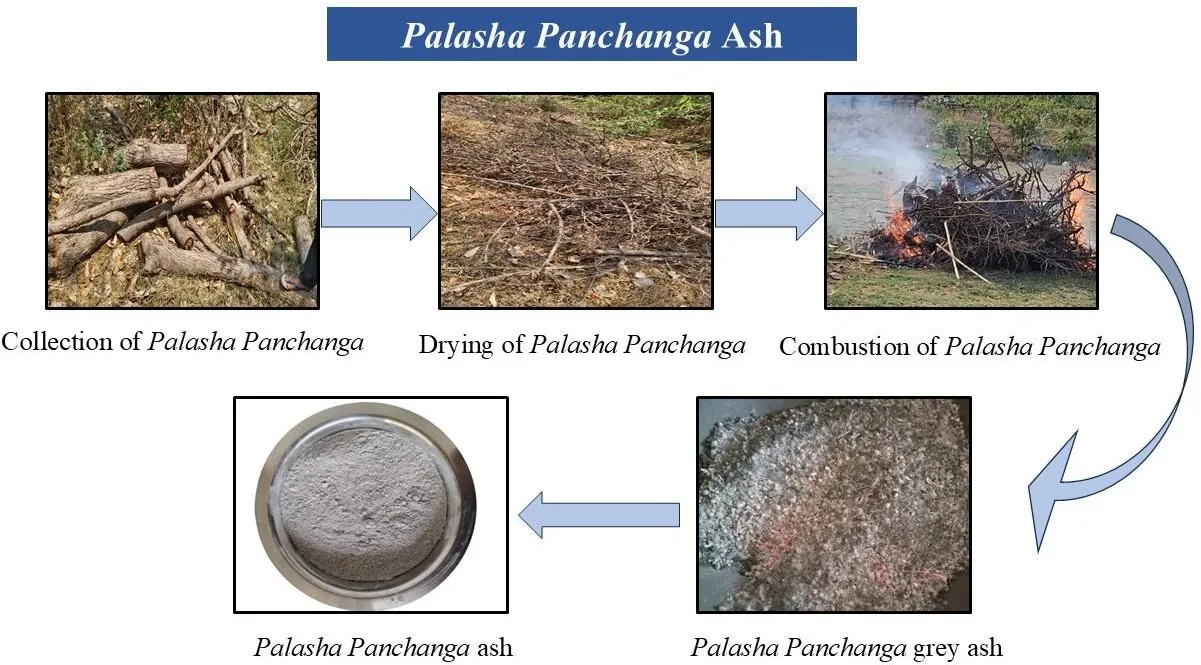
Figure 1: Preparation of Palasha Panchanga Ash
carbonaceous gases evolved and organic structures completely oxidized, the remaining material was left completely undisturbed to undergo self-cooling under ambient conditions. The final burnt material yielded a characteristically whitish-grey ash weighing exactly 94 Kg. This represents a yield of 6.91 % compare to the dry Palasha Panchanga and a net structural mass loss of 93.82 % relative to the fresh Palasha Panchanga.
Pilot batch
Practical No. 1 b [Preparation of Palasha Ksharajala (PJ)]
Before preparing the main batch of Palasha Ksharajala, a pilot batch was prepared by using a water-to-ash extraction ratio of 8 parts of water to 1 part of ash (1 Part Ash: 8 Parts potable water on a w/v or v/v scaling baseline). 1 kg of ash, having an average volume of 2 L, was thoroughly mixed with 16 L of potable water and manually macerated to maximize the dissolution of soluble alkaline compounds into the aqueous phase. It was left undisturbed for
24 hours for complete sedimentation. Within 30 minutes, heavy, undissolved particulate fractions settled at the bottom, while fine particle of ash floated temporarily on the surface. The liquid changed from an opaque, turbid whitish-grey state into a completely transparent, clear phase after sitting for 2 hours. The clear supernatant liquid was carefully decanted using a rubber tube to prevent disturbing the sediment. The liquid was then passed through a four-fold cotton cloth a total of 7 consecutive times. The entire wash process was repeated two separate times (2nd and 3rd wash) by adding 16 L potable water to the residual sediment to extract every last bit of alkaline yield. Result shows in 1st wash, 13.5 L (84.37 %), 2nd wash, 14 L (87.5 %) and 3rd wash, 14 L (87.2 %) of Palasha Ksharajala was recorded.
Main batch
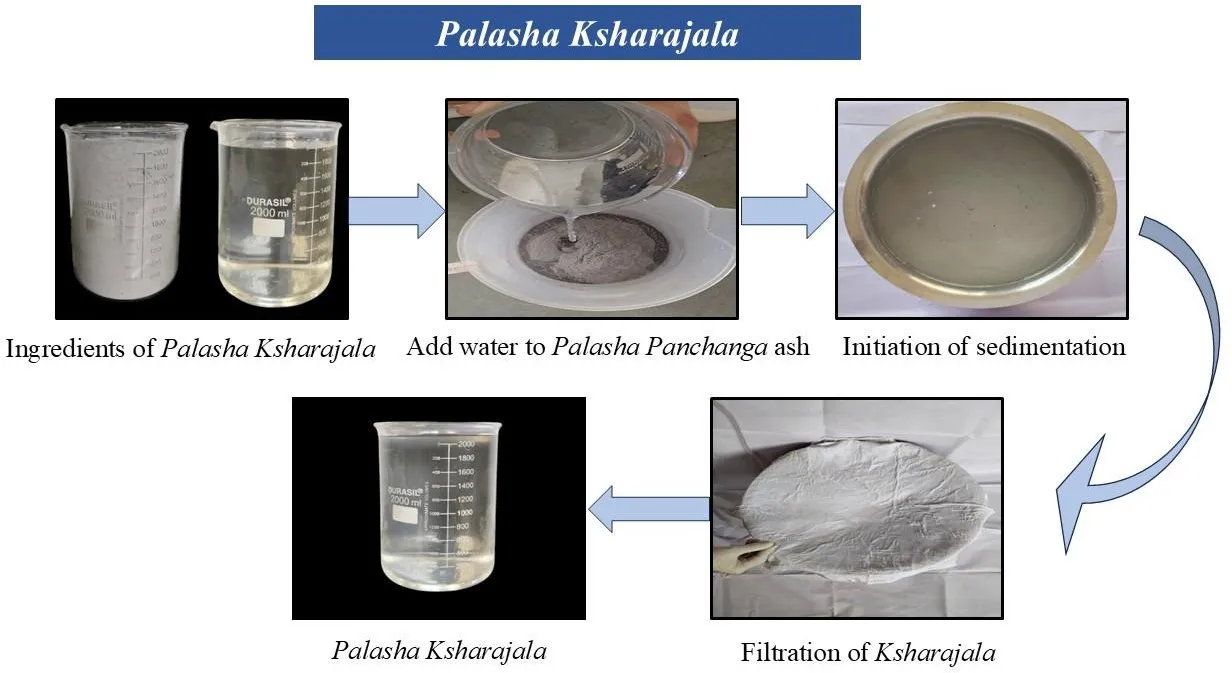
Figure 2: Preparation of Palasha Ksharajala
A total of 30 batches of PJ were prepared, among which the first 3 batches were prepared to establish SMP and an additional 27 batches were prepared for the further process to prepare Palasha Kshara. For all validated main batches, 3 Kg of Palasha Ash, which is volumetrically equivalent to 6 L, was mixed with 8 times its volume of potable water, which is 48 L, in a s. s. vessel. The process was executed across three batches to confirm batch consistency. The same method of preparation is followed as mentioned in the pilot batch. The entire wash process was repeated two more times (2nd and 3rd wash) in all three batches by adding 48 L of potable water in every wash to the residual sediment to extract maximum yield. The 1st wash yielded an average of 43.7 L (91.04 %), the 2nd wash yielded 44.27 L (92.22 %), and the 3rd wash yielded 44.53 L (92.78 %). The minor fluid retention within the wet ash residue layer caused a highly predictable average loss of about 7.24% to 8.96 % per wash. Each individual filtration batch required exactly 72 hours from initial immersion to final collection.
Practical No: 1 c [Preparation of Palasha Kshara (PKr)]
Pilot Batch: A pilot study was conducted to design the main study by identifying key parameters such as the appropriate vessel size, the duration required for the entire process, and the yield percentage.
The combined filtrates of PJ were subjected to Agni Sannikarsha. The clear liquid was poured into a broad s. s. vessel and heated over an industrial gas manifold. In the primary scale-up main batches, the fluid mass was boiled steadily for an average run time of 13 hours and 13 minutes per batch. The liquid temperature was carefully held between 94 ºC and 100 ºC. During
the early phase (hours 1 through 7), the boiling remained steady; the flame temperature registered around 290 ºC to 380 ºC while the fluid level dropped.
Main batch
A total of 30 batches of PKr were prepared, among which the first 3 batches were prepared to establish SMP and an additional 27 batches were prepared for the further process to prepare Palasha Ksharodaka. Complete evaporation of the water portion of 3 washes in 3 batches takes an average time of 39 hours. When the total water portion evaporated completely, a pure, white crystalline powder was left at the bottom of the s. s. vessel. An average yield of PKr obtained from the 1st wash was 181.33 g, from the 2nd wash was 52.33 g and an additional
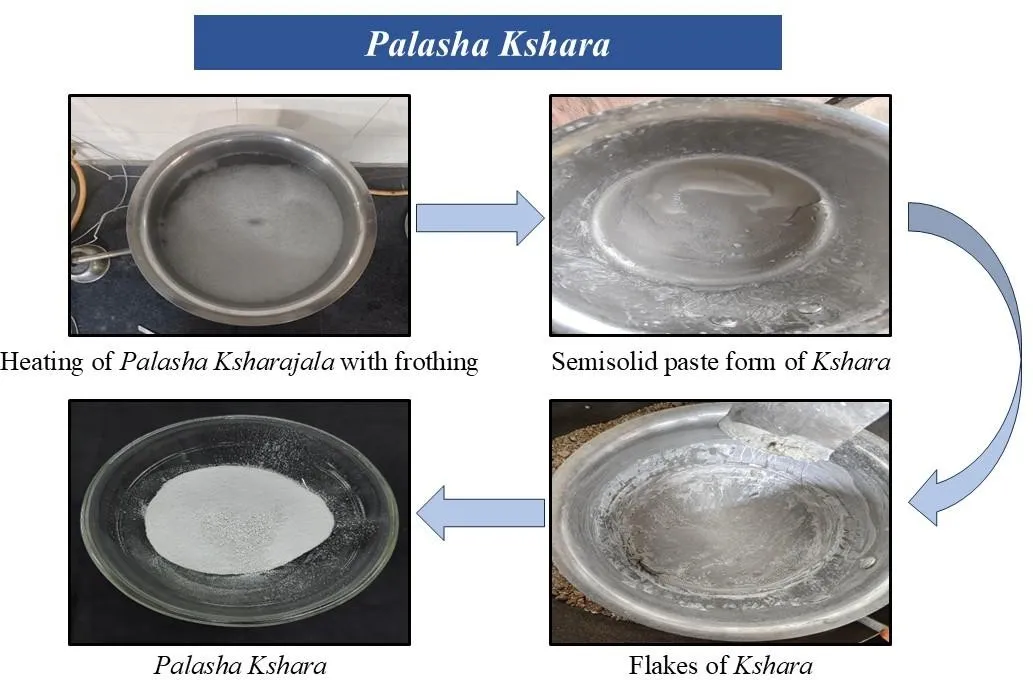
Figure 3: Preparation of Palasha Kshara
20.33 g was obtained after the 3rd wash using the same ash. An average yield of PKr from all three main batches was 254 g from the initial 3 Kg ash, showing an average yield of 8.44 %. It was immediately weighed and stored in an airtight glass bottle to prevent it from absorbing moisture from the air and degrading.
Practical No: 2
[Preparation of Palasha Ksharodaka (PK)]
The method of preparing Ksharodaka was described in Vaidyak Shabda Sindhu, but it was unclear how much of the water portion should be evaporated, 3/4th or 1/4th, to prepare Ksharodaka. For that reason, two pilot batches were conducted before initiating the main batch to determine end-point indicators like the quantity of water to be evaporated and the consistency of Ksharaodaka.
Pilot Batch 1 (3/4th Evaporation)
100 g of Palasha Kshara was dissolved in 6 parts of water (600 ml). The solution was boiled until 75 % (3/4th) of the water volume was driven off, leaving behind only 152.5 ml
(25.42 %). This process took 2.5 hours and resulted in an extremely dense, thick slurry consistency mixture that cannot be absorbed by the Pippali fruits during Bhavana.
Pilot Batch 2 (1/4th Evaporation)
A second trial was conducted using the same initial 1:6 ratio (100 g Kshara: 600 ml Water). This time, boiling was stopped much earlier, once exactly 25 % (1/4th) of the water volume had evaporated. This took 1 and a half hours, yielding 453 ml (74.51 %) of liquid. The Ksharodaka was slimy yet liquid with an optimal viscosity for proper absorption by the Pippali fruits.
Main batch
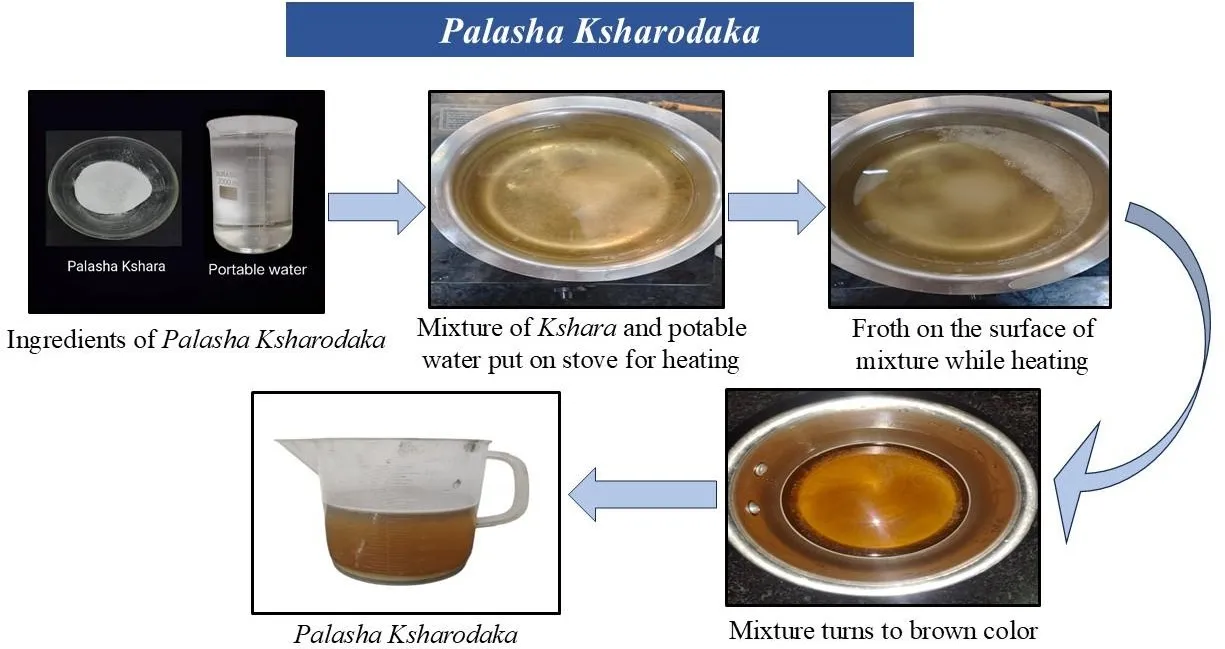
Figure 4: Preparation of Palasha Ksharodaka
Following the successful second pilot method, three main batches were prepared to establish SMP and an additional 37 batches were prepared for the Bhavana of Pippali Rasayana. PK was prepared by combining 185 g of pure Palasha Kshara with 1185 ml of potable water across three replicated batches. The solution was boiled for exactly 1 hour and 30 minutes. The liquid temperature settled into a range between 96.33 ºC and 98 ºC. The process yielded a consistent average volume of 898.33 ml (74.86 %) of Ksharodaka liquid, with an evaporation loss of 301.67 ml (25.14 %).
Practical No. 3a
(One Bhavana of Palasha Ksharodaka to Pippali fruits)
It has been observed that the same quantity of material has different mass and volume and for this reason, to completely immerse that material in the liquid media, the quantity of liquid media has to be decided properly, whether it is taken in W/V ratio or in V/V ratio to the material. Likewise, in the present study, the weight and volume of dried Pippali fruits are not the same i.e. 500 g of dried Pippali fruits have 1000 L of volume. Due to this difference in the weight and volume of Pippali fruits, it must be decided how much of Palasha Ksharodaka
should be taken so that it can completely submerge the Pippali fruits and for that, two pilot batches were prepared prior to the main batch to determine the ratio of dried Pippali fruits and Palasha Ksharodaka.
Pilot batch-1- Gravimetric Approach (w/v): Testing a weight-to-volume method, 500 g of dried Pippali fruits paired with only 500 ml of Palasha Ksharodaka. This liquid volume failed to properly submerge the Pippali fruits, leaving a large portion uncovered and unable to absorb the liquid. After drying 58 g (10.94 %) weight gain was observed in the initial weight of Pippali fruits.
Pilot batch-2- Volumetric Approach (v/v): Using a volume to volume ratio 500 g of Pippali fruits measured out to 1000 ml volumetrically, paired with 900 ml of Palasha Ksharodaka. This batch successfully submersed all the Pippali fruits completely under the liquid layer. After drying 115 g (23 %) weight gain was observed in the initial weight of Pippali fruits.
As a result, the main production batches strictly utilized the successful 900 ml liquid: 500 g fruit ratio to ensure uniform immersion.
Main batch
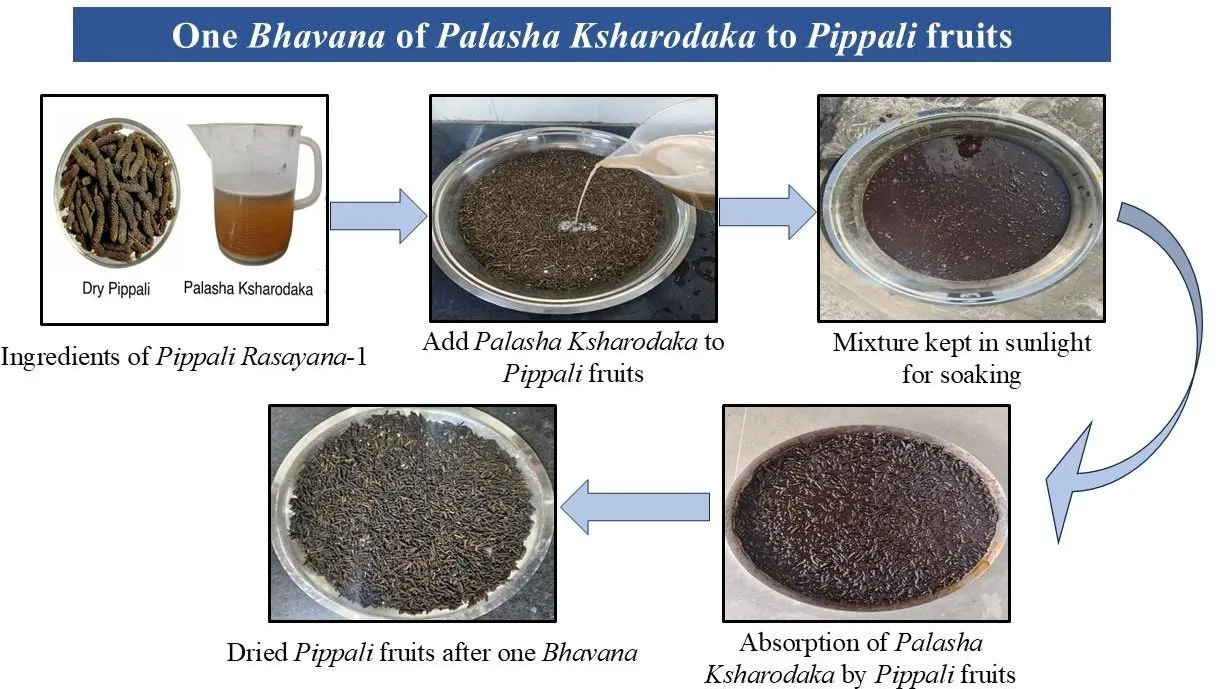
Figure 5: Preparation of Pippali Rasayana by One Bhavana of PK
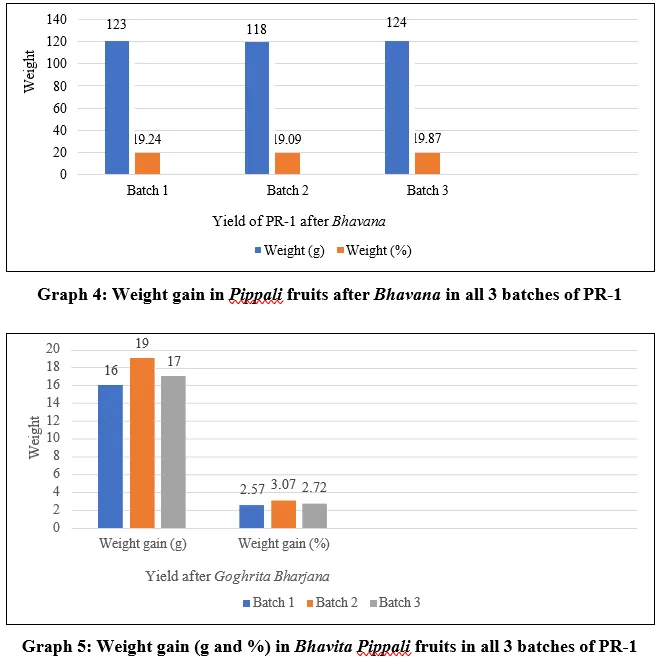
Three batches of PR-1 were prepared for the purpose of setting SMP and preparing the trial drug for a clinical trial, in which 500 g of dried Pippali fruits were submerged into 900 ml of Palasha Ksharodaka. Fruits were completely immersed in s. s. vessel, covered with a cotton cloth, and placed in direct sunlight until completely dry. The brown Pippali fruits absorbed liquid, turning a deep dark-blackish color while releasing a strong, pungent aroma. The average weight gain of 121.67 g (19.57 %) was observed in the initial weight of Pippali fruits. It took an average of 24 hours and 48 min for Pippali fruits to complete absorption of PK in all 3 batches.
Practical No. 3b
[Bharjana (Roasting) of one time Bhavita Pippali fruits in Goghrita]
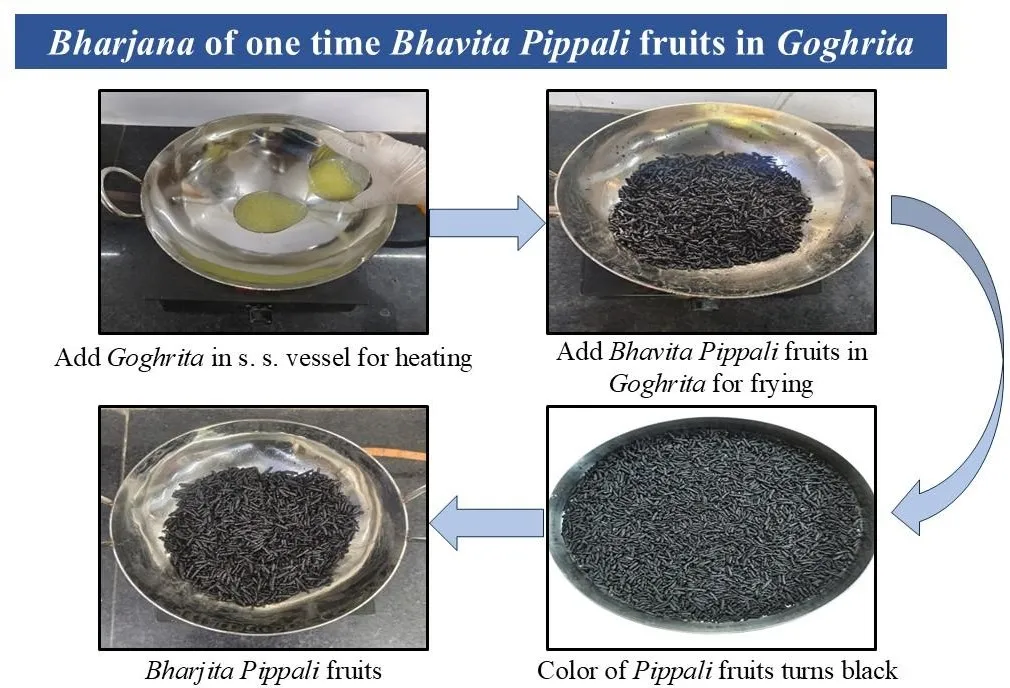
Figure 6: Bharjana of One Bhavana Pippali Fruit in Goghrita
After Bhavana, sun-dried Bhavita Pippali fruits were subjected for Bharjana in Goghrita (Clarified butter) to balance the potent actions of the herbs and prepare them for powdering. Across all batches, a standardized ratio of 30 ml of Goghrita and Bhavita Pippali fruits was added to a s. s. vessel. The mixture was heated over a gentle flame for exactly 10 minutes. The fruits were stirred continuously to ensure the Goghrita thoroughly coated every fruit and to prevent localized scorching. The material temperature rose from 27.67 ºC to 71.67 ºC while the flame reached 105.33 ºC. The average yield shows 17.33 g (2.79 %) of average weight gain in Bhavita Pippali fruits.
Practical No. 3c
(Powdering of Pippali Rasayana prepared by one Bhavana of Palasha Ksharodaka)
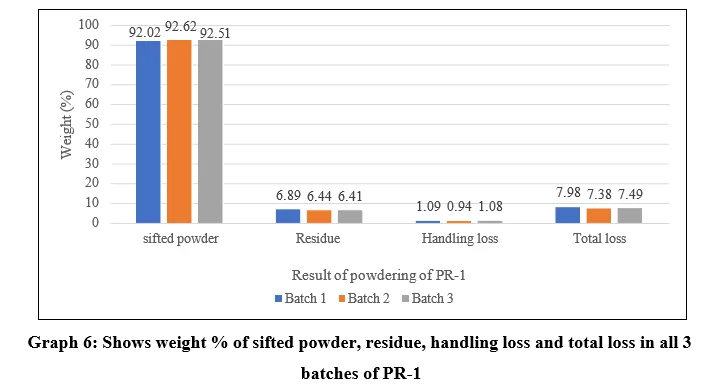
To prepare the powder of Bharjita Pippali fruits, they were allowed to cool to room temperature and then subjected to the powdering process. The material was processed in a mixture grinder and passed through a very fine Sieve No. 120# to ensure a uniform particle size suitable for filling capsules. Powdering of Bharjita Pippali fruits required an average of 3 hours and 2 minutes of processing time in all 3 batches. Sifting isolated an average of 590.33 g (92.38 %) of fine, dark brown powder, leaving behind 42 g (6.58 %) of coarse material that resisted grinding and the process experienced a minor handling average loss of 6.67 g (1.04
%). So, a total average weight loss of 48.67 g (7.62 %) was observed in all 3 batches due to fine airborne dust escaping the milling chambers and material sticking to the equipment. Sifted powder of PR-1 exhibited a dark brown color, a fine texture, and a sharp, pungent aroma
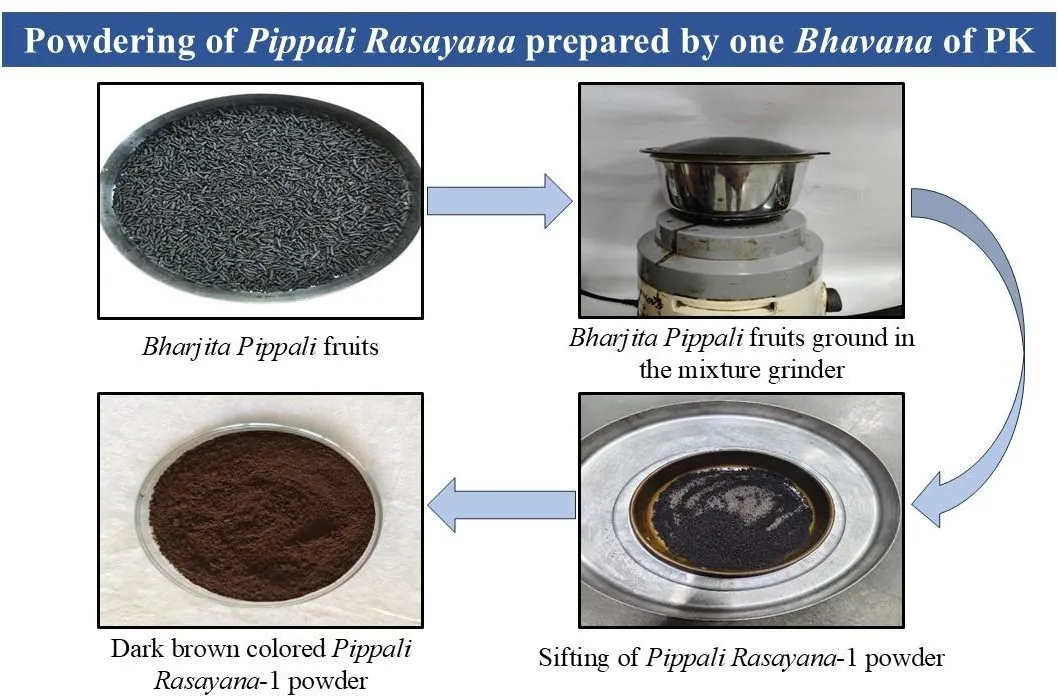
Figure 7: Powdering of PR-1 Practical No. 4A
characteristic of Pippali. The completed powder was stored in airtight containers to protect the fine particles from moisture absorption and clumping.
(Seven Bhavana of Palasha Ksharodaka to Pippali fruits)
Due to this difference in the weight and volume of Pippali fruits, it must be decided how much of Palasha Ksharodaka should be taken so that it can completely submerge the Pippali fruits and for that, two pilot batches were prepared prior to the main batch to determine the ratio of dried Pippali fruits and Palasha Ksharodaka and the total quantity of Palasha Ksharodaka to complete seven Bhavana.
Pilot batch-1- Gravimetric Approach (w/v): Testing a strict weight-to-volume matching layout, 500 g of Pippali fruits paired with only 500 ml of Palasha Ksharodaka for one Bhavana. This liquid volume failed to properly submerge the Pippali fruits, leaving a large portion uncovered and unable to absorb the liquid. To complete seven Bhavana, a total of 3500 ml PK was required. After the complete process, 180 g (36 %) weight gain was observed in the initial weight of Pippali fruits.
Pilot batch-2- Volumetric Approach (v/v): Using a volume to volume ratio, 500 g of Pippali fruits were measured out to 1000 ml volumetrically, mixed with 900 ml of Palasha Ksharodaka. In this batch, all the dried fruits were successfully submerged completely under the liquid layer. To complete seven Bhavana, a total of 6300 ml PK was required. After the complete process, 282 g (56.4 %) weight gain was observed in the initial weight of Pippali fruits.
As a result, the main production batches strictly utilized the successful 6300 ml liquid: 500 g fruit ratio to ensure uniform immersion.
Main batch
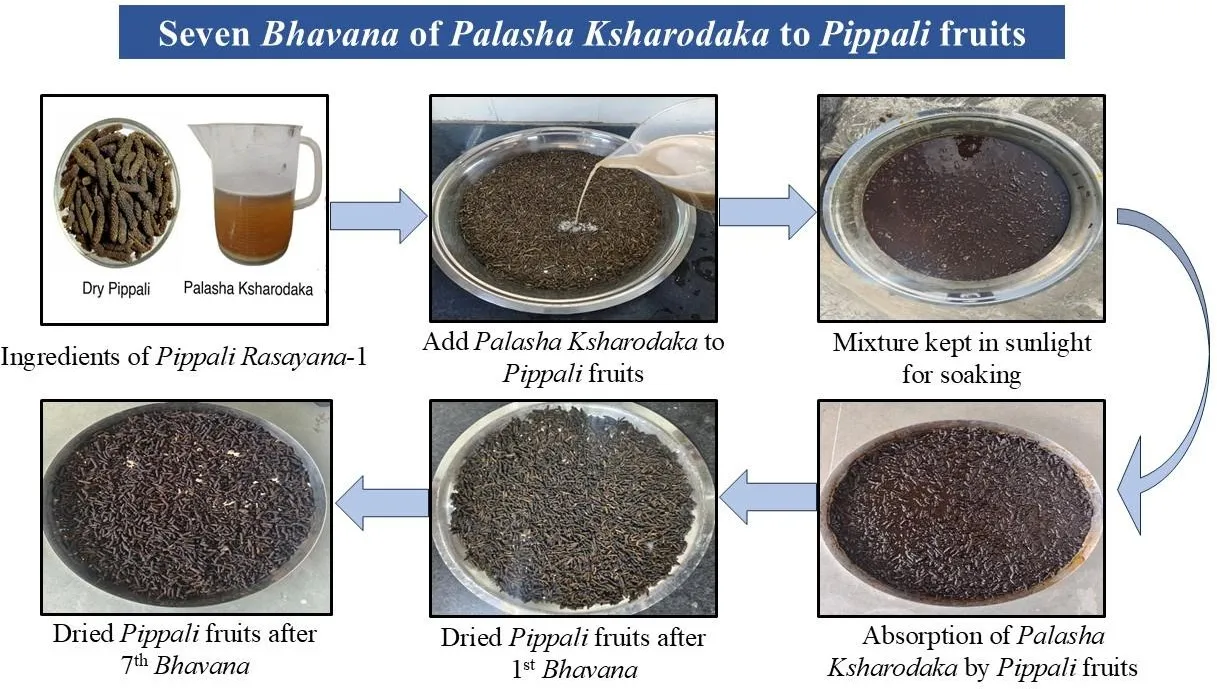
Figure 8: Preparation of Pippali Rasayana by Seven Bhavana of PK Practical No. 4B
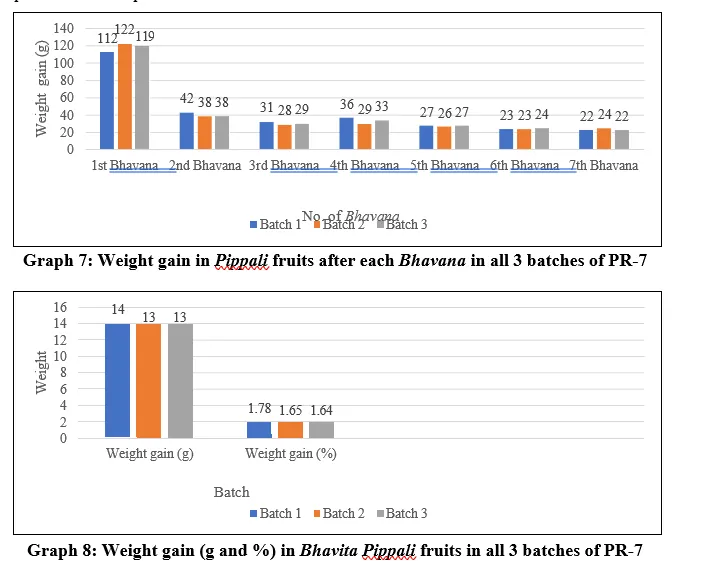
Three batches of PR-1 were prepared for the purpose of setting SMP and preparing the trial drug for a clinical trial, in which 500 g of dried Pippali fruits were submerged into 900 ml of Palasha Ksharodaka. Fruits were completely immersed in s. s. vessel, covered with a cotton cloth, and placed in direct sunlight until completely dry. Repeat this complete process six more times. The color of Pippali fruits darkened progressively with each Bhavana. Mineral crystals of Kshara were sticking to the surface of the Pippali fruits. The average weight gain observed in Pippali fruits after 1st Bhavana 117.67 g (23.53 %), after 2nd Bhavana 39.33 g (7.87 %), after 3rd Bhavana 29.33 g (5.87 %), after 4th Bhavana 32.67 g (6.53 %), after 5th Bhavana 26.67 g (5.33 %), after 6th Bhavana 23.33 g (4.67 %) and after 7th Bhavana 22.67 g (4.53 %). A total of 291.67 g (58.23 %) of average weight was gained in the initial weight of Pippali fruits. It took an average of 24 hours and 40 min for Pippali fruits to complete each Bhavana and a total of 172 hours were required for the complete seven Bhavana of PK in all 3 batches.
[Bharjana (Roasting) of seven time Bhavita Pippali fruits in Goghrita]
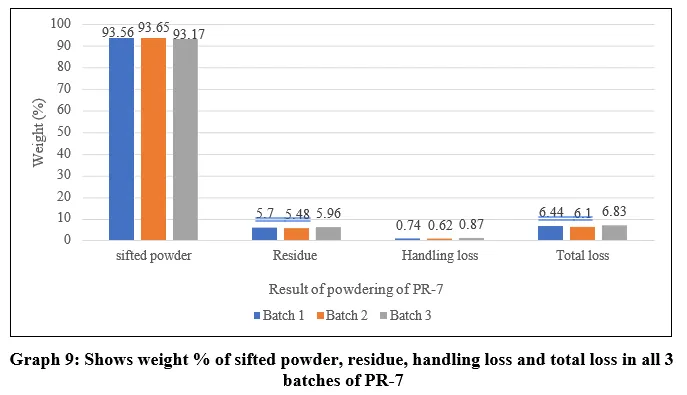
After seven Bhavana, sun-dried Bhavita Pippali fruits were subjected to Bharjana Goghrita (Clarified butter) to balance the potent actions of the herbs and prepare them for powdering. Across all batches, a standardized ratio of 30 ml of Goghrita and Bhavita Pippali fruits was added in a s. s. vessel. The mixture was heated for exactly 10 minutes. Pippali fruits were stirred continuously to ensure the Goghrita thoroughly coated every fruit and to prevent localized scorching. The material temperature rose from 26.67 ºC to 71 ºC while the flame reached 105.67 ºC. The average yield showed 13 g (1.69 %) of average weight gain in Bhavita Pippali fruits.
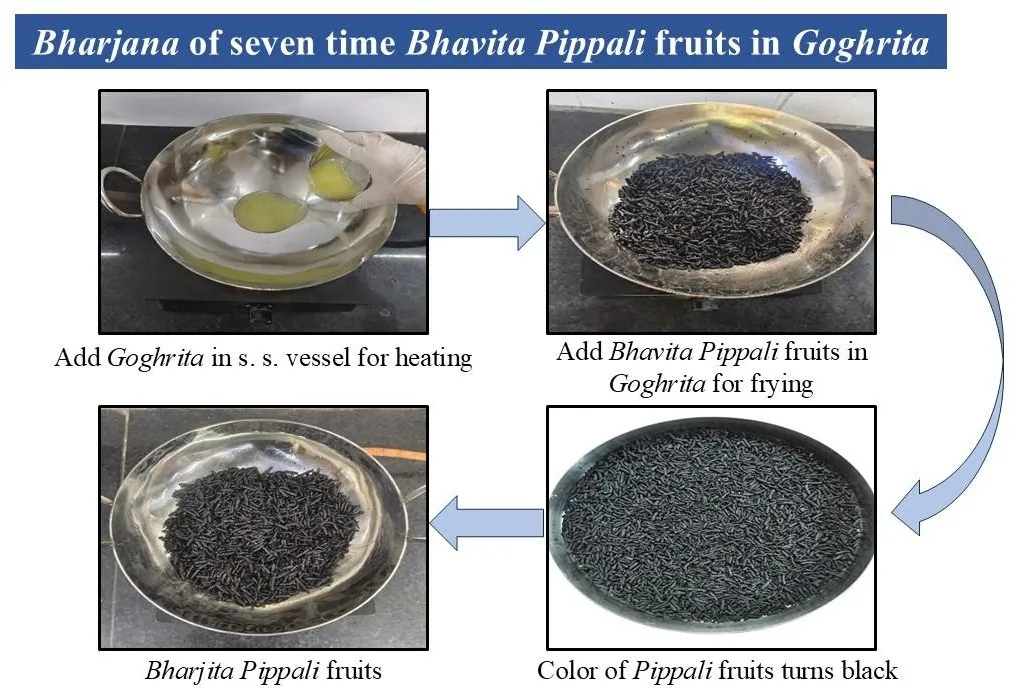
Figure 9: Bharjana of Seven Bhavana Pippali Fruit in Goghrita
Practical No. 4c
(Powdering of Pippali Rasayana prepared by seven Bhavana of Palasha Ksharodaka)
To prepare the powder of Bharjita Pippali fruits, they were allowed to cool to room temperature and then subjected to the powdering process. The material was processed mixture grinder and passed through a very fine Sieve No. 120# to ensure a uniform particle size suitable for filling capsules. Pulverizing of Bharjita Pippali fruits required an average of 2 hours and 55 minutes of processing time in all 3 batches. Sifting isolated an average of 752.33 g (93.46
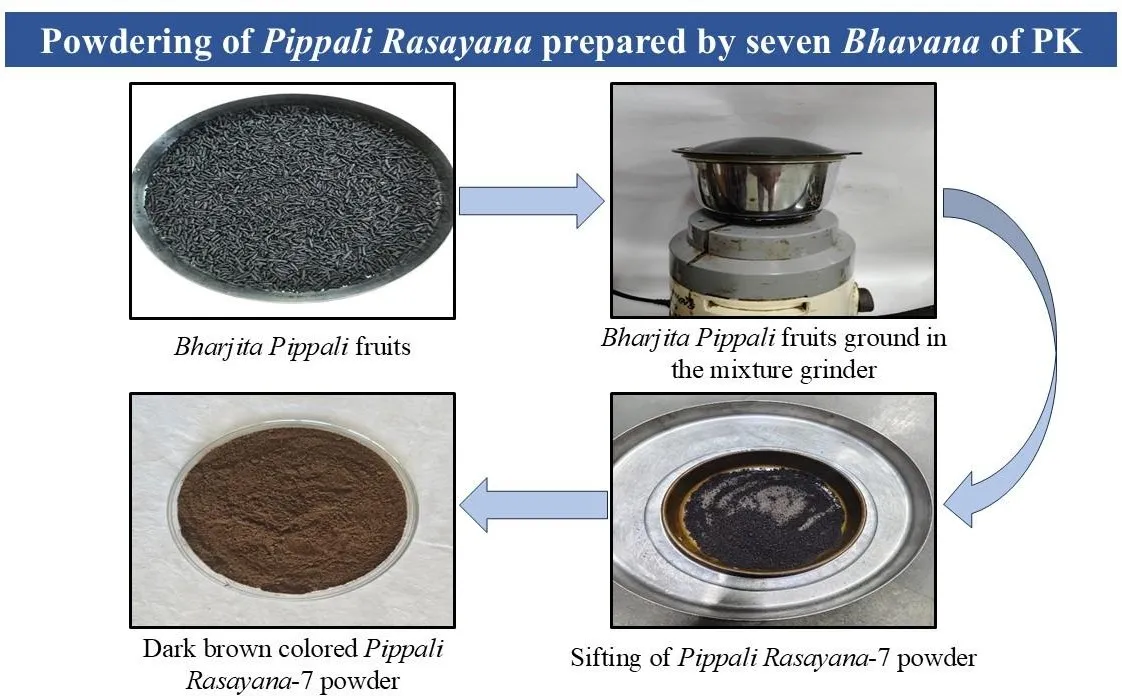
Figure 10: Powdering of PR-7
%) of fine, dark brown powder, leaving behind 46 g (5.71 %) of coarse material that resisted grinding and the process experienced a minor handling average loss of 6 g (0.74 %). So, a total average weight loss of 52 g (6.46%) was observed in all 3 batches due to fine airborne dust escaping the milling chambers and material sticking to the equipment. Sifted powder of PR-7 exhibited a brown color, a fine texture, and a sharp, pungent aroma characteristic of Pippali. The completed powder was stored in airtight containers to protect the fine particles from moisture absorption and clumping.
RESULT AND DISCUSSION
Procurement and identification of raw material
Fresh Palasha Panchanga was collected from the local farming area of Rabod, Kalol, Gujarat, in May 2024, in accordance with the Good Collection Practices (GCP) Guidelines. Pippali fruits were procured from the Government Ayurved Pharmacy, Rajpipala, Gujarat. The sample of Pippali fruits and Palasha Panchanga were identified in the Pharmacognosy Laboratory of the Upgraded Department of Dravyaguna, Government Ayurved College, Vadodara, Gujarat.
1. Preparation of PKr
The preparation of Palasha Kshara is a multi-tiered process operating under the classical principles of Bhasmikarana (combustion) and Nissarana (sedimentation/decantation).
A. Preparation of Palasha Panchanga Ash
In one previous study, ash of Palasha was prepared in two combinations in 1st combination, ash was prepared by using all five parts of Palasha i.e. roots, stem, leaves, flowers and fruits and in the 2nd combination, ash was prepared by using three parts of Palasha i.e. roots, stem and leaves. In that study, in combination 1, 9.60 % of ash was obtained from the dry material and in combination 2, 9.57 % of ash was obtained from the dry material.1 The difference in yield percentage in the present study may be because of the removal of unburnt particles of Palasha from the ash.
The burning process primarily involved pyrolysis of organic matter, wherein organic matter decomposed into volatile gases and solid char. This char subsequently underwent an oxidation process primarily in the presence of atmospheric oxygen. Once combustion of the carbonaceous residue is complete, a powdery or solid mineral residue (ash) is often left behind, consisting of inorganic oxidized materials of high melting point. SEM EDS study of ash shows that elements present in the original material usually remain in the ash as oxides, carbonates, phosphates, sulphur, potassium, and calcium.2
B. Preparation of Palasha Ksharajala (PJ)
During the preparation of PJ, the addition of water to plant ash may lead to a series of characteristic reactions and phase separations. The soluble alkaline salts present in ash, particularly potassium and sodium carbonate, probably dissolve readily, releasing ions into the aqueous medium.3,4 Simultaneously, basic oxides may undergo hydration to form their respective hydroxides,5 which could be responsible for imparting the strong alkalinity observed in Ksharajala. In the presence of atmospheric CO₂ or traces of acidic impurities, these carbonates might undergo conversion to bicarbonates, which could explain the effervescence occasionally seen during the process.6 On the other hand, some calcium7 and magnesium salts
etc., likely remain undissolved and gradually sediment during overnight standing, leaving a clear supernatant liquid that is considered as Ksharajala.
C. Preparation of PKr
For the preparation of PKr, previously prepared Ksharajala was taken and the whole watery portion was evaporated. A distinct odour of Kshara was found throughout the whole process of the Ksharajala evaporation, which correlates with the beginning of the process of separating alkaline material from Ksharajala. White froth was observed during the boiling of Ksharajala, which may be due to the decomposition of bicarbonates, which liberates CO₂,8 resulting in frothing, while increased concentration of soluble salts may cause turbidity, thereby imparting a whitish appearance to the solution. The finally produced Kshara was white, reflecting the description of Kshara characteristics given in classical writings as “Shukla Varna.”9 With increasing temperature, there was a proportional increase in aggregation, vapours and crackling sounds. The crackling sound was probably due to the sudden release of steam and gases from the concentrated Kshara paste and Bicarbonates may also undergo decomposition, liberating CO₂10 abruptly, which together contribute to the characteristic crackling. During the last phases, Kshara began to adhere vessel surface and bumping was seen. To avoid bumping and sticking at this point, the material was stirred carefully.
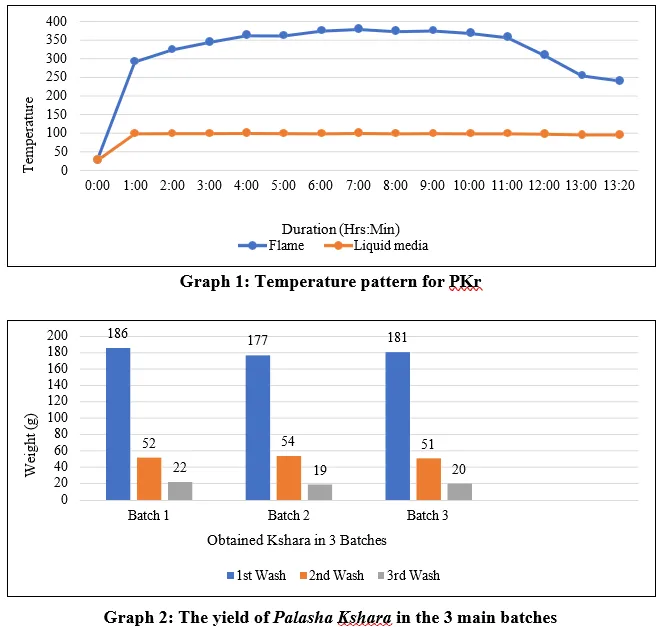
The combined filtrates of PJ were subjected to Agni Sannikarsha. The clear liquid was poured into a broad s. s. vessel and heated over an industrial gas manifold. In the primary scale-up main batches, the fluid mass was boiled steadily for an average run time of 13 hours and 13 minutes per batch. The liquid temperature was carefully held between 94 ºC and 100 ºC. During the early phase (hours 1 through 7), the boiling remained steady; the flame temperature registered around 290 ºC to 380 ºC while the fluid level dropped. The mixture was stirred intermittently during this fluid phase. As heating progressed, the solution became saturated and dense white froth formed on the surface, and the liquid attained a thick, highly reactive semi-solid consistency. At this stage, continuous mechanical stirring was done to prevent localized overheating, sticking, or dangerous bumping against the inner walls of the vessel. The temperature pattern observed during the preparation of PKr is shown in Graph 1 and the yield of Palasha Kshara in the 3 main batches is described in Graph 2.
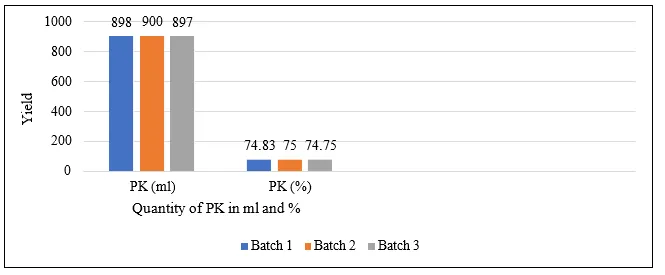
Graph 3: The Yield of PK in the 3 Main Batches
Preparation of Pippali Rasayana (PR 1 and PR 7)
The core objective of the study lies in comparing the physical changes created by one Bhavana in PR 1 and seven Bhavana in PR 7. Bhavana is much more than simple wet soaking; it introduces dynamic physical changes where the porous organic structure of the target herb (Pippali) absorbs the soluble mineral components of the liquid medium (Ksharodaka) under direct sunlight.
3. Preparation of Pippali Rasayana prepared by one Bhavana of Palasha Ksharodaka (PR 1)
The weight gain after Bhavana and Bharjana in all 3 batches is presented in Graph 4 and 5, respectively. Bharjana caused a measurable increase in weight due to the porous fruits absorbing the warm lipid fractions of the Goghrita. The weight loss in all 3 batches after sifting is presented in Graph 6.
4. Preparation of Pippali Rasayana prepared by seven Bhavana of Palasha Ksharodaka (PR 7)
The weight gain after each Bhavana and Bharjana in all 3 batches is presented in Graph 7 and 8, respectively. Bharjana caused a measurable increase in weight due to the porous fruits absorbing the warm lipid fractions of the Goghrita. The weight loss in all 3 batches after sifting is presented in Graph 6
Bhavana is regarded as a Samskara, that plays a crucial role in enhancing the characteristics of medications, thereby influences their therapeutic effectiveness. Acharya Gangadhara emphasized the dual exposure of materials to the sun and moon, recommending a seven-day period for optimal results, as described in the Bhaishajya Ratnavali. Liquid media is an essential component, playing a major role in the outcome of Bhavana
Probable Role of Sunlight in Bhavana.11 - Bhavita herbal formulations may be shade-dried, as hot sunrays may reduce volatile oil content and aromatic substances, and color changes may occur. Some chemicals may also undergo photodegradation by UV rays in sunlight and thereby forming new chemicals. Sunlight causes sterilization by UV rays. UV rays from sunlight are responsible for initiating photochemical reactions, in which photosensitizers are essential.
Some research work has been mentioned below, which suggests that as the number of
Bhavana increases, the weight gain was observed in the Bhavya Dravya.
and cytoprotective activity, indicating increased drug potency with a higher number of Bhavana. Thus, this study proves some principles of Bhavana like Tulyaviryata of Bhavana Dravya, Gunantaradhana, and Gunotkarsha.
CONCLUSION
In PR-1, after Bhavana,121.67 g (19.57 %) average yield was recorded and in PR-7, after seven Bhavana, 291.67 g (58.23 %) average yield was recorded. Bhavana significantly enhances mineral adsorption and overall product yield.
ACKNOWLEDGEMENT
REFERENCES


Hemanshu Parmar, Bharti Umretia, Process Validation of Pippali Rasayana Prepared by One and Seven Bhavana of Palasha Ksharodaka: A Comparative Study, Int. J. of Pharm. Sci., 2026, Vol 4, Issue 10, 4893-4908. https://doi.org/10.5281/zenodo.23830168
 10.5281/zenodo.23830168