

We use cookies to ensure our website works properly and to personalise your experience. Cookies policy
SIMS College Of Pharmacy, Mangaldas Nagar, Guntur,Andhra Pradesh,India 522001.
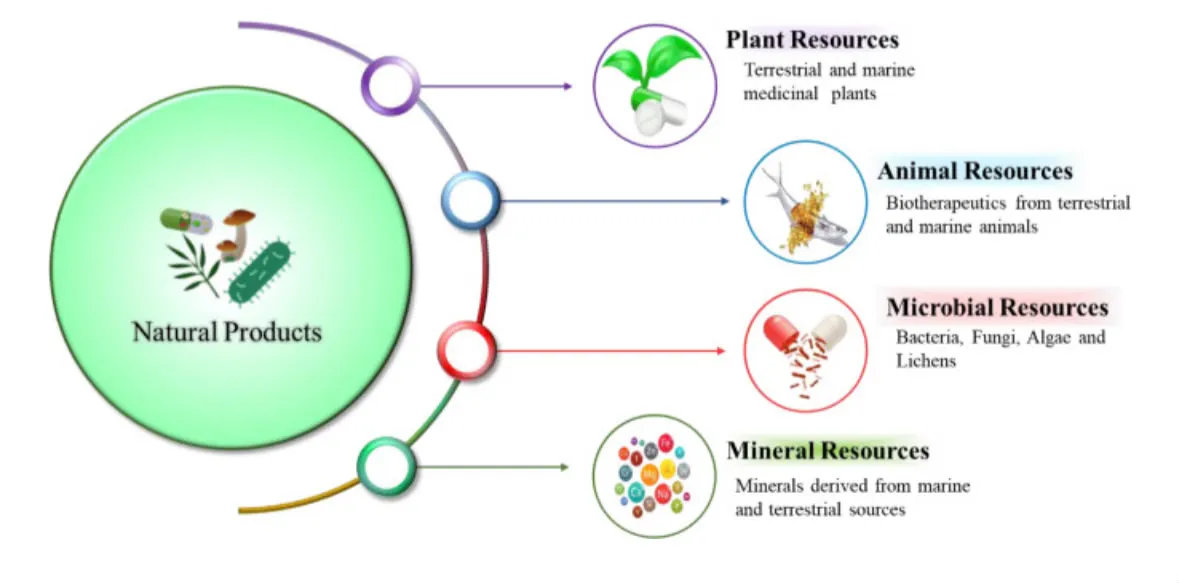
Natural products (NPs) derived from plants, microorganisms, marine organisms, and animals have played a fundamental role in the discovery and development of therapeutic agents. Their exceptional structural diversity, stereochemical complexity, and ability to interact with biologically relevant targets make them valuable sources of drug leads. Historically important medicines such as morphine, quinine, paclitaxel, artemisinin, and penicillin demonstrate the impact of natural products on modern pharmacotherapy. Analyses of approved drugs have shown that natural products and their derivatives constitute a substantial proportion of new molecular entities. Despite their importance, natural-product drug discovery has faced challenges including the complexity of extracts, limited availability of compounds, di?iculties in isolation and structural characterization, poor aqueous solubility, pharmacokinetic limitations, and di?iculties in identifying molecular targets. Recent advances in metabolomics, high- resolution mass spectrometry, genome mining, molecular networking, arti?cial intelligence, computational chemistry, microbial culturing, and biosynthetic ngineering are helping overcome many of these limitations. This review summarizes the sources, historical signi?cance, mechanisms of discovery, major therapeutic applications, advantages, challenges, and emerging technologies associated with natural-product-based drug discovery.
Drug discovery is a complex and time-consuming process involving the identification of biologically active molecules, optimization of their pharmacological properties, safety evaluation, and clinical development.
Natural products have historically served as one of the most productive sources of new therapeutic agents because living organisms produce structurally diverse molecules to survive, communicate, defend themselves, and interact with their environment. Natural products include alkaloids, flavonoids, terpenoids, glycosides, steroids, polyphenols, peptides, polyketides, and other secondary metabolites. Their structural complexity can provide interactions with biological targets that are diƯicult to reproduce using conventional syntheticchemistry. Several important medicines originated from natural sources. For example,morphine was isolated from opium poppy, quinine from Cinchona species,artemisinin from Artemisia annua, and paclitaxel from Taxus species.Microorganisms have also provided major drugs such as penicillin and other
antibiotics.
3.Major Sources of Natural Products
3.1 Plants
Plants are among the oldest and most extensively investigated sources ofmedicinal compounds. They produce numerous secondary metaboliteswith antimicrobial, anti-inflammatory, antioxidant, anticancer, antidiabetic,and cardiovascular activities.
Examples include:
Atropa belladonna → atropine
Digitalis species → digoxin
Cinchona species → quinine
Catharanthus roseus → vincristine and vinblastine
Taxus species → paclitaxel
Artemisia annua → artemisinin
3..2 Microorganisms
Bacteria and fungi are highly important sources of natural products.
Microbial metabolites have contributed extensively to antibiotic andimmunosuppressive drug discovery.
Examples include:
Penicillin from Penicillium species
Streptomycin from Streptomyces griseus
Erythromycin from Saccharopolyspora erythraea
Cyclosporine from Tolypocladium inflatum
3.3 Marine Organisms
Marine organisms such as sponges, tunicates, algae, corals, and marine
microorganisms produce chemically unusual compounds because of theirunique environmental conditions.Marine natural products have contributed to the development of anticancerand antiviral agents and continue to be an important area of drug-discoveryresearch.
3.4 Animals
Some biologically active compounds are obtained from animals and otherorganisms. Venoms, toxins, peptides, and proteins have been investigatedas potential sources of therapeutics.For example, peptide-based drugs have been developed from molecules
originally identified in animal venoms.
4.Role of Natural Products in Drug Discovery
Natural products can contribute to drug discovery in several ways:irect drug development – the natural compound itself becomes a drug.Structural modification – the natural compound is chemically modified toimprove potency, selectivity, stability, or pharmacokinetics.
Lead compounds – natural products provide structures that serve as startingpoints for synthetic drug development.
Pharmacological tools – natural compounds can help identify biologicalpathways and therapeutic targets.
Traditional medicine-based discovery – ethnomedicinal knowledge canguide the selection of plants or organisms for investigation.
5.Modern Technologies in Natural-Product Drug Discovery
Modern science has transformed natural-product research.
5.1 Genomics
Genomic information can help researchers identify genes responsible forthe production of bioactive molecules.
5.2 Metabolomics
SOURCES OF NATURAL
PRODUCTS
PLANTS
MICROORGANISMS
MARINE
ORGANISMS
ANIMALS
Metabolomics enables researchers to analyze large numbers of metabolitesand identify chemical diƯerences between samples.
5.3 Molecular Docking
Computer-based molecular docking can predict how natural compoundsmay interact with proteins or other biological targets.
5.4 Artificial Intelligence
AI and machine-learning approaches can assist with:
Compound identification
Activity prediction
Target prediction
Structure optimization
Drug repurposing
Toxicity prediction
5.5 Synthetic Biology
Synthetic biology can potentially enable microorganisms to producevaluable natural compounds in controlled laboratory systems, reducingdependence on natural harvesting.
6. Natural Products in Cancer Drug Discovery
Cancer is one of the most important areas in which natural products have
contributed to drug development.
Examples include:
Paclitaxel
Vincristine
Vinblastine
Camptothecin derivatives
These compounds act through diƯerent mechanisms, including interferencewith cell division and DNA-related processes.atural products continue to be investigated for new anticancer molecules
and molecular targets.
7. Natural Products in Infectious Disease
Natural products have historically played a major role in infectious diseasetreatment.Penicillin and streptomycin demonstrated the importance ofmicroorganisms as sources of antibacterial agents.Natural-product research also contributed to antimalarial therapy through
quinine and artemisinin.The continuing problem of antimicrobial resistance has increased interest inidentifying new antimicrobial compounds and new mechanisms of action.
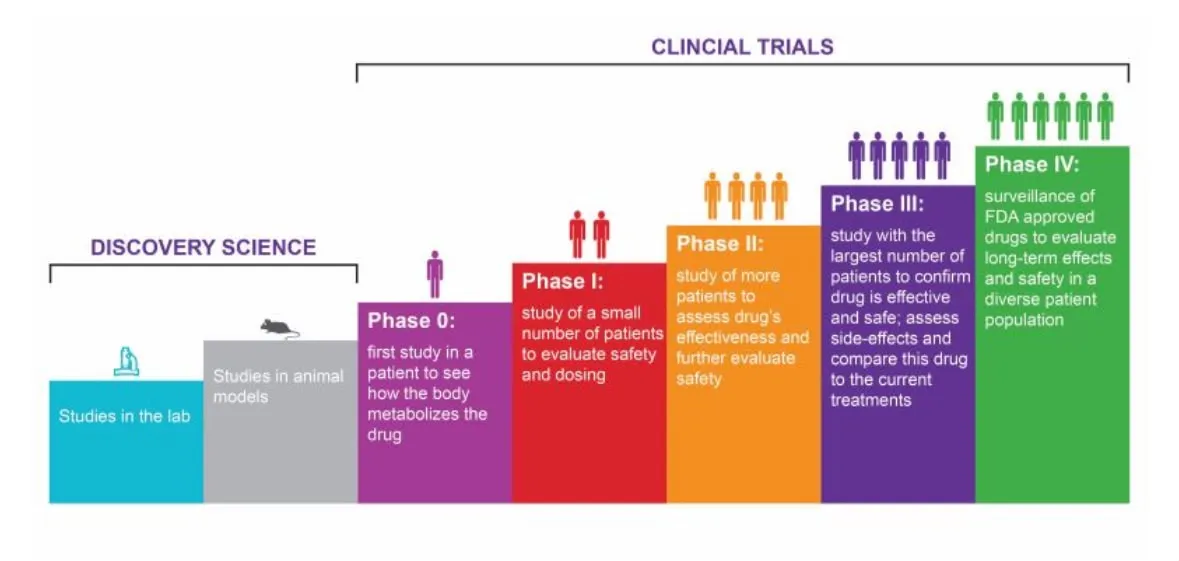
8. Natural Products and Drug Development
A natural compound does not automatically become a medicine. Drugdevelopment requires extensive evaluation.The development process generally includes:
Discovery → Lead identification → Lead optimization → Preclinical testing →
Clinical trials → Regulatory evaluation → Manufacturing → Post-marketing
monitoring
Natural molecules may be:Used directly as drugs
Chemically modified
Used as templates for synthetic drugs
Combined with other approaches to improve eƯicacy or safety
9. Quality Control and Standardization
Quality control is essential for natural medicines.
Important parameters include:
Correct identification of the source
Purity
Active-marker concentration
Contamination testing
Microbial testing
Heavy-metal testing
Pesticide-residue testing
Appropriate storage
Standardized extraction and manufacturing procedures improve
consistency and safety.
10. Future Perspectives
The future of natural-product drug discovery is likely to involve theintegration of several disciplines.
Traditional knowledge + Natural-product chemistry + Molecular biology +
Genomics + Metabolomics + AI + Synthetic biology
This integrated approach may help overcome several traditional limitations.
Emerging areas include:
Biodiversity-based drug discovery
Microbiome-derived natural products
Marine natural products
Genome mining
AI-assisted screening
Sustainable production
Precision medicine
Natural-product-inspired synthetic compounds
CONCLUSION
Natural products remain one of the most valuable sources of newtherapeutic agents. Plants, microorganisms, marine organisms, and animalshave provided numerous compounds that have become importantmedicines or served as templates for drug development.Although natural-product research faces challenges such as complexchemistry, low abundance, toxicity, standardization, reproducibility, andsustainability, modern technologies are creating new opportunities.Genomics, metabolomics, advanced analytical chemistry, computationaldrug discovery, AI, and synthetic biology can make natural-productdiscovery faster and more systematic.Therefore, natural products should not be viewed only as traditionalremedies but as scientifically valuable sources of chemical diversity andnovel drug leads. Continued collaboration between pharmacology,chemistry, biotechnology, medicine, and computational science can help
convert natural-product discoveries into safe, eƯective, and clinically usefulmedicines.
REFERENCES

Shaik. Muneer, Pasupuleti. Gayathri, Products in Natural Drug Discovery, Int. J. of Pharm. Sci., 2026, Vol 4, Issue 10, 4497-4501. https://doi.org/10.5281/zenodo.23727538
 10.5281/zenodo.23727538
Severity: 8192
Message: substr(): Passing null to parameter #1 ($string) of type string is deprecated
Filename: frontend/article.php
Line Number: 890