

We use cookies to ensure our website works properly and to personalise your experience. Cookies policy
1Research Scholar, Shri Jagdishprasad Jhabarmal Tibrewala university, Vidyanagiri ,Jhunjhunu – Churu road, Rajasthan- 6333010
2Guide,Shri Jagdishprasad Jhabarmal Tibrewala university,Vidyanagiri, Jhunjhunu – Churu road, Rajasthan- 6333010
3Co Guide, Shri Jagdishprasad Jhabarmal Tibrewala university,Vidyanagiri, Jhunjhunu – Churu road, Rajasthan- 6333010
Azadirachtin, a bioactive compound obtained from Azadirachta indica, exhibits significant antimicrobial, anti-inflammatory, antioxidant, anticancer, and insecticidal activities. However, its therapeutic application is limited due to poor aqueous solubility, low bioavailability, instability, rapid degradation, and inadequate target-site delivery. To overcome these limitations, proliposomal drug delivery systems have gained attention as stable and efficient carriers for azadirachtin delivery. Proliposomes are dry, free-flowing systems that form liposomes upon hydration, offering advantages such as improved stability, enhanced drug entrapment, sustained release, better permeability, and ease of storage compared to conventional liposomes. This review focuses on the formulation, characterization, and pharmacological evaluation of azadirachtin-loaded proliposomal systems. Various formulation techniques including thin-film hydration, film-deposition on carrier method, spray drying, and lyophilization are discussed along with the role of phospholipids, cholesterol, lecithin, and carrier materials in formulation development. The review also highlights important characterization parameters such as particle size, zeta potential, encapsulation efficiency, surface morphology, FTIR analysis, in vitro drug release, permeability studies, and stability evaluation. Pharmacological studies suggest that proliposomal encapsulation enhances the therapeutic efficacy of azadirachtin through improved stability, controlled release, enhanced bioavailability, and better tissue distribution. Overall, proliposomal technology represents a promising approach for the effective delivery of azadirachtin, with future scope in targeted therapy, large-scale production, and clinical applications.
Herbal bioactive compounds have gained considerable attention in recent decades owing to their diverse pharmacological activities, improved patient acceptability, and comparatively lower adverse effects than many synthetic therapeutic agents. Phytopharmaceuticals derived from medicinal plants are increasingly being explored for the management of inflammatory disorders, microbial infections, cancer, metabolic diseases, and dermatological conditions. Among various medicinal plants, Azadirachta indica (Neem) occupies a significant place in traditional systems of medicine such as Ayurveda, Unani, and Siddha due to its broad spectrum of therapeutic activities. Neem contains several biologically active constituents including azadirachtin, nimbidin, nimbin, nimbolide, azadiradione, and other limonoids that contribute to its medicinal value. Despite the enormous therapeutic potential of plant-derived bioactive compounds, their successful clinical application remains limited because of several pharmaceutical and biopharmaceutical challenges. Most phytoconstituents exhibit poor aqueous solubility, instability under physiological conditions, susceptibility to oxidation and hydrolysis, rapid metabolism, poor membrane permeability, and low systemic bioavailability. Furthermore, many herbal compounds are highly sensitive to environmental factors such as heat, moisture, oxygen, and light, which significantly reduce their therapeutic efficacy and shelf life. These limitations necessitate the development of advanced drug delivery systems capable of improving stability, enhancing absorption, controlling release, and increasing therapeutic performance. Azadirachtin is one of the most important tetranortriterpenoid limonoids isolated from neem seeds and other parts of Azadirachta indica. It is chemically complex and highly oxygenated in nature, possessing remarkable biological and pharmacological activities. Traditionally, neem-derived preparations containing azadirachtin have been used for the treatment of skin disorders, inflammation, microbial infections, wounds, and parasitic diseases. Scientific investigations have demonstrated that azadirachtin and related neem constituents exhibit antimicrobial, antifungal, anti-inflammatory, antioxidant, antiparasitic, insecticidal, antifeedant, and potential anticancer properties. The increasing pharmaceutical interest in azadirachtin is mainly attributed to its multifunctional therapeutic profile and natural origin. However, the therapeutic application of azadirachtin is significantly restricted by its poor physicochemical stability and unfavorable pharmacokinetic characteristics. Azadirachtin is highly susceptible to hydrolytic and photolytic degradation and can rapidly decompose upon exposure to light, heat, alkaline pH, and environmental oxygen. In addition, its poor aqueous solubility and limited permeability contribute to inadequate absorption and reduced bioavailability. Similar stability-related challenges have been reported for various neem-derived bioactive compounds incorporated into conventional dosage forms. These drawbacks often result in insufficient drug concentration at the target site and reduced pharmacological response. Therefore, novel carrier systems are essential to protect azadirachtin from degradation while improving its delivery and therapeutic effectiveness. Nanotechnology-based drug delivery systems have emerged as promising strategies for overcoming the limitations associated with phytoconstituents. Among various vesicular carriers, liposomes have received extensive attention due to their biocompatibility, biodegradability, low toxicity, and ability to encapsulate both hydrophilic and lipophilic compounds. Liposomes are microscopic vesicles composed of phospholipid bilayers capable of enhancing drug solubility, improving pharmacokinetic behavior, and facilitating targeted drug delivery. However, conventional liposomes suffer from several disadvantages including poor physical stability, phospholipid oxidation, drug leakage, aggregation, fusion during storage, and difficulties in large-scale manufacturing and sterilization. To overcome these limitations, proliposomal drug delivery systems were developed as a more stable alternative to conventional liposomes. Proliposomes are dry, free-flowing particulate systems composed of phospholipids, carrier materials, and drug molecules that rapidly form liposomal vesicles upon hydration. Because of their dry powder nature, proliposomes exhibit superior physicochemical stability, ease of storage, improved handling characteristics, and enhanced shelf life compared with conventional aqueous liposomal dispersions. Additionally, proliposomes can provide controlled and sustained drug release, improved drug entrapment efficiency, enhanced permeation across biological membranes, and better therapeutic efficacy. Film deposition on carrier particles, spray drying, slurry method, and fluidized bed techniques are among the commonly employed methods for proliposome preparation. The incorporation of azadirachtin into proliposomal systems represents a promising strategy for improving its pharmaceutical performance. Encapsulation of azadirachtin within phospholipid vesicles can protect the compound from hydrolytic and photolytic degradation while enhancing its stability and bioavailability. Furthermore, the lipidic nature of proliposomal vesicles may facilitate better penetration across biological membranes and improve drug retention at the target site. Proliposomal carriers also enable sustained and controlled release of encapsulated compounds, thereby maintaining therapeutic drug concentrations for prolonged periods. Similar observations have been reported with liposomal and proliposomal formulations of bioactive compounds, where increased entrapment efficiency, improved stability, enhanced permeation, and prolonged drug release were achieved. In addition, phospholipid-based vesicular systems may enhance pharmacological activity through improved cellular uptake and bio-distribution. High zeta potential values observed in liposomal formulations contribute to particle stability by preventing aggregation and improving internalization into target cells. Such properties are particularly beneficial for unstable herbal bioactives like azadirachtin, where efficient delivery is essential for achieving optimal therapeutic outcomes. Therefore, the development of azadirachtin-loaded proliposomal systems has emerged as an attractive approach in modern herbal nanomedicine. The combination of natural phytoconstituents with advanced vesicular delivery technologies offers substantial potential for enhancing therapeutic efficacy while minimizing instability-related limitations. The present review aims to comprehensively discuss the formulation strategies, physicochemical characterization, and pharmacological evaluation of azadirachtin-loaded proliposomal drug delivery systems. The review further focuses on the advantages of proliposomal carriers in improving the stability, bioavailability, controlled release behavior, and therapeutic performance of azadirachtin, along with future perspectives and research opportunities in this emerging area of phytopharmaceutical drug delivery.
Azadirachtin: An Overview
Source and Chemistry
Azadirachtin is one of the most biologically active limonoids isolated from the neem tree, Azadirachta indica, a medicinal plant belonging to the family Meliaceae. Neem is widely distributed in tropical and subtropical regions, particularly in India, Southeast Asia, and parts of Africa, and has been extensively utilized in traditional medicine for centuries because of its antimicrobial, anti-inflammatory, antiparasitic, and insecticidal properties. Among the numerous phytoconstituents present in neem, azadirachtin is considered the principal bioactive compound responsible for many of its pesticidal and therapeutic activities. Chemically, azadirachtin is a highly oxygenated tetranortriterpenoid limonoid possessing a complex molecular architecture with multiple oxygen-containing functional groups, ester linkages, and several chiral centers. The compound exhibits an intricate internal structure characterized by decalin and tricyclic dihydrofuran segments, which contribute to its remarkable biological activity as well as its instability. The complete chemical synthesis of azadirachtin is extremely challenging because of its structural complexity, stereochemical arrangement, and sensitivity toward environmental conditions. Early synthetic approaches required more than 70 reaction steps with very low overall yield, demonstrating the difficulty associated with large-scale synthetic production.
Botanical Source: Azadirachtin is mainly isolated from: Neem seeds, Seed kernels, Fruits, Leaves, Bark and roots (in smaller quantities) Among these, neem seed kernels contain the highest concentration of azadirachtin and are therefore considered the primary commercial source.
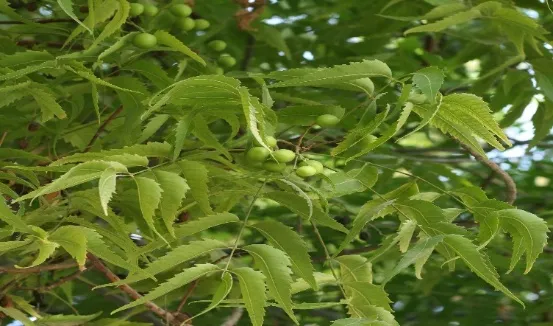
Fig No 1: Azadirachta indica Plant
Extraction Methods: Several extraction techniques have been employed for the isolation of azadirachtin from different parts of neem. Commonly used methods include:
Different organic solvents such as hexane, ethanol, methanol, acetone, acetonitrile, and ethyl acetate are commonly utilized depending on the polarity and extraction efficiency required. Analytical methods including HPLC, LC-MS, UHPLC, and UPLC-QTOF are widely used for detection and quantification of azadirachtin. Chemical Structure and Physicochemical Properties: Azadirachtin possesses a highly complex polycyclic limonoid structure with numerous oxygenated functionalities that contribute to its potent biological activity. The compound exhibits:
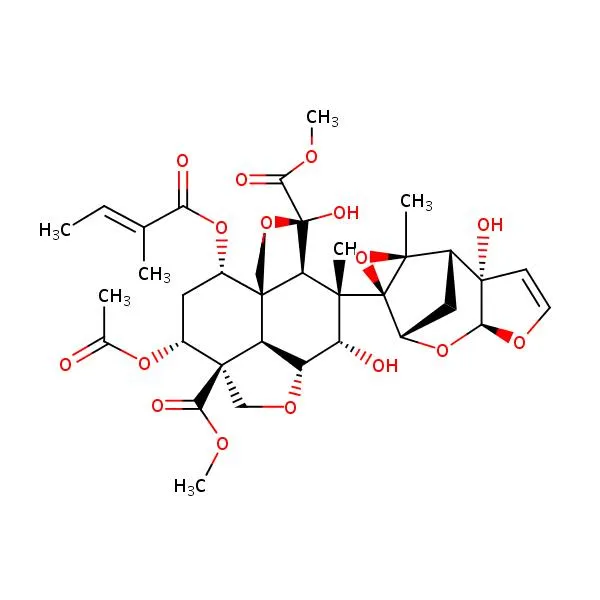
Molecular Properties:
|
Property |
Description |
|
Chemical class |
Tetranortriterpenoid limonoid |
|
Source |
Azadirachta indica |
|
Nature |
Highly oxygenated phytoconstituent |
|
Molecular behavior |
Thermolabile and photosensitive |
|
Solubility |
Poorly water soluble |
Solubility Profile: Azadirachtin exhibits poor aqueous solubility but shows better solubility in organic solvents such as methanol, ethanol, chloroform, and acetone. Its hydrophobic nature significantly limits dissolution in biological fluids, thereby reducing absorption and bioavailability.
Stability Profile: Azadirachtin is highly unstable under adverse environmental conditions and undergoes rapid degradation when exposed to: Light, Heat, Moisture, Alkaline pH, Oxidative conditions. The compound is particularly susceptible to hydrolysis and photodegradation, which considerably reduce its shelf life and therapeutic effectiveness.
Pharmacological Activities of Azadirachtin
Azadirachtin exhibits a wide spectrum of pharmacological and biological activities, making it an important natural bioactive compound in pharmaceutical, agricultural, and biomedical research. Several studies have demonstrated its therapeutic potential against microbial infections, inflammatory disorders, parasitic diseases, oxidative stress, and certain cancers.
Limitations of azadirachtin
Despite its remarkable pharmacological potential, the practical therapeutic application of azadirachtin is significantly limited because of several physicochemical and biopharmaceutical drawbacks.
|
Limitation |
Impact on Therapy |
|
Poor stability |
Reduced shelf life |
|
Poor aqueous solubility |
Poor absorption and low bioavailability |
|
Rapid degradation |
Reduced therapeutic efficacy |
|
Photodegradation |
Loss of potency during storage |
|
Thermal instability |
Difficulty in formulation processing |
|
Oxidation |
Reduced biological activity |
|
Low permeability |
Limited tissue penetration |
|
Short half-life |
Frequent dosing requirement |
These pharmaceutical limitations strongly justify the need for advanced carrier systems such as proliposomal drug delivery systems to improve the stability, permeability, controlled release, and therapeutic efficacy of azadirachtin.
Proliposomal Drug Delivery System
Concept and Definition
Liposomes are among the most extensively investigated vesicular drug delivery systems because of their biocompatibility, biodegradability, and ability to encapsulate both hydrophilic and lipophilic drugs. Structurally, liposomes are microscopic vesicles composed of one or more phospholipid bilayers surrounding an aqueous core. These vesicles are capable of entrapping drugs within either the aqueous compartment or lipid bilayer depending on the physicochemical properties of the drug molecule. Although conventional liposomes possess significant advantages in drug targeting, controlled release, and enhancement of therapeutic efficacy, they suffer from several physical and chemical stability issues. Conventional liposomal suspensions are highly prone to vesicle fusion, aggregation, phospholipid oxidation, hydrolysis, leakage of entrapped drug, and reduced shelf life during storage. These limitations encouraged the development of more stable vesicular precursor systems known as proliposomes. Proliposomes are dry, free-flowing particulate systems that generate liposomal suspensions immediately upon hydration or contact with aqueous biological fluids. The proliposomal system generally consists of phospholipids coated onto a porous, water-soluble carrier material together with the incorporated drug. Upon hydration, the lipid layer reorganizes spontaneously to form liposomal vesicles. This approach significantly improves the physical stability and storage characteristics of liposomal formulations. The concept of proliposomes was first introduced by Payne and co-workers in 1986 as a practical solution to the instability associated with conventional liposomes. Since then, proliposomal systems have gained considerable attention in pharmaceutical research for oral, topical, pulmonary, mucosal, and parenteral drug delivery applications.
Difference Between Liposomes and Proliposomes
|
Parameter |
Liposomes |
Proliposomes |
|
Physical form |
Aqueous vesicular dispersion |
Dry free-flowing powder/granules |
|
Stability |
Comparatively unstable |
Improved stability |
|
Storage |
Requires special conditions |
Easier storage and handling |
|
Drug leakage |
Higher probability |
Reduced leakage |
|
Shelf life |
Shorter |
Longer |
|
Transportation |
Difficult |
Convenient |
|
Vesicle formation |
Preformed vesicles |
Vesicles formed after hydration |
|
Manufacturing issues |
Aggregation and fusion common |
Reduced aggregation problems |
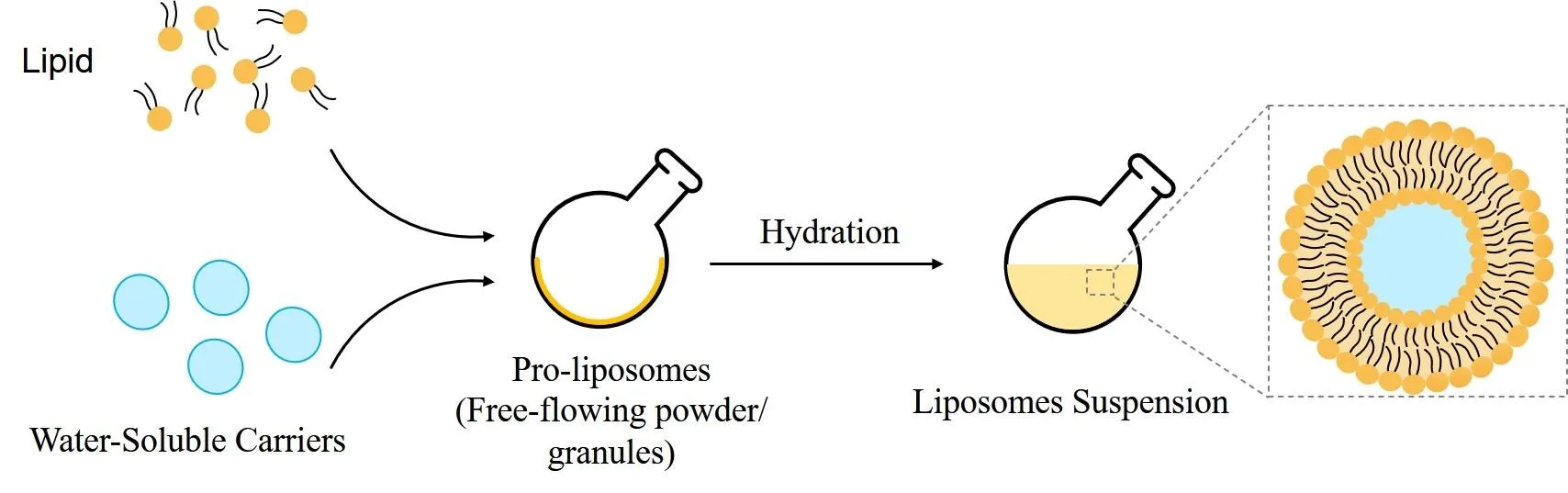
Conventional liposomes exist as aqueous colloidal dispersions, whereas proliposomes remain in dry powder form until hydration occurs. This dry state significantly minimizes hydrolytic degradation and phospholipid instability.
The dry particulate form offers several pharmaceutical advantages:
Because proliposomes remain stable in dry form, they can be easily distributed, transported, sterilized, and stored without significant drug leakage or vesicle fusion.
The hydration process involves:
Hydration may occur:
The resulting liposomal vesicles improve drug entrapment, membrane permeation, and sustained release behavior.
Components of Proliposomes
The formulation of proliposomes involves several critical excipients that determine vesicle formation, drug entrapment efficiency, stability, permeability, and release behavior.
1. Lipids
Lipids form the structural framework of proliposomal vesicles and are essential for vesicle formation, drug encapsulation, and membrane stability. Phospholipids are the most commonly used lipids because of their amphiphilic nature, biocompatibility, and ability to form bilayer vesicular structures.
Phosphatidylcholine: Phosphatidylcholine (PC) is the most widely used phospholipid in proliposomal formulations. It forms stable lipid bilayers and shows excellent compatibility with biological membranes. Phosphatidylcholine is chemically inert, non-toxic, biodegradable, and relatively economical, making it highly suitable for pharmaceutical applications. Common sources of phosphatidylcholine include egg yolk lecithin, soy lecithin, and synthetic phosphatidylcholine. The major functions of phosphatidylcholine include formation of the lipid bilayer, drug encapsulation, improvement of membrane permeability, and stabilization of vesicles. It also contributes to enhanced drug delivery and bioavailability.
Lecithin: Lecithin is a natural phospholipid mixture rich in phosphatidylcholine and is extensively used in proliposomal formulations. It possesses excellent biocompatibility, amphiphilic characteristics, low toxicity, and ease of vesicle formation. Lecithin facilitates spontaneous liposome formation upon hydration and enhances the incorporation of drugs into lipid bilayers, thereby improving formulation efficiency and stability.
Cholesterol: Cholesterol is an important membrane stabilizer incorporated into proliposomal formulations to modify phospholipid bilayer characteristics. It increases membrane rigidity, reduces permeability, and improves vesicle stability.
The major functions of cholesterol include stabilization of the lipid bilayer, reduction of vesicle leakage, improvement of entrapment efficiency, enhancement of membrane fluidity, and prevention of phospholipid crystallization. Cholesterol also improves the retention of hydrophilic drugs and enhances the encapsulation of lipophilic compounds, thereby contributing to better therapeutic performance of proliposomal systems.
2. Carrier Materials
Carrier materials play an important role in proliposomal formulations by providing a porous surface for the deposition of phospholipids and drug molecules. An ideal carrier should possess high surface area, good flowability, water solubility, porosity, and non-toxic characteristics to ensure efficient proliposome formation and hydration.
Mannitol: Mannitol is one of the most commonly used carriers in proliposomal systems because of its excellent water solubility, good flow properties, porous structure, and chemical inertness. It promotes rapid hydration and efficient liposome formation, thereby improving formulation performance and stability.
Sorbitol: Sorbitol functions as a hydrophilic carrier and contributes to improved powder flow, better lipid coating efficiency, and enhanced vesicle dispersion. It also supports rapid dissolution and hydration of proliposomal powders.
Maltodextrin: Maltodextrin is widely used in proliposomal formulations due to its high surface area, good adsorption capacity, easy dispersibility, and improved formulation stability. It is especially suitable for spray-dried proliposomal systems.
Other carrier materials reported in proliposomal formulations include microcrystalline cellulose, magnesium aluminometasilicate, and silica-based porous materials, which help improve powder characteristics, stability, and vesicle formation efficiency.
3. Solvents
Organic solvents are commonly used during proliposomal formulation to dissolve lipids and drug molecules and to facilitate uniform lipid distribution over carrier materials. Commonly used solvents include ethanol, chloroform, methanol, and ether.
Ethanol: Ethanol is one of the most widely used solvents in proliposomal formulation because of its excellent lipid solubilizing ability, lower toxicity, and ease of evaporation. It also improves formulation safety compared to highly toxic organic solvents.
Chloroform: Chloroform is highly effective in dissolving phospholipids and hydrophobic drugs, thereby promoting uniform lipid coating and efficient vesicle formation. It is frequently used in thin-film hydration and solvent evaporation methods.
Methanol: Methanol is occasionally used alone or in combination with other solvents to improve the dissolution of formulation components and enhance formulation uniformity. These organic solvents are generally removed after formulation by evaporation, spray drying, rotary vacuum evaporation, or vacuum drying techniques to obtain stable dry proliposomal powders.
Stabilizers and Charge Modifiers: Stabilizers and charge modifiers are incorporated into proliposomal formulations to improve vesicle stability, surface charge, drug entrapment efficiency, and prevention of vesicle aggregation. These agents help maintain formulation integrity during storage and after hydration. Charge modifiers influence the zeta potential of vesicles and increase repulsive forces between lipid bilayers, thereby minimizing vesicle fusion and aggregation. Surface charge also plays an important role in permeability, interaction with biological membranes, and cellular uptake behavior.
The incorporation of suitable stabilizers and charge modifiers contributes significantly to the stability, performance, and therapeutic efficiency of proliposomal drug delivery systems.
Advantages of Proliposomes
Proliposomes offer several advantages over conventional liposomal systems and other vesicular drug delivery carriers, making them highly suitable for the delivery of poorly soluble and unstable drugs such as azadirachtin. One of the major advantages of proliposomes is their enhanced stability. Since they exist in dry powder form, problems commonly associated with conventional liposomes such as hydrolysis, oxidation, vesicle fusion, and drug leakage are significantly reduced. As a result, proliposomal formulations exhibit improved physicochemical stability and prolonged shelf life. Proliposomes also provide improved drug loading capacity. Upon hydration, they form multilamellar vesicles capable of entrapping higher amounts of drug, particularly poorly water-soluble compounds. This leads to enhanced formulation efficiency and therapeutic effectiveness. Another important advantage is better storage stability. Unlike aqueous liposomal suspensions, proliposomes require less stringent storage conditions, remain relatively stable at room temperature, and show reduced degradation during storage. Their dry particulate nature also simplifies transportation, minimizes handling difficulties, and reduces leakage-related problems. Proliposomal systems are capable of providing controlled and sustained drug release for extended periods depending on vesicle composition and characteristics. In addition, they improve drug bioavailability through enhanced solubilization, increased membrane permeability, improved intestinal absorption, and better mucosal retention. These properties are especially beneficial for phytoconstituents like azadirachtin that exhibit poor aqueous solubility and limited bioavailability. Furthermore, proliposomal formulations generally exhibit low toxicity and reduced irritation because phospholipids used in the system are biocompatible and biodegradable. These combined advantages make proliposomes a promising and effective approach for advanced drug delivery applications.
Limitations of Proliposomes
Despite their numerous advantages, proliposomal systems possess certain limitations that may influence formulation development and large-scale commercial application. One of the major limitations is the high cost associated with the use of high-purity phospholipids, specialized equipment, and advanced processing techniques required for formulation preparation. Large-scale manufacturing of proliposomes may also present several scale-up challenges, including difficulties in achieving uniform lipid coating, reproducibility of formulations, efficient solvent removal, and process optimization. These factors can affect product quality and manufacturing consistency.
Another important limitation is lipid oxidation. Unsaturated phospholipids used in proliposomal formulations are susceptible to oxidative degradation during storage, which may compromise vesicle integrity, drug stability, and overall formulation performance. Reproducibility concerns are also significant, as variations in vesicle size, entrapment efficiency, surface charge, and drug release behavior may occur due to changes in formulation composition and processing conditions. Additional limitations include residual solvent toxicity, sterilization difficulties, sensitivity to humidity, and batch-to-batch variability. Despite these challenges, proliposomes remain highly promising drug delivery carriers for unstable and poorly bioavailable phytoconstituents such as azadirachtin because of their improved stability, controlled drug release, enhanced bioavailability, and superior therapeutic performance.
Formulation Strategies For Azadirachtin-Loaded Proliposomes
The successful development of azadirachtin-loaded proliposomal formulations depends on careful selection of formulation components, optimization of preparation methods, and systematic characterization of the final vesicular system. Since azadirachtin is highly unstable, poorly water-soluble, and susceptible to photolytic and hydrolytic degradation, formulation strategies must focus on improving physicochemical stability, enhancing entrapment efficiency, increasing permeability, and achieving sustained drug release. Proliposomal systems provide a suitable platform for overcoming these challenges because of their dry particulate nature, high lipid compatibility, and ability to form liposomes upon hydration.
Preformulation Studies
Preformulation studies constitute a fundamental stage in the development of advanced lipid-based drug delivery systems such as proliposomes. Proliposomes are dry, free-flowing particulate formulations composed of phospholipids, drug molecules, and solid carrier materials that spontaneously generate liposomal vesicles upon hydration. Compared with conventional liposomes, proliposomal systems exhibit superior physicochemical stability, improved shelf life, ease of transportation, and better industrial scalability. For structurally sensitive phytoconstituents such as azadirachtin, preformulation testing is particularly important because the molecule possesses multiple reactive functional groups and exhibits pronounced instability toward environmental conditions. Therefore, systematic preformulation evaluation helps establish the compatibility between the drug and excipients, improves drug entrapment, enhances stability, and ensures successful formulation development.
1. Physicochemical Profiling of Azadirachtin
A comprehensive physicochemical evaluation of azadirachtin is essential before initiating proliposomal formulation development. Azadirachtin, primarily isolated as Azadirachtin A (CAS No. 11141-17-6), is a highly oxygenated tetranortriterpenoid limonoid obtained from neem seeds. It possesses a molecular formula of C₃₅H₄₄O₁₆ with a molecular weight of 720.71 g/mol. Structurally, the molecule contains a complex decalin ring system linked to a tricyclic dihydrofuran moiety along with numerous oxygen-containing functional groups such as esters, acetals, and hydroxyl groups. Pure azadirachtin appears as a colorless to pale yellow microcrystalline powder and exhibits a melting point in the range of 154–158°C. The compound also demonstrates a characteristic ultraviolet absorption maximum at approximately 217 nm, which is commonly utilized for analytical quantification. The solubility characteristics of azadirachtin play a critical role in determining its behavior within proliposomal systems. The compound exhibits amphiphilic properties with a relatively low octanol-water partition coefficient (logP ≈ 0.13), indicating the presence of both hydrophilic and lipophilic domains. Azadirachtin is freely soluble in polar organic solvents such as ethanol, methanol, acetone, and dimethyl sulfoxide, while exhibiting limited aqueous solubility. Due to this amphiphilic nature, the molecule may partition either into the aqueous core or the lipid-water interface of liposomal vesicles. Consequently, careful optimization of lipid composition, cholesterol concentration, and surfactant ratio becomes necessary during preformulation studies to achieve maximum drug entrapment efficiency and uniform vesicle formation. Another major concern associated with azadirachtin is its intrinsic instability. The molecule is highly sensitive to ultraviolet radiation, acidic and alkaline conditions, elevated temperatures, and oxidative degradation. The presence of multiple labile ester linkages and oxygenated functionalities makes it prone to rapid hydrolysis and photodegradation during storage and handling. Such instability significantly limits the direct pharmaceutical or agricultural application of azadirachtin in its native form. Incorporating the compound into a proliposomal dry matrix offers substantial protection by physically isolating the drug from moisture, oxygen, and light exposure. The lipid bilayer further acts as a protective barrier against harsh environmental conditions, thereby improving the overall stability profile of the molecule.
2. Selection and Compatibility Testing of Excipients
The selection of suitable excipients is one of the most important aspects of proliposomal formulation design. Each excipient contributes specific physicochemical and functional properties that collectively influence vesicle formation, drug loading, membrane stability, and long-term storage behavior. Phospholipids are the primary structural components responsible for vesicle formation upon hydration. Natural phospholipids such as Soy Phosphatidylcholine (SPC) and Hydrogenated Soy Phosphatidylcholine (HSPC) are commonly investigated during preformulation studies. SPC forms relatively fluid and flexible lipid bilayers that facilitate membrane permeability and rapid vesicle formation. In contrast, HSPC possesses a higher phase-transition temperature, resulting in more rigid and stable bilayers that reduce drug leakage and improve vesicle integrity during storage. The selection between SPC and HSPC depends on the desired balance between vesicle fluidity and stability. Cholesterol is incorporated as a membrane stabilizer and bilayer modifier. It intercalates between phospholipid molecules within the hydrophobic region of the bilayer, thereby reducing membrane permeability and increasing structural rigidity. Cholesterol also minimizes leakage of entrapped drug molecules and prevents excessive membrane fluidization. For amphiphilic compounds such as azadirachtin, optimization of cholesterol concentration is crucial because excessive cholesterol may reduce vesicle flexibility, whereas insufficient cholesterol can lead to unstable and leaky vesicles. Solid carriers play a significant role in maintaining the dry, free-flowing nature of proliposomal powders. Hydrophilic carriers such as sorbitol, mannitol, maltodextrin, and microcrystalline cellulose are commonly selected because of their high water solubility, inert nature, and large surface area. Sorbitol and mannitol are particularly preferred as they additionally function as cryoprotectants and enhance powder flowability. The carrier matrix provides a large surface for uniform lipid coating, allowing rapid hydration and spontaneous formation of homogeneous liposomal vesicles upon contact with aqueous media. Non-ionic surfactants such as Poloxamer 188 (Lutrol® F68) are often incorporated to improve wetting behavior and reduce interfacial tension. These surfactants facilitate rapid hydration of proliposomal granules and may also inhibit drug recrystallization within the lipid matrix. Furthermore, surfactants contribute to improved vesicle dispersion and enhanced physical stability of the reconstituted system. Compatibility screening between azadirachtin and selected excipients is essential to ensure that no undesirable physicochemical interactions occur during formulation processing or storage. Any incompatibility may alter drug stability, reduce entrapment efficiency, or negatively affect vesicle formation.
3. Solid-State Characterization and Compatibility Studies
Solid-state characterization techniques are essential during preformulation development to confirm the physical state of the drug, evaluate molecular dispersion within the lipid matrix, and detect potential incompatibilities between formulation components. Powder X-Ray Diffractometry (PXRD) is employed to investigate the crystalline nature of azadirachtin before and after incorporation into the proliposomal system. Pure azadirachtin generally exhibits sharp crystalline diffraction peaks characteristic of its ordered crystal lattice. However, after successful incorporation into proliposomes, these sharp peaks may disappear or significantly reduce in intensity, indicating conversion of the drug into an amorphous or molecularly dispersed state within the lipid matrix. Such amorphization is highly desirable because it enhances apparent solubility, dissolution rate, and drug dispersion uniformity. Fourier Transform Infrared Spectroscopy (FTIR) is widely used to study chemical compatibility between azadirachtin and formulation excipients. FTIR analysis involves monitoring characteristic functional group vibrations such as hydroxyl stretching, ester carbonyl stretching, and C–O bond vibrations of azadirachtin. Comparison of spectra obtained from the pure drug, physical mixtures, and finalized proliposomal formulations helps identify any major shifts, disappearance of peaks, or formation of new bands that may indicate chemical interactions or degradation. The absence of significant spectral changes confirms compatibility and preservation of the drug’s chemical structure. Differential Scanning Calorimetry (DSC) provides valuable information regarding thermal transitions and molecular interactions within the proliposomal system. DSC thermograms of pure azadirachtin typically exhibit a characteristic melting endothermic peak corresponding to its crystalline melting point. Disappearance or broadening of this peak in the proliposomal formulation suggests successful incorporation and molecular dispersion of the drug within the lipid bilayer. DSC also assists in evaluating the phase-transition temperature of phospholipids and determining the thermal stability of the final system. Collectively, these characterization techniques provide essential evidence regarding drug-excipient compatibility, physical state transformation, and structural integrity of the proliposomal formulation.
4. Evaluation of Reconstitution and Feasibility Parameters
An optimized proliposomal formulation should rapidly generate stable liposomal vesicles upon hydration while maintaining high drug entrapment and physical stability. Therefore, several feasibility parameters are evaluated during preformulation development. Hydration behavior and vesicle formation are initially assessed by dispersing the proliposomal powder in aqueous media. Efficient formulations should exhibit spontaneous self-assembly into uniformly dispersed liposomal vesicles without visible aggregation or sedimentation. Dynamic Light Scattering (DLS) is subsequently used to determine vesicle size distribution and Polydispersity Index (PDI). An ideal proliposomal system generally exhibits nanosized vesicles with a low PDI value (<0.3), indicating a narrow and homogeneous particle size distribution. Zeta potential analysis is performed to evaluate the surface charge and electrostatic stability of the reconstituted vesicles. Vesicles possessing high positive or negative zeta potential values exhibit stronger electrostatic repulsive forces that minimize aggregation and fusion during storage. Therefore, zeta potential serves as an important predictor of long-term colloidal stability. Entrapment efficiency (EE%) is another critical parameter in proliposomal optimization. Since azadirachtin possesses amphiphilic characteristics, efficient encapsulation within the lipid bilayer or aqueous compartment is essential for ensuring protection against environmental degradation. Entrapment efficiency studies help determine the percentage of drug successfully incorporated into vesicles relative to the total drug used during formulation. Optimization of phospholipid concentration, cholesterol ratio, carrier selection, and surfactant content is carried out systematically to maximize drug loading and minimize drug leakage. These preformulation evaluations collectively help identify the most stable and efficient proliposomal composition capable of protecting azadirachtin while ensuring reproducible vesicle formation and enhanced delivery performance.
Through systematic preformulation optimization, proliposomal systems effectively overcome the inherent limitations associated with native azadirachtin. The dry proliposomal matrix protects the drug from moisture, light, and oxidative degradation, thereby improving stability and shelf life. Encapsulation within lipid bilayers shields the molecule from acidic and alkaline degradation pathways, while molecular dispersion within the carrier matrix enhances apparent solubility and uniformity. Furthermore, the proliposomal approach improves handling, transportation, and scalability, making it a highly promising delivery platform for stabilizing and enhancing the performance of azadirachtin.
Methods of Preparation
Proliposomes are dry, free-flowing particulate systems that transform into liposomal vesicles immediately upon hydration. These systems were developed to overcome the major drawbacks associated with conventional liposomes, including physical instability, vesicle aggregation, phospholipid oxidation, fusion, hydrolysis, and leakage of entrapped drugs during storage. Since proliposomes exist in a dry powder state, they exhibit superior stability, improved shelf life, easier handling, and better industrial applicability compared with conventional aqueous liposomal dispersions. The preparation method selected for proliposomal formulations depends on several formulation variables such as the physicochemical nature of the drug, lipid composition, desired vesicle size, entrapment efficiency, stability requirements, and scalability for industrial production.
1. Film Deposition on Carrier Method
The film deposition on carrier method is one of the most commonly employed techniques for preparing proliposomal formulations. In this method, phospholipids and the drug are dissolved in a suitable volatile organic solvent system to produce a lipid-drug solution. Commonly used solvents include chloroform, methanol, ethanol, or their mixtures because of their excellent lipid solubilizing properties. Cholesterol is often incorporated into the formulation to improve membrane rigidity and vesicle stability after hydration. The prepared lipid solution is subsequently deposited onto the surface of a solid, porous, and water-soluble carrier material. Carriers such as sorbitol, mannitol, maltodextrin, microcrystalline cellulose, and magnesium aluminum silicate are widely utilized due to their large surface area and excellent flow characteristics. The carrier is generally placed in a rotary flash evaporator, where the lipid solution is introduced slowly under reduced pressure. The organic solvent evaporates gradually, leaving behind a thin lipid film uniformly coated over the carrier surface. To prevent aggregation and overwetting of the powder bed, additional aliquots of the lipid solution are introduced only after complete evaporation of the previous portion. Continuous vacuum drying is carried out until a completely dry, free-flowing proliposomal powder is obtained. A modified version of this technique, commonly referred to as the slurry or dispersion method, has also been developed to simplify the process. In this approach, the carrier material is directly dispersed into the lipid-drug organic solution to form a homogeneous slurry. The solvent is then evaporated rapidly under reduced pressure using a rotary evaporator. This modified method significantly reduces preparation time and provides more uniform lipid distribution over the carrier surface. The film deposition method offers several advantages, including simplicity of operation, high drug entrapment efficiency, and rapid liposome formation upon hydration. It is especially suitable for lipophilic and amphiphilic drugs because these compounds readily partition into the lipid bilayer. However, the method also has limitations, including lengthy drying procedures, possible retention of residual organic solvents, and difficulties associated with large-scale industrial production due to limitations in rotary evaporator capacity.
2. Spray Drying Method
Spray drying is an advanced and highly scalable technique extensively employed in pharmaceutical industries for the preparation of proliposomal powders. The method involves atomization of a liquid feed into a stream of heated gas, resulting in rapid solvent evaporation and formation of dry particles within a single continuous operation. The process is particularly valuable for producing proliposomal formulations intended for pulmonary drug delivery because it enables precise control over particle size and aerodynamic behavior. In this method, phospholipids, cholesterol, and the active drug are dissolved in an organic solvent phase, while the carrier material such as lactose or mannitol may be dissolved in an aqueous phase. Both phases are mixed to form a homogeneous solution, suspension, or emulsion that serves as the spray-drying feed. The prepared feed is pumped through an atomizing nozzle into the drying chamber, where it is converted into fine droplets. Simultaneously, a stream of hot air or nitrogen gas is introduced into the chamber, causing instantaneous solvent evaporation from the droplets. As drying occurs, spherical proliposomal particles are formed and subsequently separated from the drying gas using a cyclone separator. The collected powder exhibits excellent flow properties and uniform particle size distribution. Various process parameters such as inlet temperature, outlet temperature, feed flow rate, atomization pressure, and drying gas flow rate must be carefully optimized to obtain stable proliposomal particles with high drug loading and minimal degradation. Spray drying provides several advantages, including continuous processing, excellent scalability, reduced processing time, and reproducible particle characteristics. The technique is especially useful for manufacturing inhalable proliposomal powders with controlled aerodynamic diameters suitable for deep lung deposition. Nevertheless, exposure to elevated temperatures during drying may result in degradation of thermolabile drugs and sensitive phospholipids. In addition, spray-drying equipment is expensive and small laboratory batches often suffer from reduced yield due to adhesion of particles to the chamber walls.
3. Fluidized Bed Method
The fluidized bed method is an automated coating technique widely used for the industrial-scale production of proliposomal formulations. This method is based on the principle of fluidization, where solid carrier particles are suspended in an upward stream of heated air while simultaneously being coated with a lipid-drug solution. The technique allows highly uniform coating of individual particles and produces proliposomal powders with excellent reproducibility and flow properties. During the process, carrier particles such as sugar beads, non-pareil beads, or crystalline powders are loaded into the fluidized bed chamber. An upward stream of heated air fluidizes the particles, causing them to remain suspended and continuously circulate within the chamber. The lipid-drug solution prepared in an organic solvent is then sprayed onto the fluidized particles using either top-spray or bottom-spray nozzles. As the solution contacts the suspended particles, rapid solvent evaporation occurs, resulting in deposition of a thin lipid film around the carrier surface. Vacuum extraction or controlled airflow is often employed simultaneously to remove organic solvent vapors efficiently. After completion of the coating process, the proliposomal particles undergo secondary drying, frequently under vacuum conditions for extended periods, to eliminate residual solvents completely. In some formulations, an initial seal-coating layer may be applied to improve particle smoothness and enhance subsequent lipid deposition. The fluidized bed method offers excellent scalability and is highly suitable for commercial pharmaceutical manufacturing. The process produces proliposomal powders with narrow size distribution, superior content uniformity, and excellent reproducibility. However, the technique requires sophisticated and expensive equipment along with precise optimization of multiple operating parameters such as spray rate, airflow velocity, inlet temperature, and atomization pressure. Improper adjustment of these parameters may result in particle agglomeration, uneven coating, or premature spray drying.
4. Supercritical Anti-Solvent (SAS) Method
The Supercritical Anti-Solvent (SAS) method is an advanced and modern proliposomal preparation technique that utilizes supercritical carbon dioxide as an anti-solvent system. Supercritical carbon dioxide possesses unique physicochemical properties, including gas-like diffusivity and liquid-like density, when maintained above its critical temperature and pressure conditions of 31.1°C and 7.38 MPa, respectively. These characteristics enable rapid extraction of organic solvents and formation of highly uniform proliposomal particles with minimal residual solvent content. In this method, a high-pressure vessel is initially equilibrated with supercritical carbon dioxide under controlled temperature and pressure conditions. Phospholipids, cholesterol, and the active drug are dissolved in a suitable organic solvent such as ethanol or dichloromethane. The prepared solution is then injected into the supercritical carbon dioxide environment through a fine nozzle using a high-pressure pump. Upon contact with supercritical carbon dioxide, the organic solvent diffuses rapidly into the supercritical phase, causing immediate supersaturation and precipitation of lipid-drug particles. The precipitated proliposomal particles are collected after continuous flushing of the chamber with fresh supercritical carbon dioxide to remove any residual organic solvent traces. Finally, controlled depressurization of the system yields dry, free-flowing proliposomal powders with high purity and excellent physicochemical stability. The SAS method offers several important advantages, including extremely low residual solvent levels, protection of thermosensitive drugs due to low operating temperatures, and elimination of prolonged vacuum-drying procedures. The method also produces particles with narrow size distribution and improved uniformity. However, despite these advantages, the technique is associated with high equipment costs and requires sophisticated control of pressure and temperature conditions. Furthermore, operation under high-pressure conditions demands specialized safety measures and technical expertise.
Formulation and Process Optimization Parameters
The successful development of proliposomal drug delivery systems depends on the careful optimization of several formulation and processing variables that collectively influence vesicle formation, drug loading, physical stability, and release behavior. Proliposomes are dry, free-flowing lipid-based particulate systems that transform into liposomal vesicles upon hydration. Their performance is highly sensitive to variations in lipid composition, carrier concentration, surfactant content, hydration conditions, and manufacturing parameters. For structurally delicate and environmentally unstable bioactive molecules such as azadirachtin, optimization studies become especially important because even minor deviations in formulation design may significantly affect encapsulation efficiency, vesicle stability, and long-term product performance. Modern proliposomal development no longer relies solely on empirical trial-and-error approaches. Instead, systematic statistical optimization methods such as Design of Experiments (DoE), factorial designs, and response surface methodologies are extensively employed to identify ideal formulation conditions while minimizing experimental variability. These approaches help establish reproducible, scalable, and commercially feasible proliposomal systems with predictable pharmaceutical behavior.
Formulation Variables
1. Lipid Concentration
Phospholipid concentration is one of the most critical formulation variables affecting the structural organization and performance of proliposomal systems. Phospholipids serve as the primary vesicle-forming components and determine the integrity of the lipid bilayer formed after hydration. Increasing the concentration of phospholipids generally increases the available hydrophobic domain within the bilayer membrane, thereby providing greater accommodation space for lipophilic and amphiphilic drug molecules such as azadirachtin. As a result, higher lipid concentrations usually improve drug entrapment efficiency (%EE) by facilitating stronger association of the drug within the lipidic environment. Lipid concentration also strongly influences the release behavior of the reconstituted vesicles. A densely packed phospholipid bilayer acts as a diffusion barrier that restricts the penetration of aqueous media and slows the outward diffusion of the entrapped drug. Consequently, formulations containing higher lipid concentrations often exhibit prolonged and sustained-release characteristics. This property is particularly advantageous for sensitive molecules requiring controlled and protected delivery. However, increasing lipid concentration beyond an optimal level may produce undesirable effects. Excess lipid material can increase vesicle size and bilayer lamellarity due to accumulation of multiple phospholipid layers during hydration. Furthermore, excessive lipid loading may saturate the surface of the carrier material, resulting in lipid aggregation, poor powder flowability, and formation of heterogeneous vesicles with high polydispersity indices. Therefore, careful optimization of phospholipid concentration is necessary to achieve a balance between high entrapment efficiency and acceptable vesicle uniformity.
2. Cholesterol Ratio
Cholesterol functions as an important membrane stabilizer and bilayer regulator within proliposomal systems. It becomes incorporated between phospholipid fatty acid chains, where it occupies the empty spaces present within the lipid bilayer structure. Through this interaction, cholesterol reduces the mobility of phospholipid hydrocarbon chains and increases membrane rigidity and mechanical stability. The inclusion of cholesterol significantly reduces membrane permeability and minimizes leakage of entrapped drug molecules during storage and hydration. By strengthening the lipid bilayer structure, cholesterol enhances vesicle stability and prevents premature escape of water-soluble or amphiphilic compounds. In the case of azadirachtin, cholesterol helps maintain the integrity of the vesicle membrane and protects the encapsulated molecule from degradation caused by environmental exposure. Despite these beneficial effects, excessive cholesterol incorporation may adversely affect formulation performance. Very high cholesterol concentrations can produce overly rigid bilayers that reduce membrane flexibility and limit drug accommodation within the lipid phase. Over-rigidification may also displace drug molecules from the bilayer region, resulting in decreased entrapment efficiency and excessively slow drug release kinetics. Therefore, cholesterol must be maintained within an optimized concentration range to provide adequate membrane stabilization without compromising drug loading capacity.
3. Carrier Quantity
The quantity and nature of the solid carrier play a vital role in determining the physical properties of proliposomal powders. Carriers act as support matrices upon which phospholipids and drug molecules are deposited during formulation preparation. Commonly used carriers include mannitol, sorbitol, maltodextrin, and microcrystalline cellulose due to their excellent water solubility, large surface area, inert nature, and good flow characteristics. An appropriate carrier concentration ensures uniform spreading of the lipid layer over the carrier surface, thereby preventing lipid-lipid aggregation and maintaining a free-flowing powder state. Carriers with high porosity and surface area facilitate thin-film deposition and promote rapid hydration upon addition of aqueous media. Polyol carriers such as mannitol and sorbitol are particularly advantageous because they dissolve rapidly during hydration, accelerating water penetration and promoting spontaneous self-assembly of small and homogeneous liposomal vesicles. Insufficient carrier quantity relative to lipid content can result in incomplete lipid anchoring and formation of thick lipid deposits. Such conditions promote particle agglomeration, poor flowability, sticky mass formation, and inefficient hydration behavior. Therefore, optimization of carrier concentration is essential for maintaining both powder stability and efficient vesicle reconstitution.
4. Surfactant Concentration
Surfactants are incorporated into proliposomal formulations to improve wetting behavior, reduce interfacial tension, and enhance membrane flexibility. Non-ionic surfactants such as Poloxamer 188 (Lutrol® F68) are commonly used because of their low toxicity and excellent compatibility with phospholipid systems. The presence of surfactants lowers the surface tension between the hydrophobic lipid phase and the surrounding aqueous medium, thereby facilitating rapid water uptake and improving dispersion of proliposomal granules. Surfactants may also enhance the apparent solubility of poorly soluble compounds and prevent drug recrystallization within the lipid matrix. Controlled incorporation of surfactants can produce highly flexible vesicular systems known as transfersomes. These elastic vesicles exhibit improved deformability and permeability across biological membranes, leading to enhanced drug absorption and bioavailability. However, excessive surfactant concentrations may destabilize the lipid bilayer by increasing membrane fluidity beyond acceptable limits. Such destabilization may result in vesicle leakage, premature drug release, membrane disruption, and possible cytotoxic effects due to micelle formation. Therefore, surfactant concentration must be carefully optimized to balance enhanced flexibility with membrane stability.
Process Variables
1. Hydration Volume
Hydration volume is a critical processing parameter that directly affects vesicle formation and reconstitution behavior of proliposomal systems. During hydration, water molecules interact with the polar head groups of phospholipids, driving spontaneous swelling and self-closure of lipid sheets into vesicular structures. Adequate hydration volume is necessary to ensure complete wetting and uniform vesicle formation. If insufficient aqueous medium is used, the system becomes highly concentrated, leading to increased vesicle collision frequency and aggregation. Under-hydrated systems typically exhibit larger particle sizes, broader size distributions, and elevated polydispersity indices. Conversely, excessive hydration may over-dilute the formulation, causing leakage of the entrapped drug into the external aqueous phase due to altered concentration gradients. Such conditions may lower overall encapsulation efficiency and reduce vesicle stability. Therefore, optimization of hydration volume is essential for producing stable, uniformly dispersed vesicles with high drug retention capacity.
2. Temperature
Temperature is another major process variable influencing both proliposomal preparation and vesicle reconstitution. During manufacturing, elevated temperatures facilitate solvent evaporation and improve lipid deposition efficiency. However, processing temperatures must be carefully controlled to avoid degradation of thermosensitive drugs and phospholipids. A particularly important parameter is the phase-transition temperature (Tm) of the phospholipid system. The phospholipid bilayer undergoes a transition from a rigid gel phase to a flexible liquid-crystalline phase when heated above its Tm. Hydration and vesicle formation should generally be carried out at temperatures above the Tm to ensure proper lipid mobility and uniform bilayer assembly. For highly sensitive natural compounds such as azadirachtin, excessive heat exposure may induce oxidation, hydrolysis, isomerization, or degradation of functional groups. Therefore, temperature optimization is essential to balance efficient processing with preservation of drug stability and biological activity.
Statistical Optimization Using Design of Experiments (DoE)
The complexity of proliposomal systems requires simultaneous evaluation of multiple formulation and processing variables. Traditional One-Factor-at-a-Time (OFAT) experimentation is inefficient because it fails to identify interactions between variables and requires a large number of experimental trials. To overcome these limitations, modern pharmaceutical development employs Design of Experiments (DoE) approaches for systematic optimization.
1. Factorial Design
Factorial designs are commonly used during preliminary optimization studies to evaluate the effects of multiple independent variables simultaneously. Variables such as lipid concentration, cholesterol ratio, carrier amount, and surfactant concentration are studied at different levels to determine their influence on responses including particle size, entrapment efficiency, zeta potential, and drug release behavior. The major advantage of factorial design lies in its ability to identify interaction effects between variables. Statistical analysis methods such as Analysis of Variance (ANOVA) and polynomial regression modeling are employed to determine whether combinations of variables influence formulation performance more significantly than individual factors alone.
2. Box–Behnken Design (BBD)
Box–Behnken Design is an advanced response surface methodology widely used for proliposomal optimization. Unlike full factorial designs, BBD requires fewer experimental runs while still providing highly accurate mathematical models for prediction and optimization. In Box–Behnken Design, experimental points are positioned at the midpoints of the edges of the process space and at the center point, thereby avoiding extreme combinations that may produce unstable formulations. This design is particularly advantageous when working with expensive drugs, delicate phytoconstituents, or highly sensitive materials such as azadirachtin. BBD generates three-dimensional response surface plots that visually represent the relationships between independent variables and formulation responses. These plots help identify optimal formulation conditions that maximize entrapment efficiency while minimizing particle size and vesicle instability.
3. Multi-Criteria Optimization Approach
The ultimate objective of proliposomal optimization is to achieve a balanced formulation possessing high entrapment efficiency, acceptable particle size, strong physical stability, and controlled drug release behavior. Mathematical optimization models generated through DoE approaches allow simultaneous evaluation of multiple response variables to identify the most desirable formulation composition. Important optimization targets generally include maximizing entrapment efficiency, minimizing particle size and polydispersity index, optimizing zeta potential to ensure electrostatic stability, and controlling sustained-release characteristics. By integrating these criteria into statistical prediction models, researchers can efficiently identify optimized proliposomal formulations with reproducible pharmaceutical performance and improved commercial feasibility. The formulation and process optimization of proliposomal systems require a comprehensive understanding of the interactions between lipids, cholesterol, carriers, surfactants, hydration conditions, and processing parameters. Each variable exerts a significant influence on vesicle formation, stability, entrapment efficiency, and drug release kinetics. Systematic optimization through Design of Experiments and response surface methodologies provides a scientific and statistically reliable approach for developing stable, efficient, and scalable proliposomal formulations. Such optimization becomes particularly important for sensitive natural compounds like azadirachtin, where successful encapsulation within proliposomal systems can significantly enhance stability, bioavailability, and overall therapeutic or pesticidal performance.
Characterization Azadirachtin-Loaded Proliposomes
Characterization of azadirachtin-loaded proliposomal formulations plays a crucial role in determining the quality, stability, drug incorporation capacity, and therapeutic suitability of the developed vesicular system. The studies reported in the reviewed literature mainly focused on evaluating the physical appearance, morphology, drug entrapment, compatibility of excipients, release behavior, and stability of proliposomal formulations prepared using phospholipids and carrier materials such as mannitol. Since azadirachtin and neem-derived bioactive constituents are highly sensitive to environmental conditions including heat, light, oxidation, and hydrolysis, characterization studies are essential to confirm whether the proliposomal system is capable of protecting the active constituent and improving its pharmaceutical performance. Physical Evaluation of Proliposomal Formulations: Physical evaluation was one of the most commonly reported characterization approaches in the reviewed studies. The prepared formulations were evaluated for appearance, texture, homogeneity, greasiness, consistency, spreadability, washability, and phase separation. These parameters are important because they determine formulation acceptability, storage behavior, and patient compliance. The neem-based formulations described in the literature exhibited smooth texture, uniform consistency, good homogeneity, and acceptable spreadability without significant phase separation. The formulations also showed non-irritant behavior upon topical application, indicating their suitability for pharmaceutical and dermatological use. pH evaluation was performed to ensure compatibility with skin and biological tissues, while viscosity studies were conducted to evaluate flow characteristics and stability of the system. Proper viscosity is important because it influences drug release, retention at the site of application, and overall formulation stability. The studies suggested that optimized concentrations of lecithin and carrier materials improved the physical appearance and homogeneity of the proliposomal formulations. Solubility Characterization: Solubility characterization was an important preformulation and characterization parameter discussed in the reviewed literature. Neem extract and azadirachtin-rich fractions were reported to possess poor aqueous solubility while exhibiting better solubility in organic solvents and lipid-based systems. The extracts showed appreciable solubility in solvents such as methanol, ethanol, and acetone, indicating their lipophilic nature. Poor water solubility was recognized as one of the major limitations affecting the therapeutic performance and bioavailability of azadirachtin. Because of this hydrophobic behavior, lipid-based carrier systems such as proliposomes were considered suitable for enhancing drug incorporation and improving stability. The reviewed studies emphasized that the affinity of azadirachtin toward phospholipid bilayers facilitates efficient incorporation within lipid vesicles and contributes to sustained drug release behavior. Solubility studies also helped in selecting suitable solvent systems during proliposomal preparation and optimization. Morphological Characterization: Morphological studies were extensively used to confirm successful proliposomal formation and vesicle generation after hydration. The reviewed proliposomal studies employed optical microscopy, scanning electron microscopy (SEM), and transmission electron microscopy (TEM) for evaluating vesicle morphology and surface characteristics. SEM studies demonstrated that the proliposomal particles existed as dry, free-flowing granular structures with phospholipid coating over porous carrier surfaces such as mannitol. The particles appeared relatively uniform and non-aggregated, indicating successful lipid deposition during formulation. TEM analysis further confirmed the formation of spherical liposomal vesicles after hydration of the proliposomal powder. The vesicles were observed to possess well-defined boundaries and multilamellar or unilamellar structures depending on formulation composition. These findings confirmed the ability of proliposomal systems to transform into liposomal vesicles upon contact with aqueous media. The reviewed studies highlighted that proper lipid concentration and carrier selection played an important role in producing stable vesicular structures with desirable morphology. Entrapment Efficiency and Drug Content: Entrapment efficiency was one of the most important characterization parameters reported in the reviewed proliposomal formulations. The studies demonstrated that proliposomal systems were capable of achieving high drug entrapment because of the lipophilic nature of azadirachtin and its affinity toward phospholipid bilayers. Drug content and entrapment efficiency were found to increase with increasing lecithin concentration. Higher phospholipid content promoted the formation of larger lipid domains capable of accommodating greater amounts of drug within the vesicular structure. Entrapment efficiency studies also revealed that optimized lipid-to-drug ratios significantly improved drug incorporation and minimized drug leakage. In several reported proliposomal formulations, drug content values exceeded 90%, indicating uniform drug distribution and effective formulation methods. High entrapment efficiency was considered advantageous because it improved sustained drug release behavior, reduced drug wastage, and enhanced formulation stability during storage. Drug–Excipient Compatibility Studies: Compatibility studies were performed in the reviewed literature to evaluate possible interactions between the drug and formulation excipients such as lecithin, cholesterol, and mannitol. Fourier Transform Infrared Spectroscopy (FTIR) was commonly employed to identify changes in characteristic functional group peaks and confirm compatibility among formulation components. The FTIR studies demonstrated that no major chemical interactions occurred between the drug and excipients during proliposomal preparation. Characteristic peaks of the drug and phospholipids were retained without significant shifts or disappearance, indicating preservation of chemical stability and successful incorporation within the lipid matrix. These findings suggested that phospholipids and carrier materials used in proliposomal formulations were compatible with the incorporated bioactive compounds and did not induce chemical degradation during formulation processing. Compatibility studies were therefore important for ensuring formulation stability, safety, and therapeutic performance. In Vitro Drug Release and Permeation Studies: In vitro drug release studies were carried out to evaluate the release profile of the entrapped drug from proliposomal vesicles. The reviewed studies reported that proliposomal formulations exhibited sustained and controlled drug release when compared with conventional formulations. The sustained release behavior was attributed to the gradual diffusion of drug molecules through phospholipid bilayers and the slow hydration of proliposomal particles. The lipid vesicles acted as reservoirs that controlled drug release over an extended period. Permeation studies further demonstrated enhanced penetration of drug molecules across biological membranes and skin barriers. Lecithin present in the formulation was reported to improve permeation by interacting with membrane lipids and enhancing vesicle fusion with biological membranes. The proliposomal vesicles facilitated prolonged retention of the drug at the site of application and improved therapeutic efficacy. These findings indicated that proliposomal systems could overcome limitations associated with poor permeability and rapid degradation of azadirachtin. Stability Studies: Stability studies were extensively emphasized in the reviewed proliposomal literature because of the inherent instability of azadirachtin and neem-derived bioactive constituents. The formulations were generally stored under different temperature conditions including refrigerated temperature, room temperature, and accelerated stability conditions. Various parameters such as residual drug content, physical appearance, vesicle morphology, and entrapment efficiency were periodically evaluated during storage. The studies reported that proliposomal formulations exhibited better stability compared to conventional liposomal dispersions because of their dry free-flowing nature. Reduced moisture content minimized phospholipid hydrolysis and vesicle aggregation during storage. Formulations stored at lower temperatures showed better retention of drug content and vesicle integrity, whereas elevated temperatures accelerated degradation and reduced stability. Changes in color, aggregation tendency, and reduction in entrapment efficiency were observed under unfavorable storage conditions. Stability studies therefore confirmed that proliposomal systems improve storage stability and protect azadirachtin from environmental degradation factors such as heat, moisture, and oxidation. Influence of Formulation Variables on Characterization Parameters: The reviewed studies repeatedly emphasized the importance of formulation variables in determining the quality and performance of proliposomal systems. Lecithin concentration was identified as one of the most critical factors affecting vesicle formation, entrapment efficiency, stability, and drug release behavior. Increased phospholipid concentration improved drug entrapment and prolonged release characteristics because of enhanced lipid bilayer formation. Carrier materials such as mannitol were preferred because of their porous structure, good flow properties, and ability to support uniform lipid coating. Processing temperature also played a crucial role during formulation development. Controlled heating conditions, generally between 65°C and 75°C, were reported to facilitate proper emulsification and lipid deposition without causing degradation of formulation components. The reviewed literature also highlighted that proper balance between lipids, solvents, and carrier materials was necessary to achieve stable, homogeneous, and non-aggregated proliposomal formulations. Optimization of these variables significantly improved the overall pharmaceutical quality and stability of the developed system.
Application And Therapeutic Potential
Azadirachtin-loaded proliposomal systems have attracted considerable attention because of their ability to improve the stability, permeability, controlled release behavior, and therapeutic effectiveness of neem-derived bioactive compounds. The reviewed studies demonstrated that proliposomal formulations can overcome major limitations associated with azadirachtin, including poor aqueous solubility, rapid degradation, low permeability, and sensitivity to environmental conditions. By incorporating azadirachtin within phospholipid-based vesicular systems, proliposomes enhance drug protection, prolong release, and improve interaction with biological membranes. These properties make proliposomal systems promising carriers for dermatological applications, wound healing, antimicrobial therapy, and other pharmaceutical as well as agricultural applications.
Dermatological Delivery: Dermatological delivery represents one of the most important therapeutic applications of azadirachtin-loaded proliposomal systems. The reviewed literature demonstrated that proliposomal vesicles improve drug permeation across skin layers because of the presence of phospholipids such as lecithin, which interact with skin lipids and enhance membrane fluidity. The proliposomal carrier system facilitates prolonged retention of the drug on the skin surface and promotes gradual penetration into deeper layers. This sustained release behavior helps maintain therapeutic drug concentrations for extended periods while reducing the frequency of application. Neem-derived bioactive compounds possess well-documented anti-inflammatory, antimicrobial, antifungal, and antioxidant activities, making them useful for the management of several dermatological disorders. The reviewed formulations exhibited good homogeneity, smooth texture, acceptable pH, and non-irritant behavior, indicating their suitability for topical application. Proliposomal systems may therefore be beneficial in the treatment of conditions such as acne, eczema, fungal infections, dermatitis, and other inflammatory skin disorders. The enhanced stability provided by proliposomal formulations is particularly important because azadirachtin undergoes degradation when exposed to environmental conditions such as heat, light, and moisture
Wound Healing Applications: The reviewed studies suggest that proliposomal delivery systems possess significant potential in wound healing applications because of the combined therapeutic effects of neem bioactives and lipid vesicles. Neem-derived compounds are known to exhibit antimicrobial, anti-inflammatory, and antioxidant properties, which are important for promoting wound healing and preventing microbial infection. The proliposomal system enhances localization of the active constituents at the site of application and provides sustained release of the drug over an extended period. The phospholipid vesicles formed after hydration improve drug penetration into damaged tissues and maintain a moist microenvironment favorable for tissue repair. The reviewed formulations also demonstrated good spreadability and skin compatibility, which are desirable characteristics for wound dressing applications. Sustained release from proliposomal vesicles may reduce the need for repeated application and improve patient compliance. Furthermore, the ability of proliposomes to protect azadirachtin from degradation may help maintain the biological activity of the compound during storage and therapeutic use.
Antimicrobial Therapy: Antimicrobial therapy is another important application area for azadirachtin-loaded proliposomal systems. The reviewed literature highlighted the antimicrobial and antifungal activities of neem-derived bioactive compounds against various pathogenic microorganisms. However, the therapeutic effectiveness of azadirachtin is often limited by poor solubility, instability, and inadequate penetration across biological barriers. Incorporation into proliposomal vesicles helps overcome these limitations by improving drug stability and facilitating sustained release. Phospholipid vesicles can interact closely with microbial membranes, thereby improving localization of the entrapped drug at the site of infection. Enhanced permeation and prolonged retention may increase antimicrobial activity and reduce the frequency of administration. The reviewed studies suggested that proliposomal systems may improve the effectiveness of neem-derived compounds against skin infections, fungal disorders, and other microbial conditions. In addition, the reduced irritation and improved compatibility of proliposomal formulations make them suitable for topical antimicrobial therapy.
Agricultural and Pharmaceutical Crossover Applications: Azadirachtin is widely recognized for its pesticidal and insecticidal properties in agricultural applications. However, its practical utility is significantly limited by rapid degradation under environmental conditions such as sunlight, heat, oxygen, and moisture. The reviewed literature emphasized that proliposomal systems provide enhanced stability and protection against environmental degradation, thereby improving the shelf life and effectiveness of azadirachtin-containing formulations. This improved stability creates potential crossover applications between pharmaceutical and agricultural fields. Encapsulation of azadirachtin within phospholipid vesicles may help protect the active compound during storage and application while enabling sustained release behavior. Controlled release systems could reduce the frequency of pesticide application and minimize degradation-related loss of activity. At the same time, the pharmaceutical adaptation of these vesicular systems enables development of safer and more stable herbal therapeutic formulations. Thus, proliposomal technology provides a common platform that may be utilized for both therapeutic drug delivery and stabilization of bioactive agricultural compounds.
Targeted Delivery Potential: The reviewed proliposomal studies also indicate the potential of these vesicular systems for targeted and localized drug delivery. After hydration, proliposomes generate liposomal vesicles capable of interacting with biological membranes and accumulating at the site of application. The lipid bilayer structure enhances drug localization and reduces rapid diffusion away from the target site. This property may improve therapeutic efficiency while minimizing systemic exposure and associated adverse effects. The sustained release behavior of proliposomal systems further contributes to targeted therapy by maintaining prolonged drug concentration at the diseased site. In topical applications, vesicle fusion with skin lipids enhances localized delivery and improves penetration into deeper tissue layers. The reviewed literature suggests that optimization of lipid concentration, carrier materials, and vesicle characteristics may further enhance the targeting capability of proliposomal systems. Although additional studies are required for advanced targeted delivery applications, the current findings demonstrate that proliposomal carriers possess significant potential for localized and controlled delivery of azadirachtin and other herbal bioactive compounds.
Future Perspective
Recent advances in nanotechnology and herbal drug delivery have significantly increased research interest in proliposomal and liposomal systems for the delivery of phytoconstituents such as azadirachtin. Current investigations are primarily focused on improving the stability, permeability, controlled release behavior, bioavailability, and therapeutic efficacy of herbal bioactive compounds through lipid-based nanocarriers. Since azadirachtin is highly susceptible to degradation by heat, light, oxidation, and hydrolysis, researchers are exploring proliposomal systems as protective carriers capable of enhancing pharmaceutical stability and therapeutic performance. The reviewed studies demonstrated that proliposomal formulations provide improved drug entrapment, sustained release, enhanced permeation, and better storage stability compared to conventional formulations. At the same time, several scientific and technological limitations remain unresolved, highlighting the need for further research and clinical translation. One of the major current research trends is the development of nano-herbal drug delivery systems for improving the therapeutic potential of plant-derived compounds. Lipid-based carriers such as proliposomes, liposomes, phytosomes, nanoemulsions, and vesicular systems are increasingly investigated because they improve drug solubility, membrane permeation, and sustained release behavior. The reviewed literature emphasized that phospholipid-based systems enhance the incorporation of lipophilic compounds such as azadirachtin within vesicular bilayers, thereby protecting the drug from environmental degradation and improving bioavailability. These systems are particularly useful for topical, transdermal, antimicrobial, and wound healing applications. Another emerging trend involves the application of green nanotechnology approaches in formulation development. Researchers are increasingly interested in eco-friendly and sustainable methods that minimize the use of toxic solvents and harsh processing conditions. Natural phospholipids such as lecithin and biodegradable carrier materials are preferred because of their biocompatibility and lower toxicity. The reviewed studies also highlighted the importance of controlled temperature processing during formulation preparation to avoid degradation of thermolabile compounds such as azadirachtin. Environmentally safer processing methods and low-energy preparation techniques are therefore becoming important areas of investigation. Surface-modified vesicular systems represent another important area of current research. Conventional liposomal systems may suffer from aggregation, instability, and limited targeting efficiency. To overcome these limitations, researchers are exploring the use of charged lipids, stabilizers, permeation enhancers, and modified phospholipid systems to improve vesicle stability and membrane interaction. Enhanced permeation and prolonged retention of drug molecules at the target site are considered important advantages of such modified vesicular carriers. The reviewed studies indicated that lipid concentration, lecithin composition, and carrier selection significantly influence vesicle stability, drug release, and permeation behavior. Targeted proliposomal drug delivery systems are also gaining increasing attention because of their ability to localize drug release and improve therapeutic efficiency. Current studies focus on developing proliposomal carriers capable of prolonged retention and sustained release at the site of action. Vesicle interaction with biological membranes may improve localization of azadirachtin and reduce premature drug degradation. Such systems are particularly promising for dermatological delivery, wound healing, and localized antimicrobial therapy. Although advanced targeting strategies are still under investigation, proliposomal systems demonstrate considerable potential for site-specific delivery of herbal bioactive compounds.
Recent research activity has also led to increased patent development related to proliposomal and liposomal technologies. Current patents mainly focus on improved vesicle preparation methods, enhanced stability, sustained release systems, carrier optimization, and herbal nanocarrier formulations. The growing demand for plant-based therapeutics and nano-herbal formulations has further accelerated industrial interest in phospholipid-based drug delivery systems. Despite the promising advantages of proliposomal systems, several important research gaps remain unresolved. One of the major limitations identified in the reviewed literature is the lack of sufficient human and clinical studies evaluating the long-term therapeutic efficacy and safety of azadirachtin-loaded proliposomal formulations. Most available investigations are limited to preformulation studies, in vitro characterization, and preliminary pharmaceutical evaluations. Comprehensive clinical studies are still required to establish therapeutic effectiveness, safety profile, dosage optimization, and patient acceptability. Another important gap is the limited availability of long-term toxicity data. Although neem-derived compounds are generally considered safe in traditional medicine, systematic toxicological evaluation of nano-herbal proliposomal systems remains inadequate. The influence of prolonged exposure, repeated administration, phospholipid accumulation, and nanoparticle interaction with biological tissues requires further investigation before large-scale clinical application. Poor scalability and manufacturing challenges also remain significant barriers in proliposomal formulation development. Many of the preparation techniques reported in the reviewed studies are suitable mainly for laboratory-scale production and may not be easily adaptable to industrial manufacturing. Factors such as solvent removal, lipid oxidation, batch-to-batch reproducibility, carrier coating uniformity, and process optimization require further standardization for commercial-scale production. Another major research gap involves limited pharmacokinetic and bioavailability evidence. Although the reviewed studies demonstrated improved drug release and permeation characteristics, detailed pharmacokinetic studies evaluating absorption, tissue distribution, metabolism, and elimination of azadirachtin-loaded proliposomal systems are still insufficient. Quantitative evidence demonstrating enhanced systemic or localized bioavailability is therefore needed to validate the therapeutic superiority of proliposomal carriers. Stability optimization also remains an important challenge. Azadirachtin is highly unstable under environmental stress conditions such as heat, moisture, oxidation, and ultraviolet radiation. Although proliposomal systems improve storage stability compared to conventional liposomes, further optimization is necessary to achieve long-term stability suitable for pharmaceutical commercialization. The reviewed studies reported that elevated temperature and unfavorable storage conditions may still reduce drug retention and vesicle stability over time. Additionally, there is limited research on advanced targeted proliposomal delivery systems for herbal compounds. Most currently available proliposomal formulations primarily focus on sustained release and improved permeability rather than active targeting strategies. Further investigations are needed to develop site-specific and stimuli-responsive proliposomal systems capable of improving therapeutic selectivity and reducing off-target effects. Future research on azadirachtin-loaded proliposomal systems is expected to focus on advanced nanotechnological approaches for improving formulation efficiency, targeting ability, and clinical applicability. One promising direction is the application of artificial intelligence (AI)-assisted formulation optimization. AI-based approaches and computational modeling may help predict optimal lipid composition, carrier concentration, drug-loading capacity, stability parameters, and release characteristics while reducing the number of experimental trials required during formulation development. Another important future direction is the development of stimuli-responsive proliposomal systems. Such systems may respond to specific physiological triggers including pH, temperature, enzymes, or oxidative stress, thereby enabling controlled and site-specific drug release. Stimuli-responsive vesicles could improve therapeutic efficacy while minimizing unnecessary drug exposure to healthy tissues. Combination herbal therapies also represent an important area for future investigation. Proliposomal systems may be used to co-deliver azadirachtin along with other phytoconstituents possessing synergistic antimicrobial, anti-inflammatory, antioxidant, or wound healing properties. Such combination approaches may enhance therapeutic outcomes and broaden the pharmaceutical applications of herbal nanocarriers. Future studies are also expected to focus on improving industrial scalability and commercialization potential of proliposomal formulations. Standardization of preparation methods, optimization of storage conditions, development of solvent-free processing techniques, and improvement of formulation reproducibility will be essential for successful industrial translation. Most importantly, clinical translation remains a major future objective. Extensive in vivo studies, pharmacokinetic investigations, toxicological evaluation, and controlled clinical trials are necessary to establish the safety and therapeutic effectiveness of azadirachtin-loaded proliposomal systems in human subjects. Successful clinical validation may lead to the development of stable, effective, and commercially viable nano-herbal therapeutic products for dermatological, antimicrobial, wound healing, and pharmaceutical applications.
CONCLUSION
Azadirachtin-loaded proliposomal drug delivery systems represent a promising and innovative approach for improving the pharmaceutical performance of neem-derived bioactive compounds. The reviewed studies demonstrated that proliposomal formulations successfully overcome several major limitations associated with azadirachtin, including poor aqueous solubility, chemical instability, rapid degradation, and low bioavailability. The dry free-flowing nature of proliposomes provides better storage stability compared to conventional liposomal dispersions while allowing rapid conversion into liposomal vesicles upon hydration. This characteristic makes proliposomal systems highly suitable for the delivery of sensitive herbal compounds such as azadirachtin. The reviewed literature further indicated that phospholipid-based proliposomal systems improve drug entrapment, membrane permeation, sustained release behavior, and localized drug retention. Lecithin-rich vesicular structures enhance interaction with biological membranes and facilitate better penetration of the entrapped drug into target tissues. Improved physical stability, reduced aggregation, enhanced drug retention, and controlled release characteristics collectively contribute to better therapeutic performance of the formulation. These advantages make proliposomal systems particularly beneficial for dermatological delivery, wound healing applications, antimicrobial therapy, and localized treatment approaches. Characterization studies reported in the reviewed articles confirmed that formulation variables such as phospholipid concentration, carrier selection, solvent system, and processing temperature significantly influence vesicle formation, entrapment efficiency, morphology, stability, and drug release behavior. Carrier materials such as mannitol and phospholipids such as lecithin were found to play important roles in improving formulation homogeneity, free-flowing properties, and vesicle stability. Stability studies also demonstrated that proliposomal formulations provide better protection against environmental degradation factors including heat, moisture, and oxidation, which are major causes of azadirachtin instability. Despite the promising pharmaceutical advantages, further research is still required to address challenges related to large-scale manufacturing, long-term stability, pharmacokinetic evaluation, toxicity assessment, and clinical validation. Advanced approaches including targeted proliposomal systems, green nanotechnology, AI-assisted formulation optimization, and stimuli-responsive vesicular carriers may further enhance the therapeutic potential of azadirachtin-loaded proliposomes in the future. Overall, proliposomal technology offers a highly promising platform for improving the delivery and therapeutic effectiveness of herbal bioactive compounds. The integration of proliposomal systems with herbal nanomedicine may contribute significantly to the development of stable, efficient, and clinically useful phytopharmaceutical formulations with improved patient acceptability and therapeutic outcomes.
REFERENCES

Anwara Aliyar Sahib, Sunbee Prakash, Raslamol. K.*, Proliposomal Delivery System for Azadirachtin: A Review, Int. J. of Pharm. Sci., 2026, Vol 4, Issue 5, 7050-7079. https://doi.org/10.5281/zenodo.20403926
 10.5281/zenodo.20403926