

We use cookies to ensure our website works properly and to personalise your experience. Cookies policy
Department of Pharmaceutical Analysis and Chemistry, QIS College of Pharmacy, Ongole, Andhra Pradesh, India.
The pyrimidine nucleus is a six-membered aromatic ring in which nitrogen occupies the 1 and 3 positions. It underlies cytosine, thymine and uracil, the building blocks of nucleic acids, and this natural pedigree has made it a favorite framework for medicinal chemists. Both simple and ring-fused pyrimidines show antibacterial, anticancer, antiviral, antitubercular, antifungal and anti-inflammatory properties, and a number of marketed drugs are built on them. The article covers four areas: (i) routes to the ring, from classical condensations to multicomponent, environmentally friendly and metal-catalyzed methods; (ii) the main therapeutic activities, with representative scaffolds, targets and approved drugs; (iii) trends in structure–activity relationships (SAR) at positions 2, 4, 5 and 6 and in fused systems; and (iv) the growing use of docking, molecular dynamics (MD), ADME/ADMET prediction and drug-likeness filters when designing leads. Studies from 2020 to 2026 receive most attention. The review closes with a critical discussion, a list of unresolved gaps and a look ahead. Overall, we argue that progress is most likely when efficient synthesis, thorough biological testing and computational models backed by experimental evidence are pursued together.
1.1 Significance of the pyrimidine scaffold
Heterocycles containing nitrogen are among the scaffolds most often used in drug discovery, and pyrimidine is a prominent member of the group. Cytosine, thymine and uracil in DNA and RNA are pyrimidines, and the ring also appears in thiamine and in many natural products1,2. Because biological systems already contain proteins that recognize this motif, pyrimidine-containing molecules readily bind enzymes, receptors and nucleic acids, which is one explanation for the diversity of pharmacological effects described for them3,4. Review articles repeatedly mention anticancer, antibacterial, antifungal, antiviral, anti-inflammatory, antitubercular and antimalarial actions for these compounds5–8. Ring-fused pyrimidines deserve particular attention, since adding a second ring has been reported to modify potency. The resulting thiazolo-, pyrido-, pyrazolo- and thieno-pyrimidines frequently serve as bio-isosteres of purines6,9.
1.2 Structure and numbering
Positions in the pyrimidine ring (C4H4N2) are labelled N1, C2, N3, C4, C5 and C6 (Figure 1). Because the two nitrogen’s draw electron density out of the ring, the system is π-deficient and C2, C4 and C6 are electron-poor. Nucleophilic substitution, for example the exchange of a chlorine atom for an amine, therefore occurs preferentially at these carbons. C5 retains more electron density than the other carbons, so electrophilic reactions such as halogenation and nitration take place there. Although C4 and C6 are interchangeable in the unsubstituted ring, they stop being equivalent when substituents are present or when another ring is fused on. This dependence of reactivity on position affects both the synthetic chemistry (Section 2) and the SAR (Section 4).
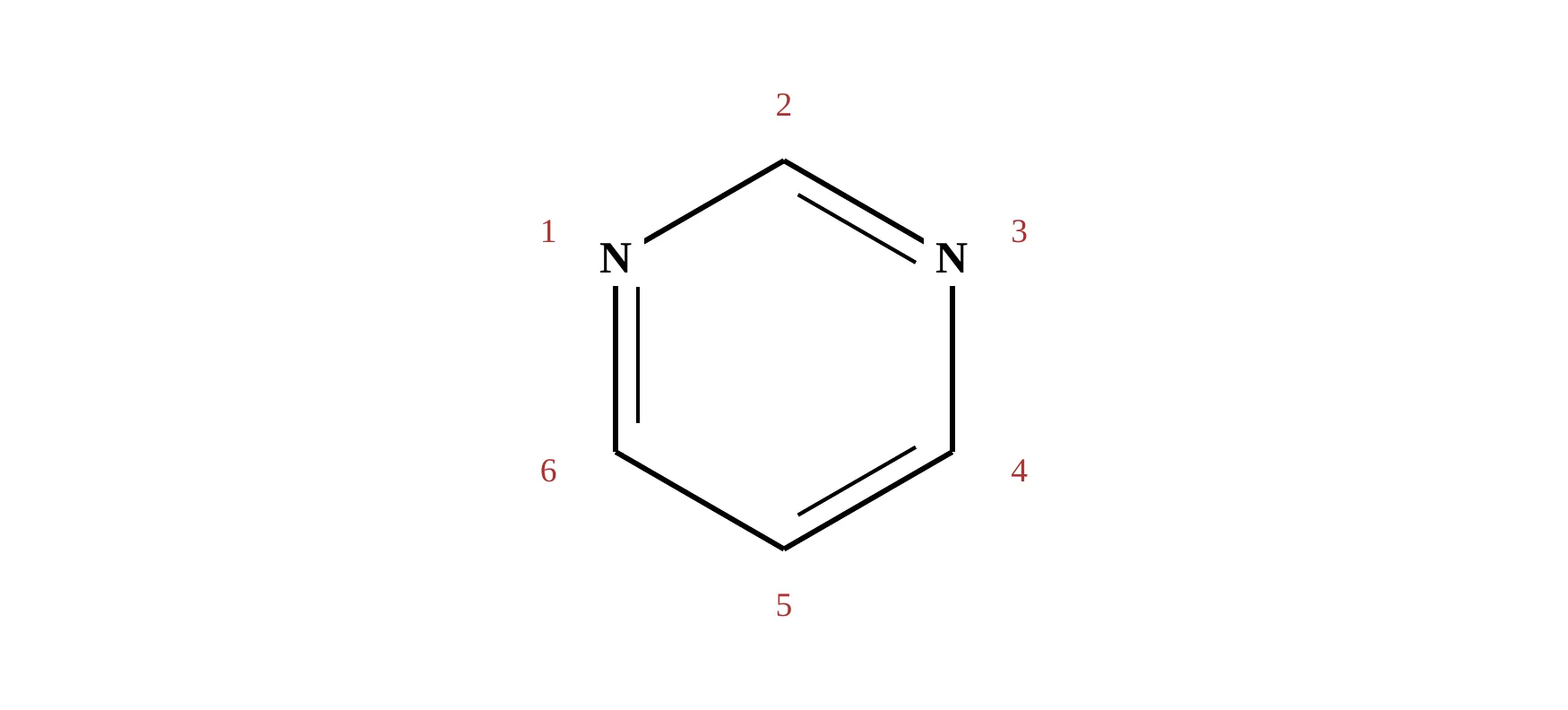
Figure 1: Structure and numbering of the pyrimidine ring.
1.3 Scope of this review
The article is organized as follows. Section 2 deals with synthesis, Section 3 with biological activities, Section 4 with SAR and Section 5 with in-silico work. Section 6 summarizes advances made between 2020 and 2026, Section 7 offers a critical analysis, Section 8 lists research gaps, Section 9 outlines future directions and Section 10 concludes.
2. SYNTHETIC STRATEGIES
Pyrimidine syntheses can be placed in four groups: classical condensation reactions that form the ring, multicomponent and green procedures, functionalization of an existing ring with transition-metal catalysts, and annulation strategies that deliver fused systems5,6 (Figure 2, Table 1).
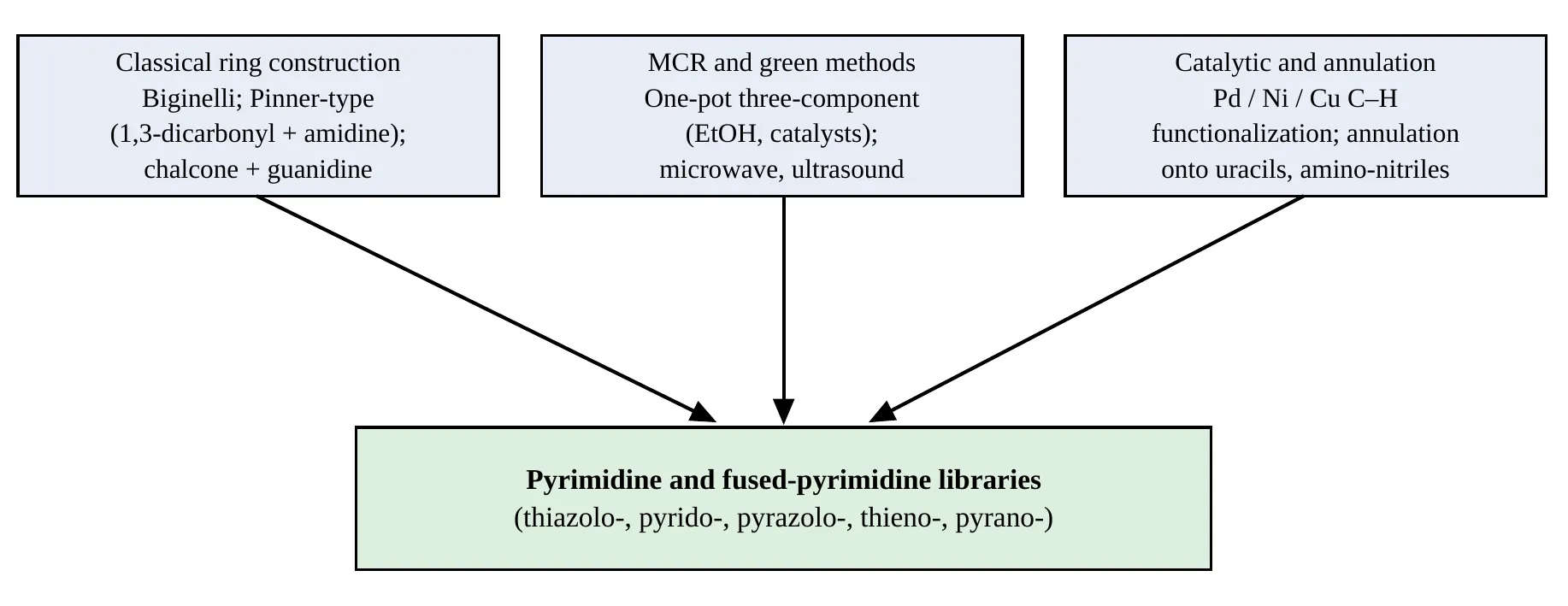
Figure 2: Main synthetic routes to pyrimidine and fused-pyrimidine libraries.
2.1 Classical ring construction
Traditional approaches generally combine a three-carbon component with an N–C–N component such as urea, thiourea, guanidine or an amidine. Biginelli's reaction is the standard example: an aldehyde, a β-ketoester and urea or thiourea are heated together with an acid catalyst in a single pot, yielding 3,4-dihydropyrimidin-2 (1H)-ones or their thio analogues. Its scope and subsequent modifications have been reviewed at length10,11. Pinner-type condensation of a 1,3-dicarbonyl compound with an amidine gives pyrimidines substituted at C2, while 4,6-diarylpyrimidines result when chalcones are cyclised with guanidine, urea or thiourea5,8.
2.2 Multicomponent and green methods
In multicomponent reactions (MCRs), several reactants are assembled into the ring in one step with little waste. As an illustration, ethanol-based condensation of an aldehyde, a nitrile bearing an active methylene group and urea or thiourea has led to pyrimidine-5-carbonitriles, cyanothiouracils and pyrano-pyrimidines7,8. Current methods increasingly replace severe conditions with microwave or ultrasound heating, reusable catalysts and reactions without solvent5.
2.3 Transition-metal-catalysed functionalization
Palladium, nickel and copper catalysts can modify a pyrimidine ring that has already been formed, without rebuilding it. One recent review compares such direct functionalization approaches and notes advantages in the number of steps, regiocontrol and ease of scale-up12. They are especially useful for adding diversity at a late stage, which helps when SAR libraries are being prepared.
2.4 Fused-pyrimidine systems
Two general tactics lead to fused pyrimidines. One builds a further ring on a pyrimidine whose neighbouring substituents are suitably reactive, as is the case for 6-aminouracils and thioxopyrimidines. The other forms the pyrimidine ring on a pre-existing heterocycle that carries an amino-carbonyl or amino-nitrile pair. Fused systems may be sorted according to the size of the new ring, anywhere from five to eight atoms6. Pyrazolo[3,4-d]- and pyrazolo[1,5-a]pyrimidines are of special importance as scaffolds for kinase inhibitors13–15.
Table 1: Overview of Synthetic Strategies for Pyrimidine Scaffolds.
| Strategy | Typical building blocks | Typical products | Ref. |
|---|---|---|---|
| Biginelli reaction | Aldehyde, β-ketoester, urea/thiourea | Dihydropyrimidinones / thiones | 10,11 |
| Pinner-type condensation | 1,3-Dicarbonyl, amidine | 2-Substituted pyrimidines | 5 |
| Chalcone cyclocondensation | Chalcone, guanidine/urea/thiourea | 4,6-Diaryl-pyrimidines | 8 |
| Three-component nitrile route | Aldehyde, active methylene nitrile, (thio)urea | Pyrimidine-5-carbonitriles, cyanothiouracils | 7,8 |
| Metal-catalysed C–H functionalization | Pyrimidine core; Pd, Ni or Cu catalyst | Late-stage substituted pyrimidines | 12 |
| Annulation to fused systems | 6-Aminouracils, thioxopyrimidines, aminonitriles | Thiazolo-, pyrido-, pyrazolo-, thieno-pyrimidines | 6,13 |
3. BIOLOGICAL ACTIVITIES
Figure 3 gives an overview of the activity classes, and Table 2 collects representative marketed or clinical-stage drugs built on pyrimidine3,5.
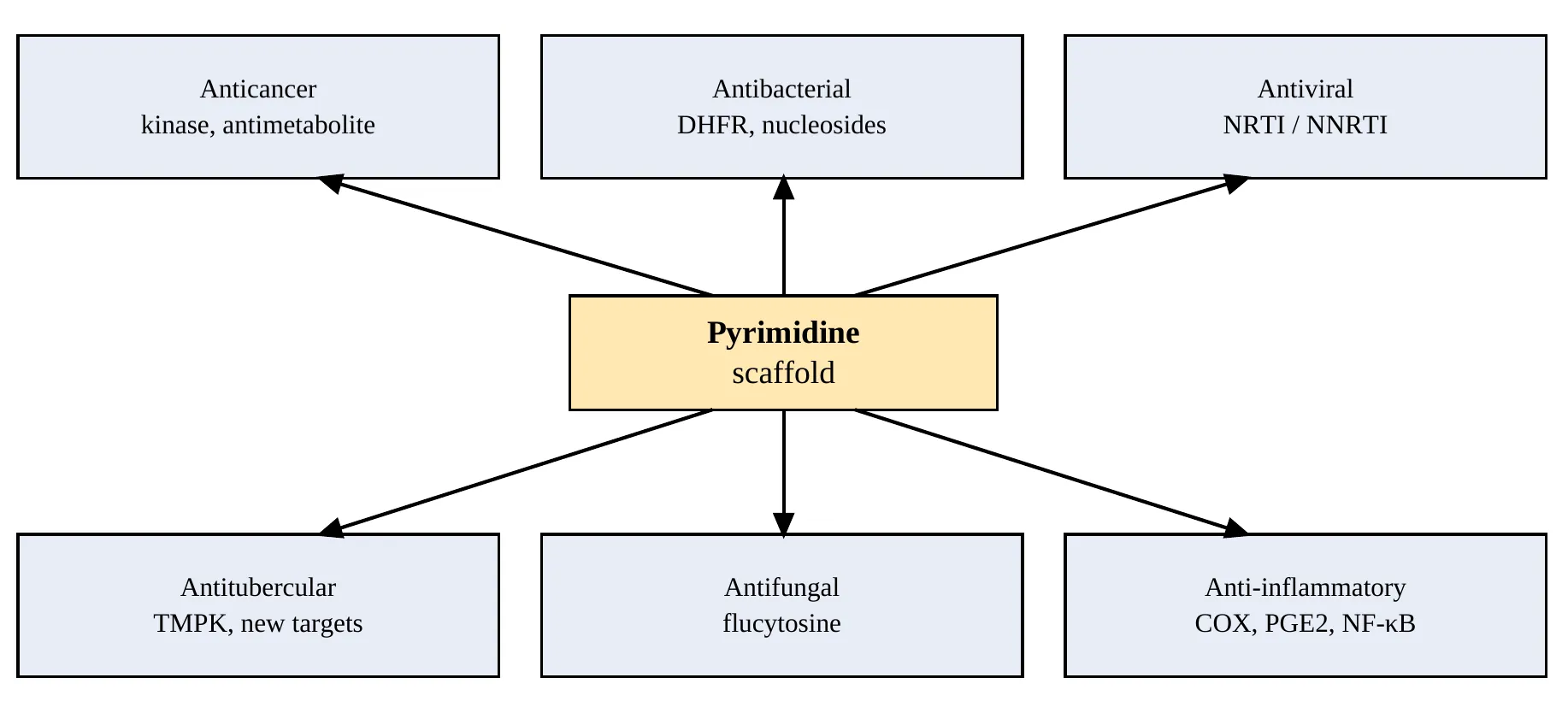
Figure 3: Major biological activities of pyrimidine derivatives, with example mechanisms or targets.
3.1 Antibacterial activity
Antimicrobial resistance is a growing worldwide threat. A survey covering over 200 pyrimidines listed compounds with one to four substituents that display antimicrobial action; trimethoprim-type 2,4-diaminopyrimidine antifolates are among them16. Pyrimidines had already been described as bactericidal, fungicidal and virucidal agents in an earlier overview4. A review published in 2026 addresses pyrimidine nucleosides, sorting them into cytosine analogues and uracil/thymine analogues. To adjust target binding, passage through membranes and metabolic stability, chemists introduce modifications such as lipidation and selenylation. Because these molecules are prodrugs, intracellular phosphorylation is needed before they can interfere with nucleic acid synthesis. According to that review, translation to the clinic is held back by toxicity to the host, a narrow spectrum and scarce information on resistance17.
3.2 Anticancer activity
Pyrimidine analogues were among the first rationally designed antimetabolites. The main actions of 5-fluorouracil are inhibition of thymidylate synthase and incorporation into RNA and DNA18; gemcitabine and cytarabine are further nucleoside antimetabolites of this type12. At present, however, most effort is directed at kinase inhibition. Approved kinase inhibitors with a pyrimidine or fused-pyrimidine core include imatinib, a phenylaminopyrimidine acting on BCR-ABL19; osimertinib, which inhibits EGFR including the T790M mutant20; and palbociclib, a pyrido[2,3-d]pyrimidine that blocks CDK4/621. Roskoski has reviewed the properties of FDA-approved drugs in this class22.
Because the pyrazolo[3,4-d]pyrimidine bicycle looks like the adenine ring of ATP, it can reproduce the contacts that ATP makes with the hinge region of kinases. Ibrutinib, a BTK inhibitor, is based on this core, and parsaclisib, sapanisertib and umbralisib are reported to have reached clinical trials13. Its isomer, pyrazolo[1,5-a]pyrimidine, has been tested against a wide range of targets such as CK2, EGFR, B-Raf, MEK, PDE4, BCL6, DRAK1, CDK1/2 and Pim-114. More recent series cover thiazolo[4,5-d]pyrimidines (CDK, VEGFR, PI3K)9, pyrido[2,3-d]pyrimidines (EGFR)23, thieno-triazolopyrimidines (EGFR, PI3K)24 and pyrimidine carboxylates (VEGFR)25. Among thiazolyl-pyrimidines designed against CK2α, five compounds had IC50 values between roughly 2.4 and 5.0 µM, whereas doxorubicin gave 6.18 µM in the same assay26.
3.3 Antiviral activity
Nucleoside analogues based on pyrimidines are central to antiviral treatment. Zidovudine, an analogue of thymidine, was the first agent shown to block HIV replication in vitro27; overviews of nucleoside and non-nucleoside reverse-transcriptase inhibitors are available28. Rilpivirine, a diarylpyrimidine, illustrates that a pyrimidine scaffold without a sugar can also produce strong anti-HIV drugs29. Anti-HIV and other antiviral effects have also often been described for fused pyrimidines6.
3.4 Antitubercular activity
Clinical progression of GSK 2556286, TBA-7371 and SPR720 stimulated interest in pyrimidines for tuberculosis. A recent review sorts pyrimidine-containing compounds by their targets and discusses SAR for each group30. In a distinct body of work, pyrimidine nucleosides and nucleotides were examined as inhibitors of thymidine monophosphate kinase from Mycobacterium tuberculosis (TMPKmt), with SAR and computational analysis in support31.
3.5 Antifungal activity
Flucytosine (5-fluorocytosine) is the best-known pyrimidine antifungal. Fungal cells that are susceptible transform it into 5-fluorouracil, and one review is devoted to its pharmacology, clinical use and toxicity32. Wider reviews of the scaffold discuss other antifungal pyrimidines, among them fused ones5,8.
3.6 Anti-inflammatory and other activities
Several mediators of inflammation, including prostaglandin E2, inducible nitric oxide synthase, TNF-α, NF-κB, leukotrienes and some interleukins, are thought to be suppressed by anti-inflammatory pyrimidines, either at the level of expression or of activity. The SAR of these compounds was analysed systematically in a 2021 review33. COX-1 and COX-2 are inhibited by some pyrimidines, and pyrimidine acrylamides have been put forward as starting points for antioxidants12. Antimalarial, anticonvulsant, antihypertensive and other effects have been reported too6,7.
Table 2: Representative Marketed Pyrimidine-Based Drugs and Activities.
| Drug / class | Pyrimidine type | Activity and target | Ref. |
|---|---|---|---|
| 5-Fluorouracil | Pyrimidine antimetabolite | Anticancer; thymidylate synthase inhibition | 18 |
| Imatinib | Phenylaminopyrimidine | Anticancer; BCR-ABL kinase | 19 |
| Osimertinib | Anilinopyrimidine | Anticancer; EGFR (incl. T790M) | 20 |
| Palbociclib | Pyrido[2,3-d]pyrimidine | Anticancer; CDK4/6 | 21 |
| Ibrutinib | Pyrazolo[3,4-d]pyrimidine | B-cell cancers; covalent BTK inhibitor | 13 |
| Zidovudine | Thymidine analogue | Antiviral; HIV reverse transcriptase | 27 |
| Rilpivirine | Diarylpyrimidine (DAPY) | Antiviral; HIV NNRTI | 29 |
| Trimethoprim-type | 2,4-Diaminopyrimidine | Antibacterial; dihydrofolate reductase | 16 |
| Flucytosine | 5-Fluorocytosine | Antifungal; converted to 5-FU in fungal cells | 32 |
4. STRUCTURE–ACTIVITY RELATIONSHIP (SAR)
How SAR in pyrimidines plays out depends on the target and the chemical series, but the literature reveals several repeating trends (Figure 4, Table 3). Fusing a ring is the most widely applicable design tool; a review of ring-fused pyrimidines points out that fused systems frequently show additive effects on biological efficacy compared with the parent ring6.
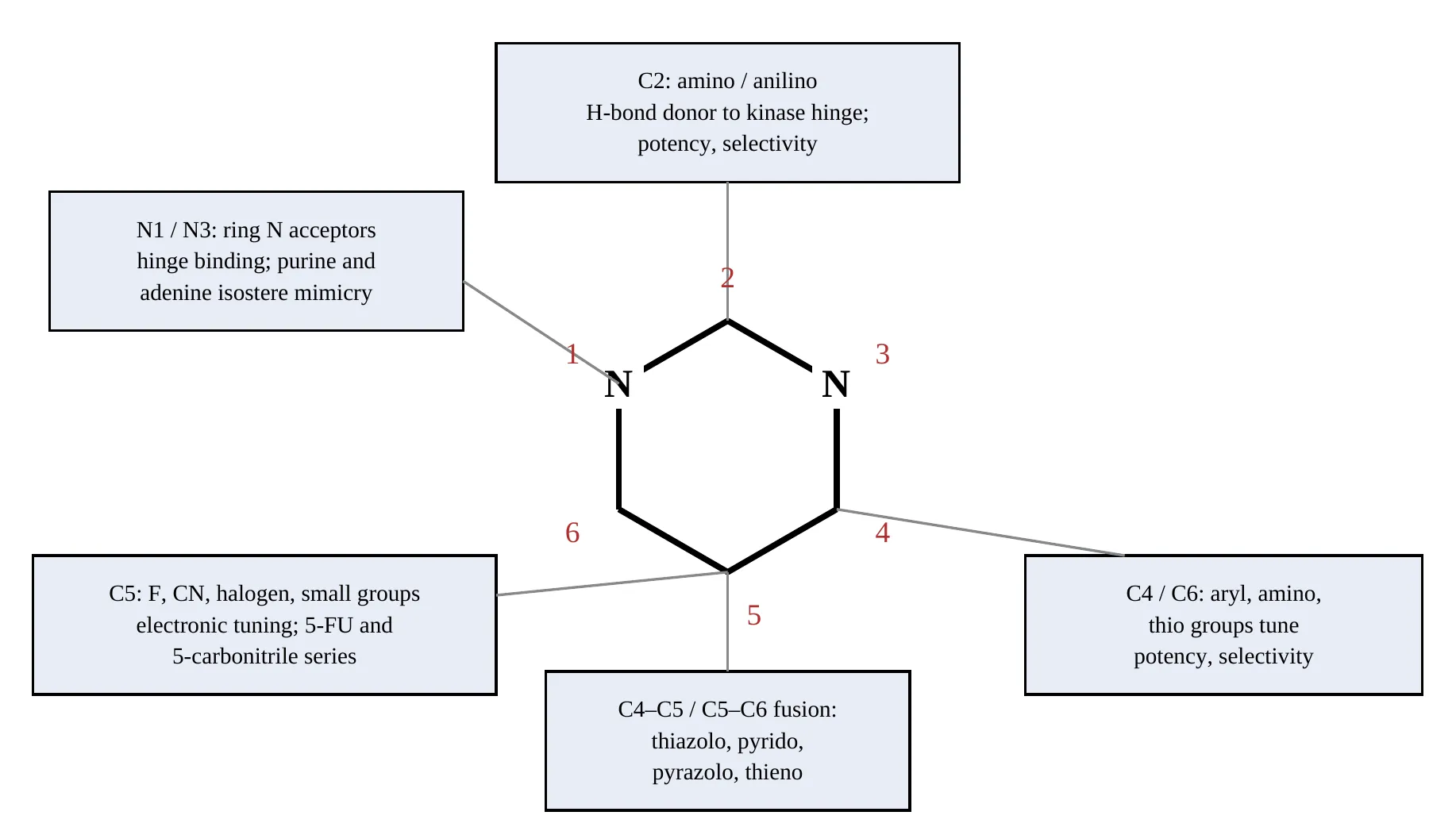
Figure 4: SAR map of the pyrimidine ring showing common substituent effects reported in the literature.
In kinase inhibitors the ring nitrogens, together with an amino group, usually hydrogen-bond to the hinge region; imatinib and osimertinib, both 2-anilinopyrimidines, are examples of this binding mode19,20. For pyrazolo[3,4-d]pyrimidines, changing groups at N1, C3, C4 and C6 shifts kinase selectivity. A thiophenethyl group at C6 was required for anticancer potency in one CDK2 series, while the substitution on the C4-aryl group determined CDK2 inhibition13. At C5, fluorine characterises the antimetabolites 5-fluorouracil and flucytosine18,32, and a carbonitrile group defines another family of anticancer, antimicrobial and antitubercular compounds7. Detailed SAR work on anti-inflammatory pyrimidines has pinpointed substitution patterns that strengthen COX or mediator inhibition without raising toxicity33.
Table 3: Position-By-Position SAR Trends in Pyrimidine Derivatives.
| Position | Common substituents | Typical effect | Ref. |
|---|---|---|---|
| N1 / N3 | Ring nitrogens (acceptors); fused-ring N | Hinge binding; adenine/purine mimicry | 13 |
| C2 | Amino, anilino, thio, alkoxy | H-bond donor/acceptor; potency and selectivity | 19,20 |
| C4 / C6 | Aryl, anilino, amino, thioether | Potency, selectivity; CDK2 SAR depended on C4-aryl and C6 group | 13 |
| C5 | F, CN, halogen, small alkyl | Electronic tuning; antimetabolite and 5-CN series | 7,18 |
| C4–C5 / C5–C6 (fusion) | Thiazolo, pyrido, pyrazolo, thieno, pyrano | Additive effect on bio-efficacy; kinase scaffolds | 6,14 |
5. IN-SILICO STUDIES
Computational methods now routinely accompany synthesis and biological testing: they help refine pharmacophores, rank candidates and explain observed activity34. Figure 5 shows a typical workflow, and Table 4 lists representative studies.
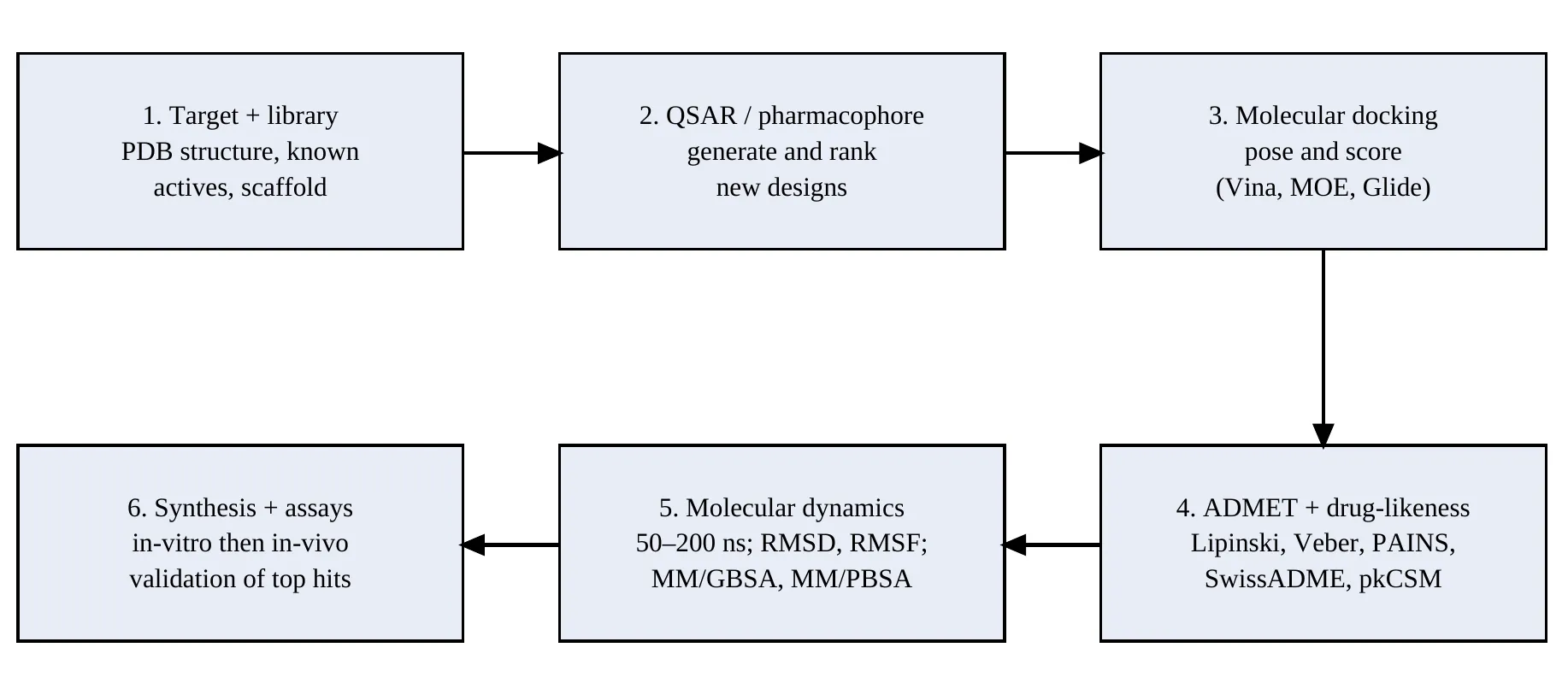
Figure 5: Typical integrated in-silico workflow for designing pyrimidine leads.
5.1 Molecular docking
Docking predicts how a ligand sits in a protein binding site and how strongly it binds, making it the main technique of structure-based design35. Programs in common use are AutoDock Vina36, the Molecular Operating Environment (MOE) and Schrödinger Maestro. Published pyrimidine studies include thiazolopyrimidines docked to CDK1, VEGFR-2 and PI3Kα9, pyrido[2,3-d]pyrimidines to EGFR23, pyrimidine carboxylates to VEGFR using MOE25, and thiazolyl-pyrimidines to CK2α, where docking agreed with in-vitro cytotoxicity26.
5.2 Molecular dynamics
Since docking usually holds the protein almost rigid, MD simulations with explicit solvent are used to see whether a docked complex remains stable37, and GROMACS is a popular engine for this38. The usual results are RMSD, RMSF, hydrogen-bond occupancy and binding free energies by MM/GBSA or MM/PBSA. Examples include a 100-ns run with MM/PBSA on pyrimidine FAK inhibitors suggested by 3D-QSAR39, a 100-ns run with MM/GBSA backing a pyrimidine-2,4-dione thymidylate synthase inhibitor40, and 200-ns runs on thieno[2,3-d]pyrimidine cholinesterase inhibitors41.
5.3 ADME/ADMET prediction
Absorption, distribution, metabolism, excretion and toxicity are usually predicted with free tools such as SwissADME42 and pkCSM43. ADMET analysis of pyrido[2,3-d]pyrimidine EGFR candidates showed they obeyed Lipinski's rule, had no PAINS or Brenk alerts (unlike erlotinib) and were predicted to be well absorbed from the gut23. Good oral bioavailability was likewise predicted for thiazolyl-pyrimidines26.
5.4 Drug-likeness
Lipinski's rule of five44 and the Veber criteria, which concern polar surface area and the number of rotatable bonds45, are used to judge drug-likeness; PAINS filters add to these by removing chemotypes that tend to interfere with assays46. Earlier in the process, QSAR and pharmacophore models47 propose new structures. A Maestro-based study found that 43 pyrimidine derivatives cleared ADMET screening, three of which were predicted to bind DNA most tightly34.
Table 4: Representative In-Silico Studies of Pyrimidine Derivatives.
| Scaffold / study | Target | Methods | Ref. |
|---|---|---|---|
| Thiazolopyrimidines | CDK, VEGFR, PI3K | Docking, Lipinski, ADMET | 9 |
| Pyrido[2,3-d]pyrimidines | EGFR | Docking, ADMET (Lipinski, PAINS/Brenk) | 23 |
| Thiazolyl-pyrimidines | CK2α | In-vitro assay, docking, ADMET | 26 |
| Thieno-triazolopyrimidines | EGFR, PI3K | Docking, in-silico ADME | 24 |
| Pyrimidine carboxylates | VEGFR | Docking (MOE), ADMET | 25 |
| Pyrimidine DNA inhibitors | DNA | Pharmacophore, 3D-QSAR, docking, ADME | 34 |
| Pyrimidine Schiff bases | Cancer cell lines | Gaussian, Maestro docking, ADME/T | 48 |
| Pyrimidine FAK inhibitors | FAK | 3D-QSAR, docking, 100-ns MD, MM/PBSA | 39 |
| Pyrimidine-2,4-diones | Thymidylate synthase | Docking, 100-ns MD, MM/GBSA, ADMET | 40 |
| Thieno[2,3-d]pyrimidines | AChE / BChE | Docking, 200-ns MD, MM/GBSA | 41 |
| Benzimidazo-pyrimidines | α-Glucosidase | QSAR, docking, ADMET, MD | 49 |
6. RECENT ADVANCES (2020–2026)
Kinase-focused scaffolds. A review from 2020 follows the maturation of pyrazolo[3,4-d]pyrimidines, covering ibrutinib-derived covalent BTK inhibitors and BTK-targeting PROTACs intended to circumvent mutation of the reactive cysteine13. A 2025 review treated pyrazolo[1,5-a]pyrimidines as protein kinase inhibitors across at least nine kinase families14.
Anti-infectives. Clinical trials have been reached by pyrimidine-based antitubercular compounds30, and in view of antimicrobial resistance pyrimidine nucleosides are again being considered as antibacterial leads17.
Inflammation and synthesis. The SAR of anti-inflammatory pyrimidines was brought together in 202133, and a 2025 review covered direct functionalization chemistry12.
New anticancer series. Pyrido[2,3-d]pyrimidine EGFR inhibitors (2026)23 and thiazolyl-pyrimidines active on CK2α (2025)26 typify what is now a standard pipeline: synthesis, assay, docking and ADMET prediction.
Wider indications and longer simulations. Dual cholinesterase inhibitors for Alzheimer's disease, supported by 200-ns MD41, and α-glucosidase inhibitors studied by QSAR, docking, ADMET and MD49 show that pyrimidine design is moving into new areas; thymidylate synthase inhibitors are being developed using 100-ns MD as well40.
7. CRITICAL ANALYSIS
Potency versus cellular activity. IC50 values from enzyme assays predict cellular efficacy poorly. In a set of BTK inhibitors derived from ibrutinib, a vinyl sulfonamide with a lower enzyme IC50 than ibrutinib had no useful antiproliferative activity in two B-cell leukaemia lines, but an acetamide analogue that was weaker against the enzyme killed cells at low micromolar concentrations13. Relying on a single enzyme assay for optimisation may thus mislead.
Selectivity and safety. Kinases have very similar ATP sites, which makes selectivity a constant problem. Ibrutinib is only moderately selective, and its off-target toxicity has been connected to a conserved cysteine that other kinases also carry; in the MER-inhibitor series, hERG liabilities forced redesign as well13.
Comparisons and controls. Whether new compounds beat a reference drug such as doxorubicin26 depends on cell line, exposure time and assay format. IC50 values or docking scores from different papers cannot be compared directly when the software, force fields and protein structures differ.
Predictive tools are hypotheses. Docking, ADMET web servers and rule-based filters42–44 are cheap but only approximate. Obeying Lipinski's rule or showing no PAINS alerts guarantees neither oral bioavailability nor safety. MD adds rigour, yet simulations of 100–200 ns are brief compared with many binding events, and several reports use only one replica.
Translational gap. A large share of pyrimidine studies end with cytotoxicity in cell lines and computational ranking. Nucleoside antibacterials, by contrast, are openly acknowledged to face unresolved clinical barriers in host toxicity and narrow spectrum17.
8. RESEARCH GAPS
9. FUTURE PERSPECTIVES
CONCLUSION
Pyrimidine remains among the most fruitful scaffolds in drug discovery, resting on well-established synthetic chemistry, drugs already validated in the clinic and abundant SAR knowledge. Computational tools speed up the identification of leads, but they are only as useful as the experimental validation and consistent reporting behind them. Future progress will probably come from selective and covalent kinase chemistry, nucleoside prodrugs for infections, targeted degradation and computational pipelines that are rigorously validated.
ACKNOWLEDGMENT
[Authors to add acknowledgment, if any.]
CONFLICT OF INTEREST
[Authors to declare any conflicts of interest, or state that there are none.]
REFERENCES

K. Madhavi, M. Kishore Babu, B. Lakshmi Pravallika, K. Anushka, Y. Prathyusha, M. Bhavani Shankar, Pyrimidine Derivatives: A Comprehensive Review of Synthetic Strategies, Biological Activities and In-Silico Studies, Int. J. of Pharm. Sci., 2026, Vol 4, Issue 10, 5066-5076. https://doi.org/10.5281/zenodo.23831397
 10.5281/zenodo.23831397