

We use cookies to ensure our website works properly and to personalise your experience. Cookies policy
1,2 Assistant Professor, Faculty of Pharmacy, The Maharaja Sayajirao University of Baroda, 390001, India
3 Associate Professor, Department of Pharmaceutics and Pharmaceutical Technology, SSR College of Pharmacy, Sayli-Silvassa Road, U.T. of Dadra and Nagar Haveli, Sayli, Silvassa 396230, India.
This research aimed to develop a single unit capsule containing sustained release gastroretentive floating films of Cilnidipine using polymers such as HPMC E50LV: EC, where a combination of ratio of both gives sustained effect up to 12 hrs. The only thing was to increase gastric residence by floating, thus increasing bioavailability and decreasing the dosage frequency. The preliminary batches of drug, polymer, plasticizer, and effervescent agent were made by solvent casting. The level of ingredients was optimized using 32 full factorial design. The optimized batches were then characterized for various parameters such as thickness, weight variation, folding endurance, floating lag time, drug release, SEM, tensile strength, etc. The drug release was also compared to the marketed formulation of Cilnidipine. The film was then maintained in the proper storage conditions. It was found that SR film exhibited a drug release of 67.80% in 12 h. Whereas FTIR studies revealed that the drug was compatible with all the other excipients. Through optimization, it was concluded that the amount of polymer and plasticizer directly affects the drug release, floating lag time, and tensile strength. Here SR film of batch B6 showed a drug release of 67.80% in 12 h. And the film was then packed in capsule 1 in a folding manner and stored under proper conditions.
The day of every other pharmaceutical company working on standard dose formulation to tackle the most common diseases are long gone. The Indian pharmaceutical sector is currently working on developing a safe and effective drug transport for disease requiring long term and regulated pharmaceutical therapy (Narendra et al., 2006). This is how sustained release medicine delivery system become most important component of pharmaceutical research as standard medicine delivery system are ineffective due to drug’s fast release and repeated dosing which could lead to dose error1. As a result of the volatility a controlled release formulation is required to maintain a near constant blood level. The therapeutically effective use of a sustained release technique is accumulation of concentration in the systemic circulation over a long period of time, as a result of which there is a high level of patient compliance(McHugh, 2005).
Many researchers have published their findings on floating oral dosage forms such as floating tables, capsules, microspheres, and beads, among other things. The research on floating films, however, was not found. In this study, floating films were made utilizing a solvent casting approach using a ratio of Ethyl cellulose and hpmcE50LV as a film forming polymer. The first effervescent and the second non-effervescent floating dose forms are divided into two categories (Ailincai et al., 2020). Floating films are a type of effervescent floating dosage form. Because of the formation of CO2 tiny bubbles within the film matrix, these films float. Floating films are used to achieve delayed and controlled drug distribution, better bioavailability, and to target specific effects within the stomach. Floating film has the advantage of being simple to prepare, time-saving, and cost-effective. Floating film is a drug-loaded polymeric film made up of an active pharmaceutical ingredient, a polymer, a film forming agent, a plasticizer, and a solvent.
Pharmaceutical quality by design (QbD) is a systematic method to development that emphasizes product and process understanding and control, as well as quality risk management(Prajapat et al., 2022). Key process parameter (CPP) whose fluctuation has an impact on critical quality attributes (CQA) and should be monitored or regulated to ensure that the process delivers the desired. Chemical, physical, biological, and microbiological qualities are properties that can be defined, quantified, and continually monitored to guarantee that final product outputs remain within accepted quality criteria(Rayas et al., 1997).
Cilnidipine (C27H28N2O7) is a dihydropyridine calcium channel blocker with action on both N and L type calcium channels which treats wide range of Hypertension. It’s official in IP. It is a light-yellow crystalline powder with a bitter flavor that belongs to BCS class-II drugs. It is water-insoluble, but soluble in DMSO (>25 mg/ml), ethanol (20 mg/ml), and Dimethylformamide6. Cilnidipine reduces blood pressure by blocking incoming calcium and suppressing blood vessel contractions through the L-type calcium channel in blood vessels. Cilnidipine also inhibits the release of norepinephrine and suppresses the rise in stress blood pressure by acting on the N-type calcium channel at the end of the sympathetic nerve(Diwan et al., 2021).
Advantage of Capsule over other dosage form
1. It can be opened in order to obtain powder ingredients (Fauzi et al., 2021).
2. Capsules deliver the active ingredient without mixing it with other excipient (Fauzi et al., 2021).
3. Seale hard gelatin capsules can serve as an effective oxygen barrier (Duconseille et al., 2015).
4. It is possible to create a one-of-a-kind ingredient combination (Duconseille et al., 2015).
5. It soothes gastrointestinal irritation and protects sensitive areas (Shook, 2006).
6. Easier to swallow and digest in the stomach (Shook, 2006).
2. MATERIAL AND METHODS:
2.1 Materials
Cilnidipine was received as a gift sample from (J. B. Chemicals and Pharmaceuticals Ltd. Gujarat India), HPMC E50 LV, EC was purchased from (Modern Industries, Malegaon- Sinnar, and Nashik). And all other chemicals and reagents used were of analytical grade.
2.2 Preparation of Cilnidipine loaded sustained release floating film
Batches of sustained release floating film of cilnidipine were prepared using HPMC-E40LV and Ethyl cellulose ratios as shown in Fig.1 by solvent casting method. In this method initially, ratio of polymers was dissolved in suitable solvent, and drug and other additives are mixed afterwards. After that mix it is stir for some time. Then, the solution is subjected to the sonicator to eradicate the air bubble (Li, 1982). Finally, solution is transferred into glass mould (10 × 10 cm2) and then placed it at room temperature. Peel out the film from the glass mold. And cut it into size of 2 × 2 cm2.
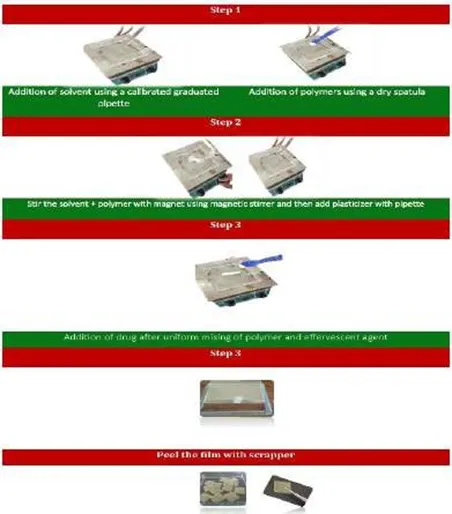
Fig.1 Plan of action for assembling sustained release floating film by solvent casting method.
2.3 QbD approach to develop sustained release floating film
Using a 32 factorial design, a definitive screening design of experiments (DoE) was performed to discover and characterize the CPP impacting CQA (Dangre et al., 2019). We used CPP to represent the concentration of HPMC E50LV: EC, PEG 200 in this investigation. We learn about the concentration of above from the literature, and how a good film was made with the desired results. If we raise the polymer concentration, a problem will arise during pouring, and the resulting film will be too thick. If we lower the concentration, the film becomes too thin and fails to produce the intended results. Main purpose of focusing Thickness, folding endurance, Tensile strength and dissolution time as CQA. Because if there is any difference in concentration of HPMC E50LV: EC, PEG 200 there is change in CQA. The matrix of design is shown in Table1. Risk analysis was carried out by contrive Ishikawa cause & effect diagram which enable screening of main root cause/main CQA affecting the formulation as shown Fig.2. The main CQA of the present formulation were highlight red.
Table 1: The Matrix of 3 2 factorial design
|
The matrix of the design |
||
|
Batch code |
X1 (HPMC E50LV: EC) |
X2 (PEG200) |
|
B1 |
0.4 (-1) |
0.3 (-1) |
|
B2 |
0.6 (0) |
0.3 (-1) |
|
B3 |
0.8 (+1) |
0.3 (-1) |
|
B4 |
0.4 (-1) |
0.5 (0) |
|
B5 |
0.6 (0) |
0.5 (0) |
|
B6 |
0.8 (+1) |
0.5 (0) |
|
B7 |
0.4 (-1) |
0.7 (+1) |
|
B8 |
0.6 (0) |
0.7 (+1) |
|
B9 |
0.8 (+1) |
0.7 (+1) |
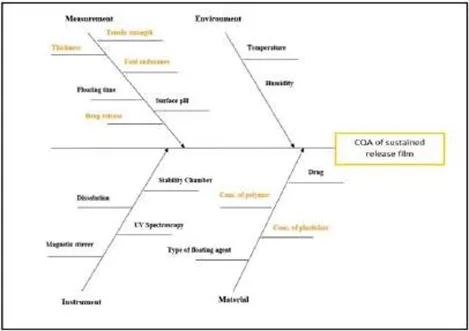
Fig.2 Fishbone diagram depicting CQA of sustained release floating film.
2.4 Characterization of sustained release floating film
2.4.1 Fourier transform-infrared spectroscopic (FTIR) analysis
The possible physical and chemical compatibility of cilnidipine with formulation polymers such as Ethyl cellulose, HPMC-E50 LV were examined by FTIR spectroscopy (Shimadzu, Japan, QA TR-S). FTIR spectral scans were recorded in the range of 4000 to 400 cm-1 (Shivakumar et al., 2026).
2.4.2 Weight Uniformity
Three films (size 2x2 cm2) were chosen at random from each batch and weighed separately using a digital balance (205 SM-DR; Presica instruments limited, Switzerland). The mean weight and standard deviation of the results were calculated (Rowe et al., 2000).
2.4.3 Thickness of Film
It was measured with a calibrated digital Vernier calliper (citizen, Japan) at 5 separate positions (4 corners and a central point) for each film in each batch, and the mean value was calculated (Celik, 2017).
2.4.4 Drug Content
The drug content estimation of all formulated batches was determined by the UV-spectroscopic technique (Thermolab, India). For estimation of drug content, the films equivalent to 10mg (SR) were dissolved in volumetric flask (100ml) containing 0.1NHCL pH1.2(100ml) and was Shaked until entire film was dissolved. The drug content of above solution was determined using UV- spectroscopic at 240nm against a suitable blank solution (Celik, 2017).
2.4.5 Floating characteristics
In a flask containing 250 mL of 0.1 N HCl, three floating films from each formulation were placed (pH 1.2). The time it took the film to go from bottom to top was called floating lag time, and the amount of time it floated on the surface continuously was called total floating time depicted in Table 2(Dass et al., 2023) .
Table 2: Results of Floating lag time and total floating time of (B1-B9) formulation
|
|
Batch co |
Floating lag time in (mins) |
Total floating time( |
|||
|
1 |
2 |
3 |
Mean |
|||
|
Sustained release film |
B1 |
2 |
1 |
1 |
1.33 |
>12 |
|
B2 |
1 |
2 |
3 |
2 |
>12 |
|
|
B3 |
4 |
3 |
2 |
3 |
>12 |
|
|
B4 |
1 |
1 |
2 |
2 |
>12 |
|
|
B5 |
3 |
1 |
5 |
3 |
>12 |
|
|
B6 |
2 |
5 |
1 |
2.66 |
>12 |
|
|
B7 |
5 |
3 |
1 |
3 |
>12 |
|
|
B8 |
1 |
2 |
5 |
2.66 |
>12 |
|
|
B9 |
5 |
4 |
3 |
4 |
>12 |
|
2.4.6 Surface Morphology by SEM
SEM of placebo, drug-loaded film before and after dissolving at certain time points (0hr, 6hr, & 12hr) of optimum formulation was performed at ambient temperature using FE-SEM (FEI Nova Nano SEM 450) figure at required magnification. The working distance (WD) was kept between 5.0 and 5.9, and the acceleration voltage was 15kV (Anand et al., 2024).
2.4.7 Determination of Tensile strength
As diametric tension or tearing force, it gauges the film's strength. The tensile strength of a sample is determined by stretching it till it ruptures, and the stress required to rupture the film. It is calculated by dividing force (N) at which the films break with the cross sectional (m2) area of the film. The floating film's tensile strength was determined utilizing a texture analyzer (Brookfield CT-310k Texture Analyzer) with a 10000 kg load cell. The floating film samples were held vertically between two 1cm a part clamps with dimensions of 2X2 cm2.The clamp was used to pull the floating film at a rate of 0.50mm/s, and the force required to break it was measured (Heng et al., 2015).
2.4.8 Determination of folding endurance
It was determined by folding each batch's film (size 2x2 cm2) until it broke at the same point. The number of times the film could be folded without breaking was used to calculate the folding endurance value. It gives an indicator of the film's brittleness. Each batch's folding endurance was tested three times (Magnano et al., 2026).
2.4.9 Drug release from Floating Film
Using USP dissolution equipment, the drug release rate of the film was measured in 900 mL 0.1 N HCl at 50 rpm (paddle type). In 900 mL of dissolving medium, a film containing 10 mg of medication was inserted. The temperature of the dissolving medium was kept constant at 37 ±0.1°C. 5 mL aliquots were taken at predetermined intervals, filtered, diluted with the same medium, and tested for Cilnidipine using a UV spectroscopy at 240 nm (Thermolab, India).
The same dissolution medium was used to replace the samples that were removed. All of the preceding experiments were carried out in triplicate (Pal & Raj, 2023).
2.4.10 Mechanism and kinetics of cilnidipine release
It was necessary to fit the release data into an appropriate mathematical model equation in order to estimate and compare the in vitro release pattern of Cilnidipine floating film in 0.1 N HCL at 1.2 pH. To evaluate the release data and explain releasing kinetics, many kinetics models were used, including zero order kinetics, first order kinetics, Higuchi square root equation, and Hixson- Crowell equation.
The zero-order rate equation describes the phenomenon in which the drug release rate does not breakdown and slowly releases the medication, assuming that the area does not change and there is no equilibrium condition, as shown in the equation below.
Qt = k 0t… (i)
The quantity of drug dissolved in time t is denoted by Qt, and the zero-order release constant is denoted by k 0.
The first-order release model is used to illustrate medication absorption and/or elimination in the study of drug dissolution. For assessing the first order release rate kinetics, the release rate data were fitted to the following equation.
Qt = Q 0ekt (ii)
Q represents the amount of drug dissolved at time t, while Qo represents the initial amount of drug in the system. In the solution, K is the first order rate constant.
Higuchi developed several theoretical models to investigate the release of hydrophilic and hydrophobic drugs in semi-solid and/or solid matrixes. The following are the mathematical equations for drug particles distributed in a unified matrix that acts as a diffusion medium:
Qt = Kt0.5 (iii)
The drug quantity released at time t is denoted by Qt, while the Higuchi dissolving constant is denoted by K. Higuchi describes medicine release as a square root time dependent diffusion process based on Fick's law.
Hixson and Crowell show that the cubic root of a particle's volume corresponds to its regular particle area, using a descriptive equation.
Q1/3 – Q01/3 + Kst (iv)
Q represents the amount of medication in the dosage form at time t, and Q0 represents the amount of drug left in the pharmaceutical dose type. K, which is a constant, represents the surface volume relationship.
The Korsmeyer and Peppas model is commonly used to examine the release of pharmacological dosage forms comprising polymeric systems when the release mechanism is unknown or there are several release events.
Q = Ktn (v)
The quantity of medication dissolved in time t is indicated by Q, the rate constant is K, and the diffusional exponent (Iharinjaka Randriamboavonjy et al., 2026).
3 PREPARATION OF OPTIMIZED SUSTAINED RELEASE FILM CONTAINING CILNIDIPINE
After reviewing the observations of 9 batches shown in Fig.4, we were able to determine the optimal polymer and plasticizer concentrations for the final formulation, which included Cilnidipine. Weigh 250 mg of medication into a beaker containing 10 mL of ethanol. The solution was then placed in a magnetic stirrer to completely dissolve the medication before adding the remaining components. Furthermore, the technique for the preparation of sustained release floating film was the same as that described before. And the contour plot obtained is shown in Fig.5.
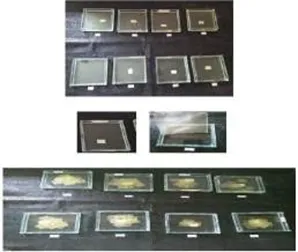
Fig.4 Optimized B1-B9 Cilnidipine loaded batch.
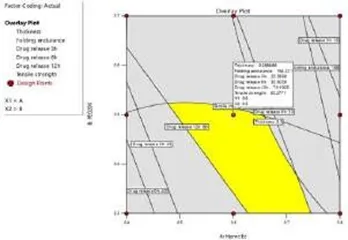
Fig.5 Contour plot of optimized formulation
4 RESULT:
4.1 Fourier transform-infrared spectroscopic (FTIR) analysis
This study was done to see if there was any drug-polymer Physical and chemical compatibility is their in formulation or not. Fig.6 shows physical compatibility of drug-polymer in 0 days,7 days, 15 days and 30 days, and Fig.7 shows the chemical compatibility of FTIR spectra of Cilnidipine- polymer in 0days, 7 days, 15 days, and 30 days. The Fig.7 shows spectra were the N-H group has a sharp curve at 3283.75 cm-1 that is unaffected by the polymers. The major peaks were obtained at 708.96, 813.09, 901.53, 1019.93, 1094.11, 1198.24, 1345.17, 1694.65 cm-1 as shown in Fig.7 for pure drug and the same were observed in different days interval without any significant spectral changes indicating that there is no interaction between drug and excipient.
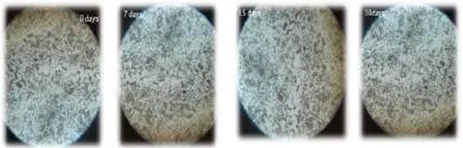
Fig.6 Physical compatibility of a mixture of Cilnidipine and HPMCE50LV: EC.
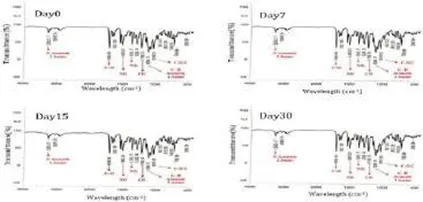
Fig.7 Chemical compatibility of a mixture of Cilnidipine and HPMCE50LV: EC.
4.2 Weight Uniformity
The result of weight variation of gastro-retentive dual release floating film. The weight of film was found in range of 0.19-0.23. As concentration of Plasticizer and polymer increases, weight of film also increases.
4.3 Thickness of film
Result for uniformity in thickness for sustained release film. And thickness was found in range of (0.25-0.35 mm). Polymer Concentration increased or decreased, also affect the thickness. As concentration of polymer increased thickness of film also increased and as concentration of polymer decreased its thickness decreased.
4.4 Floating Characterization
All the batches of film were found to float on surface of 0.1 N HCl at the start of experiment due to low density of polymer HPMC E50LV the floatability of film superior in all batches. With fixed concentration of calcium carbonate under simulated gastrointestinal circumstances. The addition of calcium carbonate, HPMC E50 LV, Ethyl cellulose improves floating and sustained drug release from the film. Fig. depicts all of the floating batches of the film.
4.5 Surface Morphology by SEM
The surface morphology of dried films from the placebo and cilnidipine-loaded batches is shown in Fig.8. at various magnifications. It can be deduced from the images produced by film on uneven surfaces. Under higher magnification, the entire roughness of the film can be seen. It was observed that cracks were generated after dissolution of the film. So, drug might be released from that part. Figure show SEM image of a) Placebo batch, b) Drug loaded batch c) After dissolution of 6hrs and d) After dissolution of 12 hrs.
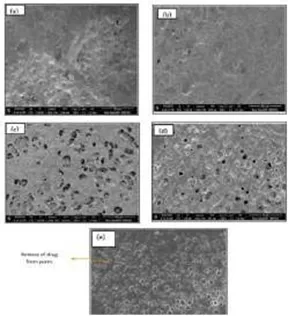
Fig.8 SEM image of a) Placebo batch, b) Cilnidipine loaded batch c) After the dissolution of 6hrs and d) After the dissolution of 12 hrs.
4.6 Determination of Tensile strength
Result for tensile strength for sustained release film. And tensile strength was found in range of (28-35 mm). The tensile strength of films was found to increase as the plasticizer concentration was raised.
4.7 Determination of folding endurance
Result for folding endurance for sustained release film. And folding endurance was found in range of (140-173). It was discovered that increasing the concentration of plasticizer increased the folding durability of films.
4.8 Drug release from Floating Film
All the Film shows prolong sustained release of cilnidipine up to 720min. Cilnidipine's cumulative drug release was in the range of 65 to 73 percent. The dissolution profile of batch B1-B9 in vitro drug release is illustrated in Fig.9. A sustained drug release from film containing cilnidipine was observed with the increase amount of HPMC E50LV: EC. Higher the film thickness retard water penetration resulting in prolongs drug release. Increase in proportion of HPMC E50LV: EC pose significant decrease and rate of extend of cilnidipine release. This could be attribute to increase in diffusion path length that the drug molecule transverse.
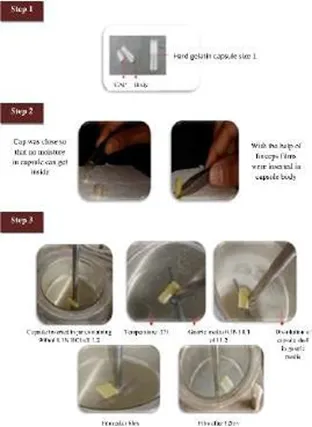
Fig.9 Photographic stepwise procedure from the encapsulation of film into capsule to its dissolution.
4.9 Kinetic of drug release
The CCPR was fitted with different kinetic models at different periods for batches B1-B9 to study the drug release mechanism of the manufactured sustained release floating film. To determine whether the medication release from the system provides the constant medication release pattern as shown in Table 3, researchers used zero order (CCPR v/s time), first order (Log CCDR v/s time), Higuchi (CCPR v/s SQRT), Korsmeyer-Peppas (log CCPR v/s log time), and Hixson Crowell (Cu-bic CDR v/s time). Using Microsoft Excel-2019, the R2 values of these models were determined for accuracy and prediction ability.
Table 3: Summary of different kinetic model applied on the gastroretentive sustained release floating film of Cilnidipine.
|
Batch code |
Zero order model |
First order model |
Higuchi model |
Hixson Crowell mo |
Korsmeyer-Peppas model |
Best fit model |
|
R2 |
R2 |
R2 |
R2 |
R2 |
R2 |
|
|
B1 |
0.988 |
0.669 |
0.936 |
0.956 |
0.776 |
Zero order |
|
B2 |
0.943 |
0.788 |
0.809 |
0.864 |
0.833 |
Zero order |
|
B3 |
0.971 |
0.706 |
0.917 |
0.926 |
0.831 |
Zero order |
|
B4 |
0.989 |
0.807 |
0.897 |
0.973 |
0.922 |
Zero order |
|
B5 |
0.982 |
0.684 |
0.912 |
0.950 |
0.767 |
Zero order |
|
B6 |
0.985 |
0.759 |
0.901 |
0.976 |
0.843 |
Zero order |
|
B7 |
0.949 |
0.680 |
0.875 |
0.898 |
0.773 |
Zero order |
|
B8 |
0.950 |
0.600 |
0.936 |
0.878 |
0.706 |
Zero order |
|
B9 |
0.994 |
0.787 |
0.911 |
0.988 |
0.950 |
Zero order |
This Table 3 shows the results of curve fitting into several mathematical frameworks. When the R of floating films containing cilnidipine was compared, it was discovered that they all follow zero order models (0.988-0.994). As a result, zero order release rates are encountered in systems where drug release is unaffected by concentration depicted in Fig.11,12,13.
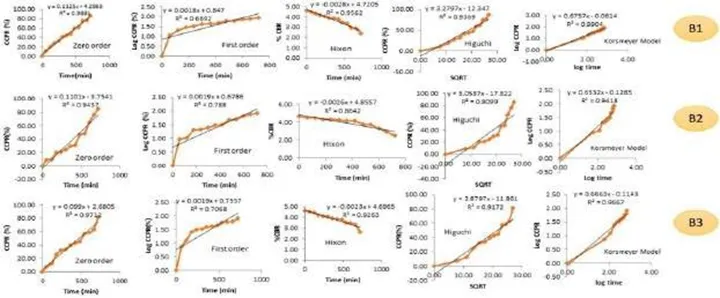
Fig.11 Drug release kinetic Model of formulation batches B1-B3.
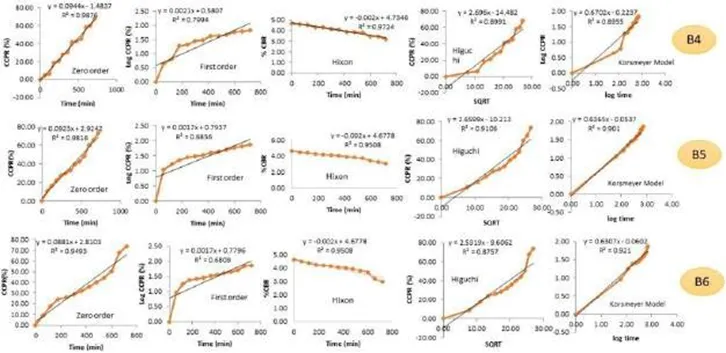
Fig.12 Drug release kinetic Model of formulation batches B4-B6.
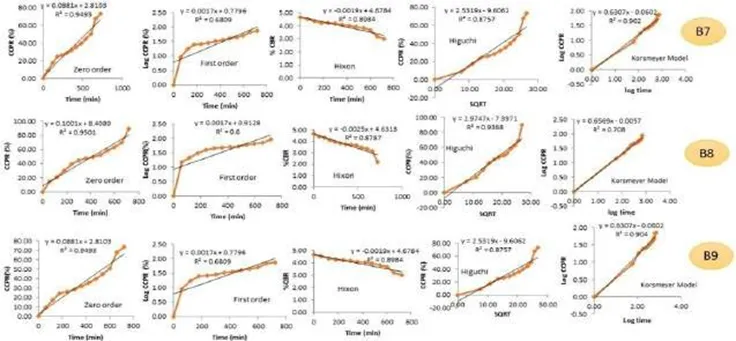
Fig.13 Drug release kinetic Model of formulation batches B7-B9.
CONCLUSION
The QbD was applied in the study, where QTPP for sustained release floating film was defined. And the next step in QbD is to assign CQA for sustained release floating film which was on the basis of Preformulation studies and form that the main CQA [X1 (Amount of ratio of HPMC E50LV: EC) & X2 (Amount of PEG200)] was screened out through risk analysis which was performed using Ishikawa cause and effect diagram and evaluated for response Y1(Thickness), Y2 (Folding endurance), Y3 (Tensile strength), Y4(Q3h), Y5(Q6h), Y6(Q12h). The 32 level factorial design was employed for optimization to understand the interactive effect of independent variable (X1, X2) on the response (Y1, Y2, Y3, Y4, Y5, Y6). The optimized batch HPMCE50LV: EC & PEG200; 0.6g & 0.3 ml respectively were obtained through graphical and numerical optimization as its result of analysis of response was the desirable range of constraints. The optimized batch was future subjected to surface topography studies using SEM (It demonstrates release of drug from polymeric
matrixes at different dissolution time point) and stability studies (assist in selection of storage condition and final packaging container for sustained release floating film).
REFERENCES

Shivani Gandhi, Milind Thosar, Vipul Prajapati, Quality By Design in Formulation Development of Hard Gelatin Capsule Containing Sustain Release Floating Film, Int. J. of Pharm. Sci., 2026, Vol 4, Issue 6, 3554-3566, https://doi.org/10.5281/zenodo.20701102
 10.5281/zenodo.20701102