

We use cookies to ensure our website works properly and to personalise your experience. Cookies policy
Sankaralingam Bhuvaneswari College of Pharmacy, Sivakasi. (Affiliated to the The TN DR. M.G.R Medical University, Chennai).
Quercetin is a naturally occurring flavonoid widely distributed in fruits, vegetables and medicinal plants. It exhibits a broad spectrum of pharmacological activities, including antioxidant, anti-inflammatory, antimicrobial, antiviral, anticancer and wound healing properties. Despite its significant therapeutic potential, the clinical application of quercetin is limited by its poor aqueous solubility, low oral bioavailability, rapid metabolism and extensive first-pass effect. Transdermal drug delivery systems (TDDS) have emerged as a promising alternative to overcome these limitations by delivering Quercetin through the skin directly into the systemic circulation. The present review highlights the physicochemical characteristics, pharmacological activities of Quercetin, its incorporation into transdermal patches by casting method, along with their general evaluation parameters. The review further emphasizes the potential benefits of Quercetin loaded transdermal systems as a promising approach for achieving controlled and effective drug delivery.
Quercetin is one of the most abundant naturally occurring flavonoids found in a variety of fruits, vegetables, tea, onions, apples, berries, broccoli and medicinal herbs. It has attracted considerable scientific interest due to its diverse pharmacological activities, including anti-oxidant, anti-inflammatory, anti-microbial, anti-viral, cardioprotective, neuroprotective and anti-cancer effects. These biological properties make quercetin a promising therapeutic agent for the prevention and treatment of several acute and chronic diseases. However, the therapeutic effectiveness of orally administered quercetin is significantly limited because of its poor water solubility, low gastrointestinal absorption, rapid metabolism and extensive first-pass hepatic metabolism, resulting in very low systemic bioavailability. Consequently, alternative drug delivery systems have been investigated to enhance its therapeutic performance. Among the various novel drug delivery approaches, the transdermal drug delivery system has emerged as an attractive strategy for delivering quercetin through the skin into systemic circulation1. This review focuses on the recent progress in the development of quercetin transdermal patches, including formulation strategies, preparation method, evaluation techniques and therapeutic applications of Quercetin. The review also highlights the potential benefits of Quercetin in transdermal drug delivery to improve the clinical utility of quercetin2.
QUERCETIN: AN OVERVIEW
Quercetin is a naturally occurring polyphenolic flavonoid belonging to the flavonol subclass of flavonoids. It is one of the most abundant dietary flavonoids and is widely distributed in fruits, vegetables, medicinal plants and beverages such as tea and red wine. Quercetin has gained considerable attention due to its broad spectrum of biological and pharmacological activities, including anti-oxidant, anti-inflammatory, anti-microbial, anti-viral, cardioprotective, neuroprotective, anti-diabetic and anti-cancer properties. These therapeutic effects are primarily attributed to its ability to scavenge free radicals, regulate inflammatory mediators and modulate various cellular signalling pathways.
NATURAL SOURCE OF QUERCETIN:
Quercetin is naturally present in a wide variety of plant-based foods. Rich dietary sources include onions, apples, berries, grapes, broccoli, kale, spinach, tomatoes, citrus fruits, green tea, black tea and medicinal herbs such as ginkgo biloba, moringa oleifera and hypericum perforatum. The concentration of quercetin varies depending on plant species, geographical conditions, cultivation practices and food processing methods. Since it is consumed regularly through the diet, quercetin is considered a safe and bioactive phytoconstituent with significant therapeutic value 3.
CHEMICAL STRUCTURE AND PHYSICOCHEMICAL PROPERTIES:
Quercetin is chemically known as 3,3′,4′,5,7-pentahydroxyflavone with the molecular formula C₁₅H₁₀O₇ and a molecular weight of 302.24 g/mol. It contains five hydroxyl groups that contribute to its strong antioxidant activity by donating hydrogen atoms to neutralize reactive oxygen species. Quercetin appears as a yellow crystalline powder and exhibits poor water solubility but is more soluble in organic solvents such as ethanol, methanol and dimethyl sulfoxide (DMSO). It possesses moderate lipophilicity, making it a suitable candidate for transdermal drug delivery when formulated with appropriate polymers and permeation enhancers. The chemical structure and physicochemical properties of quercetin are shown in figure-1.
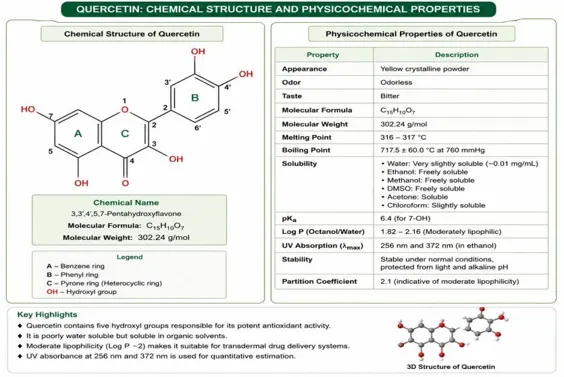
Fig:1 Chemical structure and physicochemical properties
PHARMACOLOGICAL ACTIVITIES OF QUERCETIN:
Quercetin possesses multiple pharmacological activities that make it a promising therapeutic agent for various diseases. It exhibits potent anti-oxidant activity by scavenging reactive oxygen species and reducing oxidative stress. Its anti-inflammatory effect is mediated through the inhibition of inflammatory cytokines such as TNF-α, IL-1β and IL-6. Quercetin also demonstrates anti-microbial activity against several bacterial and fungal pathogens and exhibits antiviral effects by interfering with viral replication. Furthermore, it has shown significant anti-cancer potential by inducing apoptosis, inhibiting cell proliferation and suppressing tumor angiogenesis. Additional therapeutic properties include cardioprotective, neuroprotective, anti-diabetic, hepatoprotective and wound-healing activities, making quercetin an attractive candidate for novel drug delivery systems, including transdermal patches 4.
ANTIOXIDANT ACTIVITY:
Quercetin is one of the most potent natural antioxidants among dietary flavonoids. It effectively scavenges reactive oxygen species (ROS) and reactive nitrogen species (RNS), thereby protecting cells from oxidative stress induced damage. The presence of five hydroxyl groups in its chemical structure enables quercetin to donate hydrogen atoms and neutralize free radicals. In addition, quercetin enhances the activity of endogenous antioxidant enzymes such as superoxide dismutase (SOD), catalase (CAT) and glutathione peroxidase (GPx), while reducing lipid peroxidation and oxidative damage to proteins and DNA. These anti-oxidant properties contribute to its protective effects against cardiovascular diseases, neurodegenerative disorders, diabetes and cancer.
ANTI-INFLAMMATORY ACTIVITY:
Quercetin exhibits significant anti-inflammatory activity by suppressing the production of pro-inflammatory cytokines, including tumor necrosis factor-alpha (TNF-α), interleukin-1β (IL-1β) and interleukin-6 (IL-6). It inhibits the activation of nuclear factor-kappa B (NF-κB) and cyclooxygenase-2 (COX-2), which are key mediators of inflammatory responses. Furthermore, quercetin reduces the release of histamine and inflammatory mediators from mast cells, making it beneficial in inflammatory diseases such as arthritis, dermatitis, asthma and inflammatory bowel disease 5.
ANTIMICROBIAL ACTIVITY:
Quercetin demonstrates broad spectrum anti-microbial activity against several Gram-positive and Gram-negative bacteria as well as fungal pathogens. It inhibits microbial growth by disrupting cell membrane integrity, interfering with nucleic acid synthesis and inhibiting essential bacterial enzymes. Studies have shown that quercetin is effective against microorganisms such as Staphylococcus aureus, Escherichia coli, Pseudomonas aeruginosa and Candida albicans. These anti-microbial properties make quercetin a promising candidate for wound healing and topical drug delivery applications.
ANTI CANCER ACTIVITY:
Quercetin possesses remarkable anti-cancer potential by modulating multiple signalling pathways involved in cancer progression. It inhibits cell proliferation, induces apoptosis, suppresses angiogenesis and prevents metastasis in various cancer cell lines. Quercetin also regulates cell cycle progression and enhances the sensitivity of cancer cells to chemotherapeutic agents. These properties have been investigated in breast, lung, colorectal, liver and prostate cancers6.
WOUND HEALING ACTIVITY:
Quercetin promotes wound healing by reducing oxidative stress and inflammation at the wound site. It stimulates fibroblast proliferation, collagen synthesis, angiogenesis and tissue remodelling, thereby accelerating wound closure. Additionally, its anti-microbial activity helps prevent wound infections. Quercetin loaded transdermal patches provide sustained drug release, maintaining therapeutic drug levels at the wound site and improving the healing process.
CARDIOPROTECTIVE ACTIVITY:
Quercetin provides cardioprotective effects by improving endothelial function, reducing oxidative stress, lowering blood pressure and inhibiting platelet aggregation. It also decreases low density lipoprotein (LDL) oxidation and suppresses vascular inflammation, thereby reducing the risk of atherosclerosis and other cardiovascular disease 7.
NEUROPROTECTIVE ACTIVITY:
Quercetin exhibits significant neuroprotective activity by reducing oxidative stress and neuroinflammation in neuronal cells. It can scavenge free radicals and enhance endogenous anti-oxidant defence mechanisms, thereby protecting neurons from oxidative damage. Quercetin may also modulate inflammatory signalling pathways and reduce the production of pro-inflammatory mediators. These properties suggest its potential role in protecting against neurodegenerative disorders and maintaining normal neuronal function.
ANTI-DIABETIC ACTIVITY:
Quercetin demonstrates potential antidiabetic activity by helping to regulate blood glucose levels and improve insulin sensitivity. It may inhibit enzymes involved in carbohydrate digestion and reduce postprandial glucose elevation. Quercetin also exhibits anti-oxidant and anti-inflammatory effects that may help protect pancreatic β-cells from oxidative damage. Therefore, quercetin has been investigated as a potential natural compound for the management of diabetes and its associated complications.
ANTIVIRAL ACTIVITY:
Quercetin possesses potential anti-viral activity against several types of viruses. Its anti-viral effects may involve interference with viral entry, replication and the activity of viral enzymes. In addition, its anti-oxidant and anti-inflammatory properties may help reduce cellular damage associated with viral infections. These findings indicate that quercetin may have potential as a supportive bioactive compound in the development of anti-viral therapies.
HEPATOPROTECTIVE ACTIVITY:
Quercetin exhibits hepatoprotective effects by protecting liver cells against oxidative stress, inflammation and toxic injury. It can enhance anti-oxidant defence mechanisms and reduce lipid peroxidation, thereby helping to maintain the structural and functional integrity of hepatic cells. Quercetin may also suppress inflammatory mediators involved in liver injury. Hence, its hepatoprotective properties make it a promising natural flavonoid for protecting the liver against various forms of oxidative and chemical damage.
TRANSDERMAL DRUG DELIVERY SYSTEM:
A Transdermal drug delivery system is an advanced drug delivery approach in which therapeutic agents are administered through the skin and absorbed into the systemic circulation at a controlled rate. Unlike conventional oral dosage forms, TDDS bypasses the gastrointestinal tract and hepatic first-pass metabolism, thereby improving drug bioavailability and reducing systemic side effects. Transdermal patches are designed to provide sustained and controlled drug release over an extended period, ensuring consistent plasma drug concentrations. Due to these advantages, TDDS has gained significant attention for the delivery of drugs with poor oral bioavailability, such as quercetin. Figure-2 illustrates anatomy of skin, mechanism and factors affecting drug delivery, advantages, disadvantages, components and applications of Transdermal drug delivery system.
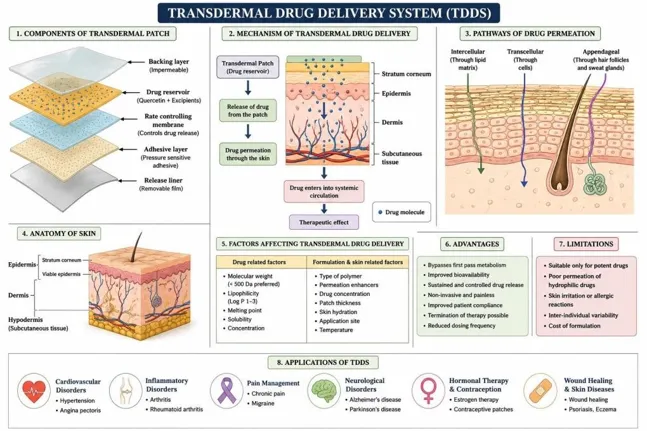
Fig:2 Overview of the transdermal drug delivery system
ADVANTAGES OF TRANSDERMAL DRUG DELIVERY SYSTEM:
Transdermal drug delivery offers several advantages over conventional drug administration methods. It bypasses hepatic first-pass metabolism, resulting in improved bioavailability. The system provides sustained and controlled drug release, reducing dosing frequency and maintaining therapeutic drug levels for prolonged periods. Since the drug is delivered directly through the skin, gastrointestinal irritation and degradation are minimized. Transdermal patches are non-invasive, painless, easy to apply and hence improve patient compliance. Additionally, therapy can be terminated immediately by simply removing the patch if adverse effects occur 8.
LIMITATIONS OF TRANSDERMAL DRUG DELIVERY SYSTEM:
Despite its numerous advantages, TDDS has certain limitations. Only drugs with suitable molecular weight, lipophilicity and potency can effectively penetrate the skin. The stratum corneum acts as a major barrier to drug permeation, limiting the delivery of many compounds. Some patients may experience skin irritation, erythema or allergic reactions at the application site. Variations in skin condition, age, hydration and temperature may also influence drug absorption and therapeutic effectiveness.
SKIN ANATOMY AND MECHANISM OF DRUG PERMEATION:
The skin is the largest organ of the human body and serves as a protective barrier against external environmental factors. It consists of three major layers: the epidermis, dermis and hypodermis. The outermost layer of the epidermis, known as the stratum corneum, is the principal barrier to transdermal drug delivery. Drugs penetrate the skin mainly through three pathways: the intercellular pathway (between skin cells), the transcellular pathway (through skin cells) and the appendageal pathway (via hair follicles and sweat glands). Successful transdermal drug delivery depends on the physicochemical properties of the drug and the formulation components 9.
Drug absorption through the skin occurs primarily by passive diffusion. After application of the transdermal patch, the drug is released from the polymeric matrix and diffuses across the stratum corneum. It subsequently passes through the viable epidermis and dermis before reaching the dermal microcirculation, from where it enters systemic circulation. The rate of drug permeation depends on factors such as molecular size, lipophilicity, concentration gradient, skin hydration and the presence of permeation enhancers. Optimizing these factors improves transdermal drug absorption and therapeutic efficacy.
FORMULATION OF QUERCETIN TRANSDERMAL PATCH:
The formulation of a quercetin transdermal patch involves the careful selection of polymers, plasticizers, permeation enhancers, solvents and backing materials to ensure controlled drug release, adequate skin permeation, mechanical strength and patient comfort. Since quercetin possesses poor aqueous solubility and limited oral bioavailability, the formulation strategy aims to enhance its solubility, improve skin permeation and maintain sustained therapeutic drug concentrations.
POLYMERS:
Polymers constitute the backbone of a transdermal patch and determine its drug release behavior, flexibility, adhesion and mechanical properties. An ideal polymer should be biocompatible, non-toxic, chemically stable and capable of forming a uniform film.
NATURAL POLYMERS:
ADVANTAGES:
Natural polymers are widely used in transdermal patch formulations because of their excellent biocompatibility and biodegradability. They are generally non-toxic, non-irritant and environment friendly, making them suitable for long-term therapeutic applications. These polymers exhibit good swelling properties, which facilitate drug diffusion and controlled release. Additionally, they are renewable, cost-effective and capable of forming stable films when combined with suitable synthetic polymers 10.
SYNTHETIC POLYMERS:
ADVANTAGES:
Synthetic polymers offer superior mechanical strength, excellent film forming ability and enhanced chemical stability compared to natural polymers. They provide better control over drug release kinetics and improve the structural integrity of transdermal patches. Their physicochemical properties can be easily modified to achieve the desired drug release profile, flexibility and adhesion. Synthetic polymers also exhibit good reproducibility, longer shelf life and compatibility with a wide range of drugs and excipients 11.
SOLVENTS:
A solvent is a liquid substance that dissolves the drug, polymer and other formulation ingredients to form a uniform solution or mixture. In transdermal patch preparation, solvents help in proper mixing of the ingredients and facilitate the formation of a smooth and uniform patch during the drying process.
PLASTICIZERS:
Plasticizers improve the flexibility, elasticity and mechanical strength of transdermal patches by reducing polymer brittleness. They also prevent cracking during storage and application. The concentration of plasticizer significantly influences tensile strength, folding endurance, moisture absorption and drug release characteristics 12.
COMMON PLASTICIZERS INCLUDE:
PENETRATION ENHANCERS:
The stratum corneum acts as the primary barrier to drug permeation. Penetration enhancers temporarily alter the skin barrier to facilitate drug transport across the skin. The choice and concentration of penetration enhancer should maximize drug permeation without causing skin irritation 13.
COMMON PENETRATION ENHANCERS INCLUDE:
PREPARATION OF QUERCETIN TRANSDERMAL PATCH BY SOLVENT CASTING METHOD:
The solvent casting method is the most widely employed technique. The polymer is dissolved in a suitable solvent, followed by the addition of quercetin, plasticizer and penetration enhancer. The homogeneous solution is poured into a casting mold and dried under controlled conditions. After complete solvent evaporation, the dried film is cut into patches of desired dimensions 14. The steps involved in solvent casting technique is shown in figure-3.
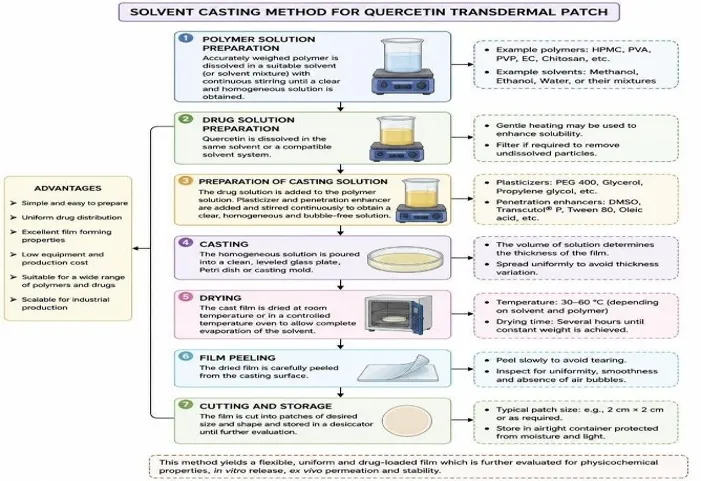
Fig:3 Solvent casting method
EVALUATION PARAMETERS:
PHYSICAL APPEARANCE:
The prepared patches are visually inspected for color, transparency, smoothness, flexibility, uniformity and the absence of air bubbles or surface imperfections. A uniform and defect free patch indicates good formulation quality.
THICKNESS:
Patch thickness is measured at different locations using a digital micrometer or vernier caliper to ensure uniformity. Uniform thickness is essential for consistent drug loading and controlled drug release 15.
WEIGHT VARIATION:
Individual patches are weighed using an analytical balance to determine weight uniformity. Minimal weight variation indicates uniform distribution of the polymer and drug throughout the patch.
FOLDING ENDURANCE:
Folding endurance is determined by repeatedly folding the patch at the same point until it breaks. This test evaluates the flexibility and mechanical strength of the patch. A higher folding endurance value indicates better durability during handling and application 16.
SURFACE pH:
The surface pH of the patch is measured after moistening with distilled water. The pH should be close to the physiological skin pH (approximately 5.5–7.0) to minimize skin irritation.
CONTENT UNIFORMITY:
Drug content is determined by dissolving the patch in a suitable solvent and analyzing the quercetin concentration using UV–Visible spectrophotometry or HPLC. Uniform drug content ensures accurate dosing 17.
MOISTURE CONTENT:
Moisture content is measured by determining the loss in weight after drying the patch. Low moisture content improves product stability and reduces the risk of microbial growth 18.
TENSILE STRENGTH:
Tensile strength measures the maximum force required to break the patch. It indicates the mechanical integrity and resistance of the patch during handling 19.
IN VITRO DRUG RELEASE:
The in vitro drug release study is one of the most important evaluation parameters for transdermal patches, as it determines the rate and extent of quercetin release from the polymeric matrix under controlled laboratory conditions.
The drug release study is performed using a Franz diffusion cell or a USP dissolution apparatus. The transdermal patch is placed on a suitable synthetic membrane or dialysis membrane that separates the donor and receptor compartments. The receptor compartment is filled with an appropriate dissolution medium, such as phosphate buffer (pH 7.4) or a hydroalcoholic buffer system, which is continuously stirred and maintained at 37 ± 0.5°C to simulate physiological conditions. At predetermined time intervals (e.g., 0.5, 1, 2, 4, 6, 8, 12 and 24 hours), a fixed volume of the receptor medium is withdrawn and replaced with an equal volume of fresh medium to maintain sink conditions. The collected samples are analyzed using UV–Visible spectrophotometry or High Performance Liquid Chromatography (HPLC) to determine the amount of quercetin released 20.
POTENTIAL BENEFITS OF QUERCETIN IN TRANSDERMAL DRUG DELIVERY:
Quercetin is a natural flavonoid with strong anti-oxidant and anti-inflammatory properties that offers several health benefits. Transdermal delivery bypasses first-pass metabolism in the liver, allowing more quercetin to reach the bloodstream and improving its bioavailability. It also overcomes the poor oral absorption of quercetin caused by its low water solubility and rapid metabolism, thereby enhancing its therapeutic effectiveness. In addition, transdermal patches provide sustained and controlled drug release, maintaining consistent quercetin levels in the body for a longer duration.
This reduces the need for frequent dosing and minimizes fluctuations in drug concentration. Since quercetin transdermal patches are non-invasive, painless and easy to use, they improve patient compliance, especially during long-term treatment.
Quercetin transdermal patches avoid gastrointestinal irritation and protect the drug from degradation in the acidic environment of the stomach, making them a suitable alternative to oral administration. They can also deliver quercetin directly to the target site, providing effective localized treatment while reducing systemic exposure and minimizing the risk of side effects.
Due to these advantages compared to oral administration, quercetin transdermal patches have great potential in the treatment of osteoarthritis, rheumatoid arthritis, chronic inflammatory diseases, diabetic wounds, cardiovascular disorders, localized pain and skin diseases caused by oxidative stress. Advanced transdermal delivery systems also improve skin penetration, enhance drug stability and provide controlled drug release, leading to better therapeutic outcomes. Therefore, transdermal delivery is a promising approach to overcome the poor bioavailability of quercetin while improving its therapeutic effectiveness and patient compliance 21.
CONCLUSION
Quercetin loaded transdermal patches represent a promising approach for overcoming the limitations associated with the oral delivery of quercetin, particularly its poor aqueous solubility, low bioavailability and extensive first-pass metabolism. Transdermal administration improves patient compliance, reduces gastrointestinal side effects and enhances therapeutic efficacy. In addition, the incorporation of quercetin into advanced transdermal delivery systems can further improve skin permeation and drug stability.
The successful formulation of quercetin transdermal patches depends on the appropriate selection of polymers, solvents, plasticizers, permeation enhancers and fabrication techniques to achieve optimal mechanical properties and controlled drug release. Comprehensive evaluation of physicochemical characteristics, drug release behavior, skin permeation, stability and safety is essential to ensure the quality and therapeutic performance of the formulation. Continued advancements in pharmaceutical research and rigorous clinical investigations are likely to pave the way for the successful development of safe, efficacious and commercially viable quercetin transdermal patch systems, expanding their therapeutic potential across diverse disease conditions.
REFERENCES




C. Priya Dhaarani, Dr. M. Rajesh, L. Subramanian, S. V. S. Harish, Quercetin In Topical and Transdermal Drug Delivery: A Comprehensive Review, Int. J. of Pharm. Sci., 2026, Vol 4, Issue 9, 442-453. https://doi.org/10.5281/zenodo.22260727
 10.5281/zenodo.22260727