

We use cookies to ensure our website works properly and to personalise your experience. Cookies policy
Department of Pharmaceutics, T. John College of Pharmacy, Bangalore, Karnataka
Nanostructured lipid carriers (NLCs) are advanced lipid-based Nano systems designed to improve the delivery of poorly soluble and biopharmaceutically challenging drugs. Composed of a combination of solid and liquid lipids, NLCs offer enhanced drug loading, better stability, and controlled release compared to conventional lipid nanoparticles. Their Nano scale size and large surface area enable efficient drug encapsulation, improved bioavailability, and targeted delivery, while reducing systemic toxicity. NLCs can be administered via multiple routes, including oral, parenteral, and topical, and their surface can be modified to achieve site-specific delivery and prolonged circulation. Various preparation methods, such as high-pressure homogenization, micro emulsion, and solvent-based techniques, allow precise control over particle characteristics. Characterization parameters, including particle size, polydispersity, zeta potential, drug loading, and entrapment efficiency, are critical for ensuring formulation effectiveness. With their versatile applications in enhancing solubility, stability, and therapeutic efficacy, NLCs hold significant promise as safe, patient-friendly, and clinically effective drug delivery systems, although further studies are needed for long-term safety and large-scale translation.
Nanotechnology is widely applied in several fields such as environmental science, medicine, cosmetics, and nutraceutical research. In recent years, it has gained significant importance in pharmaceutical research due to its ability to overcome the limitations of conventional drug delivery systems. Nano carriers are colloidal delivery systems with particle sizes generally below one micrometre. Because of their Nano scale size and large surface-to-volume ratio, nanoparticles are highly suitable for drug delivery applications. Their small size allows efficient incorporation of pharmaceutical excipients along with active drug molecules. Moreover, Nano carriers can be designed to provide targeted drug delivery, stimulus-responsive release, imaging responsive release, imaging capability, and protection of drugs from degradation1.
Lipid based nano carriers
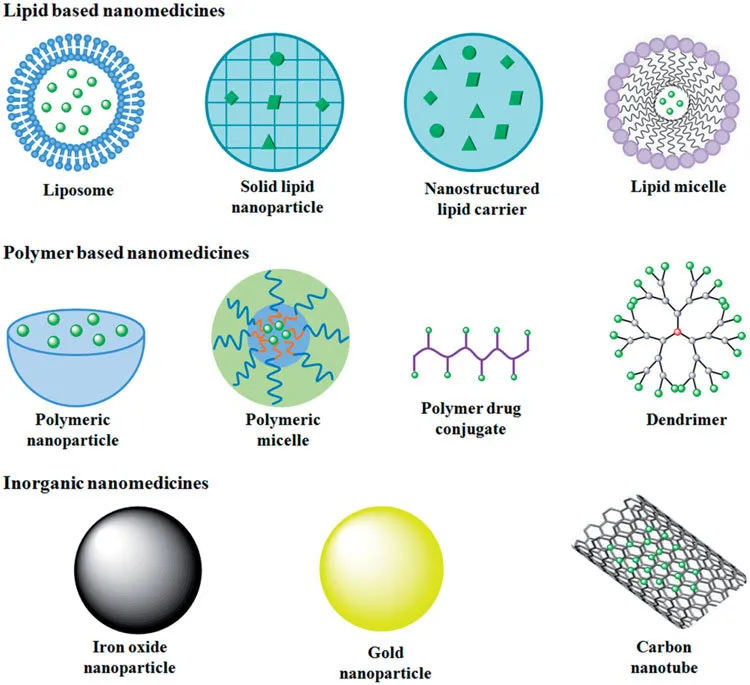
Fig. 1: Types of lipid based Nano carriers
Lipid-based Nano carriers are Nano sized drug delivery systems composed of physiological lipids that are biocompatible and biodegradable. They are designed to encapsulate, protect, and transport drugs, particularly poorly water-soluble compounds. Due to their lipid nature, these carriers enhance drug solubility, improve stability, and increase bioavailability.
Lipid-based Nano carriers can efficiently control drug release and improve therapeutic efficacy while reducing drug-related toxicity. Their small particle size and high surface area enable better interaction with biological membranes, leading to improved absorption and targeted delivery2.
Because of these advantages, Lipid-based Nano medicines such as liposomes, solid lipid nanoparticles (SLNs), nanostructured lipid carriers (NLCs), and lipid micelles have shown promising potential in drug delivery applications. These lipid-based Nano carriers provide effective approaches for achieving improved drug accumulation at the desired site of action. They also help enhance the pharmacokinetic properties of drugs, including issues related to poor oral absorption and short biological half-life. In addition, lipid-based Nano medicines improve drug safety by reducing the formation of toxic degradation products and enabling localized drug delivery, thereby minimizing systemic side effects3. Different types of lipid based nano carriers are depicted in Fig No.1 and Table No. 1
Table No 1: Types of Lipid Nano carriers
|
Lipid Nano carriers |
Key composition |
Function |
|
Liposome |
Phospholipids, cholesterol, sterols. |
Liposomes are Nano sized phospholipid vesicles that can carry both hydrophilic and lipophilic drugs, offering biocompatible and effective targeted drug delivery4. |
|
Solid lipid nanoparticle |
Solid lipids, emulsifiers/surfactants, surface modifiers. |
Solid lipid nanoparticles are lipid-based carriers that enhance bioavailability and enable controlled, targeted delivery of various therapeutic agents5. |
|
Nanostructured lipid carriers |
Solid lipid, liquid lipids, surfactant, co-surfactants |
Nanostructured lipid carriers incorporated into hydrogels improve skin barrier repair by enhancing stability, controlling drug release, and prolonging local retention6. |
|
Polymer drug conjugate |
Polymeric backbone, therapeutic drug, targeting ligand. |
Polymeric drug conjugates are biodegradable, stimuli-responsive carriers that enable targeted drug release under specific biological conditions7. |
|
Polymeric nanoparticle |
Polymer matrix, Nano capsules, Nano spheres. |
Polymeric nanoparticles improve bioavailability and controlled drug release, existing as Nano capsules with a polymer shell or Nano spheres with drug dispersed in a polymer matrix8. |
|
Polymeric micelle |
Hydrophobic core, amphiphilic polymers, hydrophilic shell |
Polymeric micelles are self-assembled Nano scale carriers that solubilize hydrophobic drugs and remain stable in aqueous environments9. |
|
Dendrimers |
Central core, Inner shell, Outer shell. |
Dendrimers are highly branched, star-shaped polymeric Nano carriers that allow surface drug attachment, enhancing biological interactions. Their controlled structure enables tuning of solubility, surface charge, and stability for biocompatible drug delivery10. |
|
Iron oxide nanoparticle |
|
Iron oxide nanoparticles are magnetic, biocompatible carriers used in imaging, targeted therapy, tumour ablation, and cancer cell tracking11. |
Nanostructured lipid carrier
Nanostructured lipid carriers (NLCs) are advanced drug delivery systems recognized for their safety and biocompatibility. Drugs are dissolved or integrated into a mixture of solid and liquid lipids in NLCs (Fig No.2), which typically have a size range of 10 to 500nm. In comparison to polymeric and metallic nanoparticles, NLCs are advantageous due to their non-toxic nature and higher drug loading capacity. These carriers enhance drug solubility, permeability, and targeting efficiency. Moreover, surface modification of NLCs can prolong systemic circulation and enable site-specific drug delivery. NLCs have been widely explored for the delivery of drugs used in the treatment of cancer, infectious diseases, neurological disorders, diabetes, and hypertension12.
NLCs are formulated using biodegradable and biocompatible solid and liquid lipids along with suitable emulsifiers. Lipids form the core of the system and play a crucial role in improving drug loading efficiency, providing sustained drug release, and enhancing formulation stability. The incorporation of liquid lipids into the solid lipid matrix disrupts its crystalline arrangement, leading to a less ordered and more imperfect structure. This structural modification minimizes drug expulsion and improves drug entrapment efficiency. Additionally, NLCs are capable of encapsulating both hydrophilic and lipophilic drugs13.
Structure and properties of nanostructured lipid carriers
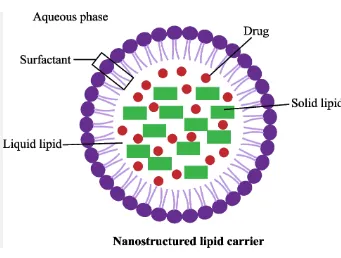
Figure No 2: Structure of Nanostructured lipid carriers (NLC)14.
Nanostructured lipid carriers (NLCs) are Nano sized particles with a typical size range of 10–500 nm and a spherical morphology. They are composed of a mixture of solid and liquid lipids, which creates imperfections in the lipid matrix and allows higher drug loading compared to solid lipid nanoparticles (SLNs). Despite the presence of liquid lipids, the NLC matrix remains solid at room and body temperatures due to controlled lipid composition.
The solid lipid matrix efficiently entraps drug molecules, improves stability, and prevents particle aggregation when compared to conventional emulsions. Mixed-type NLCs may contain long-chain liquid lipids in very low proportions and short-chain solid and liquid lipids in ratios such as 70:30. The characteristics of NLCs depend on the location of the drug (API) within the lipid matrix, and lipid concentrations of up to 95% can be used in NLC formulations15. Different types of NLCs are depicted in Fig No.3
Types of NLC’s
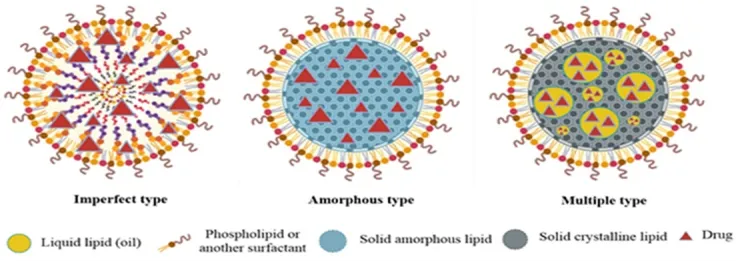
Figure No 3: Types of Nanostructured lipid carrier16.
NLC Type I:
NLC Type I, also known as the imperfect type, is the incorporation of liquid lipids into the solid lipid matrix disrupts the regular crystalline arrangement. Such structural imperfections generate additional void spaces within the lipid matrix, enabling greater accommodation of drug molecules and resulting in enhanced entrapment efficiency. In this approach, the proportion of liquid lipid is kept lower than that of the solid lipid. The solid lipid and oil components are melted, blended, and emulsified in an aqueous phase to form an oil-in-water Nano emulsion, which subsequently solidifies into lipid nanoparticles upon cooling to ambient temperature17.
NLC Type II:
NLC Type II, also known as the amorphous type, is formed by blending liquid lipids with solid lipids that maintain their α-polymorphic form after solidification and during storage. This results in the development of an amorphous lipid core. Compared to Type I NLCs, this system is more advantageous because the drug remains uniformly trapped within the amorphous matrix, and crystallization is prevented. In contrast, solid lipids that undergo transformation to the β-polymorphic form produce a highly ordered crystalline matrix18.
NLC Type III
NLC Type III, also known as the multiple types, is composed of oil, lipid, and water. This concept results in the formation of various NLC structures due to the higher solubility of lipophilic drugs in liquid lipids compared to solid lipids, especially when a high proportion of liquid lipid is used. Within the lipid matrix, small quantities of oil molecules are uniformly dispersed. However, when the amount of oil exceeds its solubility limit, phase separation occurs, leading to the formation of numerous Nano-sized oil compartments surrounded by a solid lipid matrix. The major advantages of Type II NLCs include high drug entrapment efficiency, controlled drug release, and reduced drug leakage19.
COMPOSITION OF NLCS
Nanostructured lipid carriers (NLCs) are composed of lipids, surfactants, and water, forming dispersion in an aqueous medium. Their particle size, drug loading efficiency, release behaviour, and stability are influenced by factors such as lipid concentration, lipid matrix composition, and the method of preparation. NLCs typically contain a mixture of long- and short-chain solid and liquid lipids, with total lipid content ranging from 5–40%. Surfactants are used to stabilize the formulation in the aqueous phase, usually at concentrations between 0.5–5% w/w.
The main components of NLC includes as follows,
Lipids: Lipids play a vital role in nanostructured lipid carriers (NLCs) by influencing drug loading capacity, release duration, and overall formulation stability. The core of NLCs is composed of a combination of solid and liquid lipids. Ideally, these lipids should be physiologically compatible, biodegradable, non-toxic, and classified as generally recognized as safe (GRAS)20.
Solid lipids: These lipids constitute the solid matrix of nanostructured lipid carriers. Commonly used solid lipids include glyceryl monostearate, stearic acid, cetyl alcohol, and hydrogenated lipids. The solid lipid matrix imparts structural integrity to the carrier and protects the encapsulated drug from degradation.
Liquid lipids: These lipids act as secondary components and are incorporated to create a liquid phase within the solid lipid matrix. Liquid lipids such as oleic acid, caprylic/capric triglycerides, and medium-chain triglycerides (MCT) enhance matrix fluidity and increase drug loading capacity. The presence of the liquid lipid phase improves matrix flexibility and promotes better drug solubility21.
Table 2: Lipids used in earlier studies and functions
|
Component Type
|
Lipid Name |
Application |
|
Liquid lipids |
Oleic acid |
Enhances the oral bioavailability of carbamazepine and simvastatin; used for topical delivery of spironolactone in acne vulgaris treatment. |
|
|
Caprylic/capric triglycerides |
Improves the oral bioavailability of vinpocetine and thymoquinone. |
|
|
α-Tocopherol (Vitamin E) |
Enhances the in vitro anti-breast cancer activity of quercetin. |
|
|
Soybean oil |
Facilitates pulmonary distribution of itraconazole. |
|
|
Black cumin oil |
Exhibits a synergistic free radical–scavenging effect when combined with marigold and carrot extracts. |
|
|
Caraway essential oil |
Accelerates wound healing in infected excisional wounds. |
|
|
Olive oil |
Reduces the cytotoxic effects of residual surfactants and enables the formation of oleuropein-loaded NLCs with good physicochemical stability.
|
|
|
Sweet almond oil |
Improves the stability and protective properties of NLCs enriched with cinnamon essential oil. |
|
|
Squalene |
Used for combined topical delivery of calcipotriol and methotrexate; also enhances the oral bioavailability of lovastatin. |
|
|
Capmul MCM C8 |
Increases bioavailability and lymphatic transport of tacrolimus; provides sustained release and improved bioavailability of raloxifene hydrochloride. |
|
Solid lipids |
Compritol® 888 ATO |
Enhances skin permeation of fluocinolone acetonide and clobetasol propionate for psoriasis treatment; improves oral bioavailability of fenofibrate. |
|
|
Precirol® ATO 5 |
Promotes skin delivery of dapsone and enhances rhEGF-mediated wound healing in full-thickness excisional wound models. |
|
|
Stearic acid |
Enables topical delivery of tretinoin and provides controlled release and gastric protection for progesterone. |
|
|
Glyceryl monostearate |
Improves the oral bioavailability of raloxifene and omega-3 fatty acids
|
|
|
Cetyl palmitate
|
Used for topical delivery of coenzyme Q10 and enhances oral mucosal absorption and antifungal activity of miconazole. |
Surfactants: The type and concentration of surfactants play a crucial role in determining the performance and stability of nanostructured lipid carriers and other nanolipid systems. Due to their amphiphilic nature, surfactants reduce interfacial tension between the lipid and aqueous phases and preferentially localize at the interface. Non-ionic emulsifiers, particularly Poloxamer 188, provide additional steric stabilization, thereby preventing particle aggregation in colloidal dispersions22.
Table No.3: Surfactants used in earlier studies and examples
|
Sl no |
Surfactant type |
Examples |
|
1 |
Phosphatidylcholine |
Soya lecithin, Phosphatidylcholine and egg lecithin |
|
2 |
Ethylene oxide/propylene oxide copolymers. |
Poloxamer188, Poloxamer 182, poloxamer 407, Poloxamer 908. |
|
3 |
Polymers of Sorbitan ethylene oxide/propylene oxide |
Polysorbate20, polysorbate60, polysorb 80. |
|
4 |
Alkyl aryl polyether alcohol polymers |
Tyloxapol. |
|
5 |
Alcohols |
Ethanol, butanol. |
|
6 |
Biliary salts |
Sodium cholate, sodium taurocholate sodium glycol cholate. |
Co-surfactant: Differential scanning calorimetry and static light scattering techniques are commonly employed to evaluate the influence of co-surfactants on the crystallization behaviour and physical stability of nanostructured lipid carriers. Studies have shown that the most effective co-surfactants are amphiphilic in nature, possessing both hydrophobic and hydrophilic domains. An optimal co-surfactant should contain a sufficiently large hydrophobic moiety along with high aqueous solubility, which ensures an adequate availability of molecules to efficiently stabilize the lipid–water interface23.
Active pharmaceutical ingredient: The active pharmaceutical ingredient (API) is the primary therapeutic component incorporated into nanostructured lipid carriers (NLCs). NLCs can be designed to encapsulate both hydrophobic and hydrophilic drugs by appropriately modifying the lipid matrix. Hydrophobic drugs, which are generally lipophilic in nature, are particularly well suited for incorporation into NLCs, as these systems enhance drug encapsulation efficiency and enable controlled drug release. Examples of such drugs include chemotherapeutic agents, antifungal drugs, and anti-inflammatory agents such as ibuprofen and diclofenac.
Although NLCs are primarily developed for lipophilic drugs, hydrophilic drugs can also be successfully encapsulated by modifying the lipid matrix with suitable surfactants that improve drug solubility. Using this approach, hydrophilic drugs such as antibiotics and corticosteroids can be effectively incorporated into NLC formulations21.
Emulsifiers: Emulsifiers are essential for stabilizing lipid dispersions in nanostructured lipid carriers (NLCs). Hydrophilic emulsifiers such as Pluronic F68, polysorbates, polyvinyl alcohol, and sodium deoxycholate are commonly used, while lipophilic or amphiphilic emulsifiers like Span 80 and lecithin are employed when required. The use of combined emulsifiers has been shown to more effectively prevent particle aggregation.
Polyethylene glycol (PEG) may be added to NLCs to reduce uptake by the reticuloendothelial system and prolong drug circulation time. Preservation is also critical for NLC stability; however, some preservatives can adversely affect lipid dispersions. Hydrolite® 5 has been reported as a suitable preservative for coenzyme Q10–loaded NLCs without compromising stability24.
ADVANTAGES OF NLC
DISADVANTAGES OF NLC
METHOD OF PREPARATION
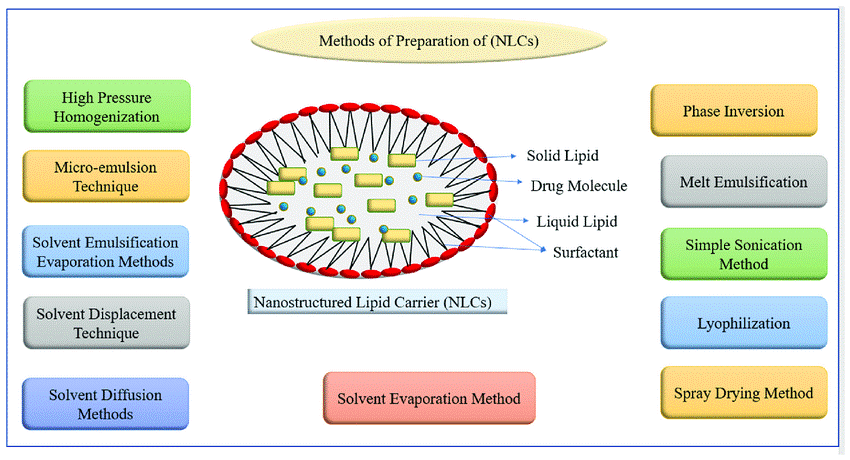
Fig. 4: Methods of Preparation of (NLCs)26.
High-pressure homogenization (HPH) is one of the most widely used techniques for the preparation of nanostructured lipid carriers. In this method, the lipid phase containing a mixture of solid and liquid lipids along with the drug is dispersed into an aqueous surfactant phase and subjected to high pressure. The intense mechanical forces generated during homogenization, such as shear stress, cavitation, and turbulence, lead to the breakdown of lipid droplets into Nano sized particles, resulting in stable NLC dispersions. Advances in nanotechnology and a better understanding of fluid dynamics have significantly improved high-pressure homogenizer design, enhancing processing efficiency, reproducibility, and scalability. This technique enables precise control over particle size, size distribution, and physical stability of NLCs. Therefore, high-pressure homogenization plays a crucial role in particle engineering and is extensively applied in the formulation of nanostructured lipid carriers for pharmaceutical drug delivery27.
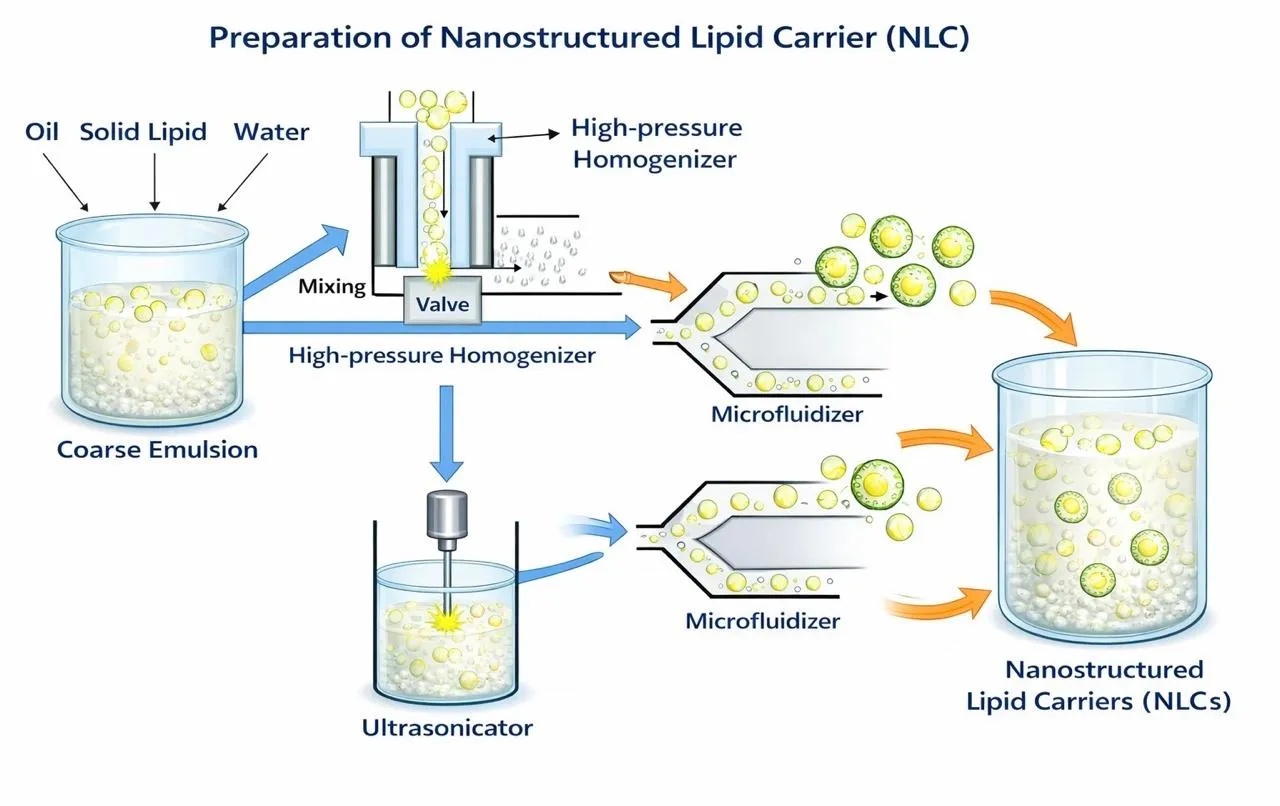
Fig. 5: High pressure homogenization technique28.
In the hot homogenization technique, the lipid phase containing the drug is heated above its melting point and mixed with an aqueous surfactant solution maintained at the same temperature. High-shear mixing is used to form a hot oil-in-water pre-emulsion, which is then processed by high-pressure homogenization at 500–1,500 bar for several cycles to obtain a Nano emulsion. During homogenization, temperature rise may occur, and excessive pressure or cycles can increase particle size. Upon cooling to room temperature, lipid recrystallization takes place, leading to the formation of nanostructured lipid carriers29.
In the cold homogenization technique, the drug is first incorporated into the molten lipid phase, similar to hot homogenization. The lipid melt is then rapidly cooled using liquid nitrogen or dry ice, resulting in solidification of the lipid mass. This solidified lipid is subsequently ground to obtain micro particles, which are dispersed in a cold aqueous surfactant solution to form a pre-suspension. High-pressure homogenization is then performed at or near room temperature, leading to size reduction and formation of nanostructured lipid carriers. This technique was developed to overcome the limitations associated with hot homogenization, particularly drug degradation and redistribution at elevated temperatures30.
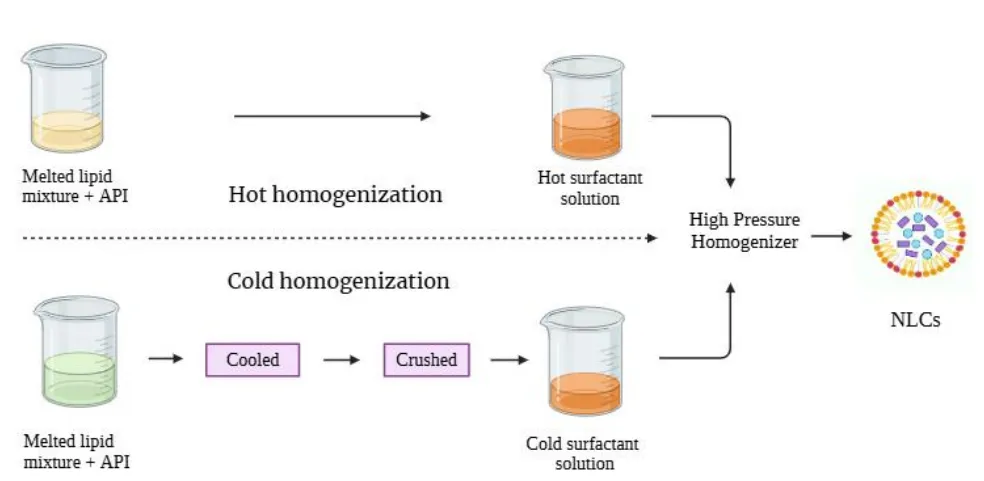
Fig. 6: Hot homogenization and cold homogenization technique.
In this method, the lipid phase is melted and the drug is incorporated into the molten lipid. An aqueous phase containing surfactant and co-surfactant is heated to the same temperature as the lipid melt and then added under gentle stirring. When appropriate ratios of lipid, surfactant, co-surfactant, and water are used, a clear and thermodynamically stable micro emulsion is formed, which serves as the precursor for nanoparticle formation. The hot micro emulsion is subsequently dispersed into a cold aqueous medium under mild mechanical stirring, typically at a dilution ratio of 1:25–1:50. This rapid cooling induces recrystallization of the lipid droplets, resulting in the formation of nanostructured lipid carriers.
Commonly used surfactants and co-surfactants include lecithin and bile salts, often combined with short-chain alcohols such as butanol; however, the use of such alcohols is limited due to regulatory concerns. For large-scale production, the micro emulsion is prepared in a temperature-controlled vessel and then transferred into a cold aqueous phase to facilitate nanoparticle precipitation31.
In this technique, the drug and lipids are dissolved in a water-immiscible organic solvent and emulsified in an aqueous phase using ultrasonication or high-shear homogenization. The organic solvent is removed under reduced pressure (40–60 mbar), resulting in the formation of nanostructured lipid carriers. This method is suitable for heat-sensitive drugs; however, residual solvent traces and the need for additional filtration may limit large-scale application and reduce product yield32.
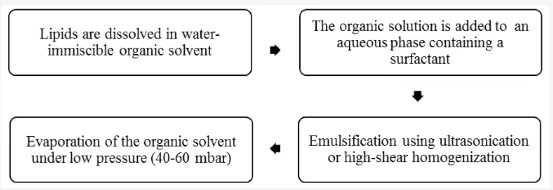
Fig. 7: Solvent evaporation technique.
The solvent injection method is an effective technique for preparing nanostructured lipid carriers. In this approach, lipids are dissolved in a water-miscible organic solvent, such as acetone, ethanol, methanol, or isopropyl alcohol. The lipid solution is rapidly injected into an aqueous surfactant solution under continuous stirring, causing the spontaneous formation of lipid nanoparticles. The resulting dispersion is then filtered to remove any excess lipids. Nanoparticle formation occurs due to the fast diffusion of the organic solvent into the aqueous phase, with particle size primarily determined by the solvent diffusion rate. This method is simple, versatile, efficient, and does not require sophisticated equipment, while using pharmaceutically acceptable solvents33.
In this method, nanostructured lipid carriers are prepared by repeated phase inversion processes, during which emulsion interfacial properties are optimized. The resulting NLCs consist of a liquid lipid core surrounded by a cohesive interfacial layer and are stably dispersed in an aqueous medium. Particle size and morphology are characterized using photon correlation spectroscopy, AFM, and TEM, while thermal behaviour is evaluated by DSC. The formulation parameters allow precise control of particle size in the range of 25–100 nm with a narrow, monodisperse distribution and good stability upon dilution34.
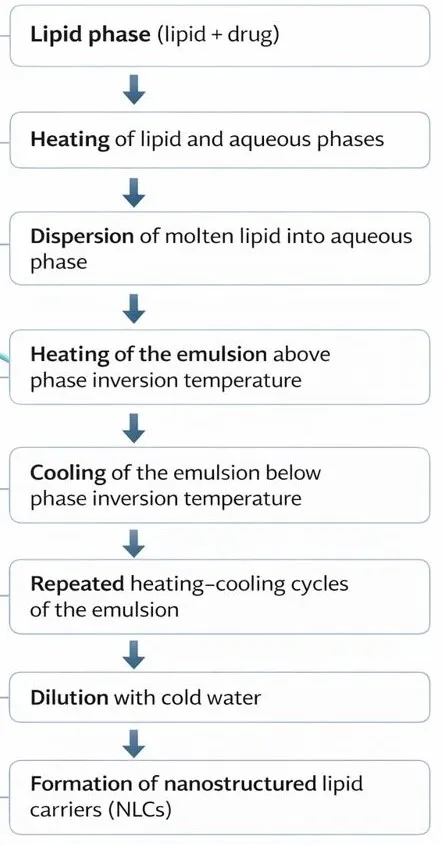
Fig. 8: Phase inversion technique35.
In this method, lipophilic drugs are uniformly dispersed or dissolved in a molten blend of solid and liquid lipids. The lipid melt is then added to a heated aqueous phase containing surfactant and mixed under continuous stirring to form a pre-emulsion. The processing temperature is typically maintained at 5–10 °C above the melting point of the solid lipid to ensure complete melting. The pre-emulsion is subsequently subjected to ultrasonic homogenization, resulting in the formation of a fine microemulsion. Upon cooling and solidification of the lipid phase, nanostructured lipid carriers are formed36.
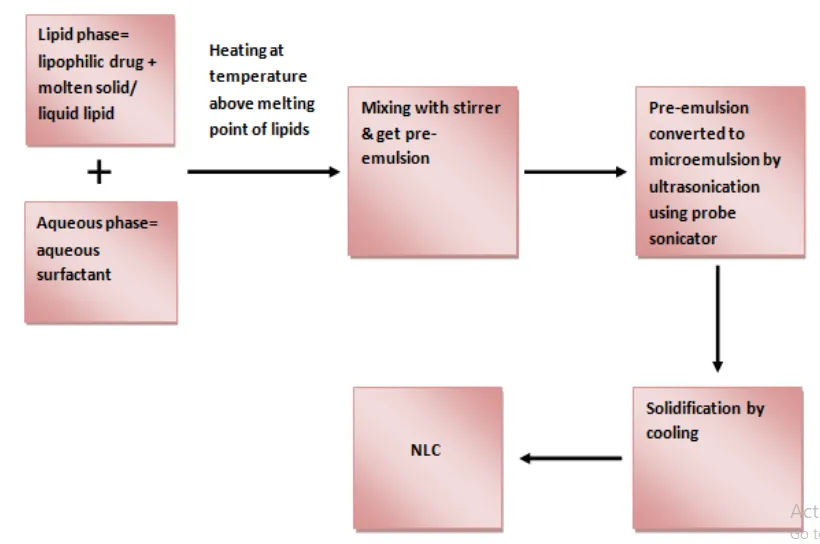
Fig. 9: Ultrasonic Homogenization technique.
In this method, a supramolecular stabilization system is first prepared in warm water using a polymeric stabilizer. A sodium salt of a fatty acid is uniformly dissolved in the stabilizer solution to obtain a clear and homogeneous phase, which is continuously stirred and heated above the Krafft temperature of the fatty acid salt. The drug, previously dissolved in ethanol, is then incorporated into this transparent solution under constant agitation to form a single-phase system. Nanostructured lipid carriers are generated by the gradual addition of an acidic coacervating solution, which induces a controlled decrease in pH and leads to particle formation. The resulting suspension is subsequently cooled under continuous stirring, producing uniformly dispersed, drug-loaded nanostructured lipid carriers22.
CHARACTERIZATION OF NLC
The surface morphology and shape of the nanostructured lipid carriers were examined using scanning electron microscopy (SEM) (Philips, The Netherlands). Prior to analysis, the NLC samples were sputter-coated with a thin layer of colloidal gold under vacuum to enhance conductivity. The coated samples were then observed at an accelerating voltage of 20 kV37.
Droplet size analysis was carried out by laser diffraction using a Mastersizer 2000™ (Malvern Instruments Ltd., Malvern, UK). Particle size was reported as volume-weighted mean diameter (d₄₃) and surface-weighted mean diameter (d₃₂), expressed in nanometres. For data analysis, the refractive indices of the aqueous and lipid phases were set at 1.33 and 1.60, respectively. Measurements were conducted in triplicate at 25 °C, and results are presented as mean values ± standard deviation (SD)38.
The polydispersity index (PDI) indicates the uniformity of particle size distribution in nanostructured lipid carrier formulations. NLCs typically exhibit PDI values between 0.2 and 0.3, suggesting a narrow and homogeneous particle size distribution. Lower PDI values indicate better stability, while values above 0.5 reflect broad size distribution and possible aggregation.
High-shear homogenization combined with probe sonication reduces particle size variability and promotes uniform nanoparticle formation. A low PDI ensures formulation reproducibility, consistent drug release, and reliable therapeutic performance, making it a key parameter for evaluating stable NLC systems.
Drug loading indicates the capacity of nanostructured lipid carriers to incorporate and retain a drug within the lipid matrix and reflects formulation efficiency. NLCs typically show drug loading values of 5–10%, influenced by the drug’s properties, its affinity for the lipid phase, and the lipid-to-drug ratio.
Higher drug loading reduces the amount of carrier needed for therapeutic dosing, improving formulation efficiency, cost effectiveness, and patient compliance. Therefore, drug loading assessment is a key parameter for evaluating the suitability of NLCs as effective drug delivery systems.
Entrapment efficiency (EE) was determined indirectly by an ultrafiltration–centrifugation method performed in triplicate using Amicon® devices (100 kDa cut-off). NLC dispersions were diluted with ultrapure water, loaded into the ultrafiltration units, and centrifuged at 4,000 rpm for 60 min. The amount of free cannabidiol (CBD) in the filtrate was quantified by UHPLC–DAD using a C18 column under gradient elution with acidified water and acetonitrile. Detection was carried out at 220 nm, and quantification was based on an external calibration curve (1–50 µg/mL; r² = 0.998). EE was calculated using the standard equation40.
EE (%) = TotalCBD-FreeCBDTotalCBD×100

Zeta potential is a key parameter used to assess the colloidal stability of nanostructured lipid carrier (NLC) dispersions, as it reflects the magnitude of electrostatic repulsion between particles. It serves as an indirect indicator of the thickness of the electrical double layer and is therefore useful for predicting long-term physical stability. Generally, NLC systems stabilized predominantly by electrostatic interactions require zeta potential values of at least ±30 mV to ensure adequate stability, whereas formulations combining electrostatic and steric stabilization can remain stable at lower values, typically around ±20 mV41.
In vitro release studies were performed to evaluate the quality and predict the in vivo performance of nanostructured lipid carriers. Drug release from NLCs was assessed over 48 h using a modified Franz diffusion cell (diffusion area 0.785 cm²; receptor volume 5 mL). A pre-hydrated cellulose acetate membrane (pore size 200 nm; MWCO 5–10 kDa) separated the donor and receptor compartments.
The donor chamber contained drug-loaded NLC dispersion, while the receptor chamber was filled with phosphate-buffered saline (pH 7.4) with a suitable surfactant to maintain sink conditions. The system was maintained at 37 ± 0.5 °C with continuous stirring at 500 rpm. Samples were withdrawn at predetermined intervals, replaced with fresh medium, and analysed for drug content. All studies were conducted in triplicate, and release data were fitted to kinetic models to determine the release mechanism42.
The crystalline structure of nanostructured lipid carriers was analyzed using X-ray diffraction. Freeze-dried NLC samples were placed between Mylar films and measured at room temperature with a Bruker D8 Advance diffractometer using CuKα radiation over a 2θ range of 2–47°, with 0.02° steps and continuous rotation. Data were processed with standard software to assess the crystallinity and polymorphic characteristics of the lipid matrix43.
APPLICATIONS OF NLCs:
Nanostructured lipid carriers (NLCs) improve bioavailability, stability, and controlled release of poorly soluble drugs, with surface modifications enabling targeted therapies like cancer treatment.
Nanostructured lipid carriers (NLCs) improve oral delivery of poorly soluble drugs by enhancing solubility, absorption, and protection from gastrointestinal degradation. Their lipid matrix allows higher drug loading, controlled release, and improved bioavailability and therapeutic efficacy.
Nanostructured lipid carriers (NLCs) enhance parenteral delivery by improving drug encapsulation, stability, and controlled release. Surface modifications like PEGylation extend circulation, increasing bioavailability and therapeutic efficacy.
Nanostructured lipid carriers (NLCs) enhance topical drug delivery by improving skin penetration, protecting the drug, and providing controlled release with minimal irritation. They show better skin retention, efficacy, and safety than conventional formulations, making them promising for treating wounds, acne, hyperpigmentation, and skin aging44.
CONCLUSION
Nanostructured lipid carriers have emerged as a versatile and promising Nano carrier system for improving the delivery of poorly soluble and biopharmaceutically challenging drugs. By combining solid and liquid lipids, NLCs overcome the limitations of conventional lipid nanoparticles through enhanced drug loading, improved physical stability, and controlled release behaviour. Their Nano scale size and modifiable surface characteristics enable improved bioavailability, targeted delivery, and reduced systemic toxicity across multiple routes of administration, including oral, parenteral, and topical delivery. Advances in formulation strategies and surface engineering have further expanded their application to both small-molecule drugs and biologics. Overall, NLCs represent a robust and adaptable platform with significant potential to translate into clinically effective and patient-friendly therapeutic systems, although further long-term safety studies and large-scale clinical evaluations are required to support widespread commercialization.
REFERENCES

Manjushree P.R.*, J. Adlin Jino Nesalin, Ganesh N. S., Vineeth Chandy, Manjushree P.R.*, J. Adlin Jino Nesalin, Ganesh N. S., Vineeth Chandy, Int. J. of Pharm. Sci., 2026, Vol 4, Issue 8, 4471-4489.https://doi.org/10.5281/zenodo.22122521
 10.5281/zenodo.22122521