

We use cookies to ensure our website works properly and to personalise your experience. Cookies policy
Department of Pharmaceutical Analysis, Nirmala College of Pharmacy, Guntur, Andhra Pradesh 522503, India.
Neurological disorders are a major global health burden, contributing significantly to morbidity, mortality and disability. A key obstacle in treating neurological dysfunction is the limited permeability of drugs across the semi-permeable membrane of the brain, which restricts drug potency and bioavailability. This has driven the development of nanoscale drug transport systems operating in the 1 to 100 nanometre range. Liposomes, magnetic particles, exosomes, nanosomes and dendrimers enhance receptor-mediated transport and cellular uptake across the brain barrier. Functionalising these nanoparticles with transferrin, lactoferrin, insulin and apolipoproteins improves specificity toward brain tissue, while stimulus-sensitive nanotherapeutics responsive to pH, redox and enzymatic microenvironments enable more targeted delivery. These optimised systems enhance the pharmacological effectiveness of treatments for neurodegenerative disorders, although nanotoxicity, immunogenicity and lack of standardisation remain critical challenges to clinical translation. Combining nanotechnology with gene-based therapies offers transformative possibilities for advancing precision medicine in neurology.
The neural system consists of an extremely intricate, complex system, which is part of the human body and therefore susceptible to various pathological conditions. According to statistics obtained from the Global Disease Burden Analysis, it has been established that neurological conditions significantly contribute to mortality, morbidity, premature mortality rates, and disability induced life worldwide. According to the 2019 report from the Global Burden of Disease study, there has been a notable increase in disability induced life years caused by diseases such as stroke, Alzheimer type dementia, Primary parkinsonism, central nervous system (CNS) malignancies, and demyelinating disease of the CNS[1,2]
Neurodegenerative disorders are mostly characterized by gradual decline of neuronal structure and function, eventually leading to cell death. Their development and advancement are influenced by an interplay between inherited genetic traits and environmental exposures. In recent years, neuro immune interactions have gained considerable attention, as several genes linked to immune system function are implicated in the risk and progression of NDs. During disease states, immune activation and associated signaling pathways play crucial roles in pathogenesis, diagnosis, and therapeutic targeting. Increased levels of pro-inflammatory immune response have been reported in various studies of neurodegenerative diseases. Elevated levels of cytokines such as IL-1, TNF-α, IL-6, IL-12, have been documented in Alzheimer's disease in both animal models and human studies. The regulation of the inflammatory response has been linked to improved cognitive functions and reduced Aβ plaque formation. Microglial cells and astrocytes represent the major glial populations that participate in phagocytic processes and cytokine production. In addition, astrocytes contribute significantly to the development of glial scars and the preservation of the blood-brain barrier (BBB)
Treatments that focus on microglial signaling pathways are therefore a promising approach. To address issues like immune dysregulation in the brain, neuroinflammation, and BBB penetration, researchers are actively creating novel treatments. Traditional treatments for neural disorders often show minimal clinical success, mainly due to ineffective drug delivery methods
Challenges such as prolonged drug administration, side effects, aging, and age-related health conditions further complicate treatment results. The BBB acts as a major barrier to effective therapy by limiting the transport of therapeutic agents into the brain. For this purpose, the role of nanotechnology has been recognized as a viable solution to overcome the challenges in the molecular level of interactions and target the drug delivery to the site of action[3,4]. There is an urgent need to develop nanocarriers with ligands, which will help in the targeting and binding with the tissues or cells, which increases the effectiveness and reducing the toxicity of the medication. In addition, aptamer-based targeting has also been shown to have potential in the treatment of brain disorders
Nanomaterials have the capacity to release the drug in a rate-controlled release fashion and cross physiological barriers. A variety of nanocarriers such as liposomes, dendrimers, polymeric and inorganic nanoparticles, exosomes, and micro/nanogels have exhibited considerable promise in the management of neurological diseases.
2. LIPOSOMES
Liposomes, which have been characterized and confirmed as nanocarriers, have gained significant attention in the context of neurological therapeutics. These vesicles have a structural similarity to biological membranes due to the presence of one or more layers of phospholipids[5,6]. Due to their high biocompatibility, liposomes have shown promising results in terms of their interaction with biological membranes. The unique structure of liposomes also permits the incorporation of both hydrophilic substances and hydrophobic substances which increases their versatility. In liposomal systems, hydrophobic substances are embedded in the lipid membrane, while hydrophilic agents are enclosed within the central aqueous core
Phospholipid bilayer composition of liposomes also aids in the permeation of the semi-permeable membrane of brain, thus allowing liposomes to focus on disorders of the neural systems. Surface modification techniques are also used to further increase the specificity and efficiency of targeting ligands. Moreover, the conjugation of liposomes with targeting ligands and peptides, such as transferrin and RVG peptides, which shows to increase receptor-mediated uptake in the brain[7]. Liposomes bearing RVG peptides have been shown to have a selective affinity towards neuronal cells and have been used in the targeting of major neurological disorders like brain tumor, Parkinson's disease, and Alzheimer's disease. Most importantly, liposomes conjugated with target specific ligands and peptides, such as RVG and transferrin, indicating their potential in the construction of genome drug delivery systems[8]
Moreover, liposomes have been engineered for image-guided and theranostic applications. Multifunctional magneto-plasmonic liposomes (MPLs) encapsulating tenofovir disoproxil fumarate have demonstrated the capacity to traverse a laboratory-based BBB model developed in vitro under magnetic guidance, thereby enhancing therapeutic efficacy against HIV-1 infection in microglial cells. Furthermore, these liposomal systems generate positive contrast in X-ray computed tomography imaging, enabling their dual functionality as both diagnostic and therapeutic agents. Overall, the intrinsic structural adaptability, high biocompatibility, and customizable surface chemistry of liposomes reduce immune system activation and underscore their continued potential as effective nanocarriers for targeted neurological therapies.
The general architecture of this nanocarrier system is illustrated in fig. 1.
3. DENDRIMERS
Dendrimers are highly defined polymeric macromolecules characterized by hyperbranched, three-dimensional architectures and precisely tunable surface functionalities. Structurally, dendrimers consist of a central core, successive branching units known as dendrons arranged in concentric layers (generations), and a peripheral shell containing multiple reactive surface groups. This unique architecture enables high molecular uniformity, multivalency, and controlled surface chemistry. Due to their nanoscale dimensions and structural versatility, dendrimers function as efficient nanocarriers for the delivery of biological macromolecules such as antigens, antibodies, oligonucleotides, and small-molecule therapeutics[9,10,11]. These properties make dendrimers particularly attractive for applications in nanomedicine, including targeted therapeutics, molecular imaging, and diagnostic platform. Recent advances in nanotechnology have expanded the therapeutic applications of dendrimer-based nanostructures in the management of aggressive CNS malignancies including glioblastoma. Glioblastoma, the most invasive primary brain tumor, is associated with poor clinical outcomes largely attributed to less permitted drug penetration across the BBB. This restricted permeability significantly compromises effective drug accumulation within tumour tissue.
To address this limitation, engineered porous silicon nanoparticles conjugated with antisense oligonucleotides have emerged as a targeted nanotherapeutic strategy. In this platform, porous silicon nanoparticles serve as the structural core, while the surface conjugated antisense oligonucleotides generate a dendrimer-like hierarchical architecture. These oligonucleotides are specifically designed to downregulate the “downregulated in renal cell carcinoma” (DRR) protein, a key regulator implicated in glioblastoma invasion and tumour progression. Surface functionalization with undecylenic acid further enables stable covalent attachment of oligonucleotides through carbodiimide mediated EDC/NHS coupling.
The capacity of nanocarrier systems to traverse the BBB has been validated using microfluidic-based in vitro BBB models and xenograft mouse models[25], demonstrating enhanced brain penetration and targeted tumor accumulation. This combinational approach integrating antisense technology with nanocarrier engineering represents a promising strategy for overcoming BBB-associated therapeutic barriers in glioblastoma management.
The general architecture of this nanocarrier system is illustrated in fig. 2.
4. MAGNETIC PARTICLES
Magnetic nanoparticles (MNPs) are emerging as promising nanomaterials for targeted and stimuli-responsive therapeutics[12]. Their superparamagnetic properties enable external magnetic field-guided actuation without residual magnetization, allowing controlled drug delivery to specific anatomical sites. This characteristic is especially beneficial in treating neurological (CNS) disorders, where traditional drug delivery approaches are often obstructed by the semi-permeable membrane of the brain (BBB).
Among the diverse nanocarrier approaches investigated for neurological applications, superparamagnetic iron oxide nanoparticles have gained substantial research interest[13,14]. While magnetic nanoparticles can be manufactured in a broad size range—from 1 to 1000 nanometers—those measuring under 200 nanometers are typically favored for targeting the brain. This preference is due to their enhanced biodistribution and decreased rate of clearance, which improve their ability to reach and effectively interact with neural tissues. However, native iron oxide nanoparticles exhibit poor aqueous dispersibility, which limits drug loading and stability. Surface functionalization with amino or carboxyl groups, oligosaccharides, or biocompatible polymers significantly enhances dispersibility and targeting efficiency. Oligosaccharide-coated ultra-small magnetic nanoparticles (<5 nm) have demonstrated BBB penetration and tumor targeting in glioma mouse models, while also enabling magnetic resonance imaging for theranostic applications. Polymeric encapsulation, particularly using poly(lactic-co-glycolic acid) (PLGA), further improves colloidal stability, protects drug cargo from degradation, and enhances bioavailability. Functionalized Fe₃O₄ nanoparticles loaded with therapeutic agents such as dexamethasone have shown promising uptake in brain endothelial cell models.
Magnetic nanoparticles can also be conjugated with targeting ligands including transferrin, lactoferrin, and BBB-penetrating peptides to facilitate receptor-mediated transport[24]. Immune responses to MNPs are influenced by factors such as size of the particle, electrical surface potential, and coating chemistry. Larger nanoparticles or those with a positive surface charge tend to provoke more pronounced inflammatory reactions. To mitigate these effects, surface modification with biocompatible polymers or poly(ethylene glycol) (PEG) is commonly employed, as it reduces opsonization and extends the nanoparticles' circulation time within the bloodstream.
The general architecture of this nanocarrier system is illustrated in fig. 3.
5. EXOSOMES
Exosomes have been recognized as nanoscale extracellular vesicles secreted by the majority of nucleated eukaryotic cells, as well as some prokaryotic cells, which act as natural nanocarriers for cell communication[15,17]. Exosomes carry active biomolecules which include polypeptides, deoxyribonucleic acid, ribonucleic acid, lipid globules and metabolites, thereby indicating the normal and diseased states of their parent cells. Exosomes alter the immune stimulations and their responses and inflammatory signaling pathways, which include autoimmune responses. There is emerging evidence suggesting that they play a role in the development of neurological disorders.
The diameter of exosomes ranges from 40 to 160 nanometers, with an average diameter of 100 nanometers. Exosomes have a membrane composed of phospholipids that enclose a core with bioactive molecules. The fact that exosomes are derived from the body makes them highly biocompatible, less immunogenic, and able to penetrate semi-permeable membranes like the BBB. The most intriguing feature of exosomes is the ability of exosomes derived from the nervous system to be found in the peripheral circulation, highlighting their significance in the communication between the CNS and the peripheral tissues. Mesenchymal stem cell-derived exosomes (MSC-exos) exhibit neuroprotective properties, including promotion of neurite outgrowth, immune modulation, and tissue repair[18]. Engineered MSC-exos have demonstrated selective migration to diseased brain regions in Parkinson's disease (PD) and Alzheimer's disease (AD) models. In contrast, exosomes derived from dendritic cells display immunomodulatory effects in stroke models, whereas macrophage-derived exosomes may contribute to neuroinflammatory processes.
Exosomes can be engineered as drug delivery platforms by incorporating therapeutic payloads through either active (post-isolation loading into purified exosomes) or passive (drug incubation with donor cells prior to exosome isolation) strategies. Exosomes can cross the BBB via a receptor mediated pathway, such as binding to transferrin receptors, a property harnessed to deliver treatments like dopamine for Parkinson's disease[16]
The general architecture of this nanocarrier system is illustrated in fig. 4.
6. NANOGELS
Progress in nanotechnology has enabled the creation of smart nanogels, nanoscale counterparts of conventional three-dimensional cross-linked hydrogels with enhanced physicochemical and functional properties[19,20]. Nanogels range between 10 to 200 nm in terms of diameter and combine the high-water content and tunable network architecture of hydrogels with the advantages of nanoscale drug delivery systems. Compared to other nanocarriers, nanogels address several translational limitations. Liposomes often face stability concerns and require stringent storage conditions, while inorganic nanoparticles raise issues regarding long-term toxicity and biodegradability. PLGA based systems may exhibit burst drug release, compromising sustained therapeutic efficacy. In contrast, nanogels demonstrate improved biodegradability, biocompatibility, colloidal stability, and relatively simple storage requirements[21]
Intranasal administration of nanogels has shown significant promise for brain targeting. Studies report enhanced brain uptake of insulin when delivered via nanogel formulations through the intranasal route. For example, poly(N-vinylpyrrolidone)-based nanogels synthesized using e-beam irradiation enabled covalent insulin loading and demonstrated efficient brain delivery without inducing immunogenic responses in nasal mucosa. These results underscore the promise of nanogels as noninvasive delivery systems for neurological conditions. Chitosan-based nanogels further illustrate the promising therapeutic potential of nanotechnology. The intranasal administration of piperine encapsulated chitosan nanogels has demonstrated improved cognitive functions in murine models, and nanogels with olanzapine show improved absorption of the drug in the nose.
Additionally, nanogel systems reinforced with hydrogen bonding, such as glycyrrhizic acid–zinc alginate nanogels (GA-NG), show promising antioxidant and anti-inflammatory effects, preferential localization in the brain, and improved molecular stability due to hydrogen bonding. The above results indicate the promising potential of such nanogel systems for improving therapeutic responses in neurological applications. Taken together, these findings emphasize nanogels as promising sustained release, biocompatible, and noninvasive carriers for treating neurological disorders with particular relevance to diseases like Parkinson's. Moreover, the versatile design of nanogels positions them as strong candidates for future theranostic applications, combining therapy and diagnostics in a single platform.
The general architecture of this nanocarrier system is illustrated in fig. 5.
CONCLUSION
The intranasal route of administration of piperine-loaded chitosan nanogels has been found to enhance cognitive ability in mouse models, whereas the incorporation of olanzapine into nanogels results in better absorption through the intranasal route of administration.
Additionally, hydrogen-bonded nanogel systems, such as glycyrrhizic acid-zinc alginate nanogels (GA-NGs), are known to possess free radical scavenger as well as inflammation reducing effects, accumulate in the brain, and have greater molecular stability due to the hydrogen-bonded interactions between the components of the nanogels.
Preclinical studies have consistently demonstrated superior therapeutic efficacy for various models of Alzheimer's disease, Parkinson's disease, glioblastoma, stroke, and other neurodegenerative disorders[22,23]. In addition to the method of administration, the multifunctional nature of the nanoplatforms also allows for the seamless integration of theranostics, which combines therapy and diagnostics into one platform[26,27]
The combination of nanotechnology, RNA-based therapy, gene editing, and diagnostics, particularly those based on the use of biomarkers, also presents tremendous opportunities for the advancement of precision medicine in the field of neurology.
Despite this, many barriers still need to be crossed, such as the need for reproducibility in industrial-scale production, evaluation of long-term biosafety, issues of immunogenicity, the need for standardization of regulations, and issues of cost-effectiveness[28]
The future of this research should include issues related to the formulation, clinical use, and standardization of regulations. With continued interdisciplinary collaboration, nanotherapeutics are poised to redefine targeted treatment strategies and improve clinical outcomes in neurological disease management.
ACKNOWLEDGEMENTS
The authors thank Nirmala College of Pharmacy for providing academic support.
REFERENCES
|
HOW TO CITE: Goday Swapna, P. Jyothi, Mungara Manoj, Savitikada Khasimbee, Avala Jyothika, Recent Advances in Nanotherapeutics for Neurological Disorders, Int. J. of Pharm. Sci., 2026, Vol 4, Issue 7, 4867-4875, https://doi.org/10.5281/zenodo.21562630
|
TITLES AND LEGENDS FOR FIGURES
Fig. 1: liposome structure showing the phospholipid bilayer enclosing hydrophilic and hydrophobic payloads
Fig. 2: schematic representation of a dendrimer nanocarrier architecture
Fig. 3: schematic representation of a magnetic nanoparticle-based drug delivery system
Fig. 4: schematic representation of exosome structure and composition
Fig. 5: schematic representation of a nanogel-based drug delivery system
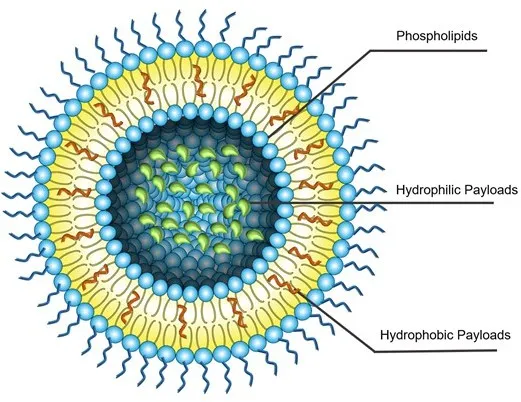
fig. 1: liposome structure showing the phospholipid bilayer enclosing hydrophilic and hydrophobic payloads
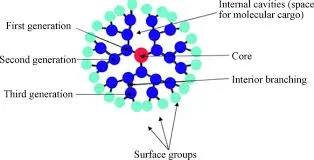
fig. 2: schematic representation of a dendrimer nanocarrier architecture
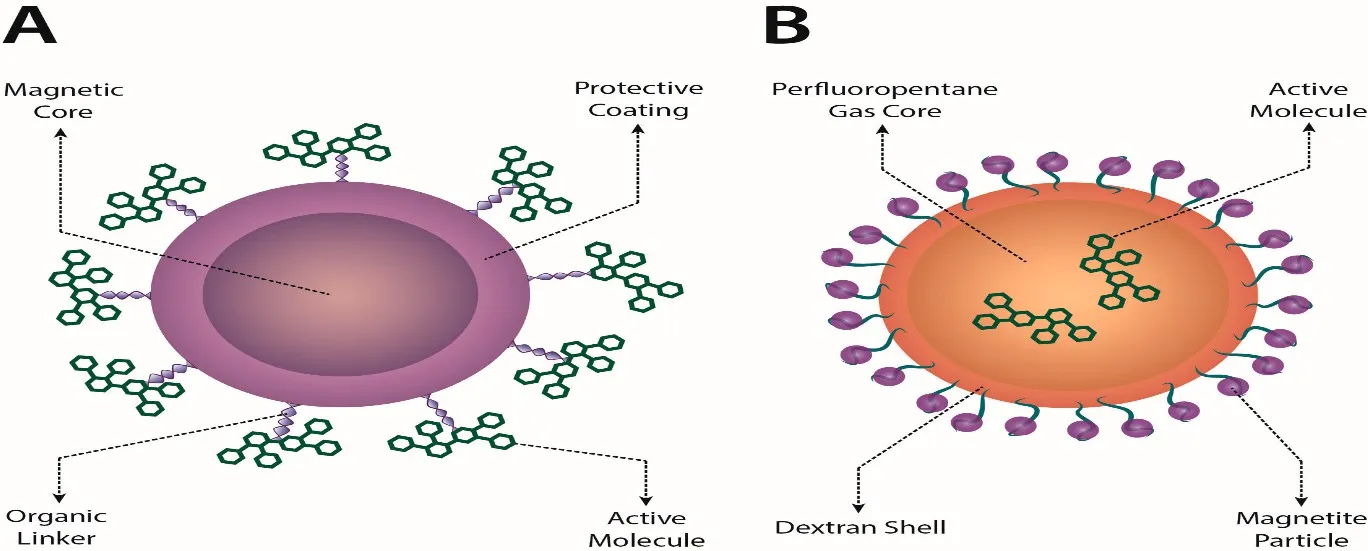
fig. 3: schematic representation of a magnetic nanoparticle-based drug delivery system
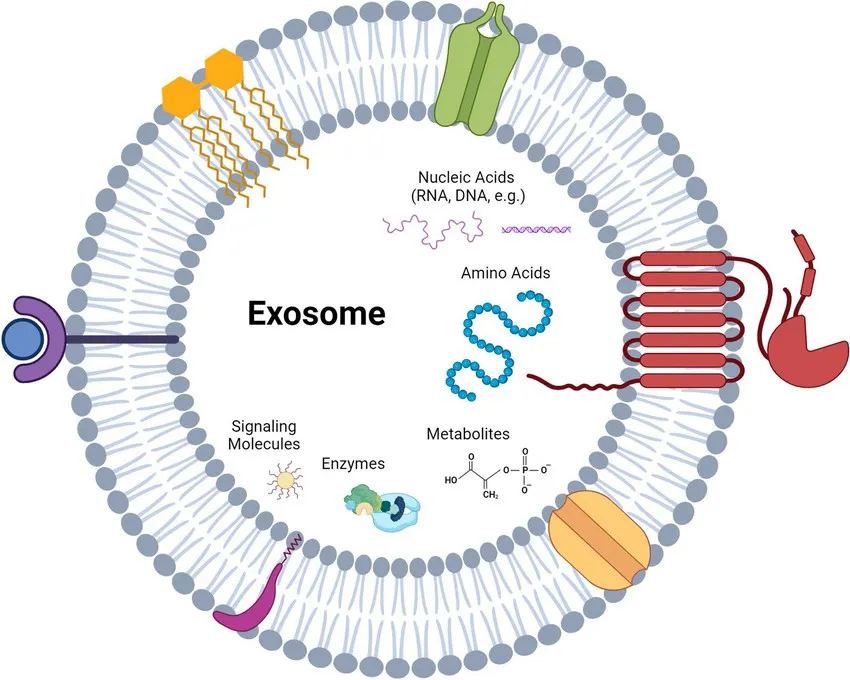
fig. 4: schematic representation of exosome structure and composition
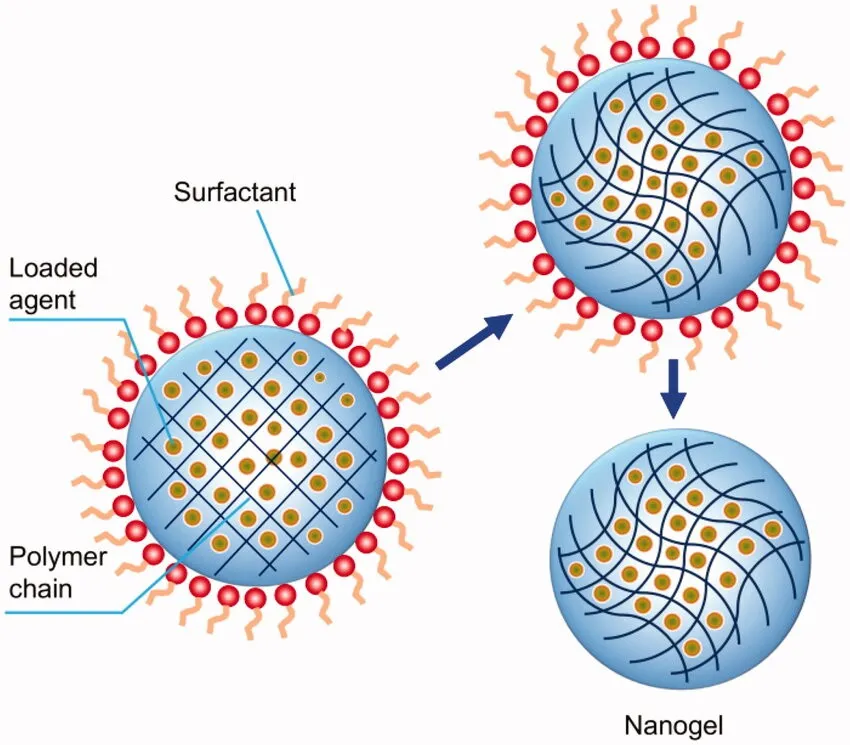
fig. 5: schematic representation of a nanogel-based drug delivery system


Goday Swapna, P. Jyothi, Mungara Manoj, Savitikada Khasimbee, Avala Jyothika, Recent Advances in Nanotherapeutics for Neurological Disorders, Int. J. of Pharm. Sci., 2026, Vol 4, Issue 7, 4867-4875, https://doi.org/10.5281/zenodo.21562630
 10.5281/zenodo.21562630