Trillium govanianum, also referred to as "Nagchhatri," is a significant medicinal herb from the Himalayas that is a member of the Melanthiaceae family. It grows at elevations of 2400–4000 meters in cold, humid, shaded conditions and is found throughout India, Nepal, Bhutan, Pakistan, and China. The rhizomes have historically been used to treat wounds, discomfort, inflammation, gastrointestinal issues, and reproductive problems. Numerous bioactive components have been identified by phytochemical analyses, mainly steroidal saponins (govanoside A, borassoside E, pennogenin, diosgenin), glycosides, terpenoids, tannins, and polyphenols. Numerous pharmacological characteristics, such as antioxidant, anti-inflammatory, analgesic, cytotoxic, and antifertility actions, are attributed to these substances. However, the species is currently endangered in its natural habitat due to slow growth, poor seed set, and unsustainable harvesting for trade. This paper highlights T. govanianum's potential for future pharmaceutical and biotechnological applications while summarizing its botanical, phytochemical, pharmacological, and conservation features...
Trillium govanianum Wall. Ex. D. Don, a herb in the Trilliaceae family, is one of the Himalayan plants with enormous potential in the pharmaceutical business. It is indigenous to the Himalayan region and is called "nagchhatri" in India. It is mostly found in the Himalayan region and often prefers cold, dark, wet environments for its abundant growth. It is found in India, Pakistan, Bhutan, Nepal and China [1-4]. Due to widespread exploitation, the species' population had significantly decreased in their natural habitats [2].With strong therapeutic qualities; Trillium govanianum is a promising medicinal plant. The residents of the research area gather nagchatri rootstock to treat a variety of illnesses, such as wounds, joint discomfort, and gastrointestinal problems [3-6]. They also extract the plant for commercial purposes. The locals did this by uprooting plants before the seeds set. Because the extraction of T. govanianum has significantly improved their financial situation, they found it to be a profitable business. However, as this unethical and illegal behavior could cause the local species to go extinct, it should be rigorously forbidden [2].Endemic to the Himalayas, Trillium govanianum (Melanthiaceae) is a perennial rhizomatous herb found in temperate and subalpine zones at elevations of 2400–3500 meters [4]. Its rhizomes are known to contain a number of rare compounds, including four steroidal saponins (govanoside A, borassoside E, pennogenin, and diosgenin), of which govaniside A is unique to this species [5, 7]. Diosgenin, which is a precursor for the manufacture of numerous steroidal medications and has pharmacological applications for preventing cancer and aging, can also be found in rhizomes [5]. The rhizome's crude methanol extract may be used medicinally to treat inflammation and pain [8]. There are 11 Asian and 38 North American species in the genus Trillium, which is made up of perennial herbaceous plants. Only two species (T. govanianum and T. tschonoskii) are found in the Indian Himalayan region, while Japan has the highest diversity of Trillium species in Asia [4, 9]. The genus contains slow-growing species with lengthy regeneration cycles that take several years (5–15 years) to reach flowering size from seeds. In Trillium, asexual reproduction is rare and they are typically spread by seeds [10].
Habitat
Geographical Location: The Himalayan area, which includes China, India, Pakistan, Bhutan, and Nepal [11].
Environmental conditions i. Wet, cold, and shaded areas
ii. Soils rich in humus.
iii. Prefers subalpine zones, woods, and grasslands [13]
Associated vegetation: It frequently grows beside understory plants like Rhododendron campanulatum and Viburnum grandiflorum, which offer protection and micro-refuges, as well as certain trees like Abies pindrow and Taxus wallichiana [14].
Traditional uses
Used, particularly in traditional Himalayan medicine, as an analgesic and anti-inflammatory for pain and inflammation [15].
Also mentioned in ethnobotanical studies for conditions like rheumatism, sepsis, hypertension, and neurasthenia/giddiness [16].
It is used as an antiseptic/anti-inflammatory agent, for wound healing, and for skin boils [17].
The rhizome is used to treat stomach problems, diarrhea, and dysentery [18].
Used in folk systems to treat sexual and menstrual diseases, such as infertility, sexual debility, and irregular menstruation [19].
Botanical overview
Scientific name: Trillium govanianum [20].
Family: Melanthiaceae (or Trilliaceae) [21].
Morphology
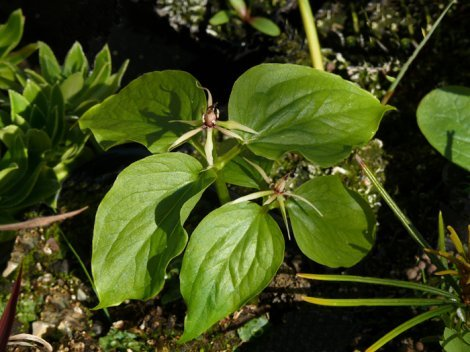
The T. govanianum herb has a center purple brown flower, three leaves in a single whorl at the top of the stem, and a maximum height of 30 cm. There are three sharp, roughly oval leaves with a prominent petiole. Three sepals, three petals, six (three double) stamens, and a three-carpellate ovary make up this plant [22]. This plant flowers from May to July, and from September to October, seeds are set. The red fruit has a globule berry that is 1-2 cm in diameter. The seeds are numerous, oblong, and 2.5 mm long, with a pulpy lateral appendage. The subterranean portion is a robust, tuberous rhizome with many adventitious roots [23]. The rhizome has a rough exterior surface, is 3 to 5 cm in length and 0.8 to 1.5 cm in thickness, and is creeping, somewhat elongated, and grayish to brown in color [24].
Fig.1 Trillium govanianum Fig.2 Rhizomes of Trillium govanianum
Phytochemical constituents
Steroids and Steroidal Saponins: The rhizomes contain large amounts of these important components [25].
Diosgenin: a crucial substance involved in the production of sex hormones, it is obtained by hydrolyzing steroidal saponins such as borassoside E [26].
Glycosides: The plant has been found to contain steroidal glycosides [27].
Fatty Acids: Saturated and unsaturated fatty acids, some of which have demonstrated biological activity against bacterial strains, are present in the plant [28].
Terpenoids: The roots, stems, and leaves have all been shown to contain these secondary metabolites [29].
Tannins and polyphenols: The plant also contains these substances [30].
Ecdysteroids: These phytoecdysteroids can be found in T. govanianum [31].
Reproductive behavior of T.govanianum
Both self-pollination and cross-pollination are acceptable for the plant.
Insects and wind pollinate the flowers when they open in the spring.
Although the flowers don't smell good, they attract pollinators by producing nectar [32].
The pollinators move the sticky pollen from one blossom to another.
The ovary is situated behind the petals and sepals because it is inferior.
The fruit is a berry with one or two seeds inside [33].
Animals like rodents and birds spread the seeds.
Environmental influences are assumed to be the cause of the plant's meiotic aberrations.
The plant is susceptible to inbreeding depression due to its limited seed set, which hinders rapid reproduction [34].
T. govanianum's reproductive activity is complicated and yet little understood. Nonetheless, the study's conclusions offer insightful information about the variables affecting this endangered plant's ability to reproduce. Conservation plans to safeguard the species can be developed using this knowledge [35].
Agro-technology
Shade-tolerant Trillium species prefer moist, well-drained soil with a pH between 5.0 and 6.5. [36].They can be multiplied via division or from seed. Division is frequently the favored technique of propagation because seed germination can be unpredictable and sluggish [37]. It is crucial to thoroughly separate the roots of Trillium plants using a sharp knife or shovel. The plants should be divided in the spring or fall while they are dormant. It is best to put Trillium plants in areas with partial to complete shade. Plant the rhizomes 6–8 inches apart and 2-3 inches deep. A balanced fertilizer can be used to lightly fertilize trillium plants in the spring [38-39]. Growing the plant in pots is an additional way of cultivation. The rhizomes are planted in pots that are filled with an organic matter-rich potting mix. The soil should be kept moist, and the pots should be positioned in a shaded area. After the leaves have perished, T. govanianum is often harvested in the fall. The portions of the plant that are most frequently collected are the leaves and rhizomes. For storage, the rhizomes are excavated and dried [40].
Pharmacological activities of Trillium govanianum
The ability to scavenge free radicals and antioxidants
T. govanianum rhizome extracts shown the ability to scavenge free radicals in DPPH, ABTS assays, and other tests (e.g., FRAP). For instance, compared to other fractions, the n-hexane and chloroform fractions demonstrated comparatively greater free-radical scavenging in one study [41-42].
In vivo analgesic and anti-inflammatory properties were demonstrated by T. govanianum extracts (methanol crude extract and its solvent fractions), such as in carrageenan-induced paw-edema models and chemical and thermal nociception tests in mice [44].
The extracts suppressed the oxidative burst in neutrophils (luminol-enhanced chemiluminescence), a sign of an inflammatory response, in vitro, as did several isolated substances such as pennogenin and borassoside E [45].
Cytotoxic and anticancer properties
T. govanianum rhizome extracts demonstrated cytotoxic and anticancer properties: Chloroform fraction ~0.8 µg/mL, ethyl acetate ~1.4 µg/mL, and butanol ~1.6 µg/mL are examples of IC?? values in µg/mL for HeLa (human cervical carcinoma) and PC-3 (prostate carcinoma) cells, according to a study [46-47].
More recently, two novel steroidal saponins (trilliumosides K & L) were isolated and demonstrated significant cytotoxicity against the cancer cell lines A-549 (lung) and SW-620 (colon) [48].
Estrogenic action and antifertility
The antifertility (anti-implantation) of a hydroalcoholic rhizome extract of T. govanianum was assessed in female Wistar rats at oral doses of 125 mg/kg and 250 mg/kg. 100% blockage of implantation sites was noted at 250 mg/kg. The extract caused endometrial thickening, raised blood estrogen levels, and increased uterine weight. In rats with ovariectomies, the extract also demonstrated potent estrogenic effects [49-50].
The aspect of threat and preservation
Threats
The Himalayan region's wild herbs are being extracted in large quantities due to the growing trade in medicinal plants used in herbal treatments. A number of causes make Trillium govanianum a threatened species [51-52].
Overexploitation
Due to the growing demand for the plant's rhizomes, which are utilized in traditional medicine, overexploitation is the biggest concern. Plant populations diminish as a result of the harvesting of rhizomes from the wild [52].
Climate change
Because it is altering the circumstances in its environment, climate change poses a threat to the plant as well. The plant is acclimated to cold, damp environments, which are becoming less prevalent due to climate change. The plant's range may be reduced as a result, or it may potentially go extinct [51].
Deforestation
Deforestation is destroying the plant's habitat. This is due to the fact that the plant thrives in damp forests and woodlands that are being removed for development and farming [53].
Preservation
Because Trillium Govanianum is a rare and valuable plant, its conservation is crucial. It has a significant role in the Himalayan ecology as well. For the quick and extensive propagation of Trillium Govanianum, both conventional methods (such vegetative propagation by rhizomes) and contemporary in vitro techniques are thought to be necessary [54]
Conservation education and awareness
Promoting sustainable harvesting methods and lowering demand for the plant can be achieved by increasing knowledge of its significance and the dangers it faces. Public awareness campaigns, educational initiatives, and training for traditional healers can all help achieve this [55].
Protected places
The plant's conservation depends on the creation of protected areas where it can flourish unhindered. The risks of overexploitation, habitat loss, and climate change can be mitigated by managing these places [56].
CONCLUSION
Rich in steroidal saponins and other bioactive substances with strong antioxidant, anti-inflammatory, analgesic, anticancer, and antifertility properties, Trillium govanianum is a significant Himalayan medicinal herb. However, overexploitation, habitat degradation, and sluggish recovery are causing its native populations to decline. To save this important species, sustainable methods of harvesting, conservation, and multiplication are desperately needed. Its medicinal use and long-term availability for pharmaceutical development should be improved by more investigation into its phytochemical makeup, pharmacological processes, and cultivation techniques.
REFERENCES
Sharma N,Samant SS. Diversity, distribution and indigenous uses of medicinal plants in parvati valley of Kullu district, Himachal Pradesh. Indian J Tradit Knowl. 2014; 13(2):357-365.
Kala CP. Indigenous uses, population density and conservation of threatened medicinal plants in protected areas of the Indian Himalayas.Conserv Biol.2005; 19(2):368-378.
Negi VS,Maikhuri RK,Vashishtha DP.Traditional healthcare practices among the villagers of Rawain Valley ,Uttarakhand ,India.Indian J Tradit Knowl. 2011; 10(3):533-537.
Plants of the World Online.Royal Botanic Gardens, Kew: Trillium govanianum Wall.ex D.Don; 2023.
Singh B,Sharma RA.Secondarymetabolites of medicinal plant : steroidal saponins from Himalayan flora.Pharmacogn Rev.2015;9(17)1-10.
Thakur M, Asrani RK, Thakur S, et.al. Observations on traditional usage of ethnomedical plants in human and animals of Himachal Pradesh .J Ethnopharmacol. 2016; 191:280-300.
Khan T, Khan IA .Govanoside A: a rare steroidal saponin from Trillium govanianum.Fitoterapia.2018;127:1-7
Bhat ZA, Singh S,Iqbal D. Phytochemistry and pharmacological potential of Trillium govanianum: A review.J Ethnopharmacol.2020;249:112416.
Chauhan NS.Medicinal and aromatic plants of Himachal Pradesh. New Delhi: Indus Publishing Company; 1999.
Samant SS, Dhar U,Palni LMS .Medicinal plants of Indian Himalaya: diversity distribution potential values. Nainital: Gyanodaya Prakashan; 1998.
Sharma P, et al. Review on Trillium govanianum Wall. ex D. Don: A threatened medicinal plant from the Himalaya. J Herbal Med. 2020; 24:100395.
Kalita B, et al. Extended distribution of Trillium govanianum in Arunachal Pradesh. J Threat Taxa. 2024; 16(10):26049–26052.
Kausar Rashid, Sufiya Rashid, Aijaz Hassan Ganie , Irshad A. Nawchoo, Anzar A. Khuroo. Meiotic Studies, Pollen Fertility and Seed Set of Trillium govanianum, an Endangered Endemic Plant Species of the Himalaya, cytologia.2021; 86(3):245-249.
Kausar Rashid, Sufiya Rashid, Tajamul Islam, Aijaz Hassan Ganie, Irshad A Nawchoo, Anzar Ahmad Khuroo. Vegetation and soil ecology of threatened Himalayan Trillium habitats in Kashmir Himalaya. Nordic Journal of Botany 2023 (8), e03925, 2023.
Shafiq Ur Rahman, Achyut Adhikari, Muhammad Ismail, Muhammad Raza Shah, Muhammad Khurram, Muhammad Shahid, Farman Ali, Abdul Haseeb, Fazal Akbar, Marcello.Beneficial Effects of Trillium govanianum Rhizomes in Pain and Inflammation. 2016 Aug 20; 21(8):1095. doi: 10.3390/molecules21081095.
Harsh K Chauhan, Anil K Bisht, Indra D Bhatt, Arvind Bhatt, David Gallacher, Andrea Santo. Population change of Trillium govanianum (Melanthiaceae) amid altered indigenous harvesting practices in the Indian Himalayas. J Ethnopharmacol. 2018 Mar 1:213:302-310. doi: 10.1016/j.jep.2017.11.003. Epub 2017 Nov 4.
Dr. Dinesh Kumar Sharma. Review on traditional medicinal plant: Trillium govanianum (Nag Chhatri), Journal of Medicinal Plants Studies 2017; 5(2): 120-122.
Leena Thakur , Pardeep Kumar . Genetic diversity, biodiversity, status and potential of Trillium govanianum wall. Ex D Don.2021; 6(4); 941-945.
Sharma S, Mehta V, Sharma P, Jaggi K, Udayabanu M, Sood H. Antifertility activity and contraceptive potential of the hydroalcoholic rhizome extract of Trillium govanianum in female wistar rats. Asian Journal of Pharmceutical and Clinical Research 2018 Nov; 11(11):329-332.
Rathore S, Walia S, Devi R, Kumar R. Review on Trillium govanianum Wall. ex D. Don: A threatened medicinal plant from the Himalaya. Journal of Herbal Medicine. 2020 Dec 1; 24:100395.
Sharma OR, Arya D, Goel S, Vyas K, Shinde P. Trillium govanianum Wall. ex D. Don (Nagchatri): an important ethnomedicinal plant of Himalayan region (Himachal Pradesh). J. Med. Plants Stud. 2018; 6(1):11-3.
Sharma P, Thakur M, Dixit VK. Trillium govanianum Wall. ex D. Don: A review on its phytochemistry and pharmacological activities. J Ethnopharmacol. 2018; 220:255–267.
Kumar P, Kumar A, Singh B. Pharmacognostic and phytochemical evaluation of Trillium govanianum rhizome. J Pharmacogn Phytochem. 2017; 6(5):1234–1238.
Chauhan NS, et al. Morpho-anatomical and phytochemical studies on Trillium govanianum a threatened medicinal plant of the Himalaya. Nat Prod Res. 2020; 34(12):1745–1750.
Sood H, Chauhan RS. Biosynthesis and accumulation of steroidal saponins in Trillium govanianum. Plant Cell Tissue Organ Cult. 2018; 135(3):425–433.
Singh B, Sharma RA, Thakur GS. Isolation and characterization of steroidal saponins from Trillium govanianum. Fitoterapia. 2019; 134:206–212.
Rahman IU, Afzal A, Iqbal Z. Ethnopharmacological and phytochemical review of Himalayan medicinal flora with reference to Trillium govanianum. Biomed Pharmacother. 2021; 134:111168.
Khan T, Ganie MA, Ganai BA. Phytochemical screening and antioxidant potential of Trillium govanianum. BMC Complement Med Ther. 2020; 20:1–10.
Malik ZA, Bhat JA, Mir SR. Isolation of phytoecdysteroids from Trillium govanianum and evaluation of their biological activity. Steroids. 2021; 168:108798.
Ahmad M, et al. Fatty acid composition and antimicrobial activity of medicinal plants including Trillium govanianum. J Appl Biol Biotechnol. 2019; 7(4):45–50.
Gupta D, et al. Phytochemical profiling of Trillium govanianum and evaluation of its pharmacological properties. J Tradit Complement Med. 2022; 12(3):215–222.
Dar GH, Khuroo AA. Reproductive biology and pollination ecology of endangered Himalayan plants including Trillium govanianum. Plant Species Biol. 2013; 28(2):85–92.
Khuroo AA, Malik AH, Dar GH. Population structure and reproductive performance of Trillium govanianum in the Kashmir Himalaya. Biodivers Conserv. 2015;24(9):2115–2128.
Rana MS, Samant SS. Diversity, indigenous uses and conservation status of medicinal plants in the Himalaya with special reference to Trillium govanianum. J Mt Sci. 2011;8(4):606–617.
Pant S, Samant SS. Reproductive traits and seed ecology of threatened medicinal plants of the Indian Himalaya. Plant Biosyst. 2010; 144(2):404–412.
Kumar, P., Singh, K., Lone, J. F., Bhushan, A., Gupta, P., & Gairola, S. Morphoanatomical, Molecular, and Chemical Standardization of Trillium govanianum Wall. ex D. Don: An Endangered Medicinal Herb Native to the Himalayas. Pharmacognosy Magazine, 2023; 19(1): 128-143.
Rathore, S., Walia, S., Devi, R., & Kumar, R. Review on Trillium govanianum Wall. ex D. Don: A threatened medicinal plant from the Himalaya. Journal of Herbal Medicine, 2020; 24: 100395.
Hanson, B. Spring-blooming Bulbs: An A to Z Guide to Classic and Unusual Bulbs for Your Spring Garden, 2002; 173: Brooklyn Botanic Garden.
Rooney, T. P., & Waller, D. M. (2001). How experimental defoliation and leaf height affect growth and reproduction in Trillium grandiflorum. Journal of the Torrey Botanical Society, 393-399.
Chandola, V., Nautiyal, A. R., Chandra, S., & Ranjan, R. A review on prioritizing conservation of Himalayan medicinal plant species: Case of Trillium govanianum (Wall. ex D. Don) kunth. Journal of Medicinal Plants, 2019; 7(5): 23-27
Bhat IA, et al. Evaluation of antioxidant and free radical scavenging activity of different extracts of Trillium govanianum. Int J Pharm Sci Res. 2016; 7(9):3800–3806.
Mir AH, et al. Comparative analysis of antioxidant potential of various solvent fractions of Trillium govanianum rhizomes. Pharmacogn J. 2018; 10(5):1001–1007.
Rawat S, Nautiyal BP, Nautiyal MC. Influence of altitudinal variation on antioxidant activity and phytochemical constituents of Himalayan medicinal plants including Trillium govanianum. Acta Physiol Plant. 2015; 37:1–10.
Ahmad S, et al. Evaluation of analgesic and anti-inflammatory activities of Trillium govanianum rhizome extracts in experimental animal models. J Ethnopharmacol. 2017; 198:107–114.
Ganie SA, Haq E, Hamid A. Anti-inflammatory and immunomodulatory activities of Trillium govanianum in vitro and in vivo. Immunopharmacol Immunotoxicol. 2019; 41(3):357–364.
Wani ZA, et al. Cytotoxic potential of different solvent extracts of Trillium govanianum against human cancer cell lines. J Appl Biomed. 2016; 14(3):219–225.
Ali A, et al. Anticancer activity of steroidal saponins isolated from Trillium govanianum. Bioorg Chem. 2021; 110:104789.
Zhang Y, et al. Trilliumosides K and L: New steroidal saponins from Trillium govanianum with cytotoxic activity. Phytochemistry. 2022; 196:113080.
Sharma N, et al. Evaluation of antifertility activity of Trillium govanianum rhizome extract in female Wistar rats. Asian J Pharm Clin Res. 2016; 9(6):102–106.
Gupta RS, Sharma R. Estrogenic and anti-implantation activity of medicinal plants: study on Trillium govanianum. Indian J Exp Biol. 2018; 56(4):270–276.
Rather, Z. A., Ahmad, R., & Khuroo, A. A. Ensemble modelling enables identification of suitable sites for habitat restoration of threatened biodiversity under climate change: A case study of Himalayan Trillium. Ecological Engineering, 2022; 176: 106534.
Shivali, V., & Namrata, S. Threat status of three important medicinal Himalayan plant species and conservation implications. Nature Conservation Research. ?????????? ?????, 2022; 7(1): 27-41.
Joshi, P., Prakash, P., & Purohit, V. K. Assessing anthropogenic pressure and threats on Paeonia emodi Wall. ex Royle habitats in Garhwal Himalaya. Journal of Mountain Science, 2023; 20(3): 810-820.
Chauhan, H. K., Bhatt, I. D., & Bisht, A. K. Biology, uses and conservation of Trillium govanianum. Socio-economic and Eco-biological Dimensions in Resource use and Conservation: Strategies for Sustainability, 2020; 235-247.
Sofi, I. I., Verma, S., Charles, B., Ganie, A. H., Sharma, N., & Shah, M. A. Predicting distribution and range dynamics of Trillium govanianum under climate change and growing human footprint for targeted conservation. Plant Ecology, 2022; 1-17.
Thapa, S., Kunwar, R. M., Adhikari, B., Paudel, H. R., & Subedi, S. Trillium govanianum (Himalayan Trillium): production, distribution, use and conservation in Nepal. Nordic Journal of Botany, 2021; 39(12).
Reference
Sharma N,Samant SS. Diversity, distribution and indigenous uses of medicinal plants in parvati valley of Kullu district, Himachal Pradesh. Indian J Tradit Knowl. 2014; 13(2):357-365.
Kala CP. Indigenous uses, population density and conservation of threatened medicinal plants in protected areas of the Indian Himalayas.Conserv Biol.2005; 19(2):368-378.
Negi VS,Maikhuri RK,Vashishtha DP.Traditional healthcare practices among the villagers of Rawain Valley ,Uttarakhand ,India.Indian J Tradit Knowl. 2011; 10(3):533-537.
Plants of the World Online.Royal Botanic Gardens, Kew: Trillium govanianum Wall.ex D.Don; 2023.
Singh B,Sharma RA.Secondarymetabolites of medicinal plant : steroidal saponins from Himalayan flora.Pharmacogn Rev.2015;9(17)1-10.
Thakur M, Asrani RK, Thakur S, et.al. Observations on traditional usage of ethnomedical plants in human and animals of Himachal Pradesh .J Ethnopharmacol. 2016; 191:280-300.
Khan T, Khan IA .Govanoside A: a rare steroidal saponin from Trillium govanianum.Fitoterapia.2018;127:1-7
Bhat ZA, Singh S,Iqbal D. Phytochemistry and pharmacological potential of Trillium govanianum: A review.J Ethnopharmacol.2020;249:112416.
Chauhan NS.Medicinal and aromatic plants of Himachal Pradesh. New Delhi: Indus Publishing Company; 1999.
Samant SS, Dhar U,Palni LMS .Medicinal plants of Indian Himalaya: diversity distribution potential values. Nainital: Gyanodaya Prakashan; 1998.
Sharma P, et al. Review on Trillium govanianum Wall. ex D. Don: A threatened medicinal plant from the Himalaya. J Herbal Med. 2020; 24:100395.
Kalita B, et al. Extended distribution of Trillium govanianum in Arunachal Pradesh. J Threat Taxa. 2024; 16(10):26049–26052.
Kausar Rashid, Sufiya Rashid, Aijaz Hassan Ganie , Irshad A. Nawchoo, Anzar A. Khuroo. Meiotic Studies, Pollen Fertility and Seed Set of Trillium govanianum, an Endangered Endemic Plant Species of the Himalaya, cytologia.2021; 86(3):245-249.
Kausar Rashid, Sufiya Rashid, Tajamul Islam, Aijaz Hassan Ganie, Irshad A Nawchoo, Anzar Ahmad Khuroo. Vegetation and soil ecology of threatened Himalayan Trillium habitats in Kashmir Himalaya. Nordic Journal of Botany 2023 (8), e03925, 2023.
Shafiq Ur Rahman, Achyut Adhikari, Muhammad Ismail, Muhammad Raza Shah, Muhammad Khurram, Muhammad Shahid, Farman Ali, Abdul Haseeb, Fazal Akbar, Marcello.Beneficial Effects of Trillium govanianum Rhizomes in Pain and Inflammation. 2016 Aug 20; 21(8):1095. doi: 10.3390/molecules21081095.
Harsh K Chauhan, Anil K Bisht, Indra D Bhatt, Arvind Bhatt, David Gallacher, Andrea Santo. Population change of Trillium govanianum (Melanthiaceae) amid altered indigenous harvesting practices in the Indian Himalayas. J Ethnopharmacol. 2018 Mar 1:213:302-310. doi: 10.1016/j.jep.2017.11.003. Epub 2017 Nov 4.
Dr. Dinesh Kumar Sharma. Review on traditional medicinal plant: Trillium govanianum (Nag Chhatri), Journal of Medicinal Plants Studies 2017; 5(2): 120-122.
Leena Thakur , Pardeep Kumar . Genetic diversity, biodiversity, status and potential of Trillium govanianum wall. Ex D Don.2021; 6(4); 941-945.
Sharma S, Mehta V, Sharma P, Jaggi K, Udayabanu M, Sood H. Antifertility activity and contraceptive potential of the hydroalcoholic rhizome extract of Trillium govanianum in female wistar rats. Asian Journal of Pharmceutical and Clinical Research 2018 Nov; 11(11):329-332.
Rathore S, Walia S, Devi R, Kumar R. Review on Trillium govanianum Wall. ex D. Don: A threatened medicinal plant from the Himalaya. Journal of Herbal Medicine. 2020 Dec 1; 24:100395.
Sharma OR, Arya D, Goel S, Vyas K, Shinde P. Trillium govanianum Wall. ex D. Don (Nagchatri): an important ethnomedicinal plant of Himalayan region (Himachal Pradesh). J. Med. Plants Stud. 2018; 6(1):11-3.
Sharma P, Thakur M, Dixit VK. Trillium govanianum Wall. ex D. Don: A review on its phytochemistry and pharmacological activities. J Ethnopharmacol. 2018; 220:255–267.
Kumar P, Kumar A, Singh B. Pharmacognostic and phytochemical evaluation of Trillium govanianum rhizome. J Pharmacogn Phytochem. 2017; 6(5):1234–1238.
Chauhan NS, et al. Morpho-anatomical and phytochemical studies on Trillium govanianum a threatened medicinal plant of the Himalaya. Nat Prod Res. 2020; 34(12):1745–1750.
Sood H, Chauhan RS. Biosynthesis and accumulation of steroidal saponins in Trillium govanianum. Plant Cell Tissue Organ Cult. 2018; 135(3):425–433.
Singh B, Sharma RA, Thakur GS. Isolation and characterization of steroidal saponins from Trillium govanianum. Fitoterapia. 2019; 134:206–212.
Rahman IU, Afzal A, Iqbal Z. Ethnopharmacological and phytochemical review of Himalayan medicinal flora with reference to Trillium govanianum. Biomed Pharmacother. 2021; 134:111168.
Khan T, Ganie MA, Ganai BA. Phytochemical screening and antioxidant potential of Trillium govanianum. BMC Complement Med Ther. 2020; 20:1–10.
Malik ZA, Bhat JA, Mir SR. Isolation of phytoecdysteroids from Trillium govanianum and evaluation of their biological activity. Steroids. 2021; 168:108798.
Ahmad M, et al. Fatty acid composition and antimicrobial activity of medicinal plants including Trillium govanianum. J Appl Biol Biotechnol. 2019; 7(4):45–50.
Gupta D, et al. Phytochemical profiling of Trillium govanianum and evaluation of its pharmacological properties. J Tradit Complement Med. 2022; 12(3):215–222.
Dar GH, Khuroo AA. Reproductive biology and pollination ecology of endangered Himalayan plants including Trillium govanianum. Plant Species Biol. 2013; 28(2):85–92.
Khuroo AA, Malik AH, Dar GH. Population structure and reproductive performance of Trillium govanianum in the Kashmir Himalaya. Biodivers Conserv. 2015;24(9):2115–2128.
Rana MS, Samant SS. Diversity, indigenous uses and conservation status of medicinal plants in the Himalaya with special reference to Trillium govanianum. J Mt Sci. 2011;8(4):606–617.
Pant S, Samant SS. Reproductive traits and seed ecology of threatened medicinal plants of the Indian Himalaya. Plant Biosyst. 2010; 144(2):404–412.
Kumar, P., Singh, K., Lone, J. F., Bhushan, A., Gupta, P., & Gairola, S. Morphoanatomical, Molecular, and Chemical Standardization of Trillium govanianum Wall. ex D. Don: An Endangered Medicinal Herb Native to the Himalayas. Pharmacognosy Magazine, 2023; 19(1): 128-143.
Rathore, S., Walia, S., Devi, R., & Kumar, R. Review on Trillium govanianum Wall. ex D. Don: A threatened medicinal plant from the Himalaya. Journal of Herbal Medicine, 2020; 24: 100395.
Hanson, B. Spring-blooming Bulbs: An A to Z Guide to Classic and Unusual Bulbs for Your Spring Garden, 2002; 173: Brooklyn Botanic Garden.
Rooney, T. P., & Waller, D. M. (2001). How experimental defoliation and leaf height affect growth and reproduction in Trillium grandiflorum. Journal of the Torrey Botanical Society, 393-399.
Chandola, V., Nautiyal, A. R., Chandra, S., & Ranjan, R. A review on prioritizing conservation of Himalayan medicinal plant species: Case of Trillium govanianum (Wall. ex D. Don) kunth. Journal of Medicinal Plants, 2019; 7(5): 23-27
Bhat IA, et al. Evaluation of antioxidant and free radical scavenging activity of different extracts of Trillium govanianum. Int J Pharm Sci Res. 2016; 7(9):3800–3806.
Mir AH, et al. Comparative analysis of antioxidant potential of various solvent fractions of Trillium govanianum rhizomes. Pharmacogn J. 2018; 10(5):1001–1007.
Rawat S, Nautiyal BP, Nautiyal MC. Influence of altitudinal variation on antioxidant activity and phytochemical constituents of Himalayan medicinal plants including Trillium govanianum. Acta Physiol Plant. 2015; 37:1–10.
Ahmad S, et al. Evaluation of analgesic and anti-inflammatory activities of Trillium govanianum rhizome extracts in experimental animal models. J Ethnopharmacol. 2017; 198:107–114.
Ganie SA, Haq E, Hamid A. Anti-inflammatory and immunomodulatory activities of Trillium govanianum in vitro and in vivo. Immunopharmacol Immunotoxicol. 2019; 41(3):357–364.
Wani ZA, et al. Cytotoxic potential of different solvent extracts of Trillium govanianum against human cancer cell lines. J Appl Biomed. 2016; 14(3):219–225.
Ali A, et al. Anticancer activity of steroidal saponins isolated from Trillium govanianum. Bioorg Chem. 2021; 110:104789.
Zhang Y, et al. Trilliumosides K and L: New steroidal saponins from Trillium govanianum with cytotoxic activity. Phytochemistry. 2022; 196:113080.
Sharma N, et al. Evaluation of antifertility activity of Trillium govanianum rhizome extract in female Wistar rats. Asian J Pharm Clin Res. 2016; 9(6):102–106.
Gupta RS, Sharma R. Estrogenic and anti-implantation activity of medicinal plants: study on Trillium govanianum. Indian J Exp Biol. 2018; 56(4):270–276.
Rather, Z. A., Ahmad, R., & Khuroo, A. A. Ensemble modelling enables identification of suitable sites for habitat restoration of threatened biodiversity under climate change: A case study of Himalayan Trillium. Ecological Engineering, 2022; 176: 106534.
Shivali, V., & Namrata, S. Threat status of three important medicinal Himalayan plant species and conservation implications. Nature Conservation Research. ?????????? ?????, 2022; 7(1): 27-41.
Joshi, P., Prakash, P., & Purohit, V. K. Assessing anthropogenic pressure and threats on Paeonia emodi Wall. ex Royle habitats in Garhwal Himalaya. Journal of Mountain Science, 2023; 20(3): 810-820.
Chauhan, H. K., Bhatt, I. D., & Bisht, A. K. Biology, uses and conservation of Trillium govanianum. Socio-economic and Eco-biological Dimensions in Resource use and Conservation: Strategies for Sustainability, 2020; 235-247.
Sofi, I. I., Verma, S., Charles, B., Ganie, A. H., Sharma, N., & Shah, M. A. Predicting distribution and range dynamics of Trillium govanianum under climate change and growing human footprint for targeted conservation. Plant Ecology, 2022; 1-17.
Thapa, S., Kunwar, R. M., Adhikari, B., Paudel, H. R., & Subedi, S. Trillium govanianum (Himalayan Trillium): production, distribution, use and conservation in Nepal. Nordic Journal of Botany, 2021; 39(12).
Payal Dogra
Corresponding author
Research scholar ,Department of Pharmacy,Abhilashi university,Chailchowk,Mandi,(H.P)
Dr. Chinu Kumari
Co-author
School of Pharmacy, Department of Pharmacy, Abhilashi University Chail Chowk, Mandi (H.P).
Dr. Abhishek Soni
Co-author
School of Pharmacy, Department of Pharmacy, Abhilashi University Chail Chowk, Mandi (H.P).
Rahul Awasthi
Co-author
School of Pharmacy, Department of Pharmacy, Abhilashi University Chail Chowk, Mandi (H.P).
Dr. Chinu Kumari, Payal Dogra, Dr. Abhishek Soni, Rahul Awasthi, Review Article on Traditional Pharmacognostic and Pharmacological Activities of Different Parts of Trillium Govanianum, Int. J. of Pharm. Sci., 2026, Vol 4, Issue 5, 2685-2693, https://doi.org/10.5281/zenodo.20132392





 10.5281/zenodo.20132392