

We use cookies to ensure our website works properly and to personalise your experience. Cookies policy
Srinath College Of Pharmacy.
Nanotechnology has emerged as one of the most influential scientific advancements of the 21st century, enabling precise manipulation of materials at the nanoscale. Nanoparticles, ranging from 1 to 100 nm, exhibit unique physicochemical and biological properties that make them valuable in diverse scientific and industrial domains. This review provides an overview of the classification, synthesis methods, and applications of nanoparticles. It discusses organic, inorganic, carbon-based, polymeric, and green nanoparticles, highlighting their synthesis through both top-down and bottom-up approaches. Furthermore, the article explores the major biomedical and technological applications, including drug delivery, cancer therapy, antimicrobial treatments, imaging, catalysis, and environmental remediation. The advantages and limitations of nanoparticles are summarized, along with examples of nanoparticle-based drug formulations that have improved therapeutic efficacy and reduced toxicity. Overall, this review emphasizes the potential of nanotechnology in advancing modern medicine, materials science, and sustainable development
Nanotechnology has emerged as one of the most transformative scientific disciplines of the twenty-first century, providing innovative tools to manipulate and control matter at the atomic and molecular scale. It focuses on materials within the size range of 1–100 nanometers, where quantum and surface effects give rise to unique physical, chemical, and biological properties1. The rapid advancement of nanoscience has been driven by developments in surface physics, material chemistry, and miniaturization technologies, which have enabled precise synthesis and functionalization of nanomaterials. Various fabrication techniques, such as chemical vapor deposition, laser ablation, and microemulsion methods, have been widely used to produce nanoparticles with controlled size and morphology2Additionally, biological and green synthesis methods employing plant extracts and microorganisms have offered eco-friendly and cost-effective alternatives for nanoparticle production3.
Nanoparticles such as gold, silver, zinc oxide, and carbon-based materials exhibit exceptional optical, electrical, and mechanical properties that differ significantly from their bulk counterparts4.These properties make them highly valuable in various fields, including drug delivery, diagnostics, catalysis, energy storage, and environmental applications. As a result, nanotechnology has become a cornerstone of modern scientific research, bridging the gap between fundamental science and practical applications in medicine, energy, and industry.
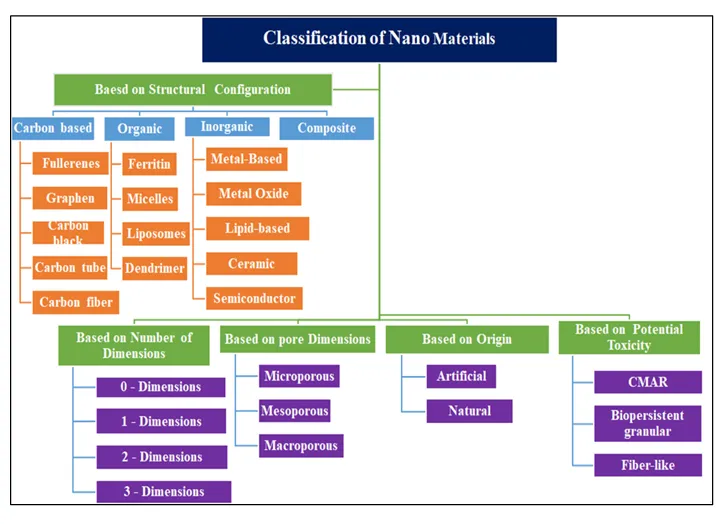
Figure no 1 classification of nanoparticles5
Organic nanoparticles are solid patches with a periphery between 10 nm and 1 μm that are made of organic substances like lipids or polymers 6. Certain organic nanoparticles, similar to liposomes and micelles, contain a concave sphere and aren't dangerous or biodegradable. It's also apprehensive of the term for light- and heat-sensitive nano capsules7. For drug delivery, it is preferable for experimenters to employ organic-grounded NPs due to their unique features. These substances are effective and implicit intercessors for the delivery of a medicine's active factors due to their stability, medicine-carrying capacity, and capacity to adsorb or entrap certain medicines8.
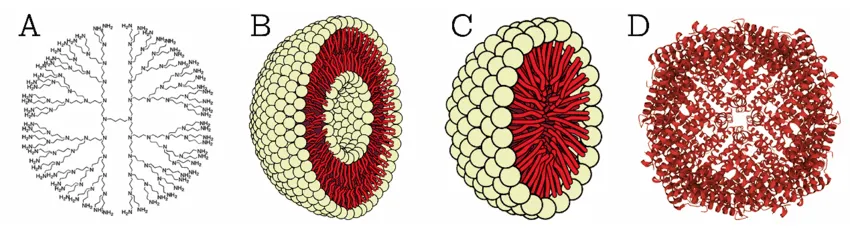
A) Dendrimers B) Liposomes C) Micelles D) Ferritin
Figure 2 types of organic nanoparticles9
Inorganic nanoparticles can be broadly classified based on their composition, structure, and origin. The most widely studied categories include metal nanoparticles, metal oxide nanoparticles, carbon-based nanomaterials, polymeric nanoparticles, and green/biogenic nanoparticles. Each type possesses distinctive physicochemical properties that influence its applications in medicine, engineering, and material science.
Metal nanoparticles such as gold (Au), silver (Ag), copper (Cu), and platinum (Pt) are extensively studied due to their optical, catalytic, and antimicrobial properties.
Gold nanoparticles (AuNPs): These are synthesized through chemical reduction or biological methods10. The demonstrated intracellular synthesis of gold nanoparticles using alkalotolerant actinomycete species. Gold nanoparticles are widely used in imaging, radio sensitization, and drug targeting11.
Green and biological synthesis techniques, including the use of Lantana camara leaf extract and marine Streptomyces species, have shown promise in producing stable silver nanoparticles with antimicrobial and antiviral capabilities12.
Copper nanoparticles (CuNPs): These are used in electronics and catalysis. demonstrated size-controlled deposition of Cu nanoclusters using ultra-high vacuum sputtering and gas aggregation techniques13.
Platinum nanoparticles (PtNPs): These particles are used as catalysts in renewable energy and fuel cell applications. Pt nanoparticles described embedded on carbon nitride composites for fuel oxidation14.
Metal oxide nanoparticles, such as zinc oxide (ZnO), titanium dioxide (TiO₂), and iron oxide (Fe₃O₄), are valued for their stability, photocatalytic activity, and biomedical relevance.
ZnO nanoparticles: ZnO NPs are frequently used in cancer therapy, drug delivery, biosensing, and electronics. highlighted their applications in cancer diagnosis and treatment4.
ZnO-doped polymer thin films:The synthesized ZnO NP-based PMMA-coated films with UV curing, demonstrating their utility in optical data storage.10
Carbon-Based Nanomaterials: Carbon nanostructures include graphene, carbon nanotubes (CNTs), fullerenes, and carbon nanofibers.
Graphene: High-quality single-layer graphene can be produced through chemical vapor deposition (CVD). reviewed its synthesis and potential in electronics and composite materials15.
Carbon nanotubes (CNTs): Arc discharge and plasma techniques have been utilized to synthesize branched or nano-channeled CNTs from waste precursors, demonstrating cost-effective methods for large-scale production. Fullerenes critically examined their characterization and environmental implications16.
Polymeric and Composite Nanoparticles
In both industrial and biomedical applications, polymer-based nanoparticles and hybrid composites have become more significant.
Functional coatings for optical and storage devices are made possible by thin films that combine nanoparticles and polymers, such as PMMA with ZnO10.
Composites of carbon and polymers: Fuel cell electrocatalytic performance is enhanced by carbon nitride composites decorated with platinum14.
Biogenic and Green Nanoparticles
Eco-friendly or biologically synthesized nanoparticles use plant extracts, bacteria, fungi, and algae.
Plant-mediated AgNPs: Extracts of Lantana camara promote the green synthesis of silver nanoparticles with minimal toxic…
Microbial synthesis: Actinomycetes and Streptomyces strains have demonstrated efficient intracellular and extracellular production of metallic nanoparticles12.
Top-Down vs. Bottom-Up Approaches
Nanoparticle synthesis methods fall into two core strategies:
Top-down methods: Techniques like laser ablation, mechanical milling, sputtering and arc discharge reduce bulk materials into nanoscale structures17.
Microemulsions, sol-gel processes, vapor deposition, and green synthesis assemble nanoparticles from molecular precursors15.
Carbon nanostructures include graphene, carbon nanotubes (CNTs), fullerenes, and carbon nanofibers.
Graphene: High-quality single-layer graphene can be produced through chemical vapor deposition (CVD),its synthesis and potential in electronics and composite materials15.
Arc discharge and plasma techniques have been utilized to synthesize branched or nano-channel CNTs from waste precursors, demonstrating cost-effective methods for large-scale production 18
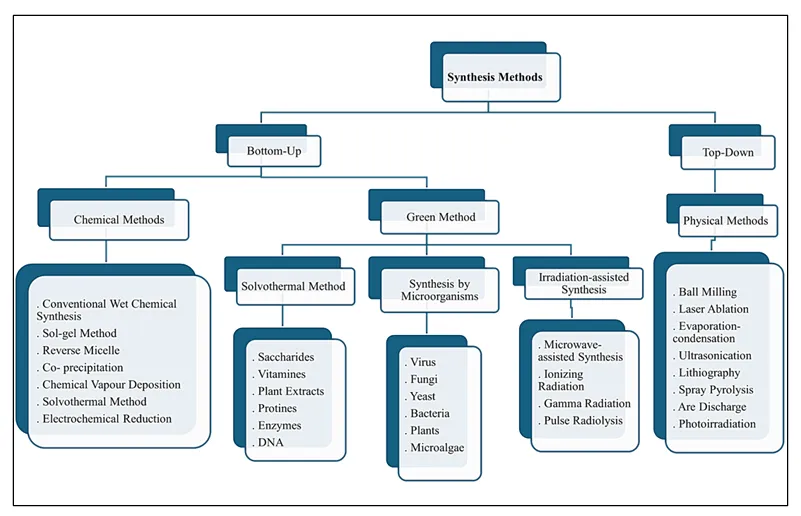
figure 3 Classification of synthesis method physical, chemical, and green synthesis5
The destructive process, occasionally appertained to as the top-down system, breaks down bulk accoutrements into bitsy factors that ultimately come nanomaterials. exemplifications of the top-down approach include lithography, thermal corruption bow discharge, ray ablation, sputtering, electron explosion, and mechanical or ball milling19.
The bottom-up or formative approach is the method used to structure material from tittles to clusters to nanoparticles. Sol-gel, spinning, chemical vapour deposit (CVD), pyrolysis, and biosynthesis are the most widely used bottom-up methods for creating nanoparticles 20. During the bottom-up construction process, nanostructures are made flyspeck by flyspeck or snippet by snippet. This can be accomplished through the development of capitals after a high position of supersaturation. By considering these two methods, colorful scientists have reported a variety of physical and chemical methods21.
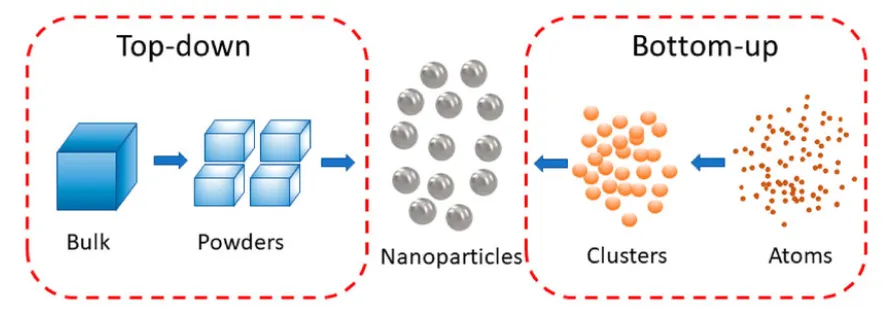
Figure 7 Schematic illustrating the top-down and bottom-up methods for nanoparticle preparation5
Advantages and Disadvantages of Nanoparticles
Disadvantages of Nanoparticles
Nanoparticles exhibit unique chemical, physical, and biological properties that enable their use across multiple scientific, medical, environmental, and industrial fields. Their customizable size, surface functionality, and biocompatibility make them particularly valuable in drug delivery, diagnostics, imaging, cancer therapy, and antimicrobial treatments.
Drug Delivery and Targeted Therapy
One of the most impactful applications of nanoparticles is in site-specific and controlled drug delivery. Due to their nanoscale size and modifiable surface chemistry, they can encapsulate, adsorb, or conjugate with therapeutic molecules, enabling targeted release.
Gold nanoparticles (AuNPs): Gold nanoparticles facilitate drug transport due to their stability and compatibility. Abdulle explored their role in radiosensitization during radiotherapy11.
Zinc Oxide nanoparticles (Zno NPs): Their use in cancer drug delivery, cellular imaging, and theranostics. Zinc oxide NPs can be functionalized with ligands to deliver drugs precisely to tumor cells4.
Polymer-coated nanostructures: Ahmad demonstrated nanoparticle-coated polymer films, which can be adapted for controlled drug release or biosensing platforms2.
Cancer Diagnosis and Radiotherapy Enhancement
Nanoparticles are widely used in oncology for diagnostic imaging and radiation enhancement.
Abdulle and Chow showed that AuNPs improve contrast during portal imaging and enhance therapeutic dose absorption in nanoparticle-assisted radiotherapy11.
Anjum emphasized the role of ZnO NPs in imaging, cytotoxic cancer therapy, and drug-tumor targeting4.
Antimicrobial and Antipathogenic Activity
Many nanoparticles exhibit inherent antibacterial, antifungal, and antiviral properties.
Green-synthesized AgNPs from Lantana camara leaf extract display strong antimicrobial action against pathogenic bacteria further confirmed antimicrobial activity of Ag nanomaterials derived from marine Streptomyces3,12.
Biogenic gold nanoparticles also demonstrate antimicrobial and biofilm-disrupting capabilities10.
Biomedical Imaging and Diagnostics
Nanoparticles are integrated into imaging systems due to their optical and magnetic properties.
Gold and metal nanoparticles: Their high electron density and surface plasmon resonance enable their use in photoacoustic imaging, CT scanning, and fluorescence-based systems.11
Polymer-nanoparticle films: Ahmad suggested that ZnO-based polymer coatings may be adapted for biosensor diagnostics and optical detection systems10.
Optical and Data Storage Application
Nanostructures offer enhanced performance in photonics and optoelectronics. developed UV-cured polymer coatings containing zinc oxide nanoparticles for optical data storage.
Graphene and carbon nanotubes have been incorporated into electronic devices and sensors due to their high conductivity and structural strength 15.
Nanoparticles are vital in improving fuel cell efficiency, catalysis, and energy conversion systems. Pt nanoparticles in graphene-based composites for catalytic oxidation in fuel cell technology.
Carbon nanotubes (CNTs): Arc discharge–synthesized CNTs from waste PET show potential in electrodes and clean energy devices14.
Environmental and Industrial Uses
Nanomaterials are being used more and more in waste treatment, coatings, filtration, and sensing. The Metal oxide nanoparticles, such as ZnO and TiO₂, are used in photocatalysis and breaking down pollutants4.
Carbon nanotube filters create nanochannels for cleaning water and improving the environment4.
Role in Biosensors and Diagnostics
Functionalized nanoparticles improve the sensitivity and specificity of biosensors. Metal and metal oxide nanoparticles boost signal detection and biochemical interaction in diagnostic systems. Biogenic nanoparticles are low in toxicity, making them suitable for point-of-care testing and lab-on-chip devices22
|
Sr.No |
Drug |
Formulation / Brand |
Indication |
Key Advantages |
NP System Type |
Reference |
|
|
Doxorubicin |
Doxil® (PEGylated liposomal doxorubicin) |
Various cancers |
Reduced cardiotoxicity; prolonged circulation; increased tumour accumulation (EPR) |
PEGylated Liposomes |
23 |
|
|
Paclitaxel |
Abraxane® (albumin bound paclitaxel) |
Breast, lung, pancreatic cancers |
Avoids Cremophor toxicity; improved tumour delivery; higher tolerated dose |
Albumin bound NPs (~130 nm) |
24 |
|
|
Cisplatin |
Liposomal / polymeric cisplatin |
Various solid tumours |
Reduced systemic toxicity; improved tumour targeting; controlled release |
Liposomal / Polymeric NPs |
25 |
|
|
Curcumin |
Various nano formulations |
Inflammatory & cancer research |
Enhanced solubility and bioavailability; improved delivery |
Polymeric / Lipid NPs |
26 |
|
|
Insulin |
Research PLGA/chitosan NPs (oral/nasal) |
Diabetes mellitus |
Non invasive ; protection from GI degradation; improved compliance |
Polymeric (PLGA, Chitosan) |
27 |
|
|
Amphoteric B |
AmBisome® (liposomal amphotericin B) |
Systemic fungal infections |
Reduced nephrotoxici ty; improved safety |
Liposomal |
28 |
|
|
siRNA (Patisiran) |
Onpattro® (LNP-siRNA) |
hATTR amyloidosis |
Systemic siRNA delivery; targeted hepatic uptake; proof of LNP efficacy |
Lipid Nano particles |
29 |
|
|
Docetaxel |
Docetaxel nanocarriers |
Breast, lung, prostate cancers |
Reduced surfactant toxicity; improved tumour accumulation |
Polymeric / Lipid / Albumin NPs |
30 |
|
|
Ibuprofen |
Nano emulsionns / nano suspensions |
Pain and inflammation |
Enhanced solubility; reduced gastric irritation; better permeation |
Nano emulsion / Vesicular |
31 |
|
|
Metho- trexate |
MTX-loaded nanoparticles |
Cancer, rheumatoid arthritis |
Targeted delivery; reduced toxicity; enhanced therapeutic index |
Polymeric/ Liposomal/ Inorganic |
32 |
Nanoparticles represent a cornerstone of modern nanotechnology, bridging the gap between fundamental research and practical applications across medicine, energy, and industry. Their tunable size, shape, and surface properties enable targeted drug delivery, enhanced imaging, and effective catalytic performance. However, challenges such as toxicity, large-scale production, environmental risks, and regulatory concerns remain key barriers to their widespread use. Continued advancements in green synthesis, surface modification, and biocompatible design are essential for ensuring safe and sustainable applications. As research progresses, nanoparticles are expected to play a pivotal role in developing next-generation materials and therapeutic systems that contribute to improved healthcare and environmental protection.
|
|





Navpute Anil, Monika Madibone, Rupali Pathre, Neha Pandit, Manas Nikam, Review On Nanoparticles, Int. J. of Pharm. Sci., 2026, Vol 4, Issue 5, 7560-7570, https://doi.org/10.5281/zenodo.20423540
 10.5281/zenodo.20423540