

We use cookies to ensure our website works properly and to personalise your experience. Cookies policy
1Ortho, DNB (ortho), FIJS, FASM., Consultant Orthopaedics Surgeon, Trauma, Arthroplasty (Joint Replacement) & Arthroscopy, Vivekanandha Medical Care Hospital
2,3,4,5Swamy Vivekanandha College of Pharmacy
Venous thromboembolism (VTE) continues to be a significant source of morbidity after total knee replacement (TKA) and total hip replacement (THA). In many locations, warfarin and low molecular weight heparin (LMWH) have gradually been supplanted as first-line pharmacological thromboprophylaxis by direct oral anticoagulants (DOACs), especially the factor Xa inhibitors rivaroxaban and apixaban. Despite having a similar mode of action, the two medicines' dosage frequency, bioavailability, and clinical trial evidence basis are different. In order to examine the effectiveness, safety, and practical concerns of rivaroxaban and apixaban following THA and TKA, this review synthesizes data from the RECORD (rivaroxaban) and ADVANCE (apixaban) trial programs, as well as subsequent meta-analyses, network meta-analyses, and extensive real-world database investigations. According to available data, apixaban is linked to a better bleeding profile, although rivaroxaban may provide a little efficacy advantage in lowering composite VTE outcomes. As a result, choosing an agent should be based on personal risk assessment rather than a standard guideline.
VTE, which includes pulmonary embolism (PE) and deep vein thrombosis (DVT), is a known side effect of major lower-limb arthroplasty. In the past, 15–30% of patients receiving THA and TKA have been documented to have symptomatic DVT in the absence of prophylaxis; TKA carries a higher overall risk of DVT, whereas THA carries a higher risk of symptomatic and fatal events. Subcutaneous LMWH, the conventional mainstay of prophylaxis, is effective but has limitations due to parenteral delivery, inconsistent compliance, and the requirement for injections provided by the patient or caregiver following discharge. The development of oral factor Xa inhibitors, primarily rivaroxaban and apixaban, which provide fixed oral dose without regular coagulation monitoring, was spurred by this constraint.1,2,3
Although apixaban and rivaroxaban are both direct, reversible inhibitors of activated factor X, their development and validation were carried out through distinct phase III trial programs (RECORD and ADVANCE, respectively) utilizing various enoxaparin comparator regimens and dosage schedules. Comparative reasoning depends on indirect comparisons, network meta-analyses, and big observational registries because no major, sufficiently powered, direct head-to-head randomized controlled trial (RCT) has evaluated the two medicines precisely in the arthroplasty population. The evidence is compiled in this review to aid in the selection of agents in clinical practice.4,5,6
The objectives of this review are to: (i) provide an overview of rivaroxaban and apixaban's pharmacological profiles; (ii) compare safety and efficacy results from pivotal trials, meta-analyses, and real-world data; (iii) address dosage, timing, and special population considerations; and (iv) offer a useful framework for customized medication selection following THA and TKA.7,8,9
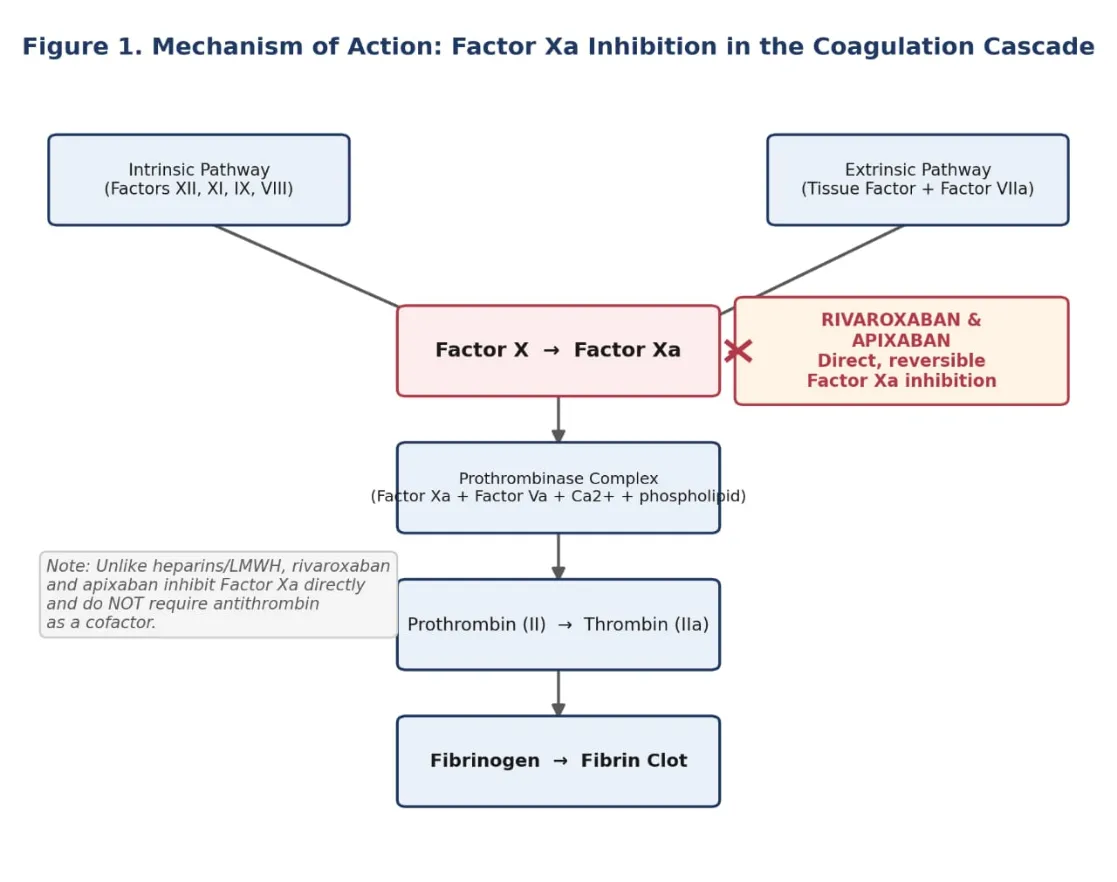
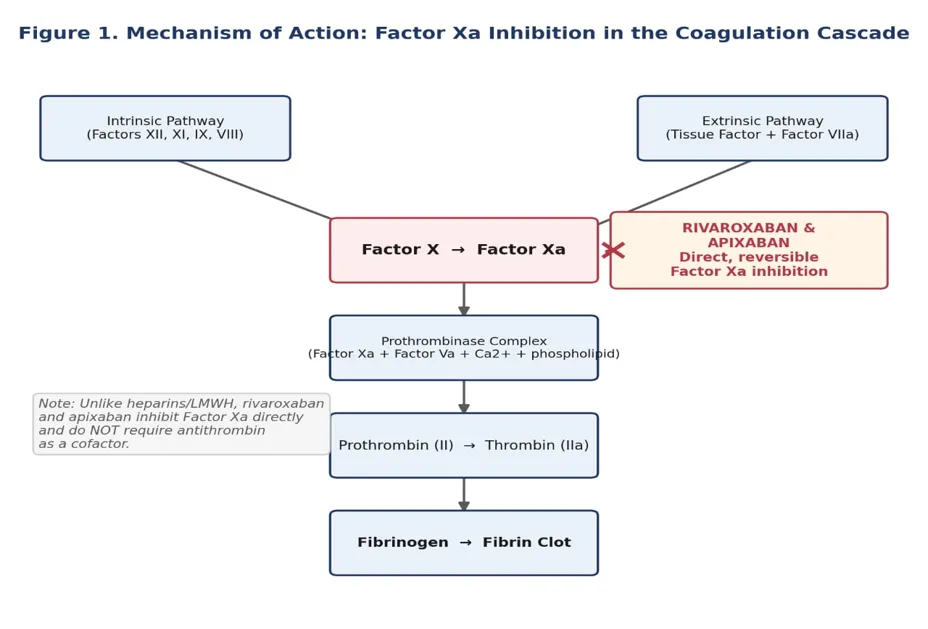
Apixaban and rivaroxaban are both direct, competitive, small-molecule inhibitors of factor Xa. They differ mechanistically from heparins and LMWH by reducing thrombin production by inhibiting the prothrombinase complex without the need for antithrombin as a cofactor.10,11,12
2.2 Pharmacokinetics
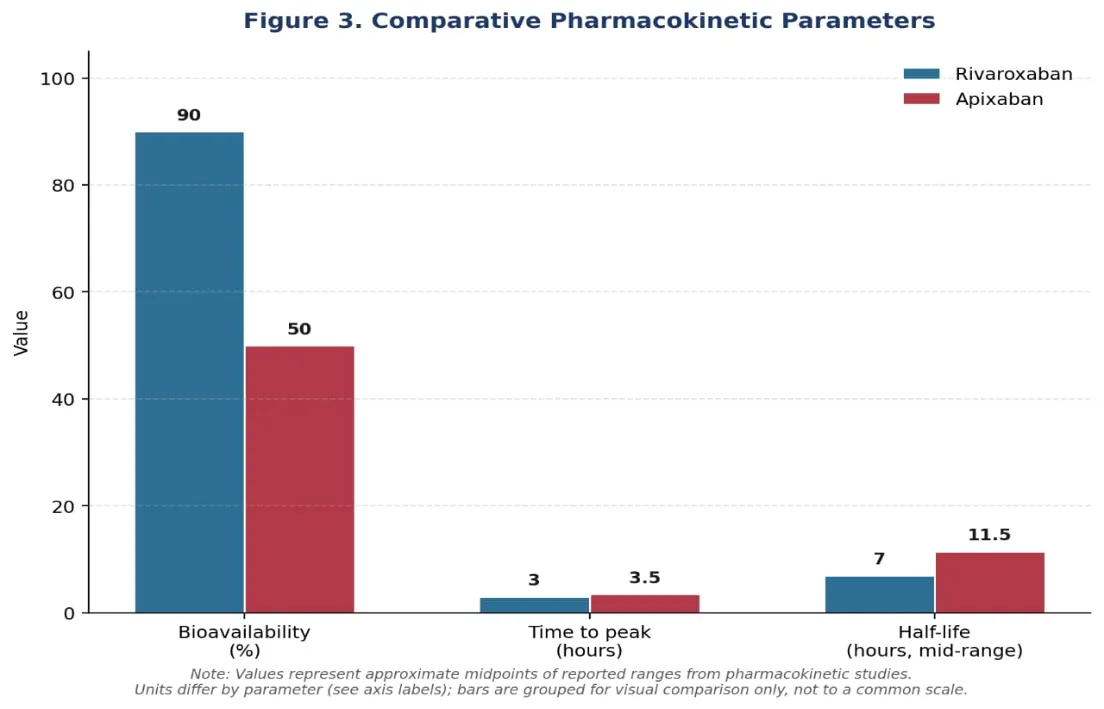
Apixaban has a lower absolute bioavailability (approximately 50%), a similar time to peak concentration (3–4 hours), and a longer elimination half-life (approximately 8–15 hours), which underpins its twice-daily dosing schedule. In contrast, rivaroxaban has a high oral bioavailability (approaching 80–100% with the 10 mg dose taken with or without food) and reaches peak plasma concentration within 2–4 hours.13,14,15
2.3 Elimination
Renal excretion (about one-third of the active substance) and hepatic metabolism/biliary excretion are the two ways that rivaroxaban is removed. Apixaban has a theoretical advantage in patients with mild-to-moderate renal impairment because it is primarily eliminated through hepatic and intestinal pathways, with renal clearance accounting for about 25% of total clearance. However, both agents require caution or dose avoidance in significant renal dysfunction.16,17,18
2.4 Approved dosing regimens for THA/TKA prophylaxis
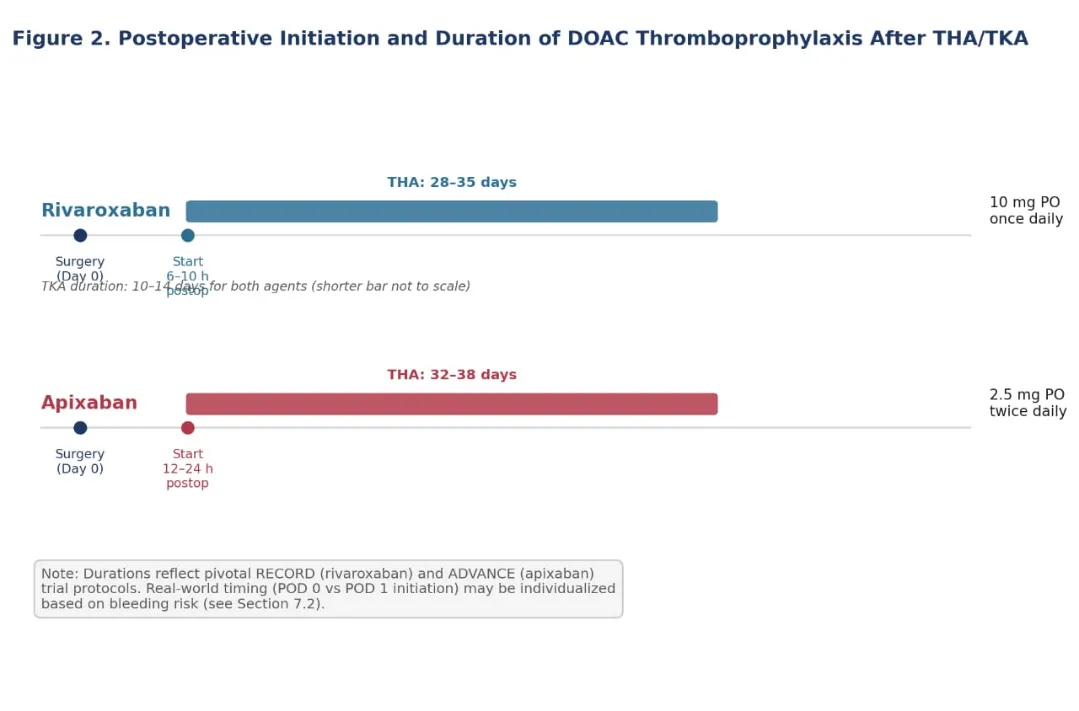
Rivaroxaban is usually started 6–10 hours after surgery and continued for about 35 days following THA and 12–14 days after TKA. The normal dosage is 10 mg orally once daily. Similar duration recommendations (about 32–38 days after THA and 10–14 days after TKA in the pivotal studies) apply to apixaban, which is dosed at 2.5 mg orally twice daily and started 12–24 hours postoperatively.19,20,21
3. MECHANISM-BASED COMPARISON
3.1 Onset and offset of anticoagulant effect
Although apixaban's longer half-life results in more stable trough levels between doses, some authors contend that this may translate into a more consistent anticoagulant effect throughout the dosing interval, at the potential expense of a longer washout period prior to invasive procedures. Both medications achieve near-peak anticoagulant effect within a few hours of ingestion.22,23,24
3.2 Once-daily versus twice-daily dosing
Rivaroxaban's once-daily schedule is often mentioned as beneficial for drug adherence, especially when patients self-administer prophylaxis for several weeks following hospital release. Although comparative adherence data specific to the arthroplasty population are scarce and primarily extrapolated from atrial fibrillation cohorts, apixaban's twice-daily regimen may present a somewhat higher adherence burden.24,26,27
3.3 Renal impairment considerations
While rivaroxaban is often avoided when creatinine clearance falls below about 15 mL/min and used cautiously between 15 and 29 mL/min, apixaban is preferred by numerous authors in patients with borderline renal function because it depends less on renal elimination.28,29,30
4. EFFICACY OUTCOMES
4.1 Deep vein thrombosis prevention
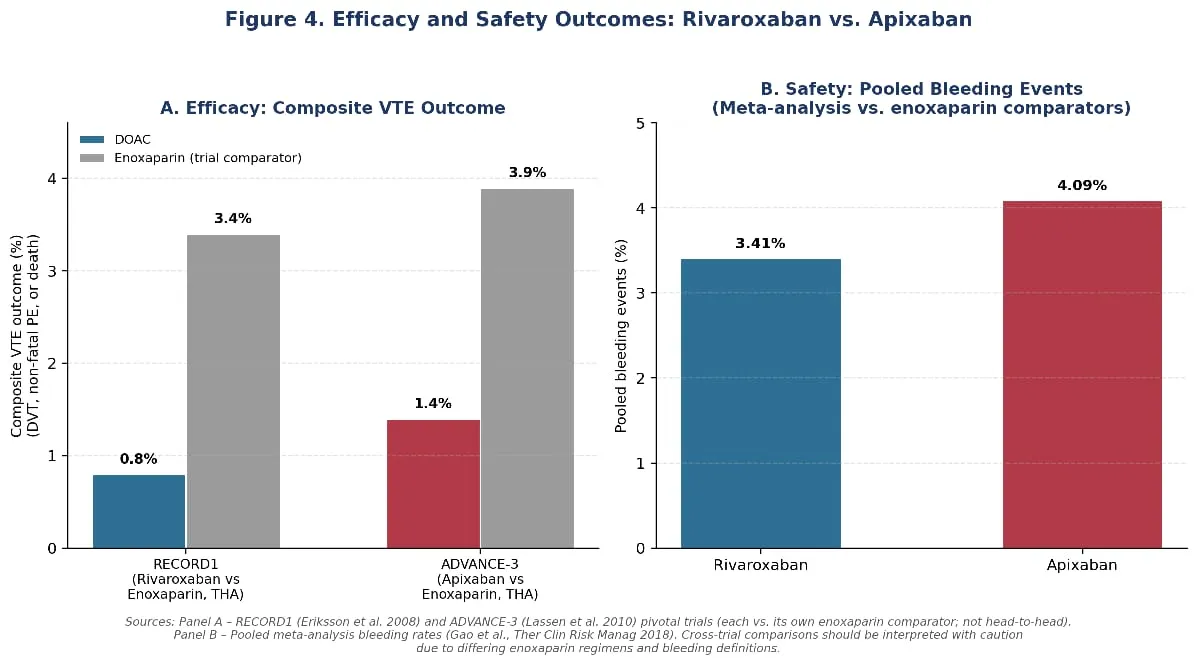
Rivaroxaban 10 mg once daily outperformed enoxaparin in all four trials of the RECORD program when it came to lowering the composite endpoint of DVT, non-fatal PE, or mortality. The composite primary efficacy outcome in RECORD1 (THA) met pre-specified non-inferiority and subsequently demonstrated superiority, occurring in 0.8% of rivaroxaban-treated patients compared with 3.4% of enoxaparin-treated patients in the per-protocol group. Even the higher US enoxaparin dosage regimen of 30 mg every 12 hours was not as effective as rivaroxaban in RECORD4 (TKA).
Results were more varied in the ADVANCE program. Although apixaban reduced clinically significant bleeding, ADVANCE-1 (TKA), which compared apixaban 2.5 mg twice daily with enoxaparin 30 mg twice daily, did not satisfy the predetermined non-inferiority margin for the primary efficacy outcome. With a comparable rate of significant bleeding, ADVANCE-2 (TKA) demonstrated that apixaban was superior to the European enoxaparin regimen of 40 mg once daily. With the composite primary objective occurring in 1.4% of apixaban patients compared to 3.9% of enoxaparin patients, ADVANCE-3 (THA) clearly showed that apixaban was superior to enoxaparin 40 mg once daily.31,32,33,34,35
4.2 Symptomatic pulmonary embolism and mortality
All-cause mortality and symptomatic PE were rare events in both trial programs, which limited statistical power for these specific endpoints; both medicines showed rates that were either lower than or equal to enoxaparin without a signal of extra death.36,37,38
4.3 Indirect and network meta-analyses
Because rivaroxaban and apixaban were each compared against enoxaparin rather than against one another, most comparative conclusions derive from indirect and network meta-analyses. A widely cited meta-analysis comparing rivaroxaban, apixaban, and enoxaparin found bleeding events in 3.41% of rivaroxaban-treated patients and 4.09% of apixaban-treated patients, with rivaroxaban showing a numerically better efficacy signal but apixaban showing no significant efficacy difference from enoxaparin. A subsequent systematic review and network meta-analysis of new oral anticoagulants concluded that rivaroxaban ranked highest for VTE, DVT, and major VTE prevention (by surface under the cumulative ranking curve, SUCRA), while apixaban was associated with a reduced risk of bleeding relative to comparators, leading the authors to recommend rivaroxaban for patients at lower bleeding risk and apixaban for patients at higher bleeding risk.39,40,41
4.4 Real-world and observational comparisons
In comparison to published LMWH benchmarks, a prospective cohort study of 2,431 patients receiving rivaroxaban, dabigatran, or apixaban following THA or TKA revealed similar symptomatic VTE rates across all three DOACs. However, rivaroxaban appeared to be more effective than apixaban and dabigatran, and there was no statistically significant difference in major bleeding between the three agents. While rivaroxaban offers excellent prophylaxis, it may carry a slightly greater bleeding signal than aspirin or enoxaparin in unselected populations, according to large administrative-database analyses of primary THA and TKA. This emphasizes the significance of patient selection.42,43,44
5. SAFETY AND BLEEDING RISK
5.1 Major bleeding
When comparing rivaroxaban to enoxaparin, pooled data from the RECORD trials indicated a slightly higher risk of major or clinically significant non-major bleeding, especially in patients under 65, those with low body weight, and those with renal impairment. On the other hand, when compared to enoxaparin, ADVANCE-1 specifically demonstrated less clinically significant bleeding, and pooled ADVANCE data did not show a significant increase in severe bleeding with apixaban.45,46,47
5.2 Clinically relevant non-major bleeding
Both agents are associated with rates of clinically relevant non-major bleeding broadly comparable to LMWH; however, cross-trial comparisons should be interpreted cautiously given differing bleeding definitions and enoxaparin comparator regimens between the RECORD and ADVANCE programs.48,49,50
5.3 Wound complications
Potent factor Xa inhibitors are known to cause prolonged wound drainage, hematoma formation, and surgical site bleeding. Although absolute event numbers were modest, the prospective cohort comparison of rivaroxaban, dabigatran, and apixaban revealed no statistically significant difference in wound-healing complications or return to theater among the three DOACs.51,52,53
5.4 Bleeding and periprosthetic joint infection
Postoperative hematoma is a recognized risk factor for subsequent periprosthetic joint infection because it provides a nidus for bacterial seeding. While direct causal data specific to rivaroxaban versus apixaban are limited, this mechanistic link underscores why bleeding-risk minimization is not merely a hematologic concern but also an infection-prevention consideration in arthroplasty.54,55,56
6. DRUG INTERACTIONS AND CONTRAINDICATIONS
6.1 Concomitant antiplatelet and NSAID use
Concurrent use of aspirin, other antiplatelet agents, or NSAIDs increases bleeding risk with either DOAC and should prompt careful risk-benefit assessment, particularly in patients on long-term antiplatelet therapy for cardiovascular disease.57,58,59
6.2 CYP3A4 and P-glycoprotein interactions
Apixaban and rivaroxaban are both P-glycoprotein and CYP3A4 substrates. powerful inducers (like rifampin and some anticonvulsants) can decrease efficacy, whereas powerful dual inhibitors (like some azole antifungals and protease inhibitors) can raise plasma concentrations and bleeding risk. Although clinically significant interactions can happen with either drug, apixaban's multiple elimination pathways may render it less vulnerable to severe interaction effects than rivaroxaban.60,61,62
6.3 Contraindications
Both agents are contraindicated in active clinically significant bleeding, severe hepatic impairment with coagulopathy, and pregnancy. Dose adjustment or avoidance is recommended in severe renal impairment, and neither is currently recommended in patients with mechanical heart valves.63,64,65
7. REVERSAL AND PERIOPERATIVE MANAGEMENT
7.1 Reversal agents
Andexanet alfa, a recombinant modified factor Xa decoy protein, is approved for the reversal of life-threatening or uncontrolled bleeding associated with either rivaroxaban or apixaban, offering a shared reversal strategy for both agents.66
7.2 Timing of postoperative initiation
Initiating rivaroxaban or apixaban on postoperative day one instead of the day of surgery is linked to fewer early postoperative bleeding complications without a corresponding increase in thromboembolic events, according to large database analyses of DOAC timing following THA. This supports a delayed-initiation strategy for both agents when clinically appropriate.67
7.3 Preoperative discontinuation and bridging
Although renal function must be taken into consideration in both cases, apixaban's longer half-life typically requires a longer preoperative cessation window than rivaroxaban for revision surgery or unscheduled reoperation in patients already taking chronic DOAC therapy.68
8. SPECIAL POPULATIONS
8.1 Elderly patients
Elderly patients have higher baseline bleeding risk and reduced renal clearance; sub-group analyses from both trial programs suggest bleeding risk with rivaroxaban rises more steeply with age and renal decline than with apixaban, favoring apixaban in frail elderly patients.69
8.2 Obese patients
Data specific to obese arthroplasty patients remain limited for both agents; fixed dosing without weight-based adjustment is standard, though efficacy at extremes of body weight warrants further study.70
8.3 Renal impairment
As above, apixaban's lower dependence on renal clearance provides a theoretical safety margin in mild-to-moderate chronic kidney disease, though both agents require caution or avoidance in severe impairment.71
8.4 Revision arthroplasty
A retrospective cohort study found that giving apixaban on the day following revision THA (rather than the day of surgery) decreased transfusion risk without increasing thromboembolic complications, indicating that timing may be more important than agent choice in this population. Revision surgery carries a higher baseline VTE and bleeding risk due to longer operative times and greater soft-tissue disruption.72
9. COST-EFFECTIVENESS AND ACCESSIBILITY
Oral factor Xa inhibitors are generally found to be cost-effective or cost-saving once avoided nursing time for injection administration, decreased VTE-related readmissions, and improved adherence are taken into account. Pharmacoeconomic analyses of DOACs against enoxaparin have been carried out in several European health systems. While rivaroxaban and apixaban have similar per-tablet prices in some countries, the twice-daily apixaban regimen may slightly raise prescription costs compared to once-daily rivaroxaban. Direct cost comparisons between rivaroxaban and apixaban rely greatly on local drug pricing and formulary status. Any thorough cost-effectiveness model should include account for the downstream costs of bleeding issues and periprosthetic joint infection, giving preference to medicines with lower bleeding signals in high-risk patients.73
10. GUIDELINE RECOMMENDATIONS
Both rivaroxaban and apixaban are listed as acceptable pharmacological options for VTE prophylaxis after THA and TKA by major guideline bodies, such as the American Academy of Orthopaedic Surgeons (AAOS), the American Society of Hematology/American College of Chest Physicians (ACCP), and the UK National Institute for Health and Care Excellence (NICE). These bodies typically do not strongly favor one DOAC over the other. However, real-world audits show inconsistent adherence to guidelines in clinical practice, highlighting a discrepancy between published recommendations and bedside implementation that is at least as important as the selection of specific medicines. Notably, a number of recent assessments contend that revised, risk-stratified recommendations are required since current guidelines are becoming out of date in light of more recent comparative and registry data.74
11. PATIENT-REPORTED OUTCOMES AND ADHERENCE
Rivaroxaban may have a theoretical benefit in real-world compliance because once-daily regimens are consistently linked to higher self-reported adherence than twice-daily regimens across various therapeutic domains, despite the paucity of head-to-head adherence evidence in the arthroplasty population. Regardless of the particular agent, patient satisfaction with oral prophylaxis is typically higher than injectable LMWH, which reflects the DOAC medication class's wider appeal over injectable alternatives.75
12. COMPARATIVE SUMMARY TABLE
|
Parameter |
Rivaroxaban |
Apixaban |
Comment |
|
Target |
Factor Xa (direct) |
Factor Xa (direct) |
Same class |
|
Dosing (THA/TKA) |
10 mg once daily |
2.5 mg twice daily |
Different frequency |
|
Bioavailability |
~80–100% |
~50% |
Rivaroxaban higher |
|
Half-life |
5–9 h (11–13 h elderly) |
8–15 h |
Comparable |
|
Renal clearance |
~33% renal |
~27% renal |
Both partly renal |
|
Time to peak effect |
2–4 h |
3–4 h |
Similar |
|
Landmark trials |
RECORD 1–4 |
ADVANCE 1–3 |
Both phase III programs |
|
Comparator |
Enoxaparin 40 mg OD / 30 mg BID |
Enoxaparin 40 mg OD / 30 mg BID |
Trial-dependent |
|
Efficacy vs enoxaparin |
Superior in RECORD 1–4 |
Superior in ADVANCE-2/3; non-inferior in ADVANCE-1 |
Rivaroxaban more consistently superior |
|
Major bleeding |
Slightly increased vs enoxaparin in pooled data |
Not increased; possibly reduced |
Apixaban favors safety |
|
Reversal agent |
Andexanet alfa |
Andexanet alfa |
Same reversal option |
13. GAPS IN CURRENT EVIDENCE AND FUTURE DIRECTIONS
• The lack of a sizable, well powered, direct head-to-head randomized controlled trial that explicitly compares apixaban with rivaroxaban in the THA/TKA group.
• Indirect comparison is complicated by differences in enoxaparin comparator dose between the RECORD and ADVANCE projects (once-daily European vs. twice-daily North American regimens).
• Limited long-term follow-up information for bleeding, VTE recurrence, and periprosthetic infection outcomes after 90 days.
• Limited information in the revision-arthroplasty, obese, and elderly-frail categories.
• Prospective adherence and patient-reported outcome studies tailored to the arthroplasty population are required.
• The potential for customized dosing regimens based on pharmacogenomics and biomarkers (such as D-dimer-directed).76
CONCLUSION
Rivaroxaban and apixaban are both effective, guideline-endorsed oral factor Xa inhibitors for VTE prophylaxis after total hip and knee arthroplasty. Evidence from the RECORD and ADVANCE trial programs, subsequent network meta-analyses, and large observational registries suggests that rivaroxaban may offer a modest efficacy advantage in reducing composite VTE outcomes, while apixaban demonstrates a more favorable bleeding profile, particularly in elderly or renally impaired patients. In the absence of a definitive head-to-head randomized trial, agent selection should be individualized, balancing thrombotic risk, bleeding risk, renal function, and patient adherence preferences, within the framework of institutional and national guideline recommendations.
REFERENCES
Roupe M, Rosengren A, Pivodic A, Bertilsson R, Philipson J, Svennerholm K, et al. Bleeding risk on rivaroxaban versus apixaban in older patients with venous thromboembolism: a nationwide observational register-based study. Eur J Intern Med. 2025;142:106438.
Roupe M, Rosengren A, Pivodic A, Bertilsson R, Philipson J, Svennerholm K, et al. Bleeding risk on rivaroxaban versus apixaban in older patients with venous thromboembolism: a nationwide observational register-based study. Eur J Intern Med. 2025;142:106438.

Dr. S. Sathyamoorthi, A. Prathap, R. Preethi, B. Rashmi Avanticaa, C. Rifa Sidhik Fathima, Rivaroxaban Vs. Apixaban After Hip and Knee Arthroplasty: A Head-To-Head Pharmacological Comparison, Int. J. of Pharm. Sci., 2026, Vol 4, Issue 9, 2863-2877, https://doi.org/10.5281/zenodo.22914905
 10.5281/zenodo.22914905