View Article

Abstract

The healing capacity of the venom has been known since antiquity, the snake became a symbol of medicine and pharmacy. The paper is a review of snake venom, especially cobra venom, and its benefits for human health. A summary of current progress in studying pharmacological effects and mechanisms of action following the administration of cobra venom was analyzed and achieved. The new approaches in the field provide a short-chain ?-neurotoxin called cobrotoxin, present in the composition of the venom of the Naja atra, through the numerous proven pharmacological activities: anti-inflammatory, immunoprotective, analgesic, antiviral, could be effective in preventing and alleviating the symptoms caused by VOCID-19. The novelty of our study is to highlight the action of cobra venom in the treatment of patients with VOCID-19 or to inhibit SARS-COV-2 infection.

Keywords

snake venom, cobra venom, cobrotoxin, anticancer, antiviral

Introduction

× Popup Image

Cancer is a major health problem that affects people all over the world. Globally, 25% of human mortality is due to cancer. In the United States, cancer was reported as the second leading cause of death in 2015. Approximately 1,735,350 new cancer cases and 609,640 deaths due to cancer were expected in 2018 [1]. In Malaysia, cancer remains one of the leading causes of death, and a total of 64,725 deaths were reported from 2007 to 2011 [2]. Cancer is a group of diseases that arises from the uncontrollable proliferation of malignant cells. It is a multigenic and multistage disease due to multifactorial etiology [3]. Briefly, high levels of exposure to carcinogens such as radiation, tobacco, and oncogenic viruses increase the risk of DNA damage in the cells. The DNA-repair mechanism will be initiated at this stage. However, when the damage is too extensive, the repair of lesions fails. This gives rise to changes in the expression of genes (such as tumor-suppressor genes) in the cells, which further alter the signalling pathways resulting in unrestricted cell growth [4].

Even though the incidence of cancer is increasing globally, the mortality rate of cancer is reported to be in decline for the past 20 years [5]. This may be due to the advancement of therapeutic regimes over the past few decades. Various therapeutic options such as surgery, chemotherapy, radiotherapy, and immunotherapy are employed in treating localized cancer. Surgery in combination with chemotherapy is still the main treatment option. Unfortunately, owing to its cytotoxic activity via the inhibition of nucleic acid synthesis, chemotherapy often results in the death of fast growing cells such as white blood cells, hair follicles, and cells lining the gastrointestinal tract in addition to cancer cells [6]. Therefore, patients often suffer from side effects such as nausea and hair loss. A weakened immune system due to the reduction of white blood cell levels during chemotherapy increases patients’ susceptibility to infection. The development of drug resistance during chemotherapy further complicates the treatment of cancer. Hence, there is an urgent need for effective cancer therapeutics with lesser side effects.

Malaysia, as the 12th most biodiverse country in the world, is the home to approximately 170,000 species of flora and fauna. Since ancient times, natural resources have been exploited to treat diseases and improve human health. For instance, the use of Orthosiphon aristatus (Misai Kuching) as a natural remedy against diabetes is common among indigenous communities in Malaysia [7,8]. Poisonous animals also play a vital role in the discovery of novel therapeutic candidates. For example, bee venom therapy is used to relieve pain symptoms and treat diseases such as rheumatoid arthritis [9,10] and other neurological diseases [11,12]. Venom from the Indian black scorpion was found to induce DNA fragmentation and reduce the proliferation of human leukemic cells [13]. Additionally, a novel peptide named Gonearrestide from scorpion venom showed the inhibition of primary colon cancer cells and solid tumor growth [14]. Commercialized drugs such as Captopril® and Enalpril® are two successful antihypertensive drugs developed based on bradykinin peptides derived from the venom of the snake Bothrops jararaca [15,16]. Ziconotide is another FDA-approved analgesic medication derived from 𝜔-conotoxin that was found in the venom of Conus magus, a marine snail [17]. By reviewing the pharmaceutical potential of animal venoms, we conclude that the complex mixture of proteins may have the potential to be an important source of therapeutic agents.

Snake venom has been associated with various therapeutic applications—as a thrombolytic agent in cardiovascular disorders [18], anti-microbial activities [19], as an anti-viral agent [20] and in antiparasitic, and antifungal activities [21,22]. Undeniably, the anticancer activities of snake venom represent one of its most attractive therapeutic features and they have been actively researched and reviewed over the past decade [23,24,25]. The venom from Malaysian common cobras has been characterized, and proteins with anticancer potential have been described. However, while there are numerous reviews focusing on the anticancer activities of snake venom in general, none have focused on the Malaysian common cobra species, i.e., Naja kaouthiaNaja sumatrana, and Ophiophagus hannah. The abundance of these cobra species provides valuable access for researchers to further investigate the venom activity. Therefore, the present review highlights the anticancer activity of the venom components of Malaysian cobra species.

MALAYSIAN COMMON COBRAS

Malaysian venomous snake species can be divided into two families, Viperidae and Elapidae [26,27]. Viperidae can be further divided into three families, Azemiopinae (Fea’s viper), Crotalinae (pit vipers), and Viperinae (true vipers). Malaysian vipers belong to the subfamily Crotalinae, which can be distinguished by the loreal pit on either side of the eyes [26]. Additional characteristics of pit vipers include hollow and retractile fangs on a moveable maxillary bone; a stocky, keel-scaled body with elliptical pupils; and that they are ovoviparous [26]. Elapidae is represented by cobras, kraits, and coral snakes that produce neurotoxic venom. It is characterized as a family of snakes with short and sharp fangs located anteriorly on the maxillary bone, with smooth-scaled body with rounded pupils, and that are oviparous [26]. Three cobra species, namely Naja kaouthiaNaja sumatrana and Ophiophagus hannah are the most common cobras in Malaysia. N. kaouthia or monocled cobra was formerly known as Naja naja siamensis, a subspecies of the Indian cobra (Naja naja) [26]. N. sumatrana is a spitting cobra and it is the most common Elapid of the ten species in the family. Both N. kaouthia and N. sumatrana can inhabit a wide range of environments, ranging from natural to anthropogenic landscapes. Members of the Naja genus are well known to be aggressive and envenomation is common for both species as humans infringe on their niche during the progress of urbanization. The third Malaysian cobra species is O. hannah or king cobra. Ophiophagus, meaning snake eater in Greek, is a monotypic genus, where the king cobra is the only species in this genus. It is the longest venomous snake species and is a dreadful assailant that is famous for its agility. The fatality rate incurred by king cobra envenomation is relatively high, although bites are rarely reported [26]. Table 1 provides a summary of comparisons between the cobras. In spite of their toxicity, the venom of Malaysian cobras demonstrates a wide range of therapeutic potential through antibacterial [28,29], anticancer [30,31,32,33], anticonvulsant [34], and antithrombotic [35] activities.

3. Proteomic Composition of the Venom from N. kaouthiaN. sumatrana, and O. hannah

Snake venom is a natural resource that can be readily obtained, especially from Malaysian N. kaouthiaN. sumatrana, and O. hannah. The evolutionary arms race has driven the diversification of toxins in snake venom. It is a complex mixture comprising: 1) proteins such as phospholipase A2 (PLA2), L-amino acid oxidase (LAAO), acetylcholinesterase, and protease; 2) peptides such as disintegrins; 3) low-molecular-weight organic compounds such as carbohydrates and histamines; and 4) inorganic ions such as magnesium, cobalt, iron, and potassium [40]. The cocktail of proteins in snake venom aids the snakes in capturing and digesting their prey. These proteins can be categorized as cytotoxins, hemotoxins, neurotoxins, and cardiotoxins [4]. However, the composition of snake venoms may have inter- and intraspecies variation, depending on habitat, diet, gender, and ontogenetic development [4,41].

The advancement of mass spectrometry techniques has allowed for the proteomic characterization of the venom from N. kouthiaN. sumatrana, and O. hannah. A combination of transcriptomic and proteomic analyses of N. kaouthia venom has identified proteins such as the three-finger toxin (3FTx), phospholipase A2 (PLA2), ohanin, cysteine-rich venom protein (CRVP), snake venom metalloproteinase (SVMP), venom nerve-growth factor (vNGF), cobra venom factor (CVF), cardiotoxin, cytotoxin, and neurotoxin [36,37]. The proteomic characterization of N. sumatrana venom identified proteins including PLA2, neurotoxins, cardiotoxin, cytotoxin, 3FTx, CVF, SVMP, CRVP, natriuretic peptide, aminopeptidase, thaicobrin, complement-depleting factor, kaouthin-1, vNGF, and cobra serum albumin [38]. Similar proteins, such as 3FTx, SVMP, PLA2, and LAAO, were also identified from the venom of O. hannah in addition to acetylcholinesterase (AChE), phospholipase B (PLB), 5’-nucleotidase (5’NUC), neprilysins, and cystatins [31,39]              
The common and unique venom proteins from N. kaouthiaN. sumatrana, and O. hannah are summarized in Figure 1. Five proteins were found to be common to all three cobra species, namely, 3FTx, PLA2, CRVP, SVMP, and vNGF. Between N. kaouthia and N. sumatrana, four shared proteins were identified, including cardiotoxin, cytotoxin, neurotoxin, and CVF. Ohanin was found in both N. kaouthia and O. hannah and natriuretic peptides were identified in both N. sumatrana and O. hannah. Cobra serum albumin, aminopeptidase, thaicobrin, and complement-depleting factor were unique in N. sumatrana venom. Nine proteins in O. hannah venom were identified to be unique when compared with N. kaouthia and N. sumatrana, such as, LAAO, Kunitz-type inhibitor, cystatin, insulin-like growth factor, venom phosphodiesterase (vPDE), 5’NUC, snake venom serine protease (SVSP), AChE, and neprilysins.


The common and unique venom proteins from N. kaouthiaN. sumatrana, and O. hannah are summarized in Figure 1. Five proteins were found to be common to all three cobra species, namely, 3FTx, PLA2, CRVP, SVMP, and vNGF. Between N. kaouthia and N. sumatrana, four shared proteins were identified, including cardiotoxin, cytotoxin, neurotoxin, and CVF. Ohanin was found in both N. kaouthia and O. hannah and natriuretic peptides were identified in both N. sumatrana and O. hannah. Cobra serum albumin, aminopeptidase, thaicobrin, and complement-depleting factor were unique in N. sumatrana venom. Nine proteins in O. hannah venom were identified to be unique when compared with N. kaouthia and N. sumatrana, such as, LAAO, Kunitz-type inhibitor, cystatin, insulin-like growth factor, venom phosphodiesterase (vPDE), 5’NUC, snake venom serine protease (SVSP), AChE, and neprilysins.
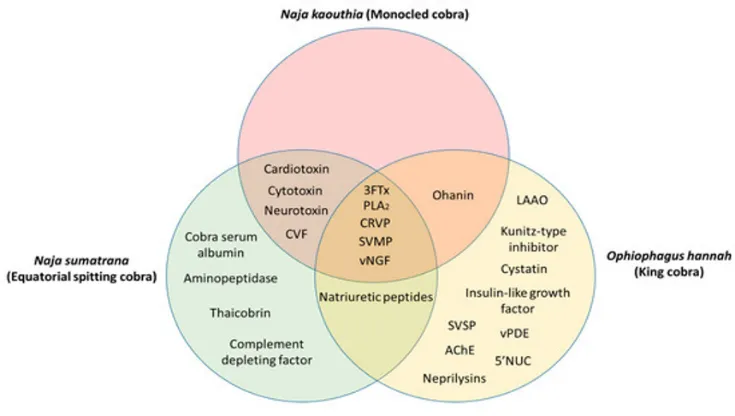
 

Figure 1. Common and unique proteins identified from the venom of Naja kaouthia, Naja sumatrana, and Ophiophagus hannah.

Abbreviations: 3FTx—three-finger toxin, PLA2—phospholipase A2, CRVP—cysteine-rich venom protein, SVMP—snake venom metalloproteinase, vNGF—venom nerve-growth factor, CVF—cobra venom factor, LAAO—L-amino acid oxidase, vPDE—venom phosphodiesterase, SVSP—snake venom serine protease, AChE—acetylcholinesterase, 5’NUC—5’-nucleotidase.

4. Potential AntiCancer Activity of Malaysian Cobra Venom

The idea of utilizing snake venom as an important source of therapeutic agents and focusing on its anticancer properties has been extensively reviewed [23,24,42]. The investigation of snake venom’s effects on cancers can be traced back as early as the 1930s [43,44]. Since then, various snake venom proteins—most notably, LAAO, PLA2, SVMP/disintegrins, and snake venom C-type lectins (SNACLEC)—have been isolated and characterized for their activity as potential anticancer agents. The large amount of venom that can be obtained from the Malaysian common cobras renders them valuable for further investigation into potential therapeutic uses, especially as anticancer agents. The anticancer activity of the venom from the cobras is summarized.

HISTORY

The snake is known as a subject of fear, and fascination, but also as a symbol used in medicine and pharmacy.  Cobra was revered in ancient Egypt, was a symbol of the resurrection, and was popularly recognized as a protective animal of the pharaohs [45]. The Romanian emperors adorned their crowns with elements in the form of cobras [46]. Historically, cobra venom has been used as a traditional popular medicine for the treatment of various ailments, especially by the Chinese to treat opium addiction, and the Indians used it to treat pain, combining it with opium [47]. The note is 1934, when cobra venom in small doses was found to have strong analgesic activity, several times higher than morphine, without causing addiction [48]. [45]. Various components of the venom have been isolated, characterized and evaluated for their biological actions; their medical utility being quickly discovered [46].  The composition of snake venoms can vary between intraspecies, depending on habitat, diet, gender, and ontogenetic development [48,49].  Progress in mass spectrometry, high performance reverse chromatography, phase and liquid next-generation sequencing, as the development of new techniques over the last two decades, such as transcriptomics and proteomics, allowed the analysis of the structures and functions of the venom components, as well as the identification of new minor constituents of the snake venom [ 50,51,52 ].  Thus, scientists managed to determine the venom composition of hundreds of species of In 1940, the existence of cardiotoxins was recognized in the venom of cobras such as N. sputrix ( spitting cobra) or N. naja, and their effects have been studied in laboratory animals [47]. From a medical point of view, the first modern study of snake venom took place at the end of the 19th century, when French researcher Albert Calmette injected small amounts of venom into animals, using ait s an antidote in your blood [48].

COBRA

Cobra is a name that represents a group of venomous snakes that are part of the Elapidae family. From the group of cobras, pharmacological interest presented the venom from the genus Naja (Naja kaouthia, Naja sumatrana, Naja pallid, Naja naja atra) and genus Ophiophagus Hannah (cobra regalia) [47].

SNAKE VENOM

4.1. Composition

Snake venom is a complex mixture of enzymatic and non-enzymatic components with specific pathophysiological functions [53]. Various components of the venom have been isolated, characterized and evaluated for their biological actions; their medical utility being quickly discovered [54]. The composition of snake venoms can vary between intraspecies, depending on habitat, diet, gender, and ontogenetic development [55,56]. Progress in mass spectrometry, high performance reverse phase liquid chromatography, and next generation sequencing, as the development of new techniques over the last two decades, such as transcriptomics and proteomics, allowed the analysis of the structures and functions of the venom components, as well as the identification of new minor constituents of the snake venom [ 57,58,59]. Thus, scientists managed to determine the venom composition of hundreds of species of snakes, giving rise to a domain called „ venomics, [ 60].

4.2. Pharmacological actions

Relevant biological actions studied in the field of biomedical use of venoms include the following: effects of decegrin on cell adhesion, effects of L-amino acids oxidases (LAAO) on cell dynamics and promotion of apoptosis, platelet function, and coagulation factors, effects of neurotoxins α (belonging to the family of three-fingered toxins (TFT)) and neurotoxins β, hypotensive effects, potassium channel blockage and biological effects of nerve growth factors (NGF), effects of myotoxins, cardiotoxins, and TFTs with other types of actions other than their effects such as α-neurotoxins and effects on the immune system [61]. Venom compounds have a wide range of pharmacological applications, including analgesic, anti-inflammatory activities, antimicrobials, and anticancer drugs that have been used as prototypes for drug design and are used in a variety of therapeutic settings [62].

The anticancer activities of snake venom are one of its most attractive therapeutic characteristics and have been actively researched and reviewed over the last decade [63,64,65]. Other studied snake venom activities: thrombolytic agent in cardiovascular disorders [66], antimicrobial [67], antiviral agent [68], antiparasitic and antifungal activities [69,70].

COBRA VENOM

Cobra venom is one of the most harmful toxins in the animal kingdom, strong enough to knock down an elephant.  Researchers have found that gluing a protein fragment from cobra venom to human immune molecules is a new and effective way to suppress inflammatory chemicals involved in several difficult conditions to be treated, such as rheumatoid arthritis, heart attacks, and stroke. [71] Despite its toxicity, cobra venom demonstrated by various studies, a high degree of therapeutic potential through activities: antibacterials [72], anticancer [73,74], anticonvulsants antithrombotic [75].  [76], and Venues from different snake species ( Naja annulifera, Naja kaouthia, and Ophiophagus hannah ) were analyzed for potential anticancer properties using pancreatic tumor cells as an analysis system. [77]

Composition-pharmacological actions

Isolated α-neurotoxins from cobra venoms have been shown to cause significant analgesia in animal models. Cobrotoxin, a short chain α-neurotoxin and α-cobra toxin, a long-chain isolated α-neurotoxin from Naja naja atra, demonstrated analgesic activity. [78] Cobrotoxin has significant central analgesic effects through an independent opioid mechanism [79] and may become a morphine substitute, suppressing the withdrawal symptoms caused by its use [80]. Cobrotoxin can be bound to several subtypes of nicotinic acetylcholine receptors (nAChR) and also to several other receptors and ion channels [81].  By using a chemical detoxification step, the neurotoxin can become safe for administration to people with minimal side effects. This modified neurotoxin demonstrated neuromodulatory, antiviral and analgesic activity, elements associated with multiple sclerosis [82,83].  The wide distribution of nAChR may be the leading cause of multiple pharmacodynamic actions of cobra venom and cobrotoxin, antiviral, including analgesic, anti-inflammatory, immunoregulatory, and antitumor activities [84].  Naja naja venom has been reported to attract (NNAV) and α-neurotoxins have anti-inflammatory and immune control actions. In many animal models and human clinical trials, cobra venom has demonstrated useful anti-inflammatory activity. Cobrotoxin may inhibit the inflammatory process in adjuvant induced rheumatoid arthritis rat models [85]. Peptides derived from oxidative detoxification of α-neurotoxin may reduce the replication of the herpes virus in infected brain tissues and may increase survival time by 50% in mice [86]. Studies have reported that α-neurotoxins have inhibited the replication and toxicity of several viruses both in vitro and in vivo. α-Neurotoxins have sequence homology with viral glycoproteins, including rabies virus glycoprotein and gp120 of the human immunodeficiency virus ( HIV ), which may specifically prevent the binding of the virus to nAChRs on cells and may inhibit rabies virus [87].   Cobra venom has shown great effectiveness in treating a patient with multidrug-resistant HIV. After subcutaneous injection of 0.1 ml cobra venom preparation daily (commercial name Bioven) for 1 month, the patient's viral load decreased from 1,580,000 copies/ml to 3274 children/ml [88]. It is noteworthy that after studies, conotoxin is thought to have the potential to treat patients with VOCID-19 or to inhibit SARS-COV-2 infection. [84.89,90]. This conclusion is based on the following aspects: NNAV and α-neurotoxins have strong inhibitory effects on inflammation; thus, they could inhibit the cytokine storm caused by SARS-COV2 infection. In addition, the symptoms of patients with VOCID-19 infection include deep vein thrombosis in hospitalized patients, leading to serious adverse results, such as heart attack and stroke [89] - Inflammation and other factors contribute to a state of hypercoagulation in VOCID-19. NNAV and cobrotoxin may inhibit inflammation and possibly thrombosis caused by inflammation in both arteries and veins. [84] -Naja naja atra and conotoxin can inhibit pulmonary inflammation, improve lung gas exchange function and alleviate the development of fibrotic lesions in the lungs. [90] Some patients with VOCID-19 have muscle pain and headache. NNAVs and conotoxin are effective analgesics [90] and can help.                    
MEDICATIONS WITH SNAKE VENOM/COBRA

 There are two ways to develop drugs in snake venoms: the use of toxins without modification or the design of small synthetic compounds that mimic the reasons for recognizing toxins, toxomimetics[87]. which The is called pharmaceutical industry produced the medicines Captopril, Aggrastim, and Eptifibatide, all designed based on the components of snake venom. [88].  The first product to appear was Captopril, which was approved by the FDA in 1981 and used to treat high blood pressure, kidney disease in diabetics, and heart failure after myocardial infarction [89].Ximelagatran, a peptide isolated from the cobra venom, with anticoagulant properties, thrombin inhibitor, has been used and largely tolerated in certain study populations, but due to hepatotoxicity reactions, research was stopped and withdrawn from the states where he already had authorization [ 90 ].

SNAKE VENOM / COBRA-ACTION ANTI-AGING

Due to the high content of peptides in its composition, snake venom is used in the cosmetics industry as the main ingredient in various creams and sera, with remarkable anti-aging effects on the skin. Research has shown that through its ability to temporarily inhibit muscle activity, it prevents premature aging of the skin and reduces wrinkles [90].

CONCLUSION

Snake venoms are the complex mixtures of several biologically active proteins, peptides, enzymes, and organic and inorganic compounds. Snake venoms are very important agents for many types of diseases as well as antimicrobial, anti-inflammation, anti-rheumatoid and cancer therapy. Snake venoms acts by inhibiting cell proliferation and promoting cell death by different means: induction of apoptosis in cancer cell, increasing Ca2+ influx; inducing cytochrome C release; decreasing or increasing the expression of proteins that control cell cycle; leading to damage of cell membranes. Snake venoms contain many components that act on the peripheral nervous system for killing or immobilizing prey. All the above mentioned attracted our attention to develop of a new drug from snake venoms will be useful as therapeutic agents of many diseases.

REFERENCES

  1. Siegel, R.L.; Miller, K.D.; Jemal, A. Cancer statistics, 2018. CA Cancer J. Clin. 2018, 68, 7–30. [Google Scholar] [CrossRef] [PubMed]
  2. Omar, Z.A.; Ibrahim Tamin, N. National Cancer Registry Report: Malaysia Cancer Statistics-Data and Figure; National Cancer Registry: Putrajaya, Malaysia, 2011; pp. 85–87. [Google Scholar]
  3. Baskar, R.; Lee, K.A.; Yeo, R.; Yeoh, K.-W. Cancer and radiation therapy: Current advances and future directions. Int. J. Med. Sci. 2012, 9, 193. [Google Scholar] [CrossRef] [PubMed]
  4. Jain, D.; Kumar, S. Snake venom: A potent anticancer agent. Asian Pac. J. Cancer Prev. 2012, 13, 4855–4860. [Google Scholar] [CrossRef] [PubMed]
  5. Wang, L.; Dong, C.; Li, X.; Han, W.; Su, X. Anticancer potential of bioactive peptides from animal sources (review). Oncol. Rep. 2017, 38, 637–651. [Google Scholar] [CrossRef] [PubMed]
  6. Liberio, M.S.; Joanitti, G.A.; Fontes, W.; Castro, M.S. Anticancer peptides and proteins: A panoramic view. Protein Pept. Lett. 2013, 20, 380–391. [Google Scholar] [PubMed]
  7. Mustaffa, F.; Indurkar, J.; Ali, N.; Hanapi, A.; Shah, M.; Ismail, S.; Mansor, S. A review of malaysian medicinal plants with potential antidiabetic activity. J. Pharm. Res. 2011, 4, 4217–4224. [Google Scholar]
  8. Tan, K.Y.; Tan, C.H.; Fung, S.Y.; Tan, N.H. Venomics, lethality and neutralization of Naja kaouthia (monocled cobra) venoms from three different geographical regions of Southeast Asia. J. Proteome 2015, 120, 105–125. [Google Scholar] [CrossRef] [PubMed
  9. Hong, S.-J.; Rim, G.S.; Yang, H.I.; Yin, C.S.; Koh, H.G.; Jang, M.-H.; Kim, C.-J.; Choe, B.-K.; Chung, J.-H. Bee venom induces apoptosis through caspase-3 activation in synovial fibroblasts of patients with rheumatoid arthritis. Toxicon 2005, 46, 39–45. [Google Scholar] [CrossRef] [PubMed]
  10. Lee, J.-D.; Kim, S.-Y.; Kim, T.-W.; Lee, S.-H.; Yang, H.-I.; Lee, D.-I.; Lee, Y.-H. Anti-inflammatory effect of bee venom on type II collagen-induced arthritis. Am. J. Chin. Med. 2004, 32, 361–367. [Google Scholar] [CrossRef] [PubMed]
  11. Cho, S.-Y.; Shim, S.-R.; Rhee, H.Y.; Park, H.-J.; Jung, W.-S.; Moon, S.-K.; Park, J.-M.; Ko, C.-N.; Cho, K.-H.; Park, S.-U. Effectiveness of acupuncture and bee venom acupuncture in idiopathic Parkinson’s Disease. Parkinsonism Relat. Disord. 2012, 18, 948–952. [Google Scholar] [CrossRef] [PubMed]
  12. Kim, J.-I.; Yang, E.J.; Lee, M.S.; Kim, Y.-S.; Huh, Y.; Cho, I.-H.; Kang, S.; Koh, H.-K. Bee venom reduces neuroinflammation in the MPTP-induced model of Parkinson’s Disease. Int. J. Neurosci. 2011, 121, 209–217. [Google Scholar] [CrossRef] [PubMed]
  13. Gupta, S.D.; Debnath, A.; Saha, A.; Giri, B.; Tripathi, G.; Vedasiromoni, J.R.; Gomes, A.; Gomes, A. Indian black scorpion (Heterometrus bengalensis Koch.) venom induced antiproliferative and apoptogenic activity against human leukemic cell lines U937 and K562. Leuk. Res. 2007, 31, 817–825. [Google Scholar] [CrossRef] [PubMed]
  14. Li, B.; Lyu, P.; Xi, X.; Ge, L.; Mahadevappa, R.; Shaw, C.; Kwok, H.F. Triggering of cancer cell cycle arrest by a novel scorpion venom-derived peptide—Gonearrestide. J. Cell Mol. Med. 2018, 22, 4460–4473. [Google Scholar] [CrossRef] [PubMed]
  15. Cushman, D.W.; Ondetti, M.A. History of the design of captopril and related inhibitors of angiotensin converting enzyme. Hypertension 1991, 17, 589–592. [Google Scholar] [CrossRef] [PubMed]
  16. Ferreira, S. A bradykinin-potentiating factor (BPF) present in the venom of Bothrops jararaca. Br. J. Pharmacol. 1965, 24, 163–169. [Google Scholar] [CrossRef]
  17. Pope, J.E.; Deer, T.R. Ziconotide: A clinical update and pharmacologic review. Expert Opin. Pharmacother. 2013, 14, 957–966. [Google Scholar] [CrossRef] [PubMed]
  18. Koh, C.Y.; Kini, R.M. From snake venom toxins to therapeutics—Cardiovascular examples. Toxicon 2012, 59, 497–506. [Google Scholar] [CrossRef] [PubMed]
  19. Wen, Y.L.; Wu, B.J.; Kao, P.H.; Fu, Y.S.; Chang, L.S. Antibacterial and membrane-damaging activities of β-bungarotoxin b chain. J. Pept. Sci. 2013, 19, 1–8. [Google Scholar] [CrossRef]
  20. Muller, V.D.; Russo, R.R.; Cintra, A.C.; Sartim, M.A.; Alves-Paiva Rde, M.; Figueiredo, L.T.; Sampaio, S.V.; Aquino, V.H. Crotoxin and phospholipases A2 from Crotalus durissus terrificus showed antiviral activity against dengue and yellow fever viruses. Toxicon 2012, 59, 507–515. [Google Scholar] [CrossRef]
  21. Castillo, J.C.Q.; Vargas, L.J.; Segura, C.; Gutiérrez, J.M.; Pérez, J.C.A. In vitro antiplasmodial activity of phospholipases A2 and a phospholipase homologue isolated from the venom of the snake Bothrops asper. Toxins 2012, 4, 1500–1516. [Google Scholar] [CrossRef]
  22. Yamane, E.S.; Bizerra, F.C.; Oliveira, E.B.; Moreira, J.T.; Rajabi, M.; Nunes, G.L.; de Souza, A.O.; da Silva, I.D.; Yamane, T.; Karpel, R.L. Unraveling the antifungal activity of a South American rattlesnake toxin crotamine. Biochimie 2013, 95, 231–240. [Google Scholar] [CrossRef] [PubMed]
  23. Calderon, L.A.; Sobrinho, J.C.; Zaqueo, K.D.; de Moura, A.A.; Grabner, A.N.; Mazzi, M.V.; Marcussi, S.; Nomizo, A.; Fernandes, C.F.; Zuliani, J.P.; et al. Antitumoral activity of snake venom proteins: New trends in cancer therapy. BioMed Res. Int. 2014, 2014, 203639. [Google Scholar] [CrossRef] [PubMed]
  24. Li, L.; Huang, J.; Lin, Y. Snake venoms in cancer therapy: Past, present and future. Toxins 2018, 10, 346. [Google Scholar] [CrossRef] [PubMed]
  25. Vyas, V.K.; Brahmbhatt, K.; Bhatt, H.; Parmar, U. Therapeutic potential of snake venom in cancer therapy: Current perspectives. Asian Pac. J. Trop. Biomed. 2013, 3, 156–162. [Google Scholar] [CrossRef]
  26. Das, I.; Ahmed, N.; Liat, L.B. Venomous terrestrial snakes of Malaysia: Their identity and biology. Clin. Toxicol. 2013, 1–15. [Google Scholar] [CrossRef]
  27. Tweedie, M.W.F. The Snakes of Malaya, 3rd ed.; Singapore National Printers: Singapore, 1983; 167p. [Google Scholar]
  28. Lee, M.L.; Tan, N.H.; Fung, S.Y.; Sekaran, S.D. Antibacterial action of a heat-stable form of L-amino acid oxidase isolated from king cobra (Ophiophagus hannah) venom. Comp. Biochem. Physiol. C Toxicol. Pharmacol. 2011, 153, 237–242. [Google Scholar] [CrossRef] [PubMed]
  29. Phua, C.; Vejayan, J.; Ambu, S.; Ponnudurai, G.; Gorajana, A. Purification and antibacterial activities of an L-amino acid oxidase from king cobra (Ophiophagus hannah) venom. J. Venom. Anim. Toxins Incl. Trop. Dis. 2012, 18, 198–207. [Google Scholar] [CrossRef]
  30. Ahn, M.Y.; Lee, B.M.; Kim, Y.S. Characterization and cytotoxicity of L-amino acid oxidase from the venom of king cobra (Ophiophagus hannah). Int. J. Biochem. Cell Biol. 1997, 29, 911–919. [Google Scholar] [CrossRef]
  31. Fung, S.Y.; Lee, M.L.; Tan, N.H. Molecular mechanism of cell death induced by king cobra (Ophiophagus hannah) venom L-amino acid oxidase. Toxicon 2015, 96, 38–45. [Google Scholar] [CrossRef] [PubMed]
  32. Lee, M.L.; Fung, S.Y.; Chung, I.; Pailoor, J.; Cheah, S.H.; Tan, N.H. King cobra (Ophiophagus hannah) venom L-amino acid oxidase induces apoptosis in PC-3 cells and suppresses PC-3 solid tumor growth in a tumor xenograft mouse model. Int. J. Med. Sci. 2014, 11, 593. [Google Scholar] [CrossRef] [PubMed]
  33. Li Lee, M.; Chung, I.; Yee Fung, S.; Kanthimathi, M.S.; Hong Tan, N. Antiproliferative activity of king cobra (Ophiophagus hannah) venom L-amino acid oxidase. Basic Clin. Pharmacol. Toxicol. 2014, 114, 336–343. [Google Scholar] [CrossRef] [PubMed]
  34. Saha, A.; Gomes, A.; Chakravarty, A.; Biswas, A.; Giri, B.; Dasgupta, S. CNS and anticonvulsant activity of a non-protein toxin (KC-MMTX) isolated from king cobra (Ophiophagus hannah) venom. Toxicon 2006, 47, 296–303. [Google Scholar] [CrossRef] [PubMed]
  35. Du, X.-Y.; Clemetson, J.M.; Navdaev, A.; Magnenat, E.M.; Wells, T.N.; Clemetson, K.J. Ophioluxin, a convulxin-like C-type lectin from Ophiophagus hannah (king cobra) is a powerful platelet activator via glycoprotein VI. J. Biol. Chem. 2002, 277, 35124–35132. [Google Scholar] [CrossRef] [PubMed]
  36. Xu, N.; Zhao, H.Y.; Yin, Y.; Shen, S.S.; Shan, L.L.; Chen, C.X.; Zhang, Y.X.; Gao, J.F.; Ji, X. Combined venomics, antivenomics and venom gland transcriptome analysis of the monocoled cobra (Naja kaouthia) from China. J. Proteom. 2017, 159, 19–31. [Google Scholar] [CrossRef] [PubMed]
  37. Kulkeaw, K.; Chaicumpa, W.; Sakolvaree, Y.; Tongtawe, P.; Tapchaisri, P. Proteome and immunome of the venom of the Thai cobra, Naja kaouthia. Toxicon 2007, 49, 1026–1041. [Google Scholar] [CrossRef] [PubMed]
  38. Yap, M.K.K.; Fung, S.Y.; Tan, K.Y.; Tan, N.H. Proteomic characterization of venom of the medically important southeast asian Naja sumatrana (equatorial spitting cobra). Acta Trop. 2014, 133, 15–25. [Google Scholar] [CrossRef] [PubMed]
  39. Petras, D.; Heiss, P.; Sussmuth, R.D.; Calvete, J.J. Venom proteomics of Indonesian king cobra, Ophiophagus hannah: Integrating top-down and bottom-up approaches. J. Proteome Res. 2015, 14, 2539–2556. [Google Scholar] [CrossRef] [PubMed]
  40. Izidoro, L.F.M.; Sobrinho, J.C.; Mendes, M.M.; Costa, T.R.; Grabner, A.N.; Rodrigues, V.M.; da Silva, S.L.; Zanchi, F.B.; Zuliani, J.P.; Fernandes, C.F. Snake venom L-amino acid oxidases: Trends in pharmacology and biochemistry. BioMed Res. Int. 2014, 2014, 196754. [Google Scholar] [CrossRef] [PubMed]
  41. Augusto-de-Oliveira, C.S.; Stuginski, D.R.; Kitano, E.S.; Andrade-Silva, D.b.; Liberato, T.; Fukushima, I.; Serrano, S.M.; Zelanis, A. Dynamic rearrangement in snake venom gland proteome: Insights into Bothrops jararaca intraspecific venom variation. J. Proteome Res. 2016, 15, 3752–3762. [Google Scholar] [CrossRef]
  42. Shanbhag, V.K.L. Applications of snake venoms in treatment of cancer. Asian Pac. J. Trop. Biomed. 2015, 5, 275–276. [Google Scholar] [CrossRef]
  43. Essex, H.E.; Priestley, J.T. Effect of rattlesnake venom on Flexner-Jobling’s carcinoma in the white rat (Mus norvegicus Albinus.). Proc. Soc. Exp. Biol. Med. 1931, 28, 550–551. [Google Scholar] [CrossRef]
  44. Kurotchkin, T.; Spies, J. Effects of cobra venom on the Fujinami rat sarcoma. Proc. Soc. Exp. Biol. Med. 1935, 32, 1408–1410. [Google Scholar] [CrossRef]
  45. Koh DC, Armugam A, Jeyaseelan K. Snake venom components and their applications in biomedicine. Cell Mol Life Sci. 2006 Dec;63(24):3030-41. doi: 10.1007/s00018-006-6315-0. PMID: 17103111.
  46. Utkin YN. Animal venom studies: Current benefits and future developments. World J Biol Chem. 2015 May 26;6(2):28-33. doi: 10.4331/wjbc.v6.i2.28. PMID: 26009701; PMCID: PMC4436903.
  47. Chang LS, Huang HB, Lin SR. The multiplicity of cardiotoxins from Naja naja atra (Taiwan cobra) venom. Toxicon. 2000 Aug;38(8):1065-76. doi: 10.1016/s0041-0101(99)00218-4. PMID: 10708798. https://ro.wikipedia.org/wiki/Cobr%C4%83
  48. Mohamed Abd El-Aziz T, Garcia Soares A, Stockand JD. Snake Venoms in Drug Discovery: Valuable Therapeutic Tools for Life Saving. Toxins (Basel). 2019 Sep 25;11(10):564. doi: 10.3390/toxins11100564. PMID: 31557973; PMCID: PMC6832721.
  49. Koh DC, Armugam A, Jeyaseelan K. Snake venom components and their applications in biomedicine. Cell Mol Life Sci. 2006 Dec;63(24):3030-41. doi: 10.1007/s00018-006-6315-0. PMID: 17103111.
  50. Utkin YN. Animal venom studies: Current benefits and future developments. World J Biol Chem. 2015 May 26;6(2):28-33. doi: 10.4331/wjbc.v6.i2.28. PMID: 26009701; PMCID: PMC4436903.
  51. Chang LS, Huang HB, Lin SR. The multiplicity of cardiotoxins from Naja naja atra (Taiwan cobra) venom. Toxicon. 2000 Aug;38(8):1065-76. doi: 10.1016/s0041-0101(99)00218-4. PMID: 10708798. https://ro.wikipedia.org/wiki/Cobr%C4%83
  52. Augusto-de-Oliveira C, Stuginski DR, Kitano ES, Andrade-Silva D, Liberato T, Fukushima I, Serrano SM, Zelanis A. Dynamic Rearrangement in Snake Venom Gland Proteome: Insights into Bothrops jararaca Intraspecific Venom Variation.
  53. J Proteome Res. 2016 Oct 7;15(10):3752-3762. doi: 10.1021/acs.jproteome.6b00561. Epub 2016 Sep 12. PMID: 27575776. 10. Casewell NR, Wagstaff SC, Wüster W, Cook DA, Bolton FM, King SI, Pla D, Sanz L, Calvete JJ, Harrison RA.
  54. Medically important differences in snake venom composition are dictated by distinct postgenomic mechanisms. Proc Natl Acad Sci U S A. 2014 Jun 24;111(25):9205-10. doi: 10.1073/pnas.1405484111. Epub 2014 Jun 9. PMID: 24927555; PMCID: PMC4078820.
  55. Križaj I. Toxinology and Pharmacology of Snake Venoms. Toxins (Basel). 2023 Mar 10;15(3):212. doi: 10.3390/toxins15030212. PMID: 36977102; PMCID: PMC10051782.
  56. Tasoulis T, Pukala TL, Isbister GK. Investigating Toxin Diversity and Abundance in Snake Venom Proteomes. Front Pharmacol. 2022 Jan 14;12:768015. doi: 10.3389/fphar.2021.768015. PMID: 35095489; PMCID: PMC8795951.
  57. Liu L, Li Y, Li S, Hu N, He Y, Pong R, Lin D, Lu L, Law M. Comparison of next-generation sequencing systems. J Biomed Biotechnol. 2012;2012:251364. doi: 10.1155/2012/251364. Epub 2012 Jul 5. PMID: 22829749; PMCID: PMC3398667
  58. Calvete JJ, Sanz L, Angulo Y, Lomonte B, Gutiérrez JM. Venoms, venomics, antivenomics. FEBS Lett. 2009 Jun 5;583(11):1736-43. doi: 10.1016/j.febslet.2009.03.029. Epub 2009 Mar 20. PMID: 19303875 66 Romanian Journal of Medical and Dental Education Vol. 12, No. 2, March-April 2023
  59. Cañas CA, Castaño-Valencia S, Castro-Herrera F, Cañas F, Tobón GJ. Biomedical applications of snake venom: from basic science to autoimmunity and rheumatology. J Transl Autoimmun. 2020 Dec 14;4:100076. doi: 10.1016/j.jtauto.2020.100076.PMID: 33385156; PMCID: PMC7772571.
  60. Von Reumont BM, Anderluh G, Antunes A, Ayvazyan N, Beis D, Caliskan F, Crnković A, Damm M, Dutertre S, Ellgaard L,Gajski G, German H, Halassy B, Hempel BF, Hucho T, Igci N, Ikonomopoulou MP, Karbat I, Klapa MI, Koludarov I, Kool J,Lüddecke T, Ben Mansour R, Vittoria Modica M, Moran Y, Nalbantsoy A, Ibáñez MEP, Panagiotopoulos A, Reuveny E,Céspedes JS, Sombke A, Surm JM, Undheim EAB, Verdes A, Zancolli G. Modern venomics-Current insights, novel methods,and future perspectives in biological and applied animal venom research. Gigascience. 2022 May 18;11:giac048.doi:10.1093/gigascience/giac048. PMID: 35640874; PMCID: PMC9155608.
  61. Calderon LA, Sobrinho JC, Zaqueo KD, de Moura AA, Grabner AN, Mazzi MV, Marcussi S, Nomizo A, Fernandes CF, Zuliani JP, Carvalho BM, da Silva SL, Stábeli RG, Soares AM. Antitumoral activity of snake venom proteins: new trends in cancer therapy. Biomed Res Int. 2014;2014:203639. doi: 10.1155/2014/203639. Epub 2014 Feb 13. PMID: 24683541; PMCID: PMC3943284 18. Li L, Huang J, Lin Y. Snake Venoms in Cancer Therapy: Past, Present and Future. Toxins (Basel). 2018 Aug 29;10(9):346. doi: 10.3390/toxins10090346. PMID: 30158426; PMCID: PMC6162746.
  62. Vyas VK, Brahmbhatt K, Bhatt H, Parmar U. Therapeutic potential of snake venom in cancer therapy: current perspectives. Asian Pac J Trop Biomed. 2013 Feb;3(2):156-62. doi: 10.1016/S22211691(13)60042-8. PMID: 23593597; PMCID: PMC3627178.
  63. Koh CY, Kini RM. From snake venom toxins to therapeutics--cardiovascular examples. Toxicon. 2012 Mar 15;59(4):497-506. doi: 10.1016/j.toxicon.2011.03.017. Epub 2011 Apr 4. PMID: 21447352.
  64. Wen YL, Wu BJ, Kao PH, Fu YS, Chang LS. Antibacterial and membrane-damaging activities of βbungarotoxin B chain. J Pept Sci. 2013 Jan;19(1):1-8. doi: 10.1002/psc.2463. Epub 2012 Nov 8. PMID: 23136049.
  65. Muller VD, Russo RR, Cintra AC, Sartim MA, Alves-Paiva Rde M, Figueiredo LT, Sampaio SV, Aquino VH. Crotoxin and phospholipases A₂ from Crotalus durissus terrificus showed antiviral activity against dengue and yellow fever viruses. Toxicon. 2012 Mar 15;59(4):507-15. doi: 10.1016/j.toxicon.2011.05.021. Epub 2011 Jun 23. PMID: 21723310.
  66. Castillo JC, Vargas LJ, Segura C, Gutiérrez JM, Pérez JC. In vitro antiplasmodial activity of phospholipases A2 and a phospholipase homologue isolated from the venom of the snake Bothrops asper. Toxins (Basel). 2012 Dec 14;4(12):1500-16. doi: 10.3390/toxins4121500. PMID: 23242318; PMCID: PMC3528259
  67. Yamane ES, Bizerra FC, Oliveira EB, Moreira JT, Rajabi M, Nunes GL, de Souza AO, da Silva ID, Yamane T, Karpel RL, Silva PI Jr, Hayashi MA. Unraveling the antifungal activity of a South American rattlesnake toxin crotamine. Biochimie. 2013 10.1016/j.biochi.2012.09.019. Epub 2012 Sep 26. PMID: 23022146. Feb;95(2):231-40.
  68. https://www.scientificamerican.com/article/poison-cobra-venom-therapy/ doi:
  69. Lee ML, Tan NH, Fung SY, Sekaran SD. Antibacterial action of a heat-stable form of L-amino acid oxidase isolated from king cobra (Ophiophagus hannah) venom. Comp Biochem Physiol C Toxicol Pharmacol. 2011 Mar;153(2):237-42. doi: 10.1016/j.cbpc.2010.11.001. Epub 2010 Nov 6. PMID: 21059402
  70. Ahn MY, Lee BM, Kim YS. Characterization and cytotoxicity of L-amino acid oxidase from the venom of king cobra (Ophiophagus hannah). Int J Biochem Cell Biol. 1997 Jun;29(6):911-9. doi: 10.1016/s1357-2725(97)00024-1. PMID: 9304806. 67 Romanian Journal of Medical and Dental Education Vol. 12, No. 2, March-April 2023 venom
  71. Fung SY, Lee ML, Tan NH. Molecular mechanism of cell death induced by king cobra (Ophiophagus hannah) l-amino acid oxidase. Toxicon. 2015 10.1016/j.toxicon.2015.01.012. Epub 2015 Jan 20. PMID: 25615711. Mar;96:38-45. doi:
  72. Saha A, Gomes A, Chakravarty AK, Biswas AK, Giri B, Dasgupta SC, Gomes A. CNS and anticonvulsant activity of a non-protein toxin (KC-MMTx) isolated from King Cobra (Ophiophagus hannah) venom. Toxicon. 2006 Mar;47(3):296-303. doi: 10.1016/j.toxicon.2005.11.006. Epub 2006 Feb 2. PMID: 16457861.
  73. Du XY, Clemetson JM, Navdaev A, Magnenat EM, Wells TN, Clemetson KJ. Ophioluxin, a convulxin-like C-type lectin from Ophiophagus hannah (King cobra) is a powerful platelet activator via glycoprotein VI. J Biol Chem. 2002 Sep 20;277(38):35124-32. doi: 10.1074/jbc.M204372200. Epub 2002 Jul 18. PMID: 12130642.
  74. Kerkkamp H, Bagowski C, Kool J, van Soolingen B, Vonk FJ, Vlecken D. Whole snake venoms: Cytotoxic, anti-metastatic and antiangiogenic properties. Toxicon. 2018 Aug;150:39-49. doi: 10.1016/j.toxicon.2018.05.004. Epub 2018 May 12. PMID: 29763628.
  75. Jiang WJ, Liang YX, Han LP, Qiu PX, Yuan J, Zhao SJ. Purification and characterization of a novel antinociceptive toxin from Cobra venom (Naja naja atra). Toxicon. 2008 Oct;52(5):638-46. doi: 10.1016/j.toxicon.2008.06.030. Epub 2008 Aug 14. PMID: 18765245.
  76. Chen ZX, Zhang HL, Gu ZL, Chen BW, Han R, Reid PF, Raymond LN, Qin ZH. A longform alpha-neurotoxin from cobra venom produces potent opioid-independent analgesia. Acta Pharmacol Sin. 2006 Apr;27(4):402-8. doi: 10.1111/j.1745-7254.2006.00293.x. PMID: 16539838.
  77. Kuo KW, Chang LS, Chang CC. The structural loop II of cobrotoxin is the main binding region for nAChR and epitope in the region is conformation-dependent. J Biochem. 1995;117:438–42. doi: 10.1093/jb/117.2.438. [PubMed] [CrossRef] [GoogleScholar]
  78. Reid P.PART II. Toxins as therapeutic agents alpha-cobratoxin as a possible therapy for multiple sclerosis: a review of the literature leading to its development for this application. Crit Rev Immunol. 2007;27:291-302.[PubMed] [Google Scholar] [Ref list]
  79. Chen R, Robinson S.The effect of cholinergic manipulations on the analgesic response to cobrotoxin in mice. Life Sci. 1990;47:1949-1954.[PubMed] [Google Scholar] [Ref list]
  80. Lin F, Reid PF, Qin ZH. Cobrotoxin could be an effective therapeutic for COVID-19.Acta Pharmacol Sin. 2020 Sep;41(9):1258-1260. doi: 10.1038/s41401-020-00501-7.Epub 2020 Aug 25. Erratum in: Acta Pharmacol Sin. 2020 Dec;41(12):1621. PMID:32843715; PMCID: PMC7445445.
  81. Zhu Q, Huang J, Wang SZ, Qin ZH, Lin F. Cobrotoxin extracted from Naja atra venom relieves arthritis symptoms through anti-inflammation and immunosuppression effects in rat arthritis model. J Ethnopharmacology. 2016;194:1087–95..doi: 10.1016/j.jep.2016.11.009. [PubMed] [CrossRef] [Google Scholar]
  82. Yourist JE, Haines HG, Miller KD. Inhibition of herpes simplex virus replication by cobra alpha-neurotoxoid. J Gen Virol. 1983;64:1475–81. doi: 10.1099/0022-1317-64-7-1475. [PubMed] [CrossRef] [Google Scholar]
  83. Lentz TL, Fu Y, Lewis P. Rabies virus infection of IMR-32 human neuroblastoma cells and effect of neurochemical and other agents. Antivir Res. 1997;35:29–39. doi: 10.1016/S01663542(97)01036-X. [PubMed] [CrossRef] [Google Scholar]
  84. Alrajhi AA, Almohaizeie A. Snake venom preparation for drug-resistant human immunodeficiency virus. Ann Saudi Med. 2008;28:292–3. doi: 10.5144/0256-4947.2008.292. [PMC free article] [PubMed] [CrossRef] [Google Scholar] 68 Romanian Journal of Medical and Dental Education Vol. 12, No. 2, March-April 2023
  85. Zhang L, Feng X, Zhang D, Jiang C, Mei H, Wang H, et al. Deep vein thrombosis in hospitalized patients with coronavirus disease 2019 (COVID-19) in Wuhan, China: prevalence, risk factors, and outcome. Circulation. 2020;142:114–28.doi: 10.1161/CIRCULATIONAHA.120.046702. [PubMed] [CrossRef] [Google Scholar]
  86. Cui K, Kou JQ, Gu JH, Han R, Wang G, Zhen X, et al. Naja naja atra venom ameliorates pulmonary fibrosis by inhibiting inflammatory response and oxidative stress. BMC Complement Alter Med. 2014;14:461. doi: 10.1186/1472-6882-14-461. [PMC free article] [PubMed] [CrossRef] [Google Scholar]
  87. Chen ZX, Zhang HL, Gu ZL, Chen BW, Han R, Reid PF, et al. A long-form alpha-neurotoxin from cobra venom produces potent opioid-independent analgesia. Acta Pharmacol Sin. 2006;27:402–8.doi: 10.1111/j.1745-7254.2006.00293.x. [PubMed] [CrossRef] [Google Scholar]
  88. Stepensky D. Pharmacokinetics of Toxin-Derived Peptide Drugs. Toxins (Basel). 2018 Nov 20;10(11):483. doi: 10.3390/toxins10110483. PMID: 30463321; PMCID: PMC6266565.
  89. Ho SJ, Brighton TA. Ximelagatran: direct thrombin inhibitor. Vasc Health Risk Manag. 2006;2(1):4958. doi: 10.2147/vhrm.2006.2.1.49. PMID: 17319469; PMCID: PMC1993972
  90. https://www.ijsr.net/archive/v7i1/ART20179204.pdf 69

Reference

  1. Siegel, R.L.; Miller, K.D.; Jemal, A. Cancer statistics, 2018. CA Cancer J. Clin. 2018, 68, 7–30. [Google Scholar] [CrossRef] [PubMed]
  2. Omar, Z.A.; Ibrahim Tamin, N. National Cancer Registry Report: Malaysia Cancer Statistics-Data and Figure; National Cancer Registry: Putrajaya, Malaysia, 2011; pp. 85–87. [Google Scholar]
  3. Baskar, R.; Lee, K.A.; Yeo, R.; Yeoh, K.-W. Cancer and radiation therapy: Current advances and future directions. Int. J. Med. Sci. 2012, 9, 193. [Google Scholar] [CrossRef] [PubMed]
  4. Jain, D.; Kumar, S. Snake venom: A potent anticancer agent. Asian Pac. J. Cancer Prev. 2012, 13, 4855–4860. [Google Scholar] [CrossRef] [PubMed]
  5. Wang, L.; Dong, C.; Li, X.; Han, W.; Su, X. Anticancer potential of bioactive peptides from animal sources (review). Oncol. Rep. 2017, 38, 637–651. [Google Scholar] [CrossRef] [PubMed]
  6. Liberio, M.S.; Joanitti, G.A.; Fontes, W.; Castro, M.S. Anticancer peptides and proteins: A panoramic view. Protein Pept. Lett. 2013, 20, 380–391. [Google Scholar] [PubMed]
  7. Mustaffa, F.; Indurkar, J.; Ali, N.; Hanapi, A.; Shah, M.; Ismail, S.; Mansor, S. A review of malaysian medicinal plants with potential antidiabetic activity. J. Pharm. Res. 2011, 4, 4217–4224. [Google Scholar]
  8. Tan, K.Y.; Tan, C.H.; Fung, S.Y.; Tan, N.H. Venomics, lethality and neutralization of Naja kaouthia (monocled cobra) venoms from three different geographical regions of Southeast Asia. J. Proteome 2015, 120, 105–125. [Google Scholar] [CrossRef] [PubMed
  9. Hong, S.-J.; Rim, G.S.; Yang, H.I.; Yin, C.S.; Koh, H.G.; Jang, M.-H.; Kim, C.-J.; Choe, B.-K.; Chung, J.-H. Bee venom induces apoptosis through caspase-3 activation in synovial fibroblasts of patients with rheumatoid arthritis. Toxicon 2005, 46, 39–45. [Google Scholar] [CrossRef] [PubMed]
  10. Lee, J.-D.; Kim, S.-Y.; Kim, T.-W.; Lee, S.-H.; Yang, H.-I.; Lee, D.-I.; Lee, Y.-H. Anti-inflammatory effect of bee venom on type II collagen-induced arthritis. Am. J. Chin. Med. 2004, 32, 361–367. [Google Scholar] [CrossRef] [PubMed]
  11. Cho, S.-Y.; Shim, S.-R.; Rhee, H.Y.; Park, H.-J.; Jung, W.-S.; Moon, S.-K.; Park, J.-M.; Ko, C.-N.; Cho, K.-H.; Park, S.-U. Effectiveness of acupuncture and bee venom acupuncture in idiopathic Parkinson’s Disease. Parkinsonism Relat. Disord. 2012, 18, 948–952. [Google Scholar] [CrossRef] [PubMed]
  12. Kim, J.-I.; Yang, E.J.; Lee, M.S.; Kim, Y.-S.; Huh, Y.; Cho, I.-H.; Kang, S.; Koh, H.-K. Bee venom reduces neuroinflammation in the MPTP-induced model of Parkinson’s Disease. Int. J. Neurosci. 2011, 121, 209–217. [Google Scholar] [CrossRef] [PubMed]
  13. Gupta, S.D.; Debnath, A.; Saha, A.; Giri, B.; Tripathi, G.; Vedasiromoni, J.R.; Gomes, A.; Gomes, A. Indian black scorpion (Heterometrus bengalensis Koch.) venom induced antiproliferative and apoptogenic activity against human leukemic cell lines U937 and K562. Leuk. Res. 2007, 31, 817–825. [Google Scholar] [CrossRef] [PubMed]
  14. Li, B.; Lyu, P.; Xi, X.; Ge, L.; Mahadevappa, R.; Shaw, C.; Kwok, H.F. Triggering of cancer cell cycle arrest by a novel scorpion venom-derived peptide—Gonearrestide. J. Cell Mol. Med. 2018, 22, 4460–4473. [Google Scholar] [CrossRef] [PubMed]
  15. Cushman, D.W.; Ondetti, M.A. History of the design of captopril and related inhibitors of angiotensin converting enzyme. Hypertension 1991, 17, 589–592. [Google Scholar] [CrossRef] [PubMed]
  16. Ferreira, S. A bradykinin-potentiating factor (BPF) present in the venom of Bothrops jararaca. Br. J. Pharmacol. 1965, 24, 163–169. [Google Scholar] [CrossRef]
  17. Pope, J.E.; Deer, T.R. Ziconotide: A clinical update and pharmacologic review. Expert Opin. Pharmacother. 2013, 14, 957–966. [Google Scholar] [CrossRef] [PubMed]
  18. Koh, C.Y.; Kini, R.M. From snake venom toxins to therapeutics—Cardiovascular examples. Toxicon 2012, 59, 497–506. [Google Scholar] [CrossRef] [PubMed]
  19. Wen, Y.L.; Wu, B.J.; Kao, P.H.; Fu, Y.S.; Chang, L.S. Antibacterial and membrane-damaging activities of β-bungarotoxin b chain. J. Pept. Sci. 2013, 19, 1–8. [Google Scholar] [CrossRef]
  20. Muller, V.D.; Russo, R.R.; Cintra, A.C.; Sartim, M.A.; Alves-Paiva Rde, M.; Figueiredo, L.T.; Sampaio, S.V.; Aquino, V.H. Crotoxin and phospholipases A2 from Crotalus durissus terrificus showed antiviral activity against dengue and yellow fever viruses. Toxicon 2012, 59, 507–515. [Google Scholar] [CrossRef]
  21. Castillo, J.C.Q.; Vargas, L.J.; Segura, C.; Gutiérrez, J.M.; Pérez, J.C.A. In vitro antiplasmodial activity of phospholipases A2 and a phospholipase homologue isolated from the venom of the snake Bothrops asper. Toxins 2012, 4, 1500–1516. [Google Scholar] [CrossRef]
  22. Yamane, E.S.; Bizerra, F.C.; Oliveira, E.B.; Moreira, J.T.; Rajabi, M.; Nunes, G.L.; de Souza, A.O.; da Silva, I.D.; Yamane, T.; Karpel, R.L. Unraveling the antifungal activity of a South American rattlesnake toxin crotamine. Biochimie 2013, 95, 231–240. [Google Scholar] [CrossRef] [PubMed]
  23. Calderon, L.A.; Sobrinho, J.C.; Zaqueo, K.D.; de Moura, A.A.; Grabner, A.N.; Mazzi, M.V.; Marcussi, S.; Nomizo, A.; Fernandes, C.F.; Zuliani, J.P.; et al. Antitumoral activity of snake venom proteins: New trends in cancer therapy. BioMed Res. Int. 2014, 2014, 203639. [Google Scholar] [CrossRef] [PubMed]
  24. Li, L.; Huang, J.; Lin, Y. Snake venoms in cancer therapy: Past, present and future. Toxins 2018, 10, 346. [Google Scholar] [CrossRef] [PubMed]
  25. Vyas, V.K.; Brahmbhatt, K.; Bhatt, H.; Parmar, U. Therapeutic potential of snake venom in cancer therapy: Current perspectives. Asian Pac. J. Trop. Biomed. 2013, 3, 156–162. [Google Scholar] [CrossRef]
  26. Das, I.; Ahmed, N.; Liat, L.B. Venomous terrestrial snakes of Malaysia: Their identity and biology. Clin. Toxicol. 2013, 1–15. [Google Scholar] [CrossRef]
  27. Tweedie, M.W.F. The Snakes of Malaya, 3rd ed.; Singapore National Printers: Singapore, 1983; 167p. [Google Scholar]
  28. Lee, M.L.; Tan, N.H.; Fung, S.Y.; Sekaran, S.D. Antibacterial action of a heat-stable form of L-amino acid oxidase isolated from king cobra (Ophiophagus hannah) venom. Comp. Biochem. Physiol. C Toxicol. Pharmacol. 2011, 153, 237–242. [Google Scholar] [CrossRef] [PubMed]
  29. Phua, C.; Vejayan, J.; Ambu, S.; Ponnudurai, G.; Gorajana, A. Purification and antibacterial activities of an L-amino acid oxidase from king cobra (Ophiophagus hannah) venom. J. Venom. Anim. Toxins Incl. Trop. Dis. 2012, 18, 198–207. [Google Scholar] [CrossRef]
  30. Ahn, M.Y.; Lee, B.M.; Kim, Y.S. Characterization and cytotoxicity of L-amino acid oxidase from the venom of king cobra (Ophiophagus hannah). Int. J. Biochem. Cell Biol. 1997, 29, 911–919. [Google Scholar] [CrossRef]
  31. Fung, S.Y.; Lee, M.L.; Tan, N.H. Molecular mechanism of cell death induced by king cobra (Ophiophagus hannah) venom L-amino acid oxidase. Toxicon 2015, 96, 38–45. [Google Scholar] [CrossRef] [PubMed]
  32. Lee, M.L.; Fung, S.Y.; Chung, I.; Pailoor, J.; Cheah, S.H.; Tan, N.H. King cobra (Ophiophagus hannah) venom L-amino acid oxidase induces apoptosis in PC-3 cells and suppresses PC-3 solid tumor growth in a tumor xenograft mouse model. Int. J. Med. Sci. 2014, 11, 593. [Google Scholar] [CrossRef] [PubMed]
  33. Li Lee, M.; Chung, I.; Yee Fung, S.; Kanthimathi, M.S.; Hong Tan, N. Antiproliferative activity of king cobra (Ophiophagus hannah) venom L-amino acid oxidase. Basic Clin. Pharmacol. Toxicol. 2014, 114, 336–343. [Google Scholar] [CrossRef] [PubMed]
  34. Saha, A.; Gomes, A.; Chakravarty, A.; Biswas, A.; Giri, B.; Dasgupta, S. CNS and anticonvulsant activity of a non-protein toxin (KC-MMTX) isolated from king cobra (Ophiophagus hannah) venom. Toxicon 2006, 47, 296–303. [Google Scholar] [CrossRef] [PubMed]
  35. Du, X.-Y.; Clemetson, J.M.; Navdaev, A.; Magnenat, E.M.; Wells, T.N.; Clemetson, K.J. Ophioluxin, a convulxin-like C-type lectin from Ophiophagus hannah (king cobra) is a powerful platelet activator via glycoprotein VI. J. Biol. Chem. 2002, 277, 35124–35132. [Google Scholar] [CrossRef] [PubMed]
  36. Xu, N.; Zhao, H.Y.; Yin, Y.; Shen, S.S.; Shan, L.L.; Chen, C.X.; Zhang, Y.X.; Gao, J.F.; Ji, X. Combined venomics, antivenomics and venom gland transcriptome analysis of the monocoled cobra (Naja kaouthia) from China. J. Proteom. 2017, 159, 19–31. [Google Scholar] [CrossRef] [PubMed]
  37. Kulkeaw, K.; Chaicumpa, W.; Sakolvaree, Y.; Tongtawe, P.; Tapchaisri, P. Proteome and immunome of the venom of the Thai cobra, Naja kaouthia. Toxicon 2007, 49, 1026–1041. [Google Scholar] [CrossRef] [PubMed]
  38. Yap, M.K.K.; Fung, S.Y.; Tan, K.Y.; Tan, N.H. Proteomic characterization of venom of the medically important southeast asian Naja sumatrana (equatorial spitting cobra). Acta Trop. 2014, 133, 15–25. [Google Scholar] [CrossRef] [PubMed]
  39. Petras, D.; Heiss, P.; Sussmuth, R.D.; Calvete, J.J. Venom proteomics of Indonesian king cobra, Ophiophagus hannah: Integrating top-down and bottom-up approaches. J. Proteome Res. 2015, 14, 2539–2556. [Google Scholar] [CrossRef] [PubMed]
  40. Izidoro, L.F.M.; Sobrinho, J.C.; Mendes, M.M.; Costa, T.R.; Grabner, A.N.; Rodrigues, V.M.; da Silva, S.L.; Zanchi, F.B.; Zuliani, J.P.; Fernandes, C.F. Snake venom L-amino acid oxidases: Trends in pharmacology and biochemistry. BioMed Res. Int. 2014, 2014, 196754. [Google Scholar] [CrossRef] [PubMed]
  41. Augusto-de-Oliveira, C.S.; Stuginski, D.R.; Kitano, E.S.; Andrade-Silva, D.b.; Liberato, T.; Fukushima, I.; Serrano, S.M.; Zelanis, A. Dynamic rearrangement in snake venom gland proteome: Insights into Bothrops jararaca intraspecific venom variation. J. Proteome Res. 2016, 15, 3752–3762. [Google Scholar] [CrossRef]
  42. Shanbhag, V.K.L. Applications of snake venoms in treatment of cancer. Asian Pac. J. Trop. Biomed. 2015, 5, 275–276. [Google Scholar] [CrossRef]
  43. Essex, H.E.; Priestley, J.T. Effect of rattlesnake venom on Flexner-Jobling’s carcinoma in the white rat (Mus norvegicus Albinus.). Proc. Soc. Exp. Biol. Med. 1931, 28, 550–551. [Google Scholar] [CrossRef]
  44. Kurotchkin, T.; Spies, J. Effects of cobra venom on the Fujinami rat sarcoma. Proc. Soc. Exp. Biol. Med. 1935, 32, 1408–1410. [Google Scholar] [CrossRef]
  45. Koh DC, Armugam A, Jeyaseelan K. Snake venom components and their applications in biomedicine. Cell Mol Life Sci. 2006 Dec;63(24):3030-41. doi: 10.1007/s00018-006-6315-0. PMID: 17103111.
  46. Utkin YN. Animal venom studies: Current benefits and future developments. World J Biol Chem. 2015 May 26;6(2):28-33. doi: 10.4331/wjbc.v6.i2.28. PMID: 26009701; PMCID: PMC4436903.
  47. Chang LS, Huang HB, Lin SR. The multiplicity of cardiotoxins from Naja naja atra (Taiwan cobra) venom. Toxicon. 2000 Aug;38(8):1065-76. doi: 10.1016/s0041-0101(99)00218-4. PMID: 10708798. https://ro.wikipedia.org/wiki/Cobr%C4%83
  48. Mohamed Abd El-Aziz T, Garcia Soares A, Stockand JD. Snake Venoms in Drug Discovery: Valuable Therapeutic Tools for Life Saving. Toxins (Basel). 2019 Sep 25;11(10):564. doi: 10.3390/toxins11100564. PMID: 31557973; PMCID: PMC6832721.
  49. Koh DC, Armugam A, Jeyaseelan K. Snake venom components and their applications in biomedicine. Cell Mol Life Sci. 2006 Dec;63(24):3030-41. doi: 10.1007/s00018-006-6315-0. PMID: 17103111.
  50. Utkin YN. Animal venom studies: Current benefits and future developments. World J Biol Chem. 2015 May 26;6(2):28-33. doi: 10.4331/wjbc.v6.i2.28. PMID: 26009701; PMCID: PMC4436903.
  51. Chang LS, Huang HB, Lin SR. The multiplicity of cardiotoxins from Naja naja atra (Taiwan cobra) venom. Toxicon. 2000 Aug;38(8):1065-76. doi: 10.1016/s0041-0101(99)00218-4. PMID: 10708798. https://ro.wikipedia.org/wiki/Cobr%C4%83
  52. Augusto-de-Oliveira C, Stuginski DR, Kitano ES, Andrade-Silva D, Liberato T, Fukushima I, Serrano SM, Zelanis A. Dynamic Rearrangement in Snake Venom Gland Proteome: Insights into Bothrops jararaca Intraspecific Venom Variation.
  53. J Proteome Res. 2016 Oct 7;15(10):3752-3762. doi: 10.1021/acs.jproteome.6b00561. Epub 2016 Sep 12. PMID: 27575776. 10. Casewell NR, Wagstaff SC, Wüster W, Cook DA, Bolton FM, King SI, Pla D, Sanz L, Calvete JJ, Harrison RA.
  54. Medically important differences in snake venom composition are dictated by distinct postgenomic mechanisms. Proc Natl Acad Sci U S A. 2014 Jun 24;111(25):9205-10. doi: 10.1073/pnas.1405484111. Epub 2014 Jun 9. PMID: 24927555; PMCID: PMC4078820.
  55. Križaj I. Toxinology and Pharmacology of Snake Venoms. Toxins (Basel). 2023 Mar 10;15(3):212. doi: 10.3390/toxins15030212. PMID: 36977102; PMCID: PMC10051782.
  56. Tasoulis T, Pukala TL, Isbister GK. Investigating Toxin Diversity and Abundance in Snake Venom Proteomes. Front Pharmacol. 2022 Jan 14;12:768015. doi: 10.3389/fphar.2021.768015. PMID: 35095489; PMCID: PMC8795951.
  57. Liu L, Li Y, Li S, Hu N, He Y, Pong R, Lin D, Lu L, Law M. Comparison of next-generation sequencing systems. J Biomed Biotechnol. 2012;2012:251364. doi: 10.1155/2012/251364. Epub 2012 Jul 5. PMID: 22829749; PMCID: PMC3398667
  58. Calvete JJ, Sanz L, Angulo Y, Lomonte B, Gutiérrez JM. Venoms, venomics, antivenomics. FEBS Lett. 2009 Jun 5;583(11):1736-43. doi: 10.1016/j.febslet.2009.03.029. Epub 2009 Mar 20. PMID: 19303875 66 Romanian Journal of Medical and Dental Education Vol. 12, No. 2, March-April 2023
  59. Cañas CA, Castaño-Valencia S, Castro-Herrera F, Cañas F, Tobón GJ. Biomedical applications of snake venom: from basic science to autoimmunity and rheumatology. J Transl Autoimmun. 2020 Dec 14;4:100076. doi: 10.1016/j.jtauto.2020.100076.PMID: 33385156; PMCID: PMC7772571.
  60. Von Reumont BM, Anderluh G, Antunes A, Ayvazyan N, Beis D, Caliskan F, Crnkovi? A, Damm M, Dutertre S, Ellgaard L,Gajski G, German H, Halassy B, Hempel BF, Hucho T, Igci N, Ikonomopoulou MP, Karbat I, Klapa MI, Koludarov I, Kool J,Lüddecke T, Ben Mansour R, Vittoria Modica M, Moran Y, Nalbantsoy A, Ibáñez MEP, Panagiotopoulos A, Reuveny E,Céspedes JS, Sombke A, Surm JM, Undheim EAB, Verdes A, Zancolli G. Modern venomics-Current insights, novel methods,and future perspectives in biological and applied animal venom research. Gigascience. 2022 May 18;11:giac048.doi:10.1093/gigascience/giac048. PMID: 35640874; PMCID: PMC9155608.
  61. Calderon LA, Sobrinho JC, Zaqueo KD, de Moura AA, Grabner AN, Mazzi MV, Marcussi S, Nomizo A, Fernandes CF, Zuliani JP, Carvalho BM, da Silva SL, Stábeli RG, Soares AM. Antitumoral activity of snake venom proteins: new trends in cancer therapy. Biomed Res Int. 2014;2014:203639. doi: 10.1155/2014/203639. Epub 2014 Feb 13. PMID: 24683541; PMCID: PMC3943284 18. Li L, Huang J, Lin Y. Snake Venoms in Cancer Therapy: Past, Present and Future. Toxins (Basel). 2018 Aug 29;10(9):346. doi: 10.3390/toxins10090346. PMID: 30158426; PMCID: PMC6162746.
  62. Vyas VK, Brahmbhatt K, Bhatt H, Parmar U. Therapeutic potential of snake venom in cancer therapy: current perspectives. Asian Pac J Trop Biomed. 2013 Feb;3(2):156-62. doi: 10.1016/S22211691(13)60042-8. PMID: 23593597; PMCID: PMC3627178.
  63. Koh CY, Kini RM. From snake venom toxins to therapeutics--cardiovascular examples. Toxicon. 2012 Mar 15;59(4):497-506. doi: 10.1016/j.toxicon.2011.03.017. Epub 2011 Apr 4. PMID: 21447352.
  64. Wen YL, Wu BJ, Kao PH, Fu YS, Chang LS. Antibacterial and membrane-damaging activities of βbungarotoxin B chain. J Pept Sci. 2013 Jan;19(1):1-8. doi: 10.1002/psc.2463. Epub 2012 Nov 8. PMID: 23136049.
  65. Muller VD, Russo RR, Cintra AC, Sartim MA, Alves-Paiva Rde M, Figueiredo LT, Sampaio SV, Aquino VH. Crotoxin and phospholipases A? from Crotalus durissus terrificus showed antiviral activity against dengue and yellow fever viruses. Toxicon. 2012 Mar 15;59(4):507-15. doi: 10.1016/j.toxicon.2011.05.021. Epub 2011 Jun 23. PMID: 21723310.
  66. Castillo JC, Vargas LJ, Segura C, Gutiérrez JM, Pérez JC. In vitro antiplasmodial activity of phospholipases A2 and a phospholipase homologue isolated from the venom of the snake Bothrops asper. Toxins (Basel). 2012 Dec 14;4(12):1500-16. doi: 10.3390/toxins4121500. PMID: 23242318; PMCID: PMC3528259
  67. Yamane ES, Bizerra FC, Oliveira EB, Moreira JT, Rajabi M, Nunes GL, de Souza AO, da Silva ID, Yamane T, Karpel RL, Silva PI Jr, Hayashi MA. Unraveling the antifungal activity of a South American rattlesnake toxin crotamine. Biochimie. 2013 10.1016/j.biochi.2012.09.019. Epub 2012 Sep 26. PMID: 23022146. Feb;95(2):231-40.
  68. https://www.scientificamerican.com/article/poison-cobra-venom-therapy/ doi:
  69. Lee ML, Tan NH, Fung SY, Sekaran SD. Antibacterial action of a heat-stable form of L-amino acid oxidase isolated from king cobra (Ophiophagus hannah) venom. Comp Biochem Physiol C Toxicol Pharmacol. 2011 Mar;153(2):237-42. doi: 10.1016/j.cbpc.2010.11.001. Epub 2010 Nov 6. PMID: 21059402
  70. Ahn MY, Lee BM, Kim YS. Characterization and cytotoxicity of L-amino acid oxidase from the venom of king cobra (Ophiophagus hannah). Int J Biochem Cell Biol. 1997 Jun;29(6):911-9. doi: 10.1016/s1357-2725(97)00024-1. PMID: 9304806. 67 Romanian Journal of Medical and Dental Education Vol. 12, No. 2, March-April 2023 venom
  71. Fung SY, Lee ML, Tan NH. Molecular mechanism of cell death induced by king cobra (Ophiophagus hannah) l-amino acid oxidase. Toxicon. 2015 10.1016/j.toxicon.2015.01.012. Epub 2015 Jan 20. PMID: 25615711. Mar;96:38-45. doi:
  72. Saha A, Gomes A, Chakravarty AK, Biswas AK, Giri B, Dasgupta SC, Gomes A. CNS and anticonvulsant activity of a non-protein toxin (KC-MMTx) isolated from King Cobra (Ophiophagus hannah) venom. Toxicon. 2006 Mar;47(3):296-303. doi: 10.1016/j.toxicon.2005.11.006. Epub 2006 Feb 2. PMID: 16457861.
  73. Du XY, Clemetson JM, Navdaev A, Magnenat EM, Wells TN, Clemetson KJ. Ophioluxin, a convulxin-like C-type lectin from Ophiophagus hannah (King cobra) is a powerful platelet activator via glycoprotein VI. J Biol Chem. 2002 Sep 20;277(38):35124-32. doi: 10.1074/jbc.M204372200. Epub 2002 Jul 18. PMID: 12130642.
  74. Kerkkamp H, Bagowski C, Kool J, van Soolingen B, Vonk FJ, Vlecken D. Whole snake venoms: Cytotoxic, anti-metastatic and antiangiogenic properties. Toxicon. 2018 Aug;150:39-49. doi: 10.1016/j.toxicon.2018.05.004. Epub 2018 May 12. PMID: 29763628.
  75. Jiang WJ, Liang YX, Han LP, Qiu PX, Yuan J, Zhao SJ. Purification and characterization of a novel antinociceptive toxin from Cobra venom (Naja naja atra). Toxicon. 2008 Oct;52(5):638-46. doi: 10.1016/j.toxicon.2008.06.030. Epub 2008 Aug 14. PMID: 18765245.
  76. Chen ZX, Zhang HL, Gu ZL, Chen BW, Han R, Reid PF, Raymond LN, Qin ZH. A longform alpha-neurotoxin from cobra venom produces potent opioid-independent analgesia. Acta Pharmacol Sin. 2006 Apr;27(4):402-8. doi: 10.1111/j.1745-7254.2006.00293.x. PMID: 16539838.
  77. Kuo KW, Chang LS, Chang CC. The structural loop II of cobrotoxin is the main binding region for nAChR and epitope in the region is conformation-dependent. J Biochem. 1995;117:438–42. doi: 10.1093/jb/117.2.438. [PubMed] [CrossRef] [GoogleScholar]
  78. Reid P.PART II. Toxins as therapeutic agents alpha-cobratoxin as a possible therapy for multiple sclerosis: a review of the literature leading to its development for this application. Crit Rev Immunol. 2007;27:291-302.[PubMed] [Google Scholar] [Ref list]
  79. Chen R, Robinson S.The effect of cholinergic manipulations on the analgesic response to cobrotoxin in mice. Life Sci. 1990;47:1949-1954.[PubMed] [Google Scholar] [Ref list]
  80. Lin F, Reid PF, Qin ZH. Cobrotoxin could be an effective therapeutic for COVID-19.Acta Pharmacol Sin. 2020 Sep;41(9):1258-1260. doi: 10.1038/s41401-020-00501-7.Epub 2020 Aug 25. Erratum in: Acta Pharmacol Sin. 2020 Dec;41(12):1621. PMID:32843715; PMCID: PMC7445445.
  81. Zhu Q, Huang J, Wang SZ, Qin ZH, Lin F. Cobrotoxin extracted from Naja atra venom relieves arthritis symptoms through anti-inflammation and immunosuppression effects in rat arthritis model. J Ethnopharmacology. 2016;194:1087–95..doi: 10.1016/j.jep.2016.11.009. [PubMed] [CrossRef] [Google Scholar]
  82. Yourist JE, Haines HG, Miller KD. Inhibition of herpes simplex virus replication by cobra alpha-neurotoxoid. J Gen Virol. 1983;64:1475–81. doi: 10.1099/0022-1317-64-7-1475. [PubMed] [CrossRef] [Google Scholar]
  83. Lentz TL, Fu Y, Lewis P. Rabies virus infection of IMR-32 human neuroblastoma cells and effect of neurochemical and other agents. Antivir Res. 1997;35:29–39. doi: 10.1016/S01663542(97)01036-X. [PubMed] [CrossRef] [Google Scholar]
  84. Alrajhi AA, Almohaizeie A. Snake venom preparation for drug-resistant human immunodeficiency virus. Ann Saudi Med. 2008;28:292–3. doi: 10.5144/0256-4947.2008.292. [PMC free article] [PubMed] [CrossRef] [Google Scholar] 68 Romanian Journal of Medical and Dental Education Vol. 12, No. 2, March-April 2023
  85. Zhang L, Feng X, Zhang D, Jiang C, Mei H, Wang H, et al. Deep vein thrombosis in hospitalized patients with coronavirus disease 2019 (COVID-19) in Wuhan, China: prevalence, risk factors, and outcome. Circulation. 2020;142:114–28.doi: 10.1161/CIRCULATIONAHA.120.046702. [PubMed] [CrossRef] [Google Scholar]
  86. Cui K, Kou JQ, Gu JH, Han R, Wang G, Zhen X, et al. Naja naja atra venom ameliorates pulmonary fibrosis by inhibiting inflammatory response and oxidative stress. BMC Complement Alter Med. 2014;14:461. doi: 10.1186/1472-6882-14-461. [PMC free article] [PubMed] [CrossRef] [Google Scholar]
  87. Chen ZX, Zhang HL, Gu ZL, Chen BW, Han R, Reid PF, et al. A long-form alpha-neurotoxin from cobra venom produces potent opioid-independent analgesia. Acta Pharmacol Sin. 2006;27:402–8.doi: 10.1111/j.1745-7254.2006.00293.x. [PubMed] [CrossRef] [Google Scholar]
  88. Stepensky D. Pharmacokinetics of Toxin-Derived Peptide Drugs. Toxins (Basel). 2018 Nov 20;10(11):483. doi: 10.3390/toxins10110483. PMID: 30463321; PMCID: PMC6266565.
  89. Ho SJ, Brighton TA. Ximelagatran: direct thrombin inhibitor. Vasc Health Risk Manag. 2006;2(1):4958. doi: 10.2147/vhrm.2006.2.1.49. PMID: 17319469; PMCID: PMC1993972
  90. https://www.ijsr.net/archive/v7i1/ART20179204.pdf 69

Photo
Mounika K.
Corresponding author

Vivekanandha Pharmacy College-Sankari-Salem,The Tamilnadu Dr MGR Medical University Chennai

Photo
R. Thirumurthy
Co-author

Vivekanandha Pharmacy College-Sankari-Salem,The Tamilnadu Dr MGR Medical University Chennai

Photo
Mohanapriya K.
Co-author

Vivekanandha Pharmacy College-Sankari-Salem,The Tamilnadu Dr MGR Medical University Chennai

Photo
C. Arokia Rani
Co-author

Vivekanandha Pharmacy College-Sankari-Salem,The Tamilnadu Dr MGR Medical University Chennai

Photo
Sivashankari S.
Co-author

Vivekanandha Pharmacy College-Sankari-Salem,The Tamilnadu Dr MGR Medical University Chennai

Photo
R. Kanmani
Co-author

Vivekanandha Pharmacy College-Sankari-Salem,The Tamilnadu Dr MGR Medical University Chennai

Photo
C. Kaviya
Co-author

Vivekanandha Pharmacy College-Sankari-Salem,The Tamilnadu Dr MGR Medical University Chennai

Photo
G. Madhumitha
Co-author

Vivekanandha Pharmacy College-Sankari-Salem,The Tamilnadu Dr MGR Medical University Chennai

Photo
P. Monika
Co-author

Vivekanandha Pharmacy College-Sankari-Salem,The Tamilnadu Dr MGR Medical University Chennai

Mounika K., R. Thirumurthy, Mohanapriya K., C. Arokia Rani, Sivashankari S., R. Kanmani, C. Kaviya, G. Madhumitha, P. Monika, Role of Cobra Venom and Its Health Benefits, Int. J. of Pharm. Sci., 2026, Vol 4, Issue 7, 888-903. https://doi.org/10.5281/zenodo.21189960

More related articles
Formulation and Evaluation of Herbal Tea for Anti-...
Lokendra Singh Rathore, Vishal Garg, Hemant Kumar, Narsingh Rajpo...
Development and Evaluation of Rivastigmine Transde...
Narsingh Rajpoot, Vishal Garg, Hemant Kumar, Laxman Prajapati, Ra...
Network Pharmacology Perspectives on the Anti-Rheu...
Darshan sonawane, Sunil Mahajan, Durgesh Pagar, Jubershaha Fakir,...
Implementation of Quality by Design (QbD) in Pharmaceutical Process Development:...
Tanmayi Jadhav, Dr. Usha Jain, Dr. Nitin Jain, Dr. Vijay Jadhav, Dadasaheb Kawade...
A Review on Transdermal Drug Delivery Patches...
Shreyash Bawage, Mahesh Mukta, Dr. Ganesh Tolsarwad...
Solid Lipid Nanoparticles: Revolutionizing Drug Delivery Through Lipid-Based Nan...
Vinay Kandu, Samali Raut, Shifa Qadri, Riya Gopal , Isha Parab , Sneha Dixit...
Related Articles
Formulation and Evaluation of Herbal Tea for Anti-Anginal Activity...
Lokendra Singh Rathore, Vishal Garg, Hemant Kumar, Narsingh Rajpoot, Mahesh Chand Sharma...
More related articles
Formulation and Evaluation of Herbal Tea for Anti-Anginal Activity...
Lokendra Singh Rathore, Vishal Garg, Hemant Kumar, Narsingh Rajpoot, Mahesh Chand Sharma...
Development and Evaluation of Rivastigmine Transdermal Patches for Sustained Dru...
Narsingh Rajpoot, Vishal Garg, Hemant Kumar, Laxman Prajapati, Rajnish Kumhar...
Network Pharmacology Perspectives on the Anti-Rheumatoid Arthritis Potential of ...
Darshan sonawane, Sunil Mahajan, Durgesh Pagar, Jubershaha Fakir, Kajal Pansare, Chandrashekhar Pati...
Formulation and Evaluation of Herbal Tea for Anti-Anginal Activity...
Lokendra Singh Rathore, Vishal Garg, Hemant Kumar, Narsingh Rajpoot, Mahesh Chand Sharma...
Development and Evaluation of Rivastigmine Transdermal Patches for Sustained Dru...
Narsingh Rajpoot, Vishal Garg, Hemant Kumar, Laxman Prajapati, Rajnish Kumhar...
Network Pharmacology Perspectives on the Anti-Rheumatoid Arthritis Potential of ...
Darshan sonawane, Sunil Mahajan, Durgesh Pagar, Jubershaha Fakir, Kajal Pansare, Chandrashekhar Pati...