

We use cookies to ensure our website works properly and to personalise your experience. Cookies policy
Mandesh institute of pharmaceutical science and Research Centre, Mhaswad
A simple, rapid and precise reverse phase high performance liquid chromatographic (RP-HPLC) method for simultaneous analysis of Amlodipine besylate and Atenolol in Biorelevant media (FaSSIF) has been developed and validated. A combination of Atenolol and Amlodipine Besylate is widely used in the treatment of cardiovascular guidelines. Validation revealed the method is rapid, accurate, precise, reliable and reproducible. Chromatographic separation was achieved using a C18 column with an optimized mobile phase consisting of a mixture of buffer and organic solvent in an appropriate ratio, delivered at a constant flow rate under isocratic conditions. Detection was carried out using a UV detector at a selected wavelength, providing well-resolved peaks with satisfactory retention times for both analytes.
The pharmaceutical analysis deals with the study of pharmaceuticals. Analytical instrumentation plays an important role in the production and Evaluation of new products and in the protection provides the lower detection limits required to assure safe foods, drugs, water and air. The manufacture of materials, whose composition must be known precisely such as substance used in integrated circuit chips, is monitored by analytical instrument[1].Treatment of essential hypertension has largely evolved from single drug therapy to multi drugs exhibiting different mechanisms of action. The main objective for such experiments is to reduce BP effectively, as it reduces mortality and morbidity associated with stroke and coronary heart disease. Especially in patients with concomitant risk factors like diabetes, optimum values for BP is the need of the hour. In spite of many therapy advancements, effective BP control is far away from reality in many patients. A combination of two active ingredients amlodipine besylate and atenolol has been used and proven effective in the treatment of hypertension in patients with moderate to severe hypertension[5].Combination therapy containing Amlodipine besylate and Atenolol is widely used in clinical practice. Accurate analytical methods for simultaneous quantification are essential for quality control, dissolution profiling, and IVIVC. RP-HPLC offers the selectivity and sensitivity required for complex matrices such as FaSSIF. Conventional dissolution and analytical studies are commonly performed using simple aqueous buffers; however, such media often fail to accurately simulate the complex physiological conditions of the gastrointestinal tract. Biorelevant media such as fasted-state simulated intestinal fluid (FaSSIF) are designed to mimic the composition of intestinal fluids, including bile salts and phospholipids, which significantly influence drug solubility and dissolution behavior. The use of FaSSIF is particularly important for drugs with variable solubility and permeability characteristics, as it provides a more predictive in vitro model for in vivo performance. Therefore, incorporation of FaSSIF in analytical method development enhances the relevance of the method for dissolution testing and bioavailability assessment.
Literature Review:
1.Vinay Pandit, et al.: Introduction: A simple, precise, and accurate HPLC method for simultaneous estimation of Nateglinide hydrochloride (MET), Repaglinide (PIO), and glimepiride (GLIMP) was developed and validated. Materials and Methods: Chromatographic separation of the drugs was performed by using a Phenomenex-ODS-3 (C- 18) column (250 × 4.60 mm, 5 μm) with a mobile phase consisting of methanol: acetonitrile: 15 mM potassium dihydrogen phosphate (pH 4) in the proportion of 40:35:25 (v/v) at a flow rate of 1 ml/min. Detection was carried out using a UV-SPD-10AVP detector at 240 nm.
2. Nachiket S. Dighe, et al.: The first reversed phase high performance liquid chromatographic method for simultaneous determination of, Canagliflozin and Nateglinide has been developed and validated to be a simple, sensitive, rapid, specific, precise, and accurate method. Chromatographic separation was achieved on C18 column (250×4.6 mm- 5μm p.s). Methanol and potassium dihydrogen phosphate buffer in a ratio [90:10 v/v] as a mobile phase at flow rate of 0.9ml/min. UV detection was operated at 222 nm and injection volume was 20 μl. The proposed method showed good linearity, accuracy, precision and was successfully applied for determination of the drugs in laboratory prepared pharmaceutical dosage forms. The current method has been statistically validated according to the ICH guidelines and this method has been subsequently developed and applied successfully to determine the levels of Nateglinide hydrochloride and Canagliflozin in a combined formulation and in the routine quality control analysis with good accuracy and sensitivity.
3.Hisham E et al. The first method is based upon a kinetic investigation of the oxidation reaction of the drug with alkaline potassium permanganate at room temperature for a fixed time at 20 min. The absorbance of the colored manganate ions was measured at 610 nm. The second method is based on the reaction of UDB hydrochloride with 4-chloro- 7- nitrobenzofurazan (NBD–Cl) in presence of 0.1 M sodium bicarbonate. The Spectrophotometric measurements were recorded by measuring the absorbance at 467 nm, at fixed time at 25 min on thermostated water bath at 90 ± 1°C. All variables affecting the development of the colour have been investigated and the conditions were optimised. The absorbance concentration plots in both methods were rectilinear over the range 5 – 25 and 50 – 250 μg / ml, for the first and second methods, respectively.
4.Aysel Kucuk et al. Two newly developed simple and sensitive methods for determination of UDB hydrochloride in ampoule dosage forms were described and validated. Measurements for Spectrophotometric method were performed using UV- Vis Spectrophotometer in ranges of 200 – 400 nm. The solutions of standard and the samples were prepared in methanol and water media and the UV absorption spectrums of UDB were monitored with maximum absorptions at 275 and 271 nm for both mediums, respectively. The standard calibration curves of UDB were constructed by plotting absorbance vs. concentration in the concentration range with the final dilution of 10 – 100 μg / ml. Reversed phase chromatography for HPLC method was conducted using a Phenomenex Bondclone C-18 column with an isocratic mobile phase consisting of 25 % acetonitrile in 75 % 0.01 M phosphate buffer (pH 3). The effluent was monitored on a DAD detector at 218 nm. Linear response (r2 > 0.99) was observed over the range of 0.5 – 40 μg / ml for methanol and water and run on six different occasions.
Gap in Literature
Several analytical methods have been reported for the individual or simultaneous estimation of Amlodipine Besylate and Atenolol using RP-HPLC in conventional solvent systems. However, most of these methods are developed using simple buffer or organic solvent systems and do not account for the complexity of biorelevant media. Limited studies are available that focus on the simultaneous estimation of these drugs in FaSSIF, and existing methods often lack comprehensive validation in such media. Additionally, interference from bile salts and phospholipids present in FaSSIF poses analytical challenges that are not adequately addressed in previously reported methods. Hence, there is a need to develop a robust and validated analytical method specifically applicable to biorelevant conditions.
Aim of the Study
The aim of the present study was to develop a simple, rapid, and reliable RP-HPLC method for the simultaneous estimation of Amlodipine Besylate and Atenolol in fasted-state simulated intestinal fluid (FaSSIF). The method was further validated in accordance with ICH guidelines to ensure its suitability for routine analysis. The developed method is intended to be applied in dissolution studies and quality control testing under biorelevant conditions, thereby providing a more predictive assessment of drug performance.
Objectives of the Study
Specificity, Linearity, Accuracy, Precision, Robustness.
Plan of Work
Collection of related articles of the drug.The extensive survey of literature for Upadacitinib (UDB) and Tofacitinib (TFC) regarding their characteristic and analytical methods. This forms the basis for development of methods.Study of UV and HPLC methods.Study of drug profile.To undertake solubility studies for analyte Upadacitinib.Selection of suitable solvent for quantitative extraction of analyte present in the formulations.Selection of suitable stationary phase and mobile phase.Selection of detection of wavelength.Develop initial conditions for HPLC and UV methods.Optimisation of HPLC and UV method.Analytical methods and validation of developed HPLC and UV methods as per ICH guidelines.Validation of developed methods for the following parameters.
Accuracy
Precision,
Specificity
Limit of detection
Linearity,
Robustness
Chromatography Principles in RP-HPLC:
RP-HPLC separates analysts based on hydrophobic interactions with the stationary phase (commonly C18). Mobile phase composition (organic modifier, buffer pH), flow rate, column dimensions, and detection wavelength are key variables affecting retention and resolution.

Figure 1. Simulated RP-HPLC chromatogram showing two resolved
Materials & Method :
Amlodipine besylate:
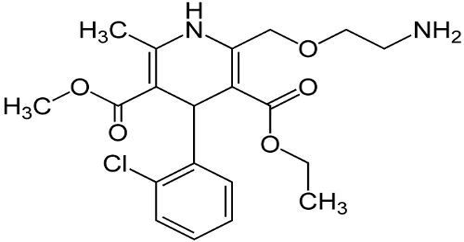
Amlodipine Besylate is a second-generation dihydropyridine class of calcium channel blockers and is used in the treatment of both hypertension and angina pectoris. Like other calcium channel blockers, Amlodipine Besylate acts by blocking the influx of calcium ions into vascular smooth muscle and cardiac muscle cells during membrane depolarization. This action causes the relaxation of vascular and arterial smooth muscle cells, resulting in arterial vasodilation and a decrease in cardiac work and oxygen consumption. Atenolol is a β-blocker that seems to be equally effective as an antihypertensive, antianginal, and antiarrhythmic drug widely used as a Cardiovascular drug in combination with Amlodipine Besylate. Atenolol contends with sympathomimetic neurotransmitters such as catecholamine for binding at beta (1)- adrenergic receptors in the heart and vascular smooth muscle, inhibiting sympathetic stimulation1-4Amlodipine Besylate is Chemically 3-ethyl 5-methyl 2-[(2-aminoethoxy) methyl]-4-(2-chlorophenyl)-6-methyl-1, 4-dihydropyridine- 3, 5-dicarboxylate and its molecular formula C20H25ClN2O5 (Fig.1). It is official in IP-20075, USP-20106, and BP-20127.
Chemical structure of Amlodipine Besylate
Atenolol :
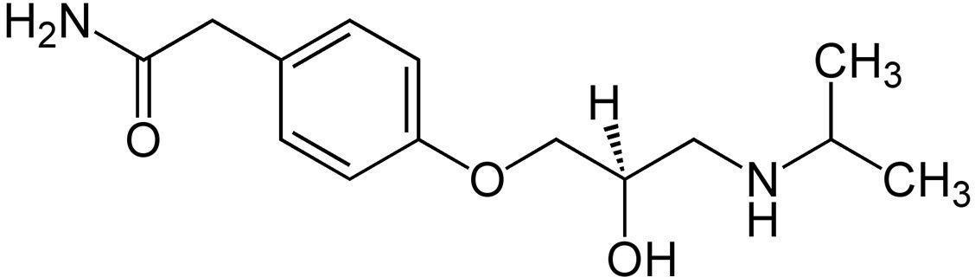
Atenolol is chemically2-(4-{2-hydroxy-3-[(propan-2yl)amino] propoxy} phenyl) acetamide and its molecular formula C14H22N2O3 (Fig.2), It is official in IP- 20078 and BP-20129. The assay of Amlodipine Besylate and Atenolol in pure form and in pharmaceutical formulations. While British Pharmacopoeia described the liquid chromatography method for the assay of Amlodipine Besylate[7]. Non-aqueous titration method is specified in Indian Pharmacopoeia for the assay of Atenolol[8]. Several methods have been report in the literature for the estimation of Amlodipine Besylate and Atenolol individually10-12 and in other combinations13-32.The present Investigation was aimed at developing a fully validated RP- HPLC method for the simultaneous estimation of Amlodipine Besylate and Atenolol in bulk and pharmaceutical combined dosage form in biorelevant dissolution medium (FaSSIF) that is more economical, simple, precise and accurate than the previous methods.
Chemical structure of atenolol:
FaSSIF:
FaSSIF (Fasted State Simulated Intestinal Fluid) is a biorelevant test medium that replicates small intestinal fluid after drinking a glass of water. Generating in vitro dissolution profiles of a Test Product and Reference in this Biorelevant Medium reveals the rates of drug release in vivo. If in vitro drug release profiles are complete, it is likely that this medium can be used to assess chances of achieving bioequivalence of the test product to the Reference.FaSSIF contains the same type and level of physiological surfactants (biliary secretions) present in the intestinal fluid it replicates. These natural surfactants are critical because they form mixed micelles which can enhance drug solubility and dissolution greatly. FaSSIF has the average pH of fasted intestinal fluid and similar osmolarity too. These are important parameters to control when testing drugs or formulations sensitive to pH and salt content. FaSSIF mimics the fasted intestinal environment with bile salts and phospholipids. Micelles can affect solubility and retention; sample cleanup (filtration, dilution) and method robustness are critical to prevent column contamination and baseline disturbances.
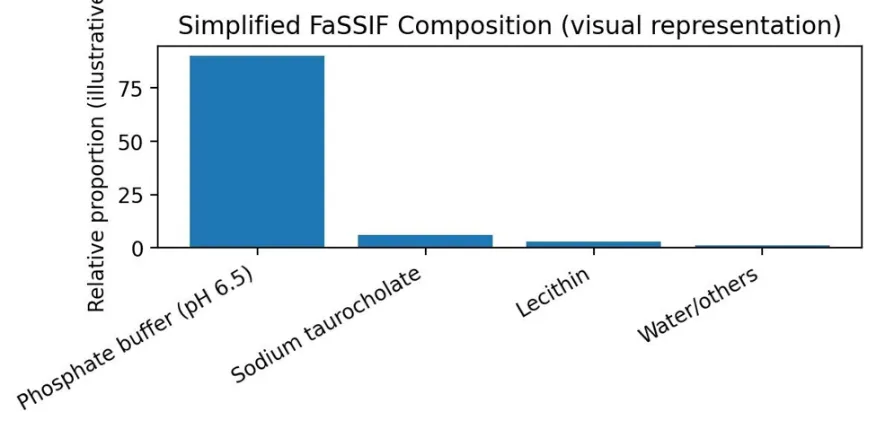
Figure 2. Simplified illustration of FaSSIF composition (illustrative).
Preparation of FaSSIF:
Accurately weighed 3.3g of sodium taurocholate dissolve in 500 mL blank FaSSIF solution, add 11.8 mL of a solution to 100mg/mL Lecithin in methylene chloride, and forming an emulsion. The Methylene chloride was eliminated under vacuum at 40°C. Then draw a vacuum for 15 minutes at 250mbar and also followed by 15 Minutes at 100mbar. These results gave in a clear, micellar solution having no perceptible odour of methylene chloride. After that, it was cool to room temperature and adjusts the volume upto 2L with blank FaSSIF[4].
Method Development :
Today the development of a method for analysis is usually based on prior art or less similar instrumentation. It is infrequent today that an RP- HPLC based method is developed that does not in some way relate or compare to existing, literature based approaches. The development of any new or improved method usually tailors existing approaches and instrumentation to the current analyte, as well as the final needs or requirements of the method.Key considerations include physicochemical properties (pKa, polarity), column selection, mobile phase selection (acetonitrile or methanol with phosphate buffer), pH optimization (typically pH 3-4 for these analytes), and detector wavelength (commonly 254 nm). System suitability testing should be performed to ensure acceptable plates, tailing factor, and resolution. The method development usually requires selecting the method requirements and deciding on what type of instrumentation to utilize .The development stage, decisions regarding choice of column, mobile phase, detectors, and method of quantitation must be addresses[1].
Optimization of HPLC method:
The HPLC method was optimized and developed with a simultaneous assay method for Amlodipine besylate and Atenolol The mixed standard stock solution (25µg/mL of HTZ, 10µg/mL of AML, 80µg/mL of Atenolol) injected in HPLC. Different ratios of methanol and potassium dihydrogen orthophosphate buffer at different pH and molarities were tried[4].
Method validation:
The method validation was done according to the ICH guidelines. The validation characteristic parameters such as accuracy and precision, linearity, and specificity, LOD, LOQ and robustness. The degradation also checked like acid, alkali , photolytic, oxidative and photolytic. The developed RP-HPLC method for simultaneous estimation of Amlodipine Besylate and Atenolol in FaSSIF medium was validated as per ICH guidelines with respect to specificity, linearity, accuracy, precision, limit of detection (LOD), limit of quantification (LOQ), robustness, and system suitability.
Specificity
Specificity was evaluated by analyzing blank FaSSIF medium, standard solutions, and sample solutions. No interfering peaks were observed at the retention times of Amlodipine Besylate and Atenolol, indicating that the method is specific for the simultaneous estimation of both analytes in the presence of biorelevant media components.
Linearity
Linearity was assessed by preparing standard solutions at different concentration levels. Amlodipine Besylate: 5–25 µg/mL
Atenolol: 10–50 µg/mL
Calibration curves were constructed by plotting peak area versus concentration. The method exhibited excellent linearity with correlation coefficients (r²) greater than 0.999 for both drugs.
Accuracy
Accuracy was determined by recovery studies using the standard addition method at three levels:
80%
100%
120%
The percentage recoveries were found to be:
Amlodipine Besylate: 98–102%
Atenolol: 98–102%
These results indicate that the method is accurate and free from interference.
Precision
Repeatability (Intra-day Precision)
Six replicate injections of standard solution were analyzed within the same day.
%RSD: < 2%
Intermediate Precision (Inter-day Precision)
The analysis was repeated on different days.
%RSD: < 2%
This confirms that the method is precise and reproducible.
Limit of Detection (LOD) and Limit of Quantification (LOQ)
LOD and LOQ were calculated using the standard deviation of the response and slope of the calibration curve:
LOD = 3.3 × (σ/S)
LOQ = 10 × (σ/S)
Typical values obtained:
Amlodipine Besylate:
LOD: ~0.5 µg/mL
LOQ: ~1.5 µg/mL
Atenolol:
LOD: ~1.0 µg/mL
LOQ: ~3.0 µg/mL
Robustness
Robustness was evaluated by making small deliberate variations in chromatographic conditions:
Flow rate (±0.1 mL/min)
Mobile phase composition (±2%)
Detection wavelength (±2 nm)
No significant changes in retention time or peak area were observed, and %RSD remained below 2%, indicating robustness of the method.
System Suitability
System suitability parameters were evaluated prior to analysis:
Theoretical plates: > 2000
Tailing factor: < 2
Resolution between peaks: > 2
These results confirm that the system is suitable for analysis.
CONCLUSION:
RP-HPLC methods, when properly optimized and validated, provide reliable simultaneous quantification of Amlodipine and Atenolol in both pharmaceutical dosage forms and biorelevant media. Future directions include LC-MS coupling for enhanced specificity and miniaturized chromatographic methods for faster throughput.
REFERENCES



Supriya Davkare*, Gayatri Maneri, Kodalkar V. N., Dr. Nagaraju Potnuri, RP-HPLC Method Development and Validation for Simultaneous Estimation of Amlodipine Besylate and Atenolol in Biorelevant Media (FaSSIF), Int. J. of Pharm. Sci., 2026, Vol 4, Issue 6, 5086-5094. https://doi.org/10.5281/zenodo.20762184
 10.5281/zenodo.20762184