

We use cookies to ensure our website works properly and to personalise your experience. Cookies policy
Department of Pharmaceutical Chemistry, Centre for Pharmaceutical Sciences, UCESTH, JNTUH, Kukatpally, Hyderabad Telangana, India, 500058
Helminth infections remain a major global public health concern, affecting billions of people worldwide and causing significant morbidity, particularly in developing countries. The emergence of drug resistance, limited efficacy of currently available anthelmintic agents, and the need for safer and more effective therapies have encouraged the search for novel therapeutic molecules. Quinazoline is a privileged heterocyclic scaffold that exhibits a wide range of pharmacological activities, making it an attractive template for the development of new anthelmintic agents. A series of quinazoline derivatives were rationally designed by introducing different electron-donating and electron-withdrawing substituents to improve their biological activity and physicochemical properties. The designed compounds were synthesized through a multistep synthetic route using suitable starting materials and reaction conditions. The synthesized derivatives were characterized using standard analytical and spectroscopic techniques such as melting point determination, Thin Layer Chromatography (TLC), Fourier Transform Infrared (FTIR) spectroscopy, Nuclear Magnetic Resonance (¹H NMR), and Mass Spectrometry to confirm their chemical structures and purity. The molecular property prediction of all synthesized compounds by using Lipinski rule of 5, PASS studies OSIRIS molecular property explorer molsoft , docking sofwares All the compounds were synthesized by conventional method The synthesized compounds were evaluated Anthelmintic activity by using Indian adult earthworms(pherituma postuma) All the compounds shows the good percentage yields all the compounds obeys the Lipinski rule nontoxic drug likness and more active shows the good binding affinities when compared to the standard drug Albendazole.
Quinazoline is a privileged heterocyclic scaffold widely investigated in medicinal chemistry due to its broad spectrum of biological activities. Novel quinazoline derivatives have attracted considerable attention for antimicrobial, anticancer, anti-inflammatory and antiparasitic applications. Helminth infections remain a major global health burden, particularly in developing countries, and increasing resistance to existing anthelmintic drugs highlights the need for new therapeutic agents.Computer-aided drug design, including molecular docking and ADME prediction, accelerates identification of promising lead molecules before synthesis. The present work focuses on designing substituted quinazoline derivatives, synthesizing them, and evaluating their binding affinity against validated anthelmintic protein targets using in silico approaches. Such studies provi de insight into ligand–protein interactions, pharmacokinetic properties, and structure–activity relationships while reducing experimental cost and time. This introduction also emphasizes the importance of quinazoline chemistry, mechanisms of helminth infection, current drugs and limitations, rationale for molecular modification, and the significance of integrating synthetic chemistry with computational techniques in modern drug discovery. Quinazoline is a privileged heterocyclic scaffold widely investigated in medicinal chemistry due to its broad spectrum of biological activities. Novel quinazoline derivatives have attracted considerable attention for antimicrobial, anticancer,anti-inflammatory and antiparasitic applications. Helminth infections remain a major global health burden, particularly in developing countries, and increasing resistance to existing anthelmintic drugs highlights the need for new therapeutic agents.
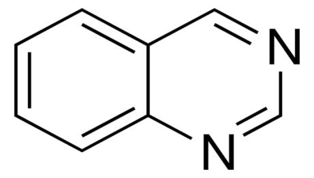
Figure 1. structure of quinazoline
Table no.1 Ligand with their IUPAC names
|
SR. NO |
Functional group |
Labelled as |
IUPAC Name |
|
1 |
CN |
R1 |
4-{(Z)-[2-(3-chlorophenyl)quinazolin-4(3H)-ylidene]amino}benzonitrile |
|
2 |
OCH3 |
R2 |
(4Z)-2-(3-chlorophenyl)-N-(4-methoxyphenyl)quinazolin-4(3H)-imine |
|
3 |
CH3 |
R3 |
(4Z)-2-(3-chlorophenyl)-N-(4-methylphenyl)quinazolin-4(3H)-imine |
|
4 |
F |
R4 |
(4Z)-2-(3-chlorophenyl)-N-(4-fluorophenyl)quinazolin-4(3H)-imine |
|
5 |
C2H5 |
R5 |
(4Z)-2-(3-chlorophenyl)-N-(4-ethylphenyl)quinazolin-4(3H)-imine |
2. MATERIALS AND METHODOLOGY
2.1 Materials
Chemicals used for the synthetic work were 2- amino benzamide Acetophenone , dimethyl sulphoxide dimethyl formamide ,phosphorous oxychloride iodine, potassium carbonate aniline derivatives ethanol . All the reactions were performed in dried borosilicate glass beakers round bottomed flasks conical flasks. Precoated silica gels plates were used for TLC to monitor progress of the reaction . compounds melting point were deterimend by capillary method and are uncorrected. UV chamber was used for detection of spots in TLC. IR spectra were recorded on BRUKER FTIR spectrometer. 1H NMR spectra were recorded on BRUKER -400MHZ Spectrometer using DMSO as solvent. The chemical shift data were expressed as values relatives to TMS in ppm. Mass spectra were recorded
3. EXPERIMENTAL SECTION :
3.1 In Silico Screening
Lipinski’s rule of 5 filtration
The files were inserted in *.pdb, *.mol, *.mol2, *.xyz, *.sdf, or .smile formats. Care was taken to avoid whitespace(s) in the input file name. The window opened and the files were uploaded in the above mentioned formats. pH was adjusted from 0-14 as required. Upon submission, results were obtained [Lipinski 2004].
3.2 Prediction of activity spectra for substances (PASS)
Molecules which have been filtered through Lipinski rule were subjected to online PASS software to predict their biological activities. This software may give the Pa and Pi values for respective activity. The Pa and Pi values should be between 0.000 to 1.000. The software may help in selecting type of activity to be predicted.
3.3 OSIRIS property explorer (version 2)
OSIRIS property explores version 2 (which requires JAVA platform to run) was used in the present study. The smiles of the compound were pasted in search bar, and it will show the results at right side with colour coding. A green colour indicates non-toxic and red indicates toxicity. It also gives the compound solubility profile, druglikeness and drug score.
3.4 Molsoft property explorer (version v.3.7-2)
In this present study Molsoft property explorer version v.3.7-2 was used for molecular exposure of compounds. When the structure of compounds drawn directly on the window or when inserted in mol, Inch, smiles formats will calculate properties like MlogP, MlogS.[10]
3.5 Docking (version 4.0)
AutoDock is a computational molecule modelling simulation software. It is especially effective for protein ligand docking. It has two versions Auto Dock 4.0, vina. Vina is a advanced version [11].
3.6 Ligand Modelling
These ligands are selected based Novelty. The structures of ligands were drawn in Chemsketch, generated their SMILES and saved as MDL mole file. By using generated SMILES, we can check ADME properties, toxicity profile and predict the activity of compounds. The selected ligands were converted into PDB format from mole file by using open babel software. Now the ligands are ready for molecular docking.[12]
SCHEME.1

R1=CN
R2 =OCH3
R3 = CH3
R4=F
R5=C2H5


Compound R1 Compound R2


Compound R3 compound R4

Compound R5
4.0 SYNTHESIS OF QUINAZOLINE AND ITS DERIVATIVES
Step 1: synthesis of 2- phenyl quinazolin -4(3H) -one (compound 1)
To the pre-heated mixture of 2-amino benzamide (1 mol) and acetophenone (1 mol) in DMSO in a round-bottom flask, iodine (10 mol%) was added as oxidising agent with addition of 20 ml of dimethyl sulphoxide as solvent. The reaction mixture was heated at 110oC for 16 hrs. The product was extracted three times with ethyl acetate (3×10 ml) to get pure quinazolinone.
Step 2: synthesis of 4- chloro -2 –(3- chlorophenyl ) quinazoline
To this Add the quinazolinone derivative to excess POCl₃.Reflux the mixture for 4–6 h. Monitor by TLC Remove excess POCl₃ under reduced pressure. Pour the residue onto crushed ice. Neutralize with sodium bicarbonate solution Filter the precipitate and recrystallize from ethanol
Step 3. Synthesis of final quinazoline derivatives
Dissolve 1 mmol of 4-chloro-2-(3-chlorophenyl)quinazoline in 20 mL ethanol. Add 1.2 mmol substituted aniline (R = CH₃, NO₂, OCH₃, F, C₂H₅).Add 2 mmol K₂CO₃. Reflux for 6–8 h with stirring. Monitor the reaction by TLC. Cool the mixture and pour into ice water. Filter the precipitated solid. Wash with water and recrystallize from ethanol.
5.0 EVALUATION OF ANTIHELMINTIC ACTIVITY
The synthesized quinazoline derivatives were evaluated for in vitro antihelminthic activity using adult earthworms (Pheretima posthuma), which are commonly used due to their physiological similarity to intestinal helminths.
Healthy earthworms of approximately 8–10 cm in length and 0.2–0.3 cm in width were collected and washed with normal saline to remove adhering soil. Test solutions of the synthesized compounds were prepared at the required concentrations using 1% DMSO as the solvent. Albendazole was used as the standard drug, while 1% DMSO served as the negative control.
The earthworms were divided into different groups (six worms per group) and placed in Petri dishes containing the test solutions, standard drug, or control solution. The worms were observed continuously, and the time required for paralysis (P) and time required for death (D) were recorded. Paralysis was confirmed when the worms failed to move even after gentle shaking, while death was confirmed by the absence of movement even after exposure to warm water (50–55°C) and fading of body color.
The antihelminthic activity of the synthesized compounds was compared with that of the standard drug based on the recorded paralysis and death times. Lower paralysis and death times indicated better antihelminthic activity.
6.0 RESULTS AND DISCUSSION
6.1 Docking Analysis
Docking is used to find the exact binding conformation and orientation of the ligand molecule into the active site of the protein. The synthesized five quinazoline compounds and standard (Albendazole] were docked againstβ-tubulin (PDB ID: 4O2B using Auto-Dock Tool 4.0, an automated docking tool.
The docking process involves four main steps,
(i) Protein preparation
(ii) Ligand preparation
(iii) Grid preparation and
(iv) Docking.
The Lamarckian genetic algorithm has been used as the search algorithm to search for the best conformers. The initial population size was set randomly as 150 individuals and ten generations was set for each genetic algorithm run and the maximum number of energy evaluations was set to 2,500,000. The grid box size was set as to include all the active site residues present in rigid macromolecules. The grid box was centered at 8.671 Å x -8.036 Å x 0.67 Å and the dimensions of the grid box have been set as 40, 40, 40 (X,Y,Z co-ordinates) so as to include all the active site residues.
Docking studies showed that all ligands chosen for analysis possessed a least binding affinity with the target protein β-tubulin (PDB ID: 4O2B The protein ligand interactions were studied in terms of minimum binding energy (Kcal/mol) and the number of hydrogen bonds formed with active site residues
Molecular docking studies were carried out against β-tubulin (PDB ID: 4O2B) to evaluate the antihelminthic potential of the synthesized quinazoline derivatives. All derivatives exhibited favorable binding within the active site of β-tubulin and showed better binding energies than the standard drug Albendazole(-6.09kcal/mol). Among all synthesized compounds, the cyano-substituted derivative (Q1) exhibited the highest binding affinity with a docking score of -7.32 kcal/mol, indicating the strongest interaction with the target protein. The enhanced activity may be attributed to the electron-withdrawing nature of the cyano group, which improves protein–ligand interactions within the binding pocket The methoxy-substituted derivative (Q2) also showed excellent binding affinity with a docking score of -7.22 kcal/mol, suggesting that the methoxy group contributes favorably to receptor binding through electronic and hydrophobic interactions.
Table No.2
|
Sr. No |
Ligand Name |
Key residues |
Distance (Ao) |
No of hydrogens |
Docking score [kcal/ mol] |
|
1 |
R1 |
LYS |
2.928 |
1 |
7.32 |
|
2 |
R2 |
- |
- |
0 |
7.22 |
|
3 |
R3 |
- |
- |
0 |
6.94 |
|
4 |
R4 |
- |
- |
0 |
6.63 |
|
5 |
R5 |
- |
- |
0 |
6.75 |
|
6 |
Albendazole standard |
ASN |
3.242 |
1 |
6.0 |
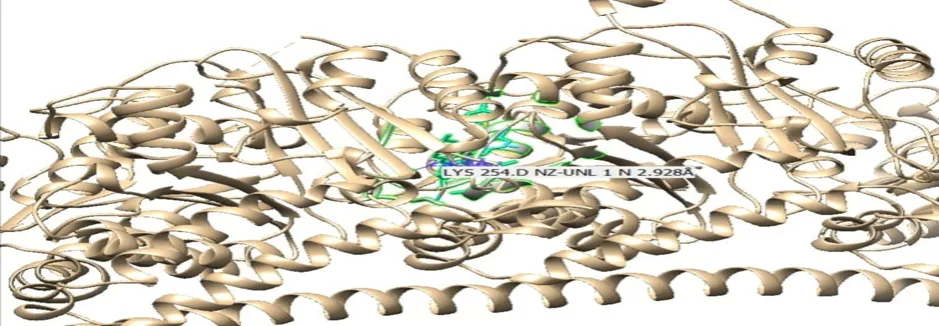
Figure. 2[4-{(Z)-[2-(3-chlorophenyl)quinazolin-4(3H)-ylidene]amino}benzonitrile}
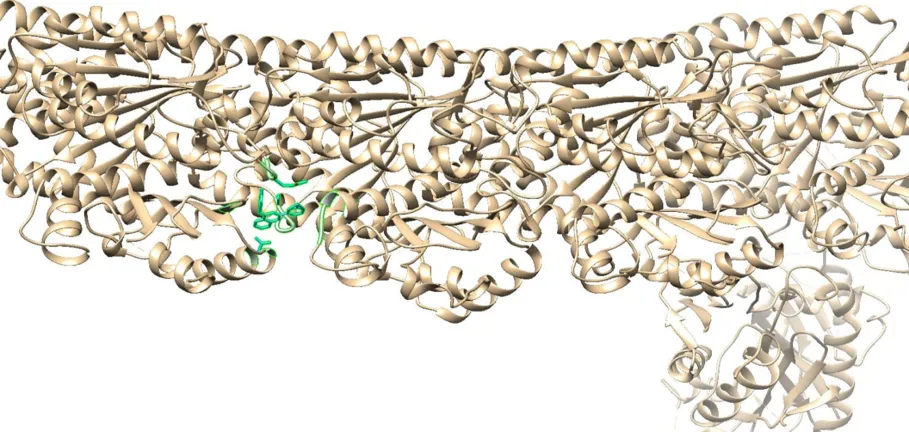
Figure .3[(4Z)-2-(3-chlorophenyl)-N-(4-methoxyphenyl)quinazolin-4(3H)-imine]
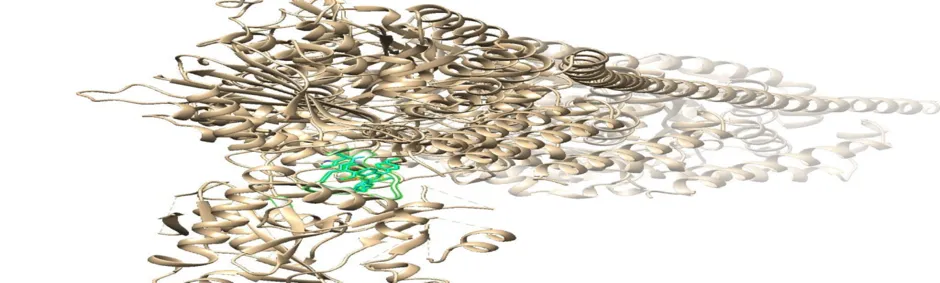
Figure .4[4Z)-2-(3-chlorophenyl)-N-(4-methylphenyl)quinazolin-4(3H)-imine]
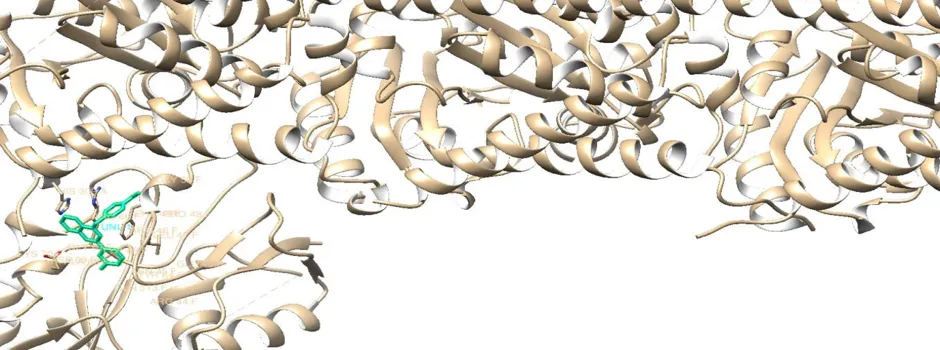
Figure. 5[(4Z)-2-(3-chlorophenyl)-N-(4-fluorophenyl)quinazolin-4(3H)-imine]
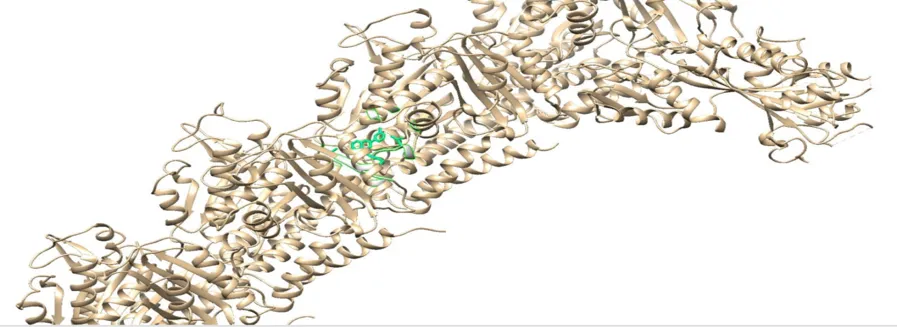
Figure. 6 [(4Z)-2-(3-chlorophenyl)-N-(4-ethylphenyl)quinazolin-4(3H)-imine]
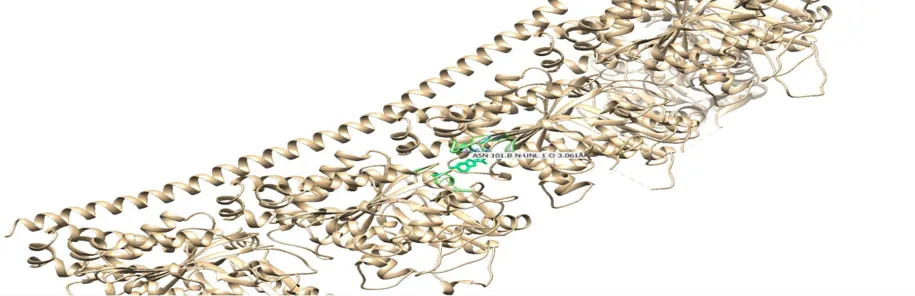
Figure. 7[Albendazole standard]
Table No.3 Lipinski rule evaluation of ligands
|
SR.NO |
LIGAND NAME |
MW{G/MOL |
HBD |
HBA |
LOG P |
LIPINSKI VIOLATION |
|
1 |
R1 |
358.82 |
2 |
2 |
3.65 |
1 |
|
2 |
R2 |
361.82 |
1 |
3 |
3.78 |
1 |
|
3 |
R3 |
345.82 |
1 |
2 |
3.66 |
1 |
|
4 |
R4 |
349.79 |
1 |
3 |
3.54 |
1 |
|
5 |
R5 |
361.87 |
2 |
1 |
3.89 |
1 |
|
6 |
Albendazole |
281.33 |
2 |
4 |
1.45 |
0 |
Result of OSIRIS molecular property explorer
Table N0.4 Results of OSIRIS molecular property explorer
|
Compound |
Toxicity |
Clog p |
Solubility |
Mol weight |
TPSA |
Druglikeness |
Drug score |
|
R1 |
Irritant effect |
4.09 |
-5.93 |
356.0 |
60.54 |
-7.57 |
0.2 |
|
R2 |
Irritant effect |
4.18 |
-5.18 |
361.0 |
45.98 |
-2.0 |
0.25 |
|
R3 |
Irritant effect |
4.6 |
-5.5 |
345.0 |
36.75 |
-2.28 |
0.22 |
|
R4 |
Irritant effect |
4.35 |
-5.47 |
349.0 |
36.75 |
-2.02 |
0.24 |
|
R5 |
Irritant effect |
5.01 |
-5.66 |
359.0 |
36.75 |
-1.11 |
0.18 |
|
Standard [albendazole] |
Reproductive Effect |
2.96 |
-4.11 |
265.0 |
92.31 |
-2.08 |
0.26 |
Molsoft property explorer
Table No.05 Results of Molsoft molecular property explorer
|
Compound |
Mol formula |
Mol Weight |
HBA |
HBD |
Mlogp |
Mlogs |
Mol PSA |
Mol Volume |
|
R1 |
C21H16C1N33 |
345.83 |
3 |
1 |
4.32 |
-4.86 |
46.11 |
340.36 |
|
R2 |
C22H18C1N3 |
359.85 |
3 |
1 |
4.67 |
-4.86 |
36.60 |
338.23 |
|
R3 |
C21H13C1N4 |
361.83 |
2 |
1 |
5.16 |
-5.43 |
29.05 |
327.33 |
|
R4 |
C21H13CIN4 |
356.81 |
2 |
1 |
4.78 |
-5.07 |
29.05 |
312.30 |
|
R5 |
C20H13C1FN3 |
349.79 |
2 |
1 |
5,.65 |
-5.86 |
29.05 |
345.47 |
6.2 Pass Studies
PASS (Prediction of Activity Spectra for Substances) is a computational tool used to predict the probable biological activities of chemical compounds based on their molecular structure. It estimates the probability of activity (Pa) and inactivity (Pi), helping to identify potential pharmacological effects before experimental testing.
Table no.6
|
SR. NO |
Compound name |
Predicted biological Activity |
PA[Activity ] PI [Inactivity ] |
|
1 |
R1 |
Anti helminthic |
0.210 ,0.056 |
|
2 |
R2 |
Anti helminthic |
0.352,0.066 |
|
3 |
R3 |
Anti helminthic |
|
|
4 |
R4 |
Anti helminthic |
0.298,0.111 |
|
5 |
R5 |
Anti helminthic |
0.410,0.039 |
|
6 |
Standard Albendazole |
Anti helminthic |
0.925, 0.002 |
Table No.7 Physical Data of synthesized compounds
|
SR. NO |
Compound name |
Molecular formula |
Molecular weight |
Melting point |
Rf value |
Percentage yield |
|
1 |
4-{(Z)-[2-(3-chlorophenyl)quinazolin-4(3H)-ylidene]amino}benzonitrile |
C21H16C1N33 |
345.83 |
225 |
0.65 |
78% |
|
2 |
(4Z)-2-(3-chlorophenyl)-N-(4-methoxyphenyl)quinazolin-4(3H)-imine |
C22H18C1N3 |
359.85 |
220 |
0.68 |
72% |
|
3 |
(4Z)-2-(3-chlorophenyl)-N-(4-methylphenyl)quinazolin-4(3H)-imine |
C21H13C1N4 |
361.83 |
225 |
0.65 |
78% |
|
4 |
(4Z)-2-(3-chlorophenyl)-N-(4-fluorophenyl)quinazolin-4(3H)-imine |
C21H13CIN4 |
356.81 |
270 |
0.45 |
75% |
|
5 |
4Z)-2-(3-chlorophenyl)-N-(4-ethylphenyl)quinazolin-4(3H)-imine |
C20H13C1FN3 |
349.79 |
225 |
0.62 |
73% |
All the newer quinazoline derivatives were synthesized by different chemical reagents compound [R=CN] &[R=ch3]Were obtained high yields . all the synthesized molecules were recrystallized from the methanol or ethanol compound are purified by column chromatography and characterized by FTIR ,1H NMR &Mass spectroscopic techniques
7.0 SPECTRAL INTERPRETATION
(4Z)-2-(3-chlorophenyl)-N-(4-methoxyphenyl)quinazolin-4(3H)-imine:
FTIR :[KBr cm-1]3344 N-H[secondary amine] 3058 C-H[Aromatic] 2955 och3 [methoxyC-H] 1621 C=N[Quinazoline] 1578 C=C[Aromatic] 1170 [Ar-N] 1031 C-O [Methoxy] 1H NMR[δ ppm, DMSO) 10.21 [s-1H-NH] 8.63 [d-1H -H5] 8.18 d[1H-H8] 7.92 [t-1H-H-7] 7.86 [d-2H-H-2,6] 7.50 [d-2H-H-3,5] 6.96 [d-2H-H-3,5] EI-MS:m/z359.1 [m+1]
(4Z)-2-(3-chlorophenyl)-N-(4-methylphenyl)quinazolin-4(3H)-imine:
FTIR :[KBr cm-1] 3354 N-H 3056 C-H[Aromatic] 2923 C-H[CH3][Aliphatic] 1622 C=N 1587 C=C[Aromatic] 1495 C=N 761 C-Cl[aryl chloride] 1HNMR 10.25 [s-1H-NH] 8.62 [d-1H-H-5] 8.18 [d-1H-H-5] 8.18 [1H-H-8] 7.92 [t-1H-H-7] 7.76 [1H-H-6] 7.82 [d-2H-H2,6] 7.48 [d-2H-H-3,5] 7.58 [d-2H-H-2,6] EI-MS:m/z 343.1[m+1]
(4Z)-2-(3-chlorophenyl)-N-(4-fluorophenyl)quinazolin-4(3H)-imine:
FTIR :[KBr cm-1]3380 N-H [Secondary amine] 3060 C-H [Aromatic] 2922 C-H[Aliphatic] 1620 C=N 1590 C=C[Aromatic] 1520 C=N 1245 [Ar-N] 840 C-H[aromatic] 760 C-Cl [arylchloride] 1HNMR 10.22 [ s-1H-NH] 8.66 [d-1H -H-5] 8.21[d-1H- H-8] 7.97[t-1H-H-7] 7.88[dd-2H-H-2,6] 7.25[dd-2H- H-3,5] 7.63[d-2H- H-2,6] 7.50[d-2H-H-3,5] EI-MS:m/z 337.1[m+1]
4Z)-2-(3-chlorophenyl)-N-(4-ethylphenyl)quinazolin-4(3H)-imine:
FTIR :[KBr cm-1] 3342 N-H [Amine] 3056 C-H [Aromatic] 2928 C-H ] [Aliphatic] 2856 C-H Aliphatic 1618 C=N 1573 C=C [Aromatic] 1294 C-N ] 1HNMR 12.28 [s-1H-NH] 8.78 [s-1H-H-2] 8.34 dd[1H-H-4] 7.92 td[1H-H-3] 7.79 d[1H-H-5] 7.63 dd[1H-H-7] EI-MS:m/z 358.1 [m+1]
8.0 EVALUATION OF ANTHELMINTIC ACTIVITY
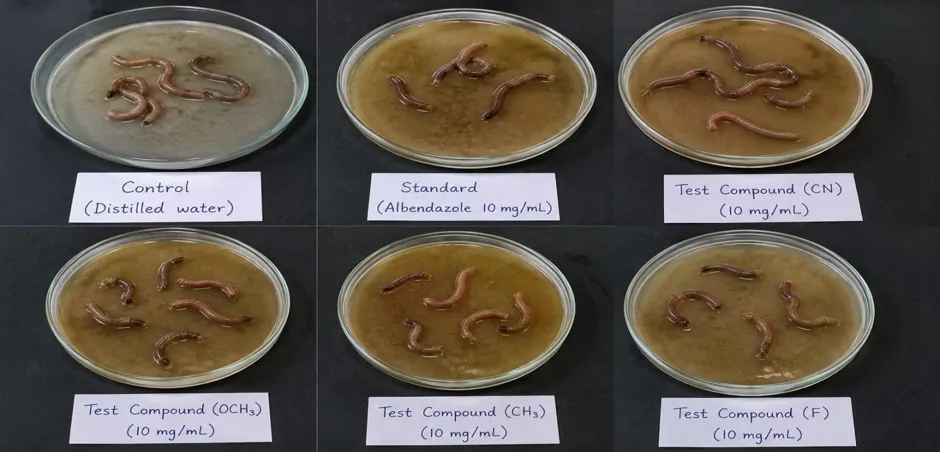
The quinazoline derivatives were screened for their in-vitro anthelmintic activity by using standard protocol against Indian adult earthworm [pherituma postuma] and compared with the standard .The indian adult earthworm [pherituma postuma] resemble both anatomically biologically and physiologically to the intestinal round worm parasites of humanbeing
All the synthesized compound displayed siginificant Anthelmintic activityTable no.6 Compounds like R=CN, could paralyze and kill the worms in less time . hence this compound found to be more potent than the standard drug albendazole
Table no.8 Biological activity evaluation
|
SR. NO |
Compound Name |
Conc {mg/ml] |
Paralysis Time[min] |
DeathTime [min] |
|
1 |
R1 |
10 |
16.3 |
28.7 |
|
2 |
R2 |
10 |
17.2 |
29.8 |
|
3 |
R3 |
10 |
17.2 |
29.8 |
|
4 |
R4 |
10 |
21.3 |
36.8 |
|
5 |
R5 |
10 |
19.6 |
33.6 |
|
6 |
Albendazole standard |
10 |
18.5 |
32.2 |
|
7 |
Distilled water |
- |
No paralysis |
No death |
CONCLUSION
In the present research mainly focus on the design synthesis and in SILICO Investigation of novel quinazoline derivatives, as an anthelmentic agents. A series of quinazoline derivatives are rationally designed by introducing different substutients. to improve their biological activity These compounds are then synthesized using appropiate organic synthesis techniques characterized by standard analytical method to conform the structures and purity After this compounds were subjected through the pass studies which predicted to novel antihelmenthic acitivity of this hetrocycle compounds. These synthesized derivatives are further evaluated. by the IN SILICO method including molecular docking, to Investigate the binding affinity towards selecting the anthelmintic target of protein 402B. In this docking the derivative [R=CN] on showing the high binding Affinty of 7.23.cal/mol and the following compounds such as [R=OCH3] Showing -7.22,[R=CH3] Showing 6.94,[R=F] Showing 6.63, [R=C2h5] showing 6.75 and sourcing compounds,and standard drug albendazole showing -6.09 so these values concluded that all the compounds showing high binding affinity compared to standard. In this addition, computational tools such as ADME & Drug likeness, prediction are employed to asses their pharmacokinetic properting & predict their suitability as a Drug candidates.By these all the compound showing the High GI Absorption with no CYP inhibition ,Log p, all are within the limit. And next this desigined wahstcompounds were subjected to Toxicity risk assesment by the tool oseries toxicity prediction .By these all the compound showing the Absence of mutagencity Teratogencity reprodutive effect but presence of irritant effect and also standard showing the reproductive effect. By the antihelmintic activity Compounds like R=CN, could paralyze and kill the worms in less time . hence this compound found to be more potent than the standard drug albendazole
ACKNOWLEDGEMENTS
The authors are grateful to the management and principal of jawaharlal Nehru techonoligical university hyderabad kukatpally -500085 Telangana India for providing the necessary research facilities
REFERENCES



Akshitha Ganavena, Dr. M. Sandhya Rani, Guduru Sai Krishna, Synthesis, In-silico Studies and Evaluation of New Quinazoline Derivatives as an Anthelmintic Agents, Int. J. of Pharm. Sci., 2026, Vol 4, Issue 9, 688-700. https://doi.org/10.5281/zenodo.22333239
 10.5281/zenodo.22333239