

We use cookies to ensure our website works properly and to personalise your experience. Cookies policy
1,4,5Tulsiramji Gaikwad Patil College of Pharmacy, Mohgaon, Wardha Road, Nagpur (MH) – 441108.
2,3Datta Meghe College of Pharmacy, Salod (H), Wardha-442002 Datta Meghe Institute of Higher Education and Research(D.U)9284591082.
Telemedicine is found to be a disruptive event that has brought major transitions to the health care industry by transforming care for a number of health care services. This review paper tries to explore the implications of telemedicine on care in the health industry, the possibilities of telemedicine causing a shift in the delivery of traditional care, as well as what telemedicine implies. It begins with the introduction of telemedicine concepts. This is achieved by highlighting the various applications of telemedicine such as telemonitoring, teleconsultation, tele-education, as well as various technologies that enable telemedicine to occur. It then outlines the various advantages of telemedicine such as enhancing patient outcomes, reducing the cost of health care, enhancing the accessibility of various health care services, as well as enhancing the efficiency of health care delivery. Telemedicine is one of the approaches that has managed to revolutionize practices in the current world of medicine that is being carried out remotely using information technology solutions. Telemedicine bridges the gap that has occurred between patients and medical practitioners for a long time since patients are attended to remotely through various forms of consultations, diagnoses, and treatment sessions.
It allows health professionals to evaluate, diagnose, and treat patients remotely by using telemedicine. This is very promising for overcoming geographical obstacles, making healthcare available in disadvantaged and rural communities, and ensuring continuity of services during emergencies. Fields such as teleconsultation, telepharmacy, teleradiology, and telepsychiatry have increased its adoption within several medical specialties. This has been further supported by the global reach of mobile technologies, artificial intelligence, and access to the internet. The telemedicine ecosystem, in addition, advocates for accessibility, cost-effective, patient-centered, and efficient healthcare delivery. Despite these pros, challenges such as infrastructural deficits, data security, and regulatory barriers are still outstanding.
The term "telemedicine" refers to the delivery of medical services through telecommunication technologies, which allows for the evaluation, diagnoses, and monitoring of patients in a distant location. This has been facilitated by digital technology, smartphones, electronic health records, and high-speed internet. Its adoption as a safe alternative to traditional modes of healthcare delivery was further accelerated by the COVID-19 pandemic. These days, telemedicine is being integrated into emergency treatment, mental health services, general care, specialist consultations, and chronic disease management.
Amongst today's most serious disruptors in healthcare, telemedicine involves the use of technology to deliver medical care from a distance. Because of enhanced telecommunications technologies and an increasing demand for effective, accessible, and affordable healthcare services, telemedicine is one of the fields that will continue to transform the manner in which healthcare will be delivered in the future. This paper discusses the history of telemedicine, its present status, and its potential to transform healthcare in the years to come.
Telemedicine is a disruptive factor in the chain of healthcare delivery, involving treatments remotely through the use of telecommunications technology. The subsequent review throws light on the evolution of telemedicine, its benefits, challenges, and future prospects, using relevant sources.[1]
II. TYPES OF TELEMEDICINE:
Live Video Telemedicine: Real-time video conferencing of follow-ups and conversations with patients and medical professionals. In live video telemedicine, patients from a distance can consult with a medical professional through a live videoconferencing process. It eliminates in-person visits because of the real-time communication and diagnosis that it provides between the patient and the medical provider. This has the potential to be useful for patients from underserved areas, those far away, those with low mobility, and those with urgent medical needs. The services rendered may include routine examinations, follow-up consultations, and counseling to urgent care. As technology advances, live video telemedicine is expanding and holds the potential to help make healthcare more available.
Synchronous telemedicine is also referred to as live video telemedicine and involves the use of audio-visual communication technologies in facilitating two-way, real-time contact between medical personnel and their patients. To be sure, under such systems, patients will consult physicians or specialists from a distance by way of video conferencing devices like laptops, tablets, or even cell phones equipped with cameras and microphones.
B. Store-and-forward: Clinical information such as images, video, and patient data is captured and stored in the store and forward telemedicine system before being transmitted to a doctor for further analysis and diagnosis. Store and forward telemedicine is advantageous since it does not require the presence of a patient and a doctor to be simultaneous, unlike live video telemedicine. Store-and-forward telemedicine is also advantageous since it allows doctors to review data at any time of their convenience without necessarily being present in their offices or requiring real-time connectivity. Store-and-forward telemedicine allows doctors to review data or images at their convenience any time without necessarily having to be in their offices or requiring real-time connectivity, making it an advantage. Store-and-forward telemedicine, also called asynchronous telemedicine, refers to the process of collecting data, storing it, and then forwarding it to a medical professional for analysis at a later time. This form of telemedicine does not require both the patient and the telemedicine medical professional's presence at the same time.
C. Remote patient monitoring: refers to the management and observation of a condition during care rendered by gathering the patient's information through technology and sending the data to the healthcare professional. RPM utilizes technology in collecting and transmitting patient health data from one place to another so that the health status of the patient can be analyzed and advised accordingly by the medical experts. This includes vital signs such as blood pressure, pulse, and blood glucose levels, among others, such as other forms of health data. RPM extends the ability of medical professionals to monitor patients' health conditions and initiates preventive measures if any abnormal change in the patient's conditions is detected without the necessity for frequent visits to the clinics. It is one way of observing the patient's health status outside the confines of traditional medicine and hospitals, which is very important to patients recuperating from surgery. Remote Patient Monitoring (RPM) is a form of telemedicine where the patient's health information is regularly collected and transmitted to the medical practitioner from the home or another location further away. It eliminates the need for repeated hospital admissions as it allows doctors and nurses to monitor the patient health status in real time, offers early warning signals in the form of complications, and acts promptly where need be.
D. Mobile Health-mHealth: mHealth is the abbreviated form of mobile health that refers to the application of medical and public health practices using mobile devices such as tablets, as well as smartphones, for the purpose of health care services and information. Mobile health, also referred to as mHealth, is the use of wearable technology, tablets, as well as smartphones for the improvement of health care delivery and medical services. It comprises health and wellness applications, telemedicine platforms, telemonitoring of health information, health information applications, prescription reminders, among other applications. mHealth helps individuals become more active with regard to their health since this is enhanced by the availability of mobile devices. Additionally, it creates job opportunities for health care providers to offer their services outside the health care unit; this is important for the patient since they get rapid access to various resources and services. Moreover, with advancements in technology, it is expected to improve patient engagement with health care services, health care accessibility, as well as health care outcomes. Mobile health, also referred to as m-Health, is the application of wireless technology such as sensors, tablet computers, and telemobile phones for the support of health care practices. Mobile health is a rapidly expanding area of telemedicine that allows health care providers and patients access to health information anytime and anywhere access to health information anytime and anywhere.
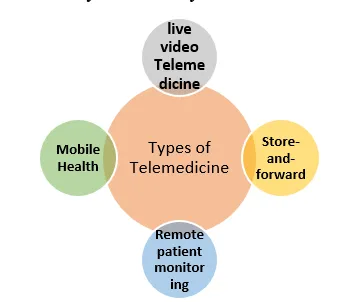
Figure 1: Varuous Types of Telimedicine
III. EVOLUATION OF TELIMEDICINE:
Growth in telemedicine has been a number of things: an amazing journey of changing healthcare needs, patient-centered care, and technological advancement. The following timeline identifies some of the key innovations and turning events of the telemedicine industry.
A. Early Concepts and Experimental Use (Early 20th Century): The investigation of radio and telephone communications for medical consultations in the early 20th century marks the beginning of the history of telemedicine. In this sense, radiology was a pioneer, using communications to send pictures for remote interpretation. [2]
B. Space Age Telemedicine (1960s): The 1960s are often referred to as the "Space Age of Telemedicine." During this period, great strides made in communication and space technology by the U.S. space program significantly accelerated the development and practical use of remote healthcare systems.
The start of telemedicine was greatly influenced by NASA and its initiatives in regard to the space race. This led to, among other things, the establishment in 1960 of the Space Technology Applied to Rural Papago Advanced Health Care-STARPAHC-project, which up until today has given telemedicine services to the Papago Native American tribe in Arizona.
C. Telemedicine in Remote Places (1970s–1980s): The growing demand for health services in rural and underserved regions saw an expanded development of telemedicine outside experimental and space-based practice in the 1970s and 1980s. In this decade, telemedicine made its journey from a research concept to an operational health service that found support from government agencies, academia, and medical institutions.
One historic undertaking was NASA's STARPAHC (satellite Technology Applied to Rural Papago Advanced Health Care) project, from 1973 to 1977, which used satellite communication technologies to provide medical care to the Papago Indian Reservation in Arizona, USA. This innovation of satellite communication technologies connected doctors working in urban hospitals with nurses and paramedics located in isolated rural locations. Telemedicine can increase the availability of health care in remote geographic areas, overcoming the main barriers created by their distance, as stated in the STARPAHC study.
First gaining popularity in the 1970s and 1980s, telemedicine was practiced in underserved or rural areas with little access to healthcare. Projects such as that by the Medical University of South Carolina, which provided healthcare to inmates in a South Carolina prison, demonstrated that telemedicine can transcend geographic limitations to care .
D. 1990s Technological Advancements in Telecommunication: Due to the tremendous advancements in computer technology, telecommunication, and the internet, the 1990s were a pivotal period in the history of telemedicine. During this time, telemedicine evolved from small experimental systems to a more interactive, accessible, and affordable healthcare tool that is now utilized by clinics and hospitals all over the world. Highly accurate medical information, pictures, or video images can be transmitted over long distances owing to the rapid adoption of personal computers, digital image processing, and broad band communications. This made it possible for the speed, accuracy, and integrity of telemedicine to be upgraded by such technological advancements. It became possible for communication among medical practitioners for the exchange of digital X-rays, CT scans, or laboratory results through electronic networking for the first time in history. Such advancements led to telepathology and teleradiology becoming feasible modes of therapy.
Telemedicine is what advancements in communication technology for the digital age, along with the use of the Internet, have brought about. It became feasible to do more sophisticated teleconsults, medical consultations, or educational lectures through digital imaging and video conferencing.
E. Regulation and Reimbursement: 2000s
The last decade, that is, the 2000s, was a major contributing decade for telemedicine development, with widespread transformations observed in regulations linked to health care, unlike the other decades that were dominated by advancements in technology. This decade witnessed the shift of telemedicine from being a complementary service to becoming an integral part of health care delivery systems.
It became clear that telemedicine should also comply with certain legal and ethical principles in order to ensure that telemedicine is safe, fair, as well as effective. This occurred as telemedicine rapidly gained support with advancements in broadband internet technology and mobile communication technology. This occurred as various nations began formulating telemedicine procedures in matters of liability for practice, consent, as well as confidentiality.
Some countries, such as the US, recognized telemedicine services through some regulations in the 2000s. This development led to an improvement in the use of telemedicine services since it is widely accepted by health care providers and institutions.
F. Wearable or Mobile Health Technology: Wearable or mobile health technology became prominent in the 2010s: Wearable technology, cellphones, and mobile health technology developed at such a rapid rate that telemedicine experienced a revolution in the 2010s. It transformed telemedicine, which was earlier limited to health care centers, into telemedicine that could be experienced even at home.
It is now possible for patients to instantly connect with medical practitioners, review their health issues, and obtain health information remotely due to the increasing use of smartphones, tablets, and applications. It is now possible for patients to manage their own health through the widespread use of m-Health applications such as activity tracking, reminders for prescription intake, and tele-consultation services. As telemedicine involved the ability to remotely monitor patients, carry out virtual consultations, as well as gather real-time health information outside of a clinical setting through the use of smartphones, wearable technology, and mobile health applications, the proliferation of these devices changed the face of telemedicine. This is because telemedicine evolved from video-conferencing platforms to various connected health solutions.[3]
IV. BENIFITS OF TELEMEDICINE:
A. There are many benefits to telemedicine that prove beneficial for the patient, the professional, and the healthcare system as a whole. Some of the major benefits of telemedicine include the following:
B .Increased Access to Care: As it was just mentioned, telemedicine greatly improves people's access to medical care, especially when it comes to those who live in rural or poor areas where physical conditions do not allow for easy transportation. It allows consumers to obtain specialty information, seek advice from professionals in the medical field, and communicate effectively irrespective of geographical locations.
C. Convenience and Flexibility: Telemedicine provides them with unmatched convenience in their daily lives by allowing them to make appointments online at times that are most convenient for them. This flexibility decreases the need for travel, which is primarily time-wasting, thereby ensuring that their experience with healthcare remains seamless.
D. .Economies of Scale: Telemedicine results in cost savings in various instances for both the patient and the health facility involved. This is through the avoidance of funds that would be used by patients to transport themselves to the health facility for the appointment or lose income for taking time off work, as well as the operational costs of conducting the care process at the facility.
E,Management of Chronic Diseases: Telemedicine is considered vital for betterment in treating chronic diseases. It will be easy for the practitioners to monitor the progress of the patients with chronic diseases by way of virtual check-in and remote monitoring of their patients, wherein early diagnosis of issues with timely intervention to prevent repercussions are guaranteed.
F. Continuity of Care: Telemedicine ensures continuity of care since communication between patients and medical providers becomes easy. For end-to-end care on virtual platforms, medication management, follow-up appointments, and ongoing support can be delivered with greater ease and reliability.
G,Medical Specialist Collaboration: Telemedicine will, in one way or the other, make it easier for doctors to collaborate in their work even though they may be in different locations. They can discuss with one another and share experiences. The treatment plan emerging from such a multidisciplinary approach could therefore be more comprehensive and helpful for patients with complex medical requirements.
H. Access to Mental Health: Telemedicine has significantly increased access to mental health especially in patients who may be stigmatized or unable to attend traditional face-to-face counseling. Without social interference and in the comfort of their homes, individuals could get the help they need or could attend online sessions discreetly and practically.
I. Less Disease Transmission: Telemedicine lessens the risk of disease transmission, especially where infectious diseases are concerned, since no need exists to make completely unnecessary journeys to medical facilities. This is due to the fact that people, through telemedicine, can get medical advice and guidance at the same time as lowering their risks of catching contagious diseases.
J. Work-Life Balance for Healthcare Professionals: Telemedicine allows healthcare professionals to spend more quality time with their families, giving them flexible schedules and helping them achieve better work-life balance. It ensures greater professional satisfaction and well-being by allowing healthcare professionals to coordinate, monitor patients remotely, and conduct consultations virtually. [5]
Table 1: Challenges and Future Prespective of Telemedicine
| SR.NO | Challenges | Future Perspectives |
|---|---|---|
| 1. | Technological Barriers | Advanced Technology |
| 2. | Security and Privacy Issue | Integrated Remote |
| 3. | Regulatory and Legal Compliance | Expand speciality care |
| 4. | Liability vand Malpractice Issues | Patient Centric Telemedicine |
| 5. | Resistance to change and Acceptance | Policy and Regulatory Changes |
V. CHALLAENGES OF TELIMEDICINE:
A.Technological Barriers: Access to reliable internet connectivity and other technology gadgets is often hard to find, especially in less fortunate rural or far-away areas. Among the population, disparities in access to computers, smartphones, and high-speed internet would be the basis for impeding full-service utilization of telemedicine.
B.Security and Privacy Concerns: Whenever telemedicine services are availed, the security and privacy of the patients' data become a major concern. It includes various cybersecurity threats, data breaches, and unauthorized access to private medical data. These are some of the major challenges in the domain of telemedicine. Solutions for these issues would help health organizations maintain patients' trust and compliance with various regulations regarding data protection.
C. Compliance with Regulations and the Law: Telemedicine falls within a very complex network of regulations and licensing requirements that, in themselves, also vary from state to state or from one region to another. Working through these regulatory frameworks is mostly unworkable, especially for those practitioners who operate their services across state or national boundaries. This then makes it very important to monitor recent changes in telemedicine laws.
D.Payment and Reimbursement Policies: There is still a great challenge in the development of valid and workable payment plans for telemedicine services. Modification in the levels of insurance coverage, payment policies, and reimbursement rates within payers and health organizations may affect the financial viability of telemedicine practices and patients' ease of receipt of virtual care.
E.Quality of Care and Clinical Limitations: Despite the evidence of clear benefits of telemedicine for many healthcare interactions, there remains a situation in which an in-person evaluation, physical examination, or diagnostic procedure cannot be easily substituted with a remote consultation. Ensuring safety and quality of care provided through telemedicine while knowing its clinical limitations remains an ongoing challenge for regulators and healthcare providers alike.
F.Workflow Integration and Change Management: This is the integration of telemedicine into clinical and healthcare workflows, something that requires careful planning and change management. Training, adaptation to new communication technologies, and the integration of telemedicine into traditional techniques of care delivery will remain a challenge for both the healthcare workforce and providers alike.G. Provider and Patient Satisfaction: Telemedicine is effective since it depends on satisfaction from clinicians and patients. Some of the limiting factors to overall satisfaction with the telemedicine services include issues related to technology usability, communication dynamics, and virtual patient-provider contact.
G.Malpractice and Liability Issues Some of the issues that telemedicine faces related to malpractice, liability, and risk include risk, informed consent, and standard of care that needs to be maintained during a telemedicine encounter. Organizations and providers must address the issues of telemedicine liability to ensure reduced liability.[6]
H.Continuity of Care and Patient Follow-Up: Ensuring seamless continuity for patient follow-up care from both offline and online interactions remains a challenge. Continuity of care issues in telemedicine must be addressed so that there are no gaps within the care experience.
I.Resistance to Change and Acceptance: One of the major resistive factors to the broad and expansive uptake of telemedicine into traditional healthcare systems is the overcoming of resistance to change among patients, administrative decision-makers, and healthcare professionals.(7)
VI. FUTURE PROSPECTS OF TELEMEDICINE:
A. Advanced Technologies: There is enormous potential for enhancing the scope and quality of telemedicine services with the advancement of telemedicine technology, including remote patient monitoring systems, telemedicine applications of Virtual Reality, Tele-Robotics, and telemedicine applications of Artificial Intelligence. These innovative applications of telemedicine technology would enable more complex diagnostic, personalized therapy, and engaged patient-provider interactions
B. Integrated Remote Monitoring: Wearable health devices as well as patient monitoring devices in telemedicine solutions would play a crucial role in the treatment of chronic illnesses, preventive care, and post-acute care. Real-time data acquisition and processing by these devices would help telemedicine providers remotely monitor patients' health more effectively.
C. Expanded Specialty Care: As a complement to primary care, telemedicine is progressively being applied in the area of cancer care, cardiology, dermatology .
y, and mental health services. Looking ahead, telemedicine for multiple specializations of care is likely to continue expanding into the foreseeable future, ensuring that specialist care is always possible for any patient regardless of their geographical location in the global context .
D. Telemedicine in Disaster Response and Emergency Response: It has been demonstrated that telemedicine can be used in emergency response and disaster relief scenarios. In the future, it might be a crucial instrument for delivering prompt, remote medical care in the case of a natural disaster, a public health emergency, or a humanitarian crisis.
E. Virtual Care Delivery Models: Asynchronous telemedicine (store-and-forward), which permits non-real-time communication between patients and providers, and hybrid models, which smoothly combine virtual and in-person care depending on patient needs and clinical complexity, are two examples of the cutting-edge care delivery models that telemedicine will develop in the future.[8)
F. Cross-Border Telemedicine: With the potential to enable cross-border healthcare consultations and collaborations, allowing patients to access expertise from providers worldwide and promoting international medical exchange and education, telemedicine's global reach is set to grow.
G. Telemedicine in Public Health Programs: The activities of telemedicine will, therefore, be more enhanced in various public health programs regarding activities like immunization programs, health educational sessions, and outreach programs for the purpose of improving health outcomes for the disadvantaged communities.
H. Policy and Regulatory Developments: It was expected that continued lobbying efforts would lead to state rule changes that would favor telemedicine, promote payment parity, and eliminate licensure barriers. These rule changes would create an environment that would be very suitable for integrating telehealth into the mainstream healthcare delivery systems.
I. Patient-Centric Telemedicine: Future telemedicine systems are anticipated to give priority to enhanced patient connection, individualized care experiences, and smooth coordination of virtual and in-person therapy in response to the growing need for patient-centric healthcare models.[9]
J. Telemedicine in global health equity would ensure that disparities in both access to care and outcomes of care significantly diminish, especially in resource-limited settings, remotely located areas with poor medical infrastructure, or areas that are conflict zones or involved in humanitarian crises.
K. Telemedicine and Healthcare Equitability: It is important for efforts to be channeled towards addressing issues of disparity in health care in order to ensure that telemedicine services can be accessed by communities that are often not served or that face challenges such as those that live in rural areas or who are senior or physically impaired .
VII. APPLICATION OF TELEMEDICINE
A. Remote Consultations: Patients can save time and money by consulting with medical specialists from the convenience of their homes.
B. Management of Chronic Conditions: Telemedicine allows for the constant management and follow-up of chronic conditions such as diabetes, hypertension, and heart diseases.
C. Mental Health Services: Telepsychiatry and online counseling can help people located in far-off places, or the most underserved or rural areas of the country, with their access to mental health treatment.
D. Emergency Care: Telemedicine can provide first responders or other carers on the scene with timely medical advice in an emergency.
E. Post-Operative Care: Patients no longer require in-person visits thanks to remote follow-up care and instructions.[10]
F. Education and Training: Telemedicine facilitates medical education and training for practitioners, especially in rural or resource-constrained locations
G .Second Opinions: Patients can get a second opinion from professionals anywhere in the world without having to travel.
H. Health Monitoring: Wearable technologies and remote monitoring tools enable real-time surveillance of patients' health data.
I. Access to Rural Healthcare: By reducing the distance between rural communities and medical professionals, telemedicine enhances access to care.
J .Elderly Care: Telemedicine allows senior citizens to receive medical care without needing to travel frequently.
VIII. Current Trend in the Digital Health Landscape:
e-Patients, e-Physicians and smart hospitals:
A relationship has grown between the patient and the clinician in line with patient-centered care, and the patient is urged to proactively take part in both the decision-making process and the care of illness. Additionally, patients are increasingly using the internet to look up health-related information. As a result, in addition to being knowledgeable about digital health, a patient today is "empowered, engaged, equipped, and enabled," giving rise to the concept of an e-Patient [11].
Physicians are gradually using and endorsing technology as well. More and more e-physicians are taking use of the prospects presented. through the use of smartphones in clinical decision-making and improved care coordination through more intelligent task arrangement and scheduling [12, 13].
By employing technological advancements to improve patient care and safety throughout their stay, hospital facilities are also developing concurrently. Such as installing automation systems for ventilation, temperature, and intelligent locks in a hospital. Furthermore, the linkage of clinical information systems, for example, laboratory information systems, helps in more effective patient care practices. System identification helps monitor or verify the tracking of patients, staff, or equipment [14].
IX. Regulatory considerations and policy implications:
The need for growth in telemedicine requires universal guidance for the convergence of practices. When establishing, the role of the various regulatory bodies cannot be overemphasized for these guidelines to achieve standardization of telemedicine services. This is true since, according to Kaplan & Litewka, 2018, *standardization*: This covers issues such as telemedicine practices, security of data, and quality standards of telemedicine services. patient care services.
Development of uniform guidelines includes collaboration across the healthcare professionals, developers of the technology, and the regulatory authorities. These Guidelines need to address issues on the licensure requirements, reimbursement structures, and integration. the integration of telemedicine into the existing health framework.
Telemedicine has the power to cross borders; therefore, cooperation from different nations is vital when developing a telehealth standards framework. Collaboration on a national level can see the development of systems that are configurable, which has the potential to make telehealth systems work seamlessly for patients as well as healthcare professionals across different nations (Bashshur, et al., 2016). Through the development of a common system, telemedicine has the potential to grow ethically on a different level.
Cross-border telehealth consultations are made easier by the international standardization of telemedicine techniques, allowing patients to receive specialized care from professionals anywhere in the world. International cooperation also entails exchanging research results, best practices, and telemedicine implementation lessons gained. Regulatory agencies might receive knowledge from their peers in various regions, encouraging a team effort to solve issues and advance telehealth innovation (Adler-Milstein & Kvedar, 2014).(15).
X. Future directions and innovations:
By incorporating predictive analytics into the disease-preventive techniques, telemedicine combines with
Artificial Intelligence can be the future that fully revolutionizes healthcare. The large datasets are coming from telehealth. AI has analyzed conversations, electronic health records, and remote patient monitoring devices for algorithms that might find patterns suggestive of a possible outcome.
health hazards-Javadoc Healthcare professionals can take pre-emptive action and implement preventive measures particular to the profile of each patient by using predictive analytics. In addition, AI-powered predictive models may be useful for population health management, as they will enable the detection of patterns and risk factors at large. Telemedicine platforms, enabled with AI, can shift the focus from reactive healthcare to proactive health management through personalized advice on health, preventive screening, and lifestyle modifications.
The marriage of telemedicine and AI extends beyond predictive analytics into the realm of precision medicine. Such AI algorithms can examine genetic data, biomarkers, and patient-specific health information to develop tailored treatment plans. Telemedicine services can offer the means for such targeted interventions, which would enable online consultations where targeted treatment alternatives are discussed by health care practitioners in relation to AI analysis results. This blend would work to the advantage of patients everywhere.
When telemedicine meets AI, it enters into the realm of precision medicine. AI algorithms can use genetic data, biomarkers, and other individual patient health data points to create personalized approaches to treatment. Telemedicine platforms would enable the delivery of these approaches through online sessions, where doctors would talk about the individualized approach to treatment that would be adopted on the basis of analysis by AI. No matter where they are located geographically, patients would be able to derive the benefits of such convergence. [(16)]
XI. Pros of telemedicine:
In fact, several health systems and groups have already integrated telemedicine into healthcare. Then there are also electronic medical records that further facilitate secure and smooth transfers of patients' protected health information [17,18].
It also provides for coordination of telemedicine between primary Care physicians and specialists to have improved outcomes in terms of facilitating a seamless transition with the aim of reducing waiting times. These are identified as the feedback for which the unnecessary travel time of patients and the unnecessary physical checkup for referral are required. The "Remote medical care is especially efficient. It was frequently used for follow-up care of already examined patients," patients. Face-to-face, conditions that are grounded in a fairly well-defined clinical illness script, which do not necessarily need laboratory diagnostics physical examinations, and patients who may have communicable diseases that can pose a risk to providers and other. Patients who are at risk if they are physically assessed, for instance, are part of these individuals [19].
XII. Cons of telemedicine:
As much as telemedicine offers a wide advantage in the field of healthcare, yet it cannot deliver many the acquisition of in-person healthcare encounters and cannot facilitate detailed medical examination and may result in failure to diagnose the following conditions:
diagnoses. This method is also not likely to provide remote visits with the same social-emotional connections of the patients and providers that in-person visits offer, a number of professional organizations have opined that in-person visits are worth doing. As such, in their updated 2020 code of ethics. The American Medical Association emphasized that telemedicine should not compromise patient welfare or interfere with the delivery of quality healthcare or follow-up care [19].
Adoption of telemedicine depends upon physicians' The aim is to bring an attitudinal change in the use and acceptance of new systems and remote modes of health care delivery. Providers and ancillary staff will be required to get training before the actual act of telemedicine. New equipment may have to be bought and installed and maintained. Telemedicine programs require full-time provide staff to manage and troubleshoot the equipment and systems. The second option for stem cell banks involves all these processes, which may be very expensive and time-consuming. It also requires the patient to have the ability of remote medicine devices and network access necessary to efficiently Participate in a telehealth visit. As with any information Telemedicine is also very likely to face challenges in this sector of technology. Intermittent delays because of technological difficulties such as poor network connections, failure of equipment, or more [20].
Reimbursement for telemedicine will also be an expensive process because regulations differ from state to state in the United States. At this time, Medicare is likely to cover electronic consultations for patients resident in areas where healthcare infrastructure of care and provider shortages. However, the play between the State's Laws and Individual's Own Insurance Plans, and clinicians' fee schedules may require more staff hours to navigate. Even though a provider’s ability to conventional telemedicine increases access and affordability, there are challenges to conduct a successful telemedicine encounter as compared to conventional medicine may be impeded, brought about by various challenges such as frequent connectivity issues in technology are experienced by both the provider and the family, which can this will result in multiple reconnections and hence delay in the follow-up in selected cases [21].
Although India has made great strides in the realm of telecommunication during the past two decades. Full utilization of telemedicine, however, is dependent upon availability of robust infrastructure: Unfortunately, a substantial number of people that live in rural areas are still bereft of the benefits accrued by a digital revolution, which has stood in the way of wide acceptability and success of telemedicine. The enormous economic, social, gender, and geographical disparities stand in the way of achieving equality in India. Stoltzfus et al. The Egyptian Journal of Internal Medicine Page 4 of 5 the wide use of telemedicine via out of the country. The COVID-19 pandemic led to a sub tremendous growth of the Internet, and with the rise of the Internet, data consumption in households, besides placing extra pressure due to limited resources such as insufficient optical fiber infrastructure, which is basic to providing. Internet services. Unfortunately, in India, the speed of the Internet is slow, ranking 131st in mobile. It ranks 65th in terms of Internet speed and 65th in fixed broadband speed, combats the issue.(22)
XIII. Main text:
The role of telemedicine has expanded due to recent notable developments in network and interface technologies [23]. Telemedicine became well-known in a matter of decades and is today acknowledged as a standard component of routine medical care.
The highest percentages of telemedicine consultations are reported to occur in radiology, emergency, pathology, and psychiatry (39.5%, 38.9%, 30.4%, and 27.8%, respectively) [24]. Telemedicine is also a mature discipline in cardiology, dermatology, oncology, and pre-and postoperative surgery. care [25, 26]. Telemedicine was frequently used in medical teaching and training even before the COVID-19 global epidemic [27]. The ability to connect people over long distances is one of telemedicine's advantages. As a result, primary care physicians in rural areas are twice as likely as those in metropolitan areas to employ telemedicine [28].
In contemporary times, there are a host of means available to deliver patient care by telemedicine. This has culminated in easier, more efficient, and quality access to healthcare, from restricted texting messages on mobile phones, video conferencing, telephones, to a host of websites, applications, gaming platforms, robots, and even virtual reality platforms.
Telehealth reimbursement policies soon became inadequate due to advancements in technology and rising demand. Healthcare providers' adoption of telehealth was hindered by the stringent regional coverage policies and payment limitations of both public and private health insurers [29].
CONCLISION:
Conclusion: Telemedicine is the Future of Health Due to its Unrivaled Access, Efficiency, and Ease. In order to move the delivery of health care into the digital age, it is important that we embrace the opportunity that telemedicine presents to us by looking into solutions other than challenges.
This would ensure better results, decreased costs, and enhanced accessibility of health care. Telemedicine is a vital part of the health care delivery system, to which adoption is imperative for finding any solution for health care in the twenty-first century. It is a concept that originated from the idea of virtual communication between patients and doctors. It has evolved into a digital health care system that encompasses people, technology, and health care knowledge without boundaries through various stages of revolutions that it went through in the last century. It went through various stages of revolutions starting from space-based biotelemetry communication systems.
Wearable sensors, with the support of cloud computing, mobile technology, as well as advancements in telecommunication systems, have brought about patient-centered, more efficient, and more accessible care in the medical field for the better. Telemedicine has actually become the hallmark of the current times with the increasing need for managing various chronic disorders, online consultations, as well as assistance in emergency care.
Telemedicine is one of the biggest paradigm shifts that the health industry is experiencing, as it not only affects the manner in which it is delivered but also addresses issues related to accessibility and management of health services. Being the basis of the health systems of the current era, telemedicine could potentially overcome challenges such as geographic hindrances, the active role of the patient, as well as ensuring that it helps with gaining adequate access to effective health delivery systems. It consumes less money, time, and resources for everyone involved, such as the patient, by establishing large geographic boundary areas, helping with the issue of providers as well as the healthcare infrastructure in the region. Telemedicine can accelerate patient care by linking patients with a group of doctors or providers in emergency situations where precious time is of the essence.
Telemedicine could provide a means of triage that could diminish the number of patients for the emergency department, eventually reducing wait times. Additionally, telemedicine could provide a means of communication that would enable school nurses to quickly reach medical staff with the objectives of hastening treatment of students or preventing lost instructional time for students. Though telemedicine presents various advantages, there are some accompanying disadvantages.
REFERENCES




Mukul Khodke, Shruti Dethe, Manjusha Sontakke, Prafullchandra Dalal, Swarangi Karangale, Telemedicine: A Paradigm Shift in Healthcare, Int. J. of Pharm. Sci., 2026, Vol 4, Issue 10, 5044-5056. https://doi.org/10.5281/zenodo.23831253
 10.5281/zenodo.23831253