

We use cookies to ensure our website works properly and to personalise your experience. Cookies policy
School of Pharmacy, Parul university, Vadodra
An estimated 2.6 billion individuals are currently living with overweight or obesity, and this number is projected to exceed 4 billion by 2035. Consequently, unless this increasing trajectory is effectively addressed, the trend is expected to continue in the coming years. Obesity, a worldwide health concern with a constantly rising prevalence, is a multifactorial chronic disease associated with a wide range of physiological disruptions, including energy imbalance, central appetite and food reward dysregulation, and hormonal alterations and gut dysbiosis. The gut microbiome is a well-recognized factor in the pathophysiology of obesity, and its influence on host physiology has been extensively investigated over the last decade. The composition of the gut microbiome is altered in obesity and characterized by reduced microbial diversity and inconsistent shifts in dominant bacterial phyla, which collectively contribute to metabolic dysregulation. The gut microbiome influences obesity through multiple mechanisms. Herein, we summarize the roles and mechanisms of gut microbiota’s composition and metabolite changes in the gut play in obesity and obesity related diseases. This review examines human obesity through the lens of the gut microbiome, providing a comprehensive overview of roles and driven mechanisms of gut microbiota’s, gut microbiome composition, prebiotic effects, microbiome-based approaches in the treatment of obesity.
The microbiome is made up of a community of microorganisms which include bacteria, viruses, fungi, and protozoa.1 The microbes that are resident in each microbiome do not function in isolation and are found in diverse communities within specific niches; humans, plants, and other animals all have multiple microbiomes per organism. There is considerable inter-individual microbiome diversity, and within an individual there can be extensive variation in the makeup of each microbiome. In humans, each microbiome is distinct, depending on its location in the body and the microorganisms which inhabit it. Gut microbiota can be radically different compared to skin microbiota – this needs to be taken into consideration when referring to the microbiome under investigation. Currently, microbiome research is experiencing phenomenal growth with particular foci being gut and skin microbiomes, and the microbiota which inhabit these niches. Genetic diversity of microbiota within a microbiome is huge, far more diverse that of the host, even in the case of humans. It is therefore not surprising that evidence is accumulating which suggests the microbiome plays a critical role in host health. A cohort study as part of the Human Microbiome Project found that there may be more than eight million unique genes associated with various microbiomes in the human body.2 It is possible that the total microbiome genome may give a genetic contribution to each person several hundred times greater than their own genome. Microbiomes have been found to broadly influence four different areas for humans: nutrition, immunity, behaviour and disease. There is growing interest in the role of the microbiome in human health and disease, with microbiome influence reported in an increasing number of diseases. Furthermore, host-microbiome interplay provides an additional level of complexity.
An associative role has been identified between the microbiome and chronic diseases such as rheumatoid arthritis, allergies and asthma. Additionally, for chronic inflammatory disease, evidence suggests that the infant microbiome plays a role in asthma and allergies in later life. Research into neuropsychiatric disorders has also found associations of certain compositions of the microbiome with people with schizophrenia and other neuropsychiatric disorders. For diseases such as colon cancer, the microbiome has been identified not just as causative, but also under investigation as a preventative and therapeutic agent.3-4
Microbiomes importance in human health
It is believed that microbiomes are important for human health, from chronic illnesses to nutrition. Research on their function in long-term inflammatory diseases such rheumatoid arthritis, allergies, and asthma is ongoing, but the precise mechanism of action is unknown. There are three possible explanations: (1) the microbiome adapts to an illness; (2) the disease causes changes in the microbiome's composition; or (3) pathological changes to the microbiome cause or hasten the development of a disease. However, it is evident that a wide variety of diseases are significantly influenced by the microbiome. Nutritional health is significantly influenced by gut microorganisms. The immune system is first exposed to commensals during passage through the birth canal, and the embryonic digestive tract is thought to be sterile until birthing. It is believed that this early interaction with the mother's microbiota shapes the immune system over time. Research conducted on germ-free animals shows how important the microbiome is to the lymphoid system's development.5-7
Immunological cell homeostasis and immunological response priming are two functions of gut bacteria. Microbes in the human gut, such as Clostridia bacteria, which alter retinoic acid signaling in immune cells, create or control essential chemicals.8 There is evidence that gut flora can affect how well a patient responds to treatment. For instance, it has been demonstrated that bacteria metabolize levodopa, a medication used to treat Parkinson's disease, reducing the drug's bioavailability and perhaps causing undesirable side effects. Additionally, gut bacteria can deactivate metabolic pathways, indicating their potential use as microbiome modulators to maximize therapeutic effectiveness.9
Immunotherapy responses can be influenced by the microorganisms that comprise a microbiome. In order to promote growth and metastasis, tumor cells may adapt to avoid the host immune system. The goal of immunotherapy is to treat cancer by strengthening the host immune system. Given the importance of the microbiome in immune regulation, it is conceivable that the composition of the microbiome may influence the response to immunotherapy. The composition of the microbiota and response to anti-PD1 therapy have been linked in numerous studies. In light of the aforementioned, interest in studying the human microbiome is rising. The ClinicalTrials.gov database lists more than 1,500 clinical experiments that use the microbiome as a biomarker or therapeutic intervention since 2000. Since the beginning of 2018, about 600 of these have been registered.10
Gut Microbiome Composition in Individuals with Obesity
The development and treatment of obesity are significantly influenced by the makeup and operation of the human GM. Numerous studies have shown that GM composition varies not just between lean and obese individuals but also between geographical areas, with notable differences noted between nations.11 A study of the literature reveals consistent changes in the GM of obese people when compared to eutrophic subjects, most notably a reduction in microbial variety and richness.12–13 The significance of GM modifications in the pathophysiology of obesity is highlighted by the connections between these compositional changes and increased adiposity, dyslipidemia, elevated low-grade inflammation, and impaired glucose metabolism.14-15
Regardless of dietary intake, obese people frequently have a higher Bacillota/Bacteroidota (B/B) ratio in their fecal microbiota.16–17 However, this microbial signature is not always seen, perhaps because of confounding variables that affect GM composition, such as fasting state, dietary habits, usage of antibiotics, age, location, exercise habits, genetic background, and methodological or clinical factors.18–19 In this regard, overweight and obese people without dietary constraints were shown to have a lower B/B ratio,20 indicating that variations in GM composition related to body mass index (BMI) may not follow a common pattern.21 These disparities could be the result of interpretive bias brought on by variations in DNA sequencing and sample processing techniques. Alternatively, they can be the result of inadequate research participant characterization, particularly the exclusion of lifestyle-related variables that are known to influence GM diversity and composition.22
Within the same cohort, variations in GM have occasionally been seen at the genus and family levels without appreciable variation at the phylum level. For example, a recent study of Korean teenagers revealed that while obese participants had higher levels of Prevotella/Prevotellaceae, those with normal weight had higher levels of Bacteroides/Bacteroidaceae. However, there was no significant difference in the B/B ratio or the relative abundance of Bacillota, Bacteroidota, and Pseudomonadota across the groups.23 While the rise in Bacillota is widely acknowledged, other research indicates that obesity risk may be more strongly associated with decreases in Bifidobacterium spp. (Actinomycetota) or Akkermansia muciniphila (Verruco microbiota), as opposed to variations in the B/B ratio.24
In Sardinia, Italy, Palmas et al. studied the GM signatures of overweight and obese people in comparison to normal-weight controls. The microbial communities of obese patients showed a marked decrease in the relative abundance of several Bacteroidota taxa, including members of the genera Bac teroides, Flavobacterium, Parabacteroides, Pedobacter, and Rikenella, as well as members of the families Flavobacteriaceae, Porphyromonadaceae, and Sphingobacteriaceae. The genera Acidaminococcus, Eubacterium, Gemella, Megamonas, Megasphaera, Mitsuokella, Ruminococcus, Streptococcus, Thermicanus, and Veillonella, as well as members of the families Gemellaceae, Lachnospiraceae, Paenibacillaceae, Streptococcaceae, and Thermicanaceae, all showed a significant increase in the same subjects. The number of Bacteroidota taxa was negatively correlated with both body fat percentage (BF) and waist circumference (WC). Bacillota taxa, on the other hand, had a negative association with levels of physical activity and/or muscle mass and a positive correlation with BF. Additionally, compared to normal-weight controls, the obese group showed a higher relative abundance of a number of bacterial taxa belonging to the Enterobacteriaceae family, which are known for their endotoxic activities.25
According to a review by Cani et al., F. prausnitzii is more common in healthy people and less common in obese patients, whereas members of the genera Clostridium, Lactobacillus, and Ruminococcus are higher in obese patients.26 In a similar vein, Duan et al. found that obese patients and control subjects had significantly different GM compositions. There were notable differences between the groups at the phylum level in Bacillota, Bacteroidota, Actinomycetota, and Fusobacteriota. 16 major genera showed significant differences at the genus level, with obese patients having significantly higher levels of Prevotella, Megamonas, Fusobacterium, and Blautia. On the other hand, the prevalence of the remaining 12 genera—Faecal bacteria, Lachnospiracea_incertae_sedis, Clostridium XIVa, Coprococcus, Gemmiger, Ruminococcus, Parabacteroides, Bifidobacterium, Clostridium IV, Alistipes, Oscillibacter, and Barnesiella—was lower. Nine species differed significantly at the species level: Bacteroides uniformis, F. prausnitzii, Fusicatenibacter saccharivorans, Barnesiella intestinihominis, Parabacteroides distasonis, and Alistipes putredinis were less common in obese subjects, while Megamonas funiformis, Segatella (previously Prevotella) copri, and Fusobacterium mortiferum were more common.27
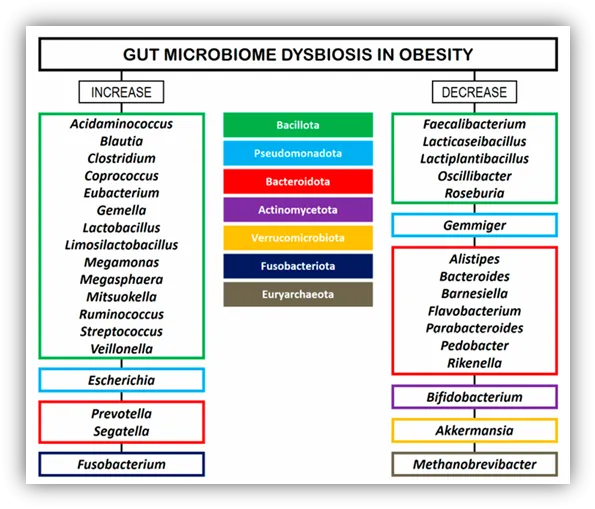
Figure 1. GM dysbiosis in obese individuals. The main bacterial genera that are more abundant than controls are displayed in the left column. The main bacterial genera with lower abundance than controls are displayed in the right column. The middle column has color-coded bacterial phyla.
Gut Microbiome-Induced Mechanisms in Obesity
The relationship between GM composition and the pathophysiology of obesity has been explained by a number of theories.28
In the first process, non-digestible carbohydrates are fermented by microorganisms into metabolic byproducts, mainly short-chain fatty acids (SCFAs) like propionate, butyrate, and acetate.29 Anaerobic fermentation produces SCFAs, which bind to G-protein-coupled receptors (GPRs). GPR43 is bound by acetate, GPR41 is bound by butyrate, and both are bound by propionate. The expression of these receptors may be downregulated in dysbiosis and obesity, which can lead to abnormalities in energy balance and hepatic lipogenesis.30 However, it has also been demonstrated that SCFAs block lipolysis while increasing fat oxidation and energy expenditure. These effects promote increased insulin sensitivity, brown adipose tissue thermogenesis, and white adipose tissue browning. Additionally, SCFAs have been linked to the overexpression of peroxisome proliferator-activated receptors (PPARs), which are crucial for controlling adipogenesis.31
Oral butyrate supplementation improves glucose metabolism in lean people but not in those with metabolic syndrome, according to a human pilot investigation. This is probably because insulin-resistant persons handle SCFA differently.32-33 According to Li et al.34, butyrate can also stimulate brown adipose tissue and reduce appetite via the gut–brain neural axis. Further research has found links between increased insulin sensitivity and SCFA levels, as well as regulatory effects on the formation of adipose tissue, lipid storage, and substrate metabolism in the skeletal muscle and liver.35 SCFA,s the portal vein carries substances that intestinal epithelial cells cannot absorb or metabolize to the liver, where they are used as substrates for lipogenesis, gluconeogenesis, and cholesterol genesis .36 Furthermore, it has been demonstrated that SCFAs suppress the activity of histone deacetylase, which affects epigenetic changes including histone acetylation and methylation.37 These modifications can help restore chromatin structure and function by regulating the expression of genes related to lipid metabolism.38
The second mechanism is the GM's ability to alter the amounts of circulating lipopolysaccharide (LPS) by compromising the integrity of the epithelial barrier, which causes endotoxemia and the beginning of moderate chronic systemic inflammation.39 LPS attaches to LPS-binding protein (LBP) as it enters the bloodstream, making it easier for the CD14 receptor to recognize it. Adipose tissue macrophages are subsequently activated by this contact via the Toll-like receptor 4 (TLR4) pathway. Tumor necrosis factor-alpha (TNF-α), interleukin-1β (IL-1β), and interleukin-6 (IL-6) are examples of pro-inflammatory cytokines that are secreted when LPS-TLR4 interaction upregulates genes involved in immune responses through the nuclear factor-kappa B (NF κB) signaling pathway.40 This chronic low-grade inflammation, also known as metabolic inflammation, contributes to systemic insulin resistance, a defining feature of obesity and metabolic syndrome, and hinders insulin signaling in peripheral tissues. Additionally, these inflammatory processes may cause genetic and epigenetic changes that increase the likelihood of comorbidities associated with obesity. By activating the GLP-1 pathway, a single acute injection of LPS has been demonstrated to improve glucose clearance and glucose-stimulated insulin production in mouse models.41
The third pathway is predicated on the idea that the GM may alter host genes related to energy utilization and storage, promoting fat growth.42 In this regard, functional gene differences in Bacteroides and Prevotella linked to amino acid and carbohydrate metabolism were revealed by Li et al. after conducting a thorough metagenomic analysis of 192 individuals. Furthermore, the investigators discovered a human genetic mutation (rs878394) in the lysophospholipase-like 1 (LYPLAL1) gene, which is linked to the relative abundance of Prevotella, insulin sensitivity, and BF distribution. Additionally, it has been demonstrated that the GM controls fullness and appetite via immunological neuroendocrine signaling pathways and vagal nerve activity. Notably, those who are obese frequently have lower amounts of anorexigenic hormones that inhibit appetite, such as GLP-1 and PYY.43
By activating the Farnesoid X receptor (FXR), the GM also plays a critical role in regulating bile acid (BA) metabolism, which in turn affects liver triglyceride (LT) levels and glucose homeostasis.44 It has been demonstrated that FXR activation in the intestines and liver reduces the risk of obesity by increasing energy expenditure, improving insulin sensitivity, and inhibiting hepatic lipogenesis. Furthermore, BAs have been linked to maintaining the integrity of the intestinal barrier, which limits the translocation of LPS into the systemic circulation and delays the establishment of chronic low-grade inflammation, a major factor in the pathophysiology of metabolic syndrome and obesity.45
Additionally, the GM may prevent the FIAF gene from being expressed, which would raise LPL activity and encourage lipid buildup in white adipose tissue. By blocking LPL, which lowers triglyceride uptake in adipose and muscle tissues, FIAF—a protein generated by adipose tissue, the gastrointestinal tract, the liver, and skeletal muscle in response to fasting—plays a crucial role in lipid metabolism.46 This inhibitory impact reduces the intake of fatty acids, which may prevent excessive fat storage and act as a mechanism to reduce obesity.47
Dysbiosis
In animal models, it has been demonstrated that dysbiosis of the intestinal microbiota is sufficient to cause increased intestinal TH17 cellular responses.48 Additionally, gut microbiota can serve as indicators for long-term inflammatory conditions such type 2 diabetes, asthma, and inflammatory bowel disease (IBD).49-51 Several symbiotic gut microbial strains and the potential detrimental effects of dysbiosis on the gut organ axis are shown in Figure 2.52
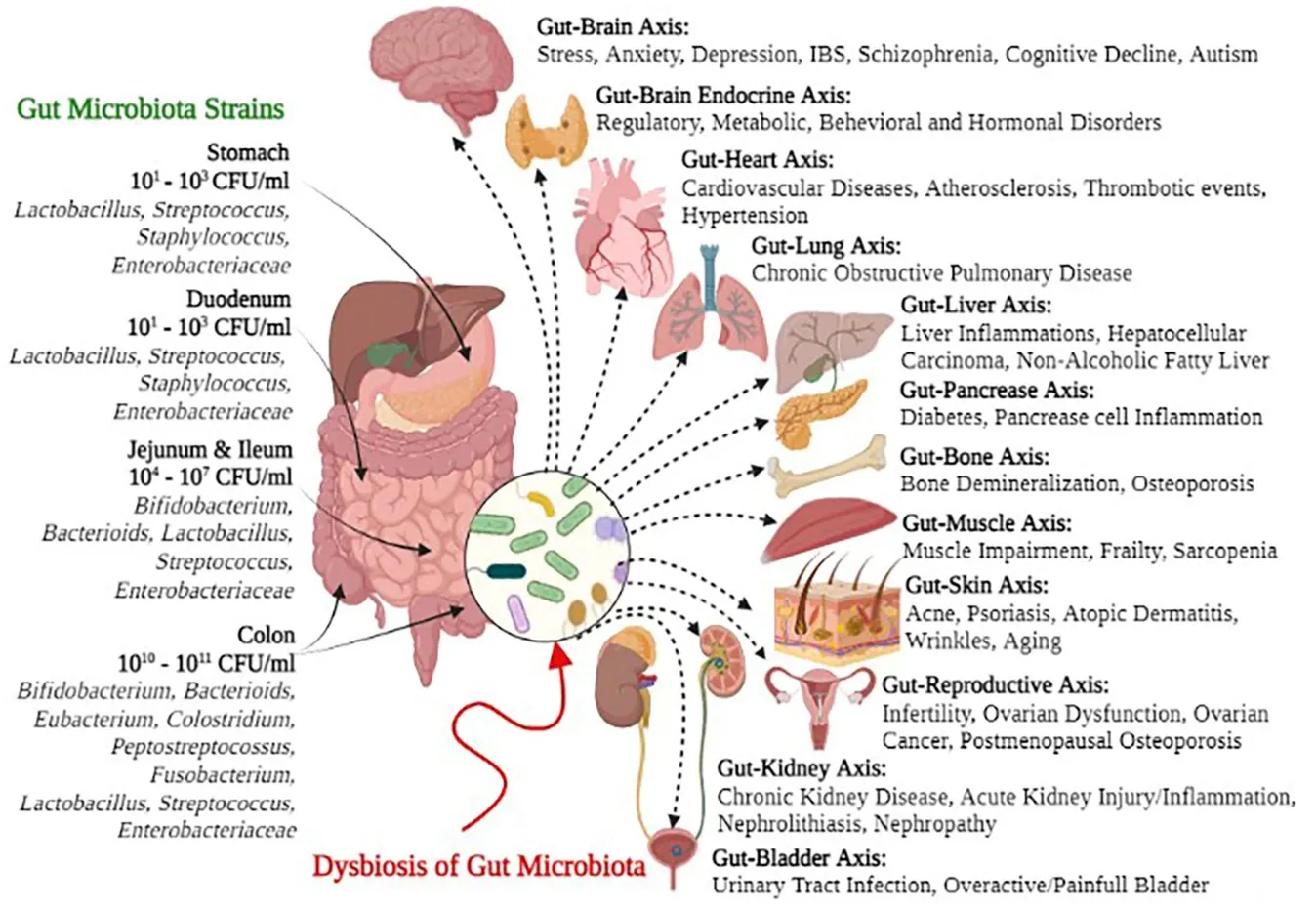
Figure 2 Illustrates a number of symbiotic gut microbial strains and the potential harm that dysbiosis on the gut organ axis may cause
Dysbiosis refers to differences in the overall gut microbial composition, structure, or functionality.53 Dysbiosis has been associated with the risk of numerous chronic diseases, including obesity.54A lower Bacteroidetes: Firmicutes ratio has been reported in individuals with obesity; however, interstudy variability exceeds variability between individuals with and without obesity.55 A 2018 systematic review compared gut microbiota among individuals with and without obesity; a total of eight studies with adults and three with children were identified. Obesity was associated with different profiles of gut microbiota (vs. controls) but the differences were inconsistent because the variation in relative abundance of microbial species was much larger among studies than among individuals with and without obesity.56
Thirty-two papers examining the composition of gut microbiota in people with or without obesity were found in another systematic review that was published between 2010 and 2019. Out of the 32 papers that were analyzed, three showed no difference between the gut microbiota of people with and without obesity, three decided that diversity was lower in people with obesity, and two indicated that diversity was higher in people with obesity. Out of the seven research that reported Firmicutes: Bacteroidetes ratios, one study found that the ratio was lower in obese individuals, while six studies found that the ratio was higher in obese individuals (compared to those without obesity). The Firmicutes: Bacteroidetes ratio, Fusobacteria, Proteobacteria, Mollicutes, Lactobacillus (reuteri), and Verrucomicrobia (Akkermansia muciniphila), Faecal ibacterium (prausnitzii), Bacteroidetes, Methanobrevibacter smithii, Lactobacillus plantarum, and Lactobacillus paracasei are all higher in obese individuals. Only three species—Bacteroides, Akkermansia muciphinila, and L. reuteri—were consistently linked to BMI in the subset of 15 studies that connected gut microbiota composition with BMI.57
Another systematic review of studies comparing gut microbiome composition between adults with and without obesity identified 32 studies published between 2012 and 2020, including seven studies summarized by the aforementioned review. 58
Only 22 of the 32 studies reviewed assessed α-diversity by Shannon index; results on gut microbiome composition in individuals with and without obesity were discrepant. Alpha diversity (Shannon) was statistically significantly lower in individuals with obesity in less than half (n = 9) of the 22 studies. When α-diversity (Shannon) comparisons were limited to the 10 studies using the green genes database, only two studies (20%) reported lower α-diversity in individuals with obesity (vs. individuals without obesity). The Simpson index was used to measureα-diversity in four studies, with two (50%) having lower α-diversity in individuals with obesity (vs. without) and two finding no difference. Of the seven studies assessing α-diversity using Chao1, three studies (43%) reported statistically lower α-diversity in individuals with obesity, two studies reported statistically higher Chao1 in individuals with obesity, and two studies found no difference. Two studies reported observed species (OS), which were lower in individuals with obesity in one study (50%) and no difference in one study. 59
Many factors are known to impact observed variability in micro biome studies, including methods of DNA extraction, as well as choice of gene region of interest, reference database, and microbial index, making reproducibility a major issue. Diversity is likely more important than specific taxa but structural or functional features of gut microbiome that distinguish individuals with or without obesity remain unknown. 60
The Role of Prebiotics in Obesity
Prebiotics are generally polysaccharides, which are described as compounds that alter the GM's composition and/or function in a way that benefits the host's health.61 Three requirements must be met for these compounds to be classified as prebiotics: (i) resistance to digestion by bile, gastric acid, and host enzymes; (ii) the capacity to specifically promote the proliferation and/or activity of the commensal microbiota; and (iii) fermentability by the GM.62
Prebiotic administration has been demonstrated to modify GM composition and metabolic processes, resulting in elevated levels of the anorexigenic gastrointestinal peptides GLP-1 and PYY and a long-term decrease in the concentration of the orexigenic hormone ghrelin. In particular, prebiotics like oligofructose, fructans, and inulin encourage the growth of good bacteria like bifidobacteria and lactobacilli. Bifidobacterium species have been associated in preclinical research with decreased FM, decreased BW gain, and decreased inflammation and metabolic endotoxemia.63 Furthermore, it has been observed that prebiotic administration increases the quantity of A. muciniphila, a species that is positively correlated with enhanced insulin sensitivity, decreased FM gain, decreased systemic inflammation, decreased metabolic endotoxemia, and energy homeostasis management.64 Clinical data showing that oligofructose consumption controls GLP-1, ghrelin, and PYY levels in humans, hence reducing hunger feelings and postprandial glucose fluctuations, has confirmed these findings in animals.65
The effects of several prebiotics given in human and animal models are compiled in Table 1.
Table 1. Preclinical and clinical study of prebiotics
|
Study |
Prebiotic Treatment |
Outcome |
|
Preclinical |
||
|
Bai et al.66
|
Oligosaccharides from the plant Codonopsis pilosula for 16 weeks to HFD-fed mice |
In HFD-fed obese mice, the prebiotic therapy enhanced glucose tolerance and reduced fat accumulation and body weight. reduced the quantity of the dangerous bacteria Rikenella, Enterobacteriaceae, Collinsella, and Megasphaera while increasing the percentage of the good bacteria Muribaculaceae, Alistipes, and Clostridium. |
|
Li et al.67
|
Crude guava polysaccharides for 11 weeks to HFD-fed mice |
Decreased the percentage of Mucispirillum, a bacterium linked to inflammation, and increased the quantity of good bacteria such Clostridium XlVa, Parvibacter, and Enterorhabdus. increased production of SCFA, especially butyrate. In obese mice fed a high-fat diet, polysaccharides decreased weight growth, dyslipidemia, and metabolic endotoxemia while increasing the synthesis of SCFAs. |
|
Wei et al.68
|
Polysaccharides from the seaweed Enteromorpha clathrate for 4 weeks to HFD-fed mice |
In obese mice, prebiotics improved intestinal dysbiosis and changed the structure of the GM. Eubacterium xylanophilum, a bacterium that produces butyrate, was more prevalent. |
|
Clinical |
||
|
Lambert et al.69 .
|
Yellow pea fiber for 12 weeks to overweight overweight/obese adults (n = 50) |
Decreased energy intake and BF. elevated amounts of insulin. GM is unaffected. |
|
Canfora et al.70
|
Galacto-oligosaccharides for 12 weeks to overweight/obese, prediabetic individuals (n = 44) |
Increased Bifidobacterium abundance but had no effect on GM microbial richness or diversity. |
HFD: high-fat diet; GM: gut microbiome; BW: body weight; SCFAs: short-chain fatty acids
Microbiome-Based Approaches in Obesity Management
By connecting inflammation, energy homeostasis, metabolism, and obesity, the GM provides a fresh viewpoint on possible treatments. Numerous reviews have covered microbiota modulation strategies in great detail, suggesting different microbial approaches to correct gut dysbiosis linked to obesity. Probiotics and synbiotics continue to be the principal treatments for these, while FMT has lately demonstrated encouraging effectiveness.71
Probiotics are live bacteria that provide the host with health advantages when given in sufficient quantities. Probiotics can affect energy and lipid metabolism by modulating the GM, which may result in decreased insulin resistance and increased fullness.72 Probiotics may help people lose weight by preventing adipogenesis and reducing fasting blood glucose levels in obese people, according to several studies. Probiotics also improve cardiovascular health by lowering cholesterol levels. They also have antibacterial qualities and improve immunomodulatory and intestinal barrier integrity. Probiotics can also quickly colonize the gut, support lipid metabolism, and aid in the breakdown and removal of visceral fat. High-dose probiotic supplementation is a beneficial strategy, with moderate but significant decreases in BMI being the most frequently reported outcome, according to systematic reviews of randomized controlled trials in overweight and obese populations.73
There has been a lot of scholarly interest in the function that some beneficial gut bacteria species play in the development and treatment of obesity. Because of their significant antibiotic resistance and limited pathogenic potential, Bifidobacterium and Lactobacillus are two of the most often researched probiotics in both animal models and obese human beings. By stimulating fatty acid oxidation and inhibiting LPL activity, probiotics belonging to the Lactobacillaceae family have shown notable effectiveness in decreasing adipose tissue mass while improving lipid metabolism.74 Sanchis-Chordà et al. examined how the probiotic Bifidobacterium pseudo catenulatum affected GM composition, inflammatory cytokines, and cardiometabolic risk factors in obese children with insulin resistance. They found a substantial decrease in BMI after the intervention. Additionally, it has been demonstrated that probiotic administration modifies GM composition, specifically impacting the abundance of members of the Rikenellaceae family, with a considerable prevalence of the genus Alistipes.75
It has been demonstrated that the combined effects of prebiotics and probiotics, known as synbiotics, outweigh the effects of each component alone. Their main benefit is that they increase the viability and survival of probiotics in the digestive system. Additionally, by encouraging microbiota growth, preserving intestinal integrity, and suppressing pathogenic species, synbiotics play a critical role in regulating gut metabolic activity. Additionally, they raise levels of carbon disulfides, ketones, methyl acetates, and SCFAs, which may help the host's health.76
Recent studies have focused a lot of interest on the therapeutic potential of synbiotics in the management of obesity, type 2 diabetes, and related metabolic disorders. Notably, Rajkumar et al. showed that in overweight subjects, co-supplementing with omega-3 fatty acids and a high-dose probiotic mixture containing Bifidobacterium, Lactobacillus, and Streptococcus species significantly improved plasma lipid concentrations, GM composition, insulin sensitivity, and inflammatory markers. Probiotic supplementation by itself caused beneficial microbial changes, while omega-3 fatty acid delivery in the absence of probiotics had no such effects. Despite these encouraging results, there is currently little data on synbiotic therapies, and factors like when they are administered seem to have a significant impact on treatment results. A review of current clinical research examining the impact of probiotics and synbiotics on obesity is shown in Table 2.77
Table 2. Effects of probiotics and synbiotics in humans with obesity
|
Study |
Treatment |
Outcome |
|
Prebiotics |
||
|
Minami et al.78
|
Probiotic: Bifidobacterium breve strain B3. n = 18 pre-obese individuals, 12 weeks. |
Probiotic use enhanced HDL cholesterol from baseline and somewhat reduced triglyceride levels. |
|
Zarrati et al.79
. |
Probiotic: yogurt containing L. acidophilus strain LA-5, Lacticaseibacillus casei strain DN001, and B. animal is subsp. lactis strain BB-12. n = 56 obese individuals, 8 weeks. |
Diminished BFP |
|
Synbiotics |
||
|
Krumbeck et al.80
|
Probiotics: B. animal is subsp. lactis strain BB-12 and B. adolescent is strain IVS-1. Prebiotic: GOS. n = 114 overweight individuals, 3 weeks. |
The results clearly demonstrated that the pro- and prebiotic components alone enhanced markers of intestinal permeability, even if the synbiotic did not exhibit functional synergism. |
|
Xavier-Santos et al.81
|
Probiotic: L. acidophilus strain LA-5. Prebiotic: inulin + FOS. n = 45 adults with metabolic syndrome, 8 weeks |
Immunoglobulins (A and M), interleukin-1 beta, total cholesterol, and HDL cholesterol were all significantly lower in both groups after daily consumption of mousse (control) and synbiotics. |
BFP: body fat percentage; FOS: fructo-oligosaccharides; GOS: galacto-oligo saccharides; HDL: high-density lipoprote
In human FMT, intestinal microbiota is transferred from a donor to a recipient using a variety of delivery techniques, such as oral fecal capsules, colonoscopy, nasogastric or Naso jejunal tubes, enemas, sigmoidoscopy, or rectal tubes. The formation of a donor-like microbiota in the recipient for at least three months after transplantation is a sign of successful FMT.82
This process has shown transferable behavioral traits and established connections between metabolic illnesses and the composition of the gut microbiome (GM), with new data pointing to possible uses in the treatment of obesity. The potential of GM treatments to modify glucose metabolism, increase the generation of SCFA (short-chain fatty acids), and lower systemic inflammation prompted research into FMT (fecal microbiota transplantation) for obesity and its associated comorbidities.83 Notably, FMT treatment considerably increased insulin responsiveness in those with metabolic syndrome, according to Kootte et al.84. In a similar vein, Vrieze et al.85 found that patients with metabolic syndrome had significantly higher insulin sensitivity six weeks after FMT compared to baseline values.
Optimized FMT therapies continue to be a major area of continuing study, despite their current limited clinical use. Pretreatment with broad-spectrum antibiotic combinations is a promising approach that lowers the recipient's native gut microbiota, making the environment less competitive and increasing the engraftment and effectiveness of transplanted bacteria. However, more research is needed to determine the precise effects of FMT on the components of the microbiota–gut–brain axis. Borrego-Ruiz and Borrego have listed a number of important concerns for further research. First, the intricate makeup of FMT material, which comprises both viable and non-viable bacteria as well as other microorganisms that make up the virome and mycobiome, contributes to the uncertainty surrounding the underlying mechanisms of FMT's therapeutic efficacy. Second, new techniques like spore transplantation and Washed Microbiota Transplantation (WMT) have been made possible by advancements in FMT technology. In this regard, there are currently insufficient controlled comparison studies and long-term safety assessments of these methods.86
CONFLICTS OF INTEREST
The authors declare no conflicts of interest
CONCLUSION
An important factor in the onset and development of obesity is the gut microbiome. Changes in its composition and function have a major role in inflammation, insulin resistance, and energy imbalance. Obesity alters the gut microbiome's (GM) composition, which is typified by decreased microbial diversity and erratic changes in the dominating bacterial phyla. These changes together lead to metabolic dysregulation. Through a variety of mechanisms, such as the regulation of energy homeostasis and insulin sensitivity mediated by SCFA (short-chain fatty acids), the chronic inflammation induced by LPS (lipopolysaccharide), the modification of host metabolic and appetite-regulating genes, and changes in BA signaling via FXR (Farnesoid X receptor), the GM contributes to the pathogenesis of obesity. Furthermore, LPL (lipoprotein lipase) activity and fat accumulation in adipose tissue are enhanced by GM-driven suppression of FIAF (fasting-induced adipose factor). By encouraging good bacteria like Bifidobacterium and A. muciniphila, which are associated with better metabolic results, prebiotics alter the composition of GM. dietary therapies that try to change the microbial makeup, include customized nutrition, prebiotics, probiotics, and synbiotics. To completely understand their mechanics and maximize clinical applicability, more research is necessary. The incorporation of microbiome-based therapies into routine clinical practice is expected to become more practical and therapeutically revolutionary as scientific knowledge of human genetics advances. This is especially true for obesity, a complicated condition that necessitates creative and tailored interventions.
REFERENCES


Bhakti Joshi*, Shyamalendu Tripathy, The Evolving Role Of The Gut Microbiome In Obesity: A Comprehensive Review, Int. J. of Pharm. Sci., 2026, Vol 4, Issue 8, 1158-1175. https://doi.org/10.5281/zenodo.21837419
 10.5281/zenodo.21837419