

We use cookies to ensure our website works properly and to personalise your experience. Cookies policy
SSS Indira College Of Pharmacy,Vishnupuri, Nanded.
In India, the regulation of narcotic drugs and psychotropic substances is a critical intersection of medical necessity and legal control. While medically these agents are used for sleep induction or mind-altering therapeutic effects, they are strictly governed legally to prevent misuse and addiction. The primary legislative framework is the Narcotic Drugs and Psychotropic Substances (NDPS) Act, which meticulously controls activities related to these substances. This review paper examines the regulatory approval process for narcotic drugs and psychotropic substances in India, primarily governed by the Central Drugs Standard Control Organization (CDSCO). It explores the legal definitions and clinical classifications of these substances, distinguishing between medical use and legal control under the Narcotic Drugs and Psychotropic Substances (NDPS) Act, 1985. The study details the mandatory requirements for drug manufacturing and importation, including the submission of Form 44 and adherence to Schedule Y guidelines for clinical trials
? Narcotics and Psychotropic Medicinal Products: -
The term narcotic? in the legal sense is quite different from that used in the medical context which denotes a sleep-inducing agent. Legally, a narcotic drug could be an opiate (a true narcotic), cannabis (a non-narcotic) or cocaine (the very antithesis of a narcotic, since it is a stimulant). The term „psychotropic substance? denotes mind-altering drugs such as Lysergic Acid Diethylamide (LSD), Phencyclidine, Amphetamines, Barbiturates, Methaqualone, and designer drugs (MDMA, DMT, etc.)
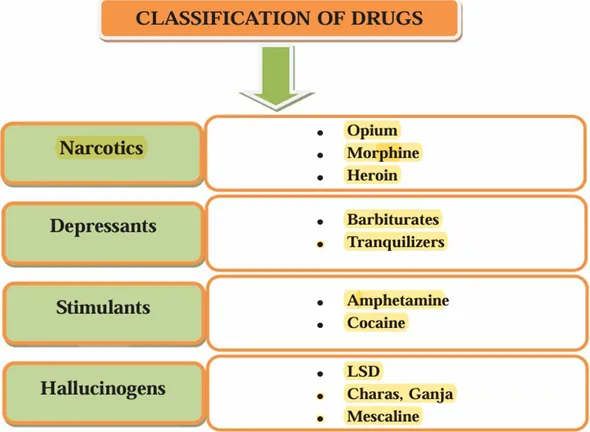
Figure No.01- Classification of Drugs
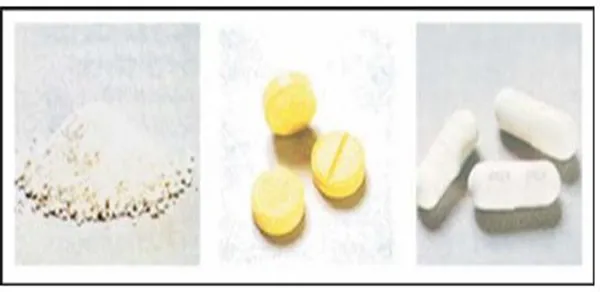
Figure No.02-Amphetamine in Powder, Tablet and Capsule Forms.
Table No.01-Common Narcotic Drugs and Psychotropic Substances.
|
Sr.No |
Drug RUG |
Trade Or Other Names |
Nature |
Mode Of Administration |
Effect Of Overdose |
Symptoms |
Mode Of Action |
|
1 |
Morphine |
Morphia |
Colorless Crystalline Substance |
Oral And/or Injection |
75 Mg. |
Respiratory Depression, Hypotension, Convulsions, Circulatory Failure, Coma, Renal Failure |
Analgesic/Ant I- Diarrheal And Euphorogenic With Potential For Addiction |
|
2 |
Heroin |
Diacetylm Orphine/Smack Brown Sugar/Gard |
Colorless Crystalline Substance |
Injection/Smok Ing/Inhalation/Sniffing |
200-500mg. |
Coma Delirium, Disorientation, Drowsiness, Muscle Spasticity |
Analgesic And Euphorogenic With High Potential For Addiction |
|
3 |
Cocaine |
Crack |
White Crystalline Powder |
Oral/Injection/Sniffing Smoking |
1.2g. |
Dryness Of Mouth And Throat, Cramps In Stomach, Convulsions. Death By Respiratory Failure |
Stimulant With Potential For Addiction |
|
4 |
Methaqualone |
Mandrax/Nidra |
White Powder |
Orally In The Form Of Tablet |
3g. |
Restlessness, Insomnia, Tremors, Hallucinations. Confusion. Seizures |
Euphoric Action In The Beginning Causes Addiction |
|
5 |
Diazepam |
Calmpose |
White Crystalline Powder |
Oral/Injection |
100-500mg. |
Bluish-Colored Lips Fingernails, Blurred Vision Confusion. Depression, Dizziness |
Develops Weakness, Ataxia, Drowsiness, Respiratory Depression |
|
6 |
Barbiturate |
Veronal, Luminal, Nembutal |
Crystalline Powder White |
Oral/Injection |
3-5g. |
Altered Level Of Consciousness. Difficulty In Thinking Drowsiness Or Coma |
Depressant, Death Occurs From Respiratory Failure |
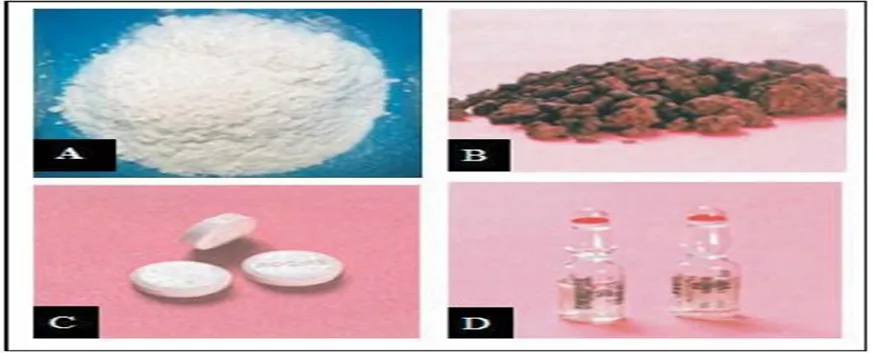
Figure No.03- Common Narcotic Drugs and Psychotropic Substances.
A. Morphine powder, ranges in color from off white to dark brown. B. Crude morphine C. Morphine tablets. D. Morphine ampoules.1
According to the NDPS Act, “narcotic drug means coca leaf, cannabis (hemp), opium, poppy straw and includes all manufactured drugs.” The Act defines psychotropic substance as “any substance, natural or synthetic, or any natural material or any salt or preparation of such substance or material included in the list of psychotropic substances specified in the Schedule.”2
The term "narcotic" carries distinct meanings in the legal and medical realms. While medically it denotes a drug inducing sleep, legally it encompasses various substances, including opiates (acknowledged as true narcotics), cannabis (classified as non-narcotic), and cocaine (notable for its stimulant effects rather than conventional narcotic properties). On the other hand, the term "psychotropic substance" refers to substances influencing the mind. The Narcotic Drugs and Psychotropic Substances (NDPS) Act of stands as a pivotal legislation in India, meticulously designed to regulate and control activities associated with narcotic drugs and psychotropic substances.3
? The Regulatory Authority India CDSCO:
Introduction: -
CDSCO – central drug standards control organization the primary regulatory authority in India now regulating the import, sale, and production of medical devices that have been notified as pharmaceuticals under section 3(b) (IV) of the D&C act is the central drugs
Standard control organization ('CDSCO'). The CDSCO offers licenses to drug makers and importers and establishes standards for medications, cosmetics, diagnostics, and gadgets. Additionally, it lays forth regulatory measures, amends acts and rules, and governs the standards of imported medications, clinical research in India, and market authorization of novel drugs, among other things. The drug controller general of India (DCGI), which is part of the CDSCO and has its headquarters in New Delhi, is in charge of overseeing the regulation of pharmaceuticals and medical devices in India. The drug technical advisory board (DTAB) and the drug consultative committee provide advice to the DCGI (dcc). The central licensing approval authority is responsible for medical device licensing and classification (CLAA). Additionally, the CLAA is in charge of establishing and implementing safety standards, designating notified bodies to supervise conformity assessment, carrying out post-market surveillance, and issuing alerts and recalls in the event of unfavorable incidents.
CDSCO is an Indian national pharmaceutical regulatory body which has a several no of designation and their responsibilities and working criteria. CDSCO organization can be shown as.4
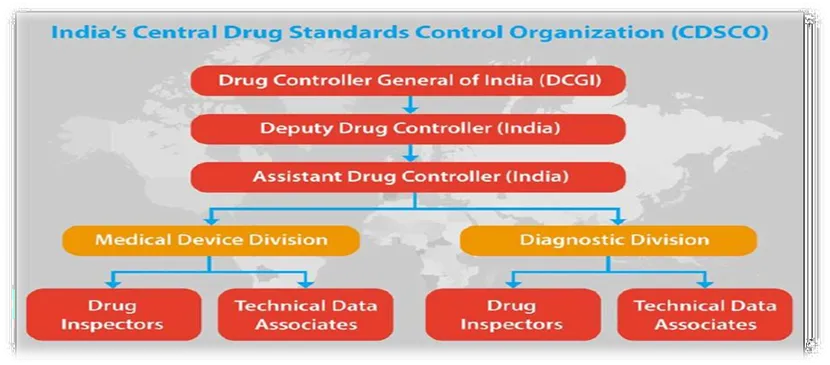
Figure No.04-Organization Chart of CDSCO.
The central drug standard control organization (CDSCO) of India is main regulatory body for regulation of pharmaceutical drug, medical device and clinical trials. The main head office of CDSCO is located in New Delhi and functioning under the control of directorate general of health services, ministry of health and family welfare government of India. Drugs controller
General of India (DCGI) he is a responsible for approval of new drugs, medical devices and clinical trials to be conducted in India. He is appointed by the central government under the DCGI the state drug control organization will be functioning. The DCGI is advised by the drug technical advisory board (DTAB) and the drug consultative committee (dcc). The DCGI is responsible for handling matters of product approval and approval standards, clinical trials, introduction of new drugs, and import licenses for new drugs. A drug may be licensed for manufacturing in a state only once it has been approved by CDSCO. Drugs controller general of India (DCGI) is the head of department of the central drugs standard. Control organization of the government of India responsible for approval of licenses of specified categories of drugs such as blood and blood products, IV fluids, vaccines, and sera in India. Drugs controller general of India, comes under the ministry of health & family welfare. DCGI also sets standards for manufacturing, sales, import, and distribution of drugs in india.5
Functions of CDSCO:-
Central Licensing Authorities Are Responsible For:
? New Drugs Approval
? Performing Clinical Trials
? Establishing Standards for Drugs
? Quality Control of Imported Drugs, Import Registration and Licensing
? Coordination of the Activities of State Drug Control Authorities by Giving Expert Opinion to Uniformly Enforce the D&C Act.
State Licensing Authorities Are Responsible For:
? Regulation Of Production, Sale and Marketing of Drugs: Other Functions:
? Grant of License for Blood Banks, Large Volume Parenteral (LVP), Vaccines, Recombinant DNA Products and Some Medical Devices
? Amendment of D & C Act Rules ban of old drugs and cosmetics.6
3.0 Aim: -
“The Regulatory Approval Process of Narcotics and Psychotropic Medicinal Products in India for Sale and Strategies for Narcotics Controlled Substances.”
3.1 objectives: -
1. Understand regulatory framework: - to comprehend the regulatory framework governing narcotics and psychotropic substances in India, including the role of CDSCO.
2. Approval process: - to outline the step-by-step regulatory approval process for narcotics and psychotropic medicinal products for sale in India.
3. Compliance strategies: - to identify effective strategies for compliance with regulatory requirements for narcotics-controlled substances.
4. Best practices: - to explore best practices for managing narcotics-controlled substances, ensuring safe use and minimizing diversion.
5. Regulatory challenges: - to analyze challenges and opportunities in the regulatory approval process and compliance with narcotics regulations.
By achieving these objectives, this topic aims to provide insights into the complex regulatory landscape of narcotics and psychotropic substances in India, supporting pharmaceutical companies, regulatory professionals, and researchers.
4.0 Plan of Work: -
The Regulatory Approval Process of Narcotics and Psychotropic Medicinal Products in CDSCO for Sale and Strategies for Narcotics Controlled Substances for the Present Aim and Objective the Plan of Work of the Present Study Will Be as Follows-
The phase wise plan of work include: -
I. Literature survey-
1. Regulatory framework: Study the Narcotic Drugs and Psychotropic Substances (NDPS) Act, 1985, and relevant rules and regulations.
2. CDSCO guidelines: Review CDSCO guidelines for narcotics and psychotropic medicinal products.
II. Regulatory Approval Process-
1. Application submission: Understand the process of submitting an application for regulatory approval.
2. Documentation: Identify required documents, including pre-clinical and clinical trial data.
3. Review and evaluation: Study the review and evaluation process by CDSCO.
III. Strategies for Narcotics Controlled Substances-
1. Compliance: Develop strategies for compliance with regulatory requirements.
2. Risk management: Identify potential risks and develop mitigation strategies.
3. Best practices: Research best practices for handling narcotics-controlled substances.
IV. Data Collection and Analysis-
1. Data sources: Identify relevant data sources, including regulatory documents, research articles, and industry reports.
2. Data analysis: Analyze data to identify trends, challenges, and opportunities.
V. Report Writing and Recommendations-
1. Report structure: Develop a comprehensive report structure.
2. Findings and recommendations: Present findings and recommendations for improving the regulatory approval process
5.0 MATERIALS AND METHOD:-
5.1 The Regulatory Approval Process of Narcotics and Psychotropic Medicinal Products in India:-
The process for approving drugs in India: The Drugs and Cosmetics Act 1940 and Rules 1945 were passed to regulate the import, manufacture, distribution, and sale of drugs and cosmetics. The drug approval procedure is controlled in India by the Central Drugs Standard Control Organization (CDSCO). CDSCO is headed by the Drugs Controller General of India (DCGI). DCGI works under the Ministry of Health (MOH) and is in New Delhi. The Drug and Cosmetics Rules of 1945 received Schedule Y from the Indian government in 1988. The rules and specifications for clinical trials are contained in Schedule Y, which was further reviewed in 2005 to bring it into compliance with accepted international practice. To produce or import a novel drug in India, a company must submit Form 44 together with the information required under Schedule Y of the Drugs and Cosmetics Act 1940 and Rules 1945 in order to request approval from the licensing body (DCGI).
Rule: For an investigational new drug, the sponsor needs to provide detailed information to the DCGI about:
? Generic name
? Patent status
? Brief description of Physio- chemical
? Biological
? Technical information
? Stability
? Specifications
? Manufacturing process
? Worldwide regulatory status
? Animal pharmacology and toxicity
studies
? Published clinical trial reports
? Proposed protocol and pro forma
? Trial duration
? Undertaking to Report Serious or Life- threatening Adverse Drug Reactions.
? Clinical study approval in India typically takes three months. The Clinical Studies Registry of India (CTRI) is the place where clinical trials can be registered, with information about the trials and the participant
The rules to be followed under The Drugs and Cosmetics Rules
1945 are: Rule 122 - A: Application for permission to import new drug.
Rule 122- B: Application for approval to manufacture new drugs other than the drugs specified under Schedule C and C1.
Rule 122 - D: Permission to import or manufacture fixed dose combination.
Rule 122 - DA: Application for permission to conduct clinical trials for New Drug.
Rule 122 - DAB: Compensation in the case of injury or death during clinical trials.7
? Stages of Approval: -
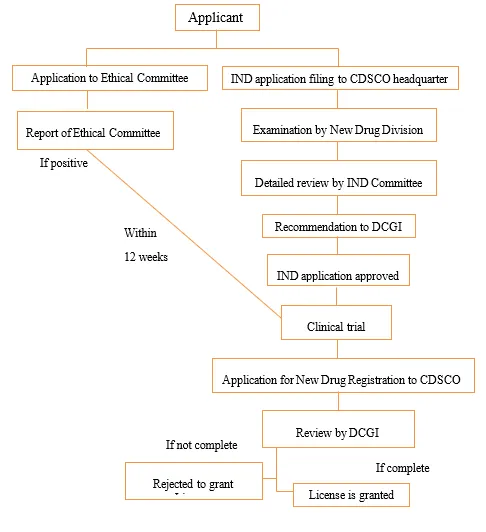
Figure No.05- Drug approval process in India.
? Submission of Clinical Trial application for evaluating safety and efficacy. Requirements for permission of new drugs approval.
? Post approval changes in biological products: quality, safety and efficacy documents.
? Preparation of the quality information for drug submission for new drug approval.
? Most countries have adopted the CTD format. Hence, CDSCO has also decided to adopt CTD format for technical requirements for registration of pharmaceutical products for human use.8
5.2 Strategies for Narcotics Controlled Substances: -
The Narcotic Drugs and Psychotropic Substances Act prohibit the non-medical and non- scientific utilization of “narcotic drugs and psychotropic substances” to align with International Treaties and Conventions. Operations involving these substances for medical or scientific purposes are allowed, managed, and overseen by the NDPS Rules of 1985, established by the Central Government under section 9 in conjunction with section 76 of the Act, as well as rules instituted by State Governments under section 10 of the Act.
1. Controlled Substance - The Act also governs specific precursor chemicals classified as 'controlled substances,' which are utilized in the production or creation of narcotic drugs or psychotropic substances. Concerning controlled substances outlined in Schedule-A, various operations such as supply, distribution, trade, commerce, possession, storage, consumption, offering for sale or distribution, or facilitating sale/purchase through mediums like websites, social media platforms, or other means, are regulated. Furthermore, the export of controlled substances listed in Schedule-B and the import of controlled substances listed in Schedule-C are subject to control and regulation under the NDPS (Regulation of Controlled Substances) Order of 2013, established pursuant to section 9A of the Act. Penalties - The Act stipulates penalties for violations concerning narcotic drugs, psychotropic substances, and controlled substances, which can range up to twenty years' imprisonment for certain offenses. Additionally, it establishes penalties for attempts to commit offenses related to narcotic drugs, psychotropic substances, controlled substances, and preparations to commit specify Offenses regarding narcotic drugs and psychotropic substances, with similar potential imprisonment terms for certain offenses (sections 15 to 30).
2. Cognizable Offence - It makes every offence punishable under the Act cognizable.
3. Criminalization Of Offence - The Act criminalizes various offenses, including the misappropriation of opium by cultivators (section 19), engaging in external dealings involving narcotic drugs and psychotropic substances without prior authorization from the Central Government and without adhering to conditions imposed by foreign governments (section 24), financing illicit trafficking in narcotic drugs and psychotropic substances, harboring offenders (section 27A), and offenses involving commercial quantities of narcotic drugs and psychotropic substances, which are classified as non- boilable (section 37).
4. Prohibition Of Certain Activities - It provides punishment for contravention of prohibition of certain activities relating to property derived from an offence committed under the Act (section 27B read with section 8A).
5. Increased Penalty or Capital Punishment - The Act offers increased penalties (section 31) or the death penalty for specific offenses concerning designated narcotic drugs and psychotropic substances following a prior conviction (section 31A).
6. Seizing & Forfeiture - It provides provisions on tracing, identifying, freezing, seizing and forfeiture of assets associated with drug and related crimes (Chapter VA)
7. Executions - Several departments and organizations of the Central Government and State Government are involved in execution of the provisions of the Act.
8. Drug Demand Reduction- The matters pertaining to 'Drug Demand Reduction' are controlled by the Ministry of Social Justice & Empowerment, Government of India and Social Welfare Departments of the States.
9. Law Enforcement Agencies - Various law enforcement agencies under the Central Government, including but not limited to the NCB, CBN, DRI, Customs, Central Excise, Para-Military Forces (such as BSF, Sa shastra Seema Bal, Coast Guard), Railway Protection Force, NIA, and Police, as well as drug control and excise departments under the State Governments, are assigned with tasks related to 'Drug Supply Reduction' and 'Suppression of Illicit Trafficking'. Prof Souvik Chatterji et.al / Kuey, 30(6), 3670 2440 In accordance with the authority vested in it by sections 42 and 67 of the Act, the Central Government has authorized officers of the Assam Rifles, holding the rank of Sub- Inspector and above, to carry out the powers and responsibilities outlined in section 42 within their designated jurisdictions. Additionally, these officers are empowered to exercise the powers granted to them under section 67 of the Act.
10. Rehabilitation Of Addicts - “Treatment and Rehabilitation of Drug Addicts” is controlled by the Ministry of Health and Family Welfare, Govt. Of India and Health Departments of the States
11. Narcotics Control Bureau - The Narcotics Control Bureau (NCB), previously under the Ministry of Finance but now under the Ministry of Home Affairs, Government of India, serves as the coordinating body for actions involving various officials in both Central and State Governments under the Act.9
CONCLUSION
By analyzing the complex regulatory landscape, this work provides essential insights for pharmaceutical companies, regulatory professionals, and researchers to navigate the approval and compliance requirements for narcotics and psychotropic substances in India.
The regulation of narcotics and psychotropic medicinal products in India is a highly complex process governed by the Narcotic Drugs and Psychotropic Substances (NDPS) Act of 1985 and the Central Drugs Standard Control Organization (CDSCO). This review highlights that while these substances are medically essential for inducing sleep or altering mental states for therapeutic reasons, their legal status requires rigorous oversight to prevent non-medical use and scientific diversion.
Conflicts of Interest:
The authors declare no conflict of interest. This review is based on publicly available regulatory and scientific literature, and no financial or personal relationships have influenced its preparation or conclusions.
REFERENCES
, 2023; 45(2):179-184.
, 2023; 45(2):179-184.




Dr. Vijay Navghare, Dr. Suryakant Jadhav, Somesh Kale, The Regulatory Approval Process of Narcotics and Psychotropic Medicinal Products in India for Sale and Strategies for Narcotics Controlled Substances, Int. J. of Pharm. Sci., 2026, Vol 4, Issue 6, 2707-2716, https://doi.org/10.5281/zenodo.20624513
 10.5281/zenodo.20624513