View Article

  • Therapeutic Reversal of Pelvic Endometriosis Using Endotone Polyherbal Capsule: A Case Report

  • 1M.S - Scholar, Department of Niswan WA Qabalat (Obstetrics & Gynaecology), Ajmal Khan Tibbiya College, Aligarh Muslim University, Aligarh, Uttar Pradesh, India

    2Research Officer, Clinical Research Unit (U), Goa, Central Council for Research in Unani Medicine, Ministry of AYUSH, Government of India.

    3Professor, Department of Niswan Wa Qabalat, Ajmal Khan Tibbiya College, Aligarh Muslim University, Aligarh, Uttar Pradesh, India.

Abstract

Background: Endometriosis is a chronic gynaecological disorder characterized by the ectopic presence of endometrial tissue, often associated with menstrual irregularities, pelvic pain, and infertility. Despite advances in conventional management, recurrence and treatment related adverse effects remain significant concerns, prompting exploration of alternative approaches.Case Presentation: This case report presents a 30 year old unmarried female with secondary amenorrhea for three months and a history of irregular menstrual cycles, diagnosed with pelvic endometriosis on ultrasonography. The patient was managed with endotone polyherbal capsule comprising Cyperus rotundus, Curcuma longa, Symplocos racemosa, Withania somnifera, Glycyrrhiza glabra, Centella asiatica, Zingiber officinale, and Cinnamomum zeylanicum, administered orally twice daily for three months.Results: The patient experienced restoration of menstrual cycles, and follow up ultrasonography revealed normal pelvic findings. No adverse effects were observed.Conclusion: The case highlights the potential of Unani polyherbal therapy as a safe and effective alternative approach in managing endometriosis. Further studies are required to validate these findings.

Keywords

Endometriosis; Unani medicine; Amenorrhea; Polyherbal therapy; Menstrual disorders

Introduction

× Popup Image

Endometriosis is a complex, oestrogen dependent inflammatory condition characterized by the growth of functional endometrial glands and stroma outside the uterine cavity, affecting a significant proportion of women (approximately 10%) in the reproductive age group[1]. The condition commonly manifests as dysmenorrhea, chronic pelvic pain, infertility, and disturbances in menstrual patterns[2,5]. Its pathogenesis is multifactorial, involving retrograde menstruation, altered immune responses, oxidative stress, and hormonal imbalance[3,6,7]. Conventional treatment strategies, including hormonal suppression and surgical interventions, often provide temporary relief but are limited by recurrence and side effects[4,8,26,27]. Traditional systems of medicine, such as Unani medicine, offer a holistic framework for managing such disorders by addressing the underlying imbalance in bodily humors (Akhlat) and temperament (Mizaj). In Unani literature, conditions resembling endometriosis are described under uterine disorders associated with Waram (inflammation) and Sudad (obstruction), primarily arising from derangement of Sauda (black bile) and Dam (blood) [9–11].

Case Presentation

A 30-year-old unmarried woman presented with complaints of absence of menstruation for three months, preceded by a history of irregular menstrual cycles over several months. There was no history of significant systemic illness, endocrine disorder, or prior surgical intervention. General physical and systemic examinations were unremarkable. Pelvic ultrasonography was performed, which revealed findings suggestive of pelvic endometriosis. Although laparoscopy remains the gold standard, ultrasonography is widely used for initial evaluation and follow up [5,12]. Based on clinical presentation and imaging findings, a diagnosis of secondary amenorrhea associated with endometriosis was made.

Timeline

Time

Event

Month 0

Presentation with amenorrhea and irregular cycles

Month 0

Ultrasonography suggestive of pelvic endometriosis

Month 0–3

Administration of Endotone polyherbal capsule

Month 3

Restoration of menses

Month 3

Repeat ultrasonography showing normal findings

Therapeutic Intervention

The patient was prescribed Endotone polyherbal capsule, administered orally twice daily for a period of three months. The polyherb capsule included Cyperus rotundus (50mg), Curcuma longa (50mg), Symplocos racemosa (50mg), Withania somnifera (40mg), Glycyrrhiza glabra (25mg), Centella asiatica (25mg), Zingiber officinale (20mg), and Cinnamomum zeylanicum (15mg). These drugs were selected based on their traditional indications and pharmacological properties, including anti-inflammatory, emmenagogue, uterine tonic, and humoral corrective actions[13–18]. No concurrent hormonal or conventional pharmacotherapy was given during the treatment period, allowing isolated evaluation of the intervention.

Outcome and Follow-Up

During the course of treatment, the patient reported gradual improvement in her condition, with the resumption of menstrual cycles. By the end of three months, menstrual regularity was restored without any reported adverse effects. A follow-up pelvic ultrasonography was conducted, which demonstrated normal pelvic anatomy with no evidence of previously noted endometriotic changes. The clinical and radiological improvement suggested a favourable response to the intervention.
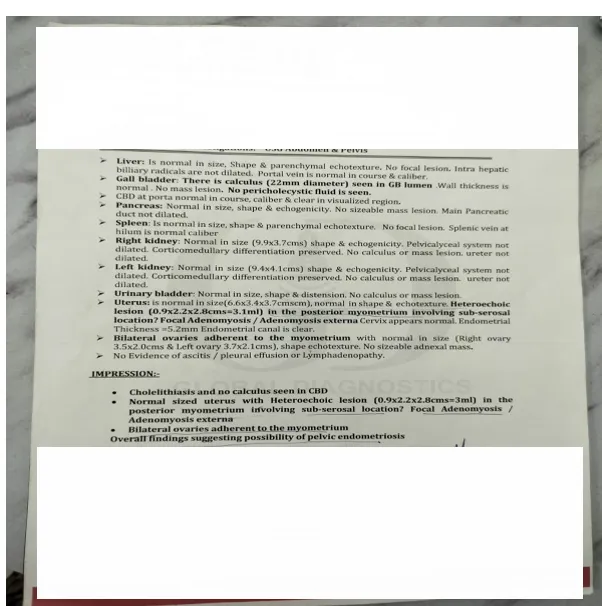


Fig.1: Ultrasonography before treatment
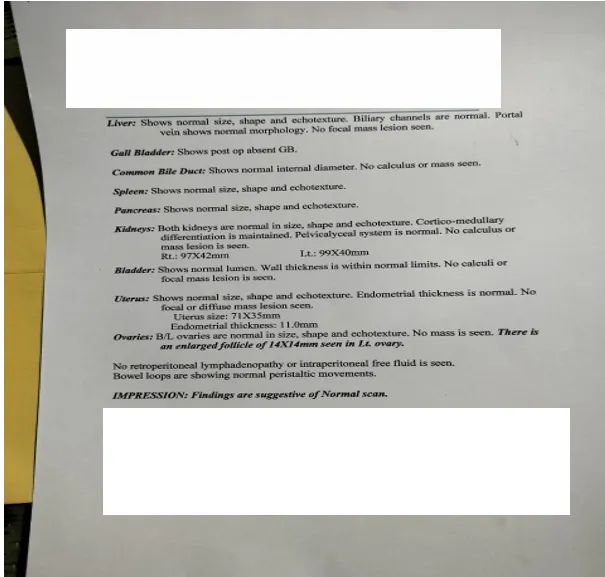


Fig.2: Ultrasonography after treatment


DISCUSSION

Endometriosis is increasingly recognized as a chronic inflammatory condition with a complex etiopathogenesis involving immune dysfunction, oxidative stress, and hormonal dysregulation. The favourable outcome observed in this case may be attributed to the synergistic pharmacological actions of the herbal components and the multi targeted nature of traditional medicinal systems [23,24,25]. Herbs such as Curcuma longa have demonstrated anti-inflammatory and anti-angiogenic effects by modulating cytokines and growth factors [19,20], and Zingiber officinale possesses significant anti-inflammatory and analgesic properties [21], which may help reduce ectopic endometrial activity. Withania somnifera and Glycyrrhiza glabra contribute to hormonal modulation and immunoregulation [15,22], while Symplocos racemosa acts as a uterine tonic, supporting menstrual normalization. Additionally, Centella asiatica promotes tissue repair and microcirculation [14,16], whereas Cyperus rotundus and Cinnamomum zeylanicum aid in improving metabolic and circulatory functions.

From the Unani perspective, the condition can be interpreted as a manifestation of Su’ Mizaj Barid Yabis associated with the accumulation of Sauda, leading to obstruction and inflammation within the uterus. The therapeutic approach in Unani medicine focuses on the correction of temperament, elimination of morbid humors, resolution of inflammation, and strengthening of the uterus. The prescribed formulation appears to act through these principles, exerting emmenagogue, anti-inflammatory, uterine tonic, and blood purifying effects. The integrative action of these mechanisms likely contributed to the restoration of normal menstrual function and resolution of endometrial pathology.

CONCLUSION

This case report demonstrates that Endotone polyherbal capsule may offer a promising, non-invasive therapeutic option for the management of pelvic endometriosis, with beneficial effects on both clinical symptoms and radiological findings. The absence of adverse effects further supports its safety profile. However, as this is a single case observation, larger well-designed clinical studies are required to validate these findings and establish the role of Unani medicine in the broader management of endometriosis.

Ethical approval: Not applicable.

Informed Consent: Written informed consent was obtained from the patient for publication of this case report and accompanying clinical details.

Conflict of interest: None declared.
Funding: None.

REFERENCES

  1. Giudice LC. Clinical practice. Endometriosis. N Engl J Med. 2010;362(25):2389–2398.
  2. Bulun SE. Endometriosis. N Engl J Med. 2009;360(3):268–279.
  3. Vercellini P, Viganò P, Somigliana E, Fedele L. Endometriosis: pathogenesis and treatment. Nat Rev Endocrinol. 2014;10(5):261–275.
  4. Dunselman GAJ, Vermeulen N, Becker C, Calhaz-Jorge C, D’Hooghe T, De Bie B, et al. ESHRE guideline: management of women with endometriosis. Hum Reprod. 2014;29(3):400–412.
  5. Zondervan KT, Becker CM, Missmer SA. Endometriosis. Nat Rev Dis Primers. 2018;4:9.
  6. Burney RO, Giudice LC. Pathogenesis and pathophysiology of endometriosis. Fertil Steril. 2012;98(3):511–519.
  7. Agarwal A, Aponte-Mellado A, Premkumar BJ, Shaman A, Gupta S. The effects of oxidative stress on female reproduction. Reprod Biol Endocrinol. 2005;3:13.
  8. Parasar P, Ozcan P, Terry KL. Endometriosis: epidemiology, diagnosis and clinical management. Int J Womens Health. 2017;9:807–817.
  9. Anonymous. National Formulary of Unani Medicine. New Delhi: Central Council for Research in Unani Medicine (CCRUM); 2006.
  10. Ali M. Textbook of Ilmul Advia. New Delhi: CBS Publishers & Distributors; 2008.
  11. Ibn Sina (Avicenna). Al-Qanoon fi al-Tibb (The Canon of Medicine). New Delhi: Idara Kitab-us-Shifa; 2010.
  12. Kennedy S, Bergqvist A, Chapron C, D’Hooghe T, Dunselman G, Greb R, et al. ESHRE guideline for the diagnosis and treatment of endometriosis. Hum Reprod. 2005;20(10):2698–2704.
  13. Nadkarni KM. Indian Materia Medica. Mumbai: Popular Prakashan; 2007.
  14. Kirtikar KR, Basu BD. Indian Medicinal Plants. Dehradun: International Book Distributors; 2005.
  15. Sharma PV. Dravyaguna Vijnana. Varanasi: Chaukhambha Bharati Academy; 2001.
  16. Brinkhaus B, Lindner M, Schuppan D, Hahn EG. Chemical, pharmacological and clinical profile of Centella asiatica. Phytomedicine. 2000;7(5):427–448.
  17. Aggarwal BB, Sundaram C, Malani N, Ichikawa H. Curcumin: the Indian solid gold. Biochem Pharmacol. 2006;71(10):1397–1421.
  18. Fabricant DS, Farnsworth NR. The value of plants used in traditional medicine for drug discovery. Environ Health Perspect. 2001;109(Suppl 1):69–75.
  19. Gupta SC, Patchva S, Aggarwal BB. Therapeutic roles of curcumin: lessons learned from clinical trials. AAPS J. 2013;15(1):195–218.
  20. Hewlings SJ, Kalman DS. Curcumin: a review of its effects on human health. Foods. 2017;6(10):92.
  21. Mashhadi NS, Ghiasvand R, Askari G, Hariri M, Darvishi L, Mofid MR. Anti-oxidative and anti-inflammatory effects of ginger in health and physical activity. Int J Prev Med. 2013;4(Suppl 1):S36–S42.
  22. Asl MN, Hosseinzadeh H. Review of pharmacological effects of Glycyrrhiza glabra. Phytother Res. 2008;22(6):709–724.
  23. Khan I, Ahmad M, Ahmad W, Khan A, Khan H. Antioxidant and anti-inflammatory properties of medicinal plants. Evid Based Complement Alternat Med. 2018;2018:1–12.
  24. Patwardhan B, Vaidya AD, Chorghade M. Ayurveda and natural products drug discovery. J Ethnopharmacol. 2004;90(2–3):147–154.
  25. World Health Organization. WHO Traditional Medicine Strategy 2014–2023. Geneva: World Health Organization; 2013.
  26. Bulletti C, Coccia ME, Battistoni S, Borini A. Endometriosis and infertility. Ann N Y Acad Sci. 2010;1205:67–75.
  27. Nisolle M, Donnez J. Peritoneal endometriosis, ovarian endometriosis, and adenomyosis: the three different entities. Fertil Steril. 1997;68(4):585–596.

Reference

  1. Giudice LC. Clinical practice. Endometriosis. N Engl J Med. 2010;362(25):2389–2398.
  2. Bulun SE. Endometriosis. N Engl J Med. 2009;360(3):268–279.
  3. Vercellini P, Viganò P, Somigliana E, Fedele L. Endometriosis: pathogenesis and treatment. Nat Rev Endocrinol. 2014;10(5):261–275.
  4. Dunselman GAJ, Vermeulen N, Becker C, Calhaz-Jorge C, D’Hooghe T, De Bie B, et al. ESHRE guideline: management of women with endometriosis. Hum Reprod. 2014;29(3):400–412.
  5. Zondervan KT, Becker CM, Missmer SA. Endometriosis. Nat Rev Dis Primers. 2018;4:9.
  6. Burney RO, Giudice LC. Pathogenesis and pathophysiology of endometriosis. Fertil Steril. 2012;98(3):511–519.
  7. Agarwal A, Aponte-Mellado A, Premkumar BJ, Shaman A, Gupta S. The effects of oxidative stress on female reproduction. Reprod Biol Endocrinol. 2005;3:13.
  8. Parasar P, Ozcan P, Terry KL. Endometriosis: epidemiology, diagnosis and clinical management. Int J Womens Health. 2017;9:807–817.
  9. Anonymous. National Formulary of Unani Medicine. New Delhi: Central Council for Research in Unani Medicine (CCRUM); 2006.
  10. Ali M. Textbook of Ilmul Advia. New Delhi: CBS Publishers & Distributors; 2008.
  11. Ibn Sina (Avicenna). Al-Qanoon fi al-Tibb (The Canon of Medicine). New Delhi: Idara Kitab-us-Shifa; 2010.
  12. Kennedy S, Bergqvist A, Chapron C, D’Hooghe T, Dunselman G, Greb R, et al. ESHRE guideline for the diagnosis and treatment of endometriosis. Hum Reprod. 2005;20(10):2698–2704.
  13. Nadkarni KM. Indian Materia Medica. Mumbai: Popular Prakashan; 2007.
  14. Kirtikar KR, Basu BD. Indian Medicinal Plants. Dehradun: International Book Distributors; 2005.
  15. Sharma PV. Dravyaguna Vijnana. Varanasi: Chaukhambha Bharati Academy; 2001.
  16. Brinkhaus B, Lindner M, Schuppan D, Hahn EG. Chemical, pharmacological and clinical profile of Centella asiatica. Phytomedicine. 2000;7(5):427–448.
  17. Aggarwal BB, Sundaram C, Malani N, Ichikawa H. Curcumin: the Indian solid gold. Biochem Pharmacol. 2006;71(10):1397–1421.
  18. Fabricant DS, Farnsworth NR. The value of plants used in traditional medicine for drug discovery. Environ Health Perspect. 2001;109(Suppl 1):69–75.
  19. Gupta SC, Patchva S, Aggarwal BB. Therapeutic roles of curcumin: lessons learned from clinical trials. AAPS J. 2013;15(1):195–218.
  20. Hewlings SJ, Kalman DS. Curcumin: a review of its effects on human health. Foods. 2017;6(10):92.
  21. Mashhadi NS, Ghiasvand R, Askari G, Hariri M, Darvishi L, Mofid MR. Anti-oxidative and anti-inflammatory effects of ginger in health and physical activity. Int J Prev Med. 2013;4(Suppl 1):S36–S42.
  22. Asl MN, Hosseinzadeh H. Review of pharmacological effects of Glycyrrhiza glabra. Phytother Res. 2008;22(6):709–724.
  23. Khan I, Ahmad M, Ahmad W, Khan A, Khan H. Antioxidant and anti-inflammatory properties of medicinal plants. Evid Based Complement Alternat Med. 2018;2018:1–12.
  24. Patwardhan B, Vaidya AD, Chorghade M. Ayurveda and natural products drug discovery. J Ethnopharmacol. 2004;90(2–3):147–154.
  25. World Health Organization. WHO Traditional Medicine Strategy 2014–2023. Geneva: World Health Organization; 2013.
  26. Bulletti C, Coccia ME, Battistoni S, Borini A. Endometriosis and infertility. Ann N Y Acad Sci. 2010;1205:67–75.
  27. Nisolle M, Donnez J. Peritoneal endometriosis, ovarian endometriosis, and adenomyosis: the three different entities. Fertil Steril. 1997;68(4):585–596.

Photo
Birjis Fatma
Corresponding author

MS-Scholar, Department of Niswan Wa Qabalat, Ajmal Khan Tibbiya College, Aligarh Muslim University, Aligarh, U.P., India.

Photo
Abid Nadeem Nomani
Co-author

Research Officer, Clinical Research Unit (U), Goa, Central Council for Research in Unani Medicine, Ministry of AYUSH, Government of India.

Photo
Suboohi Mustafa
Co-author

Professor, Department of Niswan Wa Qabalat, Ajmal Khan Tibbiya College, Aligarh Muslim University, Aligarh, Uttar Pradesh, India

Birjis Fatma, Abid Nadeem Nomani, Suboohi Mustafa, Therapeutic Reversal of Pelvic Endometriosis Using Endotone Polyherbal Capsule: A Case Report, Int. J. of Pharm. Sci., 2026, Vol 4, Issue 7, 1692-1692, https://doi.org/10.5281/zenodo.21264784

More related articles
Qualification And Validation of Spray Dryer (SPD D...
Abinash Sharma, A R Shabarya, Kajishma, Krishnananda Kamath K, Pa...
Kumari Swaras (Aloe vera) Bhavana in Rasaushadhi: ...
Dr. Pathan Saniya Khan, Dr. Shahadat Khan, Dr. Ravi Pratap Singh,...
In Vitro Antimicrobial Activity of Dhamargava1(Luf...
Dr. Manjula Turamari, Pratibha Hunachikatti...
Herbovigilance: Monitoring the Safety of Herbal Medicines...
Poonam, Lalit Kumar, Amar Pal Singh, Ajeet Pal Singh, Rajesh Kumar...
A Comparative Study to Assess the Safety and Efficacy of Polmacoxib Versus Acecl...
Haritha Pasupulati , L Yashashwini , Kummari Archana , Guru Prasad S, Manusurabadha Kavyasree ...
Formulation And Evaluation of Herbal Sunscreen Using Bitter Gourd...
Sukanya Bolkar, Dr. Yuvraj Girbane, Sachin Thaware, Sakshi Gaikwad, Virag Patni...
Related Articles
RP-HPLC Method Development and Validation of Upadacitnib (UDB) and Tofacitinib (...
Gayatri Maneri, Dr. Nagaraju Potnuri, Wagmode B, Supriya Davkare, Kodalkar V...
Formulation And Evaluation of Banana Leaf Extract Cream for Skin Infection Treat...
Omkar Lambhate, Rajendra Patil, Abhijeet shitole , Pratiksha Madane, Sakshi kodalkar, Priya kudale, ...
Qualification And Validation of Spray Dryer (SPD D-111)...
Abinash Sharma, A R Shabarya, Kajishma, Krishnananda Kamath K, Padmavathi Prabhu...
More related articles
Qualification And Validation of Spray Dryer (SPD D-111)...
Abinash Sharma, A R Shabarya, Kajishma, Krishnananda Kamath K, Padmavathi Prabhu...
Kumari Swaras (Aloe vera) Bhavana in Rasaushadhi: A Systematic Review of Pharmac...
Dr. Pathan Saniya Khan, Dr. Shahadat Khan, Dr. Ravi Pratap Singh, Dr. Rajaram Agrawal, Prof. (Dr.) G...
Qualification And Validation of Spray Dryer (SPD D-111)...
Abinash Sharma, A R Shabarya, Kajishma, Krishnananda Kamath K, Padmavathi Prabhu...
Kumari Swaras (Aloe vera) Bhavana in Rasaushadhi: A Systematic Review of Pharmac...
Dr. Pathan Saniya Khan, Dr. Shahadat Khan, Dr. Ravi Pratap Singh, Dr. Rajaram Agrawal, Prof. (Dr.) G...