

We use cookies to ensure our website works properly and to personalise your experience. Cookies policy
Department of Pharmacy Practice, Narasaraopeta institute of Pharmaceutical sciences, Narasaraopet, palnadu [Dt], Andhra Pradesh, India-522601.
Artificial intelligence (AI) is becoming an important technology in health care and is increasingly being explored in hospital pharmacy practice. Hospital pharmacists manage large amounts of medication-related information, including prescriptions, patient medical records, laboratory values, drug interactions, adverse drug reactions, medication histories and inventory data. AI-based technologies can analyse these data rapidly and may assist pharmacists in identifying medication-related problems, improving workflow and supporting clinical decision-making. Recent literature describes applications of AI in prescription screening, medication-error detection, adverse drug event detection, pharmacovigilance, medication reconciliation, dose optimization, clinical decision support, antimicrobial stewardship, inventory management and medication adherence Machine learning, deep learning and natural language processing are among the major technologies used in pharmacy-related AI applications. These technologies can identify patterns in electronic health records and clinical documentation that may be difficult to recognize manually. However, AI should be considered a support tool rather than a complete replacement for pharmacists. Concerns related to data quality, privacy algorithmic bias, explainability, cybersquatting, cost training and clinical validation remain important. Successful implementation therefore requires collaboration between pharmacists, physicians, information technology professionals, hospital administrators and AI developers. The review discusses the major applications, advantages, limitations, ethical considerations and future perspectives of AI in hospital pharmacy practice.
Artificial intelligence refers to computer-based systems that can perform tasks that normally require human intelligence, such as learning from data, recognizing patterns, making predictions and supporting decisions. In healthcare, AI is increasingly being investigated for improving the management and interpretation of large amounts of clinical information [1].
Hospital pharmacy is a complex area of health care involving medication procurement, storage, dispensing, prescription review, medication reconciliation, clinical pharmacy services, adverse drug reaction monitoring, drug information and patient counselling. The increasing volume of patient and medication data has created opportunities for computer-based technologies to support pharmacists in routine and clinical activities
A recent scoping review of AI in pharmacy practice found that applications included identifying prescriptions requiring pharmacist interventions, screening services and patient-facing applications [2].
Another review specifically examining clinical pharmacy and hospital settings reported applications related to medication management, clinical decisions support, prescription review and other pharmacy activities [2].
AI can potentially help pharmacists processes information more efficiently. For example, an AI system may screen medication orders and identify a possible dose problem or drug interaction for pharmacists review. This allows the pharmacist to concentrate on clinical assessment and communication with the patient and healthcare team [3].
However, AI implementation in hospital pharmacy should be approach carefully. Current evidence includes promising applications, but many studies still require stronger clinical validation, standardization and evaluation in real-world hospital environments [2].
OBJECTIVES
The main objectives are
ARTIFICIAL INTELIGENCE AND ITS MAJOR TECHNOLOGIES
MACHINE LEARNING
Machine learning is a branch of AI in which computer systems learn patterns from data and use those patterns to make predictions or classifications. In hospital pharmacy, ML can be used to analyse prescription data, patient characteristics, laboratory results and medication histories. For examples ML model may identify medication orders that have characteristics associated with inappropriate prescribing [4].
ML has been one of the main AI approaches reported in pharmacy practice research. The scoping review by Hatzimanolis and colleagues found that the identified pharmacy studies used machine-learning-derived models, particularly for identifying medication orders requiring pharmacist intervention [1].
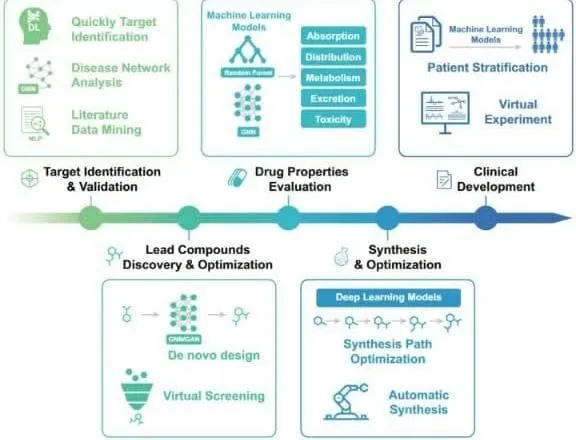
DEEP LEARNING
Deep learning is an advanced form of machine learning based on artificial neural networks with multiple layers. It can process complex datasets and identify patterns without requiring every feature to be manually specified. Deep learning has been studied for clinical text processing and adverse drug event extraction. Research in pharmacovigilance has demonstrated that deep-learning approaches can be useful for extracting adverse drug event from clinical text [5].
NATURAL LANGUAGE PROCESSING
Natural language processing enables computers to process human language. Hospital pharmacists deal with large quantities of unstructured information, including:
NLP can help extract medication-related information from these documents. It may identify drug names, clinical conditions and medication-related events from free-text records [5].
GENERATIVE AI
Generative AI refers to AI systems capable of producing new text or other content based on information provided to them. In pharmacy, generative AI may assist with:
However, general information requires professional verification because AI systems may produce incorrect or incomplete information. Therefore, pharmacists should review AI generated clinical content before it is used for patient care.
APPLICATIONS OF AI IN HOSPITAL PHARMACY PRACTICE
PRESCRIPTION SCREENING
Prescription screening is one of the important potential applications of AI in hospital pharmacy. A hospital may generate thousands of medication orders. Manual screening of every order can require considerable time. AI-based systems can analyse prescription characteristics and identify orders that may require pharmacist attention [1]. Potential problems that may be identified include:
A systematic review of machine-learning and deep-learning models used in hospital settings identified studies examining AI for inappropriate prescription detection [4]. AI does not replace pharmacist review. Instead, it can act as an initial screening mechanism, allowing pharmacists to focus on clinically important cases.
AI FOR MEDICATION ERROR DETECTION
Medication error can occur during prescribing, transcription, dispensing, administration or monitoring. AI can analyse medication and patient data to identify patterns associated with medication errors. For example, an AI system could flag a medication order that differs substantially from usual prescribing patterns.
AI-supported medication safety systems may assist in:
The literature indicates that medication-error detection and prescription screening are important areas of AI research in clinical pharmacy [3].
However, AI generated alerts need pharmacist assessment because an unusual prescription is not necessary an incorrect prescription.
AI IN DRUG-DRUG INTERACTION DETECTION
Drug-drug interactions can occur when one medication changes the effect, absorption, metabolism or elimination of another medication. Traditional drug interaction databases provide important information, but AI may provide additional support by A analysing multiple patient-specific variables. AI can potentially considered:
This could help pharmacists identify clinically important interaction risks rather than simply generating large numbers of alerts. AI based approaches have been described among the broader applications of AI in clinical pharmacy and medication management
[2].
AI IN ADVERSE DRUG INTERACTION MONITORING
Adverse drug reactions are unwanted and harmful responses associated with the use of medicines. Hospital pharmacists play an important role in ADR detection, assessment, documentation and reporting.
AI may support ADR monitoring by analyzing:
Natural language processing and machine-learning techniques can extract adverse drug events from clinical text. A review by Li et al. examined machine-learning and deeplearning approaches for adverse drug event extraction and found that different AI models have been investigated for identifying adverse-event information from clinical text [5]. AI may therefore help pharmacists identify possible ADRS earlier and priorities cases for clinical review.
AI IN PHARMACOVIGILANCE
Pharmacovigilance involves the detection, assessment, understanding and prevention of adverse effects or other medicine-related problems. Traditional Pharmacovigilance involves processing large number of safety reports. This can be time-consuming because reports require data extraction, checking, coding, assessment and follow-up.
AI may support several steps in the Pharmacovigilance process including:
Desai highlighted that AI can potentially complement routine Pharmacovigilance activities but should enhance human expertise rather than replace human experts [10]. Therefore, hospital pharmacists can use AI as a supportive tool while maintaining professional responsibility for clinical assessment and reporting.
AI IN MEDICATION RECONCILIATION
Medication reconciliation involves comparing a patient medication information across different points of care.
It is especially important during: ⚫ Hospital admission
Medication reconciliation may be difficult when patients use multiple medicines or when medication histories are incomplete.
AI may help compare medication lists and identify:
By identifying discrepancies for pharmacist review, AI could potentially reduce the time required for medication reconciliation.
Clinical pharmacy reviews identify medication management as one of the major areas in which AI is being investigated [2].
AI FOR DOSE OPTIMISATION
Correct drug is essential for achieving therapeutic effects while reducing toxicity.
Dose requirements may vary between patients because of;
AI may analyse multiple patient variables and support individualized dose selection. For example, AI-based models may potentially help identify patients who are at increased risk of adverse effects or require closer therapeutic monitoring.
Recent clinical pharmacy literature identifies dose optimization and personalized medicine as important areas for AI research [3].
Nevertheless, AI-generated dosing recommendations should be reviewed by qualified healthcare professionals, especially when dealing with high-risk or narrow-therapeuticindex medicines.
AI IN PERSONALIZED MEDICINE
Personalized medicine aims to provide treatment based on individual patient characteristics.
AI can analyses multiple sources of information simultaneously, such as:
This may help healthcare professionals identify treatment options more appropriate for individual patients.
In hospital pharmacy, personalized AI tools could potentially support medication selection, dose adjustment and monitoring.
However, implementation requires reliable data and appropriate clinical validation before AI predictions are incorporated into routine patient care [2].
AI IN CLINICAL DECISION SUPPORT
Clinical Decision Support Systems (CDDS) provide information to healthcare professionals to assist clinical decisions.
AI-enhanced CDDS can potentially support pharmacists by analyzing patient-specific information and generating alerts or recommendations.
Examples include:
AI may be particularly useful when large numbers of variables must be considered simultaneously.
However, pharmacists should critically evaluate AI recommendations rather than accepting them automatically. This is important because AI models can produce incorrect results or may not recognize unusual clinical circumstances [4].
AI IN AUTOMATED DISPENSING AND PHARMACY ROBOTICS
Hospital pharmacists may use automation to support medication storage, dispensing and distribution.
AI can potentially be integrated with automated systems to improve:

Automation can reduce repetitive manual tasks and allow pharmacy staff to spend more time on clinical activities.
However, automated systems require regular maintenance, validation and monitoring. Human supervision remains important because technical failures can have consequences for medication safety.
AI IN INVENTORY AND STOCK MANAGEMENT
Hospital pharmacists must maintain adequate stocks of medicines while avoiding excessive inventory and wastage.
AI may help predict medication requirements using information such as:
Potential benefits include:
AI-based inventory systems may therefore support pharmacy management and operational efficiency [7].
AI IN ANTIMICROBIAL STEWARDSHIP
Antimicrobial stewardship aims to promote appropriate use of antibiotics and reduce unnecessary antimicrobial exposure.
AI may support antimicrobial stewardship by analyzing:
AI may potentially assist in identifying patients who require antibiotic review or support selection and duration of antimicrobial therapy.
However, anti-microbial decisions are clinically complex.AI recommendations should therefore be interpreted together with microbiological, clinical and patient-specific information.
AI IN DRUG INFORMATION SERVICES
Hospital pharmacists frequently answer drug information questions from physicians, nurses and patients.
AI tools may assist pharmacists in:
Generative AI may make information retrieval faster, but its responses should be verified using reliable sources such as approved prescribing information, clinical guidelines and peer-reviewed literature.
AI should therefore be considered an information-support tool rather than an independent source of final clinical advice.
AI AND PATIENT MEDICATION ADHERENCE
Medication adherence refers to the extent to which patients take medicines according to the agreed treatment plan.
Poor adherence can reduce treatment effectiveness.
AI may support adherence by using:
The pharmacy AI literature has identified adherence and quality use of medicines as potential areas for AI-supported interventions [1].
However, patient preferences, digital literacy, access to technology and privacy must be considered when implementing AI-based adherence systems.
ROLE OF THE HOSPITAL PHARMACIST IN THE AI ERA
The introduction of AI does not eliminate the need for hospital pharmacists. Instead, the pharmacist role may evolve from performing only manual informationprocessing tasks toward supervising, interpreting and clinically applying AI-supported information.
Hospital pharmacists may be responsible for:
Research on hospital pharmacy and AI emphasizes the importance of integration AI with clinical pharmacy practice rather than treating it as a replacement for professional expertise [4].
BENEFITS OF AI HOSPITAL PHARMACY
Potential benefits include:
• IMPROVED EFFICIENCY
AI can rapidly process large amounts of information and may reduce time spent on repetitive screening activities [1].
• MEDICATION SAFETY
AI may identify potential prescription problems, medication errors and adverse drug events [5].
• EARLY IDENTIFICATION OF RISK
Predictive models may identify patients who require closer monitoring.
• SUPPORT FOR CLINICAL DECISION-MAKING
AI can provide additional information to pharmacists during medication review
[3].
• IMPROVED WORKFLOW
AI may automate repetitive tasks and allow pharmacy professionals to concentrate on clinical activities.
• BETTER DATA ANALYSIS
AI can analyse large datasets that would be difficult to process manually.
• SUPPORT FOR PERSONALIZED THERAPY
AI may integrate multiple patient variables to support individualised treatment Decisions [3].
CHALLENGES AND LIMITATIONS
Despite its potential, several challenges must be addressed before AI becomes widely integrated into hospital pharmacy.
• DATA QUALITY
AI models depend on the quality of the data used for training and operation.
Incomplete, inaccurate or inconsistent clinical data can result in incorrect outputs.
• PATIENT PRIVACY
Hospital pharmacy systems contain sensitive patient information.AI systems must
Protect patient confidentiality and comply with applicable privacy and dataprotection requirements.
• ALGORITHMIC BIAS
If training data do not adequately represent different patient groups, an AI system may perform differently across populations.
• LACK OF EXPLAINABILITY
Some AI models can produce predictions without providing an easily understandable explanation. Lack of explain-ability can make it difficult for pharmacists to understand why an alert or prediction was generated.
• AUTOMATION BIAS
Healthcare professionals may place excessive trust in computer-generated recommendations. pharmacists should therefore maintain independent clinical judgement.
• CYBERSECURITY
AI systems connected to hospital networks may create additional cybersecurity concerns.
• COST
Implementation may require substantial investment in:
• LACK OF TRAINNG
Pharmacists may require additional education in AI concepts, data interpretation and responsible use of AI.
A recent survey of hospital pharmacists reported willingness to engage with AI but also identified barriers such as limited AI training and concerns related to human aspects of care [13].
• LIMITED CLINICAL VALIDATION
Some AI applications demonstrate promising technical performance but have not yet been adequately evaluated for their effect on patient outcomes in routine clinical environments [4].
ETHICAL AND LEGAL COSIDERATIONS
AI implementation in hospital pharmacy raises several ethical and professional questions.
Important considerations include:
Responsibility for a clinical decision should not be transferred entirely to an AI system Pharmacists and other healthcare professionals remain responsible for evaluating whether an AI generated recommendation is appropriate for the individual patient. Pharmacovigilance literature also emphasizes that AI should augment human expertise rather than simply replace human professionals [10].
AI IMPLEMENTATION FRAMEWORK FOR HOSPITAL PHARMACY
A hospital planning to implement AI could follow the following general process:
Identify pharmacy problem
Collect appropriate clinical and pharmacy data
Select or develop suitable AI technology
Validate the AI System
Evaluate safety and accuracy
Integrate with hospital information systems
Train pharmacists and pharmacy staff Validate the AI system
Implement with human supervision
Monitor performance
Evaluate clinical outcomes
Continuously improve the system
This approach can help ensure that AI is introduced according to clinical requirements rather than simply because the technology is available.
FUTURE PERSEPECTIVES
The future of AI in hospital pharmacy is likely to involve closer integration between AI systems, electronic health records, clinical decision support and pharmacy information systems.
Potential future applications include:
Future research should focus not only on whether AI can perform a technical task, but also on whether its implementation improves patient outcomes, medication safety, work flow and healthcare value [3].
Large multi centre studies, prospective clinical evaluations and cost-effectiveness studies are needed to establish the practical value of AI in hospital pharmacy [3].
RECOMMENDATIONS
The following recommendations can be considered for responsible implementation of AI in hospital pharmacy:
CONCLUSION
Artificial intelligence has significant potential to support hospital pharmacy practice, Applications include prescription screening, medication-error detection, druginteraction identification, pharmacovigilance, ADR monitoring, medication reconciliation, dose optimization, clinical decision support, inventory management and patient adherence support [1-5].
The current literature demonstrates promising applications, but important limitations remain, including data quality, privacy, bias, explain-ability, cybersecurity, cost and limited clinical validation [10]. AI should therefore be implemented carefully and evaluated continuously.
The hospital pharmacist will remain an essential healthcare professional. In an AIsupported environment, pharmacists can provide clinical judgement, patient-centred care, professional oversight and interpretation of AI-generated information. Overall, AI should be viewed as a tool to support pharmacists and improve medicationrelated care, rather than as a replacement for professional pharmacy practice.
REFERENCES







P. Lazaru, J. N. Suresh Kumar, Ch. Pooja, Ch. Soniya, Sk. Khasimunnysa, M. Mary Rani, P. Sandhya Rani, Type of Manuscript: Review Article, Int. J. of Pharm. Sci., 2026, Vol 4, Issue 10, 4570-4580. https://doi.org/10.5281/zenodo.23727969
 10.5281/zenodo.23727969
Severity: 8192
Message: substr(): Passing null to parameter #1 ($string) of type string is deprecated
Filename: frontend/article.php
Line Number: 890