

We use cookies to ensure our website works properly and to personalise your experience. Cookies policy
Department of Pharmaceutics, Faculty of Pharmacy, Gondwana University, Gadchiroli, India 441208
This study developed an anti-aging herbal face pack incorporating lignin extracted from rice straw, an agricultural waste. Lignin, rich in phenolic compounds, exhibits antioxidant and antimicrobial properties beneficial for skincare. The lignin was extracted using alkaline maceration and acid precipitation, then characterized using FTIR spectroscopy. The face pack was formulated with natural ingredients and evaluated for physicochemical properties and antioxidant potential. Results showed notable antioxidant activity, supporting its efficacy in combating oxidative stress and skin aging. The inclusion of rice straw-derived lignin enhances the face pack's therapeutic value while promoting sustainable reuse of agricultural waste. This study demonstrates the potential of rice straw lignin as a valuable natural additive in herbal cosmetics, aligning with trends in green chemistry and sustainable agriculture. The findings suggest a promising application for lignin in natural skincare products, contributing to eco-friendly and effective anti-aging solutions.
Herbal face pack have gained significant popularity in the field of cosmetics and skincare due to their natural composition and therapeutic benefits. The use of plant-based ingredients for skin care dates back thousands of years, with ancient civilizations utilizing herbal remedies for beauty and healing purposes. These masks offer a holistic approach to skincare by combining the power of nature with modern cosmetic technology. Herbal face pack are formulated with natural extracts, essential oils, and plant-based compounds that promote healthy skin by nourishing, hydrating, and rejuvenating the skin.
A key feature of herbal face pack is their versatility in catering to various skin types and concerns. From promoting glowing skin to addressing acne, pigmentation, or premature aging, herbal face packs are tailored to address specific needs. The natural ingredients used in these masks often contain active compounds that have antioxidant, anti-inflammatory, and antimicrobial properties, contributing to their efficacy in treating skin conditions. The inclusion of these ingredients helps in not only enhancing the appearance of the skin but also protecting it from environmental stressors like UV rays and pollution [1].
The rising demand for organic skincare solutions has led to increased innovation in the formulation of herbal face masks. Modern formulations incorporate advanced techniques, such as nano-encapsulation, to improve the bioavailability and stability of active ingredients [2]. Moreover, as more consumers opt for products free from parabens, sulfates, and synthetic fragrances, the cosmetic industry has seen a shift toward incorporating herbal extracts, which are perceived as gentler and more suitable for sensitive skin types [3].
Advantages and Disadvantages of Herbal Face Packs
Advantages:
Disadvantages:
Rice Straw
Rice straw, a byproduct of rice cultivation, presents both challenges and opportunities in agricultural management and environmental sustainability. The accumulation of rice straw can lead to significant environmental issues, including air pollution from burning and soil degradation., recent research has highlighted various innovative management strategies that not only mitigate these negative effects but also enhance the utility of rice straw as a resource [8]. These strategies encompass practices such as incorporation into soil, conversion into biochar, and utilization in biogas production, reflecting a shift towards more sustainable agricultural practices. Such approaches not only improve soil health but also contribute to the circular economy in agriculture. The increasing recognition of these management strategies underscores the importance of research and development in optimizing rice straw utilization for environmental and economic benefits[9].
Rice straw is increasingly recognized as a valuable lignocellulosic resource that can be effectively utilized for various applications, including energy production, bio-materials, and soil enhancement. The comprehensive management of rice straw involves several critical steps: collection, processing, transportation, and addressing environmental concerns associated with its disposal. Efficient collection methods are essential to ensure that rice straw is harvested in a sustainable manner, while proper processing techniques can transform it into usable forms for energy generation or as a raw material in bioproducts. Additionally, transportation logistics play a significant role in the overall feasibility of rice straw utilization, as they influence the economic viability of various applications. By addressing these aspects, the potential of rice straw as a sustainable resource can be maximized, contributing to both environmental conservation and economic development [10].
Composition of Rice Straw
Rice straw is composed primarily of three main components: cellulose, hemicellulose, and lignin, which together determine its structural integrity and nutritional value. According to Bölükbas and Kaya (2018), the typical composition of rice straw is as follows [11].
Chemical Composition of Rice Straw: - [12]
Table No. 1: Chemical Composition of Rice Straw
|
Sr. No. |
Components |
Percentage (%) |
|
1. |
Organic matter |
82 |
|
2. |
Crude protein |
4 |
|
3. |
Crude fibers |
37 |
|
4. |
Non fatty esters |
43 |
|
5. |
Total ash |
18 |
|
6. |
Calcium |
0.14 |
|
7. |
Phosphorus |
0.05 |
|
8. |
Neutral detergent fibre |
75 |
|
9. |
Acid detergent fibre |
54 |
|
10. |
Cellulose |
37 |
|
11. |
Lignin |
8 |
|
12. |
Silica |
8 |
Lignin
Lignin is a complex, aromatic polymer found in the cell walls of plants, playing a crucial role in providing structural support and rigidity. It is the second most abundant biopolymer on Earth, following cellulose, and is primarily derived from lignocellulosic biomass, including agricultural residues such as rice straw. The chemical structure of lignin contributes to its high stability and resistance to degradation, making it an essential component in the formation of plant tissues.
In industrial processes, lignin is typically produced as a byproduct during the pulping of wood and other plant materials. For instance, during Kraft pulping, lignin is separated from cellulose and hemicellulose, which are the main components used to produce paper and other products. The management of lignin has garnered significant attention due to its potential applications in various fields, including bioenergy, biocomposites, and soil enhancement[13].
Chemical Composition of Lignin
Lignin is a complex and irregular biopolymer found in the cell walls of plants, primarily serving to provide structural support and rigidity. Its unique properties stem from its diverse chemical composition, which consists mainly of phenolic compounds [14].
1. Building Blocks: Lignin is primarily composed of three main phenylpropanoid units:
These monomeric units are interconnected through various types of bonds, creating a highly cross-linked structure.
2. Linkages: The structural integrity of lignin is primarily due to several types of linkages:
3. Functional Groups: Lignin features various functional groups that enhance its reactivity and versatility:
4. Variability: The chemical composition of lignin can vary significantly based on its source, including softwood, hardwood, and agricultural residues. This variability affects its properties and potential applications in areas such as biofuels, bioplastics, and soil amendments
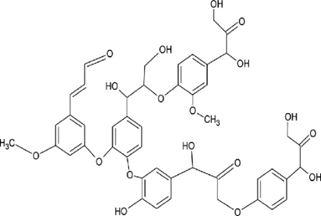
Figure No. 1: Structure of lignin
Production of Lignin from Rice Straw
Lignin extraction from rice straw has gained attention due to its abundance as an agricultural residue and its potential for value-added applications. Kaur and Kuhad (2019) highlight a combined acid-alkali pre-treatment method that enhances lignin recovery while facilitating the subsequent production of ethanol [15].
1. Overview of Rice Straw: Rice straw is a lignocellulosic biomass rich in cellulose, hemicellulose, and lignin. Its high lignin content poses challenges for enzymatic hydrolysis but also presents opportunities for lignin recovery.
2. Pre-treatment Methods: describe a combined acid-alkali pre-treatment process, which involves two key stages:
3. Lignin Recovery: After the pre-treatment process, the resulting lignin can be recovered through various methods:
4. Characterization and Utilization: The recovered lignin can be characterized for its chemical composition and functional properties. This lignin can then be valorized for various applications, including:
Applications of Lignin
2. COLLECTION OF MATERIALS
Collection and Preparation of Rice Straw Powder
The process of obtaining fine rice straw powder involves several systematic steps to ensure purity and consistency. Initially, rice straw is carefully collected from agricultural fields, ensuring it is free from contaminants. The collected straw is then thoroughly washed to remove dirt, dust, and any residual impurities. After washing, the straw is dried under controlled conditions to eliminate moisture content, preventing microbial growth and degradation. Once fully dried, the straw is cut into smaller pieces to facilitate further processing. Finally, these pieces are ground into a fine powder using appropriate milling techniques, resulting in a uniform, high-quality rice straw powder suitable for various applications.
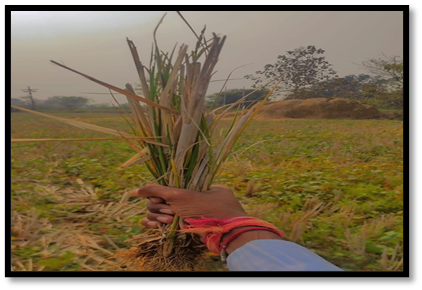
Figure No. 4: Collection Rice Straw
Extraction in Maceration Process: -
1] Alkaline extraction
Prepare 0.5 M NaOH solution: Dissolve 20 g of NaOH in 1 L of distilled water.
Add 100 mL of 0.5 M NaOH to the rice straw and heat the mixture at 80°C for 1 hour with continuous stirring.
2] Filtration:
Filter the mixture using Whatman filter paper to separate the solid residue from the liquid extract.
3] Acidification:
Add 1 M HCL dropwise to the filtrate to adjust the pH to 2.0 (precipitation of lignin occurs).
Allow the solution to settle for 2 hours.
4] Washing:
Wash the lignin precipitate with ethanol (95%) and distilled water to remove impurities.
5] Drying:
Dry the lignin in an oven at 50°C for 24 hours [16].
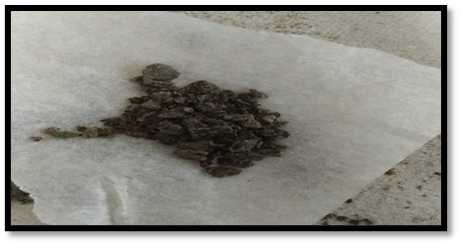
Figure No. 5: Lignin
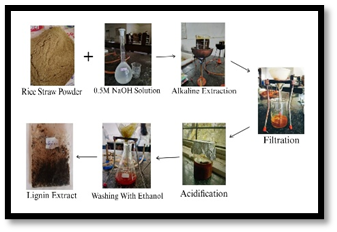
Figure No. 6: Alkalilation Extraction
3. MATERIAL OF FORMULATION
Table No. 2: Ingredients [17]
|
Sr. No. |
Ingredients |
Role of ingredients |
|
1. |
Water |
Solvent |
|
2. |
Bentonite |
Absorbent and Cleansing properties |
|
3. |
Methyl cellulose |
Thickening agent |
|
4. |
Lignin |
Antioxidant and Anti- aging properties |
|
5. |
Propylene glycol |
Humectant |
|
6. |
Sodium lauryl sulfate |
Surfactant |
|
7. |
pH buffer |
Stabilize |
|
8. |
Methyl paraben |
Preservative |
|
9. |
Rose water |
Moisturizing and Smoothening properties |
Method of preparation :-
The Preparation of Face Mask by Following Steps :-
Quantity Of Formulation :-
Table No. 3: Quantity Of Formulation
|
Sr. No. |
Ingredients |
Formulation 1 |
Formulation 2 |
|
1. |
Water |
10 ml |
15 ml |
|
2. |
Bentonite |
2 gm |
3 gm |
|
3. |
Methyl cellulose |
0.15 gm |
0.30 gm |
|
4. |
Lignin |
1.5 gm |
3 gm |
|
5. |
Propylene glycol |
1.5 gm |
3 gm |
|
6. |
Sodium lauryl sulphate |
3.0 gm |
5.0 gm |
|
7. |
pH buffer |
Adjust to between 4 to 5 |
Adjust to between 4 to 5 |
|
8. |
Methyl paraben |
3 ml |
5 ml |
|
9. |
Rose water |
2 ml |
3 ml |
4. EVALUATION PARAMETER
1] Colour and Odour :- Physical parameters like colour and odour were examined by visual examination . The brown colour was determined. The odour was found to be smelling like characteristics.
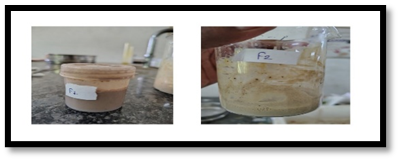
Figure No. 7: Formulation
2] pH determination:-
pH of prepared herbal face pack was measured by using digital pH meter. The solution of face pack was prepared in 1 ml of face pack solution in 9 ml of distilled water and pH was determined . The pH range of herbal face pack was found to be
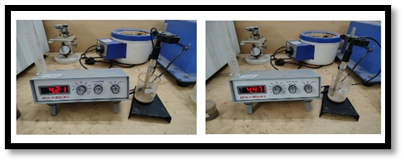
Figure No. 8: pH
3]Adhesiveness: -
The adhesiveness was determined by the applying hebal face pack to the skin for 5 min then wash it .So ,there is no any adhesiveness will accurs .
4] Spreadability:-
The spreadibility was determined by the applying of the herbal face pack to the skin .so, we determined it easily spreadable.
5] Primary irritation test :-
Herbal face pack prepared was apply to the skin of human being and observed for effect so, there is no any irritation was cause in formulation 1 and formulation 2
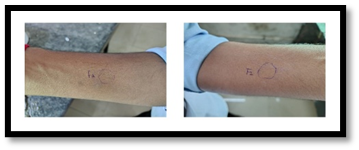
Figure No. 9: Primary irritation test
6] Viscosity :-
Viscosity of herbal face pack was measured by visco-meter on spindle no.2 at 30 rpm.
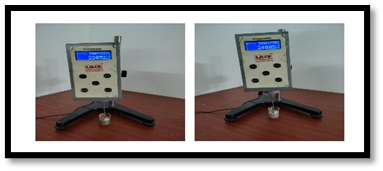
Figure No. 9: Viscosity
5. RESULT AND DISCUSSION
Organoleptic characteristics
Table No. 4: Organoleptic characteristics
|
Sr. No. |
Evaluation Test |
Formulation 1 |
Formulation 2 |
|
1. |
Colour |
Brown |
Brown |
|
2. |
Odour |
Smelling characteristics |
Smelling characteristics |
pH determination
Table No. 5: pH determination
|
Sr. No. |
Evaluation Test |
Formulation 1 |
Formulation 2 |
|
1. |
pH determination |
4.21 |
4.47 |
The pH values of the anti-aging face pack were found to be 4.21 and 4.47. These values indicate that the face pack is slightly acidic.
Adhesiveness
Table No. 6: Adhesiveness
|
Sr. No. |
Evaluation Test |
Formulation 1 |
Formulation 2 |
|
1.
|
Adhesiveness |
No adhesiveness |
No adhesiveness |
The anti-aging face pack shows no adhesiveness, indicating it doesn't stick or adhere to the skin excessively.
Spreadability
Table No. 7: Spreadability
|
Sr. No. |
Evaluation Test |
Formulation 1 |
Formulation 2 |
|
1.
|
Spreadability |
Easily spreadable |
Easily spreadable |
The anti-aging face pack is described as easily spreadable, indicating good consistency and texture.
Primary irritation
Table No. 8: Primary irritation
|
Sr. No. |
Evaluation Test |
Formulation 1 |
Formulation 2 |
|
1.
|
Primary irritation |
No irritation |
No irritation |
The mention of "primary irrigation" in the context of an anti-aging face pack seems unusual, as irrigation typically refers to flushing a wound or area with fluid. If the statement "no irrigation" implies that the face pack doesn't require rinsing or washing off with water after application.
Viscosity
Table No. 9: Viscosity
|
Sr. No. |
Evaluation Test |
Formulation 1 |
Formulation 2 |
|
1. |
Viscosity |
219.3 |
240.26 |
The viscosity of the anti-aging face pack was found to be 219.3 and 240.26 cP (centipoise). These values indicate a relatively moderate to high viscosity.
CONCLUSION
This research highlights the increasing popularity of herbal face masks due to their natural composition, therapeutic benefits, and alignment with eco-conscious beauty trends. Consumers are shifting away from chemical-based skincare, favoring herbal alternatives with fewer side effects. Ingredients like bentonite, rose water, and methyl cellulose offer hydration, exfoliation, anti-inflammatory, and antimicrobial effects. These masks can be tailored for various skin concerns, including acne and aging. They also promote mental well-being through soothing textures and fragrances. Modern formulations have enhanced the stability and effectiveness of herbal compounds. Overall, herbal face masks offer a safe, holistic, and sustainable skincare solution blending tradition with innovation.
Increasing consumer awareness about the potential adverse effects of synthetic, chemical-based skincare has led to a noticeable preference for herbal alternatives that offer effective treatment with fewer side effects. Key ingredients such Water, Bentonite, Methyl cellulose, Lignin, Propylene glycol, Sodium lauryl sulfate, pH buffer, Methyl paraben and Rose water have demonstrated potent properties, including hydration, exfoliation, anti-inflammatory, antimicrobial.
REFERENCES

Savita Shende, Srujal Bandawar, Himant Panem, Pooja Ghutake, Development and Characterization of an Anti-Aging Herbal Face Pack Using Lignin Isolated from Rice Straw, Int. J. of Pharm. Sci., 2025, Vol 3, Issue 7, 2750-2759. https://doi.org/10.5281/zenodo.16153705
 10.5281/zenodo.16153705